
Choosing new flooring feels like a monumental decision, and in many ways, it is. You’re not just picking a color; you’re selecting the foundation of your home’s design, a surface that will endure daily life for years to come. The sheer number of options—from luxury vinyl and laminate to wood-look tile—can be overwhelming. This often leads to decision fatigue and a nagging fear: what if I make a costly mistake? What if the beautiful floor I choose today looks scratched, dented, and worn out in just a few years?
This guide is designed to eliminate that fear. We’re cutting through the confusing technical jargon and marketing hype to bring you a practical, data-driven framework: the Lifestyle Scorecard. Instead of just listing pros and cons, we’ll translate concepts like “wear layers” and “AC ratings” into what they actually mean for your busy kitchen, your playful pets, and your budget.
Here, you will find a clear comparison of the top wood-look flooring contenders, a deep dive into what makes a floor truly durable, and actionable advice to help you select the perfect finish for your home with absolute confidence.
- Why Not Just Real Hardwood? Understanding the Common Problems
- Meet the Top Contenders: The Best Durable Wood Look Flooring Options
- The Ultimate Showdown: A Data-Driven Flooring Scorecard
- Your Perfect Match: Which Wood Look Floor is Best for Your Room?
- Bringing It Home: Design Ideas with Bravewood Finishes
- Your 5-Step Guide to Making the Final Decision
- Conclusion
- References
Why Not Just Real Hardwood? Understanding the Common Problems
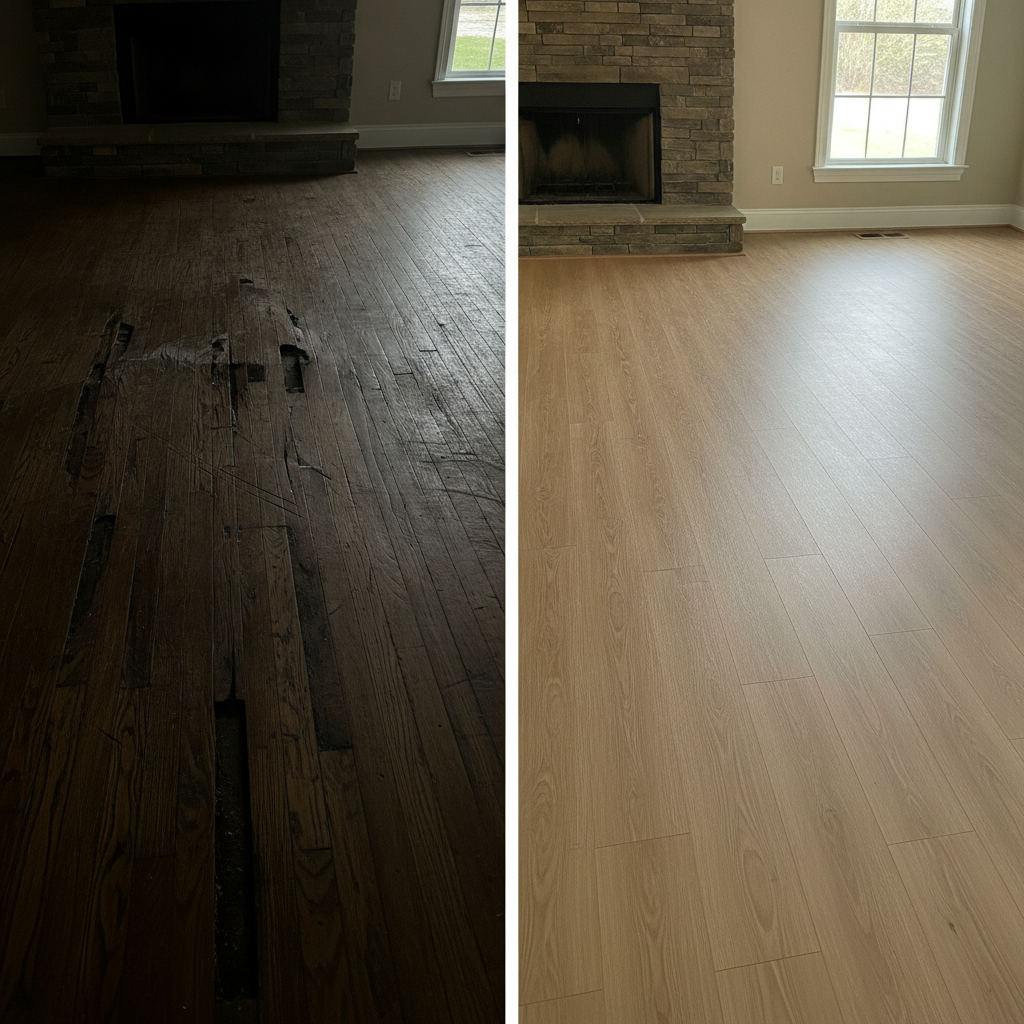
For centuries, solid hardwood has been the gold standard for beautiful flooring. Its natural warmth and timeless appeal are undeniable. However, that classic beauty comes with a significant list of vulnerabilities and maintenance demands, which is why so many homeowners now seek durable wood alternatives. Understanding these real wood flooring problems is the first step in making an informed choice.
Real wood is a natural, porous material that breathes—it expands and contracts with changes in its environment. According to the National Wood Flooring Association (NWFA), hardwood performs best when indoor humidity levels are maintained between 30-50% year-round [1]. When humidity deviates from this range, which is common during dry winters or humid summers, a host of issues can arise. Research from institutions like the U.S. Forest Products Laboratory confirms that this moisture absorption is the scientific reason behind many common flooring failures [2].
Here are the most common issues homeowners face with solid hardwood:
| Problem | Description | Prevention & Solutions |
|---|---|---|
| Scratching & Denting | Even the hardest woods can be scratched by pet claws, dragged furniture, or even grit on the bottom of a shoe. Softer woods like pine are particularly susceptible to denting from dropped objects. | Use furniture pads and area rugs in high-traffic areas. Regular cleaning is essential. The only true fix is a full sand and refinish. |
| Water Damage | From a small spill left too long to a major appliance leak, water is hardwood’s worst enemy. It can cause dark stains, swelling, and permanent warping of the planks. | Wipe up all spills immediately. Never wet-mop a hardwood floor. A dehumidifier can help in damp areas like basements. |
| Cupping & Crowning | Cupping occurs when the edges of a plank are higher than its center, usually due to a moisture imbalance (more moisture on the bottom of the board). Crowning is the opposite, where the center is higher than the edges. | Maintain consistent indoor humidity levels [1]. Ensure proper subfloor moisture barriers are installed. |
| Gapping | In dry conditions, wood planks lose moisture and shrink, causing unsightly gaps to appear between them. This is often a seasonal issue that can resolve itself when humidity returns. | Use a whole-home humidifier during dry winter months to keep humidity within the recommended 30-50% range. |
| High-Maintenance & Cost | To keep hardwood looking its best, it requires specific cleaning methods and periodic refinishing. This process of sanding down the entire surface and applying new stain and sealant can be disruptive and costly, typically ranging from $3 to $8 per square foot. |
For many modern households, this level of high maintenance flooring is simply not practical. The need for a floor that offers the beauty of wood without the worry has led to incredible innovations in durable wood alternative flooring.
Meet the Top Contenders: The Best Durable Wood Look Flooring Options
Today’s faux wood design options are a world away from the unconvincing imitations of the past. Advanced printing and texturing technologies have created remarkably realistic and resilient alternatives. Let’s meet the three primary contenders that deliver stunning wood looks with superior performance: Luxury Vinyl Plank (LVP), Laminate, and Wood-Look Porcelain Tile.
Luxury Vinyl Plank (LVP): The Versatile Champion
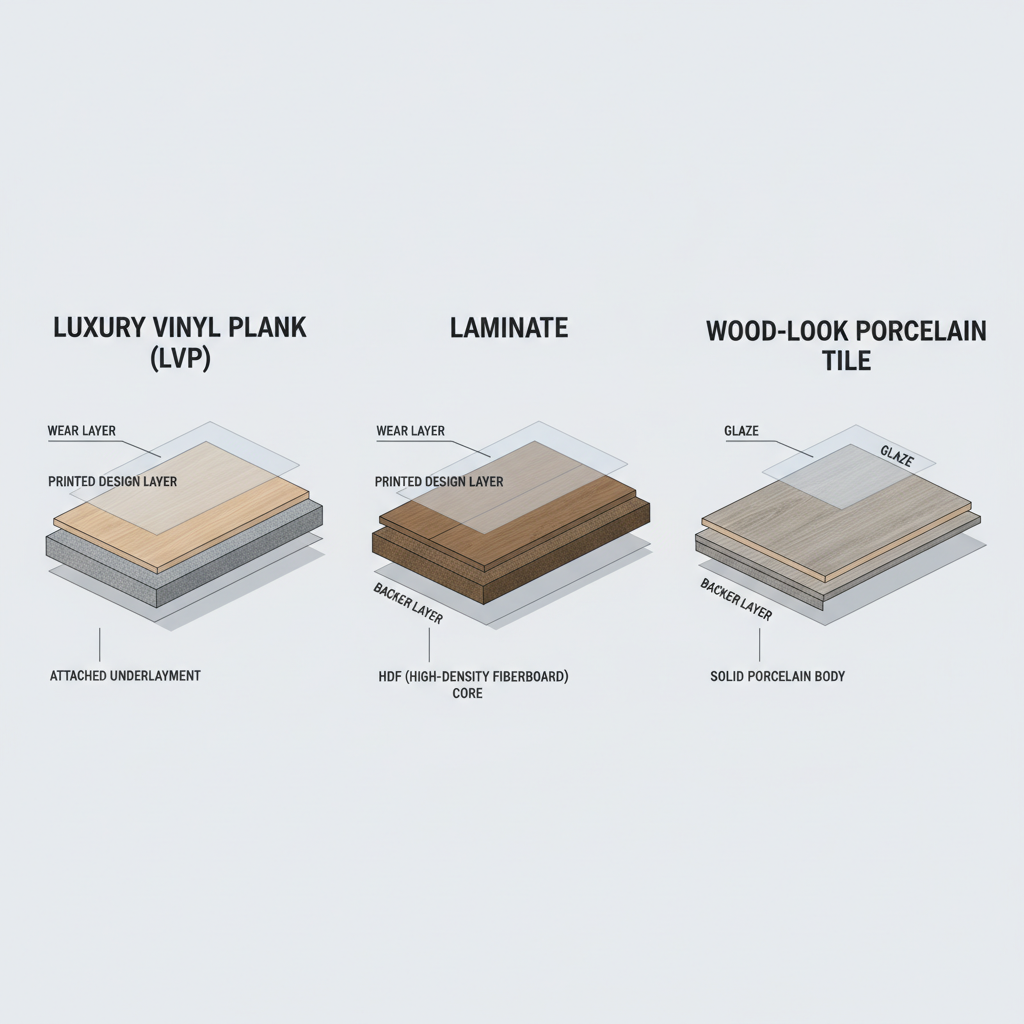
Luxury Vinyl Plank is a multi-layered, synthetic flooring product that has exploded in popularity for its winning combination of realism, comfort, and water resistance. Its layered construction typically includes a backing layer for stability, a waterproof core, a high-definition printed design layer, and a transparent top wear layer that protects against scratches and stains.
A key factor in LVP’s performance is its core. As noted by industry authorities like the Resilient Floor Covering Institute (RFCI), the core composition is crucial [3]. You’ll primarily see two types:
- Stone Polymer Composite (SPC): This core is made from a blend of limestone and stabilizers. It’s extremely dense and rigid, giving it superior resistance to dents from heavy furniture or dropped items.
- Wood Polymer Composite (WPC): This core incorporates wood pulp or plasticizers, making it slightly softer and thicker than SPC. This results in a floor that is quieter and more comfortable underfoot.
Laminate Flooring: The Scratch-Resistant Veteran
Laminate flooring has been a trusted wood alternative for decades, and modern versions are more durable and realistic than ever. It’s constructed with a core of high-density fiberboard (HDF), which gives it a rigid and substantial feel. On top of this is a high-resolution image of wood grain, which is then protected by an exceptionally tough, transparent wear layer.
Laminate’s greatest strength is its scratch resistance. This is measured on an Abrasion Class (AC) scale, which rates its durability from AC1 (light residential use) to AC5 (heavy commercial use). For most homes, a rating of AC3 or AC4 provides more than enough protection against daily traffic, kids, and pets. Additionally, many high-quality laminate floors now carry certifications like FloorScore®, which ensures they meet strict indoor air quality standards for low volatile organic compound (VOC) emissions [4].
Wood Look Tile: The Indestructible Beauty
For ultimate durability, nothing beats wood-look porcelain tile. Made from fine, dense clay fired at high temperatures, porcelain is incredibly hard and non-porous. This makes it a fantastic choice for any room in the house, including high-moisture areas like bathrooms and basements.
The durability of tile is often rated by the Porcelain Enamel Institute (PEI) on a scale from Class 1 (no foot traffic) to Class 5 (heavy commercial traffic) [5]. Most wood-look tile for residential use falls in the Class 3 or 4 range, indicating it can handle all levels of household foot traffic with ease. Its key advantage is being completely waterproof. According to standards like ASTM C373, porcelain tile has a water absorption rate of less than 0.5%, making it impervious to spills and moisture [6]. The primary cons are its hard, cold feel underfoot and a more complex, costly installation process.
The Ultimate Showdown: A Data-Driven Flooring Scorecard
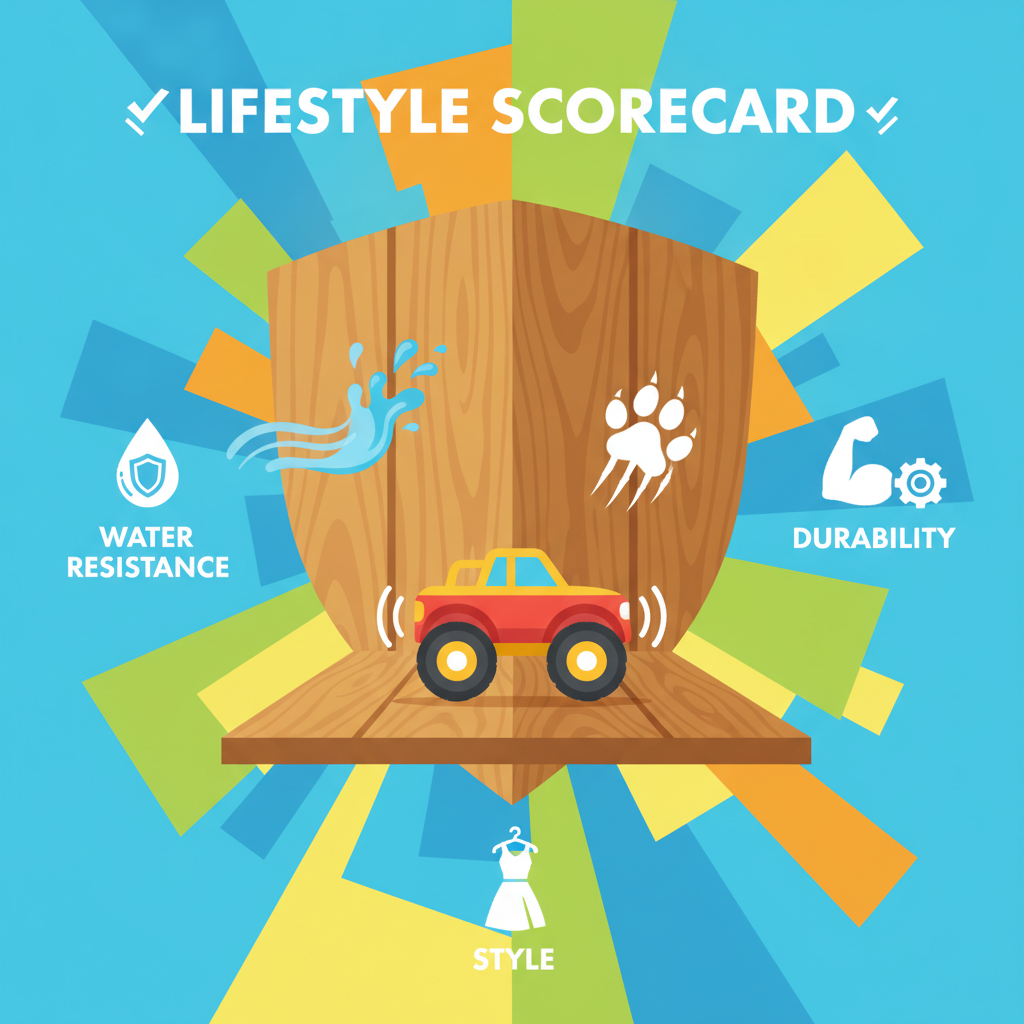
Now that you’ve met the contenders, let’s put them head-to-head. To truly understand how to choose wood look flooring, we need to compare them on the factors that matter most in a busy home. This scorecard translates the technical specs into real-world performance.
Factor 1: Lifestyle Durability (Scratch, Dent & Pet-Proofing)
This is where the floor meets the road—or the dog’s claws, the dropped pans, and the toy trucks.
- Winner: Wood Look Tile. With a PEI rating of 4 or 5, porcelain tile is virtually scratch-proof and impossible to dent. It is the most durable wood look flooring you can buy.
- Runner-Up: Laminate. A high-quality laminate with an AC4 rating is exceptionally scratch-resistant, often outperforming LVP in this specific category. It’s an excellent choice for homes with large, active dogs.
- Strong Contender: LVP. The durability of LVP is all about its wear layer. A thin 6 mil layer is only suitable for very light traffic. For a home with kids and pets, a 20 mil wear layer is highly recommended as it provides commercial-grade scratch protection. In terms of denting, SPC core LVP offers superior resistance compared to the softer WPC core or laminate’s HDF core.
Factor 2: Water & Moisture Resistance
From the kitchen to the basement, water is an unavoidable part of life.
- Winner (Tie): Wood Look Tile & LVP. Both materials are 100% waterproof. The planks or tiles themselves will not be damaged by water, no matter how long it sits there. This makes them the only truly safe options for full bathrooms and other wet areas. While LVP planks are waterproof, it’s important to ensure a quality installation to prevent water from seeping through the seams to the subfloor.
- Fair: Laminate. Modern laminate has come a long way, with many products now offering “water resistance” for up to 24 or even 72 hours. This is great for handling everyday spills, but it is not fully waterproof. It should not be installed in areas with consistent moisture or where flooding is a risk.
Factor 3: Aesthetics & Realism
A durable floor is useless if you don’t love the way it looks. Today’s technology makes faux wood design more convincing than ever.
- Winner (Tie): LVP & Laminate. Both LVP and laminate now utilize incredible high-definition printing that captures the subtle color variations and grain patterns of real wood. The most realistic options feature a technology called “Embossed in Register” (EIR), where the surface texture is pressed to perfectly align with the visual grain pattern. This creates a tactile realism that is stunningly convincing.
- Strong Contender: Wood Look Tile. The printing on wood-look tile is also excellent. However, it can sometimes lack the subtle texture of LVP and laminate. The presence of grout lines, even when minimized with large-format tiles and matching colors, is a giveaway that it isn’t real wood.
As one interior designer notes, “The key to a believable faux wood floor is variation. Look for products with a high number of unique plank patterns to avoid a repetitive, artificial look. For a modern farmhouse style, a wider plank with a light, rustic texture works beautifully, while a sleek, narrow plank in a dark finish can anchor an industrial design.”
Factor 4: Total Cost of Ownership (Upfront Price & Long-Term Maintenance)
Your budget includes more than just the price tag on the box. You must consider installation and the lifetime cost of cleaning and maintenance.
| Flooring Type | Material Cost (per sq. ft.) | Installation Cost (per sq. ft.) | Long-Term Maintenance |
|---|---|---|---|
| LVP | $2 – $7 | $2 – $6 | Very Low: Regular sweeping and damp mopping. |
| Laminate | $1 – $5 | $2 – $6 | Very Low: Regular sweeping and damp mopping with a laminate-specific cleaner. |
| Wood Look Tile | $3 – $12 | $8 – $15+ | Low: Regular cleaning. Grout may need periodic deep cleaning or sealing. |
| Solid Hardwood | $5 – $15 | $5 – $10 | High: Requires specific cleaners, humidity control, and refinishing every 7-10 years ($3-$8/sq. ft.). |
When it comes to easy to clean flooring, LVP and laminate are the clear winners. Their non-porous surfaces make wiping up spills a breeze. According to cleaning professionals who follow standards from bodies like the Institute of Inspection, Cleaning and Restoration Certification (IICRC), “The biggest time-saver is a seamless surface. Vinyl and laminate don’t have grout lines to scrub, which dramatically cuts down on deep cleaning time and effort” [7].
Your Perfect Match: Which Wood Look Floor is Best for Your Room?
The “best” floor isn’t a one-size-fits-all answer. It’s the one that best fits your life. Here are our top recommendations for common scenarios:
- Best for Homes with Large Dogs & Active Kids: Laminate (AC4 rating). Its superior scratch resistance gives it the edge for handling the constant wear and tear from claws and toys.
- Best for Busy Kitchens: LVP (SPC Core). It’s 100% waterproof to handle spills, its SPC core resists dents from dropped pots, and it’s softer and more comfortable to stand on for long periods than tile.
- Best for Moisture-Prone Basements: Wood Look Tile or LVP. These are the only two options that are fully waterproof and will not be ruined by the dampness or potential water issues common in basements.
- Best for DIY Installation: LVP or Laminate. Most modern LVP and laminate floors feature a click-lock system that makes them relatively easy for a handy homeowner to install, saving significantly on labor costs.
- Best for Ultimate, Long-Term Durability: Wood Look Tile. If you want a floor that will look the exact same in 20 years as it does the day you install it, and you’re willing to invest in professional installation, porcelain tile is the undisputed champion.
Bringing It Home: Design Ideas with Bravewood Finishes
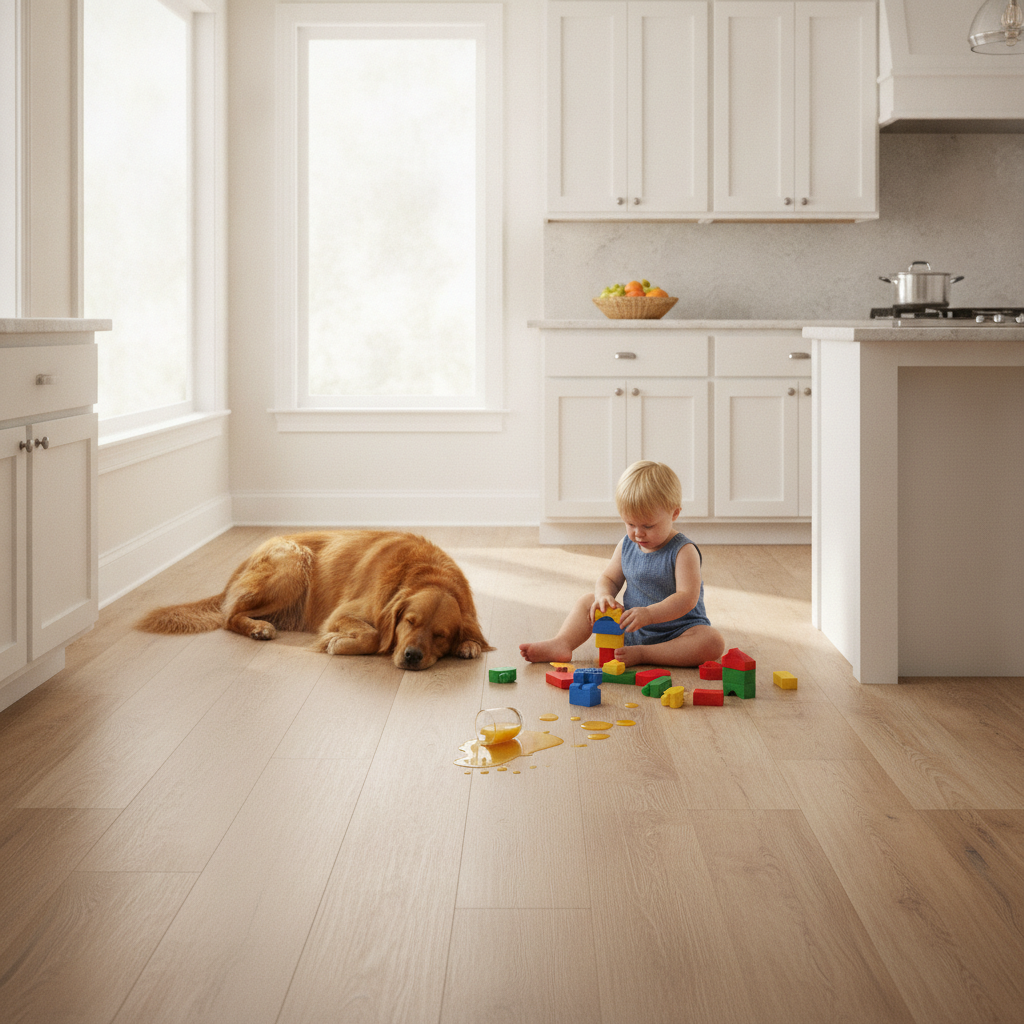
Once you’ve narrowed down the right type of flooring, the fun part begins: choosing a style. Bravewood finishes offer a curated collection of wood-look designs that combine best-in-class durability with the latest trends.
To help you visualize, here is a simple pairing guide for popular styles:
- For a Modern Farmhouse Look: Pair a wide-plank, light oak Bravewood finish with white or navy blue cabinets and matte black hardware. The light, airy floor provides a perfect rustic-yet-clean foundation.
- For an Industrial Loft Vibe: Choose a Bravewood finish with a weathered gray or dark walnut tone. The rich, moody color contrasts beautifully with exposed brick, metal accents, and open shelving.
- For a Warm, Mid-Century Modern Space: Select a Bravewood finish in a warm, honey-toned wood like teak or acacia. The clean grain patterns and rich color complement the organic shapes and iconic furniture of this style.
Don’t be afraid to think beyond the floor. The versatility of products like Bravewood allows for creative applications on accent walls to add warmth to a bedroom or even on a ceiling to create a dramatic, custom look. The best way to see how a finish will look in your home is to get a physical sample. We always recommend you order a sample to see the color and texture in your home’s unique lighting.
Your 5-Step Guide to Making the Final Decision
You’ve done the research and are armed with the knowledge to make a great choice. Follow these final steps to eliminate any remaining decision fatigue and move forward with confidence.
- Assess Your Lifestyle: Be honest. Do you have a 70-pound dog? Are your kids prone to spilling? Is the room a high-traffic entryway or a quiet bedroom? Your answers should point you directly to the right material based on our scorecard.
- Set Your Budget: Use our Total Cost of Ownership chart to determine a realistic budget that includes not just the materials but also professional installation if you’re not planning to DIY.
- Gather Samples: Order samples of your top 3-4 choices. Don’t rely on pictures online. You need to see and feel the product in person.
- Test Them in Your Home: Place the samples in the room where they will be installed. Look at them in the morning, afternoon, and at night under artificial light. As any interior designer will tell you, lighting dramatically changes how a color appears.
- Plan for Installation: Whether you’re hiring a pro or doing it yourself, proper subfloor preparation is the most critical step for a long-lasting floor. Following industry guidelines, such as those from the NWFA for subfloor flatness and moisture content, is non-negotiable [1].
Conclusion
Choosing the perfect wood-look floor no longer has to be an overwhelming process. The best choice is a thoughtful balance of durability, aesthetics, and budget, all guided by the unique demands of your lifestyle. By moving beyond the simple “pros and cons” and using a data-driven framework like the Lifestyle Scorecard, you are now fully equipped to select a floor that you will love for years to come. You can avoid the common pitfalls and buyer’s remorse, confident that you’ve chosen a beautiful, durable foundation for your home’s future.
Feeling confident? Explore the Bravewood collection to find the perfect finish for your home, or download our free Flooring Selection Checklist to take with you to the showroom.
References
- National Wood Flooring Association (NWFA). (N.D.). Technical Manuals & Guidelines. Retrieved from NWFA official resources.
- Forest Products Laboratory (U.S. Forest Service). (N.D.). Research Publications on Wood Properties. Retrieved from FPL.FS.FED.US.
- Resilient Floor Covering Institute (RFCI). (N.D.). Resources and Standards for Resilient Flooring. Retrieved from RFCI official website.
- SCS Global Services. (N.D.). FloorScore®. Retrieved from SCS Global Services official website.
- Porcelain Enamel Institute (PEI). (N.D.). PEI Rating System for Tile Abrasion Resistance. Retrieved from industry resources on PEI standards.
- ASTM International. (N.D.). ASTM C373 – Standard Test Method for Water Absorption, Bulk Density, Apparent Porosity, and Apparent Specific Gravity of Fired Whiteware Products. Retrieved from ASTM.org.
- Institute of Inspection, Cleaning and Restoration Certification (IICRC). (N.D.). Floor Care Standards and Resources. Retrieved from IICRC official website.
