
That familiar click-clack-click of your dog’s nails on the floor is the soundtrack to a pet owner’s life. While it’s a sound of companionship and joy, it can also be a constant reminder of the war being waged on your home’s surfaces. You sweep up mountains of fur, clean up muddy paw prints, and hold your breath after every “accident,” all while watching helplessly as new scratches and scuffs appear. The dream of having both a beloved pet and beautiful, pristine floors can feel like an impossible choice.
But it doesn’t have to be.
Welcome to the Ultimate Pet Owner’s Flooring Playbook. This is not just another list of pros and cons. This is your definitive guide to moving from a state of flooring frustration to one of resilient confidence. We’ve developed an expert framework, including our unique Pet-Proof Scorecard, to help you analyze your options like a pro. We’ll dive deep into the top contenders—from luxury vinyl to indestructible tile—and provide a special focus on understanding one of the most innovative solutions on the market: waterproof hybrid hardwood, featuring a case study on Bravewood flooring. Get ready to find a floor that’s built for your entire family, paws included.
- The Pet Owner’s Dilemma: Common Ways Pets Ruin Floors
- The Pet-Proof Flooring Scorecard: Ranking the Top Contenders
- A Deep Dive into Waterproof Hybrid Hardwood: The Bravewood Case Study
- Beyond Durability: Prioritizing Your Pet’s Health & Safety
- Protecting the Floors You Have: An Action Plan for Pet Owners
- First Aid for Floors: A Triage Guide to Repairing Pet Damage
- Conclusion
- References & Authoritative Sources
The Pet Owner’s Dilemma: Common Ways Pets Ruin Floors
Before finding the solution, it’s crucial to understand the problem. The daily life of a pet introduces a unique set of challenges that can quickly turn a beautiful floor into a source of stress. Recognizing these common forms of damage is the first step toward choosing a material designed to defeat them.
- The Scratch Attack: This is the most visible and frustrating issue for many. A dog’s nails, even when trimmed, can inflict constant abrasive damage. This ranges from fine, surface-level scratches that dull the floor’s finish to deep gouges caused by an excited sprint to the door or a playful slide across the room.
- The Dent Zone: Large dogs, in particular, can cause impact damage. Dropped toys, rough play, and even just the force of a heavy dog jumping off the couch can create dents and dings, especially in softer wood species.
- The Moisture Menace: Accidents happen. Unfortunately, when it comes to flooring, pet urine is a formidable enemy. The chemical composition of urine is uniquely destructive. Uric acid can eat away at a floor’s protective finish, while the ammonia in pet urine can seep into porous materials like traditional hardwood, causing permanent dark stains and breaking down the wood fibers themselves. If moisture reaches the subfloor, it can lead to lingering odors, mold, and costly structural damage.
- The Daily Grind: Beyond the major events, there’s the simple, relentless wear and tear. Constant traffic from pets tracks in dirt, grit, and debris that act like sandpaper on your floor’s surface. This gradual abrasion slowly erodes the finish, leaving it looking dull, tired, and old before its time.
The Pet-Proof Flooring Scorecard: Ranking the Top Contenders
Choosing a new floor can be overwhelming. To cut through the marketing noise, we’ve created the Pet-Proof Flooring Scorecard. We rate the top flooring categories on the four criteria that matter most to pet owners. This data-driven framework is informed by standards from industry authorities like the Floor Covering Institute, giving you a clear, unbiased way to compare your options.
Our Scoring Criteria:
- Scratch Resistance (1-10): How well the surface withstands dog nails and daily abrasion.
- Water Resistance (1-10): The floor’s ability to handle spills, accidents, and moisture without damage.
- Pet Safety & Traction (1-10): The level of grip the surface provides to prevent slips, crucial for pet joint health.
- Ease of Cleaning (1-10): How simple it is to clean up fur, dander, mud, and accidents.
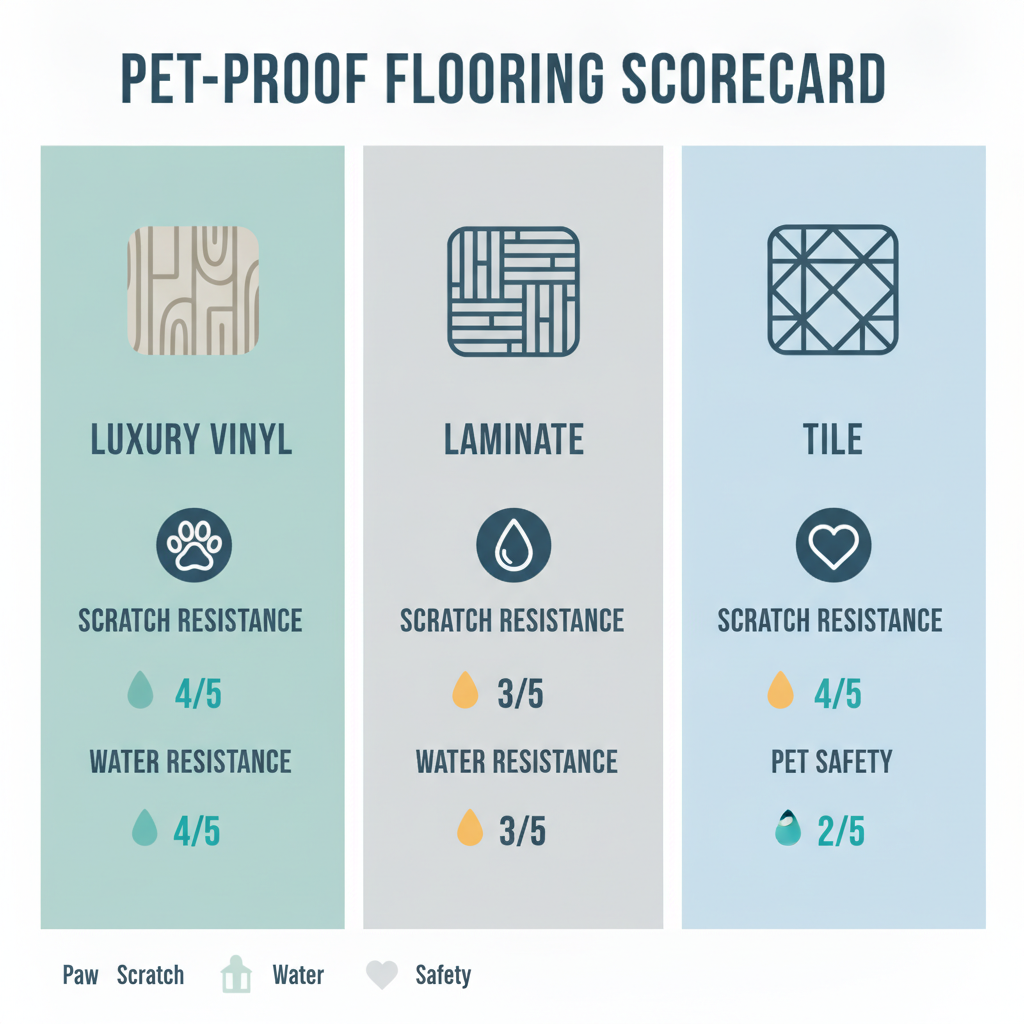
Luxury Vinyl Plank (LVP): The All-Around Champion
LVP has exploded in popularity for good reason: it’s a versatile powerhouse perfectly suited for the chaos of pet ownership. It consists of multiple layers, including a high-density waterproof core, a realistic 3D-printed design layer, and a transparent, protective wear layer on top.
For pet owners, the two most critical components are the core and the wear layer. Modern LVP often features a Stone-Polymer Composite (SPC) core, which makes the plank 100% waterproof and highly resistant to dents. The wear layer is the floor’s frontline defense against scratches. Its thickness is measured in mils (one-thousandth of an inch), and for homes with pets, thicker is always better. For LVP, a thicker wear layer of 20 mil or higher is recommended for homes with large dogs to provide maximum scratch protection. Many high-quality products also carry a FloorScore certification, which indicates they meet strict indoor air quality standards and are made with superior manufacturing processes.
- Scratch Resistance: 8/10
- Water Resistance: 10/10
- Pet Safety & Traction: 7/10
- Ease of Cleaning: 9/10
Laminate Flooring: The Scratch-Resistant Contender
If your primary concern is preventing scratches, laminate flooring deserves serious consideration. While older laminate was susceptible to water damage, modern versions have improved water resistance and an exceptionally tough surface. Laminate’s durability is officially measured by its Abrasion Class (AC) rating. This rating, which ranges from AC1 to AC5, indicates how well the floor holds up to wear and tear.
For pet-friendly homes, you should look for laminate flooring with an Abrasion Class (AC) rating of AC4 or AC5. These ratings are designed for heavy residential or even light commercial use, making them ideal for withstanding pet claws. This incredible hardness comes from a top layer infused with aluminum oxide, one of the hardest mineral compounds in existence, which creates a finish that is incredibly difficult to scratch.
- Scratch Resistance: 9/10
- Water Resistance: 7/10
- Pet Safety & Traction: 6/10
- Ease of Cleaning: 9/10
Porcelain & Ceramic Tile: The Indestructible Option
When it comes to sheer durability, nothing beats tile. It is virtually scratch-proof, completely waterproof, and will easily outlast any other flooring material. Porcelain tile, in particular, is a pet owner’s dream from a durability standpoint, as it has a water absorption rate of less than 0.5%, making it completely waterproof against any pet accident.
To gauge its toughness, look for the PEI (Porcelain Enamel Institute) rating, which measures the wear resistance of the tile’s glaze. According to the Tile Council of North America (TCNA), a rating of PEI 4 or 5 is ideal for homes with heavy traffic and large dogs1. The main drawback for pet owners is the grout lines, which are porous and can trap dirt and absorb stains.
Pro Tip: When installing tile in a home with pets, choose a darker-colored grout to hide dirt. Better yet, invest in an epoxy-based grout, which is non-porous and highly resistant to stains, making cleanup a breeze.
- Scratch Resistance: 10/10
- Water Resistance: 10/10
- Pet Safety & Traction: 5/10 (can be slippery unless textured)
- Ease of Cleaning: 7/10 (grout requires maintenance)
A Deep Dive into Waterproof Hybrid Hardwood: The Bravewood Case Study
What if you could have the authentic beauty of real hardwood without the constant fear of water damage? That’s the promise of waterproof hybrid hardwood, an exciting and fast-growing category in flooring. To understand this technology, we’re taking a closer look at a leading example: Bravewood.
This innovative flooring, manufactured by industry leader AHF Flooring2, combines the best attributes of multiple products. It features a genuine layer of real hardwood on top, bonded to a 100% waterproof SPC core—the same ultra-dense core found in high-end LVP. The result is a floor that looks and feels like real wood but performs with the resilience of a luxury synthetic.
To clear up confusion, let’s tackle some common questions.
Myth vs. Fact: Waterproof Hybrid Hardwood
Myth: The entire plank is scratch-proof, just like it’s waterproof.
Fact: While the SPC core is 100% waterproof, the top layer is still real wood. It is protected by a durable finish (often with aluminum oxide), but a sharp impact or heavy scratching can still damage the wood veneer itself. It’s highly scratch-resistant, but not scratch-proof.Myth: You can sand and refinish it like traditional hardwood.
Fact: The real wood veneer is too thin to be sanded down. This is a one-and-done surface, so choosing a quality product with a robust warranty is essential.
What Exactly Is Waterproof Hybrid Hardwood?
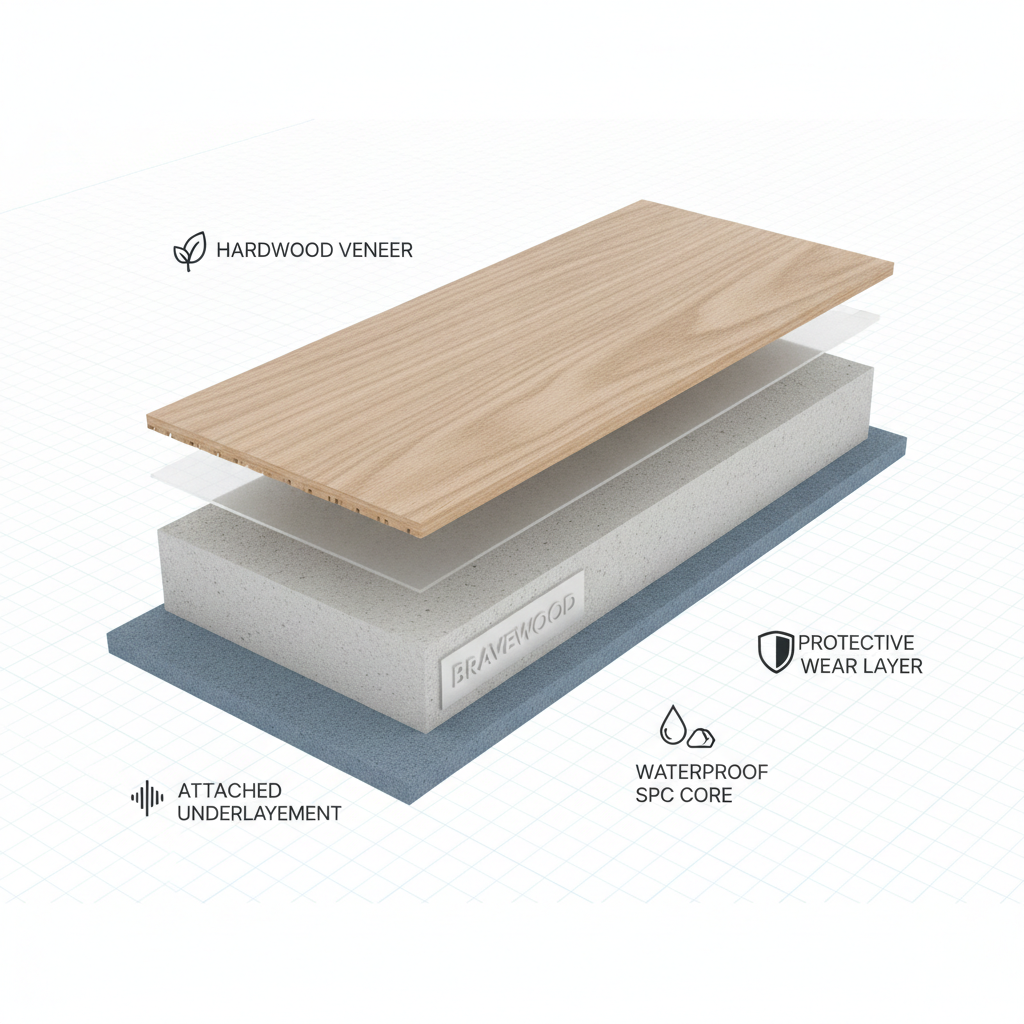
The core question everyone asks is: “Is it real wood?” The answer is yes—and no. The surface you see and walk on is a thin slice of authentic hardwood, typically ranging from 0.6mm to 2mm thick. This veneer provides the unique grain, texture, and beauty that can’t be perfectly replicated by a printed design.
Beneath this veneer lies the game-changing SPC core. With a density often greater than 50 lb/cubic foot, this composite of natural limestone powder and stabilizers provides incredible rigidity and dent resistance. This construction means that while a dropped can might dent a solid oak floor, it’s far less likely to damage a hybrid hardwood plank. This structure gives you the aesthetic of wood with the waterproof peace of mind of vinyl.
Bravewood Review: Is It the Best Choice for Your Pets?
Bravewood is a specific line of waterproof hybrid hardwood that delivers on the category’s promise. It offers the stunning visuals of oak and hickory in a wide range of colors and styles. For pet owners, it presents a compelling blend of benefits and considerations.
Pros for Pet Owners:
- 100% Waterproof Core: The SPC core provides ultimate protection against pet accidents, spilled water bowls, and muddy paws. Moisture will not damage the plank or cause it to swell.
- High Dent Resistance: The dense core makes it an excellent choice for homes with large, heavy dogs and active families.
- Authentic Wood Beauty: You get the warmth and unique character of real hardwood that elevates your home’s design.
- Strong Warranty: Bravewood typically comes with a 50-year or lifetime limited residential warranty, signaling the manufacturer’s confidence in its durability.
Cons for Pet Owners:
- Scratch Resistance of Veneer: While the factory finish is very durable, the wood veneer is not as scratch-proof as the surface of a high-quality laminate or porcelain tile. Deep scratches from a large dog are possible.
- No Refinishing: Unlike solid hardwood, damage to the veneer cannot be sanded away. Board replacement is the only option for severe gouges.
- Warranty Exclusions: As with nearly all flooring warranties, damage from pet scratches is typically not covered. It’s crucial to read the fine print.
Bravewood vs. The Competition
| Feature | Bravewood (by AHF) | Leading LVP Brand | Leading Laminate Brand |
|---|---|---|---|
| Surface Material | Real Hardwood Veneer | Vinyl with Wear Layer | Melamine/Aluminum Oxide |
| Core | 100% Waterproof SPC | 100% Waterproof SPC | Water-Resistant HDF |
| Scratch Resistance | Very Good | Excellent (with 20+ mil) | Superior (AC4/AC5) |
| Waterproof? | Yes | Yes | Water-Resistant |
| Refinishable? | No | No | No |
| Price Point | $$$ | $$ | $$ |
Beyond Durability: Prioritizing Your Pet’s Health & Safety
A truly pet-proof floor isn’t just about protecting your investment; it’s also about protecting your pet. One of the most overlooked aspects of flooring is traction. Slippery surfaces can be dangerous for pets, especially for senior dogs, large breeds, or those prone to joint issues.
The American Kennel Club (AKC) warns that a lack of good traction can contribute to injuries and exacerbate conditions like hip dysplasia3. When a dog constantly struggles for grip, it puts unnatural stress on their joints and ligaments.
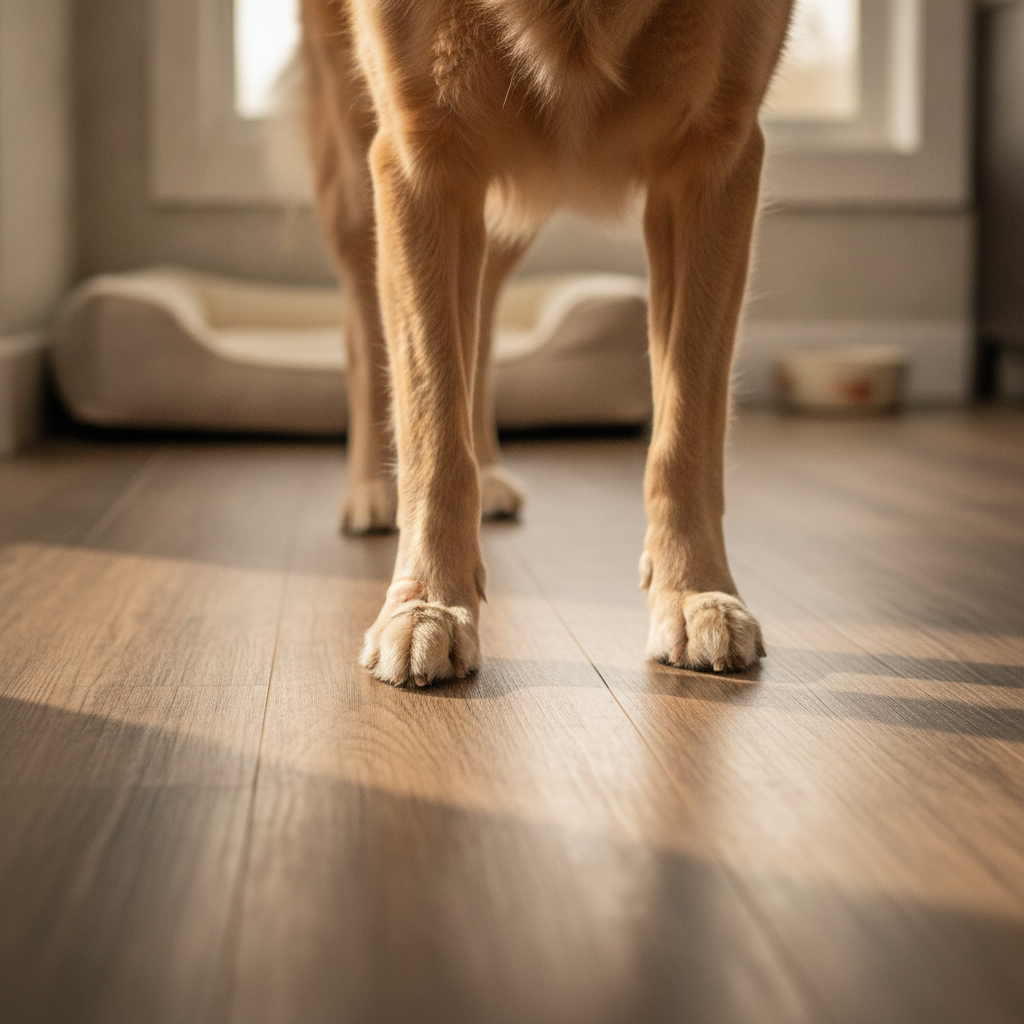
This is where material choice and texture become critical. While tile can be very slippery, many LVP and hybrid hardwood products feature embossed or textured surfaces that mimic the grain of real wood. This texturing provides crucial micro-edges for your pet’s paws to grip, making it easier and safer for them to walk, run, and play without sliding.
Acoustics are another consideration. The loud clicking of nails on a hard surface can be a source of noise pollution in a home. Strategically placing area rugs in high-traffic zones not only quiets the noise but also provides your pet with a soft, high-traction area to rest and play.
Protecting the Floors You Have: An Action Plan for Pet Owners
What if you’re not ready for a full replacement? You can still take decisive action to protect your existing floors, especially traditional hardwood. A proactive approach is the best defense.
The first line of defense begins with your pet. Keeping your dog’s nails properly trimmed is the single most effective thing you can do. Nails should be short enough that they don’t make contact with the floor when the dog is standing still. For most dogs, this requires trimming every one to two weeks.
For the floor itself, a strong finish is key. According to the National Wood Flooring Association (NWFA), a modern polyurethane finish with an aluminum oxide additive provides significantly more abrasion resistance than standard polyurethane alone4. If your floors are due for refinishing, choosing a high-durability, commercial-grade finish can make a world of difference.
Downloadable Checklist: A Floor-Friendly Pet Maintenance Routine
- Weekly: Trim dog’s nails.
- Daily: Wipe paws at the door to remove grit and dirt.
- As Needed: Clean up spills and accidents immediately.
- Placement: Use durable doormats at all entrances.
- Placement: Place area rugs or runners in high-traffic hallways and play areas.
- Placement: Put a waterproof mat under food and water bowls.
First Aid for Floors: A Triage Guide to Repairing Pet Damage
Even with the best preventative measures, damage can occur. When it does, a calm and methodical response can save your floor. This triage guide will help you assess the problem and choose the right course of action.
What NOT to Do:
- Don’t use a steam cleaner on hardwood or laminate. The high heat and moisture can force water deep into the seams and core, causing permanent swelling and delamination.
- Don’t use harsh chemicals like bleach or ammonia-based cleaners. These can strip the floor’s finish and discolor the material.
- Be cautious with hydrogen peroxide for urine stains. While often recommended online, it can lighten or bleach wood, creating a new, equally noticeable spot. Always test in an inconspicuous area first.
For credible advice on floor care and restoration, always trust industry authorities like Bona5 or standards set by the Institute of Inspection, Cleaning and Restoration Certification (IICRC)6.
Step 1: Assessing the Damage (Scratches vs. Stains)
First, determine the severity. Is it a surface scratch or a deep gouge? A surface scratch is usually a whiteish line that has only scuffed the protective finish. A deep gouge has broken through the finish and scraped away the wood or design layer itself.
For stains, time is the enemy. A fresh urine spot that is still wet is a treatable problem. A dark, black stain means the urine has fully penetrated, and the ammonia has reacted with the wood tannins, causing a permanent chemical burn that cannot be cleaned away. Following standards from the NWFA for damage assessment can help you determine the extent of the problem4.
Step 2: DIY Repair for Minor Issues
For light, surface-level scratches on wood or laminate, a simple stain-matching touch-up pen or marker can work wonders. The key is to carefully match not only the color but also the floor’s sheen (e.g., matte, satin, or gloss) for a seamless repair.
For fresh urine accidents, act immediately. Blot up as much liquid as possible with a clean cloth. Then, spray the area liberally with a pet-safe, enzyme-based cleaner. These cleaners contain beneficial bacteria that break down the uric acid crystals, eliminating both the stain and the odor at a molecular level. Do not just wipe it up; let the cleaner sit for the time recommended on the bottle to do its work.
Step 3: When to Call a Professional
Some problems are beyond a DIY fix. It’s time to call a professional if you see:
- Deep Gouges: Scratches that have penetrated the wood or vinyl wear layer require more advanced repair, often board replacement.
- Widespread Staining: If dark urine stains cover a large area, the floor will likely need to be sanded and refinished (if solid wood) or replaced.
- Cupping or Warping: If floorboards are buckling or their edges are raised, it’s a sign of significant moisture damage that may have reached the subfloor.
- Lingering Odors: A persistent urine smell, even after cleaning, indicates the liquid has saturated the subfloor.
According to IICRC-certified restoration specialists, hidden moisture in the subfloor is a serious issue that can lead to mold growth and structural rot6. A professional has the tools to detect this moisture and properly treat or replace the damaged subfloor before new flooring is installed.
Conclusion
The dream of a home that is both pet-friendly and beautifully designed is no longer out of reach. By moving beyond traditional choices and embracing a balanced scorecard of durability, pet safety, and easy maintenance, you can make a truly informed decision. Modern flooring solutions like luxury vinyl, high-grade laminate, and innovative waterproof hybrid hardwoods like Bravewood offer an incredible combination of style and resilience that was unimaginable just a decade ago.
With the knowledge from this playbook, you are now empowered to assess your needs, compare your options like an expert, and choose a floor that will stand up to your furry family members for years to come. You can finally stop worrying about every click of their nails and start enjoying a beautiful, durable, and truly pet-proof home.
Ready to find the perfect pet-proof floor for your home? Explore our full range of waterproof hybrid hardwood options or contact our flooring experts today for a personalized consultation.
References & Authoritative Sources
- Tile Council of North America (TCNA). (N.D.). PEI Rating. Retrieved from TCNA website.
- AHF Flooring. (N.D.). Bravewood Product Information. Retrieved from AHF Flooring or Bruce brand websites.
- American Kennel Club (AKC). (N.D.). Expert Advice on Canine Health and Home Safety. Retrieved from AKC website.
- National Wood Flooring Association (NWFA). (N.D.). Technical Guidelines on Wood Floor Finishes and Maintenance. Retrieved from NWFA website.
- Bona. (N.D.). Hardwood Floor Care Guides. Retrieved from us.bona.com.
- Institute of Inspection, Cleaning and Restoration Certification (IICRC). (N.D.). Standards for Water Damage Restoration. Retrieved from IICRC website.
