
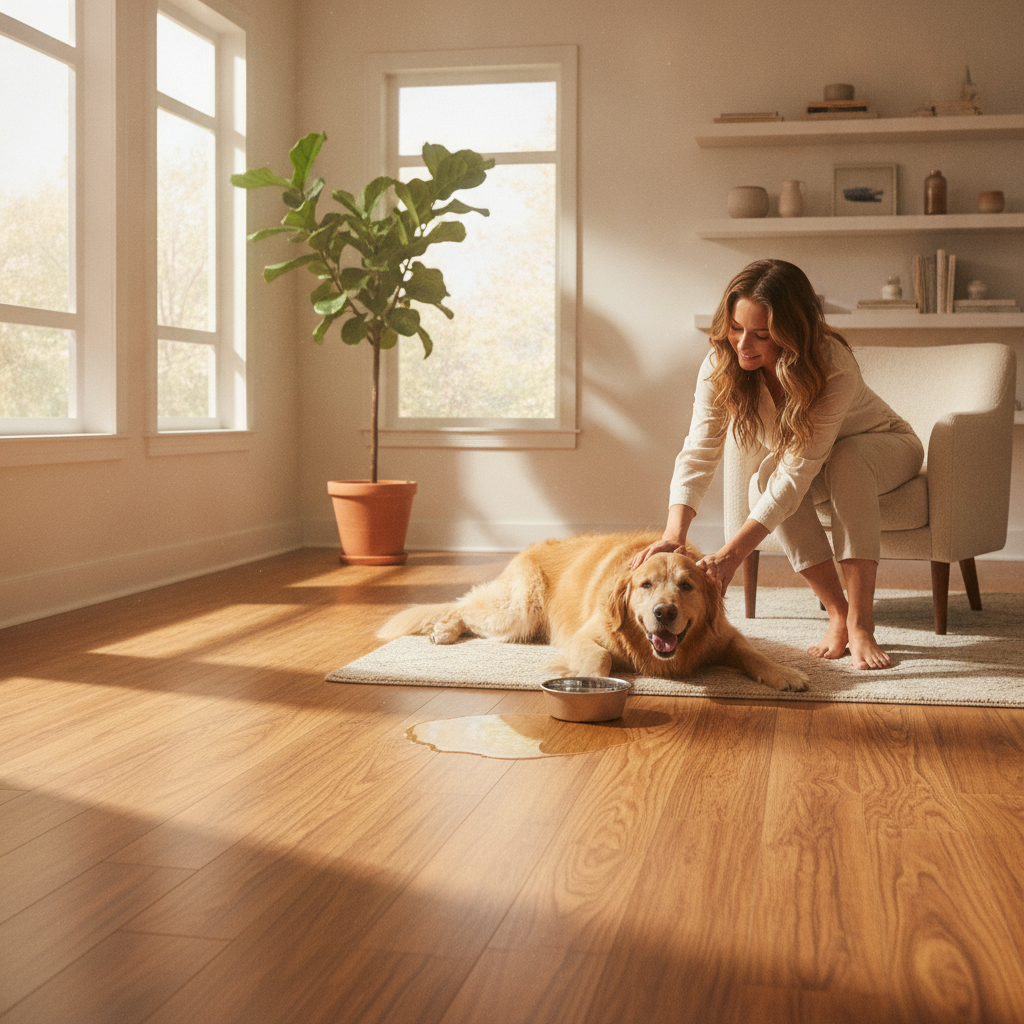
There’s a unique joy that comes with pet ownership—the happy greetings at the door, the cozy cuddles on the couch, the playful antics that fill a house with life. But there’s also a unique anxiety every pet owner knows: the click-clack of claws on a new floor, the heart-stopping moment you discover an accident, and the constant battle against scratches, stains, and spills. For too long, homeowners have felt forced to choose between having beloved pets and having beautiful floors.
This guide is here to end that compromise. This is your comprehensive, evidence-based bible for choosing, protecting, and maintaining floors that can stand up to the toughest four-legged family members. We’ll move beyond simple lists to give you a complete strategy for a worry-free home. We will explore the real damage pets can do, conduct a head-to-head showdown of the best pet-proof materials, take a deep dive into why waterproof hybrid hardwood is a game-changer, and give you actionable plans for protecting and repairing the floors you already have.
- The Core Challenge: How Pets Declare War on Your Floors
- The Definitive Pet-Proof Flooring Showdown: A Head-to-Head Comparison
- Deep Dive: Why Waterproof Hybrid Hardwood Is the Ultimate Solution for Pet Owners
- The Hardwood Preservation Plan: How to Make Existing Floors Pet-Friendly
- Emergency Floor Care: Your Guide to Fixing Pet Damage
- FAQ: Your Pet-Proof Flooring Questions Answered
- Conclusion
- References & Authoritative Sources
The Core Challenge: How Pets Declare War on Your Floors
Before finding the right solution, it’s crucial to understand the problem. The daily life of a pet introduces a unique set of challenges that can quickly degrade even the most robust-seeming floors. Validating these common pain points is the first step toward finding a flooring that lets you live peacefully with your pets.
The Scratch Factor: Claws vs. Finishes
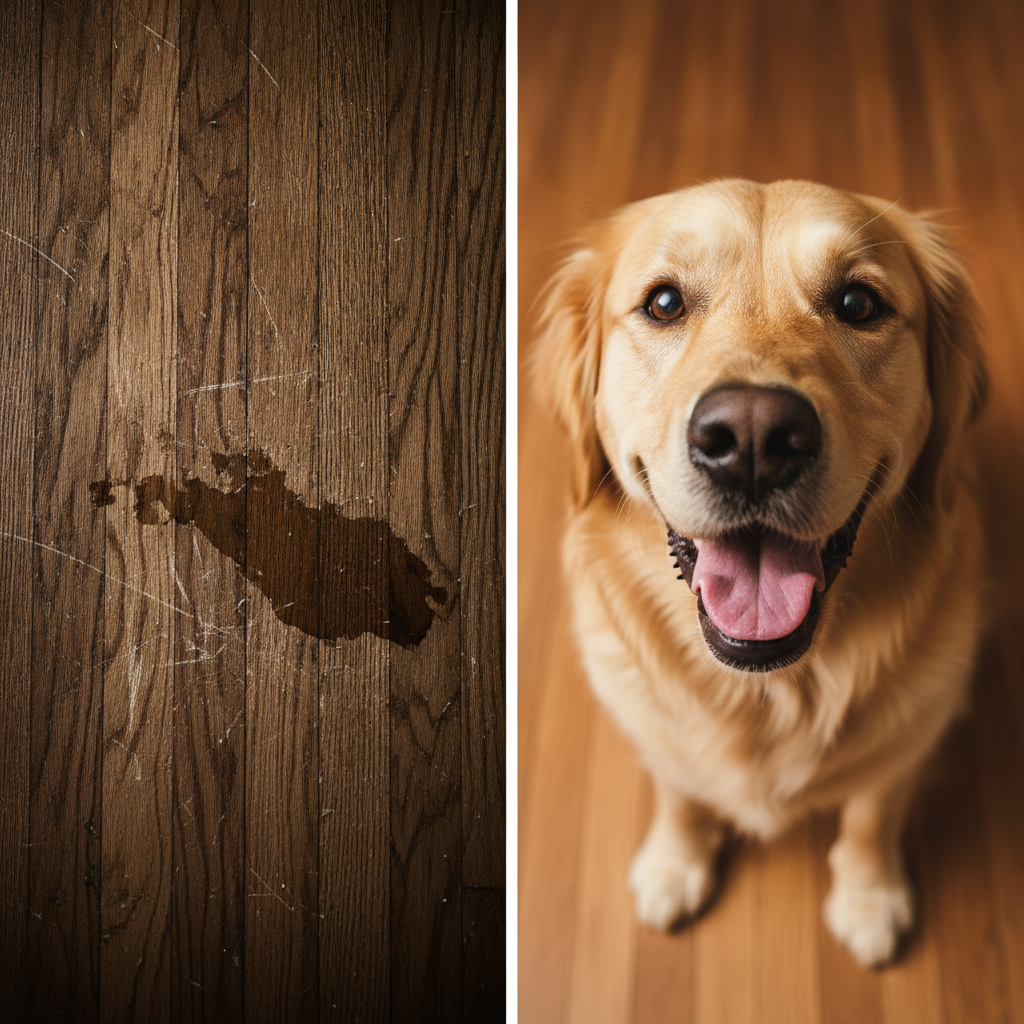
The most visible sign of pet-related wear is scratches. Whether it’s a dog skidding to a halt to chase a toy or a cat stretching its claws, the constant contact can wreak havoc. This damage isn’t just about the pet’s nails; it’s a battle between the claw and the floor’s protective finish.
Traditional hardwood floors, rated on a Janka hardness scale for their resistance to denting, are still vulnerable to surface scratching. The real defense is the floor’s topcoat or wear layer. Many modern flooring options, from laminate to hybrid hardwood, feature advanced wear layers infused with materials like aluminum oxide. This incredibly hard, transparent coating acts as a shield, providing a critical layer of defense against the daily abrasion from pet claws. Without a durable wear layer, even the hardest wood will eventually show a network of scuffs and scratches from pet activity.
The Moisture Menace: Urine, Drool, and Spilled Water Bowls
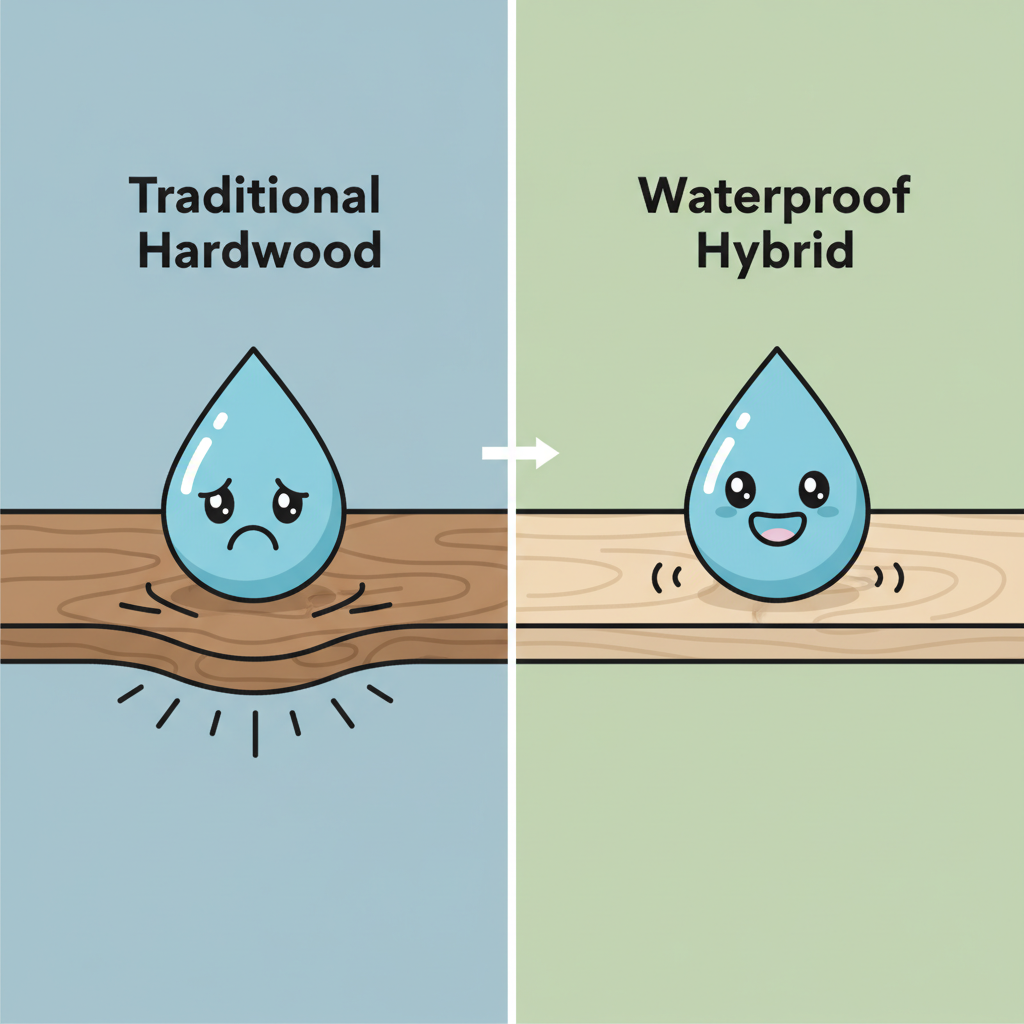
Moisture is the silent enemy of many flooring types. For pet owners, the sources are constant: drool, wet paws, and the ever-present splashes from the water bowl. These minor, daily occurrences can lead to discoloration and even warping over time, especially at the seams between planks.
The most acute threat, however, is pet urine. It’s more than just a liquid; it’s a complex chemical cocktail containing uric acid. According to restoration authorities like the Institute of Inspection, Cleaning and Restoration Certification (IICRC), uric acid crystals can embed deep into porous materials like wood, grout, and even the subfloor[1]. These crystals are not water-soluble, which is why simple mopping often fails to eliminate the persistent odor. If left unaddressed, pet urine can cause deep, dark stains and permanently damage the structure and finish of your floor.
The Definitive Pet-Proof Flooring Showdown: A Head-to-Head Comparison
Choosing a new floor is a major investment, and for pet owners, the stakes are even higher. You need a material that balances beauty, budget, and the ability to withstand the daily chaos of pet life. Here, we break down the top contenders, rating them on the criteria that matter most to you.
To make your decision easier, consult the comparison table below. We’ve rated each flooring type on a scale of 1 to 5 (with 5 being the best) across four key pet-friendly categories.
| Flooring Type | Scratch Resistance | Waterproofing | Traction/Comfort | Ease of Cleaning |
|---|---|---|---|---|
| Waterproof Hybrid Hardwood | 5 | 5 | 4 | 5 |
| Luxury Vinyl Plank (LVP) | 4 | 5 | 4 | 5 |
| Laminate Flooring | 4 | 3 | 3 | 4 |
| Porcelain/Ceramic Tile | 5 | 5 | 2 | 5 |
| Traditional Solid Hardwood | 2 | 1 | 3 | 3 |
Decoding Durability: Key Features to Look For
To truly understand the chart above, you need to speak the language of flooring durability. When shopping, don’t just look at the color and style; look for these technical specifications on the product label.
- Wear Layer Thickness (LVP & Hybrid): This is the top, transparent protective coating, measured in mils (one-thousandth of an inch). For a busy home with pets, look for a wear layer of at least 12 mil, with 20 mil or more being ideal for maximum protection against scratches and scuffs.
- AC Rating (Laminate): The Abrasion Class or AC rating measures a laminate floor’s durability, from AC1 (light residential use) to AC5 (heavy commercial use). Pet owners should look for flooring with a rating of AC3 or, even better, AC4 to ensure the surface can withstand claws and heavy traffic.
The Champion: Waterproof Hybrid Hardwood (e.g., Bravewood)
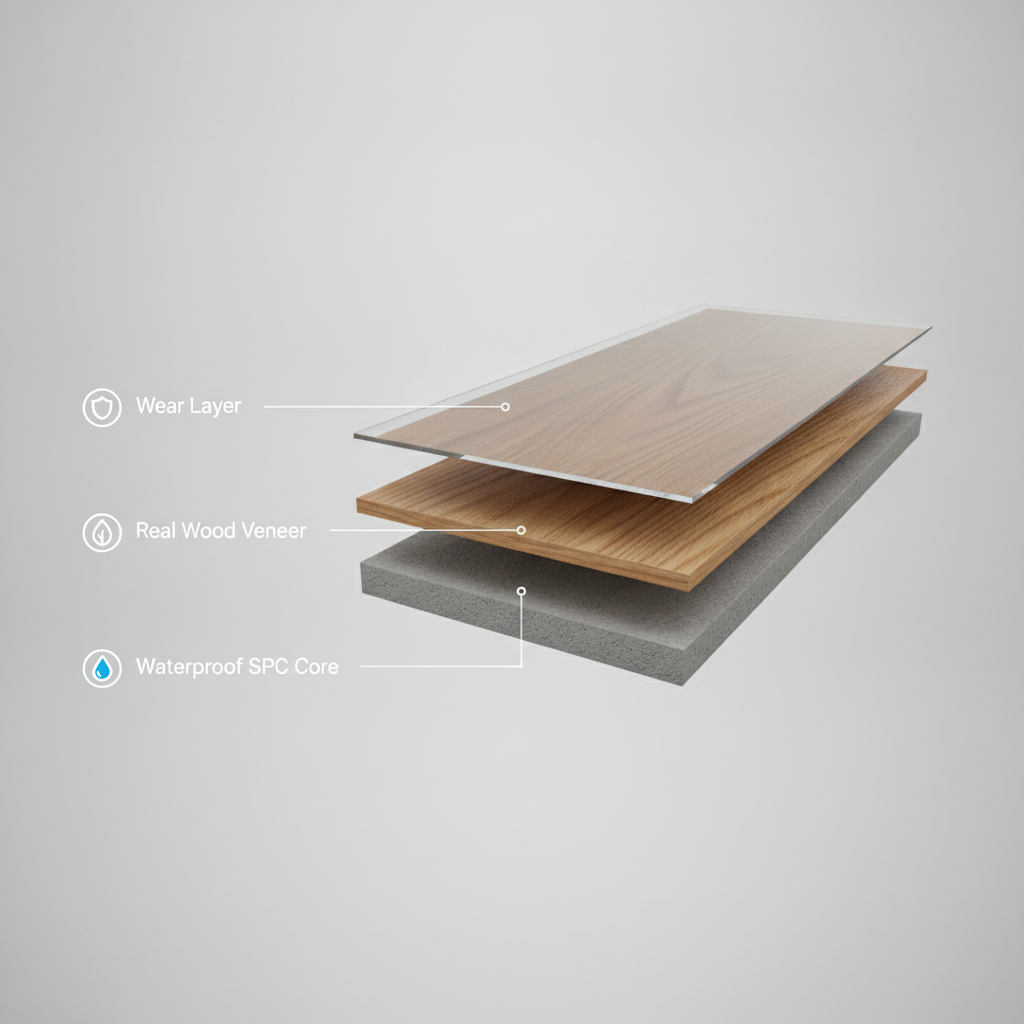
Waterproof hybrid hardwood emerges as the champion for pet owners who want it all. This innovative category combines the best features of other flooring types into one ultimate solution. Imagine a cross-section of a hybrid plank: at the top, a slice of authentic, real hardwood veneer brings unmatched beauty and character. This is protected by a commercial-grade wear layer. The magic is in the middle: a rigid core made from a Stone Polymer Composite (SPC), which is 100% waterproof and extremely dent-resistant. Finally, an attached underlayment provides sound insulation and comfort underfoot. This multi-layer construction, detailed in manufacturer technical specification sheets, creates a floor that is as beautiful as real hardwood and as durable as luxury vinyl.
Other Top Contenders: LVP, Laminate, and Tile
While hybrid hardwood takes the top spot, other materials offer excellent performance for pet-friendly homes.
- Luxury Vinyl Plank (LVP): A close second, LVP is also built with a waterproof core and a tough wear layer. It offers hyper-realistic wood and stone looks at a slightly lower price point than hybrid hardwood. Its primary drawback is that the “wood” is a printed image, not authentic veneer.
- Laminate Flooring: Modern laminate is a good, budget-friendly option. Its high-density fiberboard core and tough top layer offer good scratch resistance (check for that AC4 rating). However, most laminates are only “water-resistant,” not fully waterproof, making them vulnerable to pet accidents that aren’t cleaned up immediately.
- Porcelain & Ceramic Tile: For pure scratch-proof and waterproof performance, nothing beats tile. It is virtually indestructible. However, it has significant downsides for pets. The hard, cold surface can be uncomfortable and tough on joints. Furthermore, as organizations like the American Kennel Club (AKC) often note, the slick surface of many tiles provides poor traction, which can be dangerous for senior dogs or those with mobility issues like hip dysplasia[2]. The grout lines can also be difficult to keep clean and can absorb stains and odors. Finally, the clicking of claws on tile can be quite loud, an acoustic issue not present with quieter options like LVP or hybrid floors.
Deep Dive: Why Waterproof Hybrid Hardwood Is the Ultimate Solution for Pet Owners
Let’s look closer at why waterproof hybrid hardwood stands out as the smartest choice for a home with pets. It directly solves the core conflicts pet owners face, delivering a floor that is beautiful, resilient, and worry-free.
The ‘Best of Both Worlds’: Real Wood Beauty, Indestructible Core
For years, pet owners who loved the timeless look of hardwood had to accept the inevitable scratches and water spots as “character.” Hybrid flooring eliminates this compromise. You get the authentic grain, texture, and warmth of a real wood veneer—because it is real wood. But this beauty is fused to a technologically advanced core that provides the indestructible properties of a synthetic floor. You no longer have to sacrifice aesthetics for durability.
100% Waterproof Construction: The End of Worrying About Accidents
This is the feature that brings true peace of mind. The Stone Polymer Composite (SPC) core of hybrid hardwood is completely impervious to water. Spilled water bowls, muddy paw prints, and even pet accidents that go unnoticed for hours cannot penetrate the core or cause the planks to swell, buckle, or warp. Water will simply sit on the surface until it’s wiped away. This 100% waterproof construction, from top to bottom, means you can confidently install it in any room of the house, knowing it’s protected against any moisture your pets can throw at it.
Superior Scratch Resistance for Active Paws
Life with pets is a life in motion. Hybrid hardwood is engineered for it. The real wood veneer is shielded by a thick, commercial-grade wear layer fortified with aluminum oxide. This technology, often backed by extensive manufacturer abrasion tests, creates a surface that is exceptionally resistant to the scuffs, scratches, and gouges that active pets can inflict. Your floors will look newer for longer, even with daily “zoomies” and playtime.
The Hardwood Preservation Plan: How to Make Existing Floors Pet-Friendly
What if you love your current hardwood floors and aren’t ready for a replacement? Don’t despair. With a proactive approach, you can significantly improve their resilience. Follow this preservation plan to arm your existing wood floors against pet-related damage.
Choose Your Armor: The Best Floor Finishes for Pets
The finish is your floor’s first line of defense. According to the National Wood Flooring Association (NWFA), the finish, not the wood species, provides the primary resistance to everyday wear and tear[3]. If you’re refinishing, choose wisely.
- Oil-Based Polyurethane: This is the traditional workhorse. It’s extremely durable, scratch-resistant, and provides a thick, protective layer. It’s an excellent choice for homes with large, active dogs.
- Water-Based Polyurethane: Modern water-based finishes with added hardeners can rival the durability of oil-based options. They dry faster, have lower VOCs, and don’t yellow over time.
- Hardwax Oils: These finishes penetrate the wood rather than forming a film on top. While they don’t offer the same level of scratch protection as polyurethane, they are incredibly easy to spot-repair, which can be a major advantage for pet owners dealing with isolated scratches.
Strategic Defenses: Rugs, Runners, and Feeding Stations
Think of your home in terms of zones. Place durable area rugs and runners in high-traffic “racetracks,” like hallways and entryways. This not only protects the floor but also provides better traction for your pet.
For the feeding area, create a dedicated station. Place a waterproof mat under your pet’s food and water bowls. Look for mats made of silicone, which are non-reactive and won’t trap moisture or discolor your floor’s finish like some rubber or plastic mats can. A raised bowl stand can also help minimize splashes for messy drinkers.
Emergency Floor Care: Your Guide to Fixing Pet Damage
Even with the best floors and preventative measures, damage can happen. Knowing how to respond quickly and correctly can save you from costly professional repairs.
When to Call a Pro
While many issues can be fixed with DIY methods, some damage requires professional help. Call a certified flooring professional if you see:
- Deep gouges that go through the finish and into the raw wood.
- Widespread water damage causing planks to cup, crown, or buckle.
- Pet stains that have turned the wood black, indicating deep saturation and wood rot.
- Lingering odors after multiple cleaning attempts, which could mean the subfloor is affected.
Attempting to fix these major issues yourself can often lead to more extensive and expensive damage.
Repairing Dog Scratches: From Surface Scuffs to Deep Gouges
The key is to match the repair method to the severity of the scratch.
- For Light Surface Scuffs (in the finish only): Often, these can be buffed out. Start by cleaning the area with a hardwood-safe cleaner. Then, try rubbing a walnut or pecan over the scratch; the oils from the nut can often hide minor scuffs. Alternatively, use a specialized floor polish or wax that can fill in light scratches.
- For Medium Scratches (through the finish, but not deep into the wood): Use a stain-filled marker or a wax repair stick that matches your floor’s color. These products, available from brands like Minwax or Varathane, can effectively camouflage the scratch by coloring in the exposed wood.
- For Deep Gouges (into the wood itself): This requires filling. Use a stainable wood filler that matches your wood species. Carefully apply the filler, let it dry completely, and then sand it smooth. You will then need to carefully apply a matching stain and topcoat of finish to the repaired area.
The Science of Stain Removal: Eliminating Pet Urine Stains & Odors
To defeat pet urine stains, you must neutralize the uric acid. This is where science comes in.
Ammonia-based cleaners should be avoided, as they can chemically mimic pet urine and attract your pet back to the same spot. Bleach and other harsh chemicals can permanently damage your floor’s finish.
The only effective solution is an enzymatic cleaner. As product experts from brands like Nature’s Miracle explain, these cleaners contain beneficial bacteria and enzymes that specifically target and break down the uric acid crystals at a molecular level, completely eliminating both the stain and the odor.
How to Use an Enzymatic Cleaner:
- Blot up as much fresh urine as possible with a clean cloth.
- Saturate the entire affected area with the enzymatic cleaner, ensuring it covers an area larger than the visible stain to catch any splash.
- Allow the cleaner to sit and air dry completely. This can take 24-48 hours. The enzymes need this time to work. Do not try to speed up the drying process.
- For finding old, hidden stains, use a UV blacklight in a dark room. Urine stains will glow, allowing you to treat every spot.
FAQ: Your Pet-Proof Flooring Questions Answered
Here are answers to some of the most common questions pet owners have when choosing a floor.
What is the most durable flooring for large, active dogs?
For sheer scratch-proof durability, porcelain tile is unmatched. However, as noted in our comparison matrix, it can be hard, slick, and uncomfortable. The best all-around choice for durability, comfort, and aesthetics for a large dog is a high-quality waterproof hybrid hardwood with a thick (20 mil+) wear layer.
Can you refinish waterproof hybrid hardwood flooring?
Generally, no. Because hybrid hardwood has a thin veneer of real wood over a composite core, it cannot be sanded down and refinished like traditional solid hardwood. This is an important trade-off for its waterproof and durable properties. Minor scratches can be concealed, but deep damage may require a plank replacement.
What’s the best non-slip flooring for older dogs?
Traction is critical for senior pets to prevent slips and protect their joint health, a point often emphasized by veterinary and animal welfare groups like the AKC[2]. The best choices are floors with a textured or embossed surface that mimics natural wood grain. Many waterproof hybrid hardwood and LVP options offer excellent texture. Avoid smooth, high-gloss finishes on any material, especially tile.
Is hybrid hardwood flooring non-toxic for pets?
This is a valid concern for pet owners. Reputable manufacturers submit their products for third-party testing to ensure they are safe for indoor air quality. Look for products with a FloorScore® certification. This certification means the flooring has been independently tested and meets strict standards for low emissions of Volatile Organic Compounds (VOCs), making it a safer choice for your entire family, including your pets.
Conclusion
Living with pets doesn’t have to mean living with constant worry about your floors. By understanding the challenges they pose and the incredible innovations in modern flooring, you can have a home that is both beautiful and built for real life. While options like LVP and tile have their place, waterproof hybrid hardwood stands out as the premier solution, offering the perfect synthesis of authentic wood beauty, superior scratch resistance, and 100% waterproof peace of mind.
With the right knowledge, you can confidently choose a floor that will stand the test of time or take the necessary steps to protect the floors you already own. The war between pets and floors is over, and with the right strategy, you can declare a beautiful, durable victory.
Ready to end the war with your floors? Explore the Bravewood collection of waterproof hybrid hardwood and find the perfect, pet-proof style for your home.
This article provides informational guidance on flooring choices. Product performance can vary based on specific conditions and pet behavior. Consult with a flooring professional for personalized advice.
References & Authoritative Sources
- Institute of Inspection, Cleaning and Restoration Certification (IICRC). (N.D.). IICRC Standards for Professional Water Damage Restoration. Retrieved from the official IICRC website.
- American Kennel Club (AKC). (N.D.). Expert advice on canine health, including joint health and safe environments for dogs. Retrieved from the official AKC website.
- National Wood Flooring Association (NWFA). (N.D.). Consumer guides on hardwood floor maintenance and finishing. Retrieved from the official NWFA website.
