
Few interior design decisions evoke as much anxiety as selecting the perfect flooring. It is the foundational canvas of your home, and the fear of making a costly, irreversible mistake is incredibly common. Will the color clash with your existing cabinets? Will a trendy finish look dated in five years? Will beautiful, natural planks survive the chaotic reality of pets, spills, and active family life?
For many homeowners, the result is a paralyzing compromise between aesthetic desires and practical necessities. But what if you didn’t have to compromise?
Welcome to the definitive, no-compromise flooring masterclass. In this comprehensive guide, we will bridge the gap between expert interior design principles—demystifying color theory, undertones, and the dreaded visual chaos of clashing woods—and life-proof technology. We will navigate the complexities of choosing tones, fixing existing mismatches, and ultimately introduce you to the pinnacle of modern flooring solutions: versatile hybrid hardwood floors like the innovative Bravewood collection.
- The Art and Science of Wood Floor Tones
- Matching Wood Floors to Your Interior Style
- Solving the Clash: Fixing Mismatched Wood Flooring Tones
- The True Cost of Choosing the Wrong Wood Flooring
- The Hybrid Hardwood Revolution: A No-Compromise Solution
- Bravewood Hybrid Hardwood: High-End Design Meets Life-Proof Durability
- Conclusion
- References & Authoritative Sources
The Art and Science of Wood Floor Tones
The foundational aesthetic of any room is dictated by its flooring. Wood floor tones—broadly categorized into light, medium, and dark—do much more than just look pretty; they actively manipulate the perceived size, warmth, and cleanliness of a space. Light and blonde tones (like ash or natural maple) reflect light, making smaller rooms feel expansive and airy while effortlessly hiding daily dust and minor scratches. Conversely, dark tones (like espresso or walnut) ground a room with dramatic elegance, though they require more frequent sweeping to keep dust at bay. Medium tones offer a versatile, neutral backdrop that easily adapts to evolving decor.
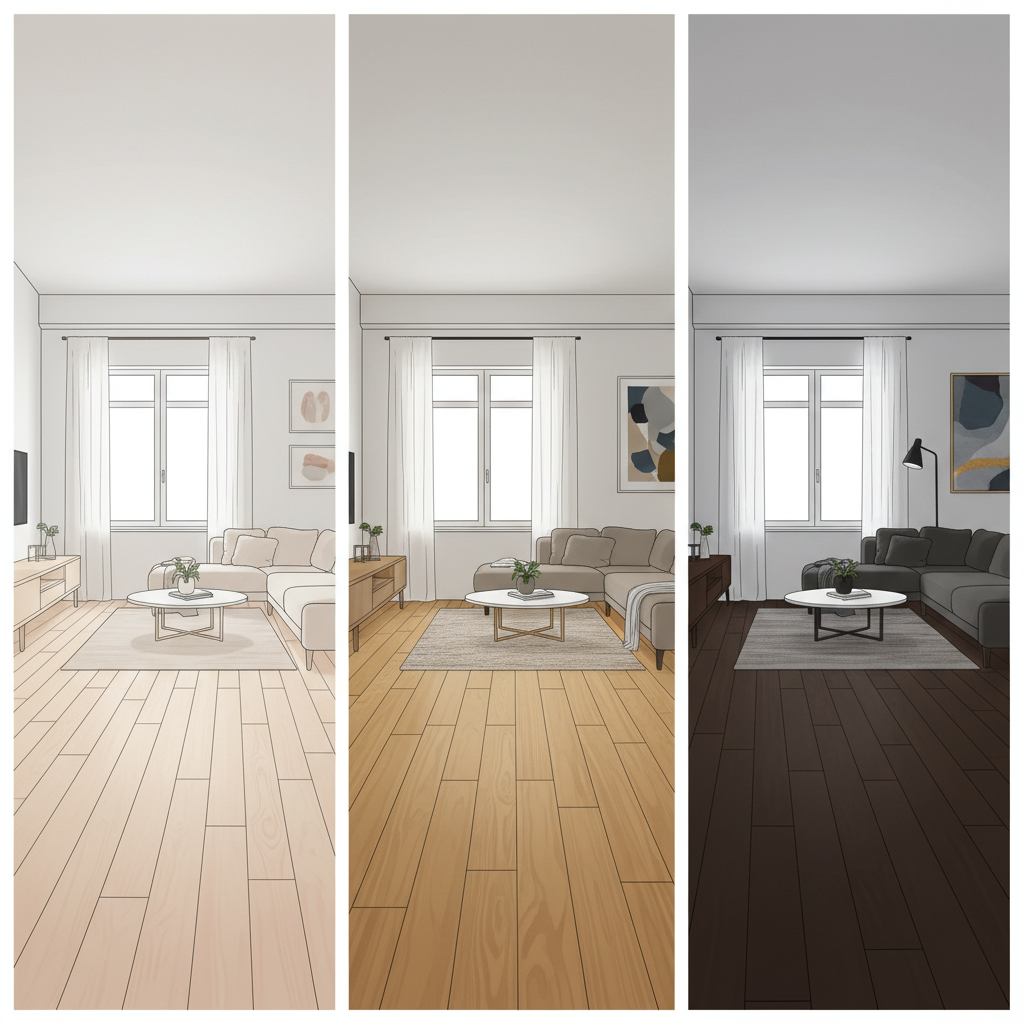
Understanding how to choose wood flooring tones requires looking at both industry data and the science of the materials themselves. According to data from the National Wood Flooring Association (NWFA), wood flooring remains the third-most popular flooring option overall, proudly featured in over 50% of US homes [1]. However, not all wood ages the same way. When evaluating tones, it is crucial to consider the technical interaction of UV rays with different wood stains. While it might seem counterintuitive, darker-colored hardwoods actually fade less over time from UV light exposure compared to light-colored hardwoods, which can amber or bleach depending on the species and finish [2].
Current Hardwood Floor Styles and Trends
As we move through 2026, hardwood floor styles have distinctly evolved. The high-gloss, narrow strips of the early 2000s have been entirely replaced by a demand for organic authenticity. Current trends lean heavily toward matte and low-sheen finishes, which not only look more natural but also hide footprints and micro-scratches far better than glossy alternatives.
Furthermore, wide planks are reigning supreme. Industry experts at Elmwood Reclaimed Timber and major retailers like Floor & Decor note a massive shift toward engineered hardwood—particularly in high-end entryways and kitchens—due to its superior structural stability and moisture resistance compared to traditional solid wood [3]. When shopping, you will encounter precise industry grading terms that dictate the floor’s character: Select or Prime grades offer a clean, uniform look with minimal knots, ideal for modern minimalism, while Character or Rustic grades feature prominent knots and color variations, perfect for farmhouse or industrial aesthetics.
How Lighting Transforms Your Wood Floors
One of the most critical steps in learning how to choose wood flooring tones is understanding the profound impact of lighting. A sample that looks perfectly warm in a brightly lit showroom can look muddy and gray in a dim hallway.
To avoid surprises, you must conduct a “Lighting and Lifestyle Assessment.” Natural sunlight changes throughout the day, casting cool, bluish light in the morning and warm, golden hues in the late afternoon. Artificial lighting plays an equally massive role; a 3000K LED bulb will pull out the warm yellows and reds in a wood plank, while a 5000K “daylight” bulb will highlight cool grays and wash out warmer tones. Experts at Floor Coverings International strongly advise homeowners to properly test physical wood samples in their actual space, observing them in different corners of the room and under various lighting conditions at multiple times of the day before committing [4].
Matching Wood Floors to Your Interior Style
Matching wood floors to interior style is the secret to a cohesive, professionally designed home. The best hardwood floors for interior design are those that align seamlessly with your home’s architectural era and your personal aesthetic.
For instance, traditional spaces benefit immensely from medium-to-deep tones like red oak or hickory with smooth finishes, which complement heavy drapery and antique furniture. Modern and Scandinavian styles, on the other hand, demand light-toned woods. Design authorities like Havwoods and VANTIA Hardwoods frequently highlight the architectural reasoning behind pairing wide plank European Oak with open-concept transitional spaces: the wide planks reduce visual clutter (fewer seams), and the light tones maximize the airy, unconfined feeling of the architecture [5].
The ‘Rule of Contrast’ and the ‘Rule of 3’
If you are overwhelmed by options, rely on two foolproof frameworks to guide your wood tone matching guide.
First is the ‘Rule of Contrast’. Never try to exactly match your floors to your wood furniture or cabinets unless they are cut from the exact same tree at the exact same time. Instead, aim for contrast. Pair dark floors with light walls and light oak furniture, or light floors with dark, grounding cabinetry. This prevents the room from feeling washed out or overly heavy.
Second is the ‘Rule of 3’. Highly regarded interior design experts, such as Chris Loves Julia and Room & Board, emphasize the principle of ‘repetition to create rhythm’ [6]. To make a space look intentional rather than accidental, use:
- One Dominant Wood: Your flooring.
- One Contrasting Wood: Your primary furniture (e.g., a dining table or kitchen island).
- One Neutral Anchor: A large area rug or crisp white walls to give the eye a place to rest.
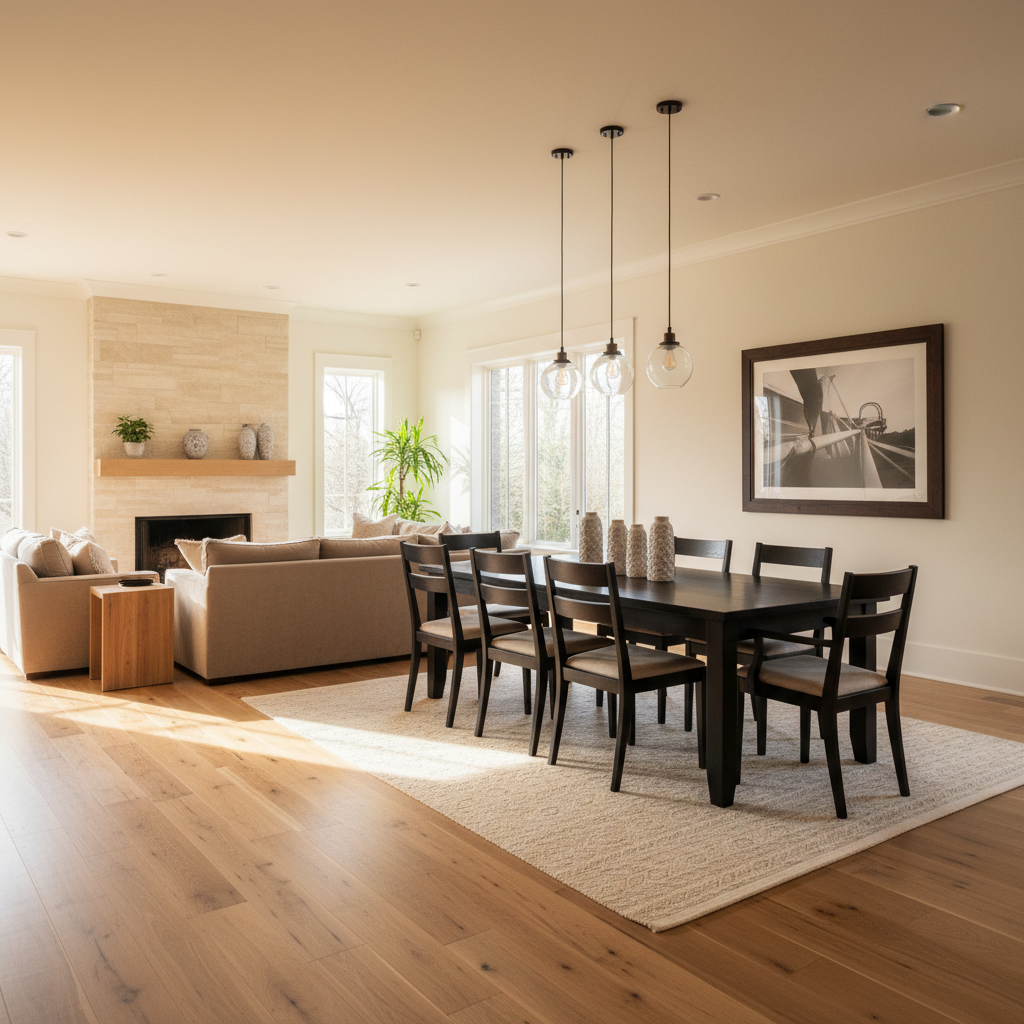
Crucially, ensure a wood tone appears at least twice in a room (e.g., a walnut side table echoing a walnut picture frame) to create visual harmony.
Solving the Clash: Fixing Mismatched Wood Flooring Tones
Perhaps you aren’t starting from scratch. One of the most common design nightmares is dealing with mismatched wood flooring tones—a visual chaos that occurs when different rooms feature clashing woods, or when new cabinets fight with old floors.
The root of hardwood floor color clash almost always comes down to undertones. You cannot successfully mix warm woods (red/yellow/orange undertones) with cool woods (gray/ashy undertones) without a strategic buffer. To fix this without ripping out existing floors, you need a “Wood Undertone Cheat Sheet.” Based on the color theory expertise of Kylie M. Interiors, you must identify the hidden colors in your wood [7]:
- Warm Undertones: Look for flashes of orange, yellow, or red (common in cherry, mahogany, and red oak).
- Cool Undertones: Look for hints of gray, violet, or subtle green (common in weathered oak, ash, and some walnuts).
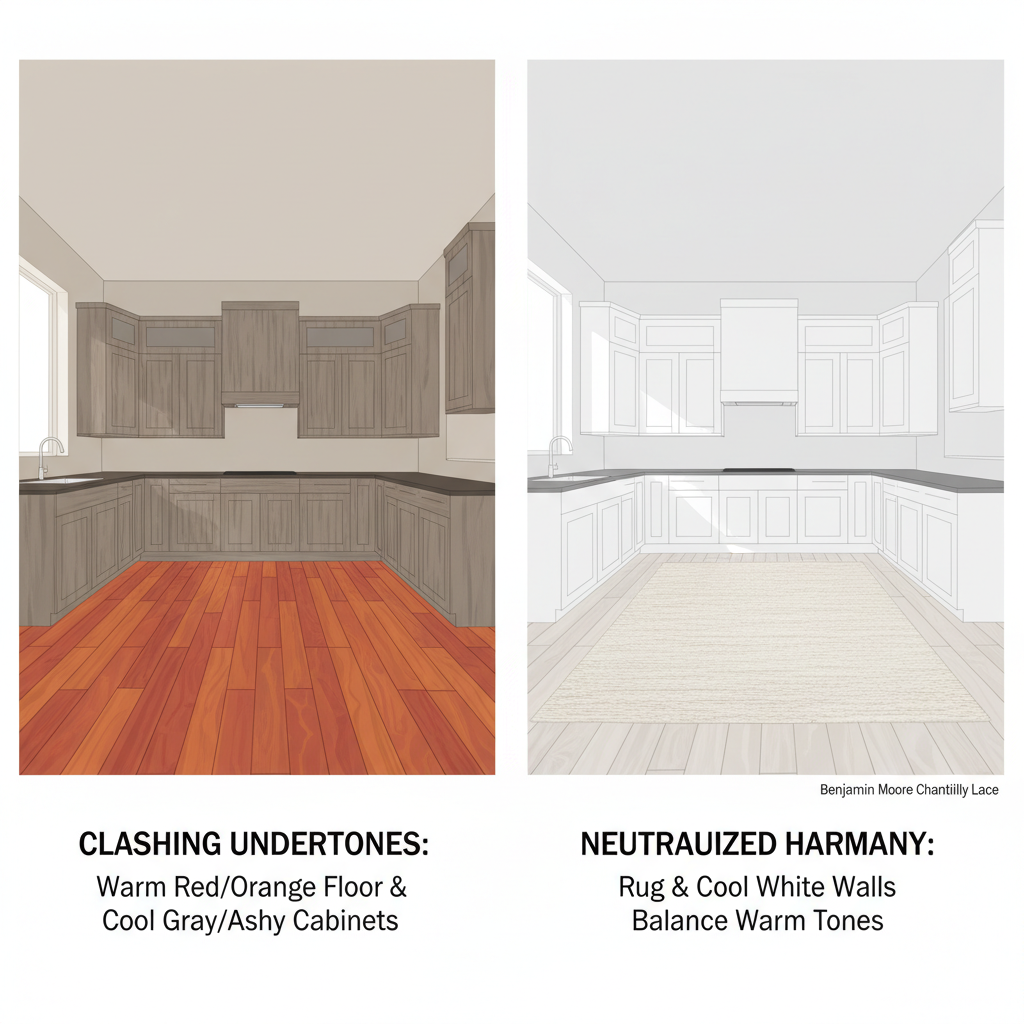
Once identified, group similar undertones together, or use large, neutral area rugs to physically separate clashing floors where they meet at a threshold.
Expert Paint Pairings to Neutralize Color Clash
If your floors and cabinets are locked in a visual battle, paint is your best weapon. By understanding color wheel mechanics, you can use wall colors to either complement or neutralize specific wood species, effectively curing a hardwood floor color clash.
Painting experts at Improovy recommend highly specific, branded paint pairings to solve these issues [8]. For example, if you have heavily red/cherry floors that you want to tone down, avoid yellow-based whites. Instead, use a crisp, slightly cool white like Benjamin Moore’s Chantilly Lace or Sherwin-Williams Superwhite. The subtle coolness in the paint neutralizes the aggressive warmth of the floor. Conversely, if you have cool, gray floors that feel too sterile, warm them up with earthy, warm-toned walls.
The True Cost of Choosing the Wrong Wood Flooring
While aesthetic mistakes are frustrating, choosing wrong wood flooring materials can be financially devastating. It is incredibly easy to be tempted by bargain-bin solid hardwood or ultra-trendy, heavily gray-washed planks that will look dated before the decade is out.
The true cost of cheap flooring goes far beyond the initial purchase price. Flooring specialists at Wood and Beyond highlight the stark technical differences in durability between cheap solid wood and high-quality engineered or hybrid options [9]. Cheap solid wood is highly susceptible to scratching, denting, and catastrophic warping when exposed to moisture or humidity changes. When you factor in the inevitable need for professional refinishing or premature replacement, investing in high-quality, structurally stable flooring yields a significantly higher long-term ROI.
The Hybrid Hardwood Revolution: A No-Compromise Solution
For active households torn between the authentic beauty of solid wood and the waterproof practicality of Luxury Vinyl Tile (LVT), the industry has developed a revolutionary answer: versatile hybrid hardwood floors.
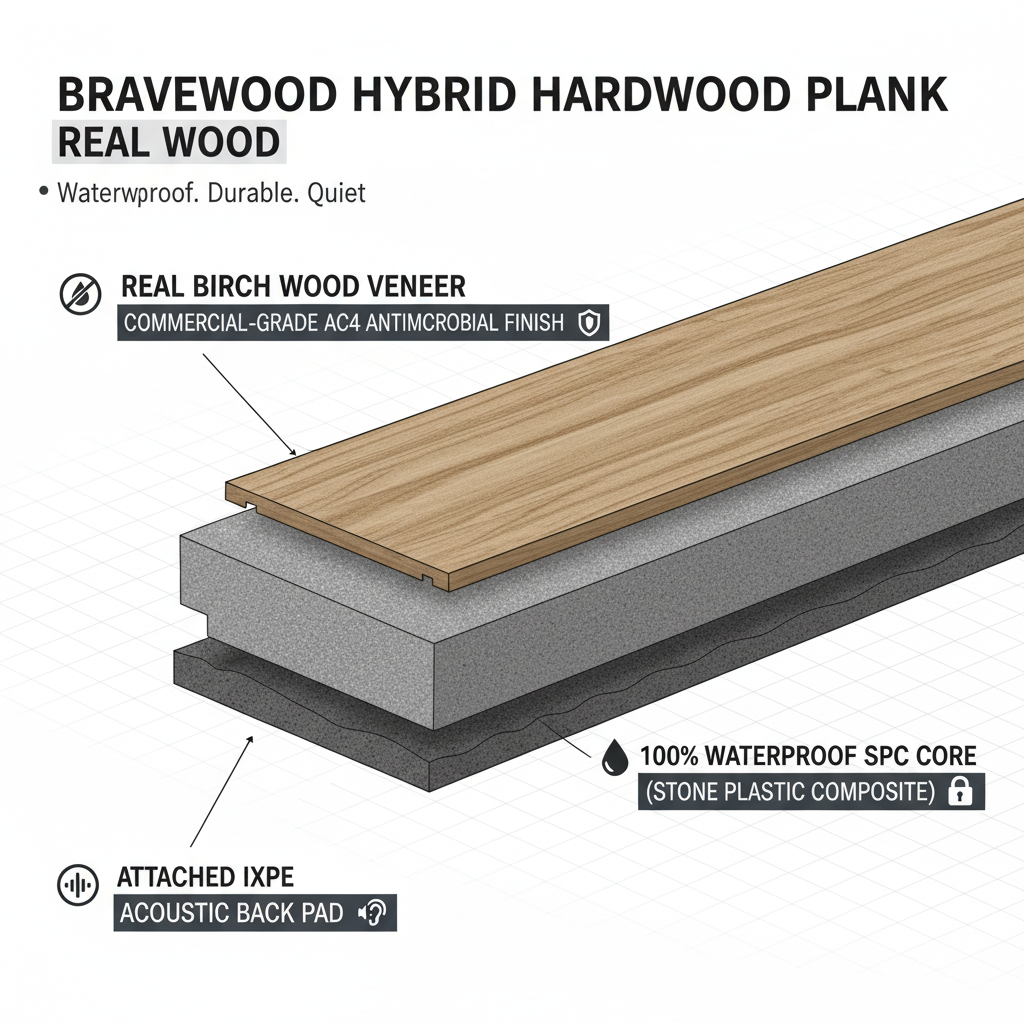
Hybrid hardwood is exactly what it sounds like—the ultimate “best of both worlds” solution. According to technical breakdowns by Floor Covering News, the anatomy of a hybrid plank is a marvel of modern engineering [10]. It typically consists of a rigid, 100% waterproof Stone Plastic Composite (SPC) or High-Density Fiberboard (HDF) core, an attached IXPE acoustic back pad for sound dampening and comfort, and—crucially—a top layer of real wood veneer. This means you get the unrepeatable, authentic grain of natural wood, backed by a core that will not swell, warp, or buckle when exposed to spills, pet accidents, or high-moisture environments like kitchens and basements.
Bravewood Hybrid Hardwood: High-End Design Meets Life-Proof Durability
If you are looking for the premier example of this revolutionary category, look no further than Bravewood Hybrid Hardwood. Bravewood represents the pinnacle of flooring design solutions, meticulously engineered to solve every pain point discussed in this guide—from aesthetic versatility to life-proof durability.
Authoritative specifications from TAS Flooring and TAS Contract reveal why Bravewood stands apart [11]. The planks boast a robust 12mm overall thickness, which includes a 1.5mm attached IXPE pad for superior underfoot feel and acoustic performance. The surface features a beautiful 0.6mm real birch wood veneer, protected by a commercial-grade AC4 rated antimicrobial finish. This means it offers extreme dent and scratch resistance while actively inhibiting the growth of bacteria—a massive benefit for homes with children and pets.
Furthermore, Bravewood doesn’t just perform well; it is exceptionally safe for your home’s indoor air quality. The collection proudly holds FloorScore and GreenGuard Gold certifications, and is Carb Phase II compliant, meeting the most rigorous environmental and health standards set by certification bodies like SCS Global Services [12].
10 Versatile Colors for Every Interior Style
Bravewood flooring design solutions are built around aesthetic flexibility. The collection features 10 distinct color options, ensuring there is a perfect match for any interior style, whether you are designing a light-filled Scandinavian retreat or a moody, traditional study.
Every plank is crafted with granular attention to detail, featuring a 4-Sided Micro-Bevel edge profile and generous 7-3/4 inch x 48 inch dimensions. This wide-plank format aligns perfectly with current 2026 design trends, reducing visual seams and making spaces feel larger and more luxurious. Because the performance specs are uniform across all 10 colors, you can make your selection based purely on which tone best complements your home’s undertones and lighting, knowing the life-proof durability is guaranteed.
Conclusion
Mastering wood floor tones is an art form rooted in science. By understanding the subtle power of warm and cool undertones, respecting the transformative nature of lighting, and utilizing design frameworks like the Rule of Contrast, you can eliminate the anxiety of color clash. Furthermore, by recognizing the hidden, long-term costs of cheap materials, you can make an investment that truly elevates your home’s value.
You no longer have to choose between a magazine-worthy aesthetic and a floor that can survive the realities of daily life. Bravewood Hybrid Hardwood offers the ultimate marriage of authentic, high-end design and 100% waterproof, life-proof durability. We highly encourage you to order physical samples of Bravewood to test in your home’s unique lighting, or consult with a certified flooring dealer to find your flawless match.
Color Variation Disclaimer: Wood is a natural material and colors may vary based on monitor settings and home lighting. Always test physical samples in your space before purchasing.
References & Authoritative Sources
- National Wood Flooring Association (NWFA). (N.D.). Wood Flooring Industry Statistics. NWFA Industry Data.
- National Wood Flooring Association (NWFA). (N.D.). Effects of UV Light on Hardwood Stains. NWFA Industry Standards.
- Elmwood Reclaimed Timber / Floor & Decor. (N.D.). Trending Hardwood Styles and Engineered Wood Benefits. Industry Trend Reports.
- Floor Coverings International. (N.D.). Lighting and Wood Floor Samples. Floor Coverings International.
- Havwoods / VANTIA Hardwoods. (N.D.). Architectural Pairings for Wide Plank European Oak. Havwoods Design Guides.
- Chris Loves Julia / Room & Board. (N.D.). The Rule of Repetition in Interior Design. Chris Loves Julia Design Principles.
- Kylie M. Interiors. (N.D.). Wood Undertone Cheat Sheet: Identifying Hidden Colors. Kylie M. Interiors.
- Improovy. (N.D.). Expert Paint Pairings for Hardwood Floors. Improovy Color Matching Guides.
- Wood and Beyond. (N.D.). The True Cost of Cheap Flooring vs. Engineered Options. Wood and Beyond.
- Floor Covering News. (N.D.). The Anatomy of Hybrid Hardwood Planks. Floor Covering News.
- TAS Flooring / TAS Contract. (N.D.). Bravewood Hybrid Hardwood Product Specifications. TAS Flooring.
- SCS Global Services. (N.D.). FloorScore and GreenGuard Gold Certification Standards. SCS Global Services.
