
Investing thousands of dollars in a beautiful new floor is one of the most exciting parts of a renovation. But for many homeowners, that excitement is quickly followed by a wave of anxiety. Will the first dropped glass of juice ruin it? Will the dog’s claws leave a permanent trail of scratches? Can it survive a dishwasher leak or an overflowing bathtub? You want the timeless beauty of hardwood, but you need a floor that can withstand the unpredictable reality of modern life.
This is where the great debate begins: classic, solid hardwood versus the new generation of waterproof hybrid hardwood. The marketing claims can be overwhelming, leaving you to wonder what’s truly durable and what’s just hype.
This guide is your answer. We’re cutting through the brochure jargon to give you a clear, data-driven framework for choosing a truly ‘life-proof’ floor. We’ll put these materials head-to-head, decode the technology behind their durability, conduct our own real-world “torture tests” on a popular hybrid brand, and provide a simple ‘right floor for the right room’ guide. By the end, you won’t just choose a floor; you’ll make a wise investment in your home’s future.
- The Core Dilemma: Hybrid vs. Solid Hardwood Showdown
- Decoding Durability: What ‘Life-Proof’ Flooring Really Means
- Case Study: A Real-World Test of Bravewood Waterproof Hybrid Hardwood
- The ‘Right Floor for the Right Room’ Framework
- Protecting Your Investment: A Guide to Repair and Prevention
- The Final Verdict: Which Floor Is the Right Investment for You?
- Conclusion
- References & Authoritative Sources
The Core Dilemma: Hybrid vs. Solid Hardwood Showdown
To make the right choice, you first need to understand the fundamental differences between these two flooring titans. This isn’t just about looks; it’s about construction, performance, and long-term value.
As a real estate agent we spoke with noted, “Solid hardwood has a classic, premium perception that buyers have valued for decades. However, we’re seeing a major shift. Today’s buyers, especially families, are incredibly practical. They see a beautiful hybrid floor in a kitchen or basement and are often more impressed by its waterproof durability than the traditional appeal of solid wood in those same areas.”
Construction: What Are They Actually Made Of?
The core difference between these two floors lies in their very DNA.
Solid Hardwood is exactly what it sounds like: each plank is milled from a single, solid piece of timber. Whether it’s oak, maple, or hickory, the plank is 100% natural wood from top to bottom. This simple, time-tested construction is what gives solid hardwood its renowned character and feel.
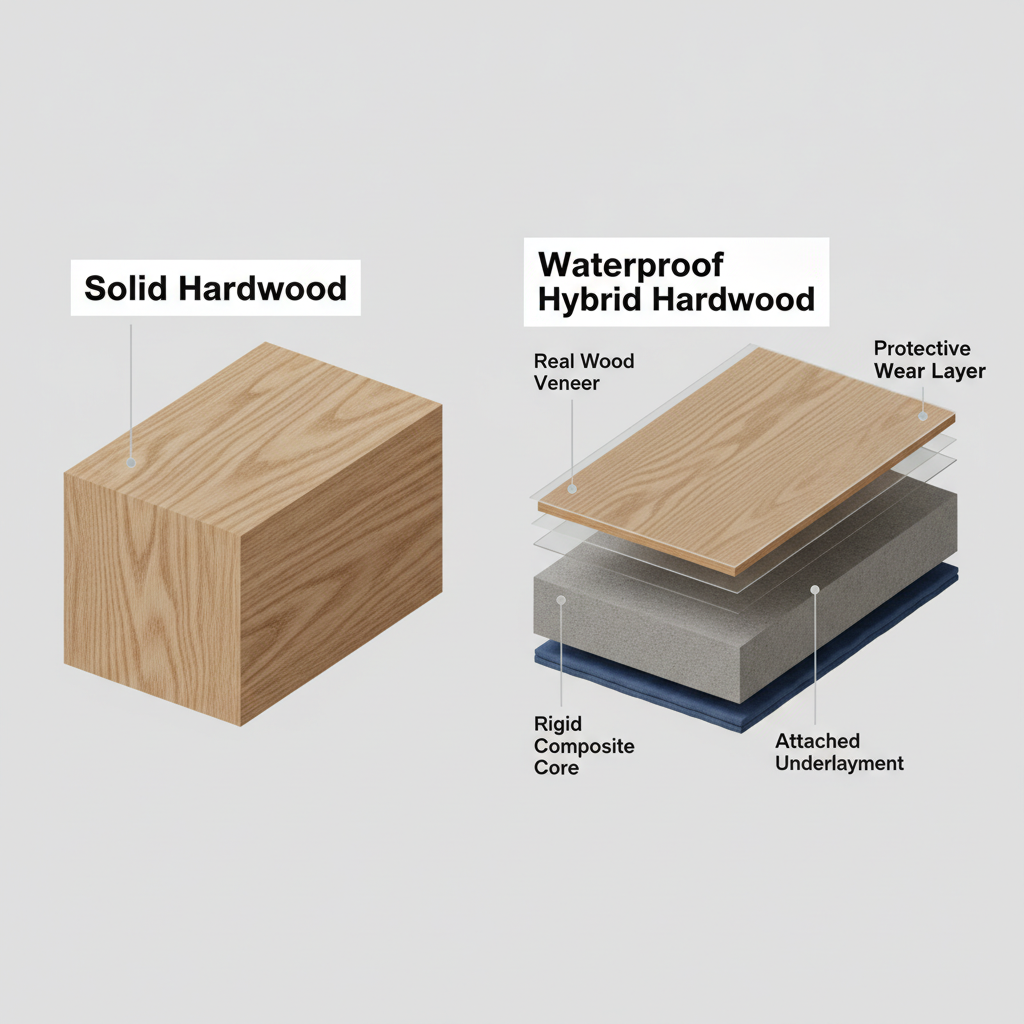
Waterproof Hybrid Hardwood, on the other hand, is a feat of modern engineering. It’s a layered product designed to deliver the best of both worlds. According to the National Wood Flooring Association (NWFA), flooring that combines different materials is categorized as engineered flooring, with waterproof hybrids being the most advanced evolution.[1] A typical hybrid plank consists of:
- A Real Wood Veneer: This is the top layer you see and feel. It’s a thin slice of genuine hardwood (like oak or hickory), which is why it looks so authentic.
- A Rigid Composite Core: This is the secret to its “waterproof” superpower. The core is typically an SPC (Stone Polymer Composite) or WPC (Wood Polymer Composite). This ultra-dense and stable core does not absorb water, swell, or warp like wood does.
- A Protective Wear Layer: Applied on top of the wood veneer, this is a clear, highly durable coating, often infused with aluminum oxide, that protects the wood from scratches, stains, and fading.
- An Attached Underlayment (Optional): Many hybrid products come with a pre-attached cork or foam pad for sound insulation and added comfort underfoot.
Durability & Lifespan: Refinishing vs. Replacing
When it comes to longevity, the conversation shifts from a simple timeline to a question of maintenance philosophy.
Solid hardwood’s greatest durability feature is its ability to be reborn. Over decades of wear, solid hardwood can typically be sanded down and refinished 4-6 times, completely erasing years of scratches and damage to reveal a fresh layer of wood. This gives it a potential lifespan of 100 years or more.
Hybrid hardwood operates on a different principle. Due to its thin wood veneer, most hybrid hardwood cannot be refinished at all. Once the top wear layer is compromised and the veneer is deeply scratched or gouged, the plank must be replaced. However, its day-to-day durability against the most common flooring disasters—water and dents—is vastly superior. Its composite core makes it dimensionally stable, meaning it won’t expand, contract, or warp with changes in humidity. This is why NWFA installation guidelines explicitly prohibit installing solid hardwood in below-grade (basement) applications, while waterproof hybrid flooring is perfectly suited for these high-moisture environments.[1]
Cost Analysis: Upfront Price vs. Long-Term Value
Your budget is a critical factor, and it’s important to look at both the initial price tag and the long-term financial picture.
- Upfront Cost: Generally, waterproof hybrid hardwood and solid hardwood can have overlapping price points, typically ranging from $5 to $12 per square foot for materials. However, on average, waterproof options can cost 20-50% more than comparable non-waterproof engineered hardwood products. Installation for solid hardwood is often more expensive due to the need for nailing, stapling, and potentially on-site finishing. Hybrid flooring, with its click-lock system, is often faster and cheaper to install.
- Long-Term Value: This is where the calculation gets interesting. Solid hardwood has a powerful reputation for boosting a home’s worth. Some studies suggest that solid hardwood is often cited as adding up to a 2.5% increase in home value. The ability to refinish it for a new owner is a significant selling point. Hybrid flooring’s value proposition is tied to risk mitigation. It offers peace of mind against costly water damage repairs, making it an increasingly attractive feature for modern homebuyers.
Decoding Durability: What ‘Life-Proof’ Flooring Really Means
Manufacturers throw around terms like “iron-clad,” “pet-proof,” and “100% waterproof.” But what do these claims actually mean? Understanding the science behind durability empowers you to look past the marketing and evaluate a floor’s true strength. The standards for these tests are often developed by organizations like ASTM International, which ensures that ratings are consistent and meaningful.[3]
Scratch Resistance: The Truth About Hardness vs. Finish
Many people believe a harder wood is automatically more scratch-resistant. While a wood’s Janka Hardness Rating (a measure of its resistance to denting) is important for preventing dents from dropped objects, it’s not the whole story for scratches.
The real hero of scratch prevention is the finish. This is the top wear layer that takes the brunt of daily abuse from pet claws, dragged furniture, and grit under shoes. Most high-quality hybrid and pre-finished solid hardwoods use a factory-applied, UV-cured urethane finish infused with aluminum oxide. This is a ceramic additive that creates an incredibly hard and durable surface.
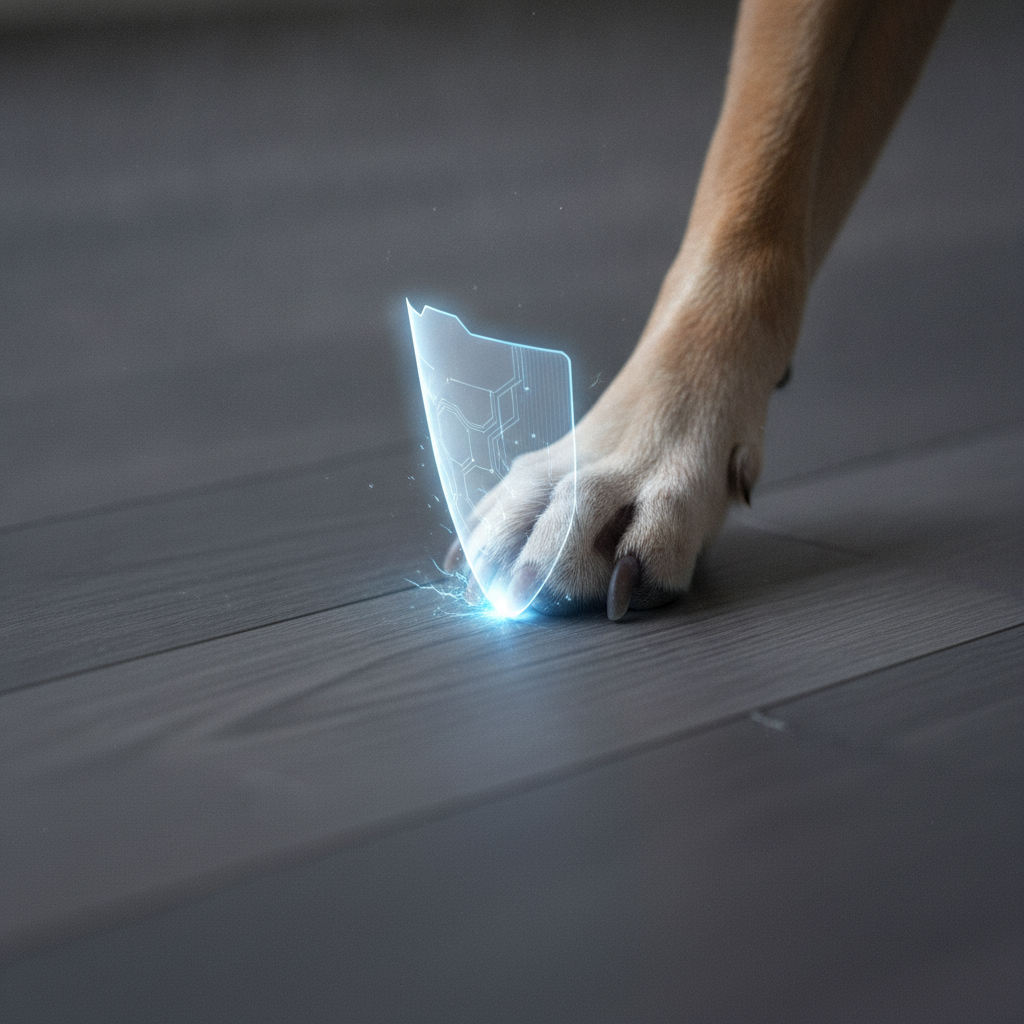
Therefore, a softer wood like oak with a high-quality aluminum oxide finish can often resist surface scratches better than a much harder exotic wood with a simple polyurethane finish. When shopping, always ask about the finish, not just the wood species. Leading manufacturers of floor finishes and care products, like Bona and Minwax, provide extensive data on the performance of these modern coatings.[4]
Water Resistance: From ‘Resistant’ to Truly ‘Waterproof’
This is the single biggest differentiator between the two categories.
- Solid Hardwood is vulnerable to water. As a natural, porous material, wood absorbs moisture. Spills that aren’t wiped up immediately can seep into the seams and the wood itself, causing staining, cupping (edges lift up), crowning (center bulges), and even buckling (planks lift off the subfloor).
- Hybrid Hardwood is designed to be waterproof. The magic lies in its construction. The SPC or WPC core is 100% impervious to water. Tight-locking installation systems create a topical barrier, preventing spills from seeping through to the subfloor. This means a puddle can sit on the surface for hours, or even days, without damaging the core or the subfloor beneath.
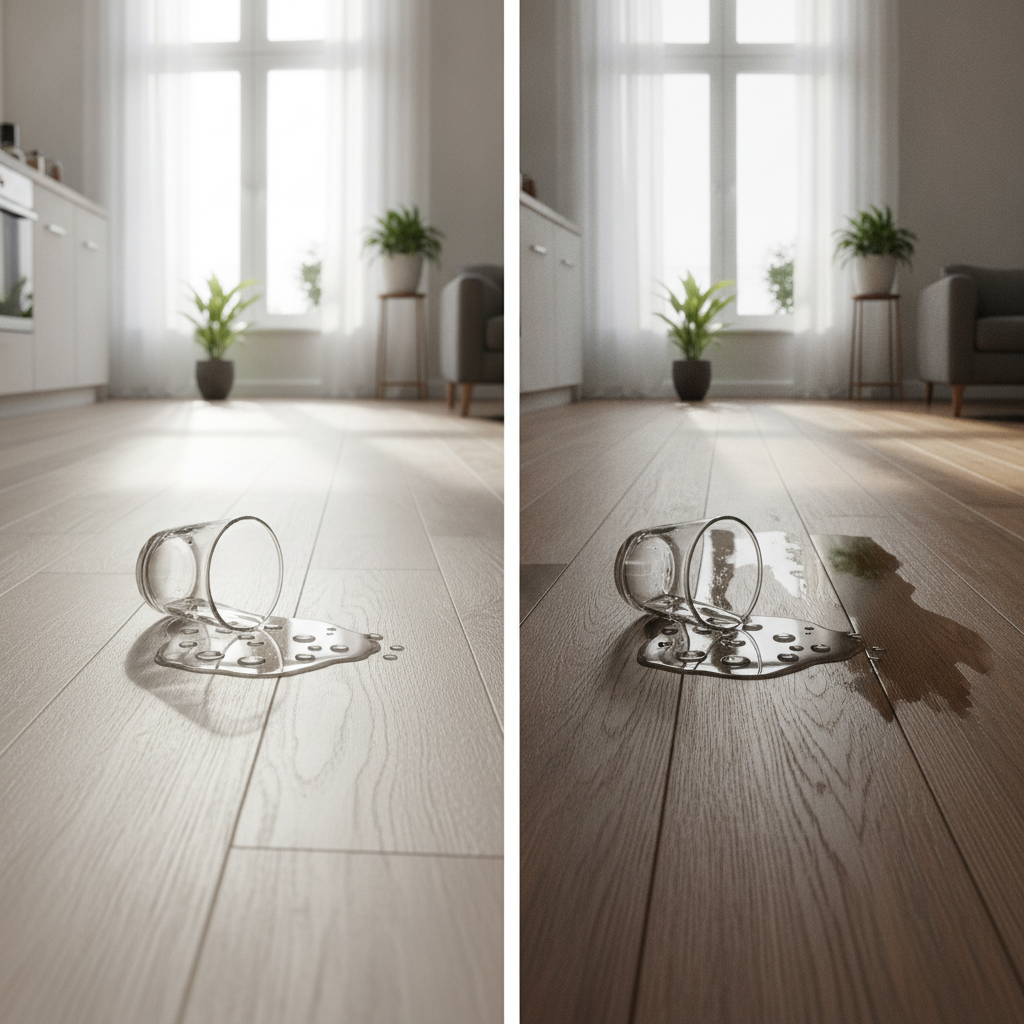
The value of this feature cannot be overstated. According to the Insurance Information Institute, the average cost of a home water damage claim is over $11,000.[2] Investing in a waterproof floor, especially in kitchens, bathrooms, and basements, is a powerful form of financial protection for your home.
It’s crucial, however, to read the warranty fine print. “Waterproof” claims typically cover topical moisture—spills from the top down. They do not usually cover moisture coming from below (hydrostatic pressure in a basement) or flooding events.
Case Study: A Real-World Test of Bravewood Waterproof Hybrid Hardwood
To move beyond spec sheets, we got our hands on a sample of Bravewood, a popular waterproof hybrid hardwood, to conduct our own “Homeowner Torture Test.” We wanted to see how it holds up to the two biggest fears: water and scratches.
We also consulted with a certified flooring installer for his take. “The plank rigidity on products like Bravewood is impressive,” he said. “The SPC core means it doesn’t flex much, which helps hide minor subfloor imperfections. The locking system is tight and well-milled, which is critical for both ease of installation and ensuring a waterproof seal at the seams.”
The Waterproof Claim: The Overnight Puddle Test
The claim is “100% waterproof.” We put it to the test.
Methodology: We took two Bravewood planks, clicked them together, and poured a half-cup of water directly over the seam. We then left it to sit, completely undisturbed, for 24 hours.
Results: After 24 hours, we wiped the water away and inspected the plank. There was absolutely no swelling, discoloration, or damage to the surface. We then un-clicked the planks to examine the core material and the seam. Both were perfectly dry and structurally sound. The locking mechanism had done its job, preventing any water from penetrating to the subfloor.
Conclusion: For topical spills, Bravewood’s waterproof claim holds up. The tight-locking system and SPC core provide excellent protection against everyday household accidents.
The Scratch Resistance Test: Pets, Kids, and Furniture
A floor has to handle more than just water.
Methodology: We subjected the Bravewood sample to a series of common scratch culprits.
- The Key Test: We dragged a house key across the surface with moderate pressure.
- The Chair Leg Test: We scraped the corner of a wooden chair leg across the plank.
- The “Dog Claw” Test: We used the coarse grit of a stone to simulate the abrasive scratching of a large dog’s claws.
Results: The aluminum oxide wear layer performed exceptionally well. The key left no mark whatsoever. The chair leg created a very faint scuff that was only visible in direct light and could be buffed out. The simulated dog claw test, our most aggressive trial, did leave fine surface-level scratches, but they did not penetrate the wear layer into the wood veneer. On a textured finish like hand-scraped or wire-brushed, these minor scratches would be nearly invisible.
The Verdict: Is Bravewood Worth the Premium Price?
Based on our tests and research, here’s our balanced conclusion.
Pros:
- Genuinely Waterproof: Offers legitimate peace of mind against spills and moisture.
- Highly Scratch-Resistant: The durable wear layer holds up well to daily life.
- Authentic Wood Beauty: The real wood veneer provides a look and feel that vinyl plank can’t quite match.
- Dimensionally Stable: Excellent choice for any level of the home, including basements.
Cons:
- Cannot Be Refinished: Deep gouges that penetrate the veneer are permanent.
- Premium Price: It represents a significant investment compared to non-waterproof options or LVT.
- Can Feel Harder Underfoot: The rigid SPC core doesn’t have the same slight give as solid wood.
Final Recommendation: Bravewood and similar premium waterproof hybrid hardwoods are an excellent investment for homeowners who prioritize durability and peace of mind over the ability to refinish. It is best for busy families with pets and kids, and for use in high-moisture areas like kitchens, mudrooms, and basements. It may be overkill for a quiet, second-floor bedroom where the risk of water damage is low.
The ‘Right Floor for the Right Room’ Framework
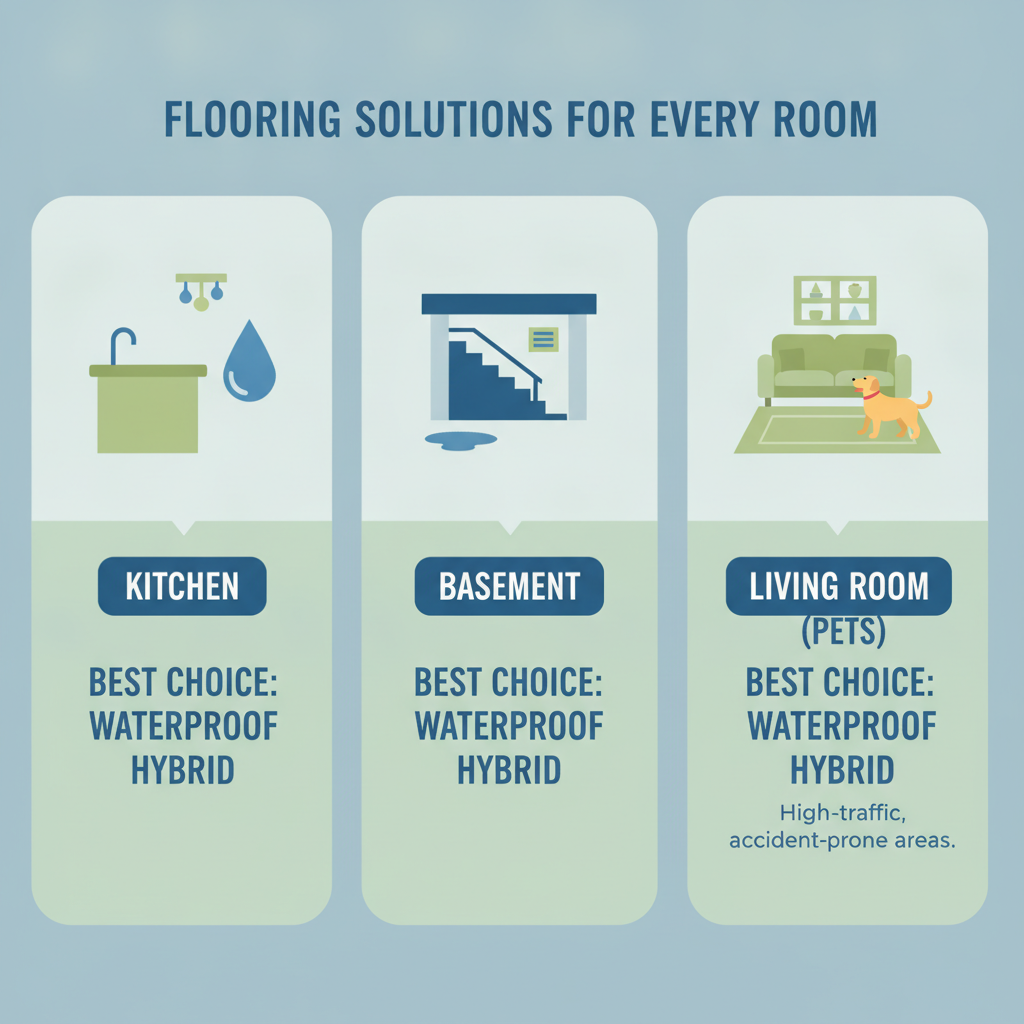
The best flooring choice is not universal; it’s specific to the demands of each room. We consulted with a certified kitchen and bath designer who emphasized, “Function must come first in utility spaces. A floor in a bathroom or kitchen has to be waterproof, slip-resistant, and easy to clean. Aesthetics are important, but they can’t compromise safety and longevity.”
For Kitchens & Bathrooms: The Ultimate Moisture Challenge
These rooms demand floors that are virtually impervious to water.
- Top Contenders: Waterproof Hybrid Hardwood, Luxury Vinyl Tile (LVT), and Porcelain Tile.
- Analysis: Porcelain tile is the king of waterproofing, with a water absorption rate of less than 0.5%.[6] The Tile Council of North America (TCNA) also recommends tile with a DCOF (Dynamic Coefficient of Friction) rating of >0.42 for wet areas to ensure slip resistance.[6] However, tile is hard, cold, and unforgiving to dropped dishes. LVT is 100% waterproof and warmer underfoot. Waterproof hybrid hardwood offers the warmth and beauty of real wood, a feature neither tile nor LVT can provide, making it a fantastic choice for homeowners who don’t want to sacrifice style for function.
For Basements: Conquering Below-Grade Conditions
Basements are subject to potential moisture from the concrete slab and high humidity.
- Top Contenders: Waterproof Hybrid Hardwood, LVT, and Waterproof Laminate.
- Analysis: This is a no-go zone for solid hardwood. The NWFA’s guidelines are clear: the risk of moisture from the subfloor causing cupping and buckling is too high.[1] Dimensionally stable floors with a waterproof core are essential. An IICRC-certified professional we spoke with warned, “Using the wrong materials in a basement is a recipe for mold growth. Any material that can trap moisture against the subfloor creates a significant health risk.”[5] Waterproof hybrid flooring is an excellent choice here, elevating the look of a finished basement to match the rest of the home.
For Homes with Pets & Kids: The High-Traffic Test
This is a battle against scratches, spills, and constant activity.
- Top Contenders: Waterproof Hybrid Hardwood, LVT, and very hard Solid Hardwood with a premium finish.
- A “Good, Better, Best” Framework:
- Good: A hard solid wood like Hickory or Brazilian Walnut (see Janka ratings below) with a high-quality aluminum oxide finish. It will resist dents and scratches but remains vulnerable to water bowl splashes and pet accidents.
- Better: A high-quality waterproof laminate with a top-tier AC rating (AC4 or AC5) for scratch resistance.
- Best: Waterproof Hybrid Hardwood. It combines the scratch resistance of a premium finish, the dent resistance of a rigid core, and complete protection from water and pet stains, making it the ultimate “peace of mind” floor for pet owners.
- An Important Note on Pet Health: Traction is crucial for dogs, especially seniors. A quote from an American Kennel Club publication reminds us that “slippery floors can be difficult and even dangerous for dogs, potentially leading to joint issues or injuries.”[7] Matte or low-sheen finishes with textures like wire-brushing can provide better grip than smooth, high-gloss surfaces.
Protecting Your Investment: A Guide to Repair and Prevention
Even the most durable floor can suffer damage. Knowing how to prevent and repair common issues is key to keeping your investment beautiful for years to come.
Fixing Scratches: From Minor Scuffs to Deep Gouges
Before attempting any repair, you must identify your floor’s finish, as methods differ. Most modern factory-finished floors have a urethane-based coating. You can test in an inconspicuous corner with a drop of water; if it beads up, it’s likely a surface finish like urethane.
- Level 1: Surface Scuffs: For light scratches in the urethane finish, you can often simply clean the area and use a manufacturer-recommended polish or a microfiber cloth to buff the scuff out.
- Level 2: Scratches in the Finish: If a scratch has gone through the top layer of finish but not into the wood itself, a stain marker or wax repair stick that matches your floor’s color can work wonders. Apply carefully, wipe away the excess, and let it dry.
- Level 3: Deep Gouges into the Wood: For deep scratches that have removed the color and exposed raw wood, you’ll need a wood filler or putty designed for floors. Choose a color-matched filler, apply it with a putty knife, scrape away the excess, and let it cure completely. For solid wood, this area can later be lightly sanded and sealed. For hybrid flooring, this is a permanent patch.
Emergency Action Plan for Water Damage
This guide applies primarily to solid hardwood and non-waterproof floors. If you have a major leak on a waterproof hybrid floor, your primary concern is water getting underneath the floor from the edges of the room.
For a water leak on a traditional hardwood floor, time is your enemy. Mold can begin to grow within 24-48 hours.[5]
Immediate First Steps (The First 30 Minutes):
- Stop the Source: Find the source of the water and shut it off immediately.
- Remove Standing Water: Use towels, a wet-dry vacuum, and mops to remove all surface water.
- Increase Airflow: Open windows and doors. Set up fans and dehumidifiers, pointing them at the affected area.
- Remove Rugs: Pull up any area rugs to allow the floor underneath to dry.
When to Call a Professional Immediately:
Call an IICRC-certified water damage restoration professional if:
- The water has been standing for more than a few hours.
- The leak came from a contaminated source (like a sewage line).
- You see signs of damage like cupping (edges of planks are raised), crowning (plank centers are raised), or buckling (planks are lifting significantly off the subfloor). These are signs that the wood and subfloor are saturated.
For Your Insurance Claim: Document everything. Take photos and videos of the source of the leak, the standing water, and the visible damage to the floors from multiple angles. This documentation is crucial for a successful claim.
The Final Verdict: Which Floor Is the Right Investment for You?
The choice between waterproof hybrid and solid hardwood isn’t about which is “best,” but which is right for your life. To help you decide, find the profile below that best matches your household.
- The Busy Family with Pets: Your priorities are scratch resistance, stain protection, and waterproofing. You need a floor that can handle spills, claws, and chaos without constant worry.
Your Best Bet: Waterproof Hybrid Hardwood. It’s the clear winner for maximum durability and peace of mind.
- The Design-Focused Couple in a Historic Home: Your priority is timeless, authentic character. You value long-term refinishing potential and the classic appeal that adds to your home’s unique story.
Your Best Bet: Solid Hardwood. Its natural beauty and ability to last a century are unmatched.
- The Basement Renovator: You’re turning a concrete slab into a beautiful, functional living space. Your absolute #1 priority is preventing moisture damage and mold.
Your Best Bet: Waterproof Hybrid Hardwood or LVT. Solid wood is not an option. Hybrid offers a more premium, “main-floor” look.
- The Resale-Value Maximizer: You want to make a smart financial investment that will appeal to the widest range of future buyers.
Your Best Bet: It’s a Tie (with a slight edge to solid wood). Solid hardwood still holds a slight edge in pure real estate prestige. However, a beautiful, durable waterproof hybrid floor in a kitchen or throughout a main level is an incredibly powerful and practical selling feature for today’s buyers.
Conclusion
The flooring landscape has evolved. For generations, solid hardwood was the undisputed champion of quality and beauty. Today, it has a formidable challenger in waterproof hybrid hardwood—a product engineered to solve the very problems that have always plagued wood floors.
Solid hardwood remains the purist’s choice, offering timeless appeal, unmatched character, and the promise of a century-long lifespan through refinishing. Waterproof hybrid hardwood is the pragmatist’s solution, delivering the beauty of real wood with a resilient, waterproof core ready for the rigors of modern life.
The ultimate goal is not to find the best floor in the world, but to find the right floor for your world. By understanding the core differences in construction, durability, and value, you are now empowered to make a confident choice—investing in a beautiful foundation for your home that you can truly live on, worry-free.
Feeling confident about your choice? Share your flooring project or ask any remaining questions in the comments below!
References & Authoritative Sources
- National Wood Flooring Association (NWFA). (n.d.). Installation Guidelines.
- Insurance Information Institute (III). (n.d.). Facts + Statistics: Homeowners and renters insurance.
- ASTM International. (n.d.). Standards for Flooring and Floor Covering.
- Bona & Minwax. As leading manufacturers, their technical data sheets provide authoritative information on the performance and composition of modern urethane and aluminum oxide floor finishes.
- Institute of Inspection, Cleaning and Restoration Certification (IICRC). (n.d.). IICRC S500 Standard for Professional Water Damage Restoration.
- Tile Council of North America (TCNA). (n.d.). TCNA Handbook for Ceramic, Glass, and Stone Tile Installation.
- American Kennel Club (AKC). (n.d.). Canine Health and Wellness Resources.
