
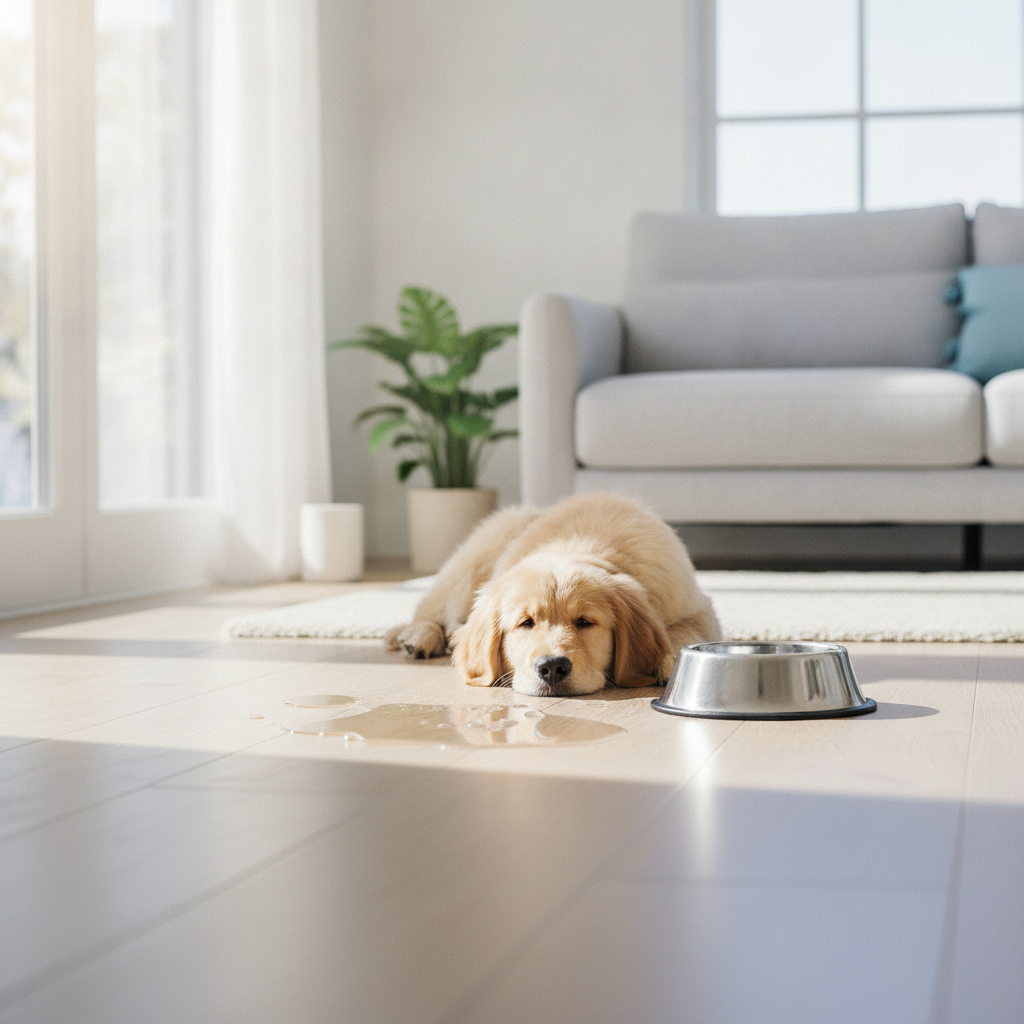
The love for a pet is boundless, but the anxiety they can cause for your beautiful floors is very real. You invest in a stunning new floor, only to live in constant fear of the click-clack of claws, the inevitable tipped-over water bowl, or the accident left behind while you were out. The heartbreaking sight of a deep scratch, a dark stain that won’t lift, or wood planks cupping from moisture is a story too many pet owners know by heart. For years, the choice has been a frustrating compromise: sacrifice the timeless beauty of real hardwood for a more durable, less elegant alternative, or accept that your floors will become a permanent record of your pet’s every mishap.
What if you didn’t have to compromise? Imagine a flooring solution that delivers the authentic, warm aesthetic of genuine hardwood but is engineered with a core of ironclad, pet-proof resilience. This is the promise of waterproof hybrid hardwood.
This is not just another list of flooring options. This is your complete playbook. We will guide you through the science of why traditional floors fail, demystify the technology behind hybrid hardwood, and provide a technical guide to choosing the most durable option for your specific pet. We’ll even equip you with a first-aid kit for the inevitable accidents, empowering you to make a confident investment and finally live stress-free with the pets you love and the floors you adore.
- Why Traditional Flooring Fails in a Pet-Lover’s Home
- The Solution: What is Waterproof Hybrid Hardwood?
- Hybrid Hardwood vs. The Competition: A Pet-Owner’s Showdown
- How to Choose the Most Durable Pet-Friendly Floor: A Technical Guide
- Spotlight: A 360-Degree Review of Bravewood Waterproof Hardwood
- The Pet Owner’s First-Aid Kit: Repairing Scratches and Stains
- Keeping It Flawless: The Ultimate Cleaning & Prevention Guide
- Conclusion
- References
Why Traditional Flooring Fails in a Pet-Lover’s Home
Before finding the right solution, it’s crucial to understand why so many common flooring types struggle to coexist with our four-legged family members. The daily life of a pet introduces a unique set of challenges that can quickly degrade and destroy surfaces not built to withstand them.
The Institute of Inspection, Cleaning and Restoration Certification (IICRC), a leading authority in the restoration industry, notes that repeated moisture exposure, such as from pet accidents, can lead to severe damage not just to the flooring itself but to the subfloor beneath, causing costly and complex problems[1]. This is the core frustration for pet owners: the damage is often more than just cosmetic.
The Scratch & Scuff Dilemma
The most visible sign of a pet-friendly home is often the network of scratches and scuffs on the floor. A dog’s nails, even when trimmed, can inflict significant damage. It’s important to understand the two levels of this problem. A superficial finish scratch is a minor abrasion in the top protective layer, often visible only in certain light. A deep gouge, however, is far more serious. This occurs when a nail cuts through the finish and stain, exposing the raw wood beneath. These deep scratches are not only unsightly but also create openings for dirt and moisture to penetrate the wood, leading to further damage.
The Unseen Enemy: Water, Spills, and Stains
Water is the arch-nemesis of most traditional flooring. Spilled water bowls, wet paws, and pet accidents introduce moisture that can have devastating effects. In traditional laminate, the high-density fiberboard (HDF) core acts like a sponge. Once it absorbs water, it swells and “mushrooms,” creating raised edges that never return to their original shape. Solid hardwood is equally vulnerable, leading to cupping (when a board’s edges are higher than its center), buckling, and permanent discoloration.
Pet urine is even more destructive. The ammonia in pet urine is alkaline, which chemically reacts with the natural tannins in wood, causing deep, dark discoloration that can be nearly impossible to remove. Furthermore, according to the Environmental Protection Agency (EPA), mold can begin to grow in a damp environment within just 24-48 hours, posing a health risk to both you and your pets[2].
The Solution: What is Waterproof Hybrid Hardwood?
Waterproof hybrid hardwood represents a technological leap forward, engineered specifically to solve the problems that plague pet owners. It combines the best of both worlds: a top layer of authentic, beautiful hardwood veneer with a technologically advanced, 100% waterproof composite core. This construction delivers the look and feel of real wood with the resilience of luxury vinyl.
To understand its power, let’s look at its layers:
- Protective Wear Layer: A high-durability, factory-applied coating, often infused with aluminum oxide, that provides superior resistance to scratches and scuffs.
- Real Wood Veneer: A thin slice of genuine hardwood (like oak, hickory, or maple) that gives the plank its authentic look, grain, and character.
- Waterproof Composite Core: The heart of the plank. This is a rigid, ultra-dense core made from either SPC or WPC that is completely impervious to water.
- Attached Underlayment: A pre-attached pad that provides sound absorption, cushioning underfoot, and a moisture barrier.
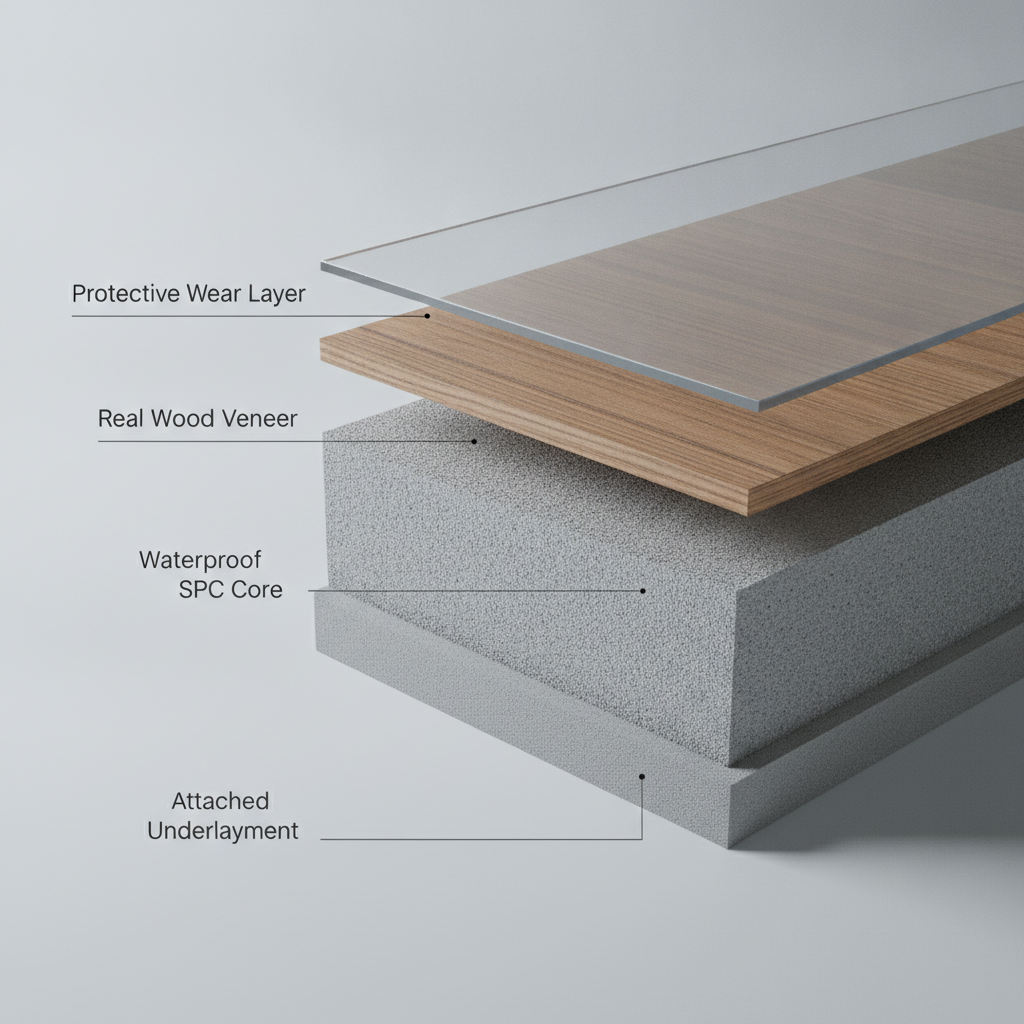
This multi-layer construction is recognized by industry authorities like the National Wood Flooring Association (NWFA) as a sophisticated form of engineered wood flooring, designed for modern performance demands[3].
The Core of Durability: SPC vs. WPC
The “waterproof” magic of hybrid hardwood comes from its core. You will typically see two types: SPC and WPC. While both are 100% waterproof, they have key differences that affect performance. The Resilient Floor Covering Institute (RFCI) helps set the technical standards for these materials, ensuring their quality and durability[4].
| Feature | SPC (Stone Plastic Composite) | WPC (Wood Plastic Composite) |
|---|---|---|
| Composition | Limestone powder, PVC, stabilizers | Wood pulp, PVC, foaming agents |
| Density | Higher density, more rigid | Lower density, lighter |
| Dent Resistance | Excellent; ideal for heavy furniture | Good; more susceptible to dents |
| Feel Underfoot | Firmer, more solid | Softer, more comfortable, quieter |
| Best For | High-traffic areas, uneven subfloors | Areas where comfort and sound are priorities |
For most pet owners, the superior rigidity and dent resistance of an SPC core make it the preferred choice for standing up to active pets and heavy traffic.
Myth vs. Fact: Can You Refinish Hybrid Hardwood?
This is one of the most common questions from homeowners considering hybrid flooring. The answer is no—due to the thinness of the real wood veneer, waterproof hybrid hardwood cannot be sanded and refinished like traditional solid hardwood.
However, this should be viewed as a feature, not a flaw. The factory-applied, UV-cured finishes on these products are fortified with aluminum oxide, making them exponentially more durable than any polyurethane finish that can be applied in your home. A professional flooring installer will confirm that these modern factory finishes are designed to last for decades under normal residential use, eliminating the costly, dusty, and disruptive process of refinishing altogether.
Hybrid Hardwood vs. The Competition: A Pet-Owner’s Showdown
How does waterproof hybrid hardwood stack up against other popular “pet-friendly” options? Here’s a head-to-head comparison based on the factors that matter most to pet owners.
| Flooring Type | Scratch Resistance | Water Resistance | Stain Resistance | Pet Traction & Comfort | Aesthetics |
|---|---|---|---|---|---|
| Hybrid Hardwood | 8/10 | 10/10 | 9/10 | 7/10 | 10/10 |
| Luxury Vinyl Plank (LVP) | 9/10 | 10/10 | 10/10 | 7/10 | 8/10 |
| Porcelain Tile | 10/10 | 10/10 | 8/10 (grout) | 4/10 | 7/10 |
| Waterproof Laminate | 9/10 | 8/10 | 9/10 | 5/10 | 8/10 |
Key Takeaways:
- Aesthetics: Hybrid hardwood is the undisputed winner, offering the genuine beauty of real wood that LVP and laminate can only imitate.
- Durability: While porcelain tile is nearly indestructible, its hardness, slippery surface, and stain-prone grout are significant drawbacks for pets. LVP and hybrid hardwood offer a better balance. The American Kennel Club (AKC) often advises that flooring with some texture provides better traction, which is crucial for a dog’s joint health, especially for senior pets or those prone to hip dysplasia[5].
- Acoustics: A frequently overlooked factor is noise. The hard surface of tile and laminate can amplify the sound of claws, creating a constant clicking noise. Hybrid hardwood and LVP, especially those with attached underlayment, do a much better job of dampening sound for a quieter home.
How to Choose the Most Durable Pet-Friendly Floor: A Technical Guide
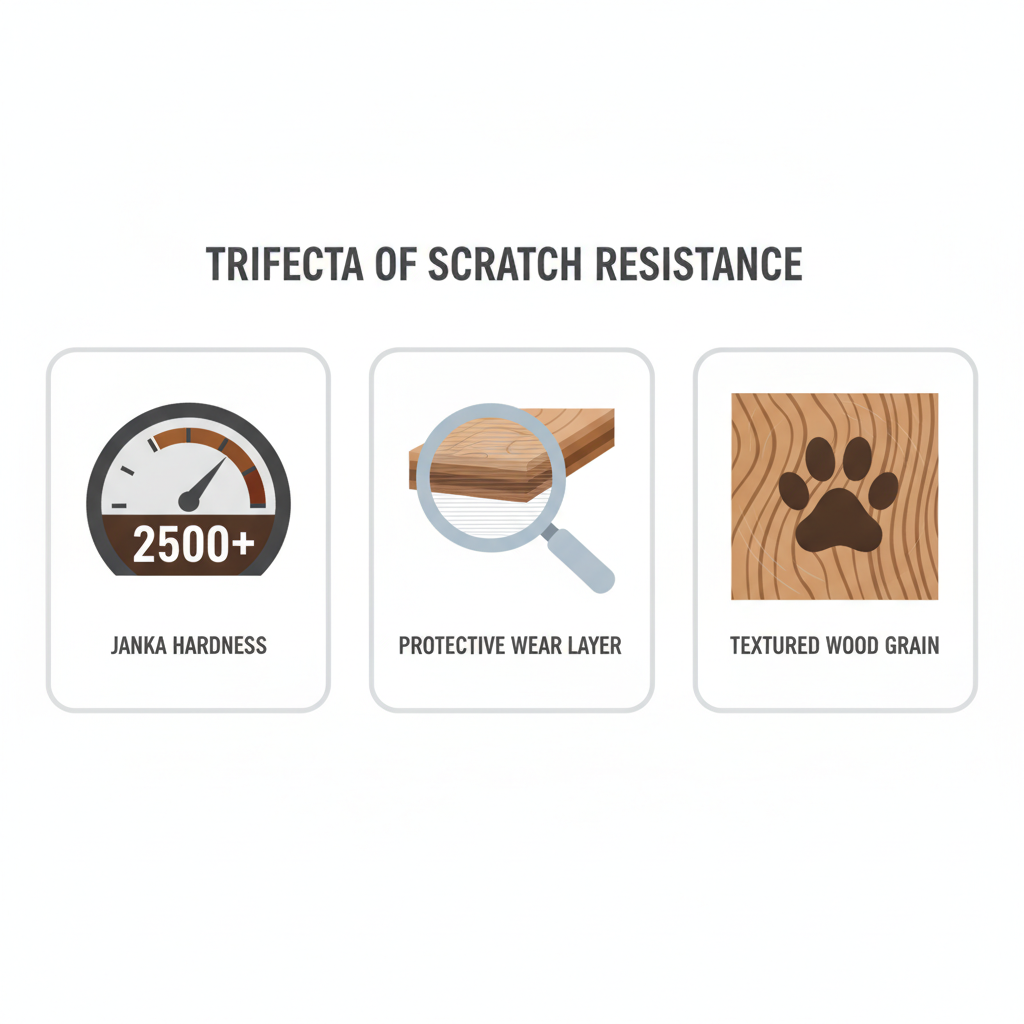
To make a truly informed decision, you need to look beyond marketing claims and understand the technical specifications that define durability. We call this the “Trifecta of Scratch Resistance”: a combination of inherent hardness, a superior finish, and a forgiving grain pattern.
Decoding Hardness: The Janka Scale Explained
The Janka Hardness Test is the industry standard for measuring a wood species’ resistance to denting and wear. The test measures the force required to embed a 0.444-inch steel ball halfway into a sample of wood. The higher the Janka rating, the harder and more durable the wood. The U.S. Forest Service’s Forest Products Laboratory is a primary authority on this scientific data[6].
Janka Hardness Scale (Examples)
- Brazilian Walnut (Ipe): 3680 (Extremely Hard)
- Hickory: 1820 (Very Hard)
- White Oak: 1360 (Hard)
- Red Oak: 1290 (Industry Benchmark)
- American Cherry: 950 (Softer)
- Pine: 690 (Very Soft)
When choosing a hybrid hardwood, selecting one with a veneer from a harder species like Hickory or Oak will provide greater inherent resistance to dents from dropped toys or heavy paws.
The Protective Shield: Understanding Finishes and Wear Layers
The finish is your floor’s first line of defense. As mentioned, factory-applied, UV-cured finishes containing aluminum oxide are significantly more durable than standard polyurethane[7]. This microscopic crystalline material creates an incredibly tough shield against scratches.
On hybrid hardwood and LVP, this shield is part of the wear layer. The thickness of this layer is measured in mils (one-thousandth of an inch). For a home with pets, especially large or active dogs, a wear layer of 20 mil or greater is highly recommended for maximum longevity. A 12 mil wear layer might be suitable for low-traffic areas, but 20 mil provides the robust protection needed for a busy, pet-filled household.
The Art of Camouflage: How Texture & Grain Hide Wear
Technical specs are only half the battle. The visual characteristics of your floor can be just as important for maintaining its appearance.
- Grain Pattern: Wood species with a busy, varied grain pattern, like Hickory or wire-brushed Oak, are masters of disguise. Their natural patterns and color variations make it much harder to spot minor scratches compared to a wood with a smooth, uniform grain like Maple.
- Texture: A hand-scraped, wire-brushed, or distressed texture adds character and creates a surface that naturally hides the small dings and scuffs of daily life. A perfectly smooth floor, by contrast, will highlight every single imperfection.
- Finish Sheen: A matte or low-gloss finish is a pet owner’s best friend. It minimizes the appearance of paw prints, smudges, and fine scratches, which are much more obvious on a high-gloss surface that reflects light.
Spotlight: A 360-Degree Review of Bravewood Waterproof Hardwood
To provide a real-world perspective, we analyzed dozens of customer reviews from major retailers and consulted professional flooring forums to synthesize feedback on the Bravewood brand of waterproof hybrid hardwood.
Methodology: Our review aggregates feedback on installation, durability in pet-filled homes, appearance, and long-term satisfaction to provide a balanced overview.
| Pros | Cons |
|---|---|
| Stunning Aesthetics: Overwhelmingly positive feedback on the authentic look and feel of the real wood veneer. | Higher Cost: Generally priced higher than LVP and waterproof laminate, reflecting its premium construction. |
| Proven Durability: Many users with large dogs and active children report excellent performance against scratches and water. | Installation Sensitivity: Like all floating floors, requires a very flat subfloor to avoid squeaks or movement. |
| Easy to Clean: The waterproof surface makes cleaning up spills and accidents simple and stress-free. | Limited Refinishing: Cannot be sanded and refinished, which is a consideration for some buyers. |
| Waterproof Peace of Mind: Homeowners consistently cite the 100% waterproof core as the primary reason for their purchase and satisfaction. |
Warranty Analysis: A critical gap in many reviews is a close look at the warranty. The Bravewood warranty typically offers robust protection against manufacturing defects and wear-through of the finish layer. Crucially, its water damage coverage is comprehensive for topical spills and moisture, provided the floor is installed correctly. However, like most flooring warranties, it will not cover damage from scratches or deep gouges, as these are considered environmental factors. This underscores the importance of choosing the right texture and taking preventative measures.
The Pet Owner’s First-Aid Kit: Repairing Scratches and Stains
Even with the most durable floor, accidents can happen. This guide will help you tackle the most common issues quickly and effectively.
Safety Warning
Always test cleaning solutions and repair products on an inconspicuous area first, such as inside a closet or under a large piece of furniture. Ensure proper ventilation when working with any cleaning agents.
Scratch Diagnosis Tool:
- Question 1: Gently run your fingernail across the scratch. Can you feel it?
- No: It’s likely a superficial scuff in the finish. Proceed to “Fixing Minor Scratches.”
- Yes: It’s a deeper scratch that has penetrated the finish. It may still be repairable, but requires more care.
According to NWFA-certified refinishing professionals, the key is to determine if the scratch has removed the color. If it has, you will need a solution that can restore both the finish and the stain.
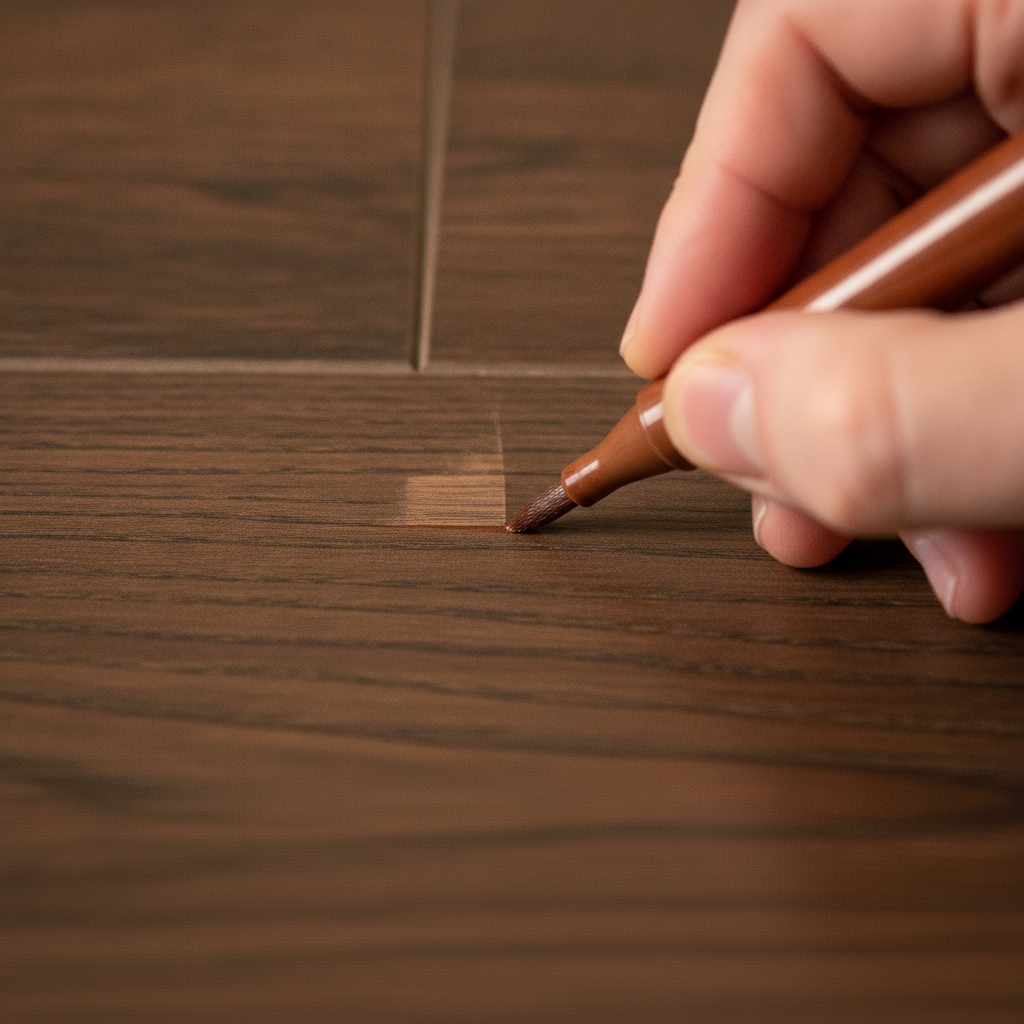
Step-by-Step: Fixing Minor Scratches
For superficial scuffs that haven’t broken through the finish, you can often make them disappear with simple methods:
- Clean the Area: Use a manufacturer-approved hardwood floor cleaner and a microfiber cloth to remove any dirt or debris.
- Use a Blending Pencil/Stain Marker: Find a repair marker that closely matches your floor’s color. Lightly dab the marker into the scratch, then immediately wipe away the excess with a clean, dry cloth. This fills in the scratch and blends it with the surrounding finish.
Emergency Response: Treating Fresh Pet Stains
When an accident happens, speed is your best friend.
- Blot Immediately: Use a clean, absorbent paper towel to blot up as much of the liquid as possible. Do not rub, as this can spread the stain.
- Clean the Area: Spray a pH-neutral, manufacturer-approved cleaner onto a clean cloth (not directly on the floor) and wipe the area.
- Neutralize the Odor: For urine, it is critical to use an enzymatic cleaner. These products contain enzymes that break down the uric acid and proteins in urine, completely eliminating the odor. Regular cleaners only mask the smell, which can encourage your pet to mark the same spot again.
Advanced Care: Tackling Old, Set-In Stains
If you discover an old, dark stain, the repair is more challenging.
- Test a Hydrogen Peroxide Solution: For dark, alkaline-based stains, you can try lightening them with hydrogen peroxide. Soak a small piece of cloth in peroxide, place it over the stain, and cover it with plastic wrap. Let it sit for an hour, then check the progress. This may take several applications.
- Know When to Call a Pro: If the stain has deeply penetrated the wood veneer, it may be permanent. Attempting to sand the area will likely damage the floor beyond repair. In these rare cases, the best solution is to have a professional flooring installer replace the affected plank.
Keeping It Flawless: The Ultimate Cleaning & Prevention Guide
The best way to handle damage is to prevent it. A proactive approach to cleaning and maintenance will keep your hybrid hardwood floors looking brand new for years.
Cleanability Scorecard
| Flooring Type | Fur Removal | Stain Resistance | Deep Cleaning Effort |
|---|---|---|---|
| Hybrid Hardwood | Excellent | Very Good | Low |
| LVP | Excellent | Excellent | Low |
| Porcelain Tile | Good | Poor (Grout) | High |
| Carpet | Poor | Poor | Very High |
Essential Tools & Strategies:
- The Right Vacuum: Use a vacuum with a setting for hard surfaces (which turns off the beater bar to prevent scratching) and a HEPA filter to trap dander and allergens. The Good Housekeeping Institute consistently rates vacuums on their effectiveness for pet hair removal[8].
- Microfiber is Your Friend: For daily cleaning, a dry microfiber dust mop is perfect for picking up fur and dust. For wet cleaning, use a microfiber mop with a manufacturer-approved cleaner, ensuring the mop is damp, not soaking wet.
- Prevention is Key: The AKC recommends several preventative measures. Keep your dog’s nails trimmed and filed smooth. Place durable, waterproof mats under food and water bowls and at all entryways to trap dirt and moisture.
- Protect with Pads: Apply felt pads to the bottom of all furniture legs to prevent scratches when chairs and tables are moved.
Conclusion
For too long, pet owners have been forced to choose between the flooring they want and the flooring they need. Waterproof hybrid hardwood decisively ends that compromise. It offers the authentic, unmatched beauty of real wood, fortified with a 100% waterproof core and a commercial-grade protective finish that stands up to the rigors of pet life.
By understanding the “Trifecta of Scratch Resistance”—choosing a hard wood species, a durable finish, and a forgiving grain—you can select a floor that is not only beautiful but also a fortress against claws and paws. This guide has equipped you with the technical knowledge to choose wisely, the first-aid skills to handle accidents, and the maintenance strategies to ensure lasting beauty. With the right choice and the right knowledge, you can finally stop worrying about your floors and get back to enjoying the priceless companionship of your pets.
Ready to find the perfect, pet-proof floor for your home? Explore our recommended collection of waterproof hybrid hardwood flooring and request your free samples today.
This article may contain affiliate links. All cleaning and repair methods should be tested on an inconspicuous area first. Always consult your flooring manufacturer’s warranty and care guidelines.
References
- Institute of Inspection, Cleaning and Restoration Certification (IICRC). (N.D.). IICRC S500 Standard for Professional Water Damage Restoration.
- Environmental Protection Agency (EPA). (N.D.). A Brief Guide to Mold, Moisture, and Your Home. Retrieved from https://www.epa.gov/mold/brief-guide-mold-moisture-and-your-home
- National Wood Flooring Association (NWFA). (N.D.). Engineered Wood Flooring Guidelines.
- Resilient Floor Covering Institute (RFCI). (N.D.). Product Standards.
- American Kennel Club (AKC). (N.D.). Choosing the Best Flooring for Dogs.
- U.S. Forest Service, Forest Products Laboratory. (N.D.). Wood Handbook–Wood as an Engineering Material.
- Bona. (N.D.). Bona Finishes.
- Good Housekeeping Institute. (N.D.). Product Testing & Reviews.
