
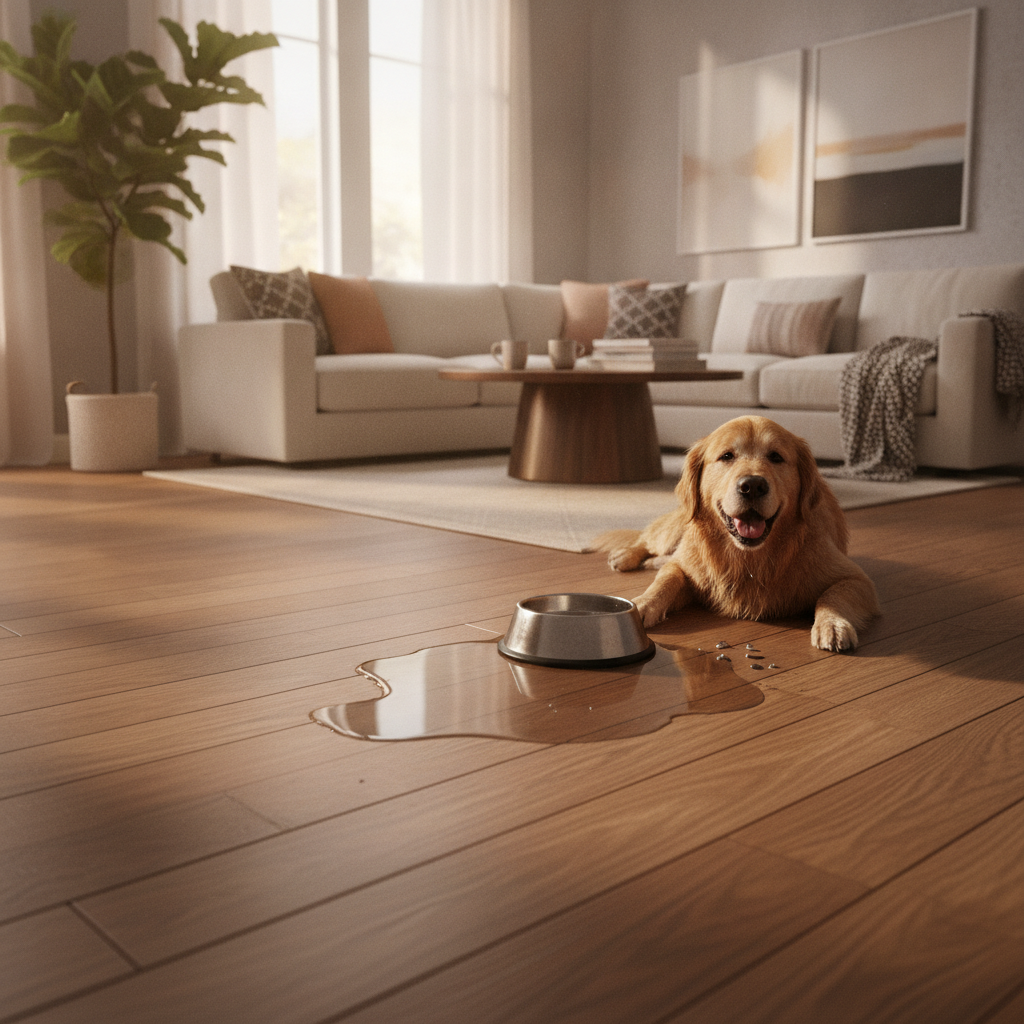
The joyful chaos of life with pets—the pitter-patter of paws, the enthusiastic greetings at the door, the cozy companionship—is priceless. But the toll it can take on your floors? That comes with a very real cost. For millions of pet owners, the constant battle against scratches, stubborn stains, and endless cleaning is a source of daily frustration. You chose your flooring for its beauty, but now you worry with every spilled water bowl and playful skid across the room.
You’re not just looking for a floor; you’re looking for peace of mind. You need a surface that can stand up to the rigors of your furry family without sacrificing the style and warmth you want for your home. This is where the search can become overwhelming, flooded with marketing jargon and conflicting advice.
This guide is your playbook. We’re moving beyond simple lists to provide a data-driven, expert-backed deep dive into what truly makes a floor pet-proof. We will systematically compare the top flooring champions, with a special focus on the game-changing technology of waterproof hybrid hardwood. By the end, you’ll be empowered with the knowledge to make a confident, long-term investment in a beautiful, durable, and stress-free foundation for your home.
- What Truly Makes a Floor ‘Pet-Proof’? The 4 Pillars of Performance
- Deep Dive: Is Waterproof Hybrid Hardwood the Perfect Pet Flooring?
- The Ultimate Showdown: Hybrid Hardwood vs. Other Pet-Friendly Champions
- The Pet Owner’s Floor Repair Manual: From Scratches to Stains
- How to Choose the Perfect Floor for Your Pet and Lifestyle
- Conclusion: The Best of Both Worlds for Your Home
- References & Authoritative Sources
What Truly Makes a Floor ‘Pet-Proof’? The 4 Pillars of Performance
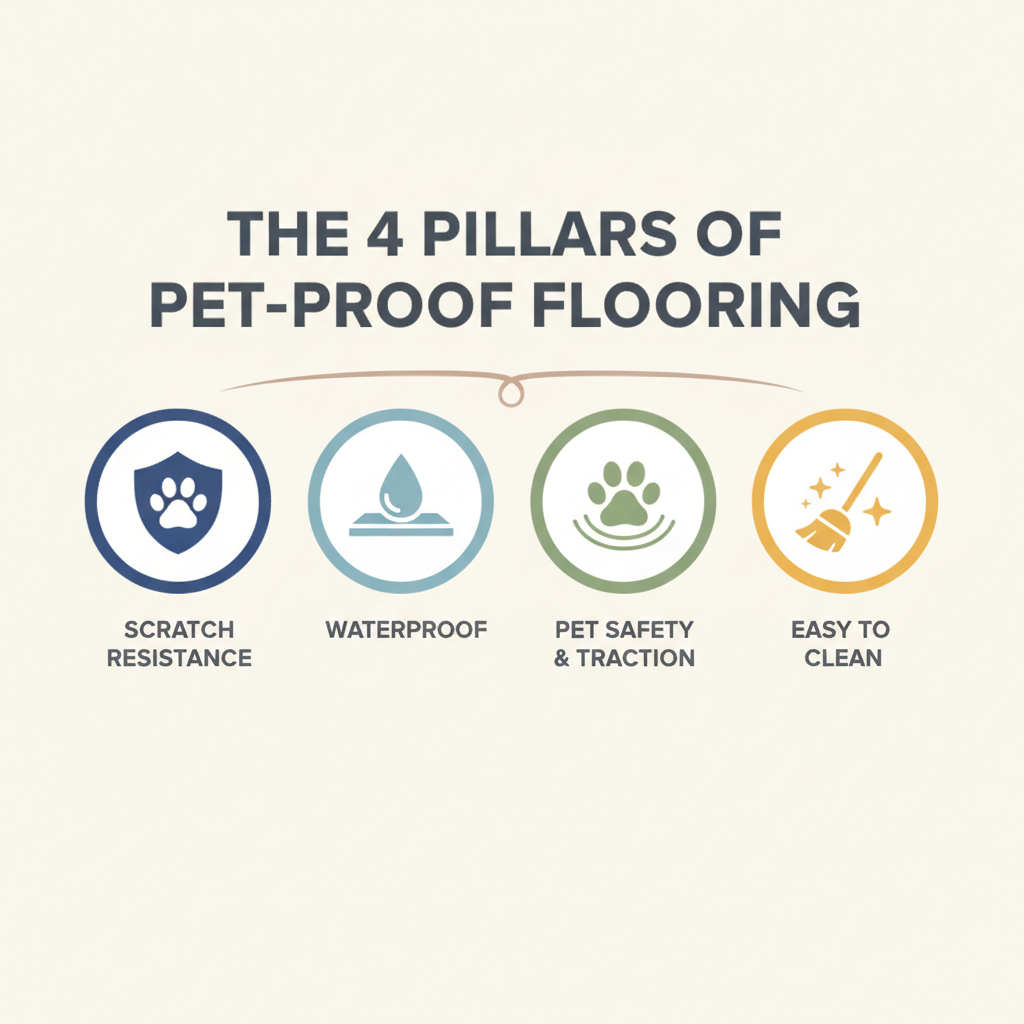
Before we can crown a champion, we need to define the rules of the game. A truly “pet-proof” floor isn’t just about one feature; it’s about a holistic performance across four critical pillars. With 66% of U.S. households owning a pet, the demand for flooring that meets these criteria has never been higher.[1] Understanding these pillars is the first step to making an informed choice.
We’ll evaluate flooring using the same metrics professionals do: Janka Hardness for wood’s dent resistance, PEI (Porcelain Enamel Institute) ratings for tile’s wear resistance, AC (Abrasion Class) ratings for laminate’s durability, and wear layer thickness for vinyl and hybrid floors. Furthermore, we’ll consider pet health, referencing certifications like FloorScore® and Greenguard, which ensure low levels of volatile organic compounds (VOCs) for healthier indoor air.[2]
Pillar 1: Unmatched Durability & Scratch Resistance
For pet owners, “durability” primarily means one thing: resisting the relentless assault of claws. It’s crucial to differentiate between a surface scratch (damage to the protective finish) and a gouge (damage that penetrates to the floor’s core). The best pet-friendly floors are engineered to prevent both. Modern flooring achieves this with advanced top coats, often infused with aluminum oxide or ceramic beads, creating a transparent shield that stands up to daily wear and tear.
To quantify this, we look at industry ratings:
- PEI Rating (Porcelain/Ceramic Tile): This scale measures the abrasion resistance of the tile’s glaze. For homes with pets, a PEI rating of 4 (suitable for moderate to heavy traffic) or 5 (suitable for heavy to extra-heavy traffic) is ideal.
- AC Rating (Laminate/Hybrid): This rating indicates durability, from AC1 (light residential use) to AC5 (heavy commercial use). Pet owners should look for flooring with a rating of at least AC3, with AC4 or AC5 offering maximum protection.
Pillar 2: The Power of 100% Waterproof Construction
Accidents happen. From muddy paws and tipped water bowls to house-training mishaps, moisture is a constant threat. This is where the distinction between “water-resistant” and “waterproof” becomes vital.
- Water-Resistant: This means the surface can repel water for a limited time, but moisture can eventually seep through seams or into the core, causing swelling, warping, and permanent damage.
- 100% Waterproof: This indicates that the flooring plank or tile itself is made from materials that will not be damaged by water, no matter how long it sits. Products with a Stone Polymer Composite (SPC) or Wood Plastic Composite (WPC) core are 100% waterproof from the top down, offering the ultimate protection against pet-related spills.
Pro Tip: A certified flooring installer will tell you that even with waterproof planks, the installation is key. A proper installation ensures tight seams and correctly sealed perimeters, preventing water from getting underneath the flooring and damaging your subfloor.
Pillar 3: Pet Safety, Traction, and Comfort
A pet-friendly floor should be safe and comfortable for your four-legged friends. A surface that is too slick can be dangerous, especially for older pets or breeds prone to joint issues like hip dysplasia. The American Kennel Club (AKC) emphasizes the importance of good traction to help dogs maintain their footing and prevent injuries.[3]
Look for flooring with an embossed or textured surface. Studies have shown that these finishes can improve a dog’s grip by up to 40% compared to perfectly smooth, glossy surfaces. Beyond traction, consider your pet’s respiratory health. Opting for floors with a Greenguard Certification ensures they have been tested for over 10,000 chemicals and are certified to have low VOCs, contributing to a healthier environment for every member of your family.[2]
Pillar 4: The Low-Maintenance Dream: Easy to Clean Floors
The final pillar is about making your life easier. The ideal pet-friendly floor is non-porous and has minimal seams, preventing fur, dander, and dirt from getting trapped. This drastically simplifies cleanup. In fact, switching from high-pile carpet to a smooth, non-porous surface can cut your active cleaning time by up to 50%.
Aesthetics also play a role in maintenance. Floors with multi-tonal colors, subtle patterns, or a matte finish are far better at hiding stray pet hair and minor dust between cleanings than very dark, solid-colored, or high-gloss floors.
Deep Dive: Is Waterproof Hybrid Hardwood the Perfect Pet Flooring?
Now that we’ve established our criteria, let’s focus on the contender that aims to check every box: waterproof hybrid hardwood. This innovative category combines the authentic beauty of real wood with a technologically advanced, pet-proof core. It represents a new frontier in flooring, designed for homeowners who refuse to choose between style and durability.
Anatomy of a Hybrid Plank: Real Wood Meets a Waterproof Core
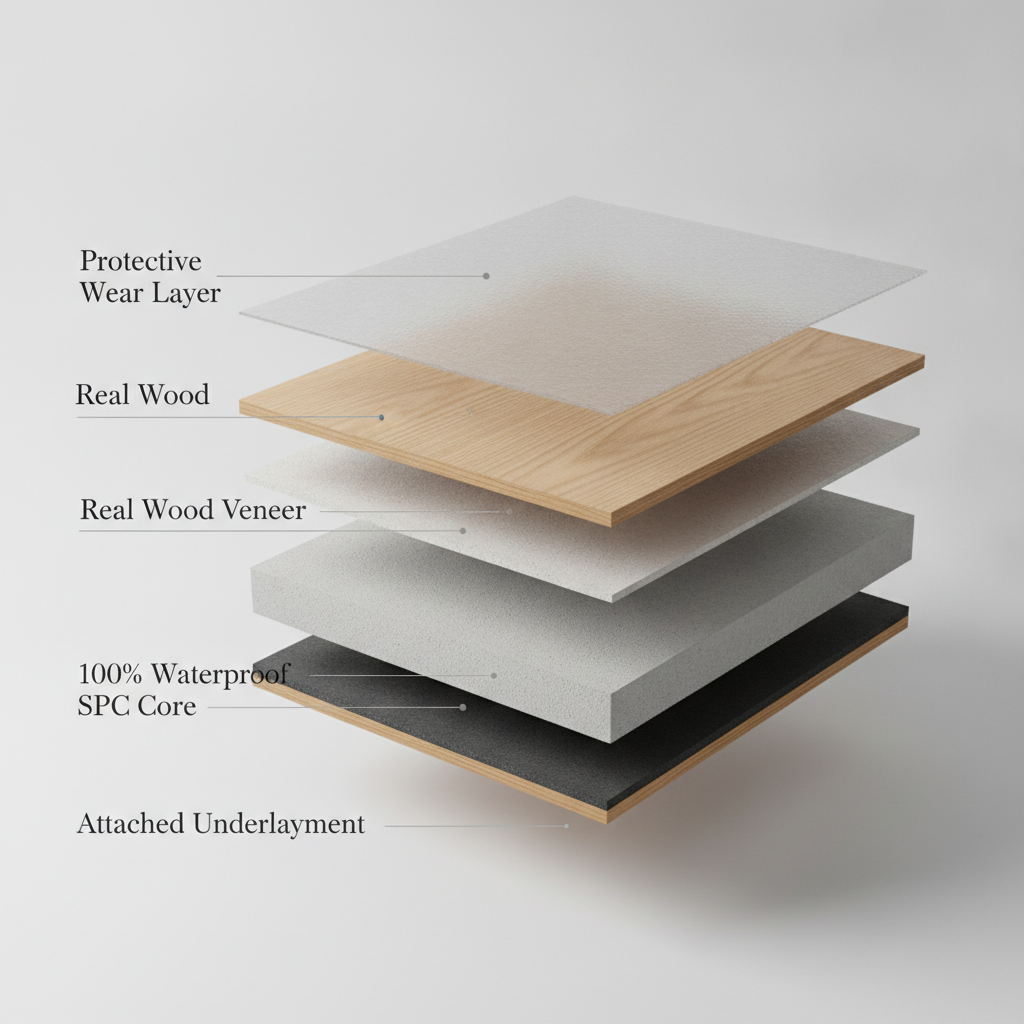
To understand why hybrid hardwood is so effective, you have to look at its layers:
- Protective Wear Layer: The top is a factory-applied urethane finish fortified with aluminum oxide, providing robust resistance to scratches, stains, and fading.
- Real Wood Veneer: This is the magic. Unlike LVP, which has a printed image, hybrid flooring uses a thin layer of genuine hardwood (typically 0.6mm to 1.2mm thick). This provides the unique grain, texture, and natural beauty that can’t be perfectly replicated.
- Waterproof Composite Core: The heart of the plank is a rigid, 100% waterproof core. This is usually either SPC (Stone Polymer Composite), known for its extreme density and dent resistance, or WPC (Wood Plastic Composite), which is slightly softer and offers better comfort and sound insulation.
- Attached Underlayment: Most hybrid products come with a pre-attached pad that provides cushioning, dampens sound, and simplifies installation.
Flooring manufacturers like Shaw Floors and Mohawk have pioneered this technology, engineering these layers to work in perfect harmony.[4]
Myth vs. Fact: Hybrid Hardwood for Pet Owners
Let’s clear up some common questions and misconceptions about this flooring category.
- Myth: It’s completely scratch-proof.
Fact: It is highly scratch-resistant, not scratch-proof. The robust wear layer, often with an AC4 or AC5 rating, can fend off the vast majority of scratches from pet claws. However, a very deep gouge from a heavy object or a determined dog could potentially damage the veneer. - Myth: Pet accidents will ruin it just like regular hardwood.
Fact: The core is 100% waterproof. As long as spills and accidents are cleaned up in a reasonable time, the moisture will not damage the plank’s structure or cause it to swell and warp. The waterproof core provides a crucial line of defense that traditional and engineered hardwood lack. - Myth: You can sand and refinish it if it gets damaged.
Fact: This is the most important trade-off. Because the real wood veneer is so thin, hybrid hardwood cannot be sanded and refinished. Severe damage to a plank would require replacing that specific plank, not refinishing the entire floor.
Pros and Cons: A Balanced Verdict for Your Furry Family
So, is waterproof hybrid hardwood the right choice for you? Here’s a clear-eyed summary.
| Pros | Cons |
|---|---|
| Authentic Wood Beauty: The look and feel of real wood. | Cannot Be Refinished: Deep gouges are permanent. |
| 100% Waterproof Core: Ultimate protection from spills. | Higher Cost: Generally more expensive than LVP. |
| High Dent & Scratch Resistance: SPC core and AC4+ finish. | Veneer Thickness Varies: Quality can differ by brand. |
| Easy to Clean: Smooth, non-porous surface. | Relatively New Product: Fewer long-term case studies. |
The Ultimate Showdown: Hybrid Hardwood vs. Other Pet-Friendly Champions
To truly understand its value, we need to see how waterproof hybrid hardwood stacks up against the other top contenders in the pet-friendly flooring world. We’ve created a “Pet Durability Matrix” to score each option based on our four pillars.
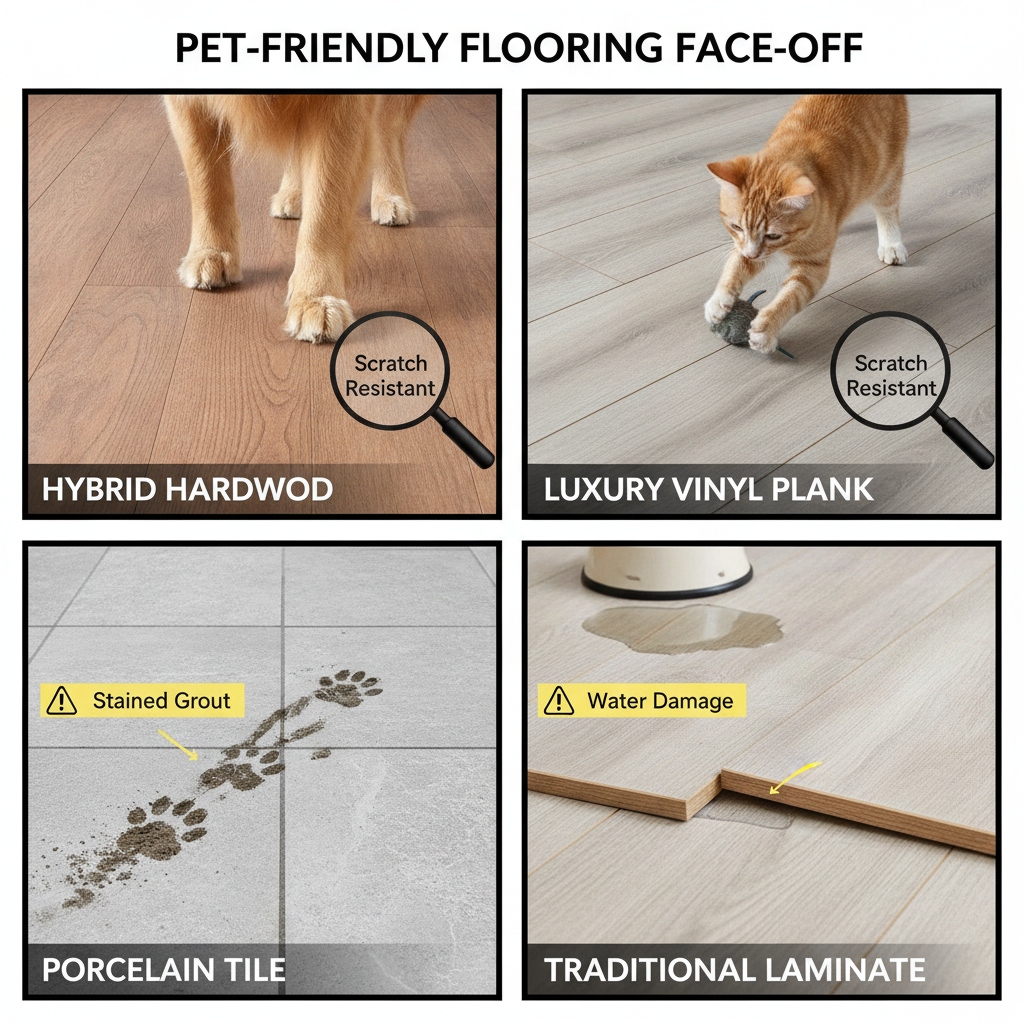
Pet Durability Matrix (Rating 1-5, 5 being best)
| Flooring Type | Scratch Resistance | Water Resistance | Pet Safety/Traction | Ease of Cleaning |
|---|---|---|---|---|
| Hybrid Hardwood | 4.5 | 5 | 4 | 4.5 |
| Luxury Vinyl Plank (LVP) | 4.5 | 5 | 4 | 5 |
| Porcelain Tile | 5 | 5 | 3 | 4 |
| Waterproof Laminate | 4 | 4 | 3.5 | 4.5 |
Hybrid Hardwood vs. Luxury Vinyl Plank (LVP)
This is the closest matchup. Both LVP and hybrid hardwood feature a 100% waterproof SPC or WPC core and a durable wear layer. For pet-friendly applications, you should look for LVP with a wear layer of at least 20 mil (0.5mm). The fundamental difference is aesthetics: hybrid hardwood offers the genuine, unique beauty of a real wood veneer, while LVP uses a highly realistic 3D printed image. This often comes down to budget and personal preference—the undeniable authenticity of real wood versus the diverse and budget-friendly designs of LVP.
Hybrid Hardwood vs. Porcelain Tile
When it comes to pure, brute-force durability, nothing beats porcelain tile. A tile with a PEI rating of 4 or 5 is virtually impossible for pet claws to scratch. As the Tile Council of North America (TCNA) standards confirm, it’s also completely waterproof.[5] However, tile has its drawbacks for pets. The hard, unforgiving surface can be tough on joints, and it can feel cold. The biggest challenge, however, is the grout lines, which are porous and can trap dirt and absorb stains and odors unless sealed meticulously or if you opt for a premium, non-porous epoxy grout.
Hybrid Hardwood vs. Waterproof Laminate
Modern laminate has come a long way. Thanks to improved top coats and water-repellent sealants, many products are now marketed as “waterproof.” They often carry high AC ratings for scratch resistance and can be very budget-friendly. However, as the North American Laminate Floor Association (NALFA) standards clarify, while the surface may resist water for a period, the core is still typically made of wood fiber.[6] A hybrid’s SPC or WPC core offers a superior level of waterproof protection from top to bottom, making it a more reliable choice for handling pet accidents.
The Pet Owner’s Floor Repair Manual: From Scratches to Stains
Even with the most durable floor, life happens. Knowing how to deal with common issues is key to maintaining your investment and your sanity. This is your emergency guide.
Pro Tip: For any signs of widespread damage, buckling, or persistent odors, it’s best to consult an IICRC-certified restoration professional. They can assess potential subfloor damage that isn’t visible from the surface.[7]
Fixing Scratches: A Tiered Approach from Buff to Fill
Use this “Scratch Severity Index” to find the right solution for wood, laminate, or hybrid hardwood finishes.
- Level 1: Minor Finish Scuff. These are light abrasions in the top wear layer that haven’t broken through to the wood or design layer. Solution: Use a manufacturer-recommended floor polish or restorer. This can often fill in and hide these minor scuffs.
- Level 2: Light Scratch. The scratch has penetrated the finish but not the color. Solution: Use a floor repair wax stick or a stain marker that closely matches your floor’s color. These products can fill the scratch and make it virtually invisible.
- Level 3: Deep Gouge. The damage has gone through the veneer/design layer and into the core. Solution: For solid or engineered wood, this can be filled with wood putty and stained. For hybrid hardwood or LVP, a deep gouge is permanent. The only true fix is to replace the damaged plank, which is a key advantage of a floating floor system.
According to the National Wood Flooring Association (NWFA), the best practice for any repair is to test your chosen product in an inconspicuous area first to ensure a good color match.[8]
Eliminating Stains & Odors for Good
Pet urine is a complex substance. Standard cleaners often fail because they can’t break down the uric acid crystals, which are the source of the lingering odor.
- Act Quickly: Blot up as much of the fresh accident as possible with a clean, dry cloth.
- Use the Right Cleaner: Spray the area liberally with an enzymatic cleaner. These products contain specialized enzymes that chemically break down the proteins and uric acid in pet waste, eliminating both the stain and the odor at its source.
- Let it Dwell: Allow the cleaner to sit for the time recommended on the product label (often 10-15 minutes) to give the enzymes time to work.
- Blot Dry: Blot the area again with a clean cloth.
Warning: Never use ammonia-based cleaners to clean pet accidents. The smell of ammonia can mimic the odor of urine, which may attract your pet back to the same spot. To find old, hidden stains that may be causing a persistent odor, use a blacklight in a darkened room—urine stains will glow.
Damage Triage: When to Repair vs. When to Replace
If you suspect long-term pet urine damage, especially on a wood-based subfloor, you need to assess the situation carefully. The ammonia in urine can cause permanent dark stains in wood. If moisture has penetrated the flooring and soaked into a plywood or OSB subfloor, it can cause delamination, rot, and persistent odor that cannot be cleaned from the surface.
Use this checklist to decide your next step:
- Surface-level stain or odor? -> REPAIR (Use enzymatic cleaners).
- Warping or buckling of a few planks? -> REPLACE SECTION (Carefully remove the damaged planks and check the subfloor).
- Spongy feeling when you walk on the area? -> FULL REPLACEMENT (This indicates probable subfloor damage).
- Persistent, strong odor even after cleaning? -> FULL REPLACEMENT (The subfloor is likely compromised).
If the subfloor is affected but structurally sound, professionals often use a shellac-based primer to seal the surface and lock in any remaining odor before installing a new floor.
How to Choose the Perfect Floor for Your Pet and Lifestyle
You’re armed with the data. Now, let’s apply it to your unique situation. This final framework will help you make the perfect choice.
Considering Your Pet’s Type: Dogs vs. Cats
While much of the focus is on dogs, cat owners have unique needs too.
- For Dogs: Traction for joint health, durability against nails, and waterproof protection are the top priorities. Large, active dogs will benefit most from floors with the highest scratch resistance (AC4+, PEI 4+) and a textured surface.
- For Cats: While claws are a concern, the primary issues are often tracked litter and scratching post behavior. A smooth surface floor (like LVP or hybrid hardwood) placed near the litter box makes sweeping up tracked litter much easier than a floor with deep bevels or grout lines.
The Humane Society of the United States advises creating a generally safe and easy-to-clean home environment, which starts from the ground up with the right flooring choice.[9]
The Sound of Paws: Factoring in Acoustics
An often-overlooked quality-of-life factor is noise. The click-clack of pet nails on a hard surface can be a constant source of background noise. This is an area where different flooring types vary significantly.
- Quietest: LVP and hybrid hardwood, especially those with an attached cork or foam underlayment, are excellent at dampening sound.
- Loudest: Porcelain tile and some laminate floors can amplify sound, creating more echo.
In any room, using area rugs in high-traffic zones is an excellent way to absorb sound, add comfort, and provide extra traction for your pets.
Long-Term Value: Budgeting for Your New Floor
Your final decision will inevitably involve your budget. It’s important to consider not just the upfront cost but the long-term value.
Typical Installed Cost Comparison ($/sq. ft.)
| Flooring Type | Price Range (Low-High) |
|---|---|
| Waterproof Laminate | $4 – $8 |
| Luxury Vinyl Plank | $5 – $10 |
| Hybrid Hardwood | $7 – $14 |
| Porcelain Tile | $8 – $20+ |
Pro Tip: Before you buy, always check the manufacturer’s warranty. Many flooring warranties have exclusions for damage caused by pets. Look for brands that offer specific, comprehensive warranties that cover pet-related issues for the ultimate peace of mind.
Conclusion: The Best of Both Worlds for Your Home
Choosing the right floor for a home with pets is a balancing act between the beautiful home you desire and the durable, worry-free environment you need. While excellent options like luxury vinyl and porcelain tile offer incredible performance, waterproof hybrid hardwood stands in a class of its own by offering a unique, no-compromise solution. It delivers the authentic, timeless beauty of real hardwood with the pet-proof power of a 100% waterproof core and a highly scratch-resistant finish.
You are now equipped with the data, expert insights, and practical frameworks to move beyond the marketing hype. You understand the four pillars of performance, the anatomy of modern flooring, and how to tackle the inevitable messes and mishaps. You can now choose the perfect floor for your home with confidence, creating a space that is as beautiful and welcoming for you as it is safe and comfortable for your furry family.
Ready to find the perfect floor for your furry family? Explore our top-rated hybrid hardwood collections or use our flooring selector tool to get a personalized recommendation today.
References & Authoritative Sources
- American Pet Products Association (APPA). (N.D.). Pet Industry Market Size, Trends & Ownership Statistics. Retrieved from https://www.americanpetproducts.org/press_industrytrends.asp
- Greenguard Certification. (N.D.). UL Solutions. Retrieved from https://www.ul.com/services/greenguard-certification
- American Kennel Club (AKC). (N.D.). Canine Hip Dysplasia. Retrieved from https://www.akc.org/expert-advice/health/hip-dysplasia-in-dogs/
- Shaw Floors & Mohawk Industries. (N.D.). Technical Specifications for Hybrid Hardwood Flooring Products. Manufacturer Websites.
- Tile Council of North America (TCNA). (N.D.). Homepage. Retrieved from https://www.tcnatile.com/
- North American Laminate Floor Association (NALFA). (N.D.). Homepage. Retrieved from https://nalfa.com/
- Institute of Inspection, Cleaning and Restoration Certification (IICRC). (N.D.). Homepage. Retrieved from https://iicrc.org/
- National Wood Flooring Association (NWFA). (N.D.). Homepage. Retrieved from https://www.nwfa.org/
- The Humane Society of the United States. (N.D.). Make your home safe for pets. Retrieved from https://www.humanesociety.org/resources/make-your-home-safe-pets
