
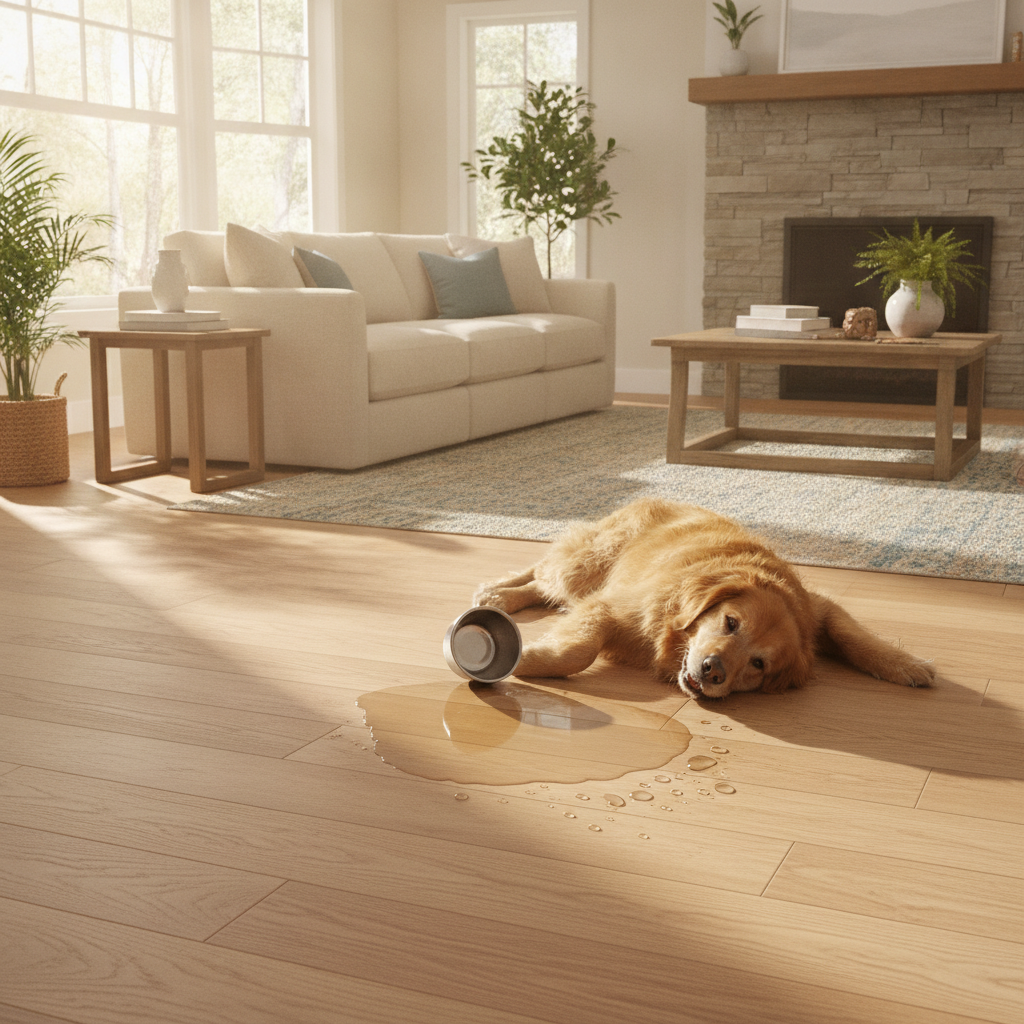
The frantic scramble for paper towels after a toppled water bowl. The heart-sinking click-clack-scratch of dog nails across a pristine surface. For pet owners, these sounds are all too familiar. You love your furry family members, but you also love your home and dream of having beautiful, elegant floors. For years, this has felt like an impossible choice: sacrifice style for durability or live in constant fear of the next inevitable scratch, spill, or accident.
This is the core conflict for millions of homeowners. You desire the timeless warmth and value of hardwood, but the realities of life with pets—the claws, the paws, the occasional mess—make it a high-risk, high-anxiety option. What if you didn’t have to choose?
Enter the modern flooring solution engineered to end this dilemma: waterproof hybrid hardwood. This is not just another wood-look alternative; it’s a revolutionary product that combines a genuine layer of real hardwood with a technologically advanced waterproof core. It offers the authentic beauty you want with the bulletproof durability you need. This guide is your definitive, data-driven playbook to understanding this game-changing material, helping you invest confidently in a floor that you and your pets can enjoy for years to come, worry-free.
- The Pet Owner’s Dilemma: Why Traditional Floors Fail the ‘Claw & Paw’ Test
- Defining ‘Pet-Proof’: Our 5-Point Checklist for the Perfect Pet-Friendly Floor
- The Champion Revealed: What is Waterproof Hybrid Hardwood?
- The Ultimate Showdown: Hybrid Hardwood vs. Other Top Pet-Friendly Floors
- Your Top Questions About Hybrid Hardwood and Pets Answered
- Style Without Sacrifice: Designing a Chic and Pet-Friendly Space
- Buyer’s Guide: How to Choose and Install Your Hybrid Hardwood Floor
- The Freedom of a Worry-Free Floor
- References
The Pet Owner’s Dilemma: Why Traditional Floors Fail the ‘Claw & Paw’ Test
Before we explore the solution, it’s crucial to understand why so many common flooring choices are simply not up to the task of cohabitating with pets. From scratches that mar the surface to moisture that seeps deep into the core, traditional floors often buckle under the pressure of daily pet life. This leads to frustration, costly repairs, and the feeling that a beautiful home is always just out of reach.
Many homeowners learn this lesson the hard way. For instance, solid hardwood’s vulnerability to moisture is a well-documented industry concern. The National Wood Flooring Association (NWFA) provides extensive guidelines on moisture protection precisely because wood naturally expands and contracts, making it susceptible to warping, cupping, and permanent damage from spills and accidents [1].
Furthermore, not all woods are created equal. The Janka hardness scale, which measures a wood’s resistance to denting and wear, reveals that popular choices like American Cherry or Douglas Fir are relatively soft, making them easy targets for the claws of even small dogs.
Here’s a breakdown of how common flooring types stack up—or fall short—in a pet-friendly home:
| Flooring Type | Common Failure Points for Pet Owners | The Modern Alternative |
|---|---|---|
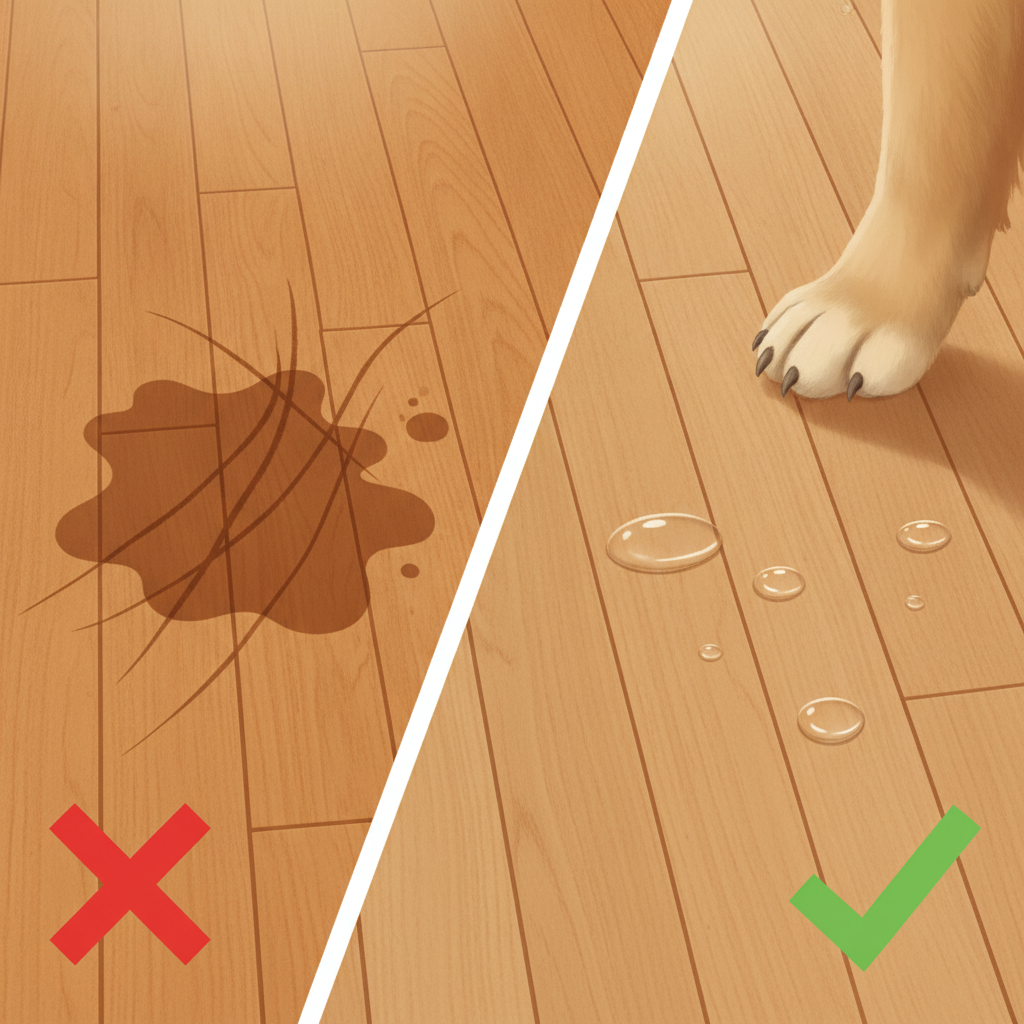
| Solid Hardwood | Scratches and dents easily (especially softer woods), absorbs moisture from spills and accidents leading to stains and warping, can be difficult to refinish repeatedly. | Waterproof Hybrid Hardwood |
| Standard Carpet | Traps pet dander, hair, and allergens; absorbs odors and stains deep into the fibers and padding; looped styles can be snagged by pet nails. | Low-pile, non-porous options |
| Traditional Laminate | Core material (fiberboard) swells and delaminates when exposed to moisture at the seams; can be very slippery for paws; creates a loud ‘clicking’ sound. | New-generation Waterproof Laminate |
This constant battle against damage is precisely why a new class of flooring was engineered—to provide a real, lasting solution.
Defining ‘Pet-Proof’: Our 5-Point Checklist for the Perfect Pet-Friendly Floor
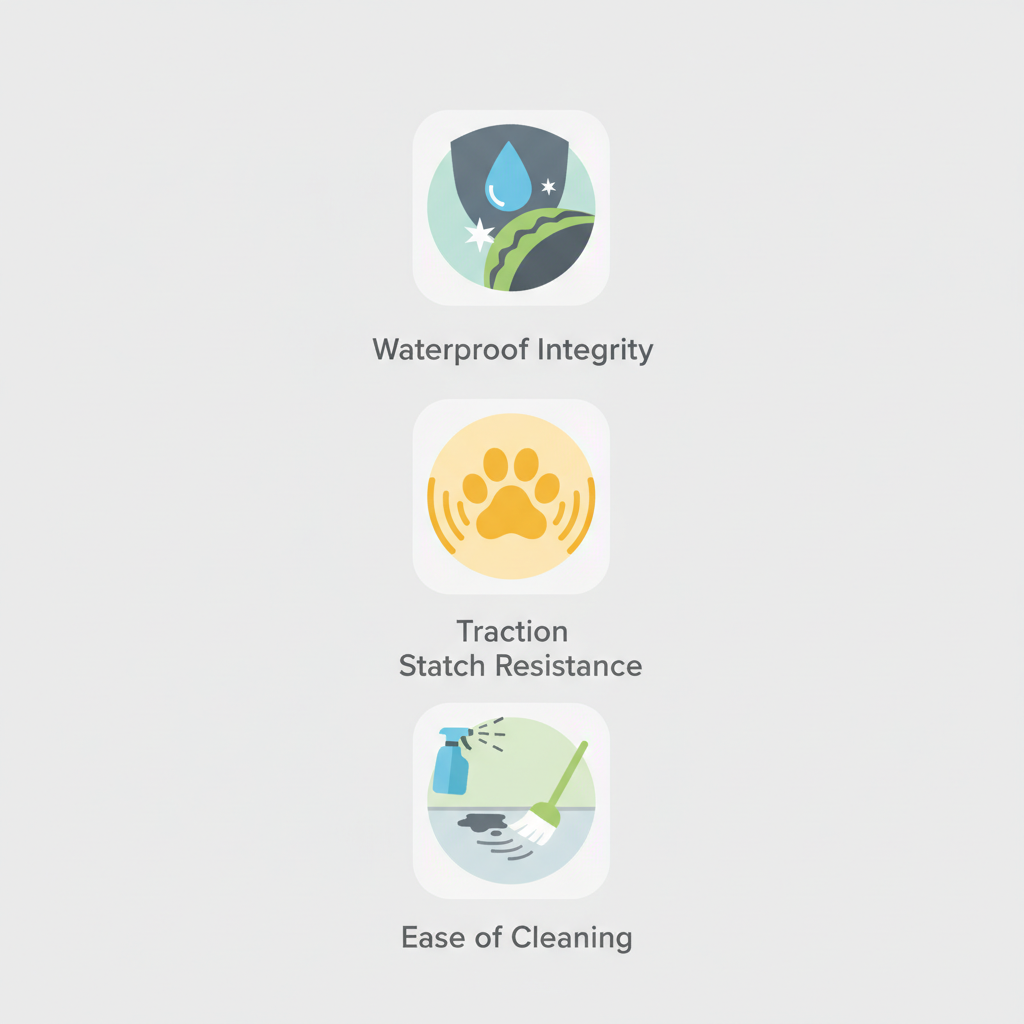
The term “pet-friendly” is used so often in marketing that it has lost its meaning. To truly evaluate a floor’s performance, you need a clear, objective framework. We’ve developed the Pet-Proof Performance Score (P3S), a 5-point checklist covering the critical metrics that matter most in a home with pets. Use this as your guide to cut through the hype and find a floor that genuinely meets your needs.
- Waterproof Integrity
This is non-negotiable. You need a floor that can handle everything from water bowl splashes to pet accidents without damage. It’s crucial to understand the difference between “water-resistant” and “waterproof.” Water-resistant floors can repel water for a short period, but prolonged exposure allows moisture to penetrate, especially at the seams. A truly waterproof floor is designed to prevent water from penetrating its core indefinitely. Industry standards, such as ASTM D1735 for water resistance testing, provide a benchmark for these claims, ensuring the product performs as advertised [2]. - Scratch & Scuff Resistance
The daily assault from claws, toys, and general pet activity requires a tough surface. The key to this is the floor’s wear layer. This is a transparent topcoat, often enhanced with durable materials like aluminum oxide, that protects the floor from scratches, stains, and fading. For vinyl and hybrid products, a thicker wear layer (measured in mils) means better protection. For laminates, an Abrasion Class (AC) rating—from AC1 (light residential) to AC5 (heavy commercial)—indicates its durability. For a home with active pets, look for a wear layer of at least 12 mil or an AC3 rating or higher. - Traction & Joint Health
A floor’s texture is not just about aesthetics; it’s a critical safety feature for your pet. As the American Kennel Club advises, overly slick surfaces can be dangerous for dogs, potentially leading to slips, falls, and joint injuries, especially in senior pets or those with mobility issues [3]. A floor with a subtle texture or an embossed-in-register finish (where the texture matches the visual grain) provides better grip for paws, promoting confidence and stability. - Stain & Odor Resistance
Accidents happen. The best pet-friendly floors have non-porous surfaces. This means liquids and odors from pet urine cannot soak into the material, which prevents lingering smells and permanent staining. Materials like vinyl, porcelain, and hybrid floors with robust topcoats allow messes to be cleaned up completely without a trace. - Ease of Cleaning
Finally, your floor should make your life easier, not harder. A smooth, non-porous surface without deep grout lines or textures that trap dirt and hair is ideal. The ability to quickly sweep, vacuum, and damp-mop without special chemicals or procedures is the hallmark of a truly low-maintenance, easy-to-clean pet-friendly floor.
The Champion Revealed: What is Waterproof Hybrid Hardwood?
Now that we have our checklist, let’s dive into the flooring that aims to check every box: waterproof hybrid hardwood. This product represents a pinnacle of flooring technology, engineered specifically to deliver the authentic beauty of wood without its inherent weaknesses.
At its core, hybrid hardwood is a multi-layered plank. While construction varies by brand, a typical high-quality plank consists of:
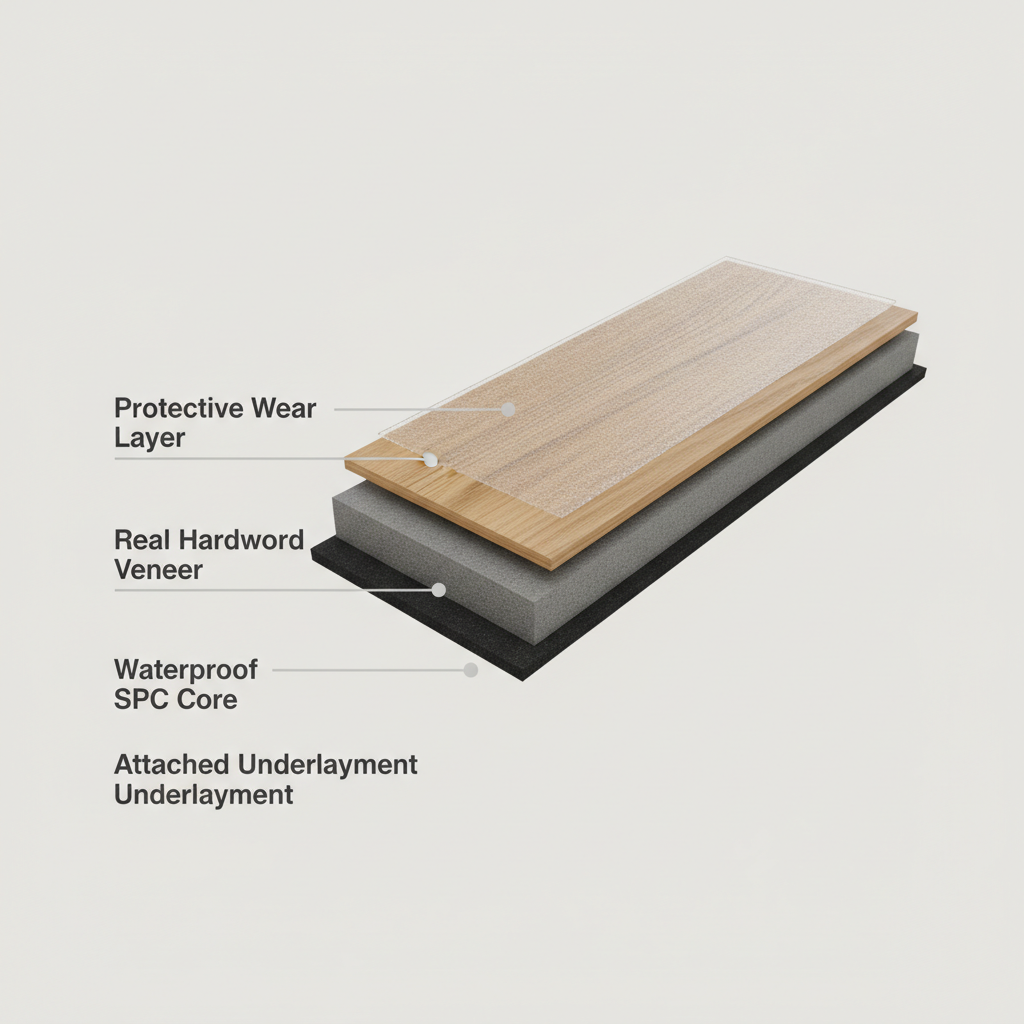
- Protective Wear Layer: A high-performance, transparent topcoat, often infused with aluminum oxide, that provides superior resistance to scratches, scuffs, and stains.
- Real Hardwood Veneer: This is the magic ingredient. A thin, authentic layer of genuine wood (like oak, hickory, or maple) gives the floor its unique grain, texture, and unmatched visual appeal. Unlike a printed pattern on vinyl or laminate, this is real wood.
- Waterproof Core: The engine of the plank. This is typically a high-density rigid core made from either a Stone Plastic Composite (SPC) or Wood Plastic Composite (WPC). This core is 100% waterproof, dimensionally stable, and provides the plank’s strength and dent resistance.
- Attached Underlayment: Most hybrid hardwood planks come with a pre-attached pad made of cork or foam. This provides sound absorption (reducing the ‘click-clack’ of pet nails), adds comfort underfoot, and simplifies installation.
A major concern for any material brought into the home is its impact on indoor air quality. For peace of mind, look for products with third-party certifications like FloorScore® [4] or Greenguard [5], which verify that the flooring meets strict standards for low volatile organic compound (VOC) emissions, ensuring a healthier environment for you and your pets.
The Core of the Matter: SPC vs. WPC in Hybrid Flooring
When choosing a hybrid hardwood, you’ll encounter two main types of waterproof cores: SPC and WPC. Understanding the difference is key to selecting the right product for your home. As flooring experts from the Resilient Floor Covering Institute (RFCI) can attest, both are excellent waterproof options, but they offer slightly different performance characteristics [6].
- SPC (Stone Plastic Composite): This core is made from a mixture of natural limestone powder, polyvinyl chloride, and stabilizers. This composition makes it incredibly dense and rigid.
- WPC (Wood Plastic Composite): This core combines recycled wood pulp and plastic composites. It is lighter and less dense than SPC.
Here’s a simple comparison to help you decide:
| Feature | SPC (Stone Plastic Composite) | WPC (Wood Plastic Composite) |
|---|---|---|
| Dent Resistance | Higher. The dense, rigid core is more resistant to impacts from heavy furniture or dropped objects. | Lower. The softer core is more susceptible to denting. |
| Feel Underfoot | Firmer. Feels more solid and rigid, similar to tile. | Softer & Quieter. Offers more cushioning and comfort, and is better at absorbing sound. |
| Cost | Often slightly more affordable due to material composition. | Can be slightly more expensive. |
For most pet owners, the superior dent and scratch resistance of an SPC core makes it the preferred choice for high-traffic areas and homes with active, large dogs.
The Ultimate Showdown: Hybrid Hardwood vs. Other Top Pet-Friendly Floors
How does waterproof hybrid hardwood stack up against other leading contenders in the pet-friendly flooring market? Using our 5-point checklist, let’s put them head-to-head. In a simulated “torture test” environment, where floors are subjected to standing water and abrasion, the differences become clear.
- Waterproof Hybrid Hardwood
This option truly offers the best of both worlds. It earns top marks for its 100% waterproof SPC or WPC core and its highly scratch-resistant wear layer. The real wood veneer provides an unmatched aesthetic that, as interior designers featured in publications like This Old House note, adds significant warmth and value to a home [7]. The textured surface provides good traction for pets.- Pet-Proof Score: ★★★★★
- Luxury Vinyl Plank (LVP)
LVP is an outstanding pet-friendly choice and a close competitor. It is also built with a waterproof rigid core (usually SPC) and a durable wear layer. It is waterproof, scratch-resistant, and easy to clean. The primary difference is aesthetic: LVP features a highly realistic 3D printed image of wood instead of a real wood veneer. While modern LVP is incredibly convincing, it can’t perfectly replicate the unique grain of genuine hardwood.- Pet-Proof Score: ★★★★☆
- Modern Waterproof Laminate
Laminate has come a long way. Older versions were notoriously vulnerable to water, but modern waterproof laminate features dense cores, water-repellent coatings, and tight-locking joints that prevent moisture from penetrating. It boasts exceptional scratch resistance, often with the highest AC ratings. However, it can still be more slippery than textured hybrid or LVP floors.- Pet-Proof Score: ★★★★☆
- Wood-Look Porcelain Tile
For sheer durability, nothing beats porcelain tile. It is completely waterproof, virtually impossible to scratch, and will never stain or hold odors. It is the ultimate “bomb-proof” flooring. The downsides, however, are significant for a pet-friendly home. The surface is extremely hard and cold underfoot, offering little comfort for pets. It can be very slippery when wet, and the grout lines can be difficult to keep clean and may require periodic sealing.- Pet-Proof Score: ★★★☆☆
Your Top Questions About Hybrid Hardwood and Pets Answered
Even with all this information, you likely have specific questions about how this flooring performs in the real world. Here are direct answers to the most common concerns from pet owners.
Can dog nails scratch hybrid hardwood?
While hybrid hardwood is exceptionally scratch-resistant, no floor is truly “scratch-proof.” The robust wear layer, often fortified with an aluminum oxide finish, provides powerful protection against everyday scuffs and minor scratches from pet nails. However, a very heavy dog running and sliding with untrimmed nails could potentially cause a surface-level scratch. Keeping your pet’s nails trimmed is still the best practice for any floor.
Is hybrid flooring non-toxic for cats and dogs?
Yes, provided you choose a quality product. Reputable manufacturers ensure their flooring is safe for families and pets by meeting stringent indoor air quality standards. To be certain, always look for third-party certifications like FloorScore® [4] and Greenguard [5], which guarantee low chemical emissions.
How do you clean pet messes on hybrid hardwood?
Cleaning is remarkably simple. For dry debris like pet hair and dirt, regular sweeping or vacuuming (using a hard floor setting without a beater bar) is sufficient. For spills or pet accidents, wipe them up promptly with a cloth. For a deeper clean, use a damp mop with a pH-neutral cleaning solution. According to cleaning experts at the Good Housekeeping Institute, you should avoid harsh chemicals, wax-based cleaners, or steam mops, as they can damage the finish [8].
Does hybrid hardwood sound loud when pets walk on it?
This was a common complaint with older laminate floors, but hybrid hardwood is designed to be much quieter. The dense rigid core combined with an attached acoustic underlayment significantly reduces sound transmission, dampening the “clicking” sound of pet nails and creating a quieter, more peaceful home environment.
Style Without Sacrifice: Designing a Chic and Pet-Friendly Space
One of the biggest fears for pet owners is that choosing a durable floor means settling for a sterile, uninspired look. Waterproof hybrid hardwood shatters this myth. Because it uses a real wood veneer, you get the authentic, high-end aesthetic that serves as the perfect foundation for any design style.
Professional interior designers often advise pet owners to choose flooring with a bit of color variation and grain pattern. A floor with a multi-tonal, wire-brushed, or hand-scraped texture is brilliant at camouflaging minor scratches, pet hair, and dirt between cleanings. Lighter, natural wood tones or mid-tone grays are excellent choices for hiding fur from both light and dark-colored pets.
You can achieve any look, from a modern farmhouse with wide-plank white oak to a sleek minimalist space with narrow-plank maple. The versatility of hybrid hardwood allows you to design a home that is both magazine-worthy and completely life-proof. To add softness, warmth, and extra comfort for your pets, consider layering stylish, pet-friendly area rugs over your floor. Look for rugs made from durable, easy-to-clean materials like polypropylene or nylon with a low pile that won’t snag on claws.
Buyer’s Guide: How to Choose and Install Your Hybrid Hardwood Floor
Ready to make a decision? The final step is ensuring you select the right product and have it installed correctly to guarantee its performance for years to come.
Here is a final checklist of what pet owners should look for when shopping:
- A Thick Wear Layer: Aim for a minimum of 12 mil for moderate pet traffic and 20 mil or more for large, active dogs or multi-pet households.
- An SPC Core: For superior dent and impact resistance, an SPC (Stone Plastic Composite) core is generally the best choice for homes with pets.
- A Comprehensive Warranty: Read the warranty carefully. Look for long-term coverage (25 years to lifetime for residential use) and ensure it explicitly covers water damage. Be aware that most warranties will not cover scratches, which are considered normal wear and tear.
- Reputable Brands: While many companies offer hybrid flooring, stick with established brands known for quality control and customer support, such as Shaw, Mohawk, and COREtec, among others.
- Professional Installation: While hybrid floors are often DIY-friendly, improper installation can void your waterproof warranty. A professional installer, especially one certified by an organization like the NWFA, will ensure the subfloor is properly prepped and that all seams are locked perfectly, creating a watertight seal.
The Freedom of a Worry-Free Floor
For too long, pet owners have been forced to compromise, choosing between the home they want and the pets they love. Waterproof hybrid hardwood finally offers a way out. It is the culmination of decades of flooring innovation, delivering the perfect trifecta of authentic wood beauty, uncompromising waterproof protection, and the rugged durability needed to withstand the joyful chaos of life with pets.
By making this choice, you are not just buying a new floor; you are investing in peace of mind. You are giving yourself the freedom to relax and enjoy your home and your furry companions without the constant worry of the next spill or scratch. You are now equipped with the expert knowledge to select a floor that your entire family—pets included—will love for a lifetime.
References
- National Wood Flooring Association. (n.d.). Moisture & Wood. NWFA.
- ASTM International. (n.d.). ASTM D1735 – 08(2020) – Standard Practice for Testing Water Resistance of Coatings Using Water Fog Apparatus.
- American Kennel Club. (n.d.). Dog-Proofing: A Guide to Keeping Your Home Safe for Your Dog. AKC.
- SCS Global Services. (n.d.). FloorScore®.
- UL. (n.d.). GREENGUARD Certification.
- Resilient Floor Covering Institute. (n.d.). About RFCI.
- This Old House. (n.d.). This Old House.
- Good Housekeeping Institute. (n.d.). Home Care & Cleaning Lab. Good Housekeeping.
