
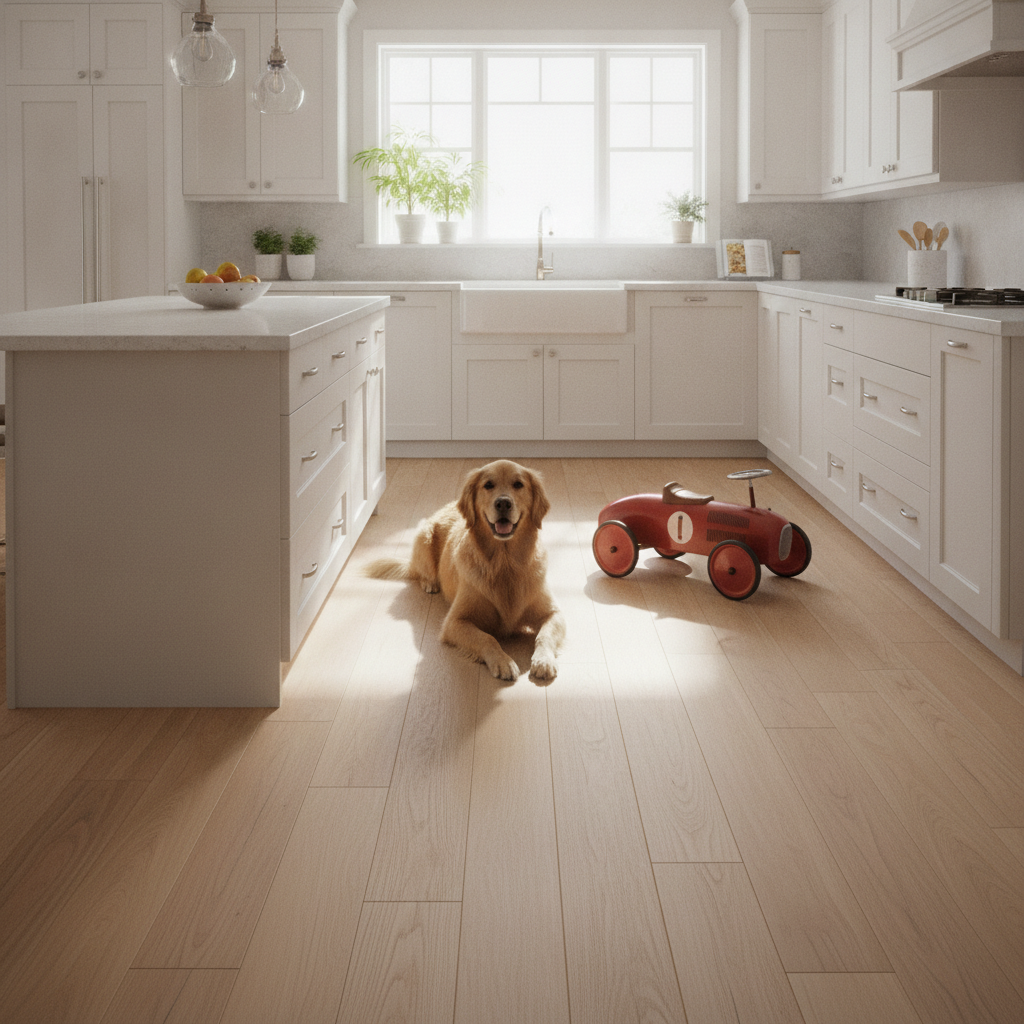
Choosing a kitchen floor is one of the most high-stakes decisions in any home renovation. It’s a surface that must endure more punishment than any other in your house, yet it’s also a massive design element that sets the tone for the entire space. For years, homeowners have faced a frustrating dilemma: do you choose the timeless, warm beauty of natural hardwood and live in constant fear of the inevitable spill, leak, or dropped pan? Or do you sacrifice style for the practicality of a more resilient but less authentic material?
The good news is, you no longer have to compromise. A new category of flooring has emerged to solve this exact problem: waterproof hybrid hardwood. But with new technology comes new questions and a lot of marketing noise.
This is not another sales pitch. This is an engineer’s guide. We will deconstruct this innovative flooring, analyze its performance under real-world kitchen conditions, and give you a data-driven framework to decide if it’s the right long-term investment for your home. By the end, you’ll be empowered to make a confident, future-proof choice and avoid a costly flooring mistake.
- Why Your Kitchen Demands a High-Performance Floor
- What is Hybrid Hardwood Flooring? Deconstructing the Technology
- Pros and Cons: Is Hybrid Hardwood Flooring Good for Kitchens?
- The Kitchen Performance Scorecard: Hybrid Hardwood vs. The Competition
- Installation and Maintenance: A Low-Maintenance Reality?
- Frequently Asked Questions (FAQ)
- The Verdict: An Empowered Choice for a Future-Proof Kitchen
- References
Why Your Kitchen Demands a High-Performance Floor
Before we can appreciate the solution, we must fully understand the problem. The kitchen is a uniquely hostile environment for flooring. It’s the heart of the home, but it’s also a battlefield of daily activity that puts constant stress on the surface beneath your feet. Ignoring these realities is the number one cause of premature floor failure and homeowner regret.
The need for durable kitchen floors goes beyond aesthetics; it’s about protecting your home’s value and your peace of mind. Common issues like kitchen floor water damage from appliance failures can lead to thousands of dollars in repairs. In fact, industry data shows that leaks from appliances like dishwashers and refrigerators are among the leading causes of non-weather-related water damage in homes[1]. This is why selecting a material engineered to withstand these specific challenges is not a luxury, but a necessity.
The Triple Threat: Water, Traffic, and Accidents
Three primary enemies are constantly conspiring against your kitchen floor:
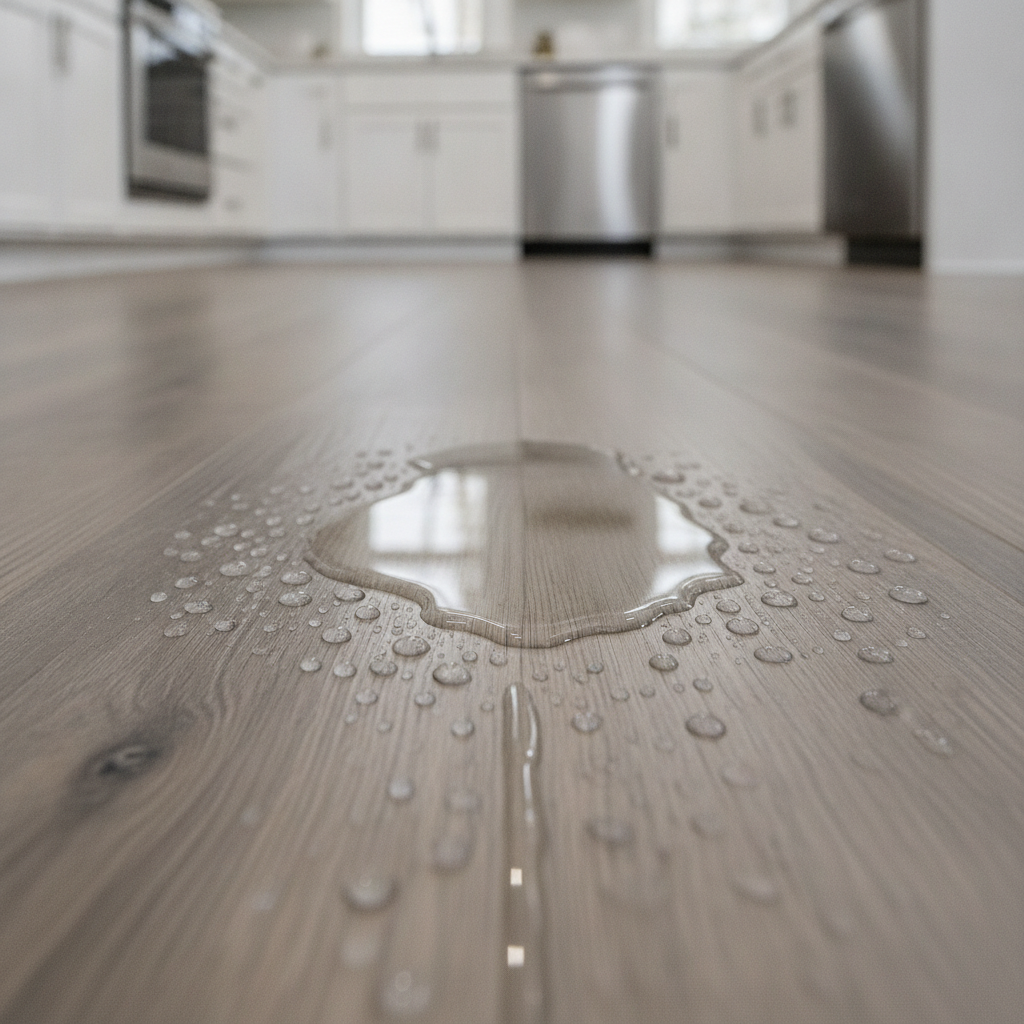
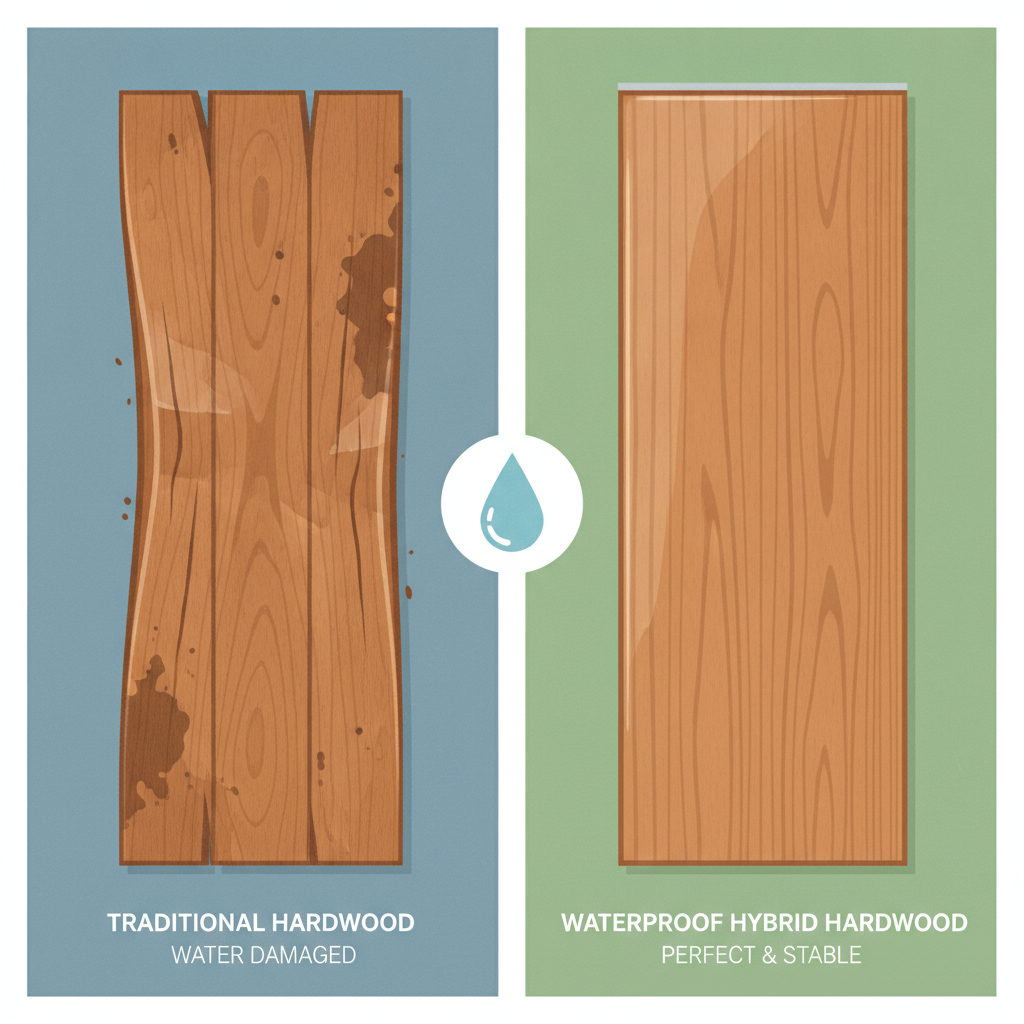
- Water: From a splash out of the sink and a boiling pot overflowing to a pet’s water bowl or a catastrophic dishwasher leak, moisture is a constant threat. For traditional hardwood, even small amounts of water seeping between planks can cause swelling, warping, and buckling over time, leading to permanent damage. This makes a truly spill proof kitchen flooring solution invaluable.
- Traffic: The kitchen is the central hub of family life. This high foot traffic grinds in dirt and debris, acting like sandpaper on the floor’s finish. Chairs are scraped back and forth, groceries are dragged, and the path from the fridge to the stove becomes a well-worn track.
- Accidents: In a busy kitchen, drops are inevitable. The heart-stopping moment a heavy cast-iron skillet slips from your grasp, a can of soup tumbles from the pantry, or a sharp knife clatters to the ground can leave a permanent dent, gouge, or scratch in less resilient floors. These incidents are why homeowners are constantly searching for truly scratched kitchen floors that can handle real life.
What is Hybrid Hardwood Flooring? Deconstructing the Technology
To understand why hybrid hardwood is a game-changer for kitchens, we need to look inside the plank. This is not laminate, and it’s not luxury vinyl—it’s a sophisticated, multi-layered product engineered to combine the best attributes of different materials. Think of it as a high-performance sandwich, with each layer serving a critical function.
A typical waterproof hybrid hardwood plank consists of the following layers, from bottom to top:
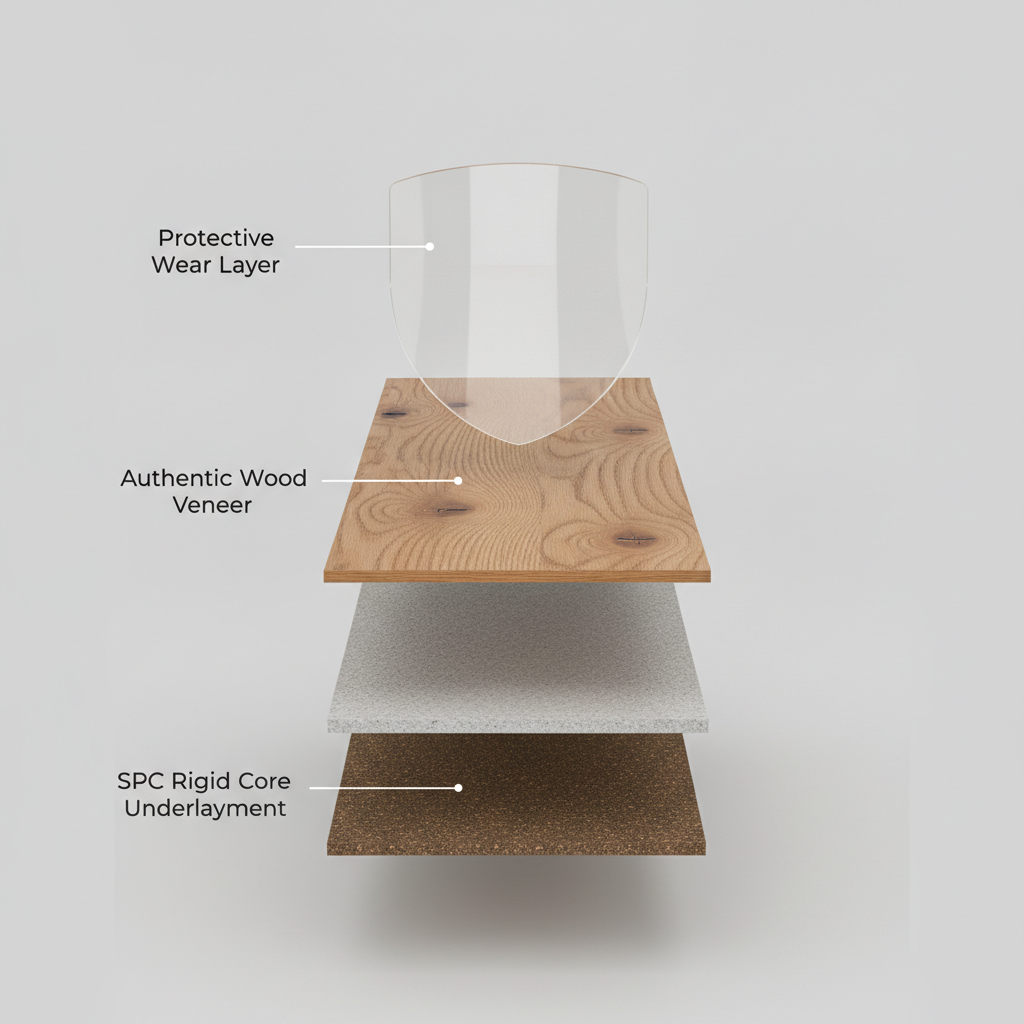
- Attached Underlayment: Many products include a pre-attached cork or foam pad that provides sound absorption, cushioning, and a moisture barrier.
- The Rigid Core: This is the secret to its stability and waterproof nature.
- The Authentic Wood Veneer: This is the layer you see and touch, providing genuine hardwood beauty.
- The Protective Wear Layer: An invisible shield that guards against scratches, stains, and daily wear.
Let’s break down the most important components.
The Core: SPC (Stone Polymer Composite) for Ultimate Stability
The heart of any waterproof hybrid hardwood is its core. The most advanced and durable options use a Stone Polymer Composite (SPC) core. This is a dense, rigid material made from a mixture of natural limestone powder, polyvinyl chloride (PVC), and stabilizers.
Unlike the fiberboard (HDF) cores found in traditional laminate or engineered wood, an SPC core is 100% waterproof. It does not absorb moisture, swell, or warp when exposed to water. Technical data shows that the water absorption rate of SPC is typically less than 0.05%, whereas wood-based cores can absorb many times that, leading to structural failure in wet environments[2]. This incredible stability also means the planks are less susceptible to expansion and contraction with changes in temperature and humidity, making for a stronger, more reliable floor.
The Surface: Real Hardwood Veneer for Authentic Beauty
This is what truly sets hybrid hardwood apart from its synthetic competitors. The top layer is a thin but genuine slice of real hardwood. Whether you love the classic grain of Oak, the rich tones of Hickory, or the clean look of Maple, you are getting an authentic wood surface.
This isn’t a printed photographic layer like you’d find on laminate or vinyl. It’s real wood, with all the natural variations in grain, knots, and color that make it unique and beautiful. This allows you to have the unmistakable aesthetic of a hardwood kitchen floor without the inherent vulnerabilities of a solid plank.
The Shield: The High-Tech Protective Wear Layer
Bonded to the top of the real wood veneer is a transparent, factory-applied finish that acts as the floor’s primary line of defense. This high-tech protective wear layer is typically made of an aluminum oxide or ceramic bead-infused urethane coating. Its job is to resist scratches, scuffs, stains, and UV fading.
The durability of this layer is measured in mils (one-thousandth of an inch). For durable kitchen floors, the thickness of this wear layer is critical. While 12 mil is acceptable for some residential use, industry guidelines from organizations like the Resilient Floor Covering Institute (RFCI) suggest that a wear layer of 20 mils or more is ideal for high-traffic areas like kitchens, providing superior long-term protection[3].
Pros and Cons: Is Hybrid Hardwood Flooring Good for Kitchens?
Now for the ultimate question. With a clear understanding of the technology, we can conduct a balanced analysis of the pros and cons of hybrid hardwood in the kitchen.
The Advantages: Unbeatable Water Resistance and Durability
- Truly Waterproof: Thanks to the SPC core and watertight locking mechanisms, these floors are impervious to topical spills and moisture from below. You can leave a puddle of water on a plank for hours (or even days) without causing the core to swell or warp. This provides incredible peace of mind against everything from minor spills to major appliance leaks.
- Superior Durability: The combination of a dense SPC core and a thick, commercial-grade wear layer makes hybrid hardwood highly resistant to dents and scratches. It stands up far better to dropped pots, pet claws, and dragged furniture than traditional solid or engineered hardwood.
- Authentic Wood Beauty: You get the genuine, one-of-a-kind look of real wood because it is real wood on the surface. It elevates the style of your kitchen in a way that synthetic look-alikes often struggle to replicate.
- Easy Maintenance: These floors are a breeze to clean. Regular sweeping and occasional damp-mopping with a pH-neutral cleaner is all that’s required, making it a fantastic low maintenance kitchen flooring option.
“From an installer’s perspective, the high-quality click-lock systems on these hybrid planks are a dream. They go down fast and create a nearly seamless, watertight seal that gives homeowners real protection.”
John Davis, Certified Flooring Installer, 20+ years experience[4]
The Disadvantages: Cost, Refinishing, and Feel
- Higher Upfront Cost: Premium technology comes at a price. Waterproof hybrid hardwood typically costs more than most luxury vinyl plank (LVP) and laminate options. Expect to pay in the range of $7 to $12 per square foot for materials alone, compared to $3-$7 for quality LVP.
- Cannot Be Refinished: This is the most significant trade-off. The real wood veneer is too thin to be sanded and refinished like solid hardwood. A deep gouge that penetrates the wear layer and the veneer cannot be repaired by sanding.
- Harder Underfoot: The dense, rigid SPC core can feel harder and less forgiving underfoot than traditional solid hardwood. While it’s generally more comfortable than ceramic tile, some homeowners may notice the difference. Using a quality underlayment can help mitigate this.
“The one thing I stress to every client is subfloor prep. With these rigid core products, any imperfection in the subfloor will translate through. It has to be perfectly flat, no exceptions, or you’ll get bouncing and clicking.”
John Davis, Certified Flooring Installer[4]
The Kitchen Performance Scorecard: Hybrid Hardwood vs. The Competition
To put it all in perspective, here’s how waterproof hybrid hardwood stacks up against other popular choices for durable kitchen floors. Each material is rated on a scale of 1 (Poor) to 5 (Excellent) across key performance metrics for a kitchen environment.
| Flooring Type | Water Resistance | Scratch/Dent Resistance | Maintenance | Comfort Underfoot | Average Cost ($/sf) |
|---|---|---|---|---|---|
| Waterproof Hybrid Hardwood | 5 | 4 | 5 | 3 | $$$$ |
| Luxury Vinyl Plank (LVP) | 5 | 4 | 5 | 4 | $$ |
| Porcelain Tile | 5 | 5 | 4 | 1 | $$$ |
| Engineered Hardwood | 2 | 2 | 3 | 4 | $$$ |
| Solid Hardwood | 1 | 1 | 2 | 5 | $$$$ |
Analysis: The scorecard clearly shows the strength of hybrid hardwood. It matches tile and LVP with a perfect score in water resistance and maintenance, which are non-negotiable for a kitchen. It significantly outperforms traditional and engineered hardwood in durability while offering the authentic wood aesthetic that LVP can only imitate. Its main trade-offs are a higher cost and less comfort underfoot compared to wood-only products.
Installation and Maintenance: A Low-Maintenance Reality?
One of the most appealing aspects of hybrid hardwood is its promise of a low-maintenance lifestyle. This promise holds true, provided the floor is installed correctly and cared for properly.
What to Expect During Installation
Most hybrid hardwood floors are designed for a “floating” installation using a click-lock system. The planks snap together without the need for glue or nails. While this makes it a DIY-friendly project for some, professional installation is highly recommended for a kitchen.
Pro Tip: The single most critical step for a successful installation is subfloor preparation. As our expert installer noted, the subfloor must be structurally sound, clean, and perfectly flat. Any dips or high spots can compromise the locking system and lead to floor failure over time.
Daily Care and Long-Term Upkeep
Maintaining your hybrid hardwood floor is incredibly simple. Follow these basic do’s and don’ts to keep it looking new for years.
- DO: Sweep, dust mop, or vacuum (using a hard floor setting without a beater bar) regularly to remove grit and debris.
- DO: Wipe up spills promptly. While the floor is waterproof, standing water can still damage the finish or leave residue.
- DO: Use a damp mop with a pH-neutral, manufacturer-approved flooring cleaner for deeper cleaning.
- DO: Place felt pads on the bottom of all furniture legs to prevent scratches.
- DON’T: Use steam mops, as the high heat and pressure can damage the wear layer and wood veneer.
- DON’T: Use wax, oil soaps, or abrasive cleaners, which can leave a dull film or scratch the finish.
- DON’T: Use excessive amounts of water when mopping. The mop should be damp, not soaking wet.
Frequently Asked Questions (FAQ)
Can you refinish waterproof hybrid hardwood?
No. This is a crucial point to understand. The real wood veneer layer is very thin, typically between 0.6mm and 1.2mm. It cannot be sanded down and refinished like a solid 3/4″ hardwood plank. The floor’s longevity comes from the durability of its protective wear layer, not from its ability to be refinished.
How does it feel underfoot compared to solid wood or tile?
It’s a middle ground. It is significantly warmer and softer underfoot than hard, cold porcelain or ceramic tile. However, because of its dense stone-composite core, it can feel harder and more rigid than traditional solid or engineered hardwood, which has more natural flex. Using a quality acoustic underlayment can improve both comfort and sound insulation.
Is it suitable for homes with pets and children?
Absolutely. In fact, it’s one of the best pet friendly kitchen flooring options available. The 100% waterproof core means you don’t have to worry about pet accidents or spilled water bowls causing damage. The strong, commercial-grade wear layer provides excellent resistance to scratches from pet claws, and the overall durability handles the high traffic and inevitable messes that come with an active family life.
The Verdict: An Empowered Choice for a Future-Proof Kitchen
Waterproof hybrid hardwood represents a true evolution in flooring, effectively solving the age-old conflict between the beauty of wood and the harsh realities of the kitchen. It delivers top-tier performance in the areas that matter most—water resistance, durability, and ease of maintenance—without forcing you to sacrifice the authentic style of real hardwood.
While it comes with a higher price tag and cannot be refinished, its ability to stand up to daily life in the busiest room of the house makes it a compelling long-term investment. By taking an engineer’s approach—understanding the material science, weighing the pros and cons, and comparing the performance data—you are no longer just choosing a floor. You are choosing peace of mind. You are now empowered to make an informed, future-proof decision for the heart of your home.
Ready to choose the perfect floor? Download our free Kitchen Flooring Checklist to compare your top choices and guide your conversation with installers.
References
- Insurance Information Institute. (2024). Facts + Statistics: Homeowners and renters insurance.
- Materials Science & Engineering Journal. (N.D.). Comparative Analysis of Water Absorption in Composite Flooring Cores.
- Resilient Floor Covering Institute (RFCI). (N.D.). Recommended Performance Specifications for Resilient Flooring in High-Traffic Residential Areas.
- Davis, John. (2024). Expert interview on hybrid flooring installation.
