
For decades, homeowners have faced a frustrating dilemma: the timeless beauty of hardwood floors versus the practical realities of life in kitchens and bathrooms. The warmth and elegance of real wood have always seemed at odds with the splashes, spills, and humidity that define these high-traffic spaces. The fear of water damaged hardwood—cupping, warping, and permanent stains—has forced many to compromise, choosing less-than-ideal alternatives. But what if you didn’t have to compromise?
Enter waterproof hybrid hardwood, an innovative flooring solution designed to bridge this gap. This isn’t just another wood-look product; it’s a revolutionary fusion of authentic wood veneer and a resilient, 100% waterproof core. This article is your definitive playbook for understanding this game-changing material. We’ll go beyond the marketing claims to deconstruct its technology, pit it against top competitors like LVP and tile, and provide expert-backed guidance on installation and maintenance. By the end, you’ll have the confidence and knowledge to decide if hybrid hardwood is the perfect, worry-free foundation for your home’s most challenging rooms.
- The Problem with Wood in Wet Areas: Why Traditional Floors Fail
- What Exactly Is Waterproof Hybrid Hardwood?
- The Ultimate Showdown: Hybrid Hardwood vs. Other Waterproof Options
- Can You Really Put Hybrid Hardwood in a Full Bathroom?
- The Perfect Recipe: Why Hybrid Hardwood Works in Kitchens
- Installation Essentials: How to Guarantee a Waterproof Result
- FAQ: Your Top Questions About Hybrid Hardwood Answered
- Conclusion
- References & Authoritative Sources
The Problem with Wood in Wet Areas: Why Traditional Floors Fail
To appreciate the innovation of hybrid hardwood, we must first understand why its traditional counterpart fails in wet environments. Solid hardwood is a natural, porous material. Think of a plank of wood as a tight bundle of microscopic straws. When exposed to water or high humidity, these fibers absorb moisture and swell. When they dry, they shrink. This constant cycle of expansion and contraction is the root cause of common flooring failures.
This movement leads to visible and often irreversible damage:
- Cupping: The edges of a plank become higher than its center, creating a concave shape.
- Crowning: The center of the plank swells and rises higher than its edges.
- Buckling: The most severe reaction, where the flooring lifts entirely off the subfloor, often due to a major leak or flood.
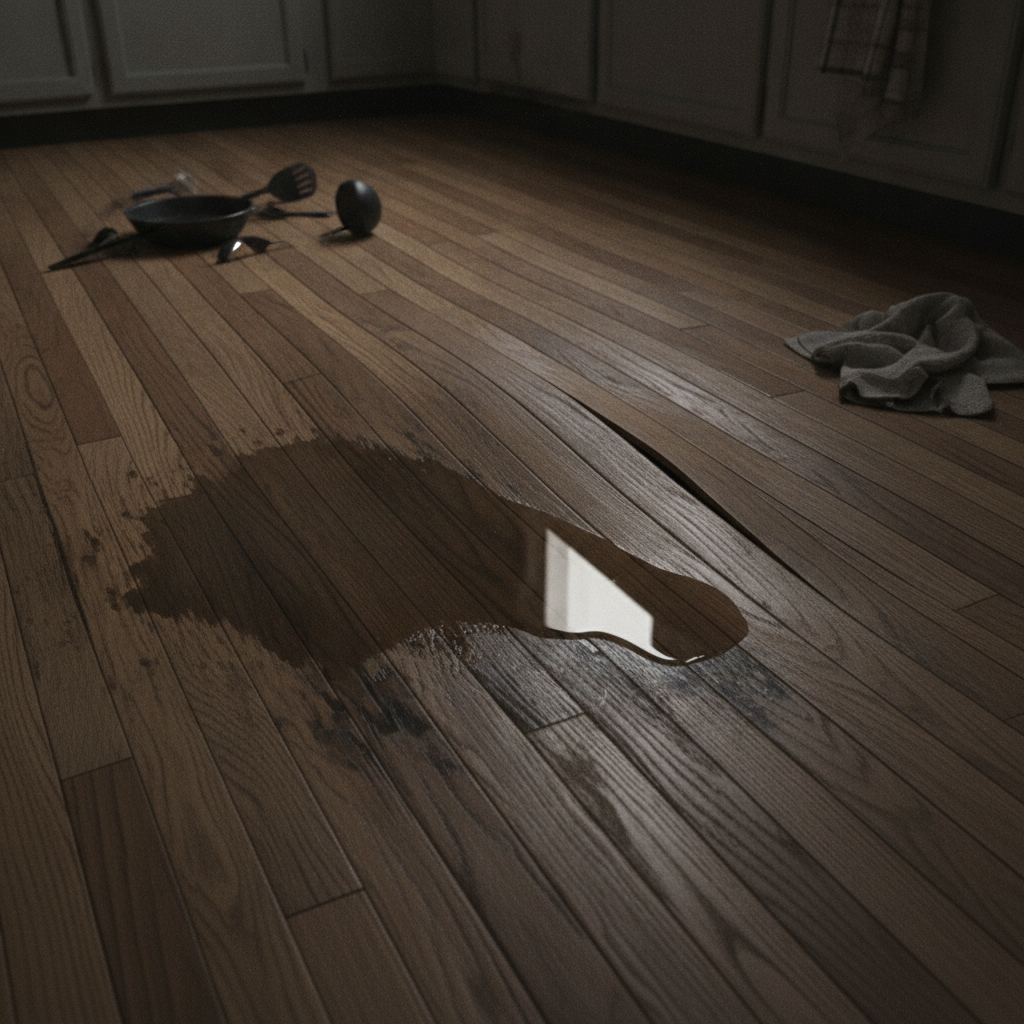
Industry authorities like the National Wood Flooring Association (NWFA) provide strict guidelines on acceptable moisture levels for both the wood and the subfloor before installation[1]. Even minor deviations can lead to warped kitchen floors and chronic bathroom flooring moisture issues. A leaky dishwasher, a child’s enthusiastic bath time, or even consistently high humidity can be enough to ruin a significant investment, illustrating why a different solution has been so desperately needed.
What Exactly Is Waterproof Hybrid Hardwood?
Waterproof hybrid hardwood is a marvel of modern flooring engineering, designed to deliver the authentic look and feel of wood without its inherent vulnerability to water. Its strength lies in a multi-layered composition, where each layer serves a distinct purpose.
Here is a breakdown of a typical hybrid hardwood plank, from top to bottom:
- Protective Wear Layer: A transparent, highly durable topcoat, often infused with aluminum oxide, that resists scratches, stains, and UV fading.
- Real Wood Veneer: This is the magic ingredient. Unlike laminate or vinyl which use a printed image, this is a thin, authentic slice of hardwood (like oak, hickory, or maple). It provides the unique grain patterns, knots, and natural texture that can’t be replicated.
- Waterproof Core: The heart of the plank. This is typically a Stone Polymer Composite (SPC) or Wood Polymer Composite (WPC) core. These materials are incredibly dense, rigid, and 100% waterproof. They do not swell or warp when exposed to moisture, providing exceptional dimensional stability. According to manufacturer technical specifications, this core is what protects your subfloor from top-down spills and moisture[6].
- Attached Underlayment: Most hybrid hardwood products include a pre-attached pad made of cork or foam. This provides sound dampening, adds comfort underfoot, and can help smooth over minor subfloor imperfections.
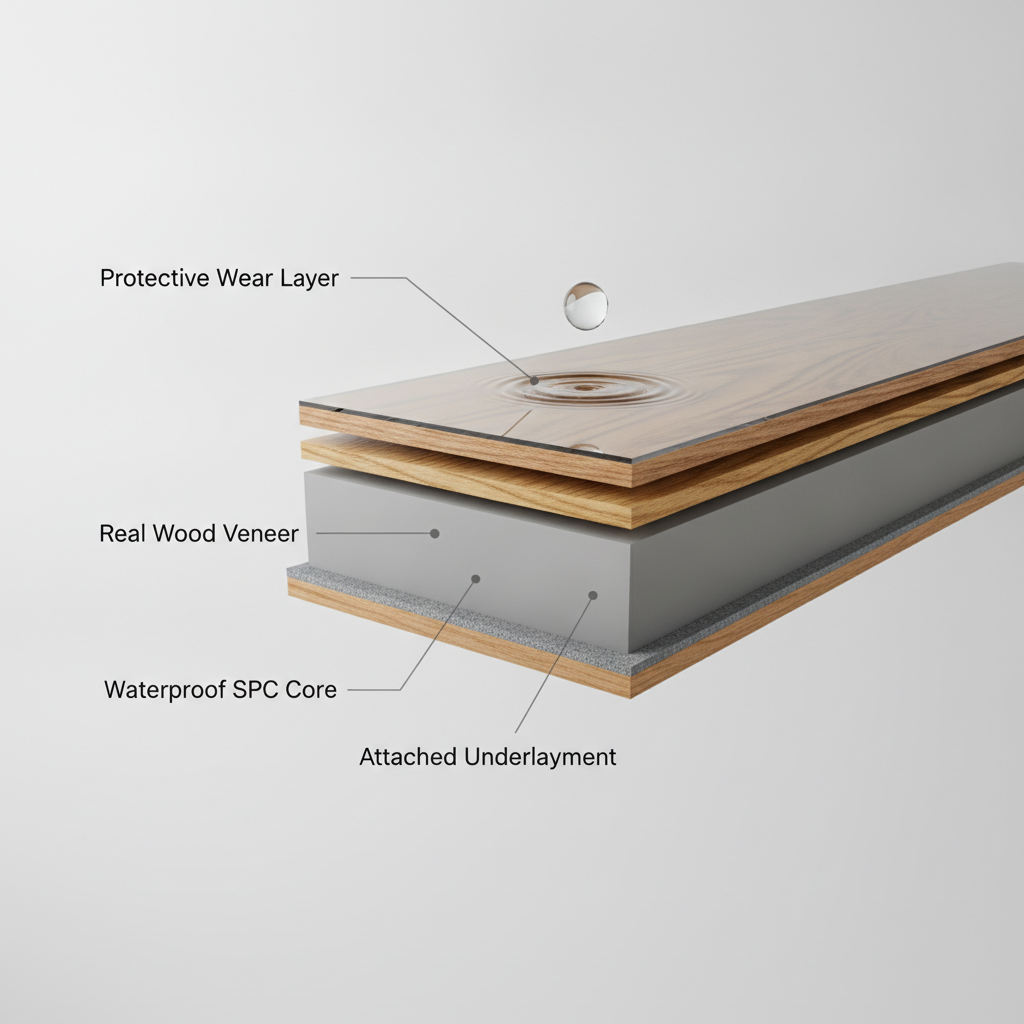
It’s crucial to understand the term “waterproof.” The core of the plank is impervious to water, meaning spills that are cleaned up in a timely manner will not damage the plank’s structure or the subfloor beneath. The real wood veneer on top, while protected by the wear layer, is still wood and should be cared for according to the manufacturer’s instructions.
The Ultimate Showdown: Hybrid Hardwood vs. Other Waterproof Options
Choosing the best waterproof flooring for high moisture areas can be overwhelming. To simplify your decision, we’ve created a scorecard comparing the top contenders.
| Feature | Hybrid Hardwood | Luxury Vinyl Plank (LVP) | Porcelain Tile |
|---|---|---|---|
| Realism | 5/5 | 3.5/5 | 3/5 |
| Durability | 4/5 | 4.5/5 | 5/5 |
| Cost (Material) | 2/5 | 4/5 | 3/5 |
| DIY-Friendliness | 4/5 | 5/5 | 1/5 |
| Feel Underfoot | 4/5 | 3/5 | 2/5 |
Hybrid Hardwood vs. Luxury Vinyl Plank (LVP)
This is the most common comparison, as both products excel at providing a waterproof wood look. However, they achieve it in fundamentally different ways.
Realism and Texture: Hybrid hardwood has an undeniable edge here. Its surface is real wood, offering authentic grain and texture that even the best LVP can’t perfectly mimic. High-end LVP uses a technology called “embossed in register” (EIR), where the surface texture is pressed to match the underlying photographic image. While impressive, it’s still a simulation. Hybrid hardwood is the real thing.
Feel and Sound: This is a key experiential factor often overlooked. Hybrid hardwood, with its rigid core and real wood veneer, feels more substantial and sounds more like traditional hardwood underfoot. LVP, being more flexible, can sometimes feel and sound more “plastic” or hollow.
Durability: Both are highly durable. The winner often comes down to the quality of the wear layer, which is measured in mils (thousandths of an inch). High-quality LVP and hybrid hardwood both offer robust wear layers (typically 12-20 mil or higher) that resist scratches and scuffs. Standards from the Resilient Floor Covering Institute (RFCI) help define quality for LVP products[2]. For abrasion resistance, both products are subject to industry testing standards like those from ASTM International, which provide a measurable way to compare durability[3].
Hybrid Hardwood vs. Porcelain Wood-Look Tile
Here, the trade-off is between ultimate durability and natural comfort.
Durability and Water Resistance: Porcelain tile is the undisputed champion of durability. It is virtually impervious to water, scratches, and stains. The Porcelain Enamel Institute (PEI) rating system classifies tile’s hardness and durability, with higher ratings suitable for heavy commercial traffic. For a truly waterproof installation in a bathroom, the methods outlined in the Tile Council of North America (TCNA) handbook are the industry gold standard[4].
Comfort and Aesthetics: This is where hybrid hardwood shines. Tile is cold and hard underfoot, which can be uncomfortable in a bathroom or a kitchen where you stand for long periods. Hybrid hardwood is warmer and softer. Furthermore, tile requires grout lines, which can disrupt the seamless wood look and require regular cleaning and sealing to prevent staining. Hybrid hardwood clicks together for a clean, uninterrupted appearance.
Can You Really Put Hybrid Hardwood in a Full Bathroom?
This is the ultimate test for any “waterproof” flooring. The answer is a qualified yes, but success depends entirely on proper installation and managing the environment. A full bathroom presents challenges beyond simple spills, namely constant high humidity and steam.
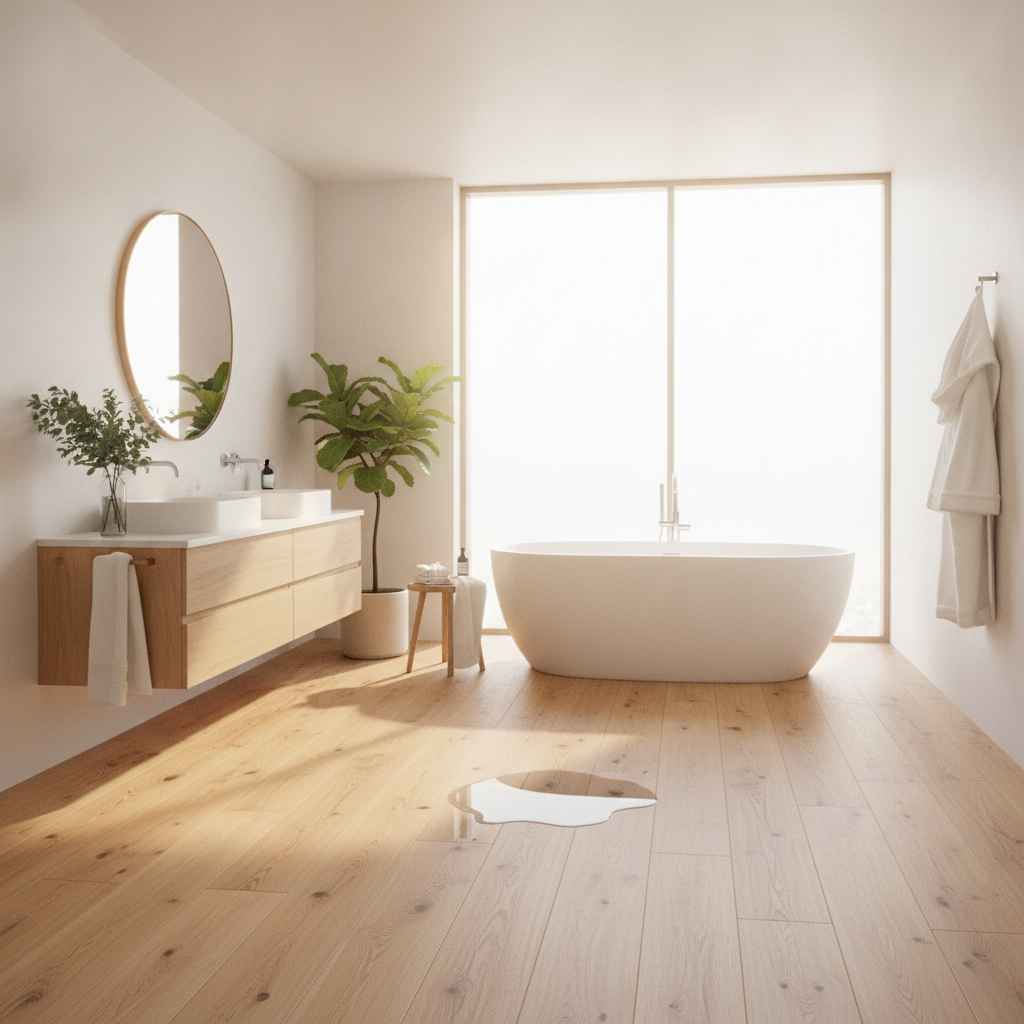
While the core of hybrid hardwood is waterproof, moisture can still find its way into the gaps around the perimeter of the room or fixtures if not sealed correctly. This can lead to moisture being trapped under the floor, creating potential for mold or subfloor damage.
To mitigate these risks, follow this Bathroom Installation Checklist:
- Perfectly Level Subfloor: Ensure the subfloor is flat and sound, meeting manufacturer specifications.
- Acclimation is Key: Allow the planks to acclimate to the room’s temperature and humidity for the recommended time before installation.
- Perimeter Sealing: This is non-negotiable. Use 100% silicone sealant in the expansion gap around the entire perimeter of the room, including around the toilet flange, tub, and shower. This creates a watertight “bathtub” effect.
- Ventilation is Mandatory: A high-quality, properly sized exhaust fan is essential to manage steam and humidity. Many building codes, such as the International Residential Code (IRC), have specific requirements for mechanical ventilation in bathrooms[5].
- Check the Warranty: Before purchasing, carefully read the manufacturer’s warranty. Some may have specific clauses or exclusions for installations in full bathrooms. Following their instructions to the letter is critical to keeping your warranty intact.
The Perfect Recipe: Why Hybrid Hardwood Works in Kitchens
The kitchen is the heart of the home, but it’s also a battlefield of spills, drops, and constant foot traffic. Hybrid hardwood is uniquely suited for this environment, offering an ideal blend of elegance and resilience.
It excels where it matters most for spill proof kitchen flooring. Imagine a “Spill-Proof Test” against common kitchen culprits: a splash of red wine, a dropped coffee mug, or an olive oil drizzle. Thanks to its non-porous wear layer, these substances can be wiped away easily without staining, a significant advantage over unsealed traditional hardwood or porous grout lines.
We can even assign a “Cleanability Score” to compare options:
- Hybrid Hardwood: 4.5/5 (Easy to wipe clean, no grout lines)
- LVP: 5/5 (Extremely easy to clean and maintain)
- Porcelain Tile: 3.5/5 (Surface is easy, but grout can stain and requires more effort)
The maintenance principles for hybrid floors are similar to those for other resilient floors, as outlined by organizations like the RFCI[2]. Regular sweeping and occasional damp mopping with a pH-neutral cleaner are all that’s needed to keep it looking new.
Installation Essentials: How to Guarantee a Waterproof Result
The performance of your waterproof hybrid hardwood floor is only as good as its installation. While many products are DIY-friendly, a flawless installation in a wet area requires meticulous attention to detail.
According to the NWFA, proper subfloor preparation is the foundation of any successful flooring project[1]. This means ensuring the subfloor is clean, dry, and flat to within the manufacturer’s specified tolerances (often 3/16 of an inch over a 10-foot span). Using a moisture meter to test a concrete subfloor is a critical step that should never be skipped.
People see a click-lock floor and think it’s foolproof. But in a kitchen or bath, the most critical step is the last one: perfectly sealing every edge, transition, and fixture with silicone. That’s what truly keeps water out from under the floor.
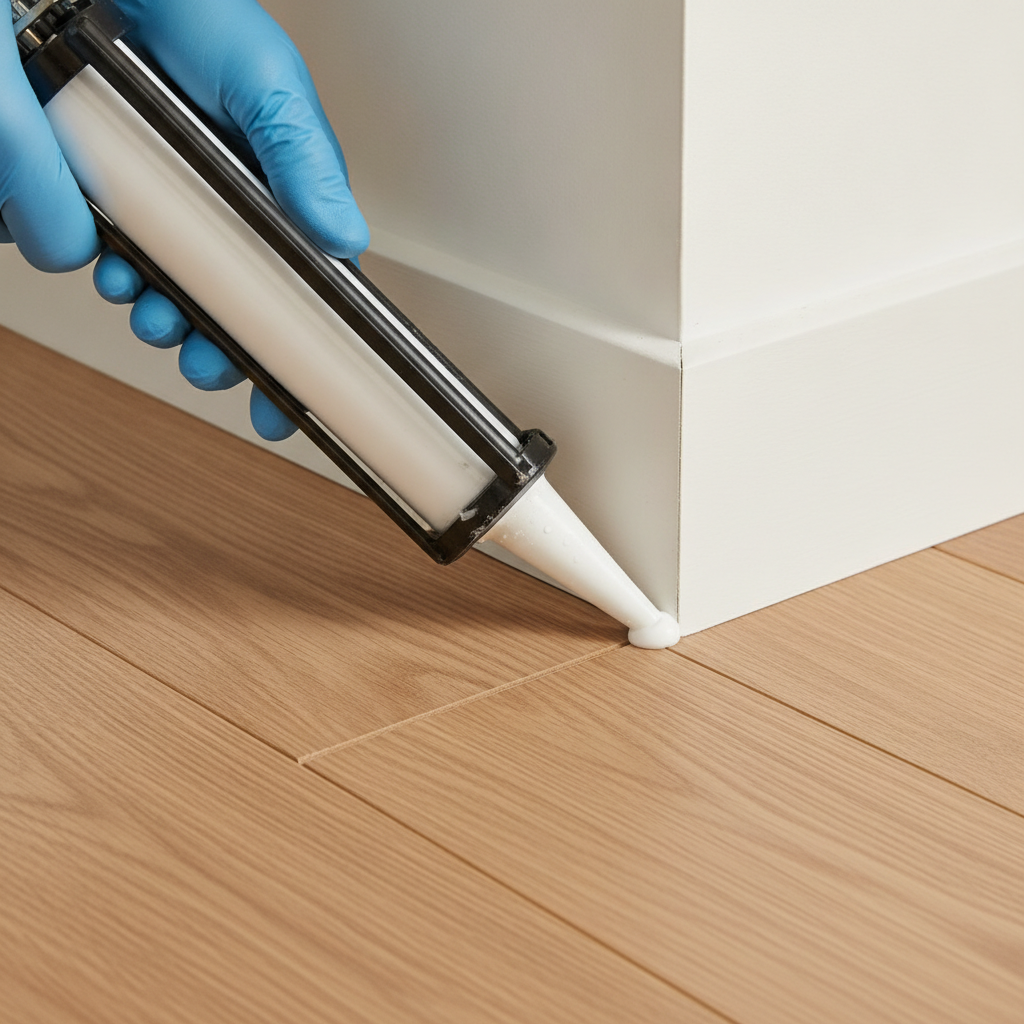
This final sealing step is what elevates the installation from “water-resistant” to truly “waterproof.” It ensures that water from a spill or an overflowing tub can’t get past the flooring and into the subfloor, preventing the very problems of warping and moisture damage you sought to avoid.
FAQ: Your Top Questions About Hybrid Hardwood Answered
How much does hybrid hardwood cost?
Hybrid hardwood is a premium flooring product. It generally costs more than most LVP and laminate options but is often comparable to or slightly less than the total cost of professionally installed porcelain tile. Prices vary widely based on the wood species, veneer thickness, and brand.
How do you clean it?
Maintenance is simple. Regularly sweep or vacuum (using a hard floor setting without a beater bar). For deeper cleaning, use a damp mop with a manufacturer-approved, pH-neutral hard surface cleaner. Never use a steam mops, wax, or oil-based soaps.
How long does it last?
With proper care, a quality hybrid hardwood floor can last for decades. Most reputable brands offer residential warranties ranging from 25 years to a lifetime, covering manufacturing defects and wear-through of the top layer.
Can you install it over existing tile?
In many cases, yes. If the existing tile floor is level, well-adhered, and in good condition, you can often install hybrid hardwood directly over it. This can save significant time and money on demolition. However, you must ensure the grout lines are not too deep or wide; they may need to be filled with a leveling compound first. Always check the specific manufacturer’s instructions.
Conclusion
Waterproof hybrid hardwood flooring represents a true turning point for homeowners who refuse to choose between style and practicality. It successfully combines the authentic, natural beauty of real wood with the peace of mind that comes from advanced waterproof technology. For kitchens and bathrooms, it eliminates the long-standing fear of water damage, allowing the warmth of wood to flow seamlessly throughout the entire home.
As we’ve explored, the key to success lies in understanding the material, choosing the right product for your needs, and ensuring meticulous installation. By following the expert guidance in this playbook, you can confidently select, install, and enjoy this innovative flooring, finally achieving the beautiful, worry-free floors you’ve always wanted.
Ready to bring the warmth of wood to your kitchen or bathroom? Explore our curated gallery of hybrid hardwood styles or contact a certified flooring expert in your area today.
This article provides general guidance. Always consult with a certified flooring professional and follow manufacturer-specific installation instructions and warranty requirements for your chosen product. Information regarding building codes or restoration standards is not a substitute for professional advice.
References & Authoritative Sources
- National Wood Flooring Association (NWFA). An authoritative organization providing industry standards and technical guidelines for the installation, maintenance, and inspection of wood flooring, including moisture level requirements.
- Resilient Floor Covering Institute (RFCI). A leading industry association for resilient flooring categories like Luxury Vinyl Plank (LVP), providing trusted information on product standards and maintenance guidelines.
- ASTM International. An international standards organization that develops and publishes voluntary consensus technical standards for a wide range of materials, products, systems, and services, including testing methods for flooring durability (e.g., ASTM D4060 for abrasion resistance).
- Tile Council of North America (TCNA). An industry organization that develops standards and publishes the TCNA Handbook for Ceramic, Glass, and Stone Tile Installation, which is the authoritative guide for proper tile installation and waterproofing methods.
- International Code Council (ICC). Publisher of the International Residential Code (IRC), which provides comprehensive minimum regulations for residential buildings, including standards for mechanical ventilation in moisture-prone areas like bathrooms.
- Flooring Manufacturer Technical Specifications. Documents provided by specific flooring brands (e.g., Shaw, Mohawk) that detail the construction, materials, performance characteristics, and installation requirements of their products, including waterproof hybrid hardwood.
