
Few sounds are as dread-inducing to a homeowner as the steady drip of a hidden plumbing leak or the splash of an overflowing bathtub. For decades, the authentic beauty of real wood floors came with a massive caveat: keep them away from water. Today, the flooring industry is flooded with confusing marketing jargon, blurring the lines between “moisture-resistant” and truly “waterproof” solutions. If you are facing the anxiety of water-damaged wood floors or proactively renovating high-moisture areas, you need facts, not fluff.
This definitive, stress-tested guide cuts through the marketing noise to reveal the material science, real-world durability, and expert wet-zone installation secrets of hybrid hardwood flooring. We will explore how to permanently solve kitchen and bathroom moisture issues without sacrificing the timeless aesthetic of real wood.
- Triage & Diagnostics: Assessing Water Damaged Wood Floors
- The Science of Hybrid Hardwood Flooring: Demystifying ‘Waterproof’
- High-Risk Zones: Waterproof Hybrid Hardwood for Kitchens and Bathrooms
- Stress-Testing Durable Hybrid Floors: Wear Layers and Real-World Performance
- Waterproof Flooring Solutions: The Ultimate Comparison Matrix
- Installation Realities & Cost for Durable Bathroom Floor Replacement
- Conclusion
- References & Authoritative Sources
Triage & Diagnostics: Assessing Water Damaged Wood Floors
Before exploring replacement options, it is critical to address the immediate crisis. If you are currently staring at warped kitchen flooring or dealing with chronic bathroom floor moisture issues, immediate triage is required to prevent structural damage and mold proliferation.
Can Water-Damaged Wood Floors Be Saved?
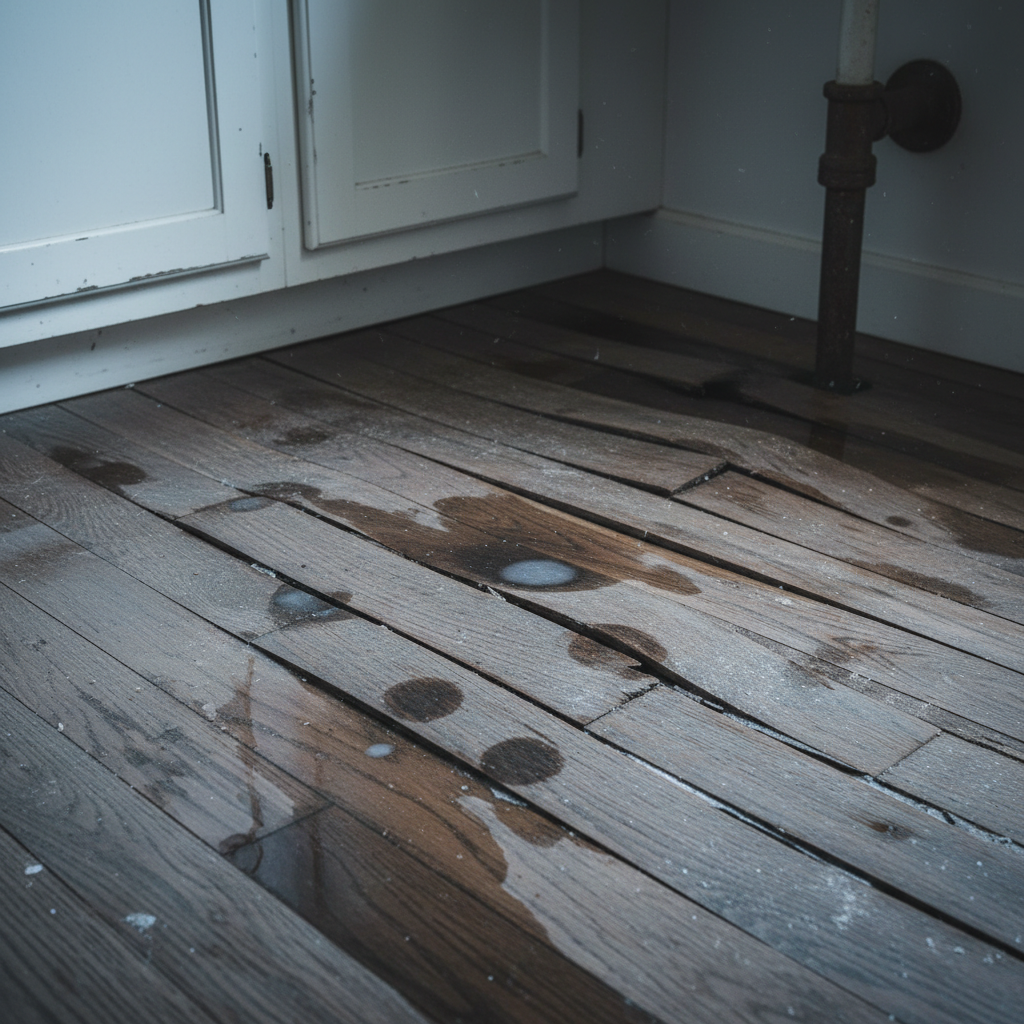
The harsh reality of traditional solid and engineered wood is its rapid reaction to moisture. According to standards set by the Institute of Inspection, Cleaning and Restoration Certification (IICRC), wood floors can begin to cup and warp within just 24 to 48 hours of significant water exposure [1].
Immediate triage involves three steps: stopping the water source, extracting standing water, and initiating rapid dry-out procedures. Following FEMA’s flood recovery and moisture control guidelines, safe dry-out requires commercial-grade dehumidifiers and air movers to pull moisture not just from the wood, but from the subfloor beneath [2].
If the wood has permanently buckled, the cellular structure has been compromised, and the floor is beyond saving. At this stage, navigating homeowners insurance claims becomes paramount. Document the damage extensively with photos and videos before removing any material. Most standard policies cover sudden and accidental water damage (like a burst pipe), but often exclude damage from gradual, chronic leaks. Work closely with your adjuster and a certified mitigation specialist to ensure the full scope of the subfloor damage is included in your claim.
Identifying the Root Cause of Warped Kitchen & Bathroom Floors
To prevent future failures, you must diagnose the exact source of the moisture. The World Floor Covering Association (WFCA) emphasizes the importance of distinguishing between a surface leak (like a dishwasher failure) and subfloor moisture (like a compromised vapor barrier over a concrete slab) [3].
Wood hygroscopy—the physics of how wood absorbs and releases moisture from the surrounding air—dictates that wood will expand in high humidity and contract in dry conditions. If a floor was installed without adequate expansion gaps, this natural swelling will cause the planks to push against the walls and buckle upward.
In bathrooms, the root cause is often environmental. The International Residential Code (IRC) mandates specific bathroom ventilation (CFM requirements) to manage humidity [4]. Improper bathroom ventilation is a leading cause of trapped moisture, leading to surface condensation and potential mold growth beneath non-waterproof flooring in as little as 24 to 48 hours.
The Science of Hybrid Hardwood Flooring: Demystifying ‘Waterproof’
If your floor cannot be saved, or if you are upgrading a high-risk zone, hybrid hardwood flooring is the modern solution. But what exactly is it?
Anatomy of a Hybrid Floor: SPC Rigid Core vs. Real Wood Veneer
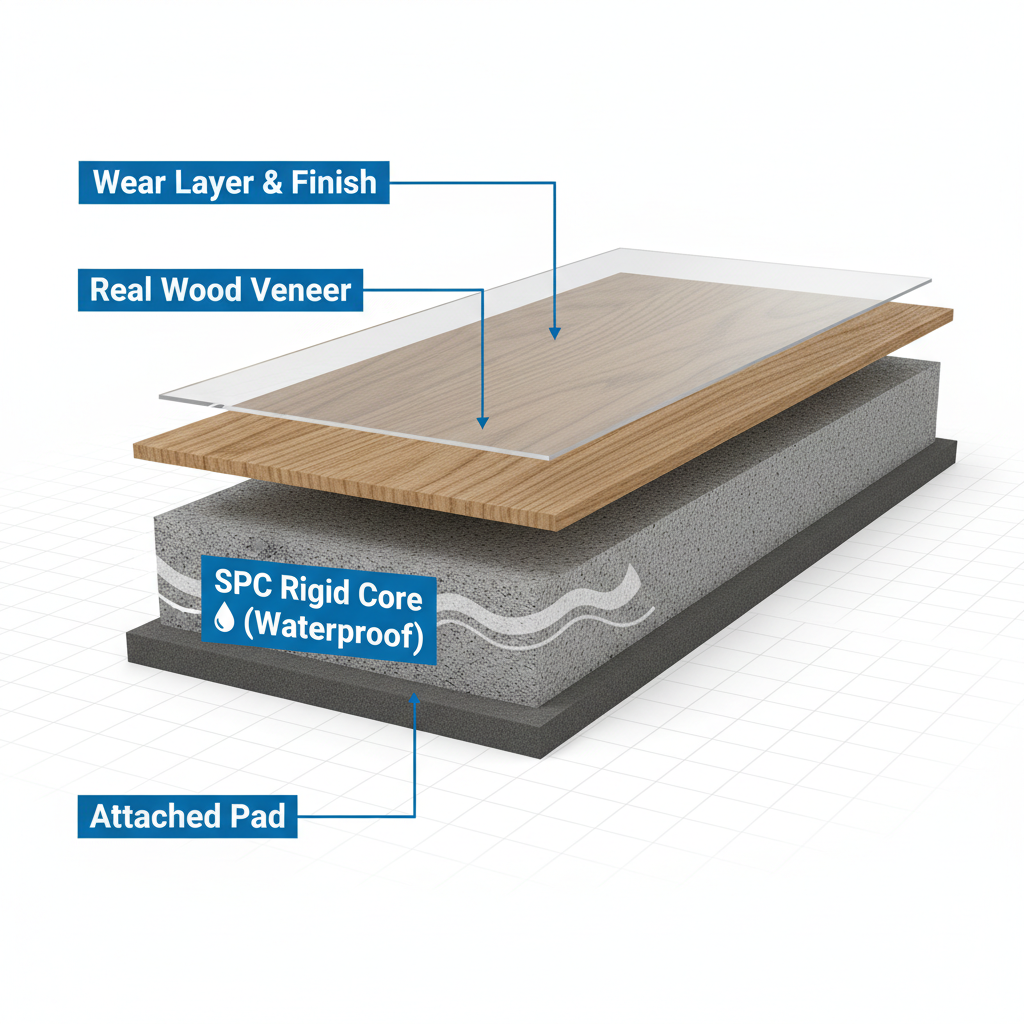
To understand why hybrid floors succeed where traditional wood fails, we must look at their construction. Picture a cross-section diagram of a premium hybrid plank vetted by material scientists:
- The Top Layer (Wear Layer & Finish): A highly durable, aluminum oxide-infused clear coat that protects against scratches and UV fading.
- The Veneer: A thin slice of 100% real hardwood (oak, hickory, maple) providing the authentic grain, texture, and aesthetic.
- The Core: This is the engineering marvel. Instead of a plywood or fiberboard core used in traditional engineered wood, hybrids utilize a rigid core.
- The Attached Pad: An acoustic underlayment (often cork or IXPE foam) for sound dampening and comfort.
The core is where the waterproofing happens. The industry primarily uses two types: Wood Plastic Composite (WPC) and Stone Plastic Composite (SPC). SPC cores, made from a mixture of natural limestone powder, polyvinyl chloride, and stabilizers, are incredibly dense. This high core density dramatically increases impact resistance and ensures the plank remains 100% dimensionally stable, even when completely submerged in water.
The Myth: ‘Moisture-Resistant’ vs. 100% Waterproof Wood Floors
The National Wood Flooring Association (NWFA) provides strict definitions for wood flooring standards [5]. It is vital to understand the difference between “moisture resistant hardwood” and “waterproof wood floors.”
Moisture-resistant engineered hardwood features traditional wood cores treated with advanced hydrophobic sealants and edge coatings. Technical data from Wood Floor Business indicates that these treated floors can typically withstand topical spills for up to 72 hours [6]. However, they are not impervious to bottom-up moisture or catastrophic flooding.
Conversely, an SPC-core hybrid floor is genuinely waterproof. Because the core contains no wood fibers, it cannot absorb water. ASTM International standard testing for water resistance proves that while the real wood veneer might experience minor topical swelling if left submerged for days, the structural integrity of the plank and the locking mechanism will not fail [7]. Always read the fine print: warranty limitations on “moisture-resistant” products often void coverage if installed in full bathrooms, whereas true SPC hybrids carry warranties explicitly covering wet-zone installations. It is no surprise that the global hybrid flooring market is growing rapidly, with rigid core products now taking over 20% of the hard surface market share [8].
High-Risk Zones: Waterproof Hybrid Hardwood for Kitchens and Bathrooms
Because of its unique anatomy, waterproof hybrid hardwood is uniquely suited for the two most demanding rooms in any home.
The Kitchen Flooring Survival Guide: Leaks, Spills, and Heavy Appliances
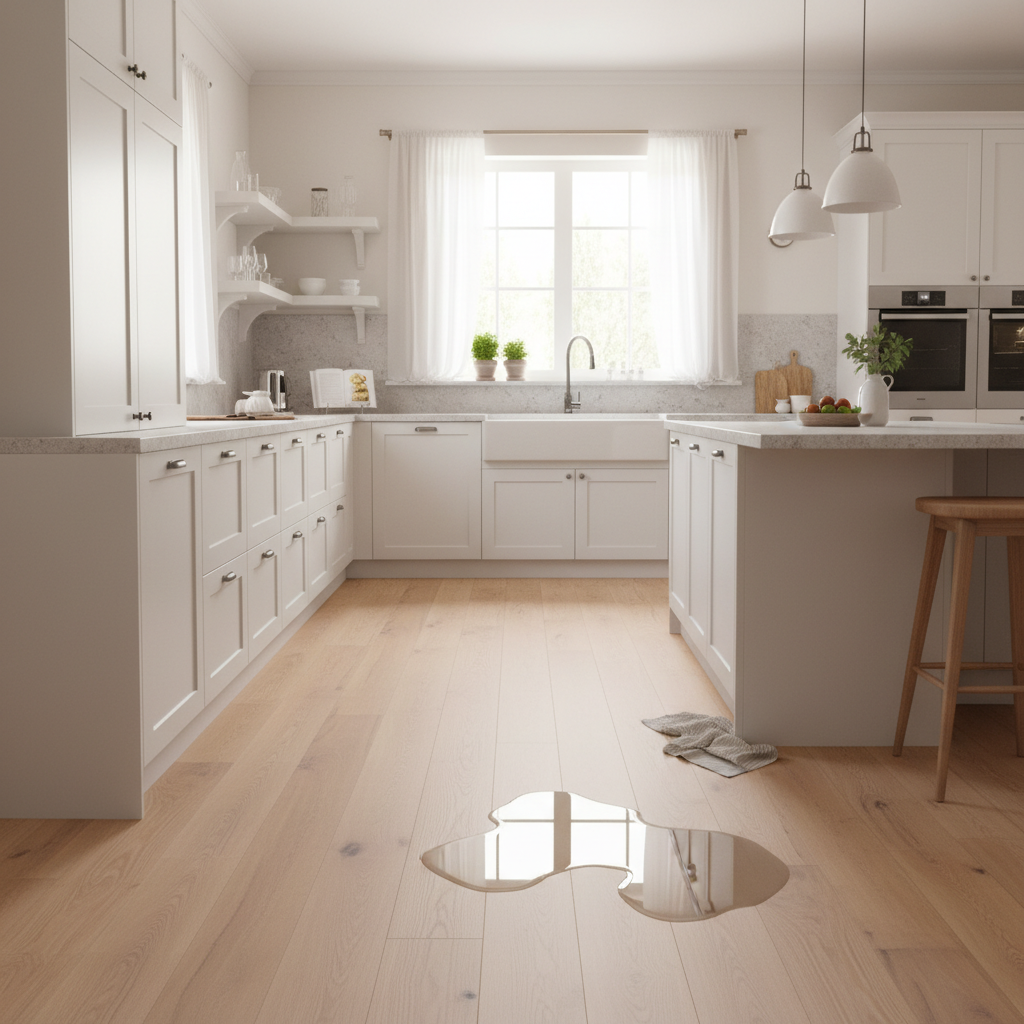
Kitchens are war zones for flooring. Between dropped cast-iron skillets, overflowing sinks, and leaking refrigerator water lines, the risks are constant. In fact, data from the Insurance Information Institute reveals that kitchens account for nearly 30% of all household water damage claims [9].
When selecting waterproof hybrid hardwood for kitchens, you must consider the impact of heavy cabinetry and islands. National Kitchen & Bath Association (NKBA) design standards generally advise against installing floating floors underneath fixed, heavy cabinetry [10]. The immense weight can pin the floating floor down, preventing it from expanding and contracting naturally with temperature shifts, leading to joint separation or buckling. Instead, hybrid floors should be installed up to the cabinet legs, leaving a proper expansion gap hidden by toe kicks or quarter-round molding.
Why Hybrid is the Best Wood Flooring for Bathrooms
Bathrooms experience wild climatic shifts. According to the American Society of Heating, Refrigerating and Air-Conditioning Engineers (ASHRAE), bathroom humidity levels can easily spike up to 80% during a shower [11]. This environment is highly detrimental to traditional solid hardwood, causing rapid expansion and cupping.
SPC core hybrids manage this effortlessly. When ranking the best wood flooring for bathrooms against wood-look luxury vinyl plank (LVP) or wood-look tile, hybrid hardwood offers the premium feel of real wood that LVP lacks, and the warmth underfoot that cold ceramic tile cannot provide. Furthermore, the Tile Council of North America highlights the importance of slip resistance (Coefficient of Friction, or COF ratings) in wet areas [12]. The natural wire-brushed or distressed textures of the real wood veneer on a hybrid plank often provide superior slip resistance compared to smooth LVP.
For ultimate peace of mind, pair your hybrid floor with a dedicated waterproofing membrane (like a Schluter system) beneath the flooring to protect the wooden subfloor from any micro-leaks that might sneak past the perimeter.
Stress-Testing Durable Hybrid Floors: Wear Layers and Real-World Performance
Active families and pet owners don’t just need water protection; they need extreme durability.
Understanding AC Ratings and Mil Thickness for Pets and Traffic
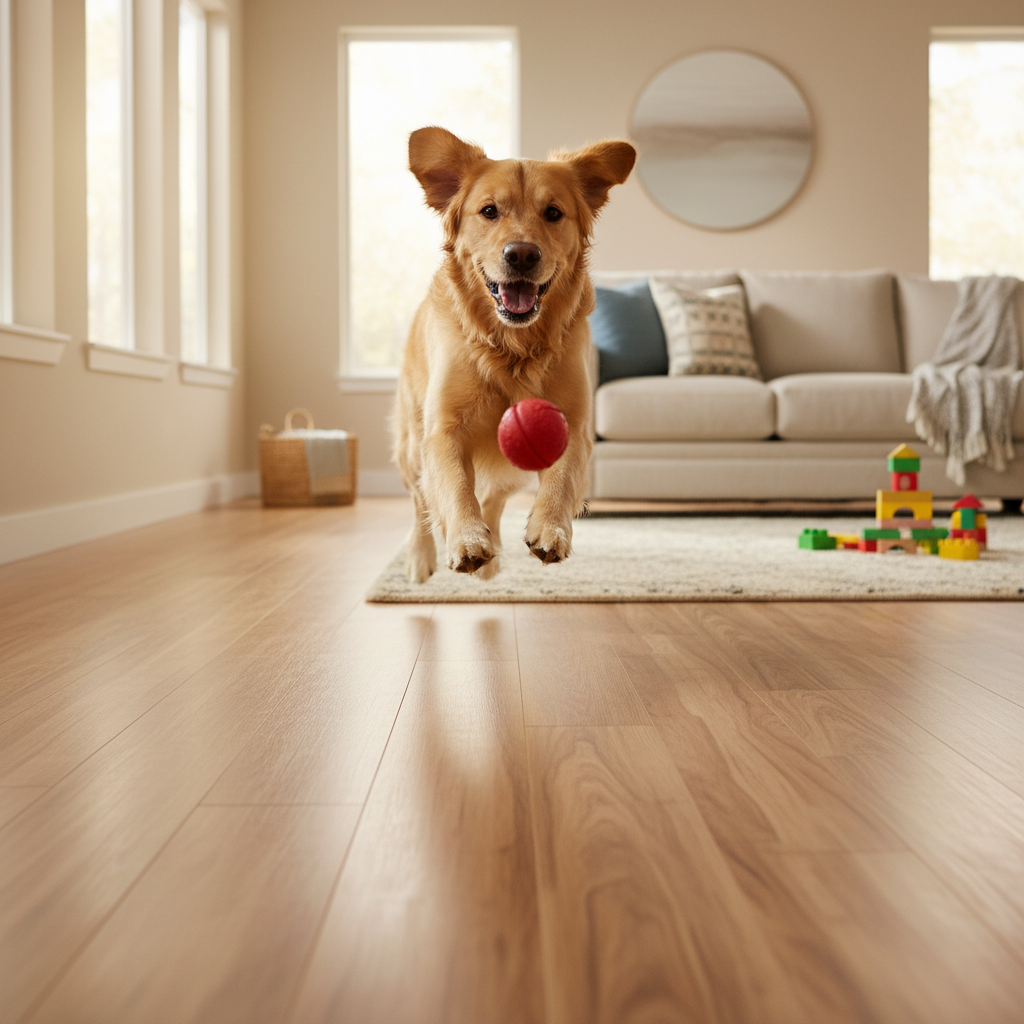
When evaluating durable hybrid floors, you must look beyond the marketing and examine the specifications. The Floor Covering Institute sets rigorous industry research and durability standards [13].
Durability is a combination of the wood species’ natural hardness (measured by the Janka Hardness Scale Database [14]), the thickness of the clear wear layer (measured in “mils,” or thousandths of an inch), and the aluminum oxide finish (often graded by an Abrasion Class or AC rating).
A 20-mil wear layer is considered commercial grade and is highly recommended for heavy residential use, easily withstanding the daily assault of large dog nails and sliding furniture. In real-world stress tests—such as dragging heavy household items or simulating pet scratches—a 20-mil aluminum oxide finish over a dense hickory or oak veneer shows virtually no signs of wear compared to standard 12-mil residential LVP.
Waterproof Flooring Solutions: The Ultimate Comparison Matrix
To help you navigate the broader category of waterproof flooring solutions, we have created a proprietary scoring system (1-10) based on water resistance, durability, ROI, and environmental impact.
| Flooring Type | Water Resistance | Durability (Scratch/Dent) | Aesthetic/ROI | Eco-Friendliness (VOCs) | Overall Score |
|---|---|---|---|---|---|
| Hybrid Hardwood (SPC) | 10/10 | 9/10 | 10/10 | 8/10 | 37/40 |
| Luxury Vinyl Plank (LVP) | 10/10 | 8/10 | 7/10 | 6/10 | 31/40 |
| Wood-Look Porcelain Tile | 10/10 | 10/10 | 8/10 | 9/10 | 37/40 (Tie, but cold/hard) |
| Water-Resistant Laminate | 6/10 | 8/10 | 6/10 | 7/10 | 27/40 |
Floor Trends Magazine notes that the waterproof flooring segment is expected to grow at a CAGR of over 6% through 2028 [15]. Hybrid hardwood represents the pinnacle of this growth because it bridges the gap between the synthetic nature of LVP (which can emit higher VOCs) and the vulnerability of traditional wood, offering a low-VOC, high-ROI solution.
Installation Realities & Cost for Durable Bathroom Floor Replacement
A durable bathroom floor replacement is a smart financial move. Remodeling Magazine’s Cost vs. Value Report states that a mid-range bathroom renovation, including floor replacement, yields an average ROI of 60-70% upon home resale [16]. However, achieving that ROI requires flawless execution.
Wet-Zone Installation Secrets: 100% Silicone and Expansion Gaps
Even the most waterproof hybrid hardwood flooring guide is useless if the installation fails at the edges. Following NWFA Installation Guidelines is non-negotiable [5].
Contractor’s Corner: “The biggest mistake DIYers make with hybrid floors in a bathroom isn’t the planks; it’s the perimeter,” notes an NWFA-certified installer. “Water doesn’t usually go through the floor; it goes around it.”
To make a hybrid floor truly waterproof in a wet zone, you must implement strict protocols:
- Undercutting Door Jambs: Planks must slide seamlessly under door casings to allow for expansion without binding.
- Toilet Flange Management: When replacing old, thick tile with a thinner hybrid floor, the toilet flange may sit too high. It must be properly adjusted or replaced to ensure a watertight wax ring seal.
- 100% Silicone Perimeter Sealing: The required 1/4-inch expansion gap around the entire perimeter (including the tub, vanity, and toilet) must be filled with a compressible polyethylene backer rod and sealed completely with 100% waterproof silicone before baseboards or shoe molding are applied.
True Cost Breakdown: Subfloor Prep and Materials
Transparent pricing is essential. According to HomeAdvisor, hybrid hardwood typically costs between $4 and $10 per square foot for the materials alone [17]. However, the true cost of a durable bathroom floor replacement must factor in subfloor preparation.
If you are removing old ceramic tile, the subfloor will likely be covered in uneven thinset mortar. Hybrid floors require a perfectly flat subfloor (usually a tolerance of 3/16 inch over a 10-foot span).
Itemized Cost Considerations:
- Premium Hybrid Hardwood: $4 – $10 / sq. ft.
- Subfloor Leveling Compound/Prep: $1 – $3 / sq. ft. (Crucial for preventing the rigid SPC core from cracking under pressure).
- Moisture Barrier/Underlayment: $0.50 – $1.50 / sq. ft.
- Transition Strips & Waterproof Silicone: $50 – $100 total.
- Professional Labor: $2.50 – $5 / sq. ft.
While the upfront cost is higher than basic laminate, the lifecycle durability and elimination of future water damage make it a superior long-term investment.
Conclusion
Hybrid hardwood represents a monumental leap forward in material science, offering the authentic beauty and texture of real wood without the paralyzing anxiety of moisture failure. By combining a 100% waterproof SPC rigid core with a commercial-grade wear layer and a real wood veneer, it stands as the ultimate flooring solution for high-risk areas. However, its success relies entirely on choosing a true rigid-core product over merely “moisture-resistant” alternatives, and executing strict, wet-zone installation protocols.
Don’t just take our word for it. We encourage you to order samples of SPC-core hybrid hardwood to conduct your own scratch and water submersion tests at home. Once you see the durability firsthand, consult a directory of NWFA-certified installers in your area to get a professional quote for your kitchen or bathroom renovation.
Disclaimer: The information provided in this guide regarding water damage triage is for educational purposes. Mold hazards and structural water damage pose severe health and safety risks. For significant flooding, chronic leaks, or visible mold growth, we strongly advise readers to consult IICRC-certified water mitigation professionals and licensed contractors immediately.
References & Authoritative Sources
- Institute of Inspection, Cleaning and Restoration Certification (IICRC). (N.D.). Water Damage Restoration Standards. IICRC.
- FEMA. (N.D.). Flood Recovery and Moisture Control Guidelines. FEMA.gov.
- World Floor Covering Association (WFCA). (N.D.). Flooring Issue Diagnostics. WFCA.
- International Residential Code (IRC). (N.D.). Bathroom Building and Ventilation Codes.
- National Wood Flooring Association (NWFA). (N.D.). Wood Flooring Standards, Definitions, and Installation Guidelines. NWFA.org.
- Wood Floor Business. (N.D.). Technical Articles on Wood Finishes and Sealants.
- ASTM International. (N.D.). Standards for Water Resistance and Material Testing.
- Floor Covering Weekly. (N.D.). Industry Trends and Market Share Data.
- Insurance Information Institute. (N.D.). Water Damage Statistics.
- National Kitchen & Bath Association (NKBA). (N.D.). Kitchen Design Standards and Best Practices.
- American Society of Heating, Refrigerating and Air-Conditioning Engineers (ASHRAE). (N.D.). Humidity Standards.
- Tile Council of North America. (N.D.). Wet Area Flooring Comparisons and Slip Resistance Data.
- Floor Covering Institute. (N.D.). Industry Research and Durability Standards.
- Janka Hardness Scale Database. (N.D.). Wood Durability Metrics.
- Floor Trends Magazine. (N.D.). Industry Market Reports and Category Growth.
- Remodeling Magazine. (N.D.). Cost vs. Value Report for Bathroom Renovations.
- HomeAdvisor. (N.D.). Pricing and Cost Data Averages.
