
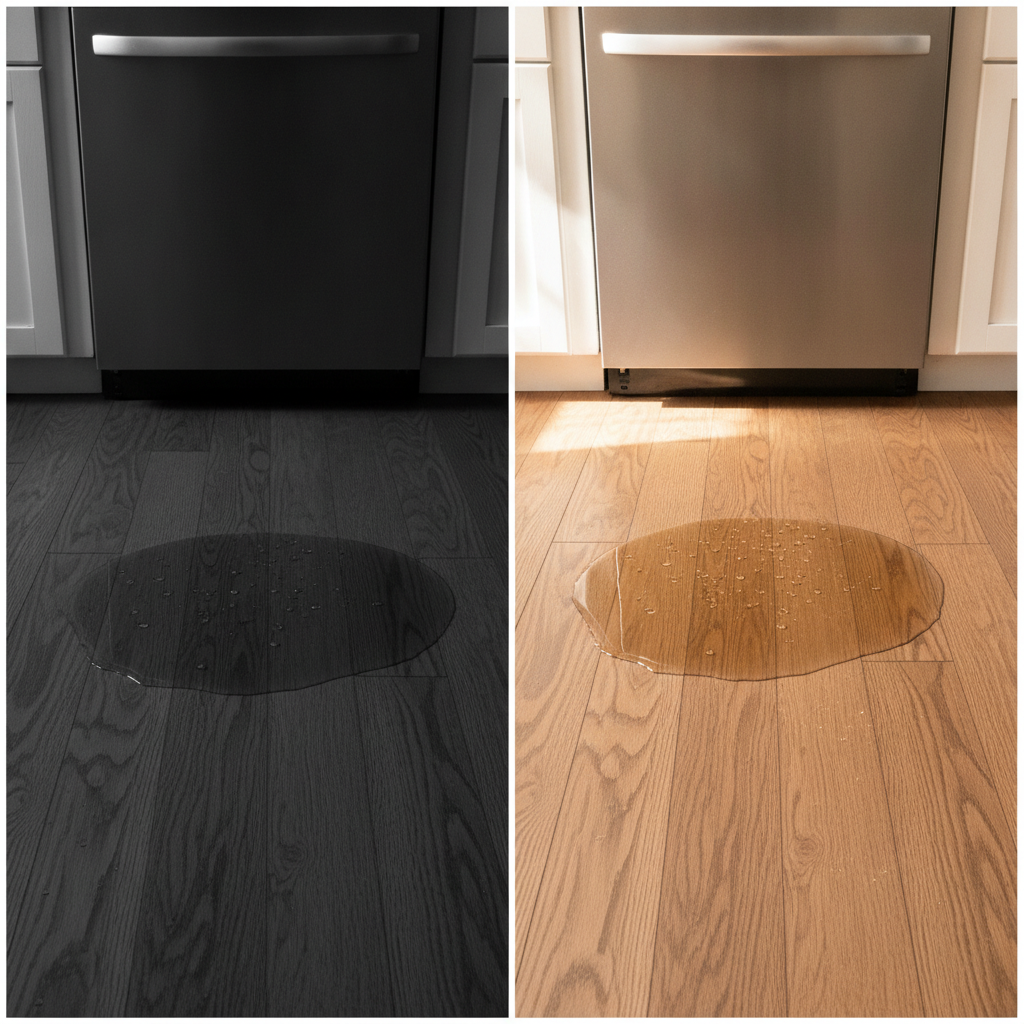
The dream kitchen or bathroom often features the warm, timeless beauty of hardwood floors. But that dream can quickly turn into a nightmare at the first sign of a dishwasher leak, a bathtub overflow, or even just the daily accumulation of splashes and spills. For years, homeowners have faced a difficult choice: sacrifice the aesthetic they love for the practicality of tile or vinyl, or risk the cupping, warping, and water damage that plagues traditional wood in high-moisture areas.
This conflict is over. A new category of flooring has emerged that delivers the best of both worlds: waterproof hybrid hardwood. It offers the authentic, touchable surface of real wood on top of a completely waterproof core, engineered to handle the real-world challenges of your home’s busiest and wettest rooms.
This definitive guide will demystify the confusing world of waterproof flooring. We will cut through the marketing jargon to show you what truly makes a floor waterproof, compare the top contenders like LVP and porcelain tile head-to-head, and introduce you to the revolutionary technology of hybrid hardwood. By the end, you’ll be empowered to make a confident, long-lasting investment that protects your home and brings your design vision to life without compromise.
- Decoding ‘Waterproof’ Flooring: What You Absolutely Need to Know
- What is Waterproof Hybrid Hardwood Flooring?
- The Ultimate Showdown: Best Waterproof Flooring for Kitchens & Bathrooms
- Homeowner’s Emergency Guide: Diagnosing & Preventing Water Damage
- Making Your Final Decision: Cost, Maintenance & Installation
- Frequently Asked Questions (FAQ)
- Conclusion
- References & Authoritative Sources
Decoding ‘Waterproof’ Flooring: What You Absolutely Need to Know
Before choosing a floor, it’s crucial to understand what manufacturers mean when they use terms like “waterproof,” “water-resistant,” and “spill-proof.” These are not interchangeable, and the difference can mean thousands of dollars in damage if you choose incorrectly.
The performance of a floor against moisture is determined by its core material and the construction of its seams. Authoritative bodies like ASTM International develop the technical standards that manufacturers use to test and rate their flooring for factors like water resistance, providing an objective basis for their claims.1
Here’s a breakdown of what these terms actually mean:
| Feature | Waterproof | Water-Resistant | Spill-Proof (Topical) |
|---|---|---|---|
| Core Material | 100% inorganic and non-absorbent, typically Stone Plastic Composite (SPC) or Wood Plastic Composite (WPC). | Typically a wood-based product like High-Density Fiberboard (HDF) or plywood, often with added resins. | Can be any core material, but relies entirely on the top surface finish for protection. |
| How it Works | The core itself will not swell, warp, or degrade, even when fully submerged in water. | The core can resist moisture penetration for a limited time but will eventually absorb water, swell, and sustain damage. | A protective top coat (like polyurethane) prevents liquids from immediately soaking in, giving you time to clean up. |
| Seam Protection | Often features tight, waterproof locking systems to prevent water from seeping between planks to the subfloor. | Seams are a weak point. Water that gets between planks can damage the core and subfloor. | Seams are not protected. Spills that are not cleaned up quickly can easily seep through. |
| Warranty Coverage | Typically covers topical water and often flooding from above and below. The core itself is guaranteed not to be damaged by water. | Warranties usually cover topical spills for a specific period (e.g., 24-72 hours) but explicitly exclude flooding or subfloor moisture. | Warranty only covers manufacturing defects in the finish, not damage from spills that were left too long. |
Pro-Tip: Edges Matter
The shape of a plank’s edge can impact its resistance to spills at the seams. Planks with square edges create a very tight, minimal seam, offering better initial protection against surface spills. Planks with beveled edges (a decorative groove) can sometimes allow small spills to pool in the seam. While this is not an issue for a truly waterproof core, it’s a critical point of failure for water-resistant products.
What is Waterproof Hybrid Hardwood Flooring?
Waterproof hybrid hardwood is a revolutionary flooring product that combines the authentic beauty of real hardwood with the durability and waterproof performance of a rigid composite core. It is engineered to provide the “best of both worlds,” solving the age-old problem of wood’s vulnerability to moisture.
The magic is in its layered construction. While specific details can vary by manufacturer, a typical plank of hybrid hardwood is built from the ground up like this:
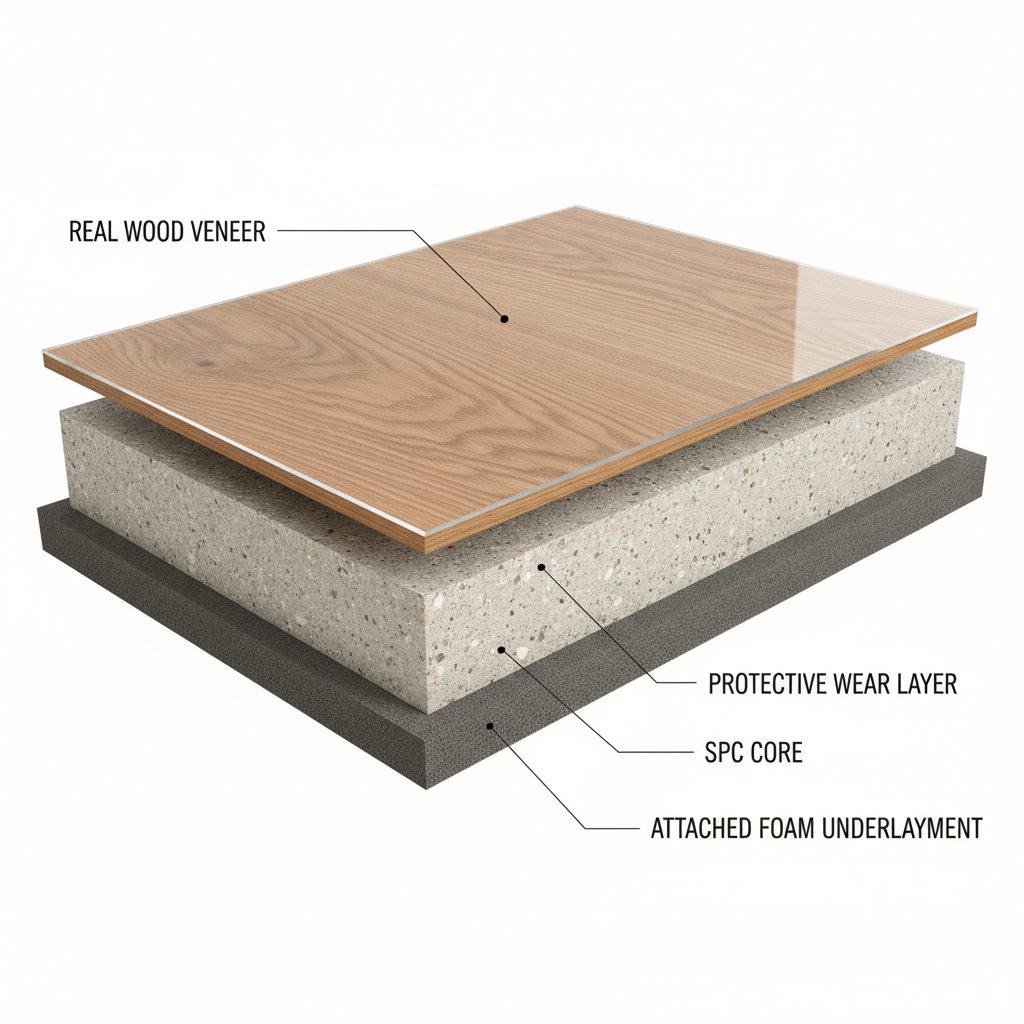
- Attached Underlayment: A pre-attached pad (often cork or foam) that provides sound absorption, cushioning, and a moisture barrier, simplifying installation.
- Waterproof Rigid Core: This is the heart of the product. It’s typically a Stone Plastic Composite (SPC) or Wood Plastic Composite (WPC) core. Unlike the plywood or HDF core of traditional engineered wood, this composite material is 100% waterproof and will not swell or warp when exposed to water.2
- Protective Wear Layer: A transparent, highly durable coating (often urethane with aluminum oxide) that protects the wood veneer from scratches, stains, and fading.
- Real Hardwood Veneer: This is what you see and feel—a thin, authentic layer of real wood, such as oak, hickory, or maple. This veneer provides the unique grain, texture, and natural beauty that cannot be perfectly replicated by printed vinyl.
This construction directly addresses a major question from homeowners: can you refinish hybrid hardwood flooring? The answer is almost always no. The real wood veneer is typically 0.6mm to 2mm thick, which is too thin to be sanded and refinished like solid hardwood or thick-veneer engineered wood. This is a crucial trade-off for gaining a 100% waterproof core. Minor scratches can often be repaired with touch-up kits, but deep gouges are not repairable through sanding.
Hybrid Hardwood vs. Engineered Hardwood vs. LVP: A Clear Comparison
Shoppers are often confused by the similarities between these three popular flooring types. Understanding their core differences is the key to making the right choice for your home. The National Wood Flooring Association (NWFA) provides clear definitions for wood flooring types, which helps establish a baseline for comparison.3
Here is how they stack up:
| Feature | Waterproof Hybrid Hardwood | Traditional Engineered Hardwood | Luxury Vinyl Plank (LVP) |
|---|---|---|---|
| Core Material | SPC (Stone Plastic Composite) or WPC (Wood Plastic Composite) | Plywood or HDF (High-Density Fiberboard) | 100% Vinyl/Polymer Composite |
| Waterproof Rating | 100% Waterproof (core is unaffected by water) | Water-Resistant (core will swell and damage with prolonged exposure) | 100% Waterproof (core is unaffected by water) |
| Surface Layer | Thin slice of real hardwood | Thicker slice of real hardwood | High-resolution photographic image of wood |
| Authenticity | Genuine wood grain, texture, and feel | Genuine wood grain, texture, and feel | Realistic look, but artificial texture and feel |
| Refinishing Potential | No | Yes (typically 1-3 times, depending on veneer thickness) | No |
The Ultimate Showdown: Best Waterproof Flooring for Kitchens & Bathrooms
Kitchens and bathrooms are the most demanding environments for flooring, requiring a material that can withstand water, traffic, and stains without failing. We’ve created a data-driven matrix to compare the top three contenders: Hybrid Hardwood, Luxury Vinyl Plank (LVP), and Porcelain Tile.
This “Kitchen & Bathroom Flooring Matrix” scores each option on a scale of 1 (Poor) to 5 (Excellent) across the most critical attributes for these high-moisture spaces. Our ratings incorporate key data points, such as porcelain tile’s water absorption rate of less than 0.5%5 and the importance of a 20 mil wear layer for high-traffic kitchens.6 Insights from the National Kitchen & Bath Association (NKBA) also confirm that durability and water resistance are top priorities for consumers choosing floors for these rooms.4
| Attribute | Waterproof Hybrid Hardwood | Luxury Vinyl Plank (LVP) | Porcelain Tile |
|---|---|---|---|
| Waterproof Rating | 5/5 | 5/5 | 5/5 |
| Durability (Scratch/Dent) | 4/5 | 4/5 | 5/5 |
| Comfort & Warmth | 4/5 | 4/5 | 2/5 |
| DIY-Friendliness | 5/5 | 5/5 | 2/5 |
| Average Installed Cost | $9 – $18 / sq. ft. | $7 – $15 / sq. ft. | $15 – $25+ / sq. ft. |
Why Hybrid Hardwood is a Top Contender for Kitchens
The kitchen is the heart of the home, but it’s also a battlefield of spills, dropped utensils, and constant foot traffic. Hybrid hardwood excels in this environment for several reasons. Its SPC/WPC core is completely impervious to topical spills from a dripping sink, an overflowing pot, or a leaky dishwasher line. Furthermore, many high-quality hybrid floors carry an AC4 abrasion rating, a standard typically used for durable laminate flooring, signifying their ability to withstand the rigors of a busy kitchen without showing premature wear.
Beyond its technical performance, hybrid hardwood offers an aesthetic advantage. As certified kitchen designers often note, the authentic wood surface brings a natural warmth and texture to a kitchen that can feel cold or clinical with materials like tile. It seamlessly connects the kitchen with living spaces that often feature traditional hardwood, creating a cohesive and inviting home design.
Achieving the Wood Look Safely in a Bathroom
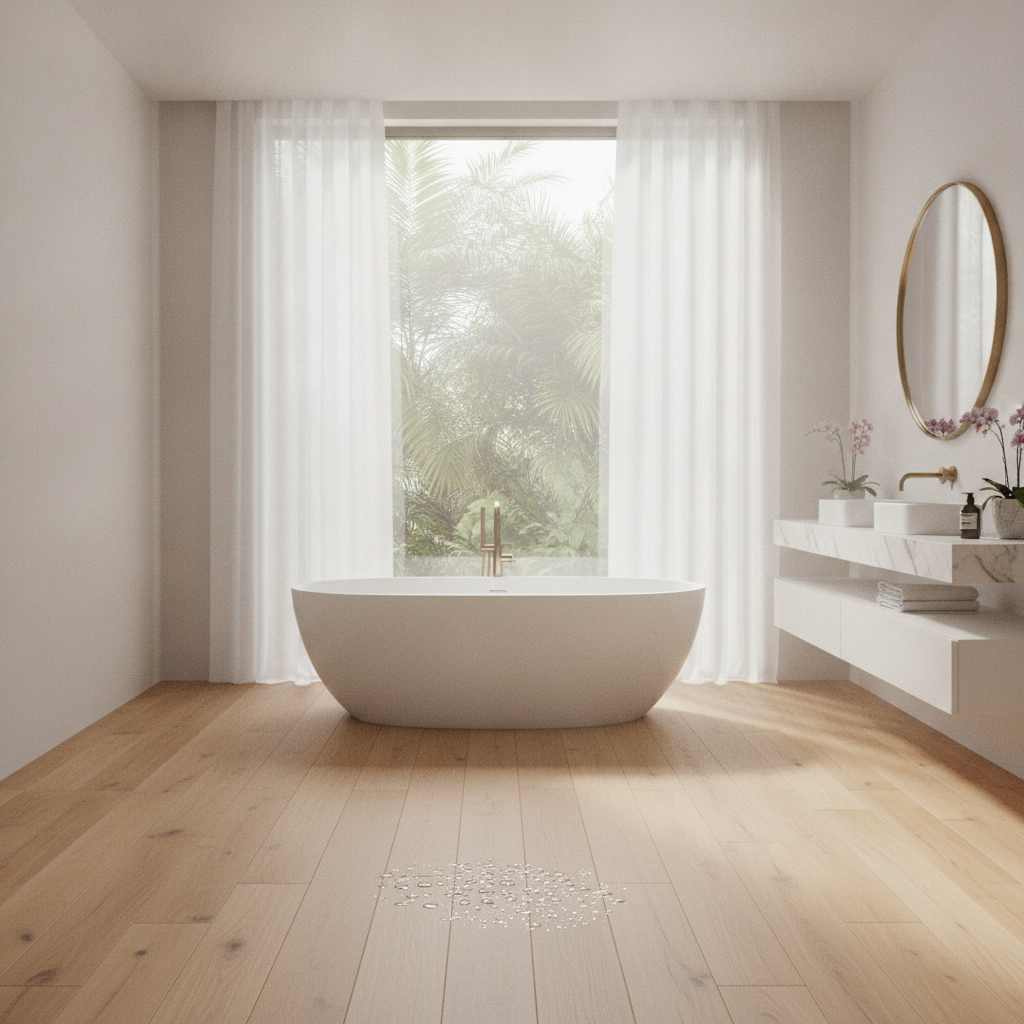
The dream of a wood floor in a bathroom has traditionally been a recipe for disaster. The National Wood Flooring Association (NWFA) explicitly advises against installing solid hardwood in full bathrooms.3 The high humidity from showers and baths causes solid wood to expand and contract excessively, leading to permanent cupping, buckling, and gaps.
This is where waterproof hybrid hardwood changes the game. Its composite core is dimensionally stable, meaning it does not react to changes in humidity. It will not swell, shrink, or warp in a steamy bathroom environment. This allows you to get the genuine wood look you desire without the inherent risks of traditional wood products. Imagine a side-by-side comparison: a solid wood plank, swollen and buckled after a water leak, next to a perfectly flat and unaffected plank of hybrid hardwood. That visual represents the peace of mind that this modern flooring solution provides.
Homeowner’s Emergency Guide: Diagnosing & Preventing Water Damage
Even with the best waterproof flooring, water can still cause significant damage to your subfloor, cabinetry, and home structure. This section provides practical, actionable advice for identifying and stopping water damage at its source, based on professional standards like the IICRC S500 standard for water damage restoration.7
Expert Spotlight
“The first 48 hours are the most critical,” says John Miller, a certified Water Damage Restoration Professional with 20 years of experience. “Your immediate actions can be the difference between a minor repair and a major structural and mold remediation project. Stop the water source, get the standing water out, and call a professional immediately. Don’t wait.”
First 24 Hours: What to Do When You Find Water on Your Floor
Discovering a leak is stressful. Follow this emergency checklist to mitigate the damage safely and effectively.
- Stop the Source: The absolute first step is to stop the flow of water. This may mean turning off the water supply valve to a specific appliance (like a toilet or dishwasher) or shutting off the main water supply to your house.
- Remove Standing Water: Use mops, old towels, or a wet-dry vacuum to remove as much water from the surface as possible. The faster you get it up, the less can seep into your subfloor and walls.
- Increase Air Circulation: Open windows if the weather permits. Set up fans and a dehumidifier (if you have one) and aim them at the wet area to promote drying.
- Document Everything: Before moving anything, take extensive photos and videos of the leak and the damage for your insurance claim.
- Call a Professional: Contact a certified water damage restoration company. They have specialized equipment to measure moisture levels in your subfloor and walls and to dry the structure properly. Remember, mold can begin to grow within just 24-48 hours of water exposure, so speed is essential.8
During this process, you may see your floors change shape. Be able to identify the signs:
- Cupping: The edges of the plank are higher than the center.
- Crowning: The center of the plank is higher than the edges.
- Buckling: The floor lifts dramatically from the subfloor, often in large sections.
The Kitchen Leak Detective: Finding the Source of Warped Floors
If you notice your kitchen floor is warped or buckling, especially near an appliance, it’s a sign of a slow, persistent leak. Use this troubleshooting guide to play detective, referencing inspection guidelines from authorities like the International Association of Certified Home Inspectors (InterNACHI).9
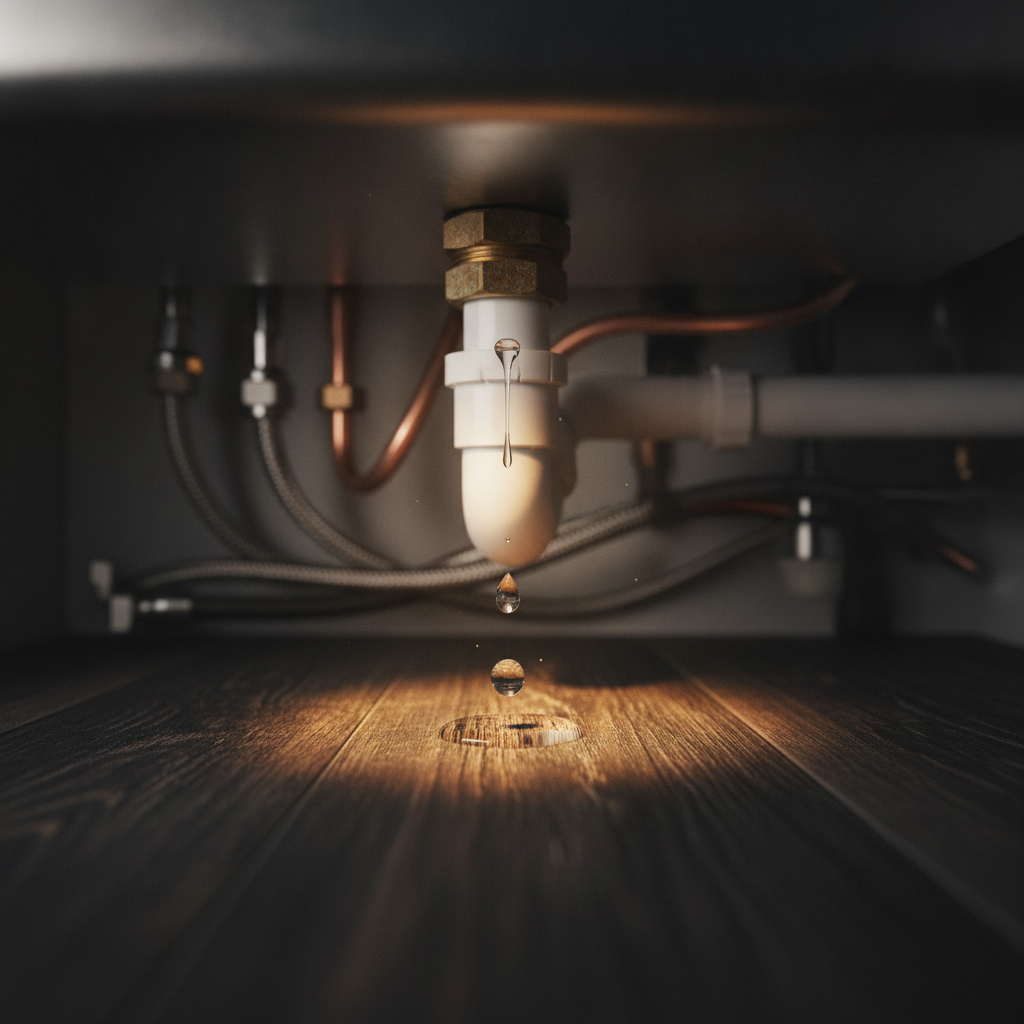
- Step 1: The Dishwasher. This is the most common culprit. Pull out the bottom kick plate. Use a flashlight to inspect the water supply line (often a braided steel hose) and the drain line for drips. Check the floor underneath for any signs of moisture.
- Step 2: The Refrigerator. If you have an icemaker or water dispenser, pull the fridge away from the wall. Inspect the small plastic or copper water line that runs to it. These lines can become brittle and crack, causing a slow leak.
- Step 3: The Sink. Open the cabinet under your kitchen sink. Check the drain pipes (the P-trap), the garbage disposal connections, and the hot/cold water supply lines for any signs of dripping or corrosion.
When to Call a Pro: Tightening a loose connection on a supply line might be a DIY fix for some. However, if you see a cracked hose, corroded pipes, or if you are unsure about the repair, it is always safest to call a licensed plumber.
The 3 Hidden Enemies of Bathroom Floors (And How to Beat Them)
Bathroom floor damage is often caused by one of three persistent issues. Here’s how to identify and solve them.
- Toilet Seal Failure: The wax ring that seals your toilet to the floor can fail over time.
- Signs: The floor around the base of the toilet feels soft or spongy, the toilet rocks slightly when you sit on it, or you notice water seeping out from the base after flushing.
- Solution: The toilet needs to be removed and the wax ring replaced. This is a common DIY project, but a plumber can ensure it’s done correctly.
- Shower & Tub Leaks: Water can escape from improperly sealed tubs and showers.
- Signs: Peeling flooring or damaged baseboards near the tub, water stains on the ceiling of the room below, or cracked or missing caulk/grout around the tub or shower base.
- Solution: Remove the old, failing caulk and apply a fresh bead of 100% silicone kitchen and bath caulk around all seams where the tub/shower meets the floor and walls.
- Poor Ventilation: Steam from hot showers creates excessive humidity that can damage walls and seep into the subfloor.
- Signs: Condensation on walls and mirrors that lingers long after a shower, peeling paint on the ceiling, or a persistent musty smell.
- Solution: Your bathroom needs an exhaust fan that is properly sized for the room. Building codes, as outlined by the International Residential Code (IRC), have specific requirements for mechanical ventilation in bathrooms.10 Run the fan for at least 20 minutes after every shower to effectively remove moist air.
Making Your Final Decision: Cost, Maintenance & Installation
Choosing the right floor involves more than just looks and waterproof ratings. Consider the total cost of ownership, ongoing maintenance, and installation requirements.
When evaluating cost, look beyond the price per square foot of the material. Factor in underlayment (if not attached), installation labor, and any special long-term maintenance needs. This “Total Cost of Ownership” view provides a much more realistic picture.
| Factor | Waterproof Hybrid Hardwood | Luxury Vinyl Plank (LVP) | Porcelain Tile |
|---|---|---|---|
| Initial Cost / sq. ft. | Moderate to High | Low to Moderate | High (with installation) |
| Required Cleaners | pH-neutral cleaner | pH-neutral cleaner | pH-neutral cleaner |
| Long-Term Maintenance | None | None | Grout sealing (if cement-based grout is used) |
For installation, hybrid hardwood and LVP are very DIY-friendly due to their click-lock floating floor systems. Following installation standards from bodies like the Resilient Floor Covering Institute (RFCI) is key to a successful, long-lasting floor.11 Porcelain tile, on the other hand, is a difficult and messy job that almost always requires a professional installer.
Cleaning & Maintenance Cheat Sheet
- Hybrid Hardwood & LVP: Sweep or vacuum regularly (use a hard floor setting, no beater bar). Mop with a microfiber mop and a pH-neutral floor cleaner. Never use wax, polish, or steam mops.
- Porcelain Tile: Sweep and mop as needed. Use a specialized grout cleaner periodically. If you have cement-based grout, it will need to be resealed every few years to prevent staining.
Frequently Asked Questions (FAQ)
Is hybrid hardwood real wood?
Yes. The top layer of hybrid hardwood is a veneer of genuine hardwood, such as oak, maple, or hickory. This is what gives it an authentic look and feel that cannot be replicated by printed floors. The core, however, is a waterproof composite material.
What brands offer the best waterproof wood flooring?
Many top flooring manufacturers now offer excellent waterproof hybrid or “waterproof wood” lines. Look for established brands like Shaw (Floorté series), Mohawk (UltraWood series), and Cali (GeoWood series) that have strong reputations and comprehensive warranties.
Does hybrid flooring work for pet accidents?
Yes, it is an excellent choice for homes with pets. The waterproof core prevents pet urine from soaking in and damaging the floor’s structure. The durable wear layer also helps resist scratches from claws. As with any floor, accidents should be cleaned up as quickly as possible.
What flooring hides dirt the best?
Flooring with multi-tonal colors, a prominent grain pattern, and a low-gloss or matte finish are the best at hiding dust, dirt, and pet hair. Lighter wood tones, like natural oak or ash, and floors with a rustic or wire-brushed texture are particularly effective.
Conclusion
The fear of water damage should no longer force you to compromise on style in your kitchen or bathroom. Waterproof hybrid hardwood flooring stands as the ideal solution, masterfully blending the authentic, warm beauty of real wood with the unyielding performance of a 100% waterproof core. It delivers the aesthetic you desire with the peace of mind you deserve.
By understanding the critical differences between waterproof and water-resistant materials, comparing the top options with a data-driven approach, and knowing how to prevent and diagnose common water issues, you are now empowered. You can move forward confidently, ready to choose a floor that will not only elevate the look of your home but will also stand up to the challenges of everyday life for years to come.
Ready to transform your kitchen or bathroom with a floor that’s both beautiful and worry-free? Explore our collection of waterproof hybrid hardwood flooring or contact our flooring experts for a personalized consultation today.
This article provides general information and guidance. Flooring installation, water damage restoration, and plumbing repairs can be complex. Always consult with certified and licensed professionals for your specific situation. Follow all manufacturer guidelines for product installation and maintenance.
References & Authoritative Sources
- ASTM International. (n.d.). Standards for Resilient Floor Coverings. Retrieved from astm.org.
- Flooring Manufacturer Technical Data Sheets (e.g., Shaw, Mohawk). (n.d.). These documents provide specific construction, performance, and warranty details for their products.
- National Wood Flooring Association (NWFA). (n.d.). Wood Flooring Types. Retrieved from nwfa.org.
- National Kitchen & Bath Association (NKBA). (n.d.). Design Trends Reports & Industry Research. Retrieved from nkba.org.
- Data Point on Porcelain Tile Water Absorption. (n.d.). This is a widely accepted industry standard for porcelain, defined as having a water absorption rate of 0.5% or less.
- Data Point on LVP Wear Layers. (n.d.). This is a common specification in the flooring industry, with 12-20 mil being the standard range for residential products.
- Institute of Inspection, Cleaning and Restoration Certification (IICRC). (n.d.). IICRC S500 Standard for Professional Water Damage Restoration. Retrieved from iicrc.org.
- Data Point on Mold Growth. (n.d.). Information on the 24-48 hour window for mold growth is widely published by health and restoration authorities, including FEMA and the EPA.
- International Association of Certified Home Inspectors (InterNACHI). (n.d.). Home Inspection Standards of Practice. Retrieved from nachi.org.
- International Code Council (ICC). (n.d.). International Residential Code (IRC). Retrieved from iccsafe.org.
- Resilient Floor Covering Institute (RFCI). (n.d.). Installation Standards for Resilient Flooring. Retrieved from rfci.com.
