
The faint smell of mildew, a floorboard that’s just a little too springy, the dreaded cupping at the edges of your beautiful kitchen floor—these are the tell-tale signs of a homeowner’s worst nightmare: water damage. For decades, the dream of having the warm, elegant look of hardwood in moisture-prone areas like kitchens and bathrooms was just that: a dream. The risk of warped kitchen flooring from a dishwasher leak or the constant humidity causing hardwood in bathroom problems was too great.
But what if you could have the authentic beauty of wood without the fear?
Enter waterproof hybrid hardwood flooring. This revolutionary product is not just another wood-look alternative; it’s a game-changing solution that combines a genuine hardwood veneer with an indestructible, 100% waterproof core. It’s the answer to one of home design’s oldest dilemmas. This guide is your definitive playbook for understanding, choosing, and installing the perfect, worry-free floor for any wet area in your home.
- The Homeowner’s Nightmare: Why Traditional Floors Fail in Wet Areas
- The Solution Arrives: What Exactly Is Waterproof Hybrid Hardwood?
- The Ultimate Showdown: Hybrid Hardwood vs. Other Waterproof Contenders
- Application Guide: Choosing the Perfect Waterproof Floor for Your Space
- Decoding Durability: What to Look for Besides ‘Waterproof’
- Installation & Maintenance: Protecting Your Investment
- Frequently Asked Questions (FAQ)
- The Confident Choice for a Beautiful, Worry-Free Home
- Sources & References
The Homeowner’s Nightmare: Why Traditional Floors Fail in Wet Areas
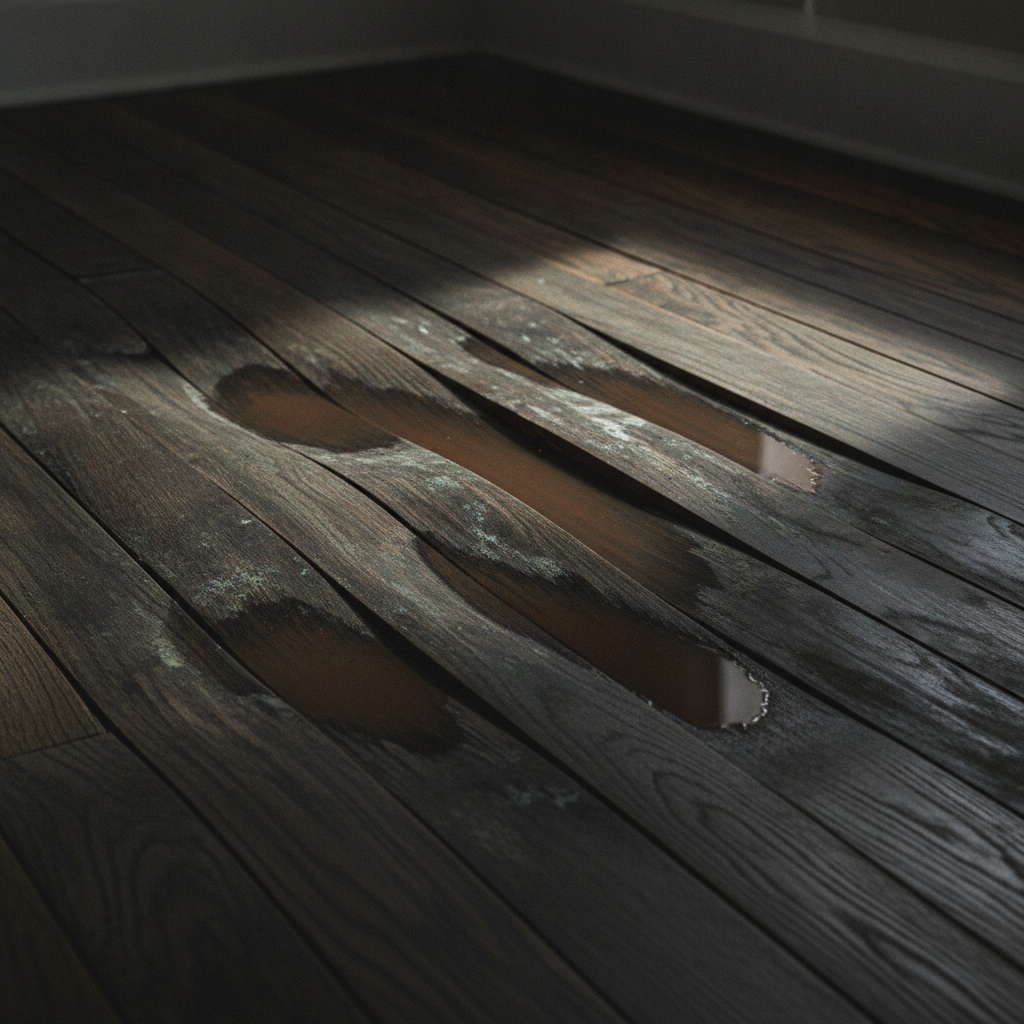
Before we explore the solution, it’s crucial to understand the problem. The fear of water-damaged wood floors isn’t unfounded; it’s based on the fundamental nature of wood itself. Traditional solid hardwood and non-waterproof laminate are like sponges. Their core materials are porous and highly susceptible to moisture.
At a microscopic level, wood is made of countless cells and fibers. When exposed to water—from a small spill that seeps between planks, a leaky pipe, or even high ambient humidity—these cells absorb the moisture and swell. This expansion is what causes the visible damage that can ruin a floor:
- Cupping: The edges of the planks rise higher than the center, creating a concave, scalloped appearance.
- Crowning: The opposite of cupping, where the center of the board swells and rises higher than the edges.
- Buckling: The most severe form of damage, where the flooring lifts entirely off the subfloor, sometimes by several inches.
According to water damage restoration professionals, the first 24-48 hours after exposure are critical. Within this short window, irreversible swelling can occur, and mold can begin to colonize, creating a serious health hazard alongside the structural damage[1]. Once this process starts, the floor is often unsalvageable, leading to a costly and disruptive replacement. This inherent vulnerability is why, until now, placing traditional wood in a kitchen or bathroom has been a high-stakes gamble.
The Solution Arrives: What Exactly Is Waterproof Hybrid Hardwood?
Waterproof hybrid hardwood is an engineered marvel designed to eliminate the risks associated with traditional wood flooring. It delivers the authentic look and feel of real hardwood because the top layer is real hardwood. The magic lies in its multi-layered, technologically advanced construction.
Let’s break down a typical plank:
- Protective Wear Layer: A transparent, ultra-durable topcoat (often containing aluminum oxide) that resists scratches, stains, and fading from UV light.
- Real Wood Veneer: A thin, authentic slice of hardwood (like oak, hickory, or maple) that provides the unique grain, texture, and beauty you can only get from genuine wood.
- 100% Waterproof Core: This is the heart of the technology. Instead of wood-based materials like HDF, the core is made from a Stone Plastic Composite (SPC) or Wood Plastic Composite (WPC). SPC, which uses a limestone composite, is exceptionally dense, rigid, and completely impervious to water. It will not swell, warp, or buckle, no matter how much water it’s exposed to.
- Attached Underlayment: Most hybrid hardwood planks come with a pre-attached pad that provides sound absorption, cushioning underfoot, and a moisture barrier from the subfloor.
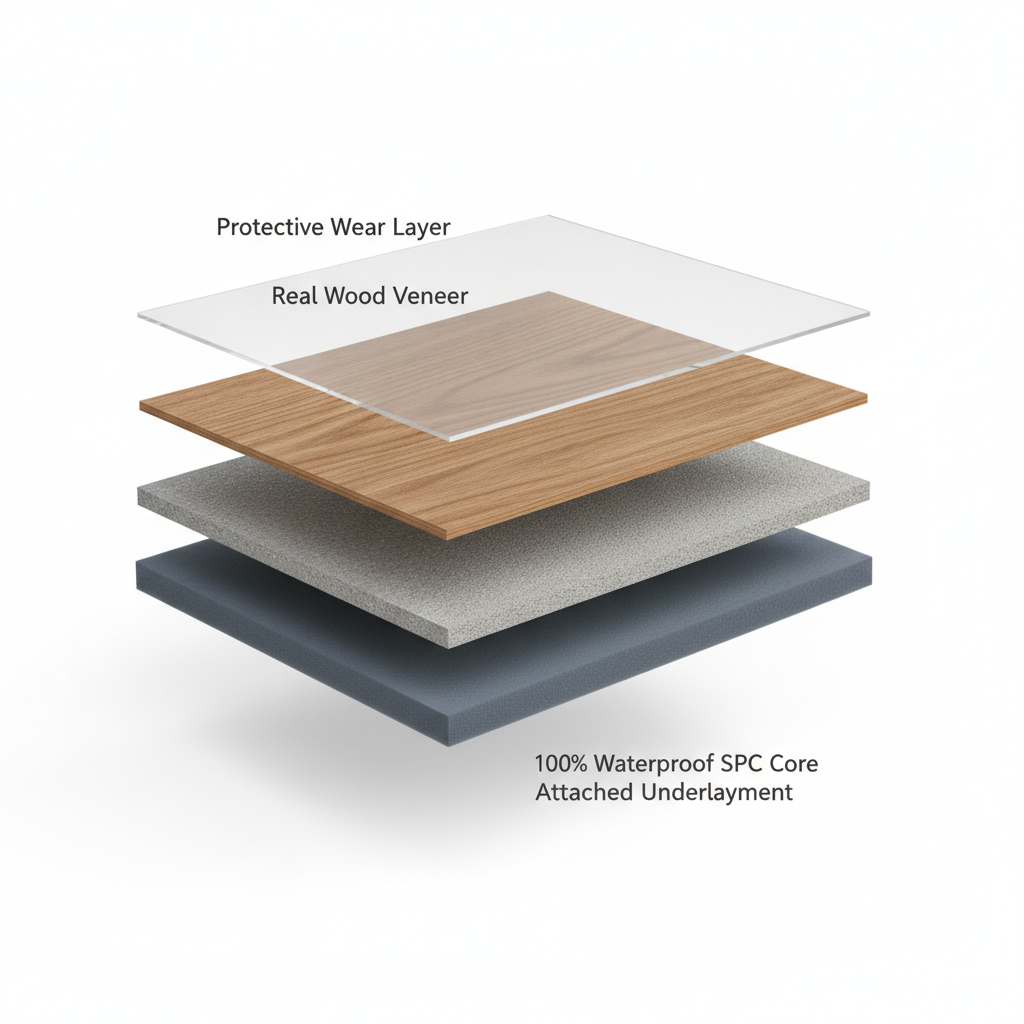
This composite construction creates a product with unparalleled stability. Major brands have pushed this technology even further. For instance, some product lines like Duravana Hybrid Resilient flooring claim to have a “100% waterproof construction” and boast features that provide up to 50% more resistance to wear than traditional hardwood[2]. This isn’t just water-resistant flooring; it’s a truly waterproof system designed for the most challenging rooms in your home.
Myth vs. Fact: Debunking Common Fears About Wood-Look Floors in Bathrooms
The long-held taboo against wood in bathrooms has created several myths. Let’s set the record straight on how waterproof hybrid hardwood changes the rules.
| Myth | Fact |
|---|---|
| “All wood floors will warp in a bathroom.” | Fact: Hybrid hardwood’s SPC core is dimensionally stable and 100% waterproof. It is specifically engineered to handle the moisture and humidity of a full bathroom without warping, cupping, or buckling. |
| “The seams might let water through.” | Fact: Modern hybrid hardwood uses advanced click-lock systems that create extremely tight, water-repellent seams. When installed correctly with a perimeter seal, the entire floor system becomes a waterproof barrier, protecting the subfloor. |
| “It’s not truly ‘wood’ flooring.” | Fact: While the core is a composite, the top layer is a genuine wood veneer. This gives it the authentic look, feel, and value of traditional hardwood, a key differentiator from fully synthetic options like LVP. |
The Ultimate Showdown: Hybrid Hardwood vs. Other Waterproof Contenders
As to the ultimate showdown, waterproof hybrid hardwood is just one of several excellent options. Here’s how it stacks up against other popular choices for high-moisture areas.
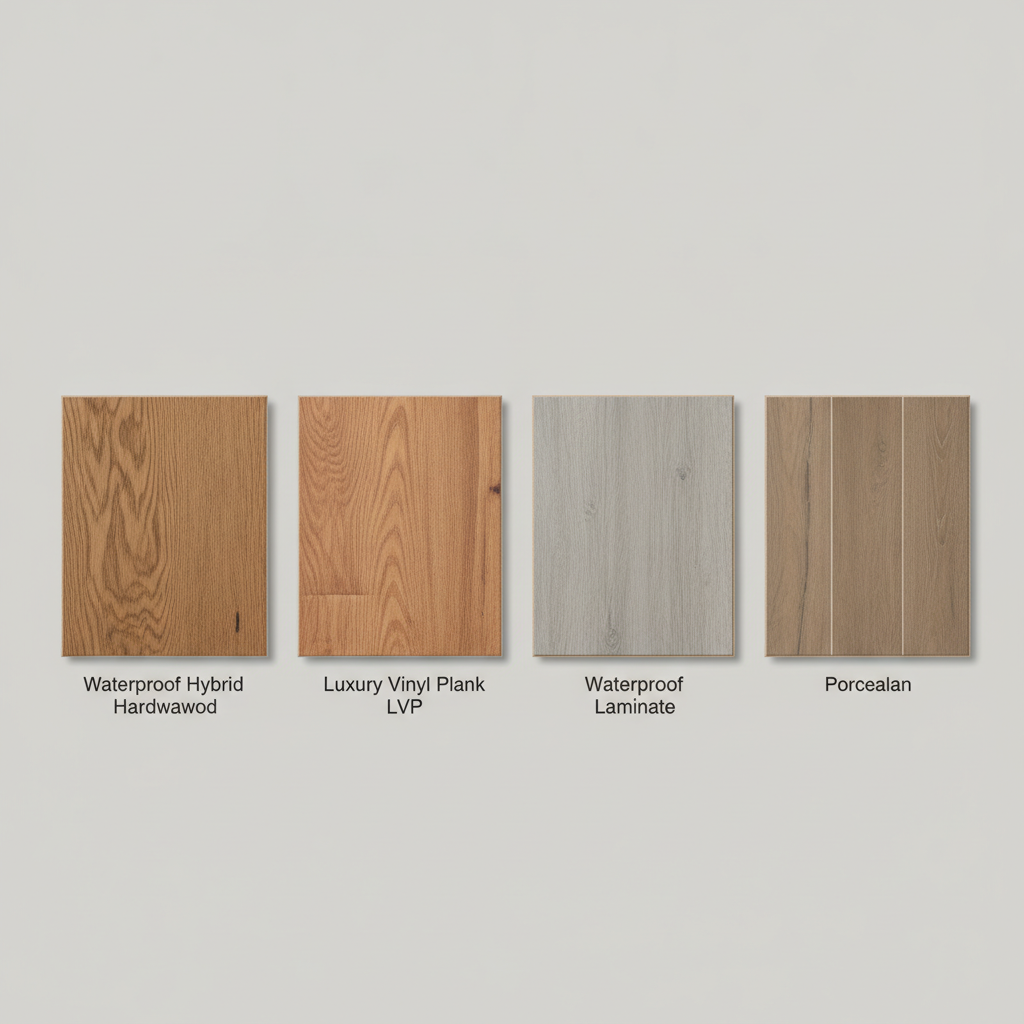
| Feature | Waterproof Hybrid Hardwood | Luxury Vinyl Plank (LVP) | Waterproof Laminate | Porcelain Tile |
|---|---|---|---|---|
| Pros | – Authentic real wood top layer – Superior dent & scratch resistance – 100% waterproof core – Adds real estate value |
– Highly affordable – Wide variety of styles – Easy DIY installation – 100% waterproof |
– Scratch-resistant top layer – Budget-friendly – Realistic wood visuals |
– Extremely durable and long-lasting – Impervious to water – Huge range of designs |
| Cons | – Higher initial cost – Wood veneer can still be scratched |
– Can be dented by heavy furniture – Less realistic feel than hybrid – Adds less resale value |
– Core is water-resistant, not fully waterproof – Can sound hollow underfoot |
– Hard and cold underfoot – Grout lines require maintenance – Professional installation often needed |
| Avg. Cost (per sq. ft.) | $7 – $15 | $3 – $8 | $3 – $7 | $3 – $11 |
| Realism | Excellent (it’s real wood) | Very Good | Good to Very Good | Good |
| Feel Underfoot | Warm, solid feel of wood | Softer, warmer than tile | Can feel hard or hollow | Hard, cold |
Porcelain tile, for example, is classified as “impervious” to water according to American National Standards Institute (ANSI) standards, meaning it has a water absorption rate of less than 0.5%[3]. While incredibly durable, it lacks the warmth and feel of wood that many homeowners desire. LVP and waterproof laminate offer great visuals at a lower price point, but they cannot match the authentic texture and character of a genuine wood veneer found on hybrid hardwood.
Application Guide: Choosing the Perfect Waterproof Floor for Your Space
Moving from general comparisons to specific recommendations, the best waterproof flooring often depends on the unique demands of the room.
For the Heart of the Home: Best Flooring for Kitchens
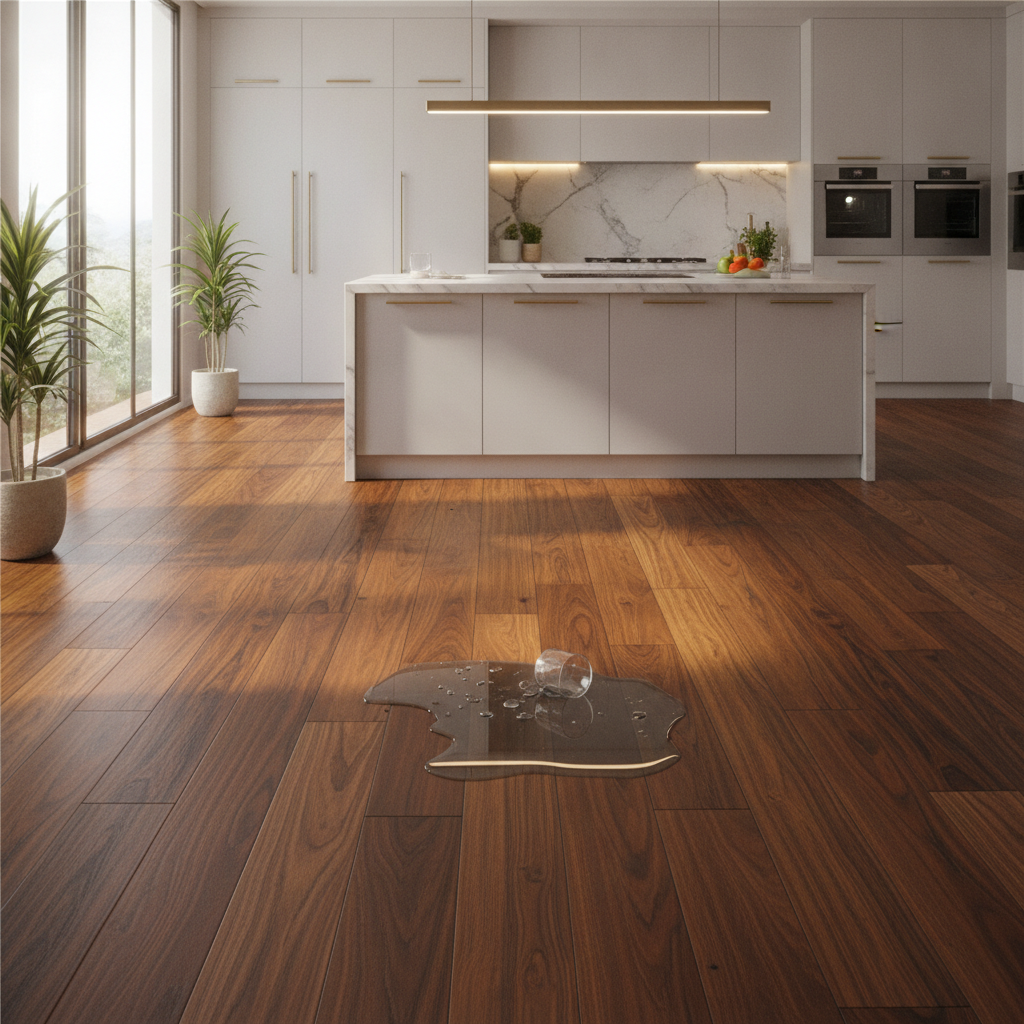
The kitchen is a high-traffic area prone to everything from dropped pots and pans to leaky dishwashers. This environment demands exceptional durability. Here, waterproof hybrid hardwood truly shines. Its dense SPC core provides superior dent resistance compared to LVP, while its robust wear layer protects the real wood veneer from the scratches of dragged chairs and pet claws. The combination of a waterproof core and a tough surface makes it an ideal choice for a busy, accident-prone kitchen.
For the Ultimate Wet Room: Best Flooring for Bathrooms
Bathrooms present the ultimate challenge: constant high humidity, direct splashes from tubs and showers, and the ever-present risk of mold. While traditional wood is a definite no-go, waterproof hybrid hardwood is engineered to handle these conditions. Its advanced click-lock systems create tight, water-repellent seams, and the waterproof core is completely unaffected by ambient steam and moisture in a way that fiberboard cores in laminate are not. When installing in a full bathroom, it is crucial to check the product’s slip-resistance rating and ensure a proper perimeter seal is used to create a fully watertight surface.
Beyond the Obvious: Solutions for Basements & Laundry Rooms
Basements and laundry rooms are other common “wet areas” where flooring failure is a major concern. These spaces often have concrete subfloors that can transmit moisture from the ground up. This is where rigid core flooring, the foundation of hybrid hardwood, is a top recommendation. The dimensional stability of an SPC core allows it to be installed directly over slightly imperfect subfloors and provides a formidable barrier against potential subfloor moisture, preventing damage from below.
Decoding Durability: What to Look for Besides ‘Waterproof’
A floor’s long-term value is determined by more than just its ability to resist water. When shopping, you need to become a savvy consumer and look at the specifications that define true durability, especially for homes with pets and kids.
The most critical factor is the wear layer. This is a clear topcoat that protects the wood veneer from scratches, scuffs, and stains. It’s measured in mils (one-thousandth of an inch).
- 12-mil Wear Layer: Sufficient for rooms with light to moderate foot traffic.
- 20-mil Wear Layer or Higher: Highly recommended for high-traffic areas like kitchens, entryways, and homes with active children or pets. This thicker layer provides substantially more protection against daily wear and tear.
It’s also essential to understand the warranty. A “lifetime residential warranty” sounds great, but read the fine print. These warranties typically cover manufacturing defects and wear-through of the top layer, but they often exclude damage from improper installation, subfloor moisture issues, or extreme events like flooding. Understanding these exclusions helps you set realistic expectations for your floor’s performance.
Installation & Maintenance: Protecting Your Investment
Even the best waterproof flooring can fail if not installed and maintained correctly. Proper installation is key to creating a truly watertight system and protecting your investment.
First, subfloor preparation is non-negotiable. The subfloor must be clean, flat, and dry before installation begins. Any imperfections can compromise the locking system and lead to gaps over time.
While many hybrid hardwood products feature DIY-friendly click-lock systems, professional installation is highly recommended for kitchens and bathrooms. An experienced installer will know how to properly work around obstacles like toilets, vanities, and kitchen islands. Most importantly, they will apply a 100% silicone caulk around the entire perimeter of the room and at all fixtures. This perimeter seal is the final, critical step that prevents water from seeping under the floorboards at the edges, creating a truly sealed, mold-resistant surface.
Frequently Asked Questions (FAQ)
How much does it cost to install waterproof hybrid hardwood?
The cost can vary, but you can generally expect the material itself to range from $7 to $15 per square foot. Professional installation typically adds another $3 to $5 per square foot, depending on your location and the complexity of the job.
Can I install waterproof hybrid hardwood flooring myself?
Yes, for those with some DIY experience, the click-lock installation systems make it a manageable project, especially in simple, square rooms. However, for bathrooms, kitchens, or any area with complex cuts and a critical need for a perfect waterproof seal, professional installation is strongly advised to protect your warranty and ensure long-term performance.
How does hybrid hardwood’s water resistance compare to luxury vinyl plank (LVP)?
Both waterproof hybrid hardwood and LVP are built on a 100% waterproof core, making them equally effective at resisting spills and moisture from the top down. The primary difference is the surface layer: hybrid hardwood features a real wood veneer for an authentic look and feel, while LVP has a high-definition printed image layer. Both are excellent waterproof choices; the decision often comes down to budget and your preference for authentic wood versus a highly realistic replica.
The Confident Choice for a Beautiful, Worry-Free Home
The fear of water damage has long dictated flooring choices, forcing homeowners to sacrifice the beauty of wood for the practicality of tile or vinyl in kitchens and bathrooms. Waterproof hybrid hardwood has shattered that compromise. It offers the undeniable warmth and character of real wood, fortified with a modern, indestructible core that stands up to the spills, splashes, and humidity of everyday life.
By understanding the technology behind it, comparing it to other options, and ensuring proper installation, you are now equipped with the expert knowledge to confidently select a floor that is not only beautiful but also built to last.
Ready to transform your kitchen or bathroom? Explore our top-rated waterproof hybrid hardwood flooring options and find the perfect style for your home today.
This article provides general guidance. For specific installation advice and to ensure warranty compliance, always consult with a certified flooring professional and follow manufacturer instructions. This post may contain affiliate links.
Sources & References
- Duffy Floors. (n.d.). What You Need to Know About Water Damaged Wood Floors. Retrieved from https://www.duffyfloors.com/what-you-need-to-know-about-water-damaged-wood-floors
- Lumber Liquidators. (2024). Duravana Hybrid Resilient Flooring. Retrieved from https://lumberliquidators.com/collections/duravana-hybrid-resilient-flooring
- Greatmats. (2024). Wet Area Flooring. Retrieved from https://www.greatmats.com/wet-area-flooring.php
