
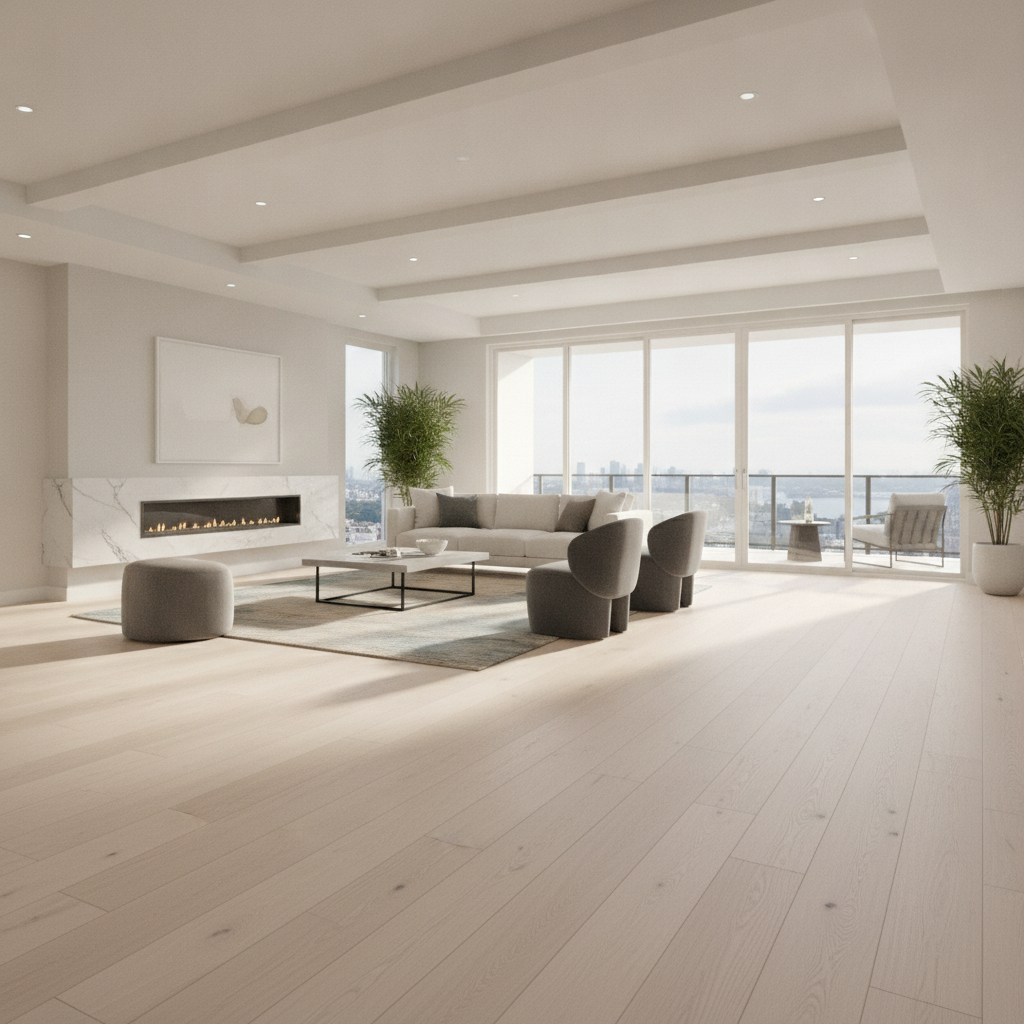
You love the timeless, elegant look of hardwood floors, but you dread the reality. The fear of a spilled glass of water causing planks to warp, the cringe-inducing sound of pet claws scratching the finish, and the constant worry about high-maintenance cleaning routines can turn a dream floor into a daily source of stress. For years, homeowners have been forced to choose between the beauty of wood and the practical durability of alternatives. But what if you didn’t have to compromise?
Enter waterproof hybrid hardwood flooring, the innovative solution designed for modern life. This groundbreaking category combines a genuine layer of real hardwood with a technologically advanced waterproof core, offering the authentic beauty you desire and the robust performance your busy household demands.
This is not just another product brochure. This is your definitive, evidence-based guide to understanding, choosing, and living with waterproof hybrid hardwood. We will move beyond the marketing hype to provide a practical framework, helping you select the perfect floor that balances stunning style with real-world durability and long-term value. We will explore the technology that makes it possible, compare modern and traditional styles, and give you the tools to make a smart, confident investment in your home.
- What is Waterproof Hybrid Hardwood Flooring?
- The Real-World Benefits: Solving the Problems of Traditional Hardwood
- A Visual Guide to Hybrid Hardwood Flooring Styles
- The Smart Buyer’s Guide: How to Choose Your Hybrid Hardwood
- Frequently Asked Questions (FAQ)
- The Smart Choice for Modern Homes
- References
What is Waterproof Hybrid Hardwood Flooring?
At its core, waterproof hybrid hardwood flooring is an engineered product designed to solve the biggest problems of traditional solid hardwood. It features a multi-layer construction, with the most important layers being a top surface of real wood veneer and a core made from a 100% waterproof composite material. This “hybrid” construction delivers the best of both worlds: the unmistakable grain, texture, and beauty of authentic wood on the surface, supported by a core that won’t swell, buckle, or degrade when exposed to water.
So, is it real wood? Yes, the part you see and walk on is genuine hardwood. However, unlike solid hardwood, which is a single piece of wood from top to bottom, a hybrid plank is a feat of modern engineering. This construction, as defined by industry organizations like the National Wood Flooring Association (NWFA), creates a more dimensionally stable and resilient flooring product.
The Anatomy of a Hybrid Plank: A Layer-by-Layer Breakdown
To truly understand its benefits, you need to look inside a hybrid hardwood plank. Imagine a cross-section revealing several distinct layers working in harmony:
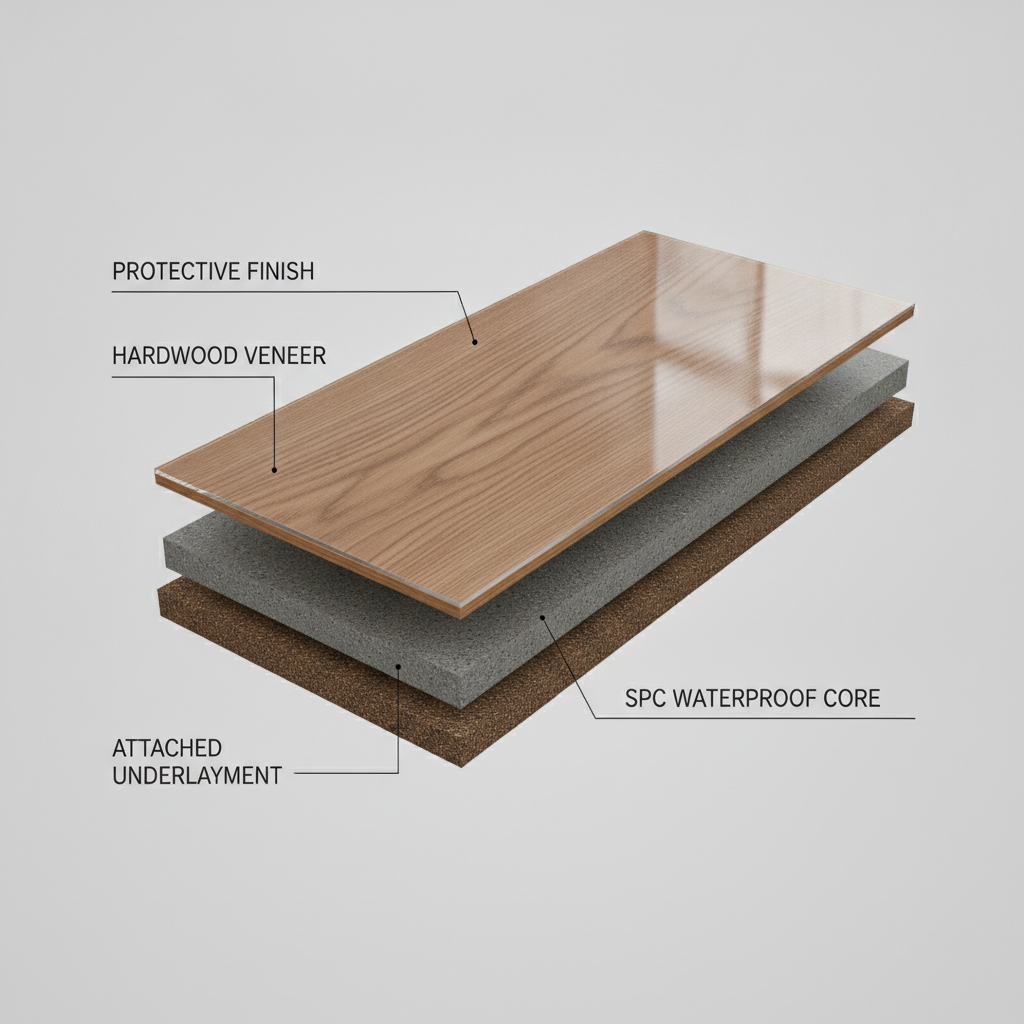
- Protective Finish: The top layer is a factory-applied, multi-coat finish, often infused with hardening agents like aluminum oxide. This provides the first line of defense against scratches, scuffs, and fading.
- Hardwood Veneer: Just below the finish is the star of the show—a thin layer of real hardwood. This veneer can range from 0.6mm to 2mm thick and provides the floor’s unique color, grain, and character.
- Waterproof Core: This is the game-changing innovation. The wood veneer is bonded to a rigid, 100% waterproof core. There are two primary types:
- SPC (Stone Polymer Composite): This is the most common and durable option. Composed of approximately 60-80% crushed limestone, PVC, and stabilizers, SPC cores are incredibly dense, rigid, and resistant to dents and impacts.
- WPC (Wood Polymer Composite): WPC cores incorporate wood-like plasticizers and foaming agents, making them slightly softer and quieter underfoot than SPC, though typically less dense.
- Attached Underlayment: Most hybrid hardwood planks come with a pre-attached pad made of cork or foam. This simplifies installation, provides sound dampening, and adds comfort underfoot.
Leading manufacturers have developed proprietary versions of these waterproof cores, such as Shaw’s COREtec and Mohawk’s SolidTech, continuously pushing the boundaries of performance and durability.
Myth vs. Fact: Is It Truly 100% Waterproof?
This is one of the most critical questions homeowners ask, and the answer requires a bit of nuance. The hybrid plank itself—specifically its SPC or WPC core—is 100% waterproof. If you submerge a single plank in water, it will not swell, warp, or fall apart. This performance is verified through objective scientific testing outlined by standards bodies like ASTM International.
However, a “waterproof floor” is a system, not just a single plank. While the planks themselves are impervious to water, moisture can still find its way through the seams between planks and reach the subfloor below if the floor is not installed correctly.
Therefore, the truth is: The planks are waterproof, but proper installation is essential to protect your subfloor. For areas with a high risk of moisture, such as bathrooms, it’s crucial to follow best practices for moisture mitigation. According to the Institute of Inspection, Cleaning and Restoration Certification (IICRC), this can include ensuring a clean, dry subfloor and using appropriate sealants at the perimeter of the room. This transparency is key—hybrid flooring offers incredible protection against everyday spills and accidents, but it’s not a substitute for proper plumbing or foundational waterproofing in a basement.
The Real-World Benefits: Solving the Problems of Traditional Hardwood
Waterproof hybrid hardwood was engineered to address the most common frustrations homeowners have with traditional wood floors. It’s a solution built for busy households with kids, pets, and the unpredictability of daily life.
| Traditional Hardwood Problem | Waterproof Hybrid Hardwood Solution |
|---|---|
| Water Damage: Planks cup, crown, or buckle from spills and leaks. | Worry-Free: 100% waterproof core prevents planks from swelling or warping. |
| Scratches & Dents: Soft woods scratch easily from pet claws and dropped objects. | Durable: Hard SPC core resists dents; strong aluminum oxide finish resists scratches. |
| High Maintenance: Requires special cleaners; must avoid water; needs eventual refinishing. | Low Maintenance: Easy to clean with a damp mop and pH-neutral cleaner. No refinishing needed. |
| Installation Limits: Not recommended for basements or full bathrooms due to moisture. | Install Anywhere: Suitable for every level of the home, including kitchens, basements, and bathrooms. |
Unmatched Durability: Resisting Scratches, Dents, and Daily Life
The durability of hybrid hardwood comes from its multi-layer construction. While the Janka Hardness Scale is a useful measure for the wood veneer itself, the true resilience of the plank comes from the synergy between its core and finish.
The dense SPC core provides exceptional impact resistance, preventing dents from dropped pots, pans, or toys. More importantly, the factory-applied finish, typically fortified with aluminum oxide, creates a surface that is significantly more scratch-resistant than traditional, site-applied polyurethane. This means less worry about pet nails, furniture legs, and the general wear and tear of a high-traffic home.
Worry-Free Water Resistance: Ideal for Kitchens, Basements, and Bathrooms
The fear of installing wood floors in moisture-prone areas is now a thing of the past. Because its core is waterproof, hybrid hardwood is an excellent choice for kitchens, laundry rooms, basements, and even full bathrooms. This is a significant advantage, especially considering that kitchens are one of the top locations for residential water damage claims.
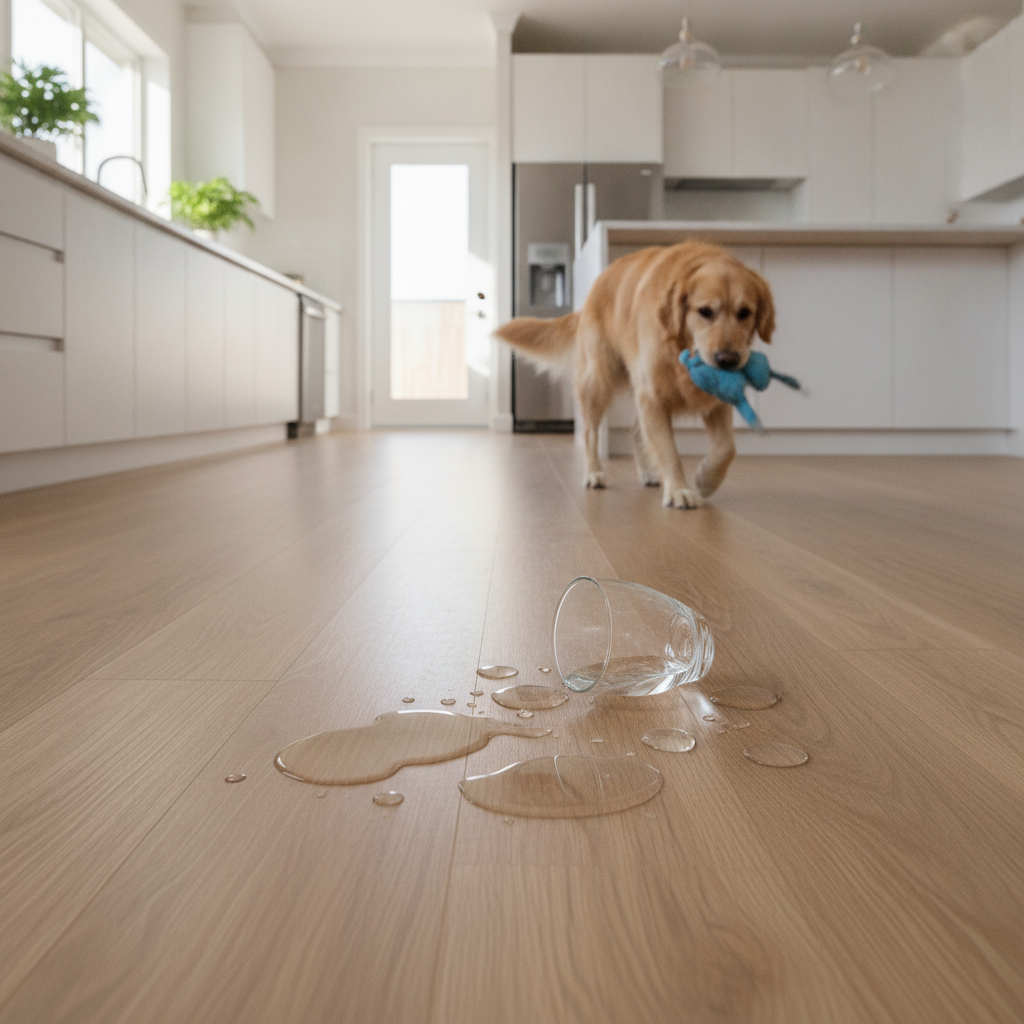
When choosing a hybrid floor for a high-traffic, spill-prone area like a kitchen, look for products with a high Abrasion Class (AC) rating. An AC4 or AC5 rating indicates the flooring is durable enough for heavy residential or even light commercial use. While the material is different, referencing the installation standards from The Tile Council of North America (TCNA) for wet areas provides a benchmark for quality, emphasizing the importance of a properly prepared subfloor and sealed perimeters for a truly water-tight system.
Low Maintenance Living: Spend Less Time Cleaning, More Time Enjoying
Forget the complex rules of caring for solid hardwood. Maintaining waterproof hybrid flooring is refreshingly simple, freeing you to enjoy your home without constant worry.
A Simple Weekly Cleaning Routine:
- Sweep or Vacuum: Regularly remove dust, dirt, and grit using a broom or a vacuum with a hard floor setting (beater bar off).
- Damp Mop: For a deeper clean, use a damp mop with a pH-neutral cleaner. There’s no need to fear water—just avoid leaving large puddles to stand on the floor for extended periods.
That’s it. There’s no need for special oil soaps, waxing, or polishing. Experts from finish manufacturers like Bona consistently recommend simple, pH-neutral formulas to protect the floor’s finish without leaving a dulling residue. This simple routine stands in stark contrast to the demanding upkeep of materials like marble or the eventual need to refinish solid hardwood, making hybrid a clear winner for low-maintenance living.
A Visual Guide to Hybrid Hardwood Flooring Styles
Beyond its technical performance, hybrid hardwood excels in aesthetics, offering a vast array of styles to match any interior design vision. From sleek and modern to warm and traditional, you can achieve the authentic wood look you want without compromise. As noted by design authorities like Architectural Digest, the trend is toward floors that provide both natural beauty and livable performance—a niche hybrid hardwood fills perfectly.
Modern vs. Traditional: Finding Your Perfect Aesthetic
Understanding the key differences between modern and traditional styles is the first step in narrowing your choices. The American Society of Interior Designers (ASID) defines these styles by a collection of characteristics, which translate directly to flooring choices.
| Feature | Modern Style | Traditional Style |
|---|---|---|
| Plank Width | Wide (5″ or wider) | Narrow (2.25″ to 4″) |
| Color Palette | Neutral, cool tones (grays, light naturals, whitewashed) | Warm, rich tones (honey, amber, deep browns) |
| Finish Sheen | Matte or low-sheen | Satin or semi-gloss |
| Grain Pattern | Subtle, clean, uniform (e.g., rift-sawn look) | More prominent, natural character (e.g., plain-sawn look) |
| Overall Vibe | Open, airy, minimalist | Cozy, classic, detailed |
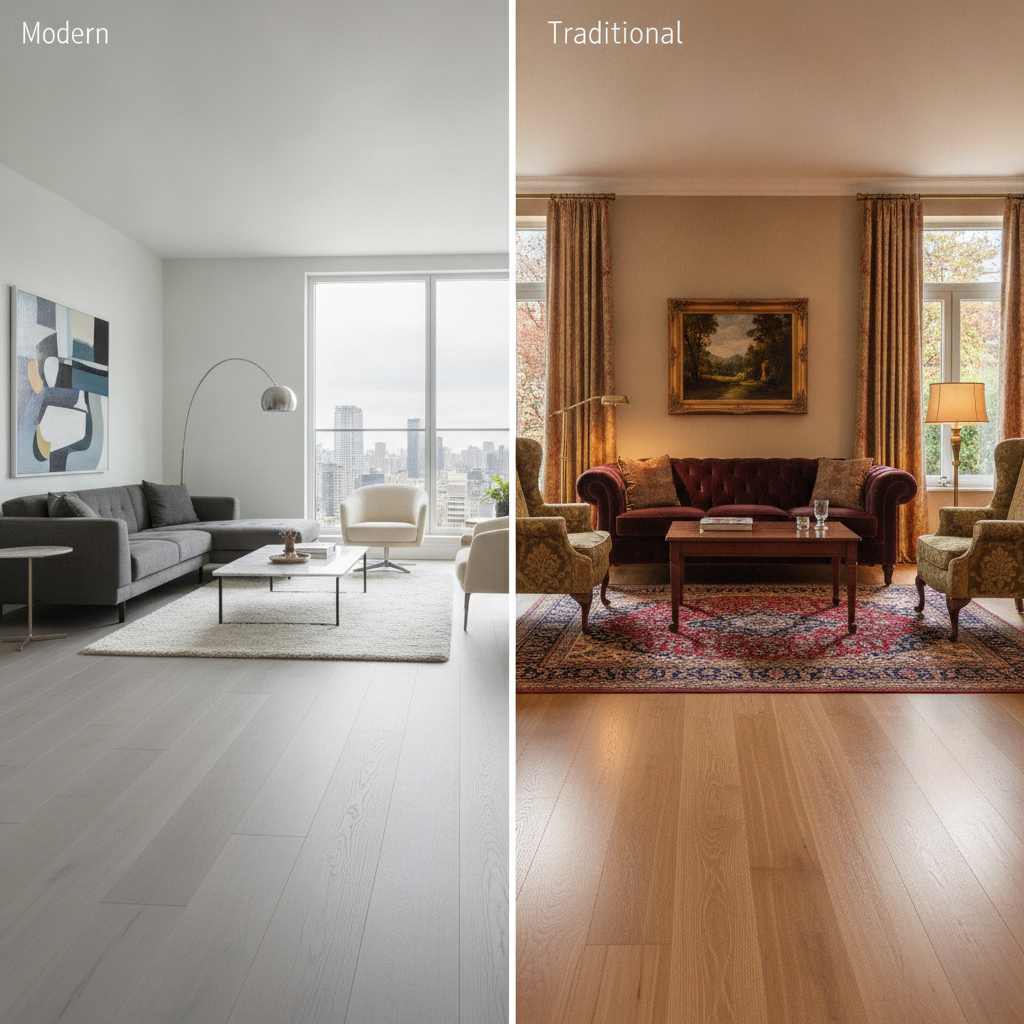
A modern aesthetic favors wide planks in light, neutral colors with a matte finish to create a seamless, expansive feel. A traditional look, by contrast, often uses narrower planks in warmer, richer tones with a subtle satin sheen to create a timeless and inviting atmosphere.
The Impact of Plank Width, Color, and Grain
The physical characteristics of the plank play a huge role in the final look of your room.
- Plank Width: Wide planks (typically 5 inches or more) have fewer seams, which can make a space feel larger and more contemporary. Narrower planks create a more classic, busier look that is characteristic of historic homes.
- Color: Light-colored floors—like white oak, maple, or ash—reflect more light and can make a small or dark room feel bigger and brighter. Darker floors, such as walnut or ebony stains, create a dramatic, luxurious, and intimate feel but may show dust and scratches more readily.
- Grain: The grain pattern, which is determined by the wood species and how the veneer is cut, adds character. A floor with a busy, prominent grain pattern, like hickory, is excellent for high-traffic areas as it naturally helps to camouflage minor scratches and dust. A floor with a subtle, straight grain, like quarter-sawn oak, provides a cleaner, more uniform look favored in modern design. The Hardwood Manufacturers Association (HMA) provides extensive resources on how different species and milling techniques produce these varied looks.
Choosing a Finish: From Matte to Satin
The finish, or sheen, of your floor affects both its look and its perceived maintenance.
- Matte Finish: Has very little reflection. It provides the most natural, raw-wood look and is exceptional at hiding minor imperfections, dust, and footprints. This is the dominant choice for modern and Scandinavian designs.
- Satin Finish: Offers a medium-low luster that is elegant and timeless. It provides a soft glow without being overly shiny, making it the most popular and versatile choice for both modern and traditional homes.
- Semi-Gloss Finish: This finish has more shine, reflecting more light and creating a more formal look. However, the higher gloss level will also highlight dust, scratches, and imperfections more than lower sheens.
Finish experts like Bona and Minwax note that while the protective qualities are similar across sheens, lower-sheen finishes are generally perceived as lower maintenance because they are more forgiving of daily life.
The Smart Buyer’s Guide: How to Choose Your Hybrid Hardwood
With a solid understanding of the technology and styles, you’re ready to make a choice. This practical framework will guide you through the final steps of selecting the perfect floor for your home, helping you avoid common pitfalls and make a confident decision.
Step-by-Step: A 4-Step Decision Framework
Break down the selection process into these four manageable steps:
- Assess Your Lifestyle: Who lives in your home? The answer dictates your durability needs. If you have large dogs, active children, and high foot traffic, prioritize a product with a thick wear layer, a strong SPC core, and a grain pattern that hides minor wear.
- Match Your Home’s Aesthetic: Look at your existing furniture, cabinet colors, and wall paint. Are you aiming for a modern, traditional, or transitional look? Use this to guide your choice of color, plank width, and finish.
- Consider the Room: Analyze the specific room where the floor will be installed. For small, dark rooms, a lighter-colored floor can work wonders. For large, open-concept spaces, wider planks can create a beautiful, cohesive look. Always bring samples home and view them at different times of day—morning, noon, and night—to see how they look in your home’s unique lighting.
- Establish Your Budget: Hybrid hardwood costs vary based on veneer thickness, brand, and core type. Remember to factor in the cost of installation. While a straight plank installation is standard, more complex patterns like herringbone or chevron can significantly increase labor costs.
Hybrid Hardwood vs. The Competition: LVP, Laminate, and Engineered
How does hybrid hardwood stack up against other popular flooring options? This head-to-head comparison clarifies its unique position in the market.
| Feature | Hybrid Hardwood | Luxury Vinyl (LVP) | Laminate | Engineered Hardwood | Solid Hardwood |
|---|---|---|---|---|---|
| Top Layer | Real Wood | Printed Vinyl | Printed Paper | Real Wood | Real Wood |
| Water Resistance | 100% Waterproof Core | 100% Waterproof | Water-Resistant (Varies) | Water-Resistant (Varies) | Poor |
| Scratch Resistance | Very Good | Excellent | Excellent | Good | Fair to Good |
| Dent Resistance | Excellent (SPC Core) | Good | Good | Fair | Fair to Good |
| Authentic Feel | Excellent | Fair (Can feel like plastic) | Fair (Can sound hollow) | Excellent | Excellent |
| DIY-Friendly | Yes (Click-Lock) | Yes (Click-Lock) | Yes (Click-Lock) | Yes (Varies) | No |
| Resale Value | Good to Very Good | Good | Fair to Good | Very Good | Excellent |
| Cost (Materials) | $$ – $$$ | $ – $$ | $ – $$ | $$ – $$$$ | $$$ – $$$$ |
According to the World Floor Covering Association (WFCA), the key is to match the product’s attributes to the homeowner’s needs. The unique value proposition of hybrid hardwood is clear: it is the only product that combines a 100% waterproof core with a genuine hardwood surface. While LVP and laminate offer excellent durability and water resistance, they cannot replicate the authentic look and feel of real wood. And while traditional engineered and solid hardwood offer that authenticity, they lack the worry-free waterproof performance needed for every room in the house.
Frequently Asked Questions (FAQ)
How much does hybrid hardwood flooring cost?
The material cost for waterproof hybrid hardwood typically ranges from $4 to $12 per square foot. The price is influenced by the thickness and species of the wood veneer, the brand reputation, and the core technology (SPC is common). This is generally more expensive than most LVP and laminate options but is comparable to or slightly less expensive than mid-to-high-end engineered and solid hardwood. Professional installation is an additional cost, so always get multiple quotes.
How long does hybrid hardwood flooring last?
With proper care and maintenance, a quality hybrid hardwood floor can last for decades. Most products come with residential warranties ranging from 15 to 25 years, and some even offer lifetime warranties. The ultimate lifespan is determined by the quality of the protective finish and wear layer, which shields the wood veneer from daily wear and tear.
Can you refinish waterproof hybrid hardwood?
Generally, no. Because the real wood veneer layer is very thin (typically 0.6mm to 2mm), there isn’t enough material to sand down and refinish as you would with solid hardwood. This is the primary trade-off for its incredible upfront durability and waterproof performance. Instead of being refinished, a damaged plank is typically replaced, which is a relatively simple process with click-lock flooring systems.
The Smart Choice for Modern Homes
Waterproof hybrid hardwood flooring represents a true evolution in home design, finally closing the gap between the timeless beauty of wood and the practical demands of modern life. It offers the authentic grain and texture that only real wood can provide, fortified with a waterproof core that stands up to spills, pets, and children. It is the smart, worry-free choice for homeowners who refuse to compromise on style or durability.
By understanding the technology, exploring the vast range of styles, and using a clear framework for your decision, you can confidently invest in a floor that is not only beautiful today but is built to last for years to come.
Disclaimer: This article may contain affiliate links. Recommendations are based on extensive research and expert opinion, but homeowners should always order samples and consult with a professional installer.
References
- National Wood Flooring Association (NWFA). (n.d.). Engineered Wood Flooring. NWFA Consumer Guides.
- Floor Covering Institute. (n.d.). Stone Plastic Composite Flooring (SPC) Technical Insights.
- ASTM International. (n.d.). ASTM D1734 – Standard Practice for Making Cementitious Panels for Testing Coatings.
- Institute of Inspection, Cleaning and Restoration Certification (IICRC). (n.d.). IICRC S500 Standard for Professional Water Damage Restoration.
- Janka Hardness Scale for Wood. (n.d.). Wood-Database.com.
- TCNA (The Tile Council of North America). (n.d.). TCNA Handbook for Ceramic, Glass, and Stone Tile Installation.
- Bona. (n.d.). Hardwood Floor Cleaners. Bona US.
- American Society of Interior Designers (ASID). (n.d.). ASID Interior Design Style Guides.
- Hardwood Manufacturers Association (HMA). (n.d.). Guide to Hardwood Species.
- World Floor Covering Association (WFCA). (n.d.). Flooring Guide for Consumers.
