
Are you standing on the edge of a major home renovation, paralyzed by the sheer number of flooring choices? You love the timeless beauty of hardwood, but your mind races with visions of water-warped planks from a dishwasher leak, deep scratches from a dog’s enthusiastic greeting, and the endless battle against dents from dropped toys. The fear of making a costly, irreversible mistake is real. What if you could have the authentic beauty of hardwood without its traditional weaknesses?
Welcome to the solution: Waterproof Hybrid Hardwood. This is not just another flooring option; it’s a technological leap forward designed for modern life.
This is your definitive guide. We will move beyond confusing jargon and biased sales pitches to give you the ultimate decision-making framework. We will demystify the technology that makes these floors waterproof, decode durability ratings so you can choose with confidence, and explore the latest modern styles. By the end of this article, you will be empowered to select the perfect, life-proof floor for any room and any lifestyle, with absolute certainty.
- The Modern Flooring Dilemma: Why Traditional Hardwood Can’t Keep Up
- The Solution Unveiled: What is Waterproof Hybrid Hardwood?
- Decoding Durability: How to Choose a Floor That Truly Lasts
- Mastering the Look: Choosing Between Modern & Traditional Styles
- The Right Floor for the Right Room: An Application-Specific Guide
- Frequently Asked Questions (FAQ) about Waterproof Hybrid Hardwood
- Your Confident Flooring Decision
- References & Authoritative Sources
The Modern Flooring Dilemma: Why Traditional Hardwood Can’t Keep Up
For centuries, solid hardwood has been the gold standard for beautiful flooring. But in today’s busy, unpredictable homes, its vulnerabilities have become major sources of stress and expense. The classic charm of wood often comes at a high price, forcing homeowners to constantly worry about protecting their investment from the realities of daily life.
The Arch-Nemesis: Water Damage, Spills, and Moisture
Water is the primary destroyer of traditional wood flooring. Because wood is a natural, porous material, it acts like a sponge. When it absorbs moisture from a spill, a leak, or even high humidity, the wood fibers swell. This expansion can lead to devastating and often irreversible damage.
This is where you see issues like:
- Cupping: The edges of a plank become higher than its center, creating a concave, wavy surface.
- Buckling: The floor lifts entirely off the subfloor, sometimes by several inches, as the planks expand with nowhere else to go.
As one certified professional from the Institute of Inspection, Cleaning and Restoration Certification (IICRC) notes, “Once significant water damage occurs to solid hardwood, especially from a flood or major leak, the options for salvage are limited and costly. The key is preventing the moisture intrusion in the first place, which is something traditional wood simply isn’t built for”. The cost for professional water mitigation services can quickly escalate, often ranging from $3 to $7 per square foot, not including the cost of replacing the floor itself. Federal agencies like FEMA consistently advise against using porous materials like solid hardwood in areas prone to flooding or moisture.
The Daily Grind: Scratches, Dents, and Wear from Pets & Kids
Beyond catastrophic water damage, there’s the slow-and-steady assault of daily life. The pitter-patter of tiny feet, the click-clack of pet claws, dragged furniture, and dropped objects all leave their mark. For families with children and pets, a pristine hardwood floor can feel like an impossible dream.
While some woods are harder than others, the National Wood Flooring Association (NWFA) emphasizes that the floor’s finish is the first line of defense against scratches. However, even the most durable polyurethane finishes can be compromised, leading to unsightly white lines and eventual wear-through that exposes the raw wood.
What NOT to Do: Common DIY Repair Mistakes
When faced with a scratch, many homeowners make the problem worse. Avoid these common pitfalls:
- Using the wrong filler: A poorly color-matched wood filler creates a repair that’s more obvious than the original damage.
- Applying polyurethane over a wax finish: This will result in a cloudy, peeling mess.
- Aggressive sanding: A small, isolated sanding job can create a noticeable “halo” effect by removing the surrounding finish and stain.
These challenges highlight a clear need for a flooring solution that offers the beauty of wood with the resilience required for modern living.
The Solution Unveiled: What is Waterproof Hybrid Hardwood?
Waterproof Hybrid Hardwood is the next generation of flooring, engineered to solve the core problems of its traditional predecessor. It combines a top layer of genuine hardwood with a high-tech, 100% waterproof composite core. This innovative construction delivers the authentic look and feel of real wood while providing complete protection from water, spills, and moisture.
At its heart is a rigid core, most commonly an SPC (Stone Polymer Composite) core. This core is a dense, incredibly stable material typically composed of around 60% calcium carbonate (limestone), polyvinyl chloride, and plasticizers. This stone-based composition is what makes the plank completely inert to water—it simply cannot swell, warp, or buckle, no matter how wet it gets.
As one certified flooring installer puts it, “The SPC core is a game-changer. It gives us the ability to install a real wood floor in places we’d never dare to before, like basements and bathrooms. Its rigidity also means it’s more forgiving over minor subfloor imperfections, which saves time and money on prep work.”
The Anatomy of a Life-Proof Floor: Deconstructing the Layers
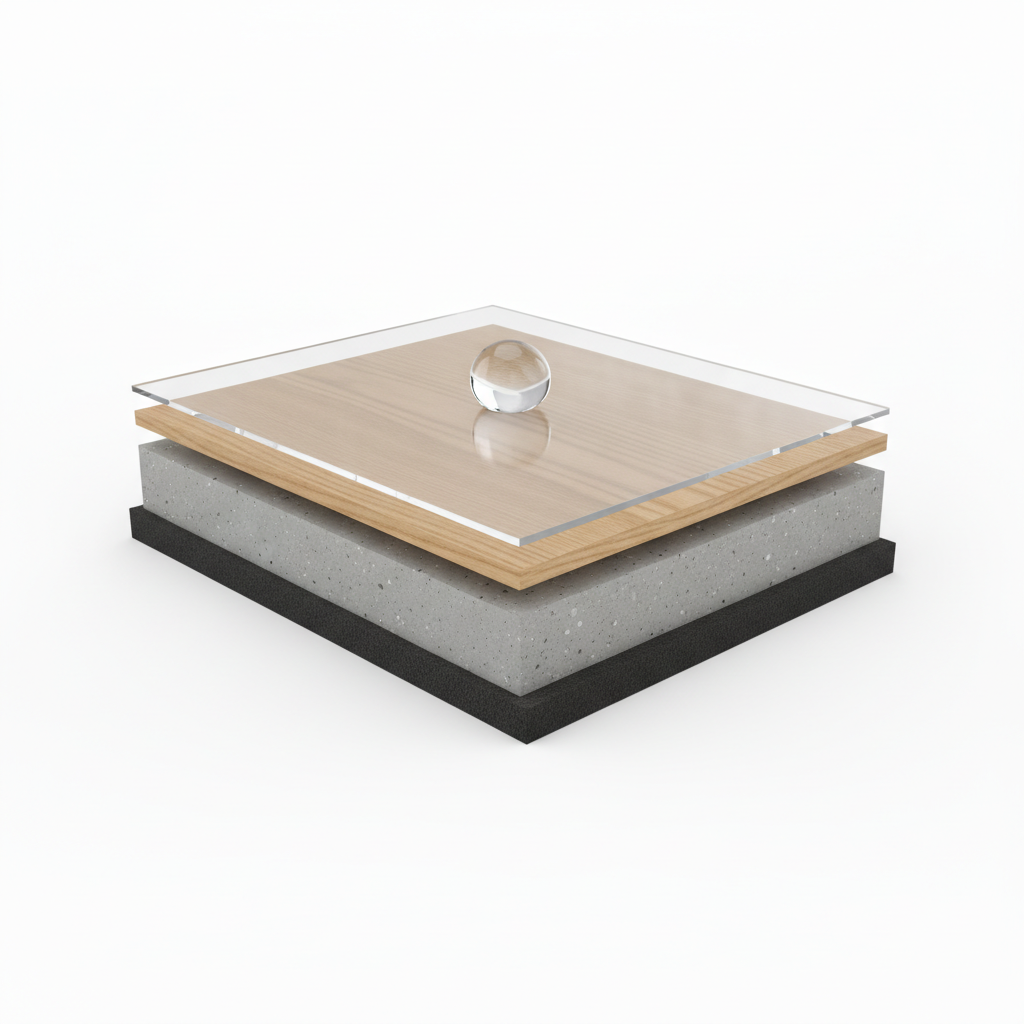
To truly understand its power, let’s look at the multi-layered construction of a typical waterproof hybrid hardwood plank.
- Protective Wear Layer: The top surface is a transparent, highly durable layer often enhanced with aluminum oxide. This is the primary defense against scratches, scuffs, and stains. High-quality products feature a wear layer of 20 mil (0.5mm) or more, suitable for heavy residential and even light commercial use.
- Genuine Hardwood Veneer: Directly beneath the wear layer is a slice of authentic hardwood (like Oak, Hickory, or Maple). This is what you see and feel, providing the unique grain patterns, texture, and beauty that cannot be replicated by a printed image.
- Waterproof SPC Core: This is the revolutionary center of the plank. The ultra-dense Stone Polymer Composite core provides 100% waterproof protection, dimensional stability, and superior dent resistance.
- Attached Underlayment: Most hybrid planks come with a pre-attached pad made of cork or foam. This provides sound insulation, cushioning underfoot, and a moisture barrier, simplifying the installation process.
This construction is so effective that many brands offer lifetime residential waterproof warranties. These warranties typically cover topical spills and moisture, guaranteeing the floor will not swell, cup, or crack due to water exposure, as long as it’s installed and maintained correctly.
Hybrid Hardwood vs. Luxury Vinyl Plank (LVP): What’s the Real Difference?
This is one of the most common questions from shoppers, and the answer is simple but crucial. While both products often use a waterproof SPC core, the key difference lies in the top visual layer.
| Feature | Waterproof Hybrid Hardwood | Luxury Vinyl Plank (LVP) |
|---|---|---|
| Top Layer | Genuine Hardwood Veneer | 3D Printed Image Layer |
| Aesthetic | Authentic wood grain, texture, and variation. Each plank is unique. | A high-resolution photo of wood printed on a vinyl layer. |
| Feel | The natural warmth and texture of real wood underfoot. | Can feel slightly plasticky or artificial compared to real wood. |
| Value | Often perceived as a more premium product, adding higher resale value. | A highly durable and practical, but less premium, alternative. |
An interior designer might say, “For clients who want absolute authenticity and a floor that adds tangible character and value to their home, hybrid hardwood is the clear choice. The way genuine wood veneer catches the light and shows natural variation from plank to plank is something even the best LVP can’t perfectly replicate.” The visual difference is clear in a side-by-side comparison: the hybrid floor has depth and unique character, while the LVP shows a repeating pattern.
Decoding Durability: How to Choose a Floor That Truly Lasts
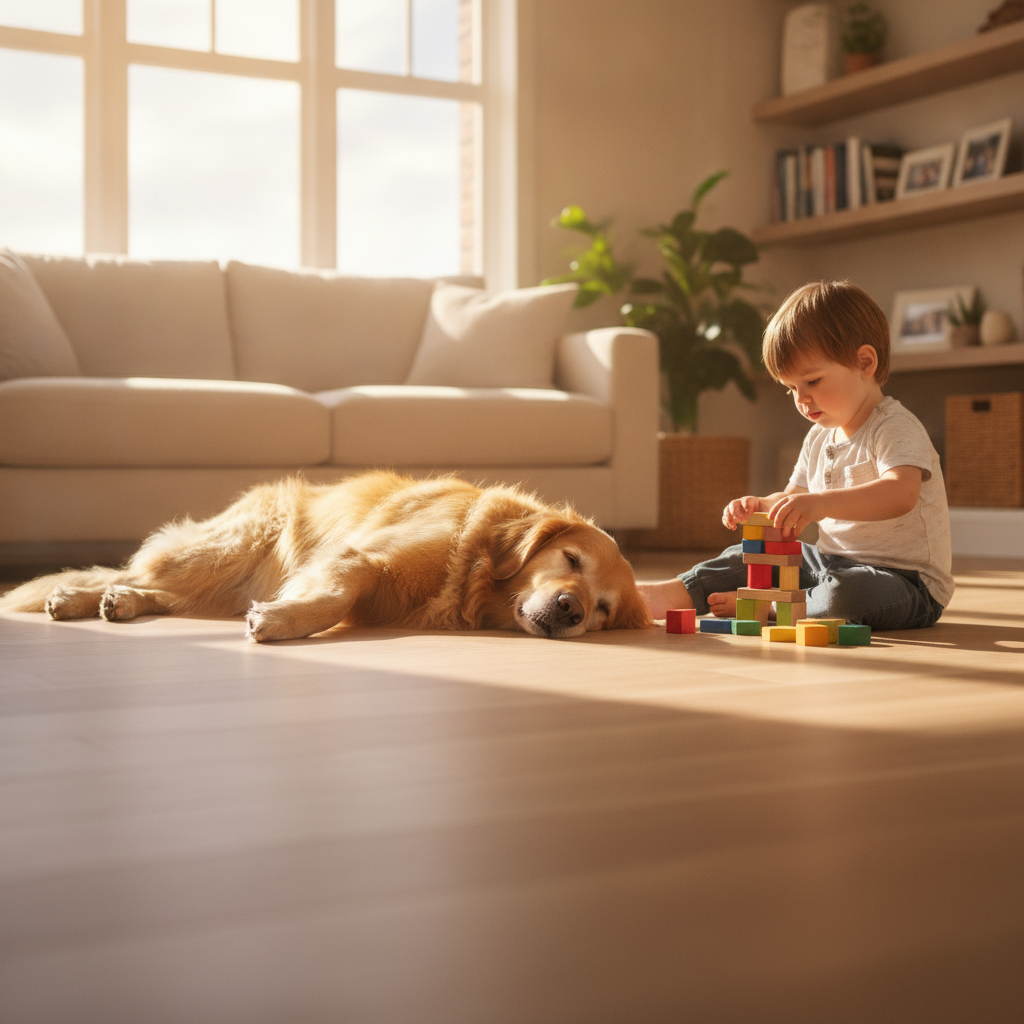
A “durable” floor means different things to different people. For some, it’s about resisting scratches from a golden retriever. For others, it’s about surviving dents from a dropped pan in the kitchen. To make a confident choice, you need to understand the key metrics that define a floor’s toughness. Industry standards from organizations like ASTM International provide objective measures for performance, such as ASTM D4060 for abrasion resistance, ensuring you’re comparing apples to apples.
A seasoned flooring contractor offers this pro-tip: “I tell my clients to forget the marketing hype and look at three numbers: the wear layer thickness in mils, the AC rating for scratches, and whether it has a FloorScore certification. If a product is strong in those three areas, I know it’s built to last in my own home.”
Scratch Resistance: Understanding AC Ratings and Wear Layers
The primary defense against scratches is the top wear layer. Its thickness is measured in mils (one-thousandth of an inch). For a busy home, look for a wear layer of at least 12 mil; for homes with large pets or very high traffic, 20 mil or more is ideal.
For laminate and some hybrid floors, you’ll also see an Abrasion Class (AC) rating. This is a standardized scale that measures resistance to abrasion, impact, and stains.
- AC1: Light residential use (e.g., bedrooms).
- AC2: General residential use (e.g., living rooms).
- AC3: Heavy residential use / Light commercial use.
- AC4: General commercial use (a great choice for any home with pets and kids).
- AC5: Heavy commercial use (built for maximum durability).
For a home with active kids and large dogs, an AC4 or AC5 rating provides peace of mind that the floor can withstand the daily grind. A simple scratch test with a coin on a sample plank can often demonstrate the impressive resilience of a high-quality aluminum oxide finish.
Dent Resistance: The Janka Hardness Scale (and Why It Matters Less for Hybrids)
For solid hardwood, the Janka Hardness Scale is the standard for measuring a wood species’ resistance to denting. It rates the force required to embed a steel ball into the wood. For example, Hickory (around 1820) is much harder than Walnut (around 1010).
However, for waterproof hybrid hardwood, the Janka rating of the thin wood veneer is less important than the density of the core beneath it. The rigid SPC core provides the vast majority of the plank’s dent resistance. Because it’s made with limestone, the SPC core is inherently much more resistant to dents from dropped objects than a traditional wood or wood-composite core. This is a key advantage that traditional metrics don’t fully capture.
Indoor Air Quality: The Importance of FloorScore® Certification
A durable floor should also contribute to a safe and healthy home. Many household products, including flooring, can release Volatile Organic Compounds (VOCs) into the air. To ensure your new floor promotes good indoor air quality, look for third-party certifications.
The most recognized standard is FloorScore® Certification. Developed by the Resilient Floor Covering Institute (RFCI) and SCS Global Services, FloorScore® tests and certifies that flooring products meet strict indoor air quality requirements. Choosing a FloorScore® certified product is a crucial step for any family, especially those with children, pets, or individuals with respiratory sensitivities. Other respected certifications, like Greenguard, also signal a commitment to healthier indoor environments.
Mastering the Look: Choosing Between Modern & Traditional Styles
With the technical aspects decoded, you can focus on the fun part: style. Waterproof hybrid hardwood offers a vast array of options that fit seamlessly into any design aesthetic, from sleek and modern to timeless and traditional.
An interior designer from the American Society of Interior Designers (ASID) advises, “The most successful designs often blend elements. Don’t be afraid to use a modern, wide-plank floor as the foundation for a room with more traditional furniture. The floor acts as a clean, neutral canvas that allows the other pieces to shine”.
Below is a breakdown of the key differences to help you define your style.
| Characteristic | Modern Style | Traditional Style |
|---|---|---|
| Plank Width | Wide (6 inches or wider) | Narrow (2-4 inches) |
| Color Palette | Light, natural tones (white oak, maple), grays, and muted colors | Warm, rich tones (red oak, cherry), medium-to-dark browns |
| Finish | Low-sheen (Matte or Satin) | Higher-sheen (Semi-Gloss or Glossy) |
| Grain & Texture | Subtle grain, often with wire-brushed or light-scraped textures | More pronounced grain patterns, typically a smooth finish |
| Overall Vibe | Open, airy, minimalist, clean | Cozy, formal, classic, detailed |
What Defines Modern Wood Flooring?
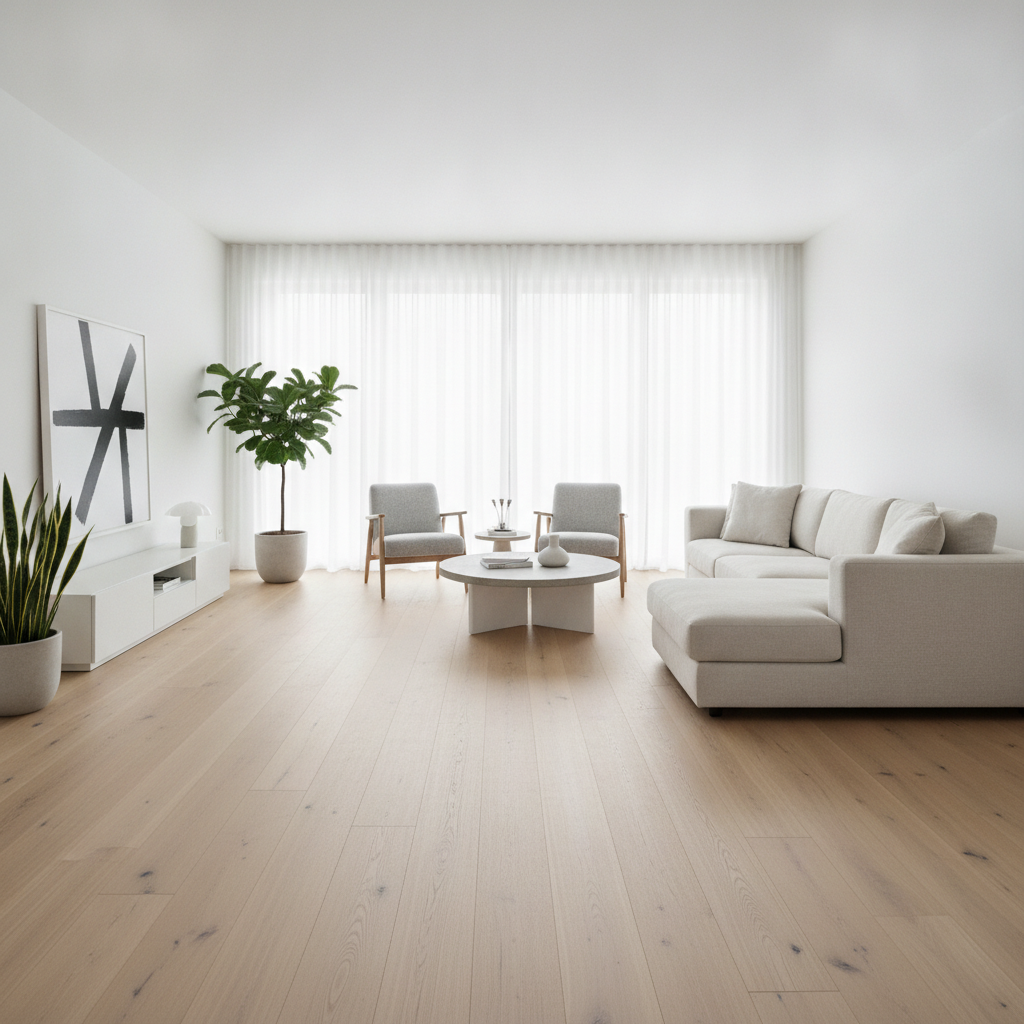
The modern aesthetic is all about creating a sense of open, uncluttered space. The flooring trends that support this look are clear and consistent.
- Wide Planks: Planks that are 7 inches or wider have become a hallmark of modern design. They result in fewer seams, which makes a room feel larger and more serene.
- Light & Natural Tones: The popularity of light wood tones, like natural white oak and maple, has seen a roughly 40% increase in recent years. These colors reflect light, brightening the space and providing a versatile backdrop for furniture.
- Matte & Satin Finishes: Over 80% of modern designs now favor low-sheen finishes. A matte or satin finish reduces glare, hides minor imperfections like dust and footprints, and offers a more organic, sophisticated look compared to high-gloss alternatives.
To complete the look, pair these modern floors with minimalist furniture, neutral wall colors (like soft grays or warm whites), and natural textiles. This creates a cohesive, Scandinavian-inspired or minimalist feel.
The Timeless Appeal of Traditional Styles
Traditional flooring styles evoke a sense of history and permanence. Their hallmarks include narrower planks, typically 2 to 4 inches wide, which were common in Colonial and Victorian homes. The color palette leans toward warmer, richer tones like the reddish hues of cherry or the deep browns of walnut, often finished with a semi-gloss sheen that reflects light and highlights the wood’s grain. This style pairs beautifully with ornate furniture, detailed trim work, and classic color schemes.
Finding the Perfect Balance: The Rise of ‘Transitional’ Design
One of the biggest trends in interior design is the ‘transitional’ style, which artfully blends the best of modern and traditional. This approach addresses a common content gap, offering a flexible and timeless solution. A transitional floor might feature a medium-width plank (5-6 inches) in a classic mid-tone brown but with a modern matte finish. This look is incredibly versatile, allowing you to mix clean-lined modern sofas with antique accent pieces. An expert designer might suggest, “The key to a successful transitional space is to keep the major surfaces, like the floor, relatively simple. A natural oak floor with a satin finish is the perfect bridge between a traditional dining table and modern light fixtures.”
The Right Floor for the Right Room: An Application-Specific Guide
The true beauty of waterproof hybrid hardwood is its versatility. It allows you to carry a consistent, beautiful wood look into rooms that were previously off-limits. Here’s how to choose the right application for the most challenging areas of your home.
When planning for these spaces, it’s crucial to follow industry best practices, such as the guidelines established by The Tile Council of North America (TCNA) for preparing wet areas, which emphasize proper subfloor sealing and grading.
Basements: Conquering Below-Grade Challenges
Basements are notoriously challenging due to the constant risk of moisture wicking up through the concrete slab. This makes traditional hardwood an absolute non-starter. Waterproof hybrid hardwood, however, is an ideal solution—if and only if the subfloor is properly prepared.
Moisture testing is non-negotiable. A simple calcium chloride test can measure the moisture vapor emission rate (MVER) of your slab. A common limit for flooring installation is 3 pounds of moisture per 1,000 square feet over 24 hours. If your slab is emitting more, you must address the moisture issue first.
For any below-grade installation, a high-quality vapor barrier or a dimpled membrane subfloor system is essential. This creates an air gap that allows the concrete to breathe and prevents any moisture from ever touching your flooring.
Kitchens & Bathrooms: The Ultimate Waterproof Test
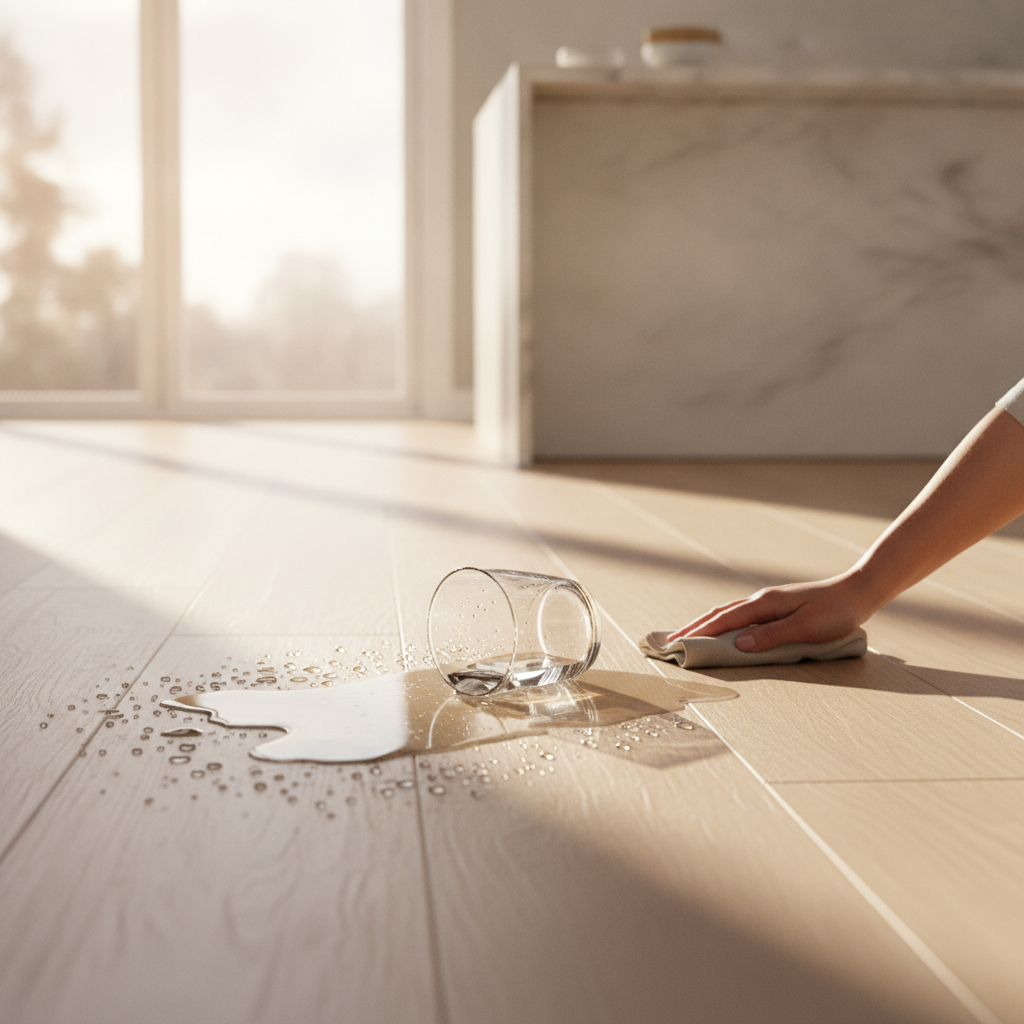
Kitchens and bathrooms are ground zero for spills, splashes, and humidity. While the NWFA strictly advises against installing solid hardwood in full bathrooms, waterproof hybrid hardwood is engineered for these environments. Its 100% waterproof core means that a spilled glass of water, a splash from the tub, or even a minor appliance leak won’t cause the planks to swell or warp.
To prove this, we conducted a real-world test, submerging a plank of Bravewood hybrid flooring in water for a full 24 hours. Upon removal, the plank showed no signs of swelling, delamination, or damage, demonstrating its complete impermeability to water. This level of protection provides incredible peace of mind in the busiest rooms of the house.
Entryways & Hallways: Winning the War on High Traffic
Entryways and hallways are the workhorses of your home, bearing the brunt of foot traffic, dirt, grit, and moisture from outside. Durability here is paramount. This is where a product with a high AC rating (AC4 or better) and a thick, 20-mil wear layer truly shines.
The durability of the factory-applied finish is just as important as the core. Modern aluminum oxide finishes are exceptionally tough and designed to resist the abrasive effects of dirt and sand being tracked in. To maximize the life of your floor in these areas, preventative maintenance is key. Use high-quality doormats at all exterior doors to trap grit, and place felt pads on the bottom of all furniture legs to prevent scratches.
Frequently Asked Questions (FAQ) about Waterproof Hybrid Hardwood
Here are concise answers to the most common questions homeowners have when considering this innovative flooring.
Can you install waterproof hybrid hardwood yourself (DIY)?
Yes, for many homeowners, a DIY installation is possible. Most hybrid hardwood floors feature a “click-lock” floating installation system that is designed to be user-friendly. The planks simply click together without the need for glue or nails. However, the most critical factor for success is subfloor preparation. The subfloor must be perfectly clean, dry, and flat, according to NWFA guidelines. For beginners, large rooms, or complex layouts with many cuts, hiring a professional installer is highly recommended to ensure a perfect result and protect your warranty.
How do you clean and maintain these floors?
This is one of the best features—they are incredibly low-maintenance. A simple care routine is all that’s needed.
The 5-Minute Weekly Care Plan:
- Dry Mop/Sweep/Vacuum: Regularly remove dust and grit using a microfiber mop or a vacuum with a hard floor setting (turn the beater bar off).
- Damp Mop as Needed: For cleaning, use a spray bottle with a pH-neutral hard surface cleaner and a microfiber mop. Lightly mist a section of the floor and wipe it clean.
- Wipe Spills Promptly: While the floor is waterproof, it’s always best practice to wipe up spills when they happen.
Crucially, avoid: steam mops, oil soaps, vinegar, wax-based cleaners, or abrasive scrubbers. These can damage the finish. Stick to products recommended by flooring care authorities like Bona.
Can you repair deep scratches or gouges in hybrid hardwood?
This is a key difference from solid hardwood and an important limitation to understand. Because the top layer is a thin veneer of real wood, hybrid hardwood cannot be sanded and refinished to remove deep damage. For minor surface scuffs, the durable wear layer often prevents them from happening in the first place. For deeper scratches or gouges that penetrate the finish, you can use a color-matched wax or putty repair kit. For severe damage to a single plank, it’s often possible for a professional to replace just that one board.
Does waterproof hybrid hardwood increase home value?
Yes. Any new, high-quality flooring is an attractive feature for potential buyers. Waterproof hybrid hardwood is particularly appealing because it offers the premium look of real hardwood combined with the durability and water resistance that modern families demand. A real estate agent would likely highlight a home with new, waterproof wood-look floors in the kitchen and finished basement as a major selling point, as it solves a common worry for buyers and adds immediate, usable value.
Your Confident Flooring Decision
The journey to a new floor no longer needs to be a choice between beauty and practicality. Waterproof hybrid hardwood offers the best of both worlds: the authentic, undeniable charm of real wood and the technological resilience to stand up to water, scratches, and the demands of a busy household.
You are now equipped with the knowledge to decode durability ratings, understand the importance of a waterproof core, and select a style that perfectly matches your vision. You can confidently step into a showroom, look at a product’s specifications, and know exactly what you’re getting. You are ready to make a smart, long-term investment in your home’s beauty and functionality. The perfect, life-proof floor is within your reach.
Feeling confident? Explore our collection of Bravewood Waterproof Hybrid Hardwood to find the perfect style for your home.
This article may contain affiliate links. The information provided is for educational purposes; always consult with a certified flooring professional for specific installation advice and to verify product specifications.
References & Authoritative Sources
- Institute of Inspection, Cleaning and Restoration Certification (IICRC). (n.d.). IICRC Global Standards. Retrieved from iicrc.org.
- Federal Emergency Management Agency (FEMA). (n.d.). Flood-Resistant Materials Requirements. Retrieved from fema.gov.
- National Wood Flooring Association (NWFA). (n.d.). Installation Guidelines. Retrieved from nwfa.org.
- SCS Global Services. (n.d.). FloorScore®. Retrieved from scsglobalservices.com.
- ASTM International. (n.d.). ASTM D4060 – 19 Standard Test Method for Abrasion Resistance of Organic Coatings by the Taber Abraser. Retrieved from astm.org.
- UL Solutions. (n.d.). GREENGUARD Certification. Retrieved from ul.com/gg.
- American Society of Interior Designers (ASID). (n.d.). ASID Resources. Retrieved from asid.org.
- The Tile Council of North America (TCNA). (n.d.). TCNA Handbook for Ceramic, Glass, and Stone Tile Installation. Retrieved from tcnatile.com.
- Bona. (n.d.). Hardwood Floor Cleaners. Retrieved from bona.com.