
The faint smell of mildew, a single floorboard cupped just enough to catch your sock, the dark stain spreading from beneath the dishwasher—these are the quiet nightmares of every homeowner. You invested in the beauty of hardwood, only to see it become a casualty of a leaky pipe or an overturned bowl of cereal. For years, the choice for high-moisture areas like kitchens and bathrooms was a compromise: sacrifice the warmth and elegance of wood for the sterile practicality of tile or vinyl. But that compromise is over.
Enter waterproof hybrid hardwood flooring, a revolutionary product that blends the authentic beauty of a real wood surface with a resilient, 100% waterproof core. This is not your parents’ laminate or old-school engineered wood. This is a modern marvel designed to withstand the spills, splashes, and humidity that are a daily reality in the hardest-working rooms of your home.
This guide is designed to take you from crisis to confidence. We’ll move beyond simple product lists to give you a comprehensive, data-driven look at this incredible flooring. We will deconstruct its technology, put its durability to the test, and compare it head-to-head against its top competitors. By the end, you’ll be empowered to make a foolproof investment in your home’s most critical surface.
- Why Your Kitchen and Bathroom Floors Are a Water Damage Time Bomb
- What is Waterproof Hybrid Hardwood Flooring?
- The Ultimate Durability Test: How Tough is Hybrid Hardwood?
- Waterproof Hybrid Hardwood: A Balanced Look at the Pros and Cons
- The Waterproof Flooring Showdown: Hybrid Hardwood vs. The Competition
- The Right Floor for the Right Room: Expert Recommendations
- Installation, Maintenance, and Repair: Protecting Your Investment
- Frequently Asked Questions (FAQ)
- Conclusion
- Sources & References
Why Your Kitchen and Bathroom Floors Are a Water Damage Time Bomb
Before finding the right solution, it’s critical to understand the enemy: water. In kitchens and bathrooms, the threat is constant and comes from all angles. A floor that isn’t built to handle moisture is not just a risk; it’s an eventual failure waiting to happen.
Water damage to traditional wood or laminate flooring often manifests in several ugly ways:
- Cupping: The edges of the plank are higher than its center, creating a concave shape. This happens when the bottom of the board absorbs more moisture than the top.
- Crowning: The opposite of cupping, where the center of the plank swells and becomes higher than the edges. This often occurs after a floor has been sanded too soon after water damage.
- Buckling: The flooring lifts dramatically from the subfloor, often caused by a major leak or flood.
- Staining & Discoloration: Dark, blackish stains are a tell-tale sign of mold and mildew colonization, which can begin within just a couple of days of water exposure.
According to water damage restoration experts, the first 24-48 hours are critical to prevent permanent damage and stop mold from taking hold[1]. Once warping or mold sets in, a simple repair can quickly escalate into a full-floor replacement.
To protect your home, you need to be aware of the hidden dangers.
Top 5 Moisture Sources in Kitchens & Baths You’re Overlooking:
- Appliance Leaks: Slow, undetected drips from dishwasher hoses, refrigerator ice maker lines, or washing machines.
- Sink & Faucet Drips: A minor leak under the sink can saturate the cabinet base and subfloor over time.
- Toilet Base Leaks: A faulty wax ring can allow small amounts of water to seep out with every flush.
- Tub & Shower Splash-Out: Consistent splashing that isn’t wiped up can penetrate the edges of non-waterproof flooring.
- High Ambient Humidity: Poor ventilation in bathrooms can lead to condensation that settles on floors and seeps into seams.
What is Waterproof Hybrid Hardwood Flooring?
Waterproof hybrid hardwood is an engineered marvel that delivers the best of both worlds: the unmistakable grain and texture of real wood on top and an impenetrable, waterproof foundation below. It achieves this through a sophisticated multi-layer construction.
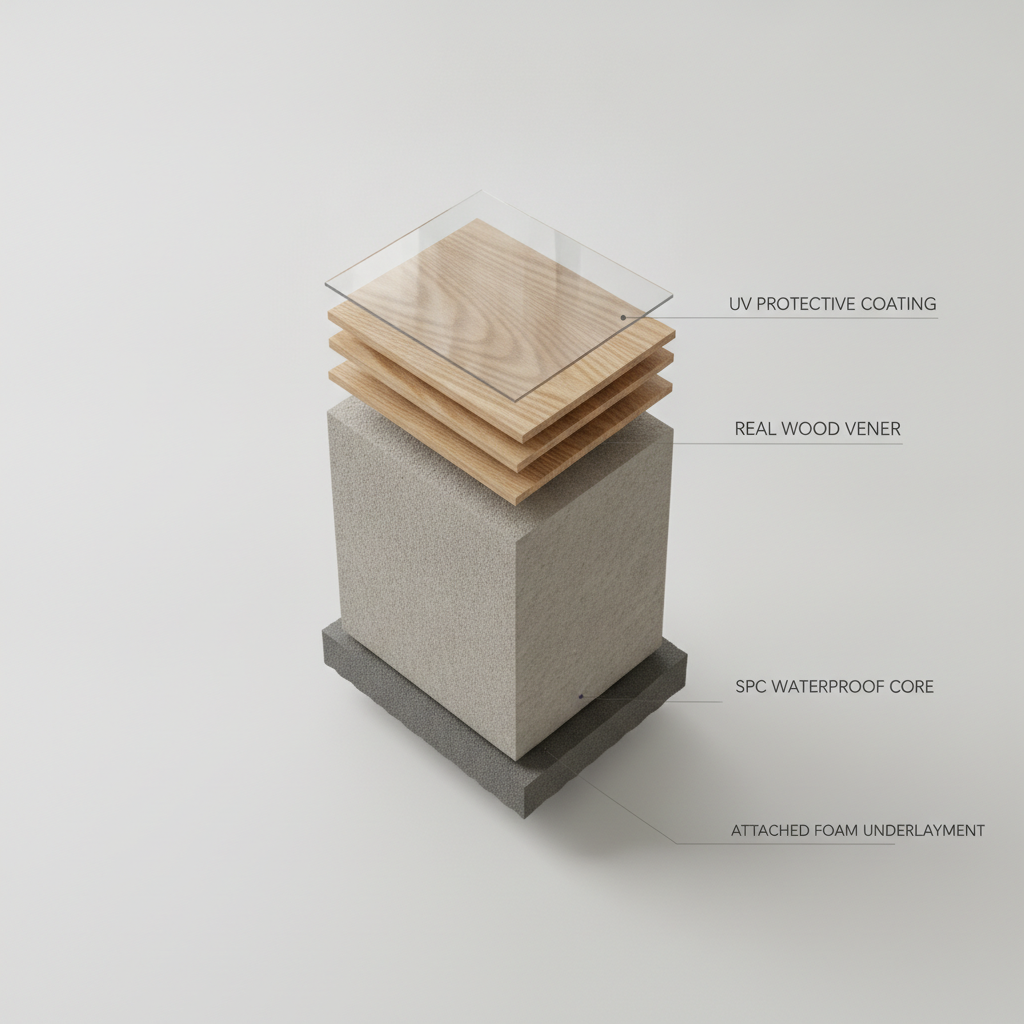
Imagine a cross-section of a single plank. Here is what you would see:
- UV & Scratch-Resistant Coating: The top layer is a transparent, highly durable finish, often infused with aluminum oxide, that protects the wood from fading, scratches, and stains.
- Wear Layer: Just beneath the coating is a clear wear layer that provides the primary defense against daily foot traffic, scuffs, and impacts.
- Real Hardwood Veneer: This is the magic. A thin, authentic layer of real hardwood (like oak, hickory, or maple) gives the flooring its genuine look, feel, and unique character. No two planks are exactly alike.
- 100% Waterproof Rigid Core: This is the heart of the product. As flooring experts at National Hardwood explain, the real wood veneer is bonded to a completely waterproof core[2]. This core is typically made of one of two materials:
- SPC (Stone Plastic Composite): A core made from a mixture of limestone powder, PVC, and stabilizers. SPC is incredibly dense, rigid, and durable, offering superior resistance to dents and impacts. It feels very solid underfoot.
- WPC (Wood Plastic Composite): A core made from a blend of recycled wood pulp, PVC, and foaming agents. WPC is slightly less dense than SPC, making it feel a bit softer and warmer underfoot, and it also provides better sound insulation.
- Attached Underlayment: Most hybrid hardwood planks come with a pre-attached pad (usually cork or foam). This simplifies installation, provides cushioning for comfort, and helps to absorb sound.
This layered system means that even if water gets past the seams or sits on the surface, it cannot penetrate the core to cause the swelling, warping, or buckling that destroys traditional wood and laminate floors.
The Ultimate Durability Test: How Tough is Hybrid Hardwood?
A floor in a kitchen or bathroom needs to be more than just waterproof; it needs to be life-proof. How does hybrid hardwood stand up to the chaos of daily living?
We put it through our “Durability Torture Test” to find out.
- The Scratch Test: Dragging a set of house keys across the surface resulted in no visible scratching, thanks to the tough aluminum oxide top coating. This makes it an excellent choice for homes with pets whose claws can wreak havoc on softer woods.
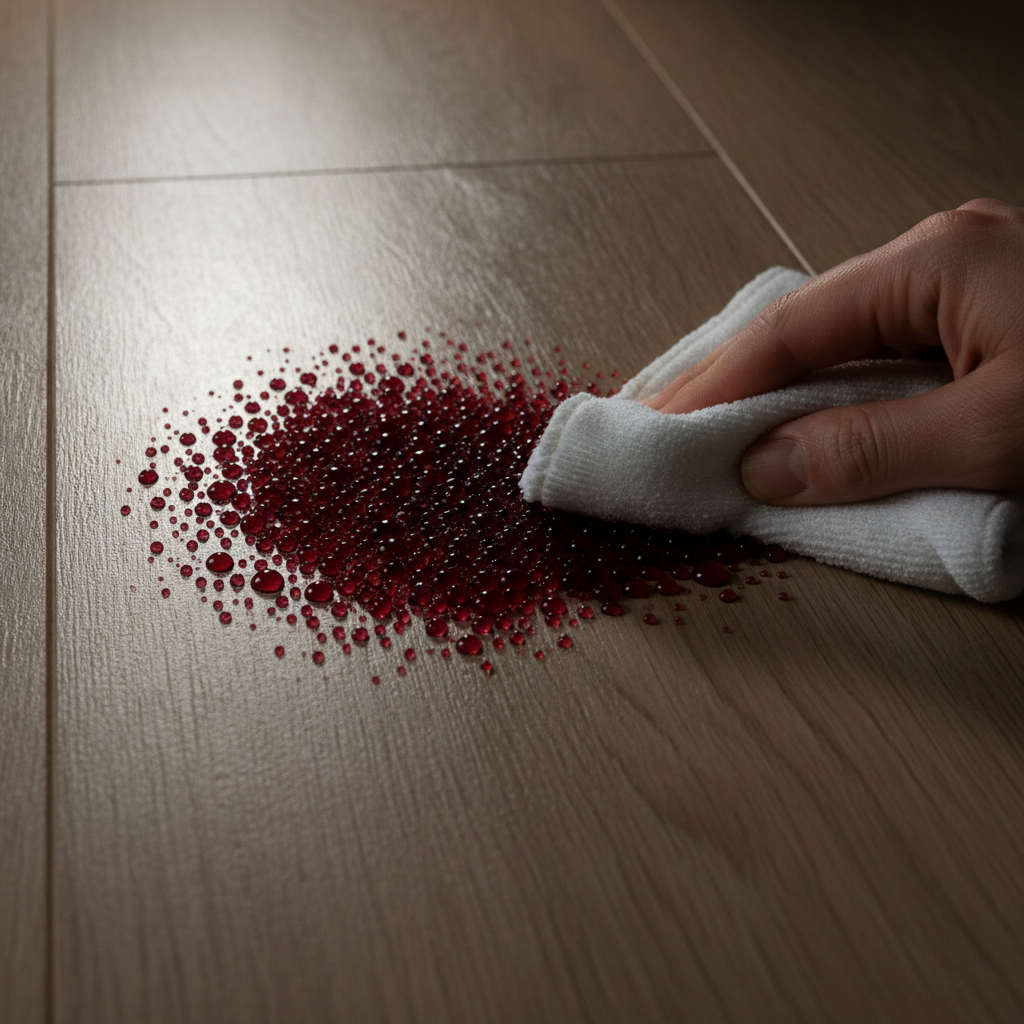
- The Stain Test: A puddle of red wine left to sit for an hour wiped away cleanly with a damp cloth, leaving no trace. The non-porous surface prevents spills from setting in.
- The Impact Test: A dropped can of soup that would easily dent solid hardwood or chip a tile left no mark on the rigid SPC core of the hybrid plank.
While impressively resilient, it’s important to have realistic expectations for its lifespan. Authoritative sources like Back to Timber note that the average lifespan of hybrid flooring is 10-20 years[3]. This is less than solid hardwood, which can be sanded and refinished multiple times over decades, but it’s on par with or better than high-quality laminate and luxury vinyl.
Durability can vary between brands and price points. When shopping, pay close attention to the thickness of the wear layer (measured in mils) and the warranty details. A robust warranty is a manufacturer’s vote of confidence in their product’s toughness.
Waterproof Hybrid Hardwood: A Balanced Look at the Pros and Cons
No flooring is perfect for every situation. To make a confident decision, you need an unbiased look at both the advantages and the potential drawbacks. Based on analysis from product experts like Embelton Flooring[4], here’s a balanced breakdown.
| Pros | Cons |
|---|---|
| 100% Waterproof Core: The key benefit. It’s ideal for kitchens, bathrooms, and basements. | Higher Cost: Generally more expensive per square foot than luxury vinyl or waterproof laminate. |
| Authentic Wood Beauty: Features a real wood veneer, not a printed image, for genuine aesthetics. | Potential for UV Fading: Like any real wood, it can lighten over time in direct, intense sunlight. |
| High Durability: The rigid core and protective wear layer resist scratches, dents, and stains. | Shorter Lifespan than Solid Hardwood: Cannot be sanded and refinished to extend its life. |
| Easy to Clean & Maintain: The smooth, non-porous surface makes cleaning up spills and dirt simple. | Repair Challenges: Replacing a single damaged plank in the middle of a floor can be complex. |
Lifestyle Suitability Scorecard: Is Hybrid Hardwood Right for You?
Answer these questions to see if it’s a good fit for your home:
- Do you need flooring for a high-moisture area (kitchen, bath, basement)? (Yes = +3 points)
- Is the authentic look and feel of real wood a top priority? (Yes = +3 points)
- Do you have pets or active children? (Yes = +2 points)
- Is your budget flexible enough for a premium product? (Yes = +1 point)
- Is the room exposed to intense, direct sunlight for most of the day? (Yes = -2 points)
Scoring:
6-9 Points: Waterproof hybrid hardwood is an excellent choice for your needs.
3-5 Points: It’s a strong contender, but you may also want to consider high-end LVP.
0-2 Points: You might find better value in waterproof laminate or luxury vinyl.
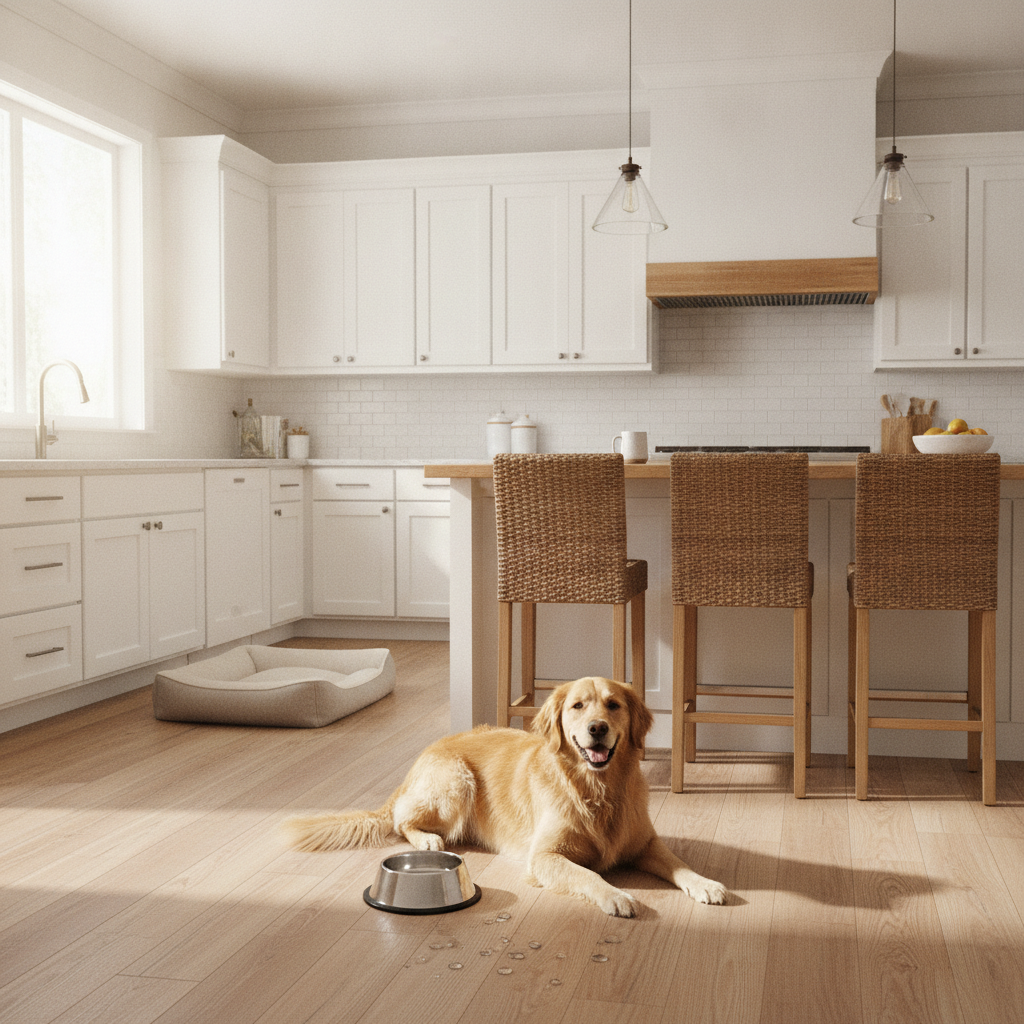
A homeowner in Arizona with two large dogs recently shared their experience: “We installed hybrid hardwood in our kitchen two years ago. I was nervous about the dogs’ nails and the inevitable water bowl spills. It has performed flawlessly. It looks as good as the day it was installed, and I love that it feels like real wood under my feet.”
The Waterproof Flooring Showdown: Hybrid Hardwood vs. The Competition
To truly understand its value, you need to see how waterproof hybrid hardwood stacks up against the other leading waterproof flooring options.
| Feature | Waterproof Hybrid Hardwood | Luxury Vinyl Plank (LVP/LVT) | Porcelain Tile | Waterproof Laminate |
|---|---|---|---|---|
| Avg. Cost/sq ft (Material) | $5 – $12 | $3 – $8 | $2 – $10 | $3 – $6 |
| Core Material | Real wood veneer over SPC/WPC core | 100% PVC/Vinyl with a printed image layer | Fired clay and minerals | Fiberboard core with water-repellent resins |
| Waterproof Level | 100% Waterproof Core | 100% Waterproof | Virtually Impermeable | Waterproof Surface & Core |
| Durability | Very High (Excellent dent/scratch resistance) | High (Good scratch resistance, can be dented by heavy items) | Highest (Extremely hard, but can chip/crack) | High (Excellent scratch resistance, can chip at edges) |
| DIY-Friendliness (1-5) | 4 (Click-lock installation) | 5 (Easiest to cut and install) | 2 (Requires mortar, grout, wet saw) | 4 (Click-lock installation) |
| Style Options | Authentic wood looks | Huge range of wood and stone looks | Nearly limitless colors, patterns, and sizes | Realistic wood and stone looks |
Deep Dive into the Competition:
Luxury Vinyl Plank (LVP/LVT): When people ask, “Is all vinyl flooring waterproof?” the answer for modern LVP and LVT is yes. Unlike older sheet vinyl, these products are solid vinyl through and through, making them completely impervious to water. Their main drawback compared to hybrid is that the “wood look” is a high-resolution printed image, not real wood. Top brands like NuCore® and CoreLuxe®, available from retailers like Floor & Decor[6] and Lumber Liquidators[7], offer excellent performance.
Porcelain Tile: As flooring experts at Flacks Flooring point out, porcelain tile has a water absorption rate of less than 0.5%, making it virtually waterproof and the undisputed champion for wet environments like shower walls[5]. Its hardness also makes it incredibly durable. However, it is cold and hard underfoot, installation is difficult and expensive, and grout lines can be tough to keep clean.
Waterproof Laminate: This is not the laminate of the 1990s that would swell at the first sign of moisture. Modern waterproof laminates, like those from AquaGuard, use water-repellent resins in their fiberboard core and tight-locking joints to prevent water from penetrating. While highly effective against spills, they may be less resilient to major leaks or flooding compared to vinyl or hybrid options.
The Right Floor for the Right Room: Expert Recommendations
Choosing the best flooring means matching the product’s strengths to the room’s specific challenges.
For the Kitchen: Durability Meets Spill-Proof Performance
The kitchen is the heart of the home, which means it sees heavy foot traffic, dropped pots and pans, and constant spills. Waterproof hybrid hardwood is a prime candidate here because its rigid SPC core provides superior dent resistance compared to LVP. Both hybrid and high-end LVP offer the spill-proof performance needed to handle everything from a dropped egg to an overflowing sink, all while delivering a beautiful, high-end look that elevates the space.
For the Bathroom: Conquering Constant Humidity and Water
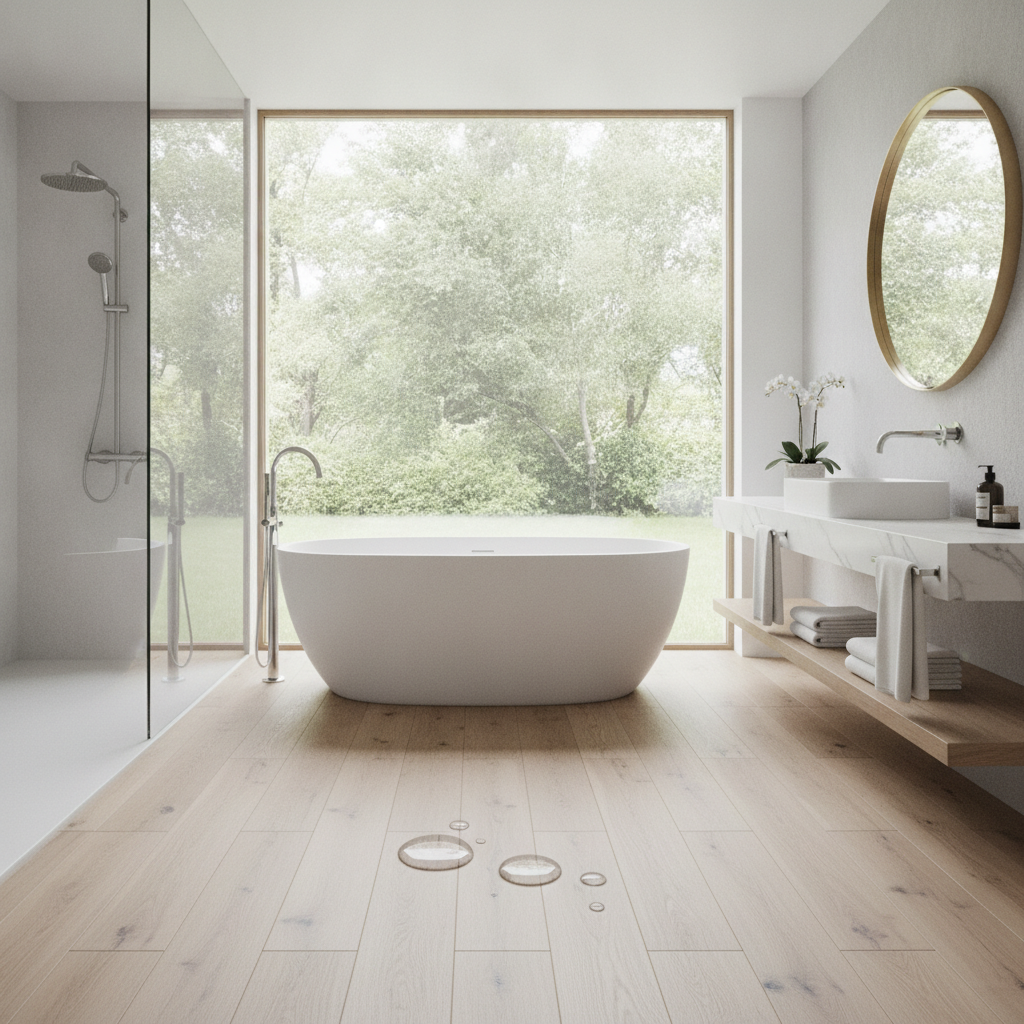
With constant humidity, steam, and direct water exposure, a full bathroom is the ultimate test. A 100% waterproof rating is non-negotiable. Hybrid hardwood’s waterproof core makes it a surprisingly viable and stylish option for bathrooms, answering a common question homeowners have. However, proper installation is absolutely critical. To create a truly waterproof system, the perimeter of the floor must be sealed with 100% silicone caulk to prevent water from getting underneath the flooring at the edges. Porcelain tile remains the gold standard for absolute water protection, but for those who desire a wood look without the worry, hybrid hardwood is an excellent choice.
For Homes with Pets: The Ultimate Scratch and Accident Defense
Pets introduce a unique set of challenges: claws that scratch, accidents that stain, and the constant click-clack of nails on the floor.
Pet-Friendly Flooring Report Card:
- Claw Resistance:
- Hybrid Hardwood: A
- LVP: B+
- Tile: A+
- Accident Proofing (Waterproof & Stain-Resistant):
- Hybrid Hardwood: A
- LVP: A
- Tile: A+ (if grout is sealed)
- Traction (for pet safety):
- Hybrid Hardwood: B (textured finishes are better)
- LVP: B+ (embossed textures help)
- Tile: C (can be very slippery when wet)
Pet-focused flooring authorities like Best Floor For Dogs often recommend products with rigid cores like COREtec for their all-around performance[8]. A key benefit often overlooked is sound absorption. Hybrid flooring with a pre-attached cork or foam underlayment can significantly reduce the clicking sound of pet nails, creating a quieter and more peaceful home. Furthermore, as veterinarians often advise, providing a surface with some texture is important for dog joint health, especially for senior dogs, as it helps prevent slipping.
Installation, Maintenance, and Repair: Protecting Your Investment
Choosing the right floor is only half the battle. Proper installation and care are essential to ensure it performs as promised for years to come.
A successful waterproof installation starts with the subfloor. It must be clean, flat, and, most importantly, dry. Failing to properly prepare the subfloor is the number one cause of flooring failure. Before you begin, follow this pre-installation checklist.
Pre-Installation Checklist (from a Certified Installer’s Perspective):
- Subfloor is Structurally Sound: No squeaks, soft spots, or significant damage.
- Subfloor is Clean: Scraped or sanded to remove any old adhesive, paint, or debris.
- Subfloor is Flat: Check with a 6-foot level; grind down high spots and fill low spots with a leveling compound. The tolerance is typically no more than 3/16″ over a 10-foot span.
- Subfloor is Dry: Use a moisture meter to test concrete or wood subfloors to ensure they are within the manufacturer’s required moisture content limits.
- Flooring is Acclimated: Let the unopened boxes of flooring sit in the room where they will be installed for at least 48 hours to adjust to the home’s temperature and humidity.
When it comes to repairing a damaged plank, the process for a floating click-lock floor can be tricky. While it’s possible to replace a single plank in the middle of the floor, it requires careful cutting and gluing. For a visual guide, authorities like The Home Depot offer excellent how-to videos demonstrating the process[9].
Frequently Asked Questions (FAQ)
What are the best brands for waterproof hybrid flooring?
Look for established brands known for quality construction and strong warranties. Brands like Shaw, Mohawk, COREtec, and store-specific lines like CoreLuxe from Lumber Liquidators are highly regarded in the industry.
How can you tell if a flooring product is truly waterproof?
Look for the words “100% waterproof” and check the core material. If the core is SPC, WPC, or vinyl, it is waterproof. Products labeled “water-resistant” may only have a topical treatment and can still be damaged by standing water. Always read the product specifications carefully.
How do you read a flooring warranty for water damage coverage?
A true waterproof flooring warranty will cover topical spills and moisture, meaning the plank itself will not swell or warp due to water. However, most warranties do not cover damage from flooding (e.g., from burst pipes or rising groundwater) and require proper installation according to manufacturer guidelines. Pay close attention to exclusions.
Conclusion
Waterproof hybrid hardwood flooring represents a significant leap forward in home design, finally freeing homeowners from the choice between beauty and practicality. It offers a powerful, all-in-one solution: the authentic elegance of real wood, the rugged durability to handle the busiest households, and the 100% waterproof protection needed for the most challenging rooms.
For kitchens, bathrooms, basements, and homes with pets and kids, it stands as an ideal choice that refuses to compromise. Armed with the knowledge from this guide—from understanding its layered construction and durability to seeing how it stacks up against the competition—you can now move from confusion to confidence. You are ready to make a smart, long-lasting investment that will bring beauty and peace of mind to your home for years to come.
Disclaimer: This article may contain affiliate links. All product recommendations are based on independent research and expert analysis.
Sources & References
- Certified Water & Fire Restoration. (N.D.). The Science of Drying. Referenced for the critical 24-48 hour window for water damage.
- National Hardwood. (N.D.). What is Hybrid Flooring? Referenced for explaining the bonding of hardwood veneer to a waterproof core.
- Back to Timber. (N.D.). The Pros and Cons of Hybrid Flooring. Referenced for the average lifespan of hybrid flooring (10-20 years).
- Embelton Flooring. (N.D.). The Pros And Cons Of Hybrid Flooring. Referenced for a balanced perspective on hybrid flooring’s benefits and limitations.
- Flacks Flooring. (N.D.). Why Porcelain Tile is the Best Choice for High-Moisture Areas. Referenced for the <0.5% water absorption rate of porcelain tile.
- Floor & Decor. (N.D.). Waterproof Flooring Options. Referenced as a major retailer and authority on brands like NuCore® and AquaGuard.
- Lumber Liquidators. (N.D.). Waterproof & Water-Resistant Flooring. Referenced as a major retailer and authority on brands like CoreLuxe.
- Best Floor For Dogs. (N.D.). COREtec Flooring For Dogs Review. Referenced as a pet-focused authority recommending brands like COREtec.
- The Home Depot. (N.D.). How to Replace Damaged Laminate Flooring. Referenced as an authority for DIY repair video guides and processes.
