
Choosing the perfect floor for your home can feel like a high-stakes decision. You’re not just picking a color; you’re making a long-term investment that needs to withstand daily life. The worries pile up quickly: a spilled glass of wine on traditional hardwood, the click-clack of your dog’s nails leaving a trail of scratches, or the nagging fear that the trendy grey you love today will look dated in five years. What if there was a flooring solution that eliminated these anxieties, blending the timeless beauty of real wood with modern, bulletproof technology?
Enter waterproof hybrid hardwood. This innovative flooring is engineered for the realities of a busy home, offering a powerful combination of authentic style, uncompromising durability, and incredible design versatility. It’s the answer for homeowners who refuse to choose between a floor that looks beautiful and a floor that performs.
This guide is your Modern Flooring Matrix—a clear, data-driven framework to cut through the marketing hype. We will deconstruct the technology, compare it head-to-head against other popular options, and provide expert-backed advice on style and maintenance. By the end, you’ll have the confidence to invest in the perfect floor that truly fits your home, lifestyle, and aesthetic vision.
- The Modern Homeowner’s Dilemma: Why Traditional Floors Fall Short
- What Exactly is Waterproof Hybrid Hardwood?
- The Ultimate Showdown: Hybrid Hardwood vs. Other Wood-Look Options
- Design Versatility: A Floor for Every Style
- A Practical Guide to Installation, Maintenance, and Durability
- FAQ: Your Waterproof Hybrid Hardwood Questions Answered
- Conclusion: The Confident Choice for a Modern Home
- References
The Modern Homeowner’s Dilemma: Why Traditional Floors Fall Short
For decades, homeowners have been forced to compromise. The classic elegance of solid hardwood came with a constant fear of water, while other materials sacrificed beauty for practicality. These common pain points validate the search for a better solution.
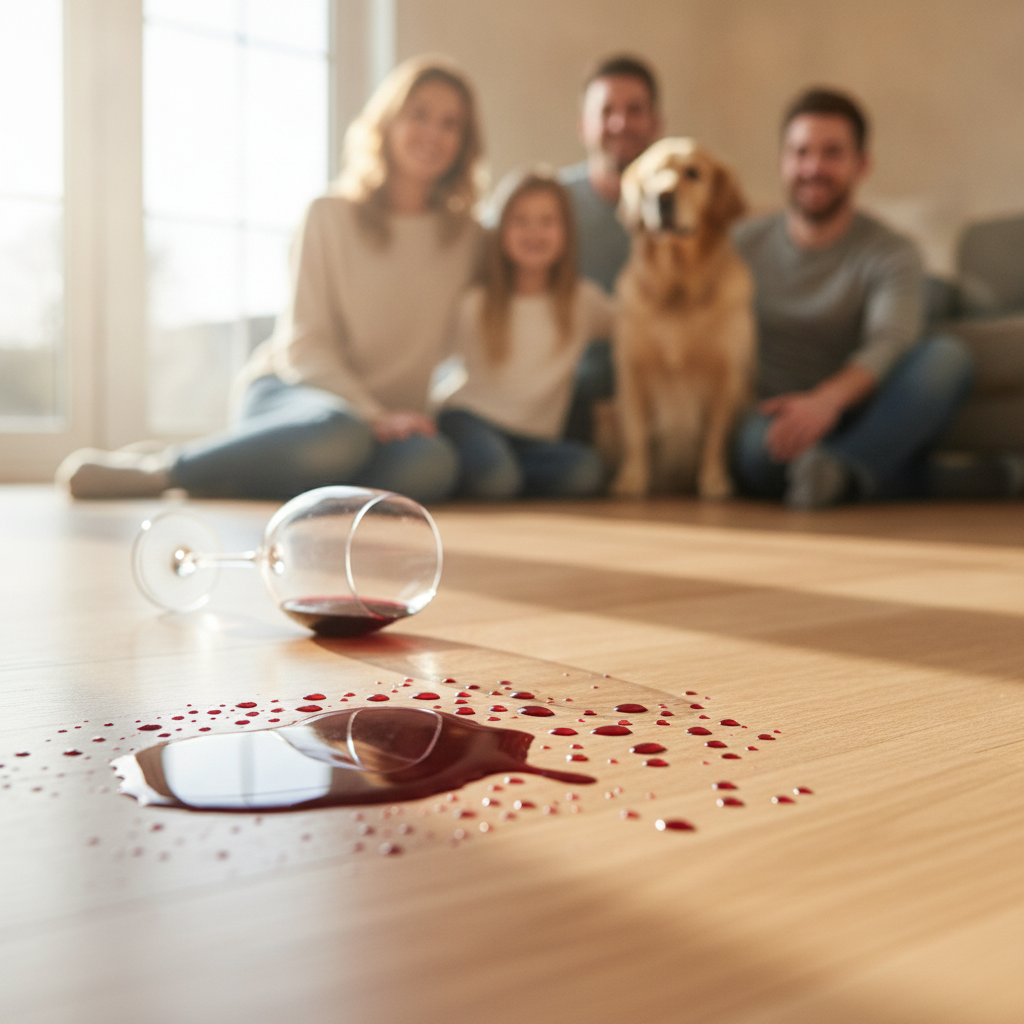
The ever-present threat of water is a primary concern. From kitchen spills to bathroom humidity and basement leaks, moisture is the natural enemy of many flooring types. According to restoration industry authorities like the Institute of Inspection, Cleaning and Restoration Certification (IICRC), water damage is one of the most frequent and costly issues homeowners face, requiring swift and proper mitigation to prevent long-term structural problems and mold growth [1]. A simple appliance leak can lead to buckling, warping, and staining that ruins a traditional wood floor.
Next comes the wear and tear of daily life, especially in households with pets and children. Scratches, scuffs, and dents can quickly diminish the appearance of a new floor, turning a significant investment into a source of frustration. This isn’t just an aesthetic issue; it impacts your home’s financial value. As experts from the National Association of Realtors (NAR) consistently report, updated and well-maintained floors have a significant positive impact on a home’s resale value, while outdated or visibly damaged flooring can be a major deterrent for potential buyers [2].
Finally, there’s the anxiety of choosing a style that lasts. Flooring trends come and go, and picking a color or pattern that becomes quickly outdated can mean living with a choice you regret or facing another expensive renovation. The challenge is finding a floor that feels current yet timeless, providing a versatile foundation that adapts as your decor evolves.
What Exactly is Waterproof Hybrid Hardwood?
Waterproof hybrid hardwood is not just another wood-look product; it’s a masterful fusion of natural materials and advanced engineering. It solves the core problems of traditional flooring by combining a genuine hardwood veneer with a completely waterproof, rigid core. This multi-layered construction is the key to its superior performance.
Imagine a cross-section of a hybrid hardwood plank. You would typically see:
- Protective Wear Layer: A top coat of aluminum oxide or other durable finish that resists scratches, stains, and fading from UV light.
- Real Wood Veneer: This is the magic. A thin but authentic layer of real hardwood (like oak, hickory, or maple) provides the unique grain, texture, and beauty that can’t be perfectly replicated by printed designs.
- Waterproof Rigid Core: The heart of the plank is a high-density core that is 100% waterproof and provides extreme stability. This core prevents the plank from swelling, buckling, or warping when exposed to moisture.
- Attached Underlayment (Optional): Many hybrid products come with a pre-attached pad that provides sound insulation, cushioning underfoot, and a moisture barrier.
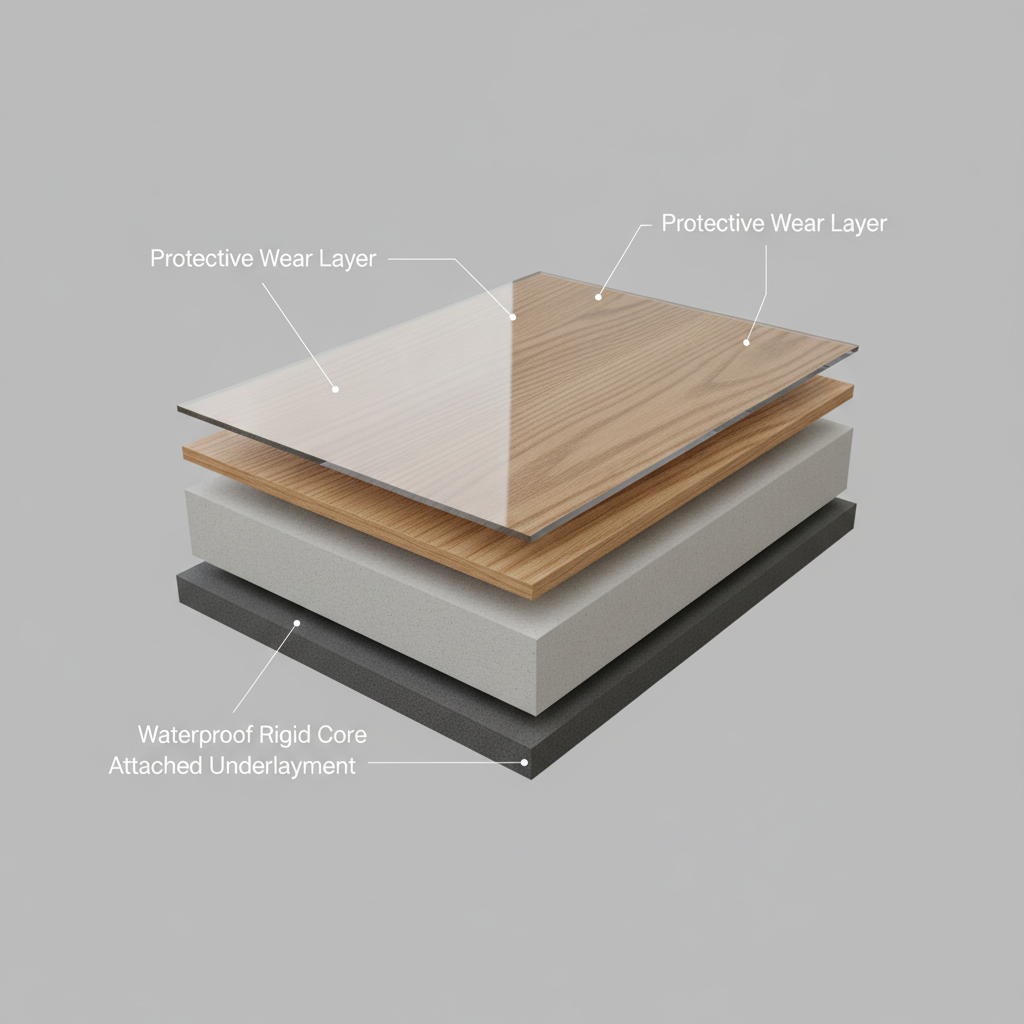
The innovation lies in that waterproof core. As a certified flooring inspector might explain, “The stability of a floor plank comes from its core. By replacing a moisture-sensitive wood-based core with an inert composite, you eliminate the primary failure point of traditional engineered and solid wood flooring.”[4] This technology ensures that spills on the surface won’t be absorbed into the plank’s structure, making it ideal for any room in the house.
SPC vs. WPC Core: Which is Right for Your Home?
The waterproof core in hybrid flooring typically comes in two main types: Stone Plastic Composite (SPC) and Wood Plastic Composite (WPC). While both are 100% waterproof, they have distinct characteristics that make them suitable for different applications. Leading manufacturers provide clear specifications on these materials [3], and understanding the difference is key to your choice.
SPC (Stone Plastic Composite) is made from a mixture of natural limestone powder, polyvinyl chloride, and stabilizers. This composition makes it incredibly dense and rigid.
WPC (Wood Plastic Composite) is made from a combination of recycled wood pulp and plastic composites. It is lighter and less dense than SPC.
Here is a simple breakdown to help you decide:
| Feature | SPC (Stone Plastic Composite) | WPC (Wood Plastic Composite) |
|---|---|---|
| Density | Higher density, more rigid | Lower density, more flexible |
| Dent Resistance | Excellent; ideal for high-traffic areas, heavy furniture, or commercial use. | Good; but more susceptible to dents from heavy dropped objects. |
| Sound Insulation | Less inherent sound absorption; relies more on the underlayment. | Quieter and softer underfoot due to foaming agents in the core. |
| Cost | Often slightly more affordable. | Can be slightly more expensive. |
According to the Floor Covering Institute, SPC’s superior density gives it an edge in dimensional stability and resistance to impact, making it a go-to choice for demanding environments. WPC, on the other hand, offers a more comfortable and quieter experience underfoot, which can be a deciding factor for living areas and bedrooms [5].
The Ultimate Showdown: Hybrid Hardwood vs. Other Wood-Look Options
With so many waterproof wood-look floors on the market, analysis paralysis is common. To make a confident decision, it’s essential to compare hybrid hardwood against its main competitors. We’ve created a comprehensive chart to break down the key differences, referencing industry standards from organizations like ASTM International for material performance [6]. A certified flooring installer would emphasize that “it’s not just about the material, but how its properties fit the specific room and lifestyle—from installation complexity to long-term feel” [7].
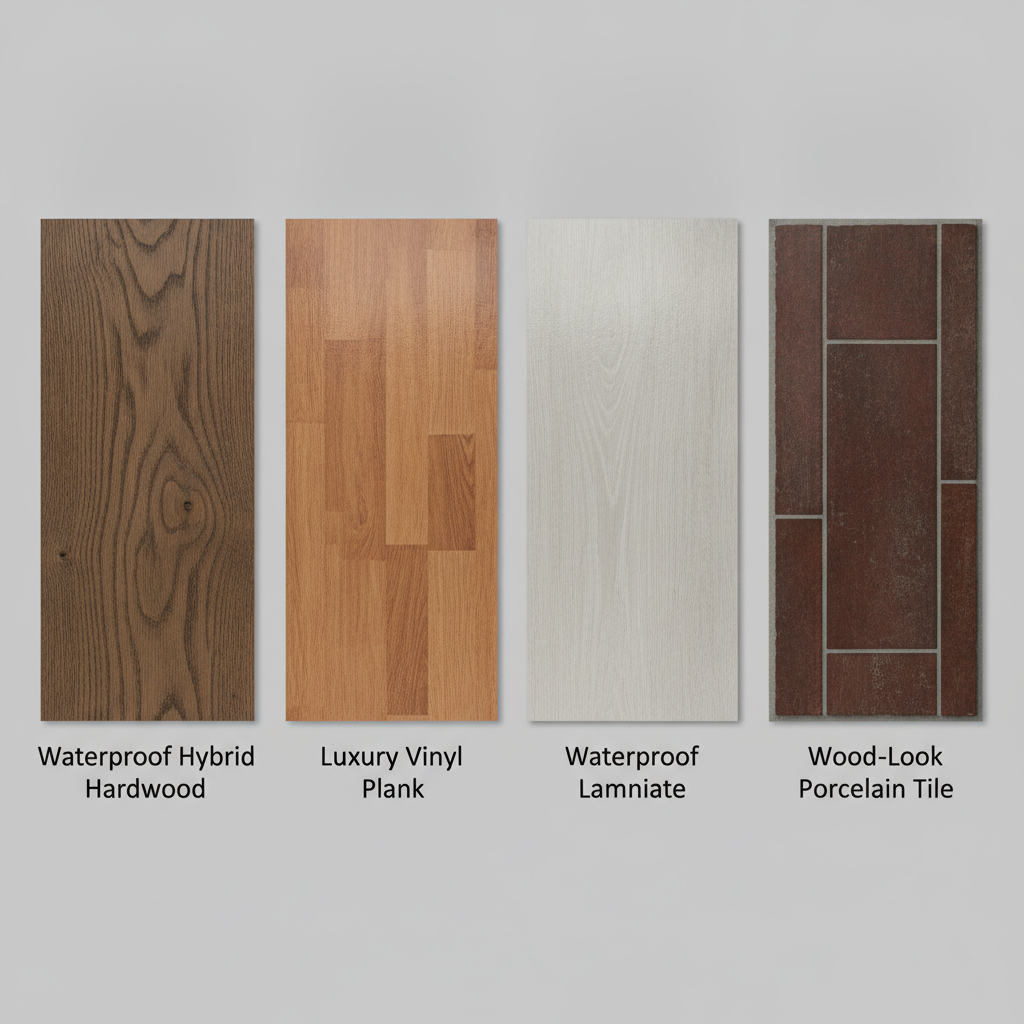
| Feature | Waterproof Hybrid Hardwood | Luxury Vinyl Plank (LVP) | Waterproof Laminate | Wood-Look Porcelain Tile |
|---|---|---|---|---|
| Core Material | SPC or WPC (Waterproof) | SPC or WPC (Waterproof) | High-Density Fiberboard (HDF) with water-repellent resins | N/A (Solid Porcelain) |
| Waterproofing | Inherently waterproof core | Inherently waterproof core | Water-resistant top layer & sealed edges; core can still be damaged by major floods | 100% waterproof material and grout |
| Realism & Feel | Real wood veneer top layer; authentic look and feel | High-definition printed image layer; can feel synthetic | High-definition printed image layer; hard, sometimes “clicky” feel | High-definition printed image; cold and hard underfoot |
| Durability | Excellent scratch/dent resistance due to hard core and finish | Excellent scratch resistance (depends on wear layer); core can dent | Excellent scratch resistance (AC rating); susceptible to chipping | Virtually scratch-proof and indestructible |
| Cost/Sq. Ft. | $$$ (Moderate to High) | $$ (Low to Moderate) | $$ (Low to Moderate) | $$$$ (High, incl. complex installation) |
| Pros | Best of both worlds: real wood beauty, waterproof performance | Highly durable, affordable, wide style variety | Very scratch-resistant, budget-friendly | Unmatched durability, 100% waterproof |
| Cons | Higher cost, veneer cannot be refinished | Lacks authentic wood feel, can be dented by heavy objects | Can be damaged by standing water, noisy underfoot | Cold, hard, expensive and difficult to install/remove |
vs. Luxury Vinyl Plank (LVP)
The primary difference between hybrid hardwood and LVP is the surface layer. Hybrid hardwood features a real wood veneer, while LVP uses a highly realistic 3D printed photograph of wood placed beneath a protective wear layer. While premium LVP looks convincing, it cannot fully replicate the unique grain variation and feel of real wood. Hybrid hardwood offers that authentic touch. According to the Resilient Floor Covering Institute (RFCI), the quality of LVP is often judged by the thickness of its wear layer, measured in mils, which is crucial for its scratch resistance [8]. Hybrid hardwood, by contrast, relies on both its durable aluminum oxide finish and the inherent hardness of its wood veneer.
vs. Waterproof Laminate
Modern laminate has made huge strides in water resistance. Manufacturers now use water-repellent coatings and special edge sealants to protect the high-density fiberboard (HDF) core. However, as standards from the North American Laminate Flooring Association (NALFA) clarify, this is typically rated for topical moisture and spills, not for standing water or flooding, which can still cause the core to swell [9]. Hybrid hardwood’s SPC or WPC core is inherently waterproof, meaning the plank itself will not be damaged by water, offering a higher level of protection. In terms of scratch resistance, laminate is a top performer, with its durability rated on an Abrasion Class (AC) scale (AC3 to AC5 is common for residential and light commercial use).
vs. Wood-Look Porcelain Tile
Porcelain tile is the undisputed champion of durability and waterproofing. It is virtually impervious to scratches, stains, and water. However, this performance comes with significant trade-offs. As one interior designer notes, “While tile is functionally brilliant for a bathroom, it can feel cold, hard, and acoustically harsh in a living room or bedroom, where the warmth and comfort of a wood product is often desired” [10]. Furthermore, tile installation is a complex and expensive process involving mortar, grout, and significant subfloor preparation, making it a much more permanent and costly choice than the floating-floor installation of hybrid hardwood.
Design Versatility: A Floor for Every Style
Beyond its technical prowess, the true appeal of waterproof hybrid hardwood lies in its aesthetic flexibility. It serves as a beautiful, neutral canvas that can anchor any interior design scheme, from rustic modern farmhouse to sleek, urban minimalism. This is the key to creating a home that feels both personal and timeless.
Leading interior designers often recommend flooring with natural tones and subtle textures as the most versatile choice. According to experts featured in publications like Interior Design Magazine, “Your floor is the fifth wall and the foundation of your design. Choosing a classic tone like a natural white oak or a soft-hued walnut allows you to change your wall colors, furniture, and accessories over time without ever clashing with your floor” [11].
This versatility is best seen in action. Imagine a single light, natural oak hybrid hardwood floor:
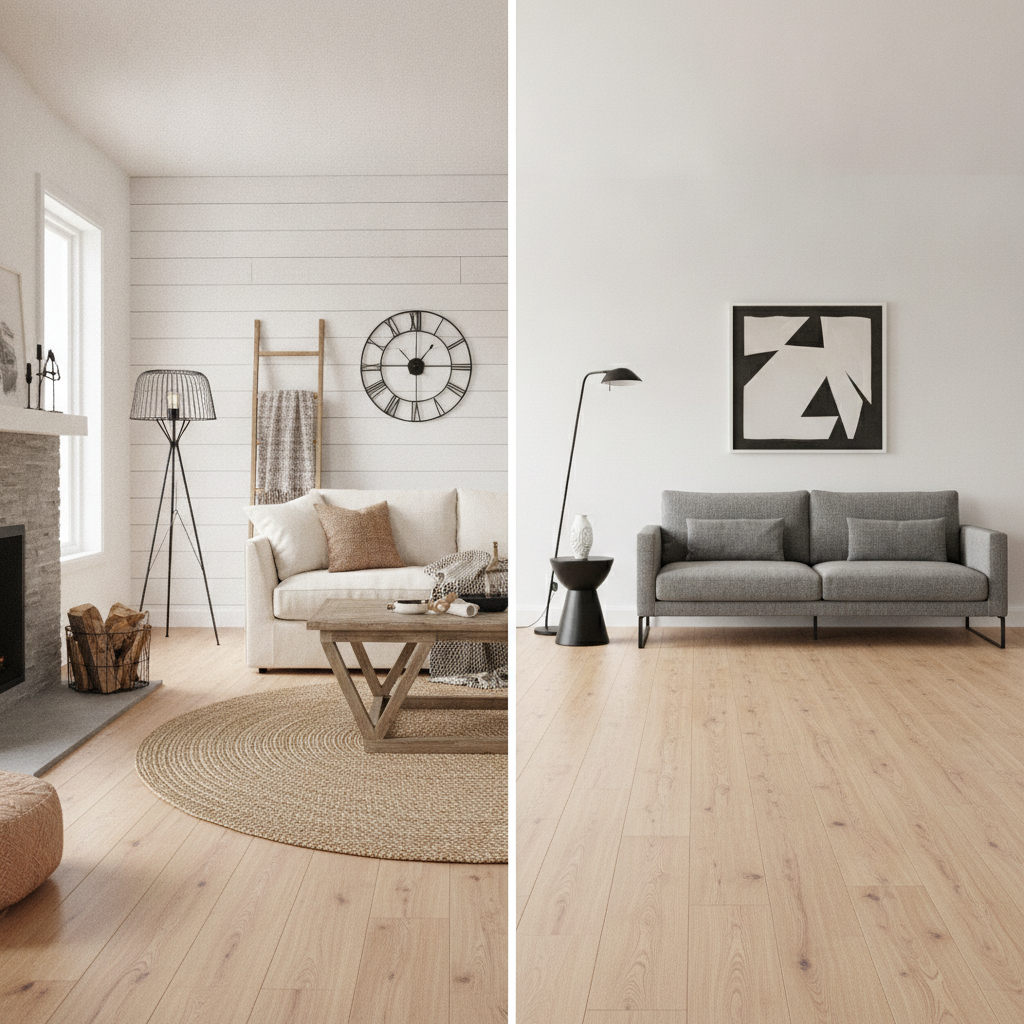
- In a Modern Farmhouse setting: It pairs perfectly with white shiplap walls, black metal fixtures, and cozy, neutral textiles.
- In a Minimalist space: It provides a touch of organic warmth against clean white walls, simple black-framed furniture, and uncluttered surfaces.
- In a Mid-Century Modern room: It complements the rich walnut tones of iconic furniture and the bold pops of color in artwork and decor.
- In a Coastal-inspired home: It creates a light, airy base for blues, whites, and natural textures like jute and rattan.
Choosing Timeless Colors and Tones
To ensure your floor remains stylish for years to come, focus on timeless colors and finishes. Color theory experts at design-forward companies like Sherwin-Williams and Benjamin Moore emphasize the importance of understanding undertones [12].
- Warm Undertones: Floors with hints of red, orange, or yellow (like traditional oak or hickory) create a cozy, inviting atmosphere. They pair well with warm wall colors like beige, cream, and greige.
- Cool Undertones: Floors with grey, blue, or taupe undertones (like ash or certain maple stains) lend a modern, sophisticated feel. They work beautifully with cool wall colors like grey, blue, and crisp white.
- Neutral Undertones: Floors that balance warm and cool tones (like natural white oak or muted walnuts) are the most versatile of all, adapting to nearly any color palette.
The finish of the floor also plays a critical role in its versatility. A matte or satin finish is often preferred over a high-gloss one. It hides minor imperfections and scratches more effectively and provides a more contemporary, organic look that complements a wider range of decor styles.
The Impact of Lighting on Your Flooring Choice
A common mistake homeowners make is choosing a floor based on a small sample under the harsh fluorescent lights of a showroom. The appearance of your floor can change dramatically depending on the lighting in your home.
- Natural Light: A room with large, south-facing windows will make flooring appear lighter and bring out its natural character. In a room with less natural light, the same floor may look darker and more subdued.
- Artificial Light: The type of lightbulbs you use also matters. Warm, incandescent lighting will enhance the warm undertones in a floor, while cool, LED or daylight bulbs will highlight its cooler tones.
As our interior designer expert advises, “You must bring large samples home. Look at them in the morning, at noon, and at night. Place them next to your kitchen cabinets, your sofa, and your wall colors. This is the only way to see how the floor will truly live in your space” [10].
A Practical Guide to Installation, Maintenance, and Durability
The long-term performance of your waterproof hybrid hardwood floor depends on proper installation and care. Following expert guidelines ensures you get the most out of your investment.
Installation Essentials: Kitchens, Bathrooms, and Basements
While the planks themselves are waterproof, a successful installation in wet areas like kitchens, bathrooms, and basements requires attention to detail. The National Wood Flooring Association (NWFA) provides standards for subfloor preparation, which is critical for any flooring installation [13]. The subfloor must be clean, flat, and dry before you begin.
For wet areas, a certified installer will emphasize a few key steps [7]:
- Perimeter Sealing: Use a 100% silicone sealant around the entire perimeter of the room, under baseboards, and around plumbing fixtures or cabinets. This creates a barrier that prevents water from seeping under the floor.
- Expansion Gaps: Leave the manufacturer-recommended expansion gap (typically 1/4 to 3/8 inch) around the edges of the room to allow the floor to expand and contract with temperature changes.
- Working Around Appliances: Ensure flooring is installed properly under appliances like dishwashers and refrigerators, where leaks are common.
Before your project begins, discuss this checklist with your installer to ensure they are taking the necessary precautions for a truly waterproof system.
Cleaning and Long-Term Care
Maintaining your hybrid hardwood is simple. Regular sweeping or vacuuming (using a hard floor setting without a beater bar) will remove dirt and grit that can cause fine scratches. For deeper cleaning, use a damp mop with a pH-neutral cleaner specifically approved by the floor’s manufacturer [3].
Here are some essential do’s and don’ts:
- DO: Wipe up spills promptly.
- DO: Use felt pads under furniture legs to prevent scratches.
- DO: Place walk-off mats at all exterior doors.
- DON’T: Use steam mops, as the high heat and pressure can damage the finish and wood veneer.
- DON’T: Use wax, oil soaps, or abrasive cleaners.
- DON’T: Flood the floor with water when mopping; a well-wrung-out mop is all you need.
Pet-Proofing Your Floor
The durable top coat and rigid core of hybrid hardwood make it an excellent choice for pet owners. To further minimize the risk of scratches, the American Kennel Club (AKC) recommends regular nail trimming for dogs. Keeping your dog’s nails short and filed smooth prevents them from digging into the floor’s finish when they run and play [14].
Finally, always read your warranty documents. They will specify what is covered and outline the required maintenance procedures to keep your warranty valid.
FAQ: Your Waterproof Hybrid Hardwood Questions Answered
Here are quick answers to some of the most common questions about this versatile flooring.
Is hybrid hardwood truly 100% waterproof?
The core of the plank is 100% waterproof and will not swell or degrade when exposed to water. However, for a fully “waterproof system,” the installation is key. Water can still get underneath the floor through the seams or around the perimeter if it is not installed correctly with proper sealing in wet areas.
What are the best brands of waterproof hybrid hardwood?
The market is constantly evolving, but several brands are consistently recognized for their quality, innovation, and style. According to industry publications like Floor Covering Weekly, brands such as Shaw, Mohawk, Coretec, and Cali Floors are well-regarded leaders in the rigid core and hybrid flooring categories [15]. Look for brands that offer robust warranties, clear specifications, and a wide range of real wood species and finishes.
How much does hybrid hardwood cost to install?
The cost can vary significantly based on the quality of the product, the wood species, and your geographic location. Generally, you can expect to pay between $5 to $12 per square foot for the material itself. Professional installation typically adds $2 to $5 per square foot. Factors that can increase installation costs include the need for extensive subfloor preparation or complex room layouts.
Conclusion: The Confident Choice for a Modern Home
Waterproof hybrid hardwood represents a true evolution in flooring. It elegantly solves the modern homeowner’s dilemma by refusing to compromise. You no longer have to sacrifice the authentic beauty of real wood for the peace of mind that comes with waterproof, scratch-resistant durability. It is the rare product that delivers on both form and function, providing a stunning and resilient foundation for your life.
By using the Modern Flooring Matrix—balancing real-world durability, timeless aesthetics, and long-term value—you are now equipped to move beyond the confusion of the showroom floor. You have the framework to analyze your needs, compare your options with clarity, and select a floor that will not only withstand spills and scratches but will also adapt to your evolving style for decades to come. This is more than just a home improvement choice; it’s a confident investment in a beautiful, worry-free home.
Ready to find the perfect waterproof hybrid hardwood for your home? Browse our curated collection of styles or contact our flooring experts for a personalized consultation today.
This article may contain affiliate links. All product recommendations are based on independent research and expert opinion. Consult with a professional flooring installer for specific project advice.
References
- Institute of Inspection, Cleaning and Restoration Certification (IICRC). (n.d.). IICRC Standards for Professional Water Damage Restoration. IICRC.
- National Association of Realtors (NAR). (n.d.). Remodeling Impact Report. NAR Research.
- Leading Flooring Manufacturers (e.g., Shaw Floors, Mohawk, Coretec). (n.d.). Technical Data Sheets and Installation Guides.
- Expert Insight. (n.d.). Based on industry best practices from certified flooring inspectors.
- Floor Covering Institute. (n.d.). Technical Resources on Flooring Materials.
- ASTM International. (n.d.). Standards for Flooring and Resilient Floor Coverings.
- Expert Insight. (n.d.). Based on field experience and best practices from certified flooring installers.
- Resilient Floor Covering Institute (RFCI). (n.d.). Technical Specifications for Resilient Flooring.
- North American Laminate Flooring Association (NALFA). (n.d.). NALFA Certification and Testing Standards.
- Expert Insight. (n.d.). Based on professional design principles and experience from interior designers.
- Interior Design Magazine. (n.d.). Flooring Trends and Designer Recommendations.
- Sherwin-Williams & Benjamin Moore. (n.d.). Professional Color Resources and Trend Reports.
- National Wood Flooring Association (NWFA). (n.d.). Installation Guidelines and Specifications.
- American Kennel Club (AKC). (n.d.). Dog Grooming Tips: How to Trim Your Dog’s Nails.
- Floor Covering Weekly. (n.d.). Flooring Industry News, Brand Reports, and Product Reviews.
