
Choosing a new floor can feel like navigating a minefield of confusing acronyms and bold marketing claims. You want the timeless beauty of hardwood, but you live a life full of spills, muddy paws, and active kids. You hear terms like LVP, SPC, WPC, and “waterproof hardwood,” leaving you wondering: What’s the difference, and which one won’t be a costly mistake in my kitchen, basement, or busy entryway?
You’re not alone in this frustration. The fear of investing thousands in a beautiful new floor only to see it warp, scratch, or fail in a high-moisture area is a major concern for homeowners.
This is your definitive, data-driven guide. We cut through the marketing hype to give you the clear, unbiased information you need. We’ll decode the materials, put the top contenders in a head-to-head showdown based on objective standards, provide a room-by-room playbook for choosing the perfect floor, and reveal the expert installation secrets that ensure your investment lasts a lifetime. By the end of this guide, you will have the confidence to choose the perfect beautiful, durable, and truly life-proof floor for your home.
- Understanding the Contenders: What is Modern Waterproof Flooring Made Of?
- The Ultimate Flooring Showdown: A Data-Driven Comparison
- The Room-by-Room Playbook: Choosing the Right Floor for Your Space
- Before You Install: The Critical Steps Everyone Misses
- Troubleshooting: A Diagnostic Guide for Hardwood Moisture Problems
- FAQ: Your Top Waterproof Flooring Questions Answered
- Your Confident Choice for a Beautiful, Life-Proof Home
- References & Authoritative Sources
Understanding the Contenders: What is Modern Waterproof Flooring Made Of?
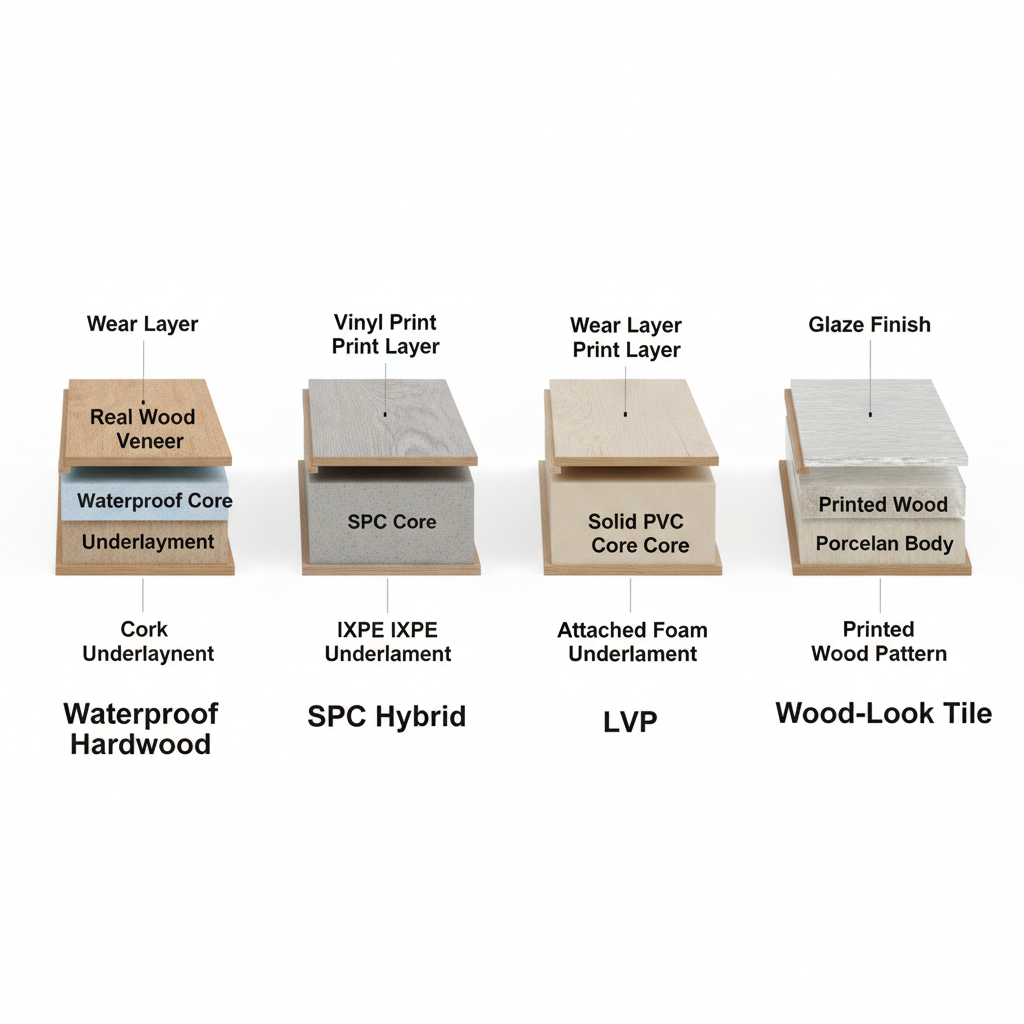
To make the right choice, you first need to understand what you’re actually buying. Modern waterproof and water-resistant flooring options are marvels of material science, each with a unique construction designed for specific performance goals. Let’s break down the layers of the top contenders.
The Real Deal? Decoding ‘Waterproof’ Engineered Hardwood
When you hear “waterproof hardwood,” it’s crucial to understand this isn’t traditional solid hardwood. Instead, it’s a sophisticated composite product. It features a thin, authentic layer—or veneer—of real hardwood (like oak or hickory) on the surface. This is what you see and touch. The magic happens underneath, where this real wood veneer is bonded to a 100% waterproof core, often a high-density composite material.
So, is it truly 100% waterproof? The core is, which prevents the plank from swelling or warping from moisture from below. The top wood veneer, however, is still wood. As the National Wood Flooring Association (NWFA) defines it, engineered wood is a layered product made of a top layer of wood veneer.[1] This means the surface is highly water-resistant to topical spills. Most manufacturers offer warranties for a specific duration, such as “24-hour spill protection,” meaning you have a generous window to clean up liquids before they can damage the wood veneer itself. It offers the authentic look and feel of wood with powerful protection against everyday accidents.
The All-in-One Solution: Hybrid Flooring (SPC & WPC)
Hybrid flooring has emerged as a powerhouse solution, engineered to combine the best attributes of laminate, vinyl, and hardwood. It consists of a rigid, waterproof composite core topped with a high-resolution, textured vinyl layer that mimics wood, and a final protective wear layer. The two main types of hybrid flooring are defined by their core:
- Stone Plastic Composite (SPC): This core is made from a mixture of natural limestone powder, polyvinyl chloride, and stabilizers. The result is an incredibly dense, rigid, and dimensionally stable plank. SPC’s primary strength is its superior resistance to dents and impacts, making it ideal for high-traffic areas or rooms with heavy furniture.
- Wood Plastic Composite (WPC): This core incorporates wood pulp or plasticizers, which makes it slightly softer and thicker than SPC. This composition gives WPC flooring a warmer, more comfortable feel underfoot and provides better sound insulation.
According to the Resilient Floor Covering Institute (RFCI), these composite materials represent a significant advancement in flooring technology, offering robust performance in a wide range of applications.[2]
The Popular Choice: Luxury Vinyl Plank (LVP)
Luxury Vinyl Plank, or LVP, is a flexible, multi-layered flooring that has become incredibly popular for its combination of realism, durability, and affordability. Its construction typically includes a vinyl core, a printed design layer, and a crucial protective wear layer on top.
The single most important factor in an LVP floor’s durability is the thickness of this transparent wear layer, measured in mils (one-thousandth of an inch). A thicker wear layer provides greater protection against scratches and scuffs.
- 6-12 mil: Good for light-traffic residential areas like bedrooms.
- 12-20 mil: Excellent for all residential applications, including kitchens and hallways.
- 20+ mil: Commercial-grade, built for the most demanding environments.
Unlike hybrid flooring’s rigid core, LVP is typically more flexible. When choosing LVP, look for products with FloorScore Certification, which ensures the flooring meets strict indoor air quality standards and contributes to a healthier home environment.[3]
The Classic Champion: Wood-Look Porcelain Tile
For unparalleled durability and waterproofing, porcelain tile remains the king. Thanks to advanced digital printing technology, modern wood-look porcelain can replicate the grain, texture, and color of real wood with astonishing realism.
Because tile is made from fired clay, it is completely impervious to water and is one of the most durable flooring materials on the market. It will not scratch from pet claws, dent from dropped objects, or fade from sunlight. However, as the Tile Council of North America (TCNA) emphasizes, a tile installation is only as waterproof as the system beneath it.[4] This means proper subfloor preparation and, in wet areas like bathrooms, a complete waterproofing membrane are absolutely essential for a successful, long-lasting installation.
The Ultimate Flooring Showdown: A Data-Driven Comparison
Now that you understand the materials, let’s put them to the test. We’ll compare waterproof hardwood, SPC hybrid, LVP, and porcelain tile across the four categories that matter most to homeowners: durability, waterproof performance, cost, and aesthetics.
Durability & Scratch Resistance: Janka, PEI, and Wear Layers Explained
A floor’s ability to withstand daily life is paramount. Here’s how our contenders stack up, based on industry standards:
- Waterproof Hardwood: Durability is determined by two factors: the hardness of the wood veneer and the quality of the finish. The wood species’ hardness is measured on the Janka Hardness Scale; harder woods like Hickory or Maple will resist dents better than softer woods like Pine. According to the U.S. Forest Service’s Forest Products Laboratory, which provides foundational data on wood properties, this test measures the force required to embed a steel ball into the wood.[5] Most high-quality products also feature a multi-layer finish with Aluminum Oxide, a hard mineral that provides excellent scratch resistance.
- Hybrid Flooring (SPC/LVP): Durability comes from the wear layer. As mentioned, a 12-20 mil wear layer is ideal for most homes. SPC, with its rigid stone-composite core, offers superior dent resistance compared to LVP and WPC.
- Porcelain Tile: Tile durability is measured by the Porcelain Enamel Institute (PEI) rating, which indicates its resistance to abrasion and wear.[6]
- PEI 3: Suitable for all residential foot traffic.
- PEI 4: Suitable for all residential and light commercial traffic.
- PEI 5: Suitable for all residential and heavy commercial traffic.
For most homes, a PEI rating of 3 or higher is more than sufficient. Tile is virtually scratch-proof.
Winner for Durability: Porcelain Tile, with SPC Hybrid as a close second.
Waterproof Performance: From Spills to Floods
This is where the marketing claims meet reality.
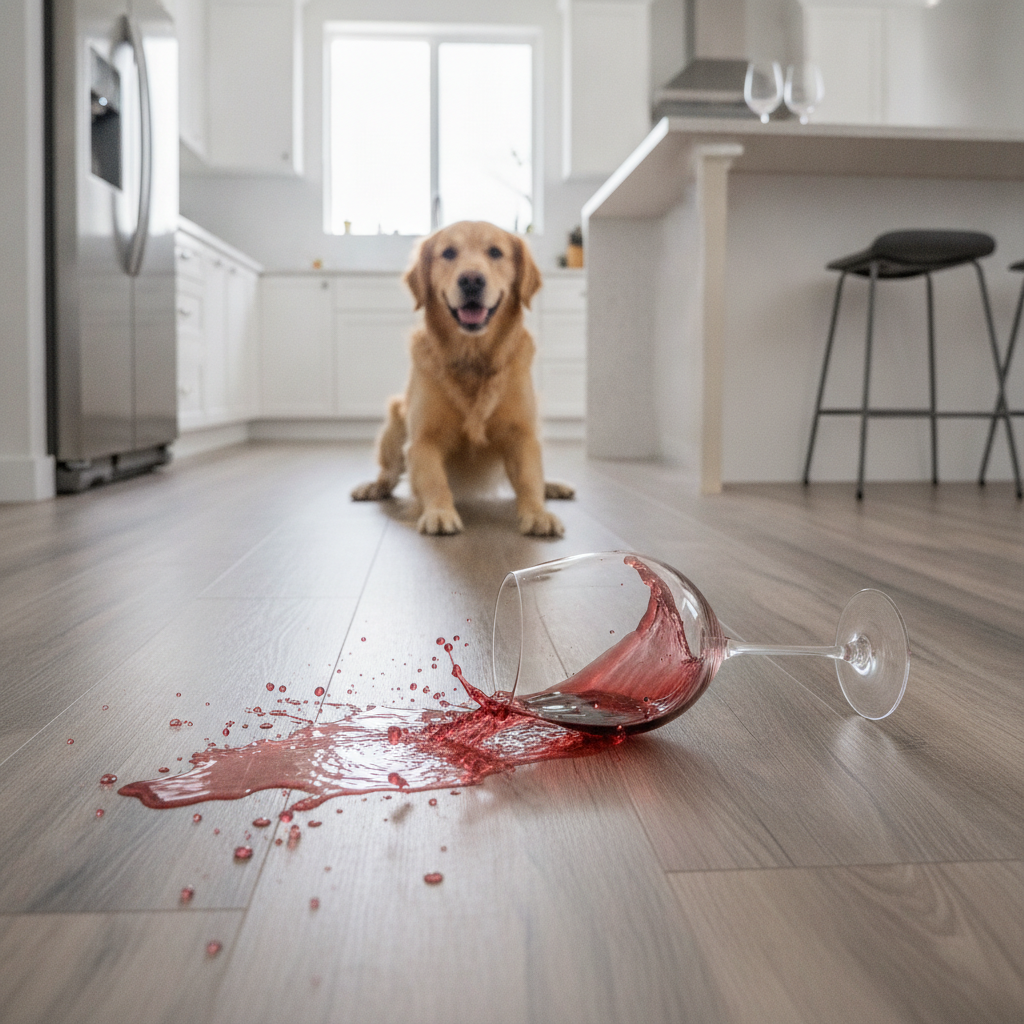
- Porcelain Tile, SPC Hybrid, & LVP: These materials are 100% waterproof. The planks or tiles themselves can be fully submerged in water without being damaged. Their effectiveness in a room depends on the installation; properly installed, they create a surface that protects the subfloor from topical moisture indefinitely.
- Waterproof Hardwood: This material is water-resistant. It is designed to handle topical spills and moisture for a specified period (e.g., 24-72 hours). However, it is not designed for prolonged submersion or for use in areas with constant high humidity or potential flooding, like a full bathroom with a shower.
An IICRC-certified water damage restoration professional would always recommend inorganic materials like tile or vinyl in any area with a risk of significant water exposure, as they will not support mold growth.[7] A click-lock system on a hybrid floor can prevent a spilled glass of water from reaching the subfloor, but a full waterproofing membrane system under tile is designed to handle daily water saturation.
Winner for Waterproofing: A tie between Porcelain Tile, SPC Hybrid, and LVP.
Cost Analysis: Materials, Installation, and Long-Term Value
Your budget is a key factor. Here’s a general breakdown (costs vary by region and quality):
| Flooring Type | Material Cost (per sq. ft.) | Installation Cost (per sq. ft.) | Long-Term Value Notes |
|---|---|---|---|
| LVP | $2 – $7 | $2 – $6 | Most budget-friendly. Lifespan depends on wear layer. Cannot be refinished. |
| Hybrid (SPC/WPC) | $4 – $9 | $3 – $7 | Mid-range price. Extremely durable. Cannot be refinished. |
| Waterproof Hardwood | $7 – $15 | $4 – $8 | Higher initial cost. Can sometimes be lightly screened and recoated, but not fully refinished like solid hardwood. Adds real wood value. |
| Porcelain Tile | $3 – $10 (varies widely) | $8 – $20+ | Material cost varies, but installation is most expensive due to labor intensity. Highest long-term value and longest lifespan. |
A key trade-off to consider is repairability. A deep scratch on a hybrid or LVP floor may require a plank replacement. A waterproof hardwood floor has a real wood veneer that may be more difficult to repair seamlessly. Tile is incredibly hard to damage, but a cracked tile also requires replacement.
Winner for Budget: LVP.
Winner for Long-Term Value: Porcelain Tile.
Aesthetics & Comfort: Realism, Feel, and Style Options
How the floor looks and feels is just as important as how it performs.
- Waterproof Hardwood: Offers the undeniable, authentic beauty of real wood because it is real wood on the surface. It provides a warmth and unique character that is hard to replicate.
- Hybrid & LVP: High-end products now offer incredible realism with “embossed in register” texturing that aligns the surface texture with the printed wood grain. However, pattern repeats can be noticeable over large areas. They are generally warmer and softer underfoot than tile.
- Porcelain Tile: While the visuals are hyper-realistic, tile is noticeably harder and colder to the touch. This “cold feel” is a common drawback for some homeowners, though it can be completely solved by installing electric radiant floor heating underneath for a touch of luxury.
Winner for Authenticity: Waterproof Hardwood.
Winner for Realism & Comfort (Non-Wood): Hybrid Flooring (WPC).
The Room-by-Room Playbook: Choosing the Right Floor for Your Space
Theory is great, but let’s get practical. Here are our expert picks for the most challenging areas of your home.
For Kitchens & Bathrooms: The Ultimate Test of Water & Wear
These rooms demand top-tier waterproofing and ease of cleaning. The best choices are LVP and Porcelain Tile.
- Porcelain Tile: The ultimate choice for wet rooms. It’s impervious to water and easy to sanitize. When selecting tile for a wet area, slip resistance is a critical safety factor. Look for a DCOF (Dynamic Coefficient of Friction) rating. The ANSI A326.3 standard recommends a DCOF of 0.42 or greater for level interior spaces expected to be walked upon when wet.[8] Furthermore, the Tile Council of North America (TCNA) handbook stresses the importance of using high-performance grouts (like epoxy or urethane) and proper sealing in wet areas to prevent staining and mold.[4]
- LVP/SPC Hybrid: An excellent and often more budget-friendly alternative. It’s 100% waterproof, warmer underfoot than tile, and much easier for a DIYer to install. Its seamless surface has no grout lines to clean, which is a major advantage for many homeowners.
Expert Pick: For a master bathroom with a walk-in shower, Porcelain Tile with a proper waterproofing system is the professional standard. For a powder room or kitchen, SPC Hybrid offers a fantastic blend of durability, waterproofing, and comfort.
For Basements: Conquering Dampness with Style
Basements are typically below-grade with concrete slab subfloors, making them prone to moisture issues. You need a 100% waterproof and inorganic flooring that won’t be damaged by high humidity or a potential water event.
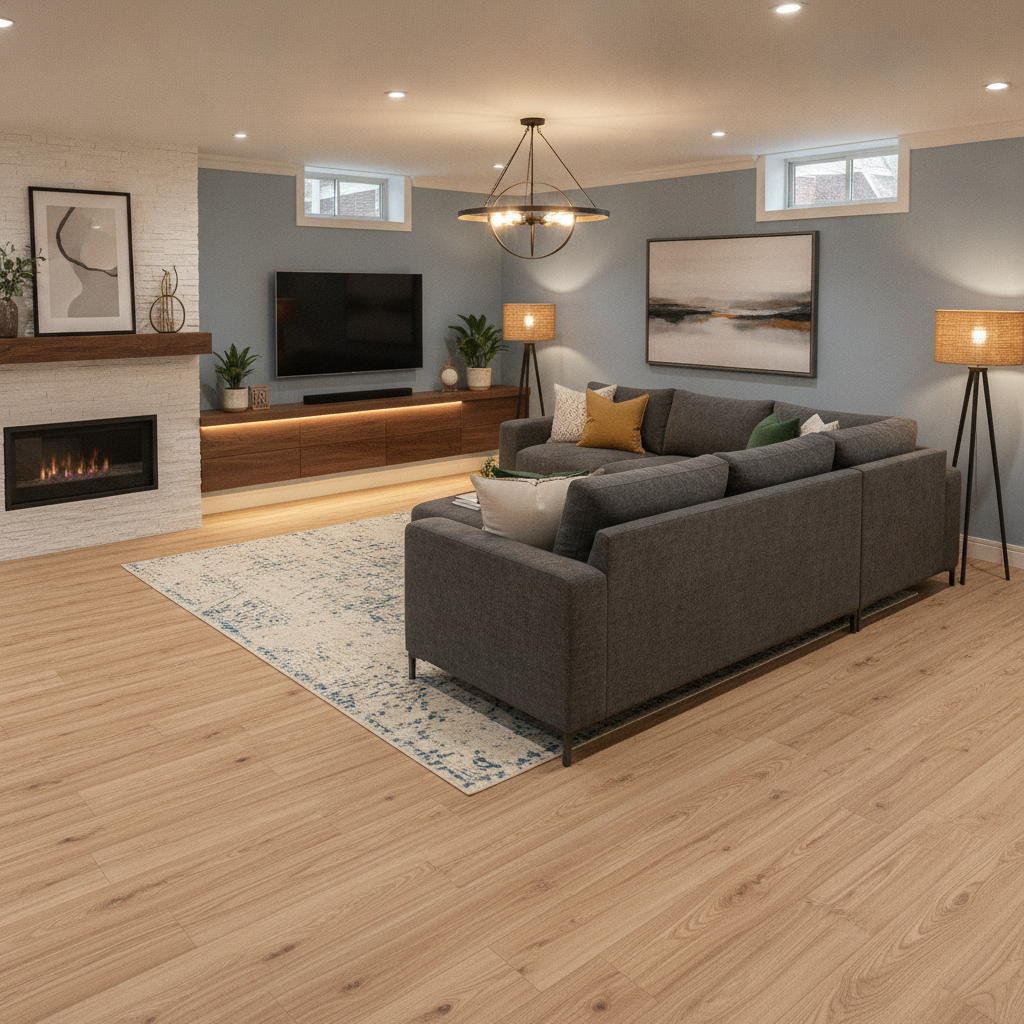
- SPC Hybrid & LVP: These are the top choices for finished basements. They are completely waterproof, they can be installed directly over a concrete slab (with a vapor barrier), and their “floating” installation method allows for slight subfloor imperfections.
- Stylish Concrete: Don’t overlook the slab itself. Modern concrete staining, polishing, or epoxy coatings can create a stunning, industrial-chic look that is completely waterproof and incredibly durable.
According to the Basement Health Association, creating a healthy below-grade living space starts with controlling moisture at the source.[9] No matter which flooring you choose, installing a 6-mil polyethylene vapor barrier over the concrete slab is an absolute necessity to block moisture vapor transmission. You can then use area rugs to add warmth and define living spaces, creating a cozy and stylish environment.
Expert Pick: SPC Hybrid is the go-to choice for a versatile, stylish, and worry-free basement floor.
For Entryways & Hallways: The High-Traffic Gauntlet
These areas are the ultimate proving ground for durability. They face constant foot traffic, dirt, grit, and moisture from outside.
- Porcelain Tile: With a PEI rating of 4 or 5, porcelain tile is nearly indestructible and will show no signs of wear even after years of heavy use. It’s also incredibly easy to clean.
- SPC Hybrid: The dense, rigid core of SPC makes it exceptionally resistant to dents from dropped keys or impacts from shoes. A high-quality product with a 20+ mil wear layer will stand up to the most demanding household traffic, including large dogs and active children.
The World Floor Covering Association (WFCA) educates consumers that in high-traffic zones, the floor’s ability to resist abrasion is just as important as its moisture resistance.[10] Both tile and high-quality SPC excel here.
Expert Pick: For maximum durability in a busy entryway, Porcelain Tile is unmatched. For a seamless wood look that flows from the entry into the main living area, SPC Hybrid is the superior choice.
Before You Install: The Critical Steps Everyone Misses
The world’s best waterproof flooring will fail if it’s installed on a poorly prepared subfloor. Taking the time to get the foundation right is the most important investment you can make in your new floor. This is a step professionals never skip.
Step 1: How to Test Your Subfloor for Moisture
Before covering a subfloor—especially a concrete slab in a basement or on-grade level—you must know how much moisture it contains. As the International Concrete Repair Institute (ICRI) guidelines detail, excess moisture in concrete can lead to flooring failure, adhesive breakdown, and mold growth.[11]
You can perform a simple DIY test or use a more professional tool:
- Plastic Sheet Test: Tape a 2’x2′ square of clear plastic sheeting to the concrete, sealing all four edges with duct tape. Wait 24-48 hours. If you see condensation under the plastic or the concrete has darkened, you have a moisture issue that must be addressed.
- Calcium Chloride Test: This is a more quantitative test available in kits. It measures the moisture vapor emission rate (MVER) from the slab. Follow the kit’s instructions and compare the results to your flooring manufacturer’s specifications. Most floating floors require an MVER below 3-5 lbs per 1,000 sq. ft. per 24 hours.
Step 2: Choosing the Right Underlayment and Vapor Barrier
These two terms are often confused, but they serve different functions.
- Vapor Barrier: Its only job is to stop moisture. A 6-mil polyethylene sheet is the standard for use over concrete subfloors in damp areas. Its purpose, as explained by experts at Building Science Corporation, is to prevent moisture vapor from the ground or concrete from migrating upwards and getting trapped under your flooring.[12]
- Underlayment (or Pad): This provides cushioning, sound absorption, and thermal insulation. Many modern hybrid and LVP floors come with a pre-attached underlayment pad.
Crucial Point: A pre-attached pad is not a vapor barrier. If you are installing flooring with an attached pad over a concrete subfloor, you still need to put down a separate 6-mil poly vapor barrier first.
Troubleshooting: A Diagnostic Guide for Hardwood Moisture Problems
If you already have hardwood floors and are experiencing issues, this diagnostic guide can help you understand the problem.
Symptom: Cupping (Edges Higher than Center)
- What it Looks Like: The long edges of the floorboards are raised, creating a concave, “cupped” shape across the board’s surface.
- Cause: This is always caused by a moisture imbalance. There is more moisture on the bottom of the board than on the top. This causes the wood fibers on the bottom to swell, forcing the edges of the board upward. Common sources include a damp crawlspace or basement, a slow plumbing leak, or moisture wicking up from a concrete slab. Wood is hygroscopic, meaning it naturally absorbs and releases moisture from the air. Cupping is a physical manifestation of this property when moisture is imbalanced.
- Cure: First, you must identify and eliminate the moisture source. Once the source is stopped, use fans and dehumidifiers to slowly dry the area. In many cases, as the wood dries out and the moisture content equalizes, the boards will flatten on their own. According to NWFA technical manuals, attempting to sand a cupped floor flat is a mistake, as it will become “crowned” (the opposite problem) once it dries fully.[1]
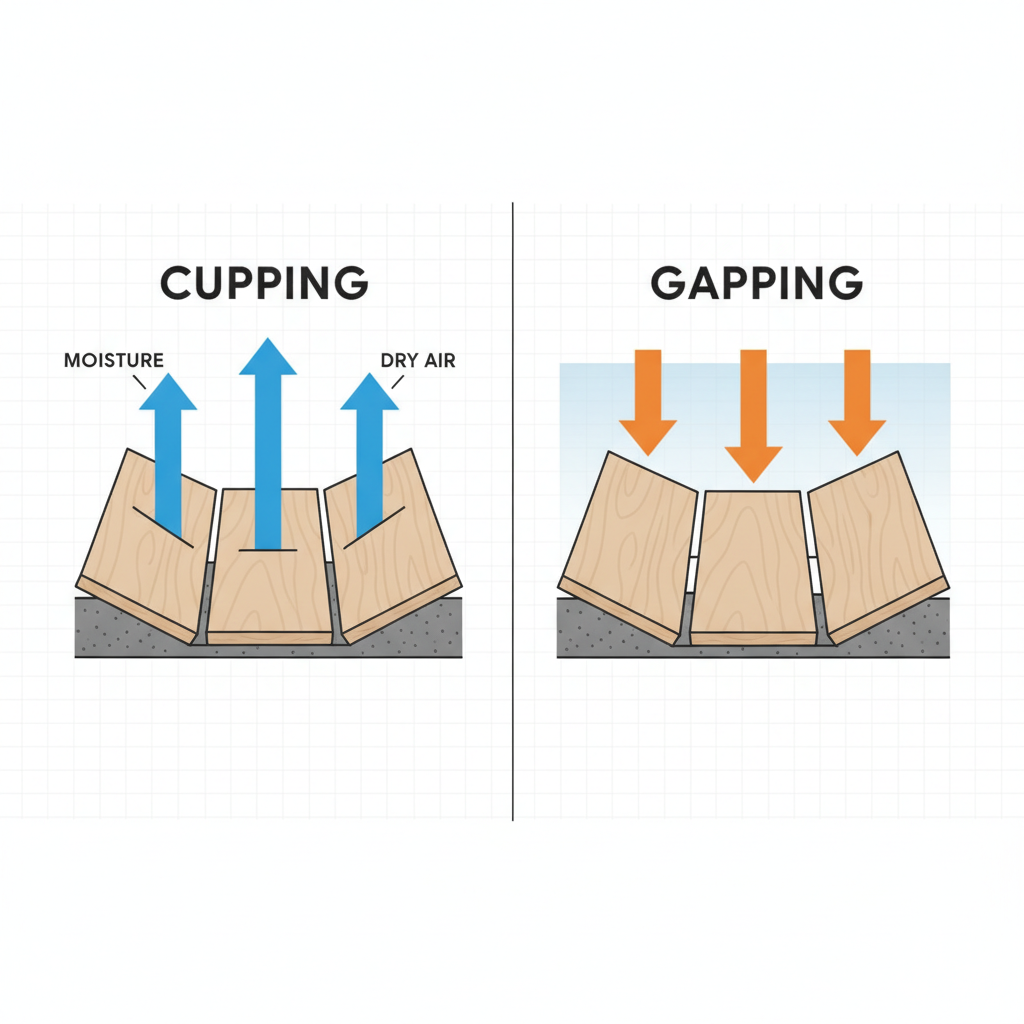
Symptom: Gapping (Spaces Between Boards)
- What it Looks Like: Noticeable gaps appear between the floorboards.
- Cause: This is most often caused by low humidity. As the air becomes dry (typically in winter), the wood loses moisture and shrinks. This is a normal, seasonal process.
- Cure: The best solution is prevention. The NWFA recommends maintaining a stable indoor humidity level between 30% and 50% year-round to minimize wood movement.[1] Use a simple tool called a hygrometer to monitor your home’s humidity. A whole-home humidifier or dehumidifier is the most effective way to maintain this balance. Minor seasonal gaps will typically close up as humidity returns in the summer.
Emergency Action: What to Do After a Flood or Major Leak
Dealing with a significant water event is stressful. Act quickly and safely.
- Safety First: Turn off the electricity to the affected area at the breaker box. Be aware of slip hazards.
- Stop the Water: Find the source of the water and shut it off.
- Remove Water: Use a wet/dry vacuum, mops, and towels to remove as much standing water as possible, as quickly as possible.
- Create Airflow: Open windows (if humidity outside is lower) and set up fans and dehumidifiers immediately to start the drying process.
- Call a Professional: For any significant amount of water, call an IICRC-certified water damage restoration company. They have the proper equipment and expertise to dry the structure properly and prevent mold. The IICRC S500 is the industry standard for professional water damage restoration.[7]
- Contact Your Insurance: Document the damage with photos and contact your homeowner’s insurance company to start the claims process.
Warning: Mold can begin to grow within 24-48 hours of a water event. If the water is not removed and the area dried quickly, you risk serious mold contamination under your floors and in your walls, which can be a health hazard and requires professional remediation.
FAQ: Your Top Waterproof Flooring Questions Answered
What are the main pros and cons of hybrid flooring?
- Pros:
- 100% waterproof core
- Extremely durable and resistant to scratches and dents (especially SPC)
- Easy to install with a click-lock system, often DIY-friendly
- Can be installed over many existing hard surfaces
- Cons:
- Cannot be sanded or refinished like real hardwood
- The printed pattern will eventually repeat over large areas
- May feel less premium or substantial underfoot than real wood or tile
How do you clean and maintain waterproof and hybrid floors?
Maintenance is simple. Regularly sweep or vacuum (using a hard floor setting without a beater bar). For deeper cleaning, use a damp mop with a pH-neutral flooring cleaner. Avoid using steam mops, as the high heat and pressure can damage the vinyl layers and adhesive. Also, avoid harsh chemicals, wax, or oil-based soaps. Always check the specific manufacturer’s care guide for your product.
Can you install new waterproof flooring over existing tile?
Yes, in many cases. Floating floors like LVP and hybrid flooring can be installed directly over an existing ceramic or porcelain tile floor, provided the tile is in good condition. The existing floor must be clean, flat, and structurally sound (no loose or cracked tiles). If the grout lines are deep (more than 1/4 inch), a professional installer will recommend filling them with a leveling compound to create a smooth, flat surface before installing the new floor.
Your Confident Choice for a Beautiful, Life-Proof Home
The journey to a new floor doesn’t have to be overwhelming. By moving past the marketing hype and focusing on objective data, you can see a clear picture emerge. The best flooring choice is not a single product, but a perfect match between a material’s proven strengths and your room’s specific demands. Whether it’s the unmatched durability of porcelain tile in a busy bathroom, the stylish resilience of SPC hybrid in a finished basement, or the authentic beauty of waterproof hardwood in your living room, the right solution is available.
You now understand the critical importance of subfloor preparation and the value of using industry standards like PEI and DCOF ratings to guide your decision. You are empowered to ask the right questions and make a confident investment that will bring beauty, value, and worry-free performance to your home for years to come.
Feeling confident and ready to choose your perfect floor? Explore our curated gallery of waterproof flooring styles to find inspiration for your project, or use our project cost calculator to start budgeting today.
Disclaimer: This article may contain affiliate links. All installation and repair advice should be considered alongside consultation with a certified flooring professional, especially when dealing with moisture issues.
References & Authoritative Sources
- National Wood Flooring Association (NWFA). (n.d.). Technical Guidelines and Publications. NWFA.
- Resilient Floor Covering Institute (RFCI). (n.d.). About Resilient Flooring. RFCI.
- SCS Global Services. (n.d.). FloorScore.
- Tile Council of North America (TCNA). (n.d.). TCNA Handbook for Ceramic, Glass, and Stone Tile Installation. TCNA.
- U.S. Forest Service, Forest Products Laboratory. (n.d.). Wood Handbook–Wood as an Engineering Material.
- Porcelain Enamel Institute (PEI). (n.d.). PEI Rating Information.
- Institute of Inspection, Cleaning and Restoration Certification (IICRC). (n.d.). IICRC S500: Standard for Professional Water Damage Restoration.
- American National Standards Institute (ANSI). (n.d.). ANSI A326.3: American National Standard Test Method for Measuring Dynamic Coefficient of Friction of Hard Surface Flooring Materials.
- Basement Health Association. (n.d.). Basement Health Standards.
- World Floor Covering Association (WFCA). (n.d.). Consumer Flooring Guide.
- International Concrete Repair Institute (ICRI). (n.d.). Technical Guideline No. 310.2R-2013: Selecting and Specifying Concrete Surface Preparation for Sealers, Coatings, Polymer Overlays, and Concrete Repair.
- Building Science Corporation. (n.d.). Research and Publications on Moisture Control.
