
You love the timeless, elegant look of hardwood floors. The warmth, the character, the way it elevates any room. But you live in the real world. A world of spilled drinks, muddy paws, rambunctious kids, and the sinking feeling that comes with discovering a leak from the dishwasher. For years, homeowners have faced this dilemma: choose the beautiful floor you love or the durable floor you need. What if you didn’t have to compromise?
Welcome to the new era of flooring. An era where technological innovation has given us waterproof hardwood and hybrid flooring—stunning, resilient solutions designed for modern life. This isn’t just another article listing pros and cons. This is your comprehensive guide to bridging the gap between technical specifications and real-world design inspiration. We’ll demystify the technology, compare the top options head-to-head, and give you the designer-level advice you need to not only choose the perfect floor but integrate it flawlessly into your home. It’s time to stop worrying and start designing with confidence.
- Why Traditional Flooring Fails the Modern Home
- The New Generation of Flooring: Understanding Your Options
- The Ultimate Comparison: Which Life-Proof Floor is Right for You?
- Designing with Confidence: How to Integrate Your New Floors
- Your Flooring Journey: From Installation to Long-Term Care
- Frequently Asked Questions (FAQ)
- The Foundation for a Home You Love
- References & Authoritative Sources
Why Traditional Flooring Fails the Modern Home
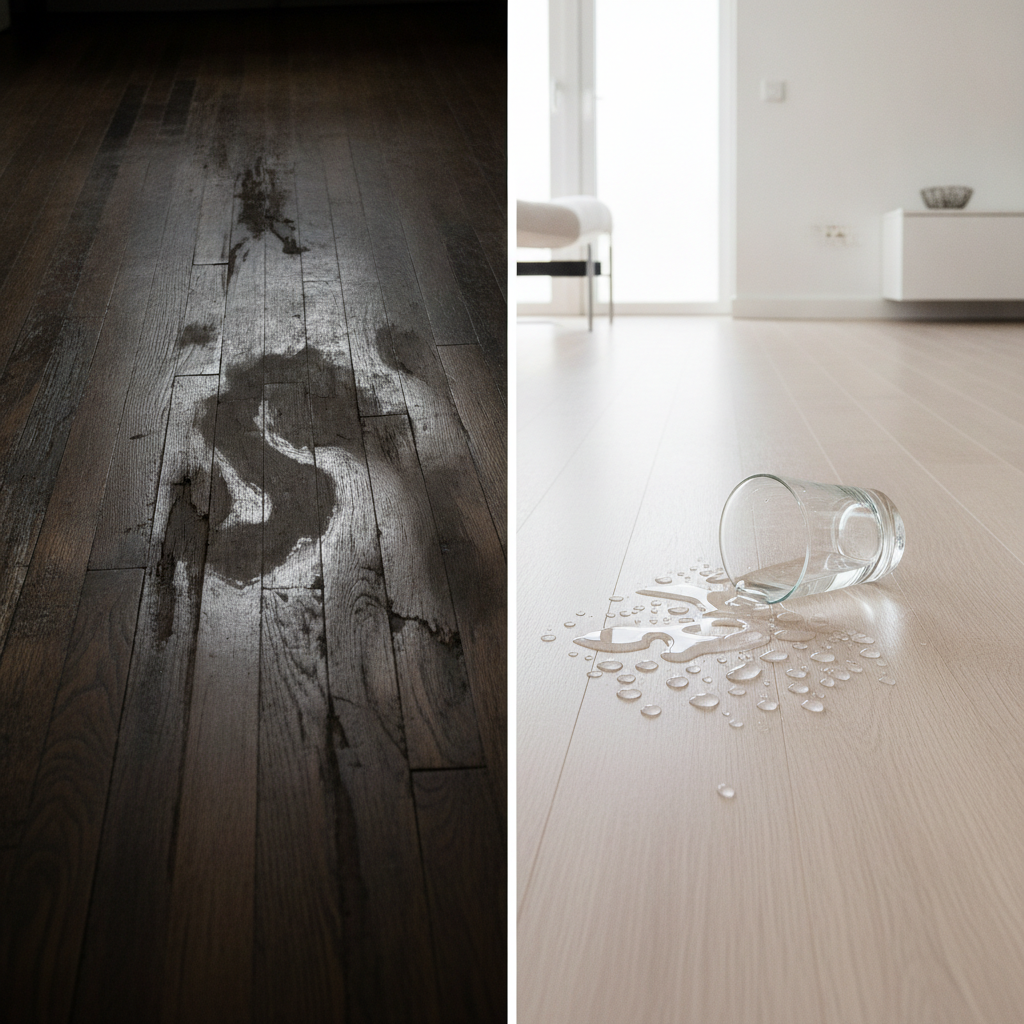
Before we explore the solutions, it’s crucial to understand the problems they were designed to solve. The flooring in our homes is the foundation of our daily lives, and for many, that foundation feels frustratingly fragile. Your concerns are valid, and they are the very reason a new generation of flooring now exists.
According to our consulting real estate expert, “Outdated or visibly damaged flooring is one of the first things potential buyers notice. A floor that looks worn, water-stained, or simply out of style can significantly impact a home’s perceived value and appeal. Conversely, investing in modern, durable flooring often provides a strong return, as it signals a well-maintained and updated home.” This sentiment is often reflected in remodeling impact reports, which show flooring updates can be a valuable investment.
The Heartbreak of Hardwood: Water Damage, Scratches, and Dents
Solid hardwood is beautiful, but its organic nature is also its greatest weakness. Composed entirely of wood, it acts like a sponge, absorbing moisture from spills, leaks, or even high humidity. This absorption leads to a host of problems that can be devastating and costly to repair.
The Institute of Inspection, Cleaning and Restoration Certification (IICRC), which sets the professional standard for water damage restoration, identifies several common forms of damage [2].
- Cupping: The edges of the plank are higher than its center, creating a concave, scalloped appearance across the floor.
- Crowning: The opposite of cupping, where the center of the plank swells and becomes higher than the edges.
- Buckling: The most severe form of damage, where the flooring pulls away from the subfloor entirely, creating large, dangerous waves.
Beyond water, daily life takes its toll. The scrape of a dining chair, the click-clack of a pet’s nails, or a dropped toy can leave permanent scratches and dents, slowly eroding the floor’s pristine finish and turning your beautiful investment into a map of past mishaps.
The Pet Owner’s Dilemma: Beyond Scratches and Stains
For the millions of us who consider pets part of the family, flooring presents a unique set of challenges. The concerns go far beyond the inevitable scratch or stain from an accident.
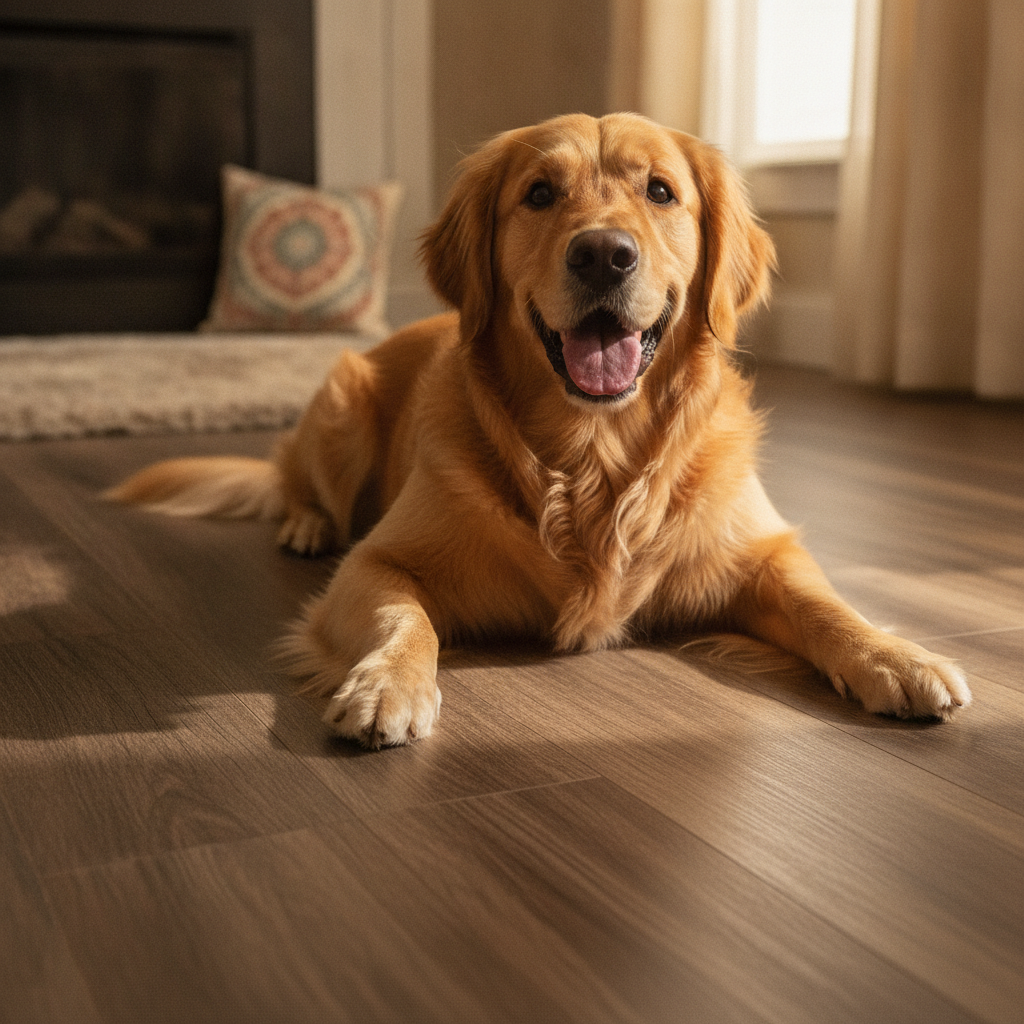
As one of our consulting veterinarians notes, “Traction is a significant but often overlooked aspect of flooring for pets, especially for senior dogs or breeds prone to hip dysplasia. Slippery surfaces like traditional high-gloss hardwood can cause them to splay out, leading to potential injuries or aggravating existing joint conditions.”
The American Kennel Club (AKC) also emphasizes creating a safe home environment, which includes considering the floor’s surface [3]. Pet owners need a floor that is not only scratch and stain-resistant but also easy to clean and safe for their four-legged companions to navigate confidently.
The New Generation of Flooring: Understanding Your Options
Born from the need to solve these real-world problems, a new class of high-performance flooring has emerged. These products combine the best of nature and technology to deliver floors that are both beautiful and built to last. According to the Floor Covering Institute, these engineered products are defined by their layered construction, which gives them properties impossible to achieve with traditional solid materials [4].
What is Waterproof Hardwood? The Best of Both Worlds
Waterproof hardwood is the dream solution for those who refuse to compromise on authenticity. It features a multi-layer construction that delivers the best of both worlds: a genuine wood surface and a technologically advanced, waterproof core.
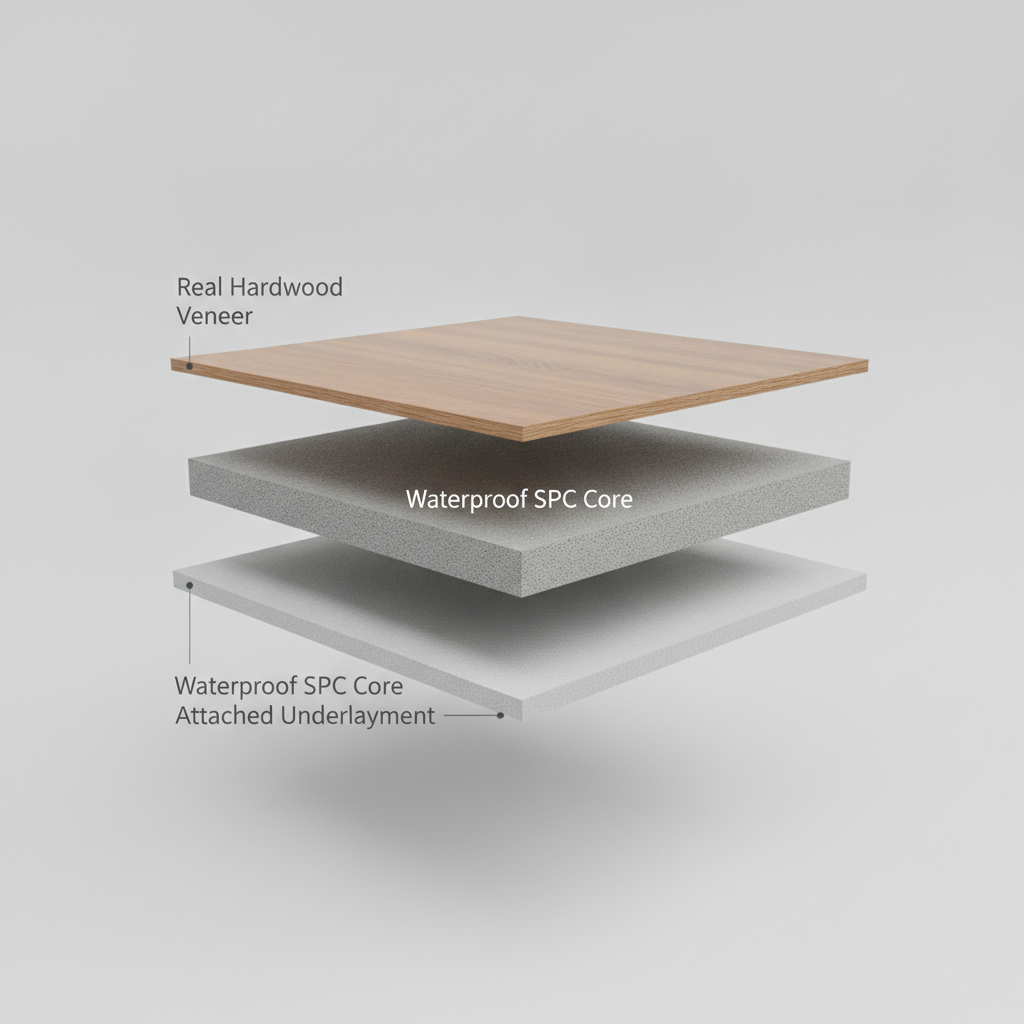
- Top Layer: A veneer of real hardwood (like oak, hickory, or maple) provides the authentic grain, texture, and beauty you can only get from real wood.
- Core Layer: This is the game-changer. Instead of wood-based materials, the core is made from a stone-plastic composite (SPC) or similar waterproof material. This core is dimensionally stable and impervious to water, preventing the swelling, cupping, and buckling that plagues solid hardwood.
- Backing Layer: An attached pad or underlayment often provides sound insulation and cushioning.
It’s crucial to understand that the performance of these products is verified through standardized testing methods, such as those developed by ASTM International, which ensure they meet specific criteria for water resistance [5].
Myth vs. Reality: Waterproof Hardwood
Myth: You can leave standing water on it indefinitely.
Reality: While the plank itself is waterproof and won’t be damaged by topical spills or mopping, it is not a “flood-proof” system. Major leaks can still get under the planks and damage the subfloor. The goal is to protect the floor itself from everyday moisture.Myth: It’s just a picture of wood, like laminate.
Reality: The top layer is 100% real wood. It looks and feels authentic because it is authentic.
Decoding Hybrid Flooring: The Power of a Composite Core
Hybrid flooring, often known by its core material as SPC (Stone Plastic Composite) flooring, is another revolutionary category. It’s engineered for maximum durability and stability, making it a true workhorse for the busiest homes.
- Wear Layer: A transparent top coat that protects against scratches, stains, and fading.
- Decorative Layer: A high-resolution printed film that realistically mimics the look of wood, stone, or other materials.
- Core Layer: The heart of the product is a dense, rigid core made from a mixture of limestone powder, polyvinyl chloride, and stabilizers. This SPC core makes the floor incredibly resistant to dents from heavy furniture or dropped objects and provides stability in fluctuating temperatures.
- Backing Layer: Like waterproof hardwood, most hybrid floors include an attached underlayment for comfort and sound reduction.
From an environmental perspective, the composition of these floors is critical. Authoritative information on material composition can be found on manufacturer Material Safety Data Sheets (MSDS) [6]. While the plastic components raise questions, the longevity and durability of the product mean less frequent replacement. Additionally, some manufacturers are exploring take-back or recycling programs for these materials.
Luxury Vinyl Plank (LVP): The Undisputed King of Versatility
Luxury Vinyl Plank has been a dominant force in the market for years, and for good reason. It is a 100% synthetic product known for its versatility, realism, and excellent performance in wet areas. Modern LVP uses advanced printing and embossing technology to create incredibly realistic wood and stone looks that can fool even a discerning eye.
“From an installer’s perspective, the click-lock systems on most modern LVP and hybrid floors are a dream,” says our consulting certified flooring contractor. “They allow for a ‘floating’ installation over many existing hard surfaces, which can save homeowners significant time and money on subfloor preparation compared to traditional nail-down or glue-down floors.”
The Ultimate Comparison: Which Life-Proof Floor is Right for You?
Now that you understand the technology, it’s time to make a decision. To help, we’ve created a scorecard comparing our three top contenders across the criteria that matter most to you.
| Feature | Waterproof Hardwood | Hybrid / SPC Flooring | Luxury Vinyl Plank (LVP) |
|---|---|---|---|
| Durability | ★★★★☆ (Real wood top can dent) | ★★★★★ (Dent-proof core) | ★★★★☆ (Softer core can dent) |
| Aesthetics | ★★★★★ (Authentic wood) | ★★★★☆ (Highly realistic) | ★★★★☆ (Highly realistic) |
| Comfort | ★★★★☆ (Warm, natural feel) | ★★★☆☆ (Firm, solid feel) | ★★★☆☆ (Slightly softer feel) |
| Cost | $$$$ (Premium) | $$$ (Mid-range) | $$ (Value-oriented) |
Criterion 1: Durability & Scratch Resistance
Durability is more than just being waterproof. For hardwood, dent resistance is measured by the Janka hardness scale, which rates the hardness of the wood species used for the veneer [7]. For hybrid and LVP floors, the key is the wear layer. Measured in mils (thousandths of an inch), a thicker wear layer (20 mil or higher is excellent for residential use) provides more protection against scratches and scuffs. The rigid SPC core in hybrid flooring also gives it superior dent resistance compared to the softer core of many LVP products.
Criterion 2: Aesthetics & Realism
This is where waterproof hardwood truly shines. Because the top layer is real wood, it has the unique grain patterns, color variations, and natural warmth that even the best synthetic products can’t perfectly replicate.
“The biggest giveaway of a fake wood floor is pattern repetition and a lack of depth,” advises our lead interior designer. “Premium LVP and hybrid floors have come a long way with varied prints and embossed-in-register textures that align with the grain. However, for a high-end, truly authentic look, nothing beats the genuine wood veneer of a quality waterproof hardwood.”
Criterion 3: Comfort, Feel & Acoustics
How a floor feels and sounds underfoot is a critical, yet often overlooked, part of the experience. The real wood veneer of waterproof hardwood tends to feel warmer and more natural to the touch. Hybrid/SPC floors, due to their dense stone-composite core, feel exceptionally solid and firm. LVP can feel slightly softer, depending on its core construction.
For all three types, an attached underlayment or a separate high-quality underlayment is essential. It not only adds cushioning but also helps to deaden sound, reducing the “clicking” noise that can sometimes be associated with floating floors and improving the room’s overall acoustics.
Criterion 4: Average Cost & Installation
Cost is always a key factor in any renovation project. It’s important to consider both the material cost per square foot and the cost of professional installation.
- Luxury Vinyl Plank (LVP): $$ – Most budget-friendly option.
- Hybrid / SPC Flooring: $$$ – Mid-range pricing, offering a step up in durability.
- Waterproof Hardwood: $$$$ – A premium product with a price tag to match its authentic wood surface.
“Always get a detailed quote that breaks down costs,” advises our flooring contractor. “Factors like removing the old floor, extensive subfloor leveling, or navigating a complex room layout with lots of cuts can add to the final installation price. Don’t just compare the per-square-foot material cost.”
Designing with Confidence: How to Integrate Your New Floors
Choosing the right material is only half the battle. The true magic happens when your new floor becomes the perfect foundation for your home’s style. This is where you move from technical decisions to creative expression. The principles of good design, as championed by organizations like the American Society of Interior Designers (ASID), provide a framework for making choices that feel cohesive and intentional [8].
Get the Look: Flooring for Every Style
Your floor sets the tone for the entire room. Here’s how to choose the right waterproof or hybrid flooring to nail some of today’s most popular design aesthetics.
Organic Modern
This style is all about warmth, texture, and a connection to nature. It blends the clean lines of modernism with natural materials.
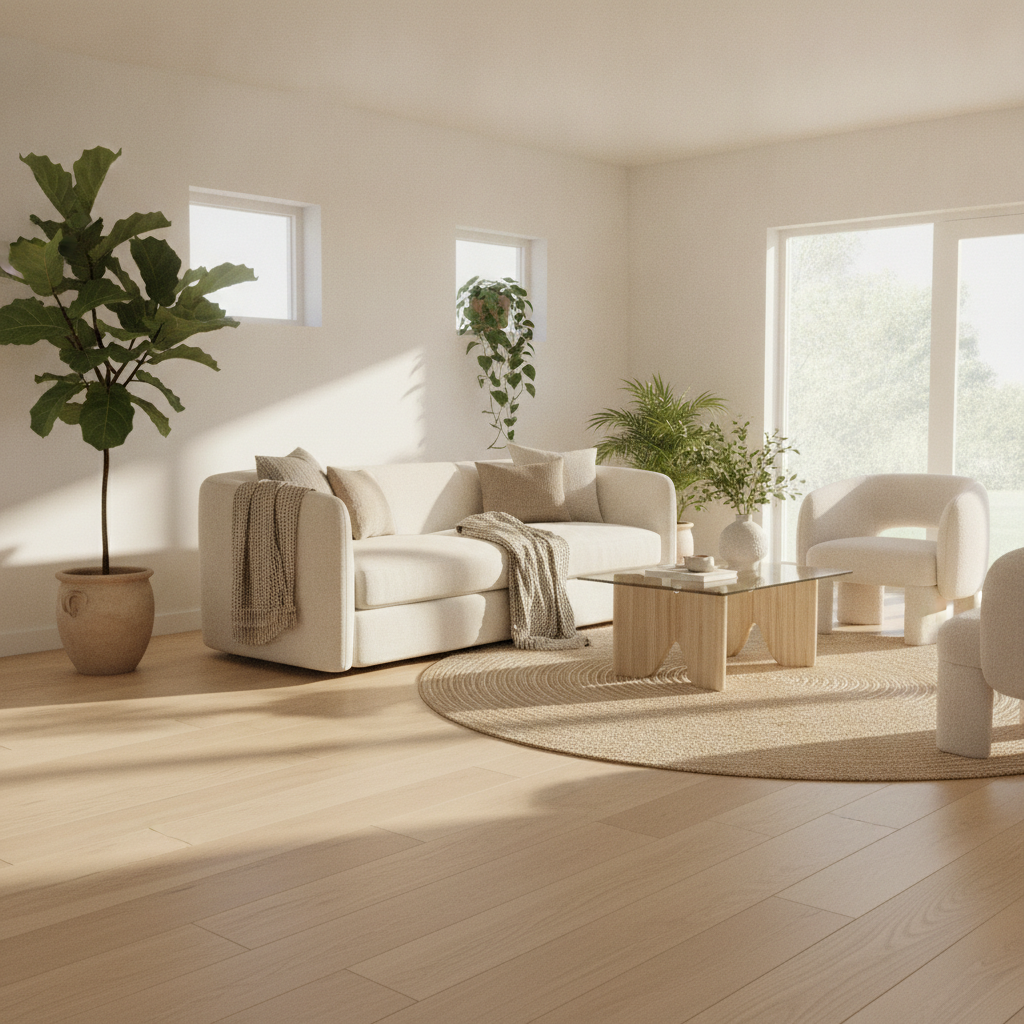
- Flooring Recipe: Choose a waterproof hardwood or high-end hybrid in a light, natural tone like White Oak or Ash. Look for a matte finish and wide planks (7″+) to create a serene, expansive feel.
- Wall Color: A warm, soft white (e.g., Sherwin-Williams Alabaster).
- Furniture: Pieces with natural wood tones, boucle or linen upholstery, and soft, curved lines.
Modern Farmhouse
A cozy, comfortable style that balances rustic charm with modern simplicity.
- Flooring Recipe: A hybrid or waterproof hardwood with some character is perfect. Think medium wood tones with subtle wire-brushing or a low-gloss finish to hide wear and tear. Hickory or a character-grade Oak works beautifully.
- Wall Color: A classic greige or a muted blue/green (e.g., Sherwin-Williams Sea Salt).
- Furniture: A mix of comfortable, oversized seating, black metal accents, and reclaimed wood pieces.
Scandinavian Minimalism
This aesthetic emphasizes light, simplicity, and functionality. Floors are typically light to maximize the feeling of space and brightness.
- Flooring Recipe: Light-colored hybrid flooring in a pale Maple or a nearly-white washed Oak look. A smooth, clean surface with minimal grain variation is key.
- Wall Color: Crisp, cool white (e.g., Benjamin Moore Chantilly Lace).
- Furniture: Simple, functional pieces with clean lines, light wood tones (like birch), and pops of color through textiles.
The Art of the Pair: Choosing Wall Colors, Rugs, and Furniture
Once your floor is chosen, building confidence in your other decor choices is key. Don’t get paralyzed by the options; follow a few simple rules.
- The 60-30-10 Rule: This is a classic designer’s trick. Your dominant color (often the walls) should take up about 60% of the space. Your secondary color (furniture, rugs) takes up 30%. Your accent color (pillows, art, accessories) makes up the final 10%.
- Rugs: A rug should define a space (like a seating area in the living room). Ensure at least the front legs of all your main furniture pieces are on the rug to make the space feel connected and expansive.
- Wood Tones: Should your wood furniture match your wood floors? Our interior designer says, “Absolutely not! A perfect match looks dated and flat. Instead, look for contrast. If you have light oak floors, consider a dark walnut media console. The key is to keep the undertones consistent—pair warm woods with other warm woods.”
Your Flooring Journey: From Installation to Long-Term Care
Your beautiful new floor is in, but the journey isn’t over. Proper installation and maintenance are essential to ensure it looks great for years to come.
Installation: DIY vs. Hiring a Professional
While the click-lock systems of these floors make them more DIY-friendly than traditional hardwood, a professional installation is often worth the investment. A pro can properly assess and prepare your subfloor, ensure a flawless finish, and navigate tricky areas like doorways and stairs. Industry groups like the FCICA (the Flooring Contractors Association) establish best practices that certified installers follow to guarantee a quality result [9].
If you hire a pro, be prepared. Here is a checklist of questions to ask:
- Are you licensed and insured?
- Can you provide references from recent jobs?
- How will you handle subfloor preparation, and is that included in the quote?
- What is the estimated timeline for the project?
- What does your installation warranty cover?
Maintaining the Beauty: Cleaning and Care Guide
The beauty of waterproof and hybrid flooring is how easy it is to maintain.
- Do: Sweep, dust mop, or vacuum regularly to remove grit and dirt.
- Do: Mop with a pH-neutral floor cleaner. Lightly mist the floor or the mop head; never pour liquid directly on the floor.
- Don’t: Use steam mops. The high heat and pressure can damage the finish and potentially void your warranty.
- Don’t: Use wax, oil soaps, or abrasive scrubbers.
- Do: Use felt pads under all furniture legs to prevent scratches.
Always check your manufacturer’s specific care guide, as using unapproved cleaning methods can void the product’s warranty.
Frequently Asked Questions (FAQ)
Is waterproof hardwood really 100% waterproof?
The planks themselves are designed to be 100% waterproof. The real wood veneer is protected by a waterproof finish, and the composite core will not swell or warp when exposed to water. However, this protects the plank, not your subfloor. In a major flood, water can still seep through the seams and get trapped underneath, so it’s not a substitute for proper flood remediation.
Which is better: Hybrid flooring or laminate?
For most modern applications, hybrid (SPC) flooring is superior. The primary difference is the core. Traditional laminate has a fiberboard core that can swell and be permanently damaged by water. Hybrid flooring’s stone-plastic composite core is completely waterproof, making it a much safer choice for kitchens, bathrooms, and basements.
Does homeowners insurance cover water damage to floors?
It depends entirely on the source of the water and your specific policy. Generally, damage from a “sudden and accidental” event, like a burst pipe or a faulty appliance hose, is often covered. However, damage from gradual leaks, high humidity, or natural floods (which requires separate flood insurance) is typically not. Always consult your insurance agent to understand your specific coverage.
The Foundation for a Home You Love
Choosing a new floor is one of the biggest decisions you can make for your home. It’s a financial investment and the design foundation upon which every other choice rests. For too long, that decision has been fraught with compromise, forcing you to choose between the style you desire and the durability you need.
The evolution of waterproof hardwood and hybrid flooring has changed the game. It offers a powerful, elegant solution that stands up to the rigors of a busy, modern life without sacrificing an ounce of style. By understanding the technology, evaluating your options with objective criteria, and applying a few core design principles, you can move forward with absolute confidence. You can finally have the floor you’ve always wanted—one that’s not just beautiful, but truly life-proof.
Feeling inspired? Explore our gallery of stunning room designs featuring waterproof and hybrid flooring to find the perfect look for your home.
References & Authoritative Sources
- National Association of Realtors (NAR). (Various Years). Remodeling Impact Report. Retrieved from nar.realtor.
- Institute of Inspection, Cleaning and Restoration Certification (IICRC). (N.D.). IICRC Standard for Professional Water Damage Restoration (IICRC S500). Retrieved from iicrc.org.
- American Kennel Club (AKC). (N.D.). Home Safety & Products. Retrieved from akc.org.
- Floor Covering Institute. (N.D.). Industry Standards and Information. Retrieved from floorcoveringinstitute.com.
- ASTM International. (N.D.). Standards for Resilient Floor Coverings. Retrieved from astm.org.
- Manufacturer Material Safety Data Sheets (MSDS). (Various). Provided by flooring manufacturers, detailing material composition and safety information.
- United States Department of Agriculture (USDA) Forest Products Laboratory. (N.D.). Janka Hardness. The industry-standard test for measuring the resistance of wood to denting and wear.
- American Society of Interior Designers (ASID). (N.D.). Knowledge & Resources. Retrieved from asid.org.
- FCICA, the Flooring Contractors Association. (N.D.). Installation Standards. Retrieved from fcica.com.
