
The warm, inviting look of hardwood floors is a timeless dream for many homeowners. But for years, that dream came to a screeching halt at the kitchen doorway or the bathroom threshold. The fear is universal: a dishwasher leak, a bathtub overflow, or even just daily splashes could lead to warped, stained, and ruined floors—a costly and heartbreaking mistake. You love the aesthetic, but you dread the potential for water damage.
If you’re caught between the beauty of wood and the practical demands of your home’s toughest rooms, you’re not alone. The flooring market is now flooded with terms like “waterproof hardwood,” “hybrid flooring,” and “waterproof engineered wood,” creating a confusing landscape of marketing claims. How do you know what’s truly waterproof? Which option will stand up to dropped pots, pet claws, and constant foot traffic?
Consider this your definitive playbook. We’re cutting through the jargon to give you the clear, expert-backed information you need. In this guide, we will:
- Demystify the technology behind “waterproof hardwood” to show you what you’re really buying.
- Provide a data-driven comparison of the top wood-look flooring contenders for wet areas.
- Offer a room-by-room playbook for choosing the absolute best floor for your kitchen and bathroom.
- Deliver a “first aid” guide for dealing with existing water-damaged floors.
By the end of this article, you’ll be empowered to make a confident, worry-free choice that brings the beautiful look of wood into any room of your home.
- The ‘Waterproof Hardwood’ Myth vs. Reality: What Are You Really Buying?
- The Top Contenders: A Data-Driven Comparison of Wood-Look Flooring for Wet Areas
- The Application Playbook: Choosing the Best Wood-Look Floor for Your Kitchen & Bathroom
- Flooring First Aid: A Homeowner’s Guide to Water Damaged Hardwood
- Installation Essentials: How to Bulletproof Your Investment
- Conclusion: The Wood Look, Without the Worry
- References & Authoritative Sources
The ‘Waterproof Hardwood’ Myth vs. Reality: What Are You Really Buying?
The first and most crucial step is to understand that when you see the term “waterproof hardwood,” you are almost never buying a plank of solid oak that has been magically sealed against water. True solid hardwood will warp, cup, and buckle when exposed to significant moisture. The term “waterproof hardwood” is a marketing label for a new class of advanced, multi-layered flooring products.
These are highly sophisticated engineered or hybrid floors. They are designed to give you the best of both worlds: the authentic beauty of wood on the surface and a technologically advanced, waterproof core underneath.
Imagine a cross-section of a typical waterproof engineered hardwood plank. It’s built in layers, each with a specific job:
- Top Layer (Veneer): This is a thin, authentic slice of real hardwood (like oak, hickory, or maple). This is what you see and feel, providing the genuine grain and character of wood.
- Protective Finish: Multiple coats of a highly durable, factory-applied finish (often aluminum oxide) protect the wood veneer from scratches and wear.
- Waterproof Core: This is the game-changing innovation. Instead of a traditional wood-based core, these planks use a 100% waterproof composite material, most commonly an SPC (Stone Polymer Composite) or WPC (Wood Polymer Composite) core. This core is dimensionally stable and will not swell, crack, or peel when exposed to water.
- Attached Underlayment (Optional): Many products come with a pre-attached pad for sound insulation and added comfort underfoot.
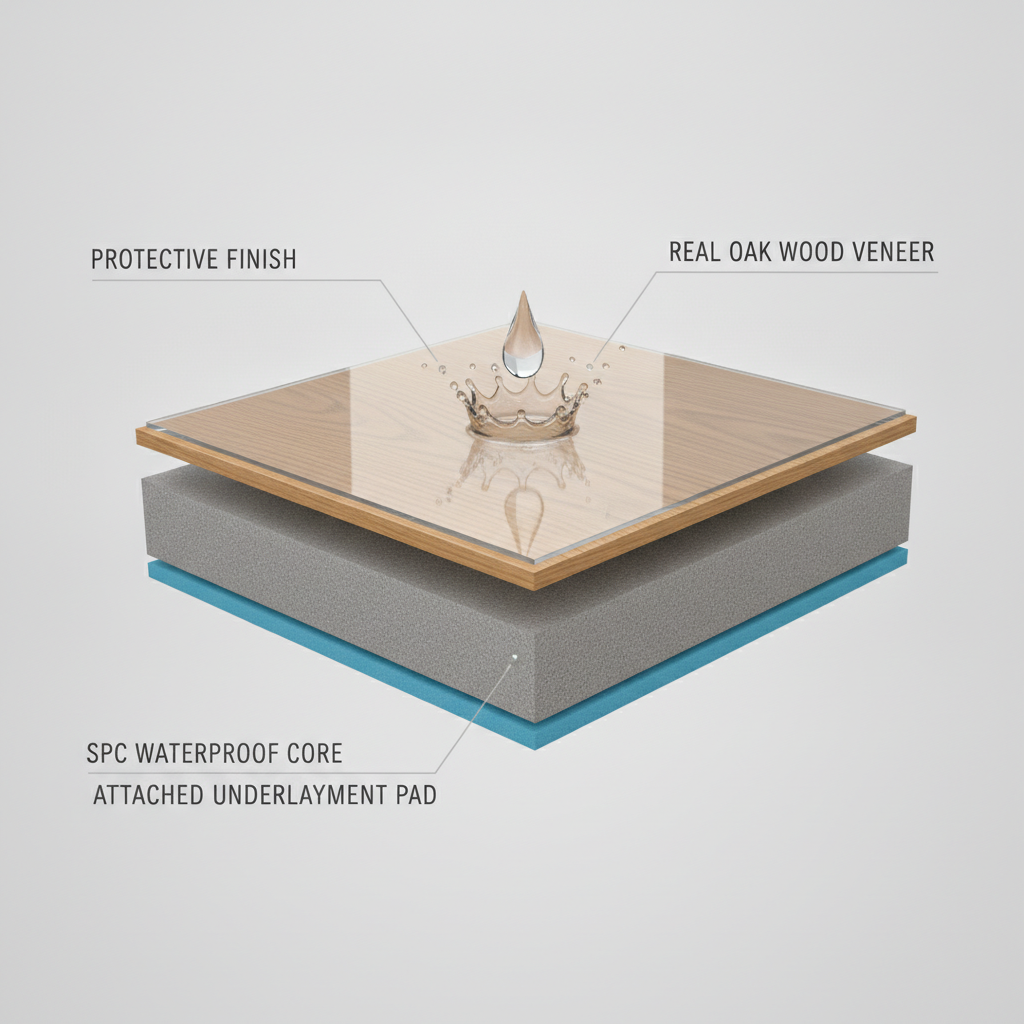
It’s also vital to distinguish between two often-confused terms. According to industry standards bodies like the National Wood Flooring Association (NWFA), the construction of these products is key.
- Water-Resistant: This means the product can resist water penetration for a limited amount of time. A small spill wiped up quickly is fine, but prolonged exposure can still cause damage, especially at the seams.
- Waterproof: This term typically applies to the core material itself. A plank with a waterproof core will not be structurally damaged by water from the top down. The warranty usually covers topical spills and moisture, meaning the planks themselves won’t swell. However, it does not mean your subfloor is protected from a flood or major leak that gets around the flooring.
So, the reality is you’re buying a high-tech hybrid floor that brilliantly combines a real wood surface with a synthetic, waterproof foundation.
The Top Contenders: A Data-Driven Comparison of Wood-Look Flooring for Wet Areas
Now that we’ve demystified the terminology, let’s compare the leading categories of waterproof and water-resistant wood-look flooring. To make the decision easier, we’ve created a “Moisture-Resistance Scorecard” that rates each option on the factors that matter most in a kitchen or bathroom. Performance claims are often validated against standards from organizations like ASTM International, which sets benchmarks for material durability.
Moisture-Resistance Scorecard
| Flooring Type | Topical Waterproofing (1-5) | Realism (1-5) | Durability (Scratch/Dent) (1-5) | Cost ($ – $$$$) | DIY-Friendliness (1-5) |
|---|---|---|---|---|---|
| Waterproof Engineered Hardwood | 4 | 5 | 3 | $$$$ | 3 |
| Hybrid Flooring (SPC/WPC) | 5 | 4 | 5 | $$$ | 5 |
| Luxury Vinyl Plank (LVP) | 5 | 4 | 4 | $$ | 5 |
| Waterproof Laminate | 4 | 4 | 5 | $$ | 4 |
Option 1: Waterproof Engineered Hardwood
This is the premium choice for those who want zero compromise on authenticity. It uses a real wood veneer atop a waterproof SPC core.
- Pros: Unmatched beauty and realism because the top layer is real wood. It can increase home value more than synthetic alternatives.
- Cons: It’s the most expensive option. While the core is waterproof, the real wood veneer can still be dented or deeply scratched, just like traditional hardwood. Repairing these deep scratches can be more complex than with a synthetic floor.
- Best For: Homeowners who prioritize the authentic look and feel of wood and are willing to invest in a premium product, especially in kitchens or half-baths.
Option 2: Hybrid Flooring (SPC & WPC Core)
Hybrid flooring, also known as rigid core flooring, is a category that has exploded in popularity for its durability and performance. These products are defined under technical standards like ASTM F3261 as resilient flooring with a rigid polymeric core. They feature a high-definition photographic layer over a rigid core.
The two main types of cores are:
- SPC (Stone Polymer Composite): Made from a mixture of limestone powder, PVC, and stabilizers, SPC cores are incredibly dense and durable. This makes them highly resistant to dents from dropped items or heavy furniture.
- WPC (Wood Polymer Composite): Made with a mix of recycled wood pulp and plastic composites, WPC cores are lighter and less dense than SPC. They feel slightly softer and warmer underfoot and offer better sound insulation.
As one certified flooring professional notes, “I recommend SPC for high-traffic kitchens with heavy appliances and lots of activity due to its superior dent resistance. For a basement or a living area where comfort and warmth are a priority, WPC is an excellent choice.”
- Pros: 100% waterproof core, extremely durable (especially SPC), easy click-lock installation, and highly realistic visuals.
- Cons: Can feel harder underfoot than WPC or some other options. While realistic, the pattern repeats over a certain number of planks.
- Best For: Almost any room in the house, but especially kitchens, bathrooms, and basements where both waterproofing and high durability are required.
Option 3: Luxury Vinyl Plank (LVP)
LVP has been a go-to waterproof solution for years. It’s a flexible or rigid plank made entirely of synthetic materials, making it impervious to water damage. Its durability is primarily determined by its wear layer—a clear top coating that protects the printed design layer from scratches and scuffs.
The Resilient Floor Covering Institute (RFCI) provides information on vinyl product standards, helping consumers understand performance metrics. A simple guide for wear layers is:
- 6-12 mil: Suitable for light residential traffic (e.g., bedrooms).
- 20+ mil: Recommended for high-traffic areas, kitchens, and homes with pets and children.
- Pros: Completely waterproof, highly durable when a thick wear layer is chosen, budget-friendly, and one of the easiest floors for DIY installation. Modern LVP offers stunningly realistic wood visuals.
- Cons: Can be susceptible to denting from heavy objects. The quality and realism can vary significantly between budget and premium brands.
- Best For: Bathrooms, laundry rooms, basements, and kitchens, especially for budget-conscious homeowners or DIYers looking for a reliable, waterproof solution.
Option 4: Waterproof Laminate Flooring
Laminate flooring has come a long way from the easily damaged product of the past. Modern “waterproof” laminate features water-repellent wear layers, dense fiberboard cores with high moisture resistance, and advanced edge-sealing technology that prevents water from seeping into the seams for a specified period (often 24-72 hours).
Its durability is measured by an Abrasion Class (AC) rating, a standard set by the North American Laminate Flooring Association (NALFA).
- AC3: Good for general residential use.
- AC4: Ideal for heavy residential traffic, including kitchens.
- AC5: Suitable for light commercial use, offering maximum durability.
- Pros: Extremely scratch-resistant (often more so than LVP or real wood), very realistic visuals, and budget-friendly.
- Cons: While the surface is waterproof, the core is typically water-resistant, not waterproof. Severe flooding can still cause damage.
- Pro Tip: For laminate installations in kitchens or bathrooms, professionals recommend applying a thin bead of 100% silicone sealant in the expansion gap around the entire perimeter of the room before installing baseboards. This creates a final barrier against moisture reaching the edges of the floor.
- Best For: Kitchens and high-traffic areas where scratch resistance is the top priority. It can be used in half-baths, but LVP or Hybrid is a safer bet for full bathrooms with showers.
The Application Playbook: Choosing the Best Wood-Look Floor for Your Kitchen & Bathroom
Choosing the right material is only half the battle. The best floor for a kitchen isn’t always the best for a full bathroom. Here’s how to select the perfect option for your specific space.
According to the National Kitchen & Bath Association (NKBA), functionality and durability are just as important as aesthetics when selecting materials for these hardworking rooms.
[Downloadable Resource] Before you shop, grab our free 10-Point Checklist for Choosing Kitchen & Bathroom Flooring to take with you.
For the Kitchen: Durability is King
A kitchen floor has to endure a unique assault: heavy foot traffic, spills from oil and sauces, dropped cans, and the weight of heavy appliances. Water resistance is crucial, but so is resistance to dents and scratches.
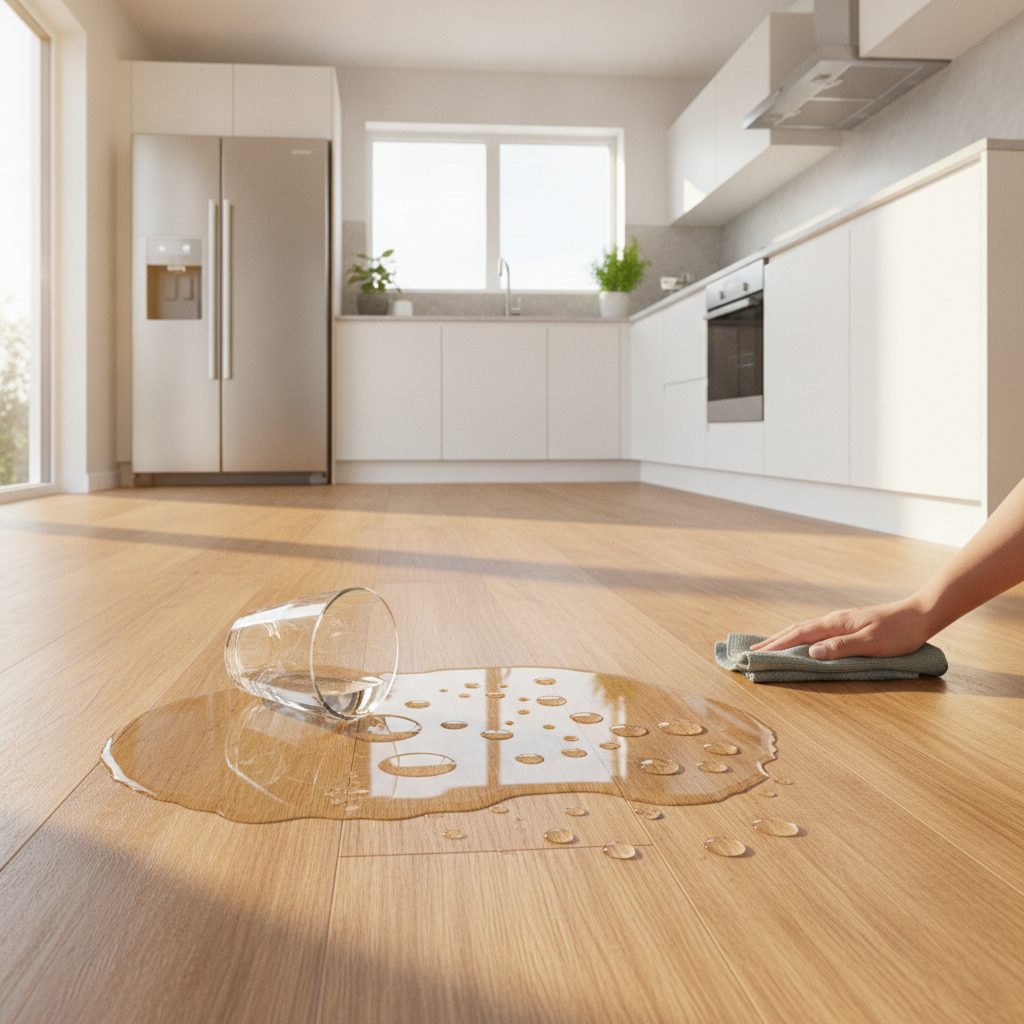
Here is our Good, Better, Best framework for kitchen flooring:
- Good: Waterproof Laminate (AC4 or higher). Its exceptional scratch resistance makes it a workhorse against dragged chairs, pet claws, and daily wear. Just be diligent about wiping up spills within a reasonable time.
- Better: Luxury Vinyl Plank (LVP) (20mil+ wear layer). LVP offers superior waterproofing and is softer underfoot, which can be more comfortable during long cooking sessions. A thick wear layer is non-negotiable to protect against scratches.
- Best: SPC Hybrid Flooring. This is the champion for kitchens. It combines the 100% waterproof nature of vinyl with a stone-composite core that provides the ultimate resistance to dents from dropped pots and pans. For those considering tile, a high-quality wood-look porcelain tile with a PEI rating of 4 or 5 offers similar durability.
A practical tip for maintenance: For cleaning greasy spills on hybrid or vinyl floors, use a pH-neutral cleaner. Avoid “mop and shine” products, which can leave a dulling film, and never use a steam mop, as the high heat can damage the wear layer and adhesives.
For the Bathroom: A 100% Waterproof System is Non-Negotiable
The bathroom is the most challenging environment for any flooring. High humidity, direct splashes from tubs and showers, and the potential for leaks demand a truly waterproof solution. Here, it’s not just about the flooring material—it’s about the entire flooring system.
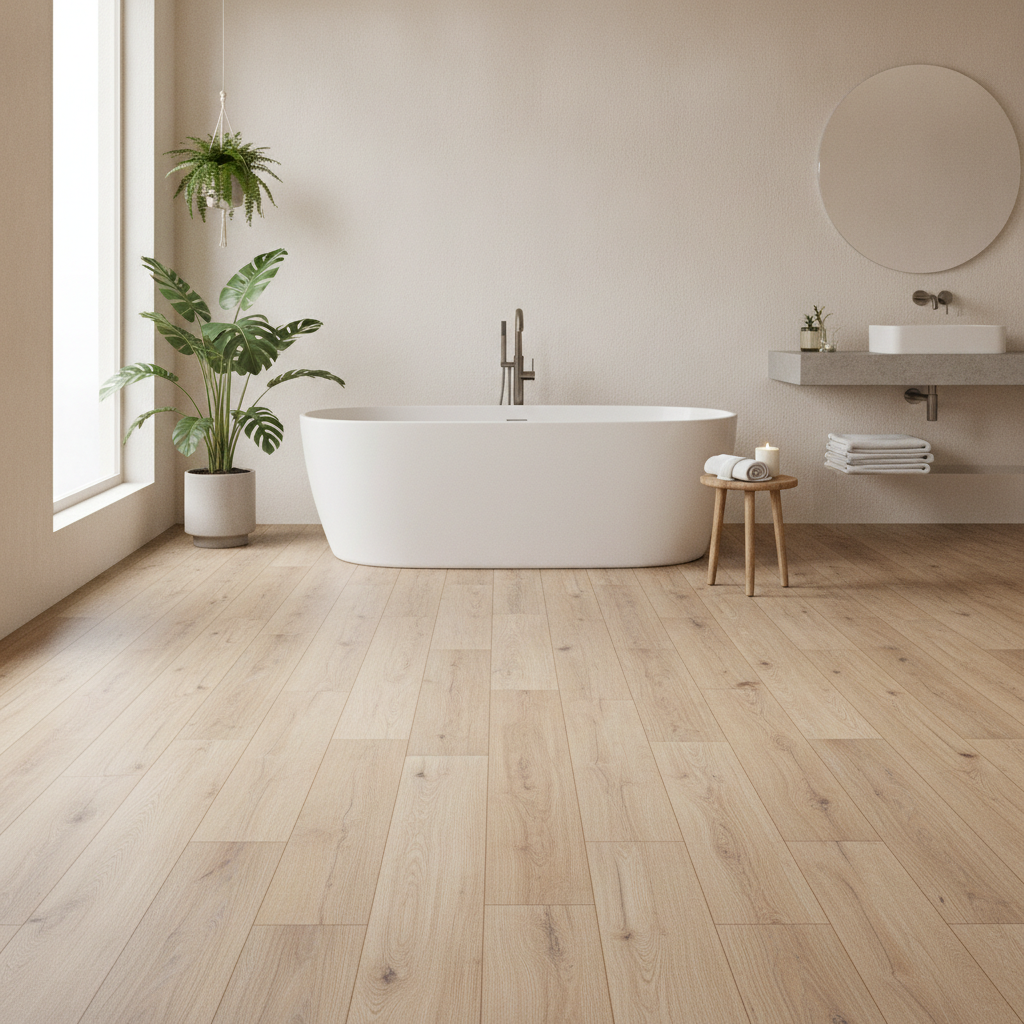
The principles of waterproofing detailed in resources like the Tile Council of North America (TCNA) Handbook are critical: your subfloor must be properly prepared and sealed to prevent moisture from becoming trapped underneath your floor, regardless of the material you choose.
- Top Choices: For a full bathroom with a shower or tub, LVP and SPC Hybrid Flooring are the undisputed best options. Their synthetic, 100% waterproof construction from top to bottom provides the ultimate peace of mind. They have no organic materials that can rot or swell.
- Use with Caution: Waterproof Engineered Hardwood can be a stunning choice for a powder room or half-bath where splashes are minimal. However, for a full bathroom, you must meticulously check the manufacturer’s warranty. Many warranties are voided if the product is installed in a room with a shower, as ambient humidity can still be a concern.
Success in the bathroom depends on a holistic approach: excellent ventilation, proper subfloor preparation, and a flooring material that is waterproof through and through.
Flooring First Aid: A Homeowner’s Guide to Water Damaged Hardwood
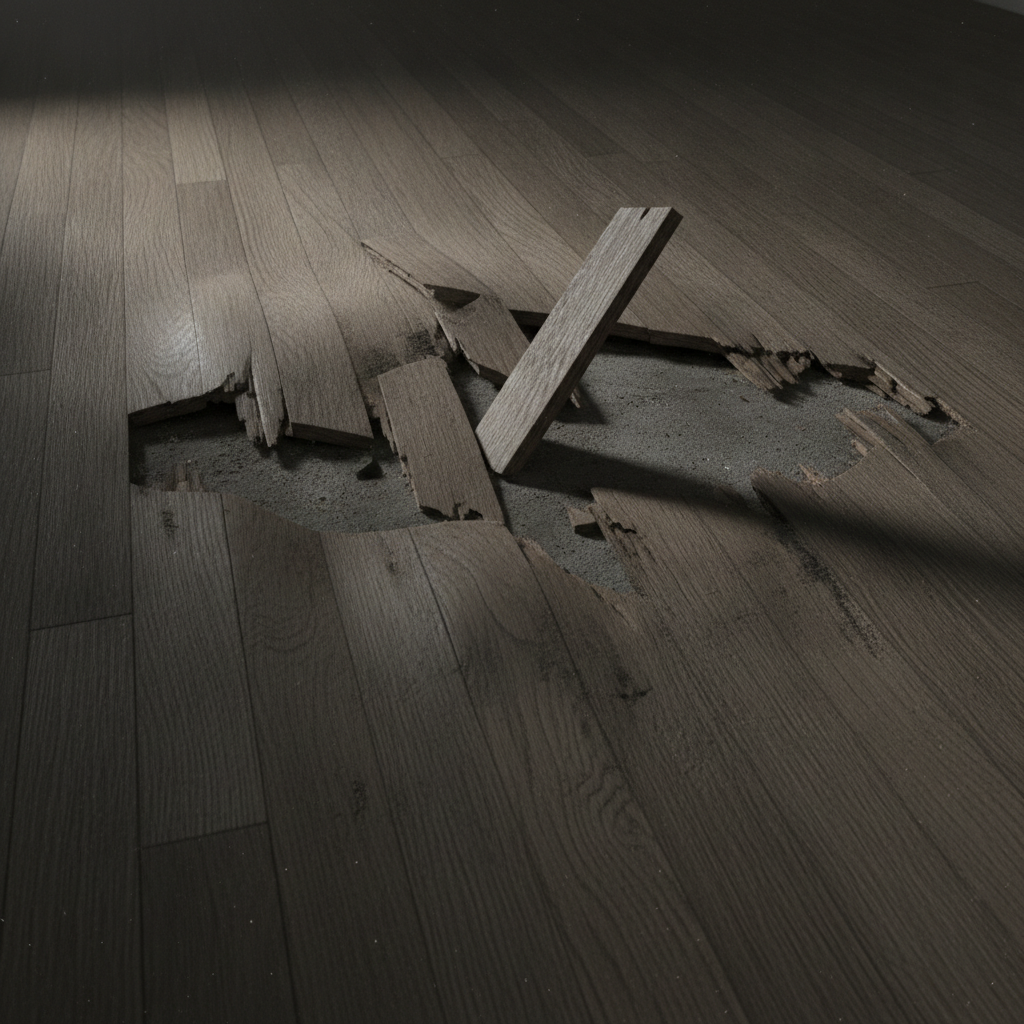
What if you’re reading this because you already have a problem? Seeing your beautiful hardwood floors warped, cupped, or stained from a leak is stressful. Before you panic, here is a first-aid guide to assess the situation and take the right steps.
According to experts from the Institute of Inspection, Cleaning and Restoration Certification (IICRC), the first 24-48 hours are critical to mitigating long-term damage.
“The number one mistake homeowners make is waiting,” says one IICRC-certified Water Restoration Technician (WRT). “Immediately stopping the water source and starting the drying process can be the difference between a minor repair and a full replacement.”
Step 1: Stop the Source & Remove Water. Immediately find and shut off the source of the water. Use towels, a wet-dry vacuum, and mops to remove all standing water from the surface of the floor.
Step 2: Dry the Area. Speed up the drying process aggressively. Open windows, and set up fans and dehumidifiers to circulate air and pull moisture from the wood and the surrounding environment.
Step 3: Assess the Damage. Once the floor is completely dry (which can take days or even weeks), you can assess the type and extent of the damage.
Diagnosing the Damage: Cupping, Crowning, or Buckling?
Understanding the visual cues can help you communicate with a professional. The NWFA provides technical guidelines that define these common moisture-related problems.
- Cupping: The edges of the plank are higher than its center. This happens when the bottom of the board absorbs more moisture than the top, causing it to expand and push the edges upward. This is often caused by a leak from below or high subfloor moisture.
- Crowning: The center of the plank is higher than its edges. This is the opposite of cupping and usually occurs when the surface of the floor is exposed to moisture (like a surface spill) or if a previously cupped floor was sanded flat before it had fully dried out.
- Buckling: This is the most severe form of damage, where the flooring lifts completely off the subfloor, often by several inches. It’s caused by major flooding or a long-term, unaddressed leak.
A professional will use a moisture meter to get an accurate reading of the moisture content in both the flooring and the subfloor. It’s also critical to be aware of mold risk. According to the Environmental Protection Agency (EPA), mold can begin to grow on damp surfaces within 24 to 48 hours. If the wood has been wet for an extended period, professional assessment is necessary.
Repair or Replace? Making the Right Call
The big question is whether your floor can be saved. The answer depends on several factors.
“Whether a floor is salvageable depends on the type of wood, the duration of the water exposure, and whether the subfloor is compromised,” explains a veteran flooring repair professional. “Minor cupping in solid hardwood can often be fixed by addressing the moisture and letting it dry, but a buckled engineered floor almost always requires replacement.”
Use this checklist to guide your decision:
- Is the damage localized? A small area of damage from a pet accident is much easier to repair (often by replacing a few boards) than an entire floor warped by a dishwasher leak.
- Is the subfloor compromised? If the subfloor is saturated, warped, or moldy, it must be repaired or replaced, which usually means removing the flooring above it.
- Is it solid or engineered wood? Solid hardwood is more forgiving. It can often be sanded and refinished after it has fully dried and acclimated. The thin veneer of most engineered hardwood can typically only be sanded once, if at all.
- Navigating Insurance: Many homeowners’ insurance policies cover sudden and accidental water damage. Document everything with photos and videos immediately, and contact your insurance agent to understand your coverage and begin the claims process.
Installation Essentials: How to Bulletproof Your Investment
Even the best waterproof flooring will fail if installed incorrectly. Proper installation is not a step to be rushed—it’s the key to ensuring your floor performs as advertised and that your warranty remains intact.
We asked a certified flooring installer from the International Certified Flooring Installers Association (CFI) about the most common mistakes they see. Here’s a summary of our Q&A:
Q: What’s the #1 mistake homeowners make when installing waterproof flooring in a kitchen or bathroom?
A: “Without a doubt, it’s ignoring the subfloor. People are so excited to lay the beautiful new planks that they install them over a subfloor that isn’t perfectly flat or is still damp. Any bumps or dips will compromise the click-lock joints, and any trapped moisture will lead to mold and musty smells. Your subfloor must be clean, flat, and dry. Period.”
Q: How important is reading the manufacturer’s instructions?
A: “It’s everything. Every brand has slightly different requirements for expansion gaps, underlayment, and transition pieces. If you don’t follow their guide to the letter, you can void a 25-year warranty in a single afternoon. That piece of paper in the box is your contract for performance.”
Your Subfloor Preparation Checklist:
- Clean: Scrape or sand away any old adhesive, paint, or debris. Sweep and vacuum the entire area thoroughly.
- Flat: Check for high or low spots using a long, straight edge. Most manufacturers require the subfloor to be flat within 3/16 of an inch over a 10-foot span. Use a self-leveling compound for low spots and sand down high spots.
- Dry: Use a moisture meter to ensure the subfloor (especially concrete) is within the manufacturer’s acceptable moisture content range.
Conclusion: The Wood Look, Without the Worry
The dream of having beautiful, warm wood-look floors in your kitchen, bathroom, or basement is no longer a risky proposition. Thanks to modern materials like SPC hybrid flooring, luxury vinyl plank, and waterproof engineered hardwood, you can achieve the aesthetic you love with the performance you need.
The key to success is knowledge. True “waterproof hardwood” is a high-tech system, not just a single plank. Lasting beauty and durability come from choosing the right material for the right room, understanding the difference between waterproof and water-resistant, and prioritizing a flawless installation.
You are now armed with the expert knowledge to cut through the marketing noise and make a confident, worry-free decision. You can finally have the floor of your dreams in every room of your home.
Feeling confident to start your project? Browse our curated selection of waterproof and hybrid flooring to find the perfect style for your kitchen or bathroom.
This article provides general guidance. Always consult manufacturer-specific installation instructions and warranties before purchasing or installing any flooring. If dealing with significant water damage, consult a certified professional.
References & Authoritative Sources
- National Wood Flooring Association (NWFA). (N.D.). Technical Guidelines. Retrieved from the official NWFA website.
- ASTM International. (N.D.). Standards and Publications. Retrieved from the official ASTM International website.
- ASTM F3261-22. (2022). Standard Specification for Resilient Flooring in Modular Format with Rigid Polymeric Core. ASTM International. Retrieved from www.astm.org.
- Resilient Floor Covering Institute (RFCI). (N.D.). Resources for Consumers. Retrieved from the official RFCI website.
- North American Laminate Flooring Association (NALFA). (N.D.). NALFA Certification & Standards. Retrieved from the official NALFA website.
- National Kitchen & Bath Association (NKBA). (N.D.). Design & Inspiration. Retrieved from the official NKBA website.
- Porcelain Enamel Institute (PEI). (N.D.). PEI Rating System for Ceramic Tile.
- Tile Council of North America (TCNA). (N.D.). TCNA Handbook for Ceramic, Glass, and Stone Tile Installation.
- Institute of Inspection, Cleaning and Restoration Certification (IICRC). (N.D.). IICRC Standards. Retrieved from the official IICRC website.
- Environmental Protection Agency (EPA). (N.D.). Mold and Moisture. Retrieved from www.epa.gov/mold.
- International Certified Flooring Installers Association (CFI). (N.D.). Installation Standards. Retrieved from the official CFI website.
