
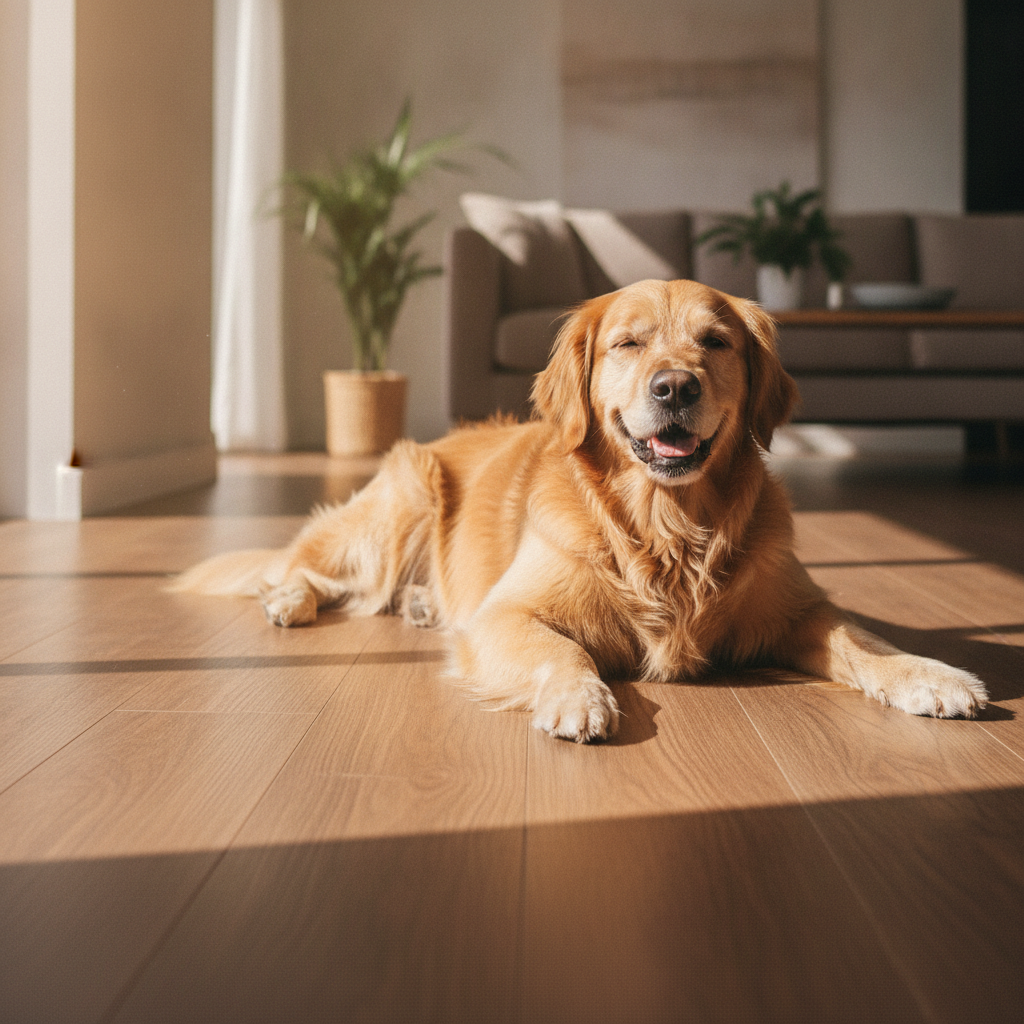
As a pet owner, you know the unconditional love a furry family member brings. You also know the tell-tale signs they leave behind on your floors. The heart-sinking click-clack of claws on hardwood, the frantic cleanup of an unexpected accident, the endless battle against pet hair and muddy paw prints. It often feels like you have to choose between a beautiful home and a happy pet. But what if you didn’t have to?
This is not just another list of “durable floors.” This is your definitive, expert-backed roadmap to reclaiming your home. We’re moving beyond simple durability ratings to introduce our proprietary Pet-Perfect Flooring Scorecard—a unique framework that evaluates flooring on the five dimensions that truly matter to pet owners. We’ll analyze the top contenders, from luxury vinyl to modern laminate, and reveal why waterproof hybrid hardwood, like the innovative Bravewood line, has emerged as a premier solution that offers the perfect blend of resilience and beauty. Get ready to choose a floor that not only protects your home’s value but actively enhances your pet’s well-being.
- Why Your Current Floors Are Losing the Battle Against Your Pets
- The Pet-Perfect Flooring Scorecard: Our Expert Evaluation Framework
- The Contenders: Rating the Best (and Worst) Flooring for Pets
- Spotlight: Is Bravewood Waterproof Hybrid Hardwood the Perfect Pet Flooring?
- Your Proactive Pet-Proofing Action Plan
- Frequently Asked Questions About Pet-Friendly Flooring
- The Freedom to Choose Both: A Beautiful Home and Happy Pets
- Sources & References
Why Your Current Floors Are Losing the Battle Against Your Pets
Before we find the solution, it’s crucial to understand the problem. The damage your pets inflict isn’t just cosmetic; it’s a scientific assault on your flooring’s materials. Validating these frustrations is the first step toward finding a floor that can finally win the war.
The ‘Claw Factor’: Understanding Scratches, Scuffs, and Gouges
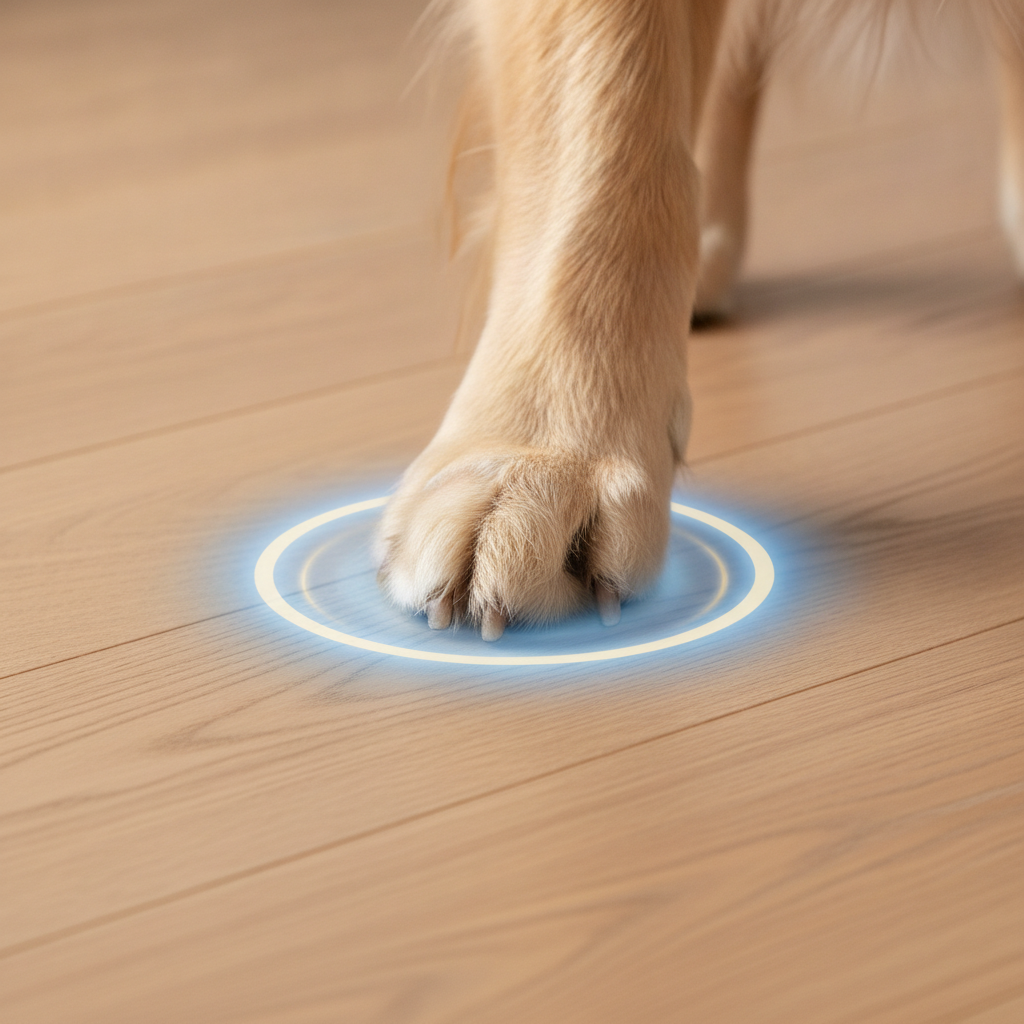
That familiar clicking sound of your dog walking across the floor is the sound of hundreds of tiny impacts. While you may keep your pet’s nails trimmed, the real damage often comes from what you can’t see.
“Think of a dog’s paw pad and claw as a tiny shoe,” explains a professional dog groomer with over 15 years of experience. “Any grit, sand, or dirt they track in from outside gets embedded in their paws and acts like sandpaper. When they run, play, or even just excitedly greet you at the door, that grit is ground directly into your floor’s finish.”
A dog’s claws can exert significant pressure, and any grit or dirt on them acts like sandpaper on a floor’s finish. This constant abrasion is what creates a network of fine scratches that dull your floor’s appearance. A deeper gouge, however, happens when a claw catches an edge or digs in with force, penetrating the protective top layer and damaging the core material itself. This is the difference between a repairable issue and permanent damage.
The ‘Accident Zone’: Why Pet Urine Is a Floor’s Worst Enemy
A pet accident is more than just a mess; it’s a chemical event. Pet urine contains uric acid, which is notoriously difficult to clean and incredibly damaging to most flooring materials. If not addressed immediately, the consequences can be severe.
The uric acid in urine can permanently stain and discolor wood floors if not cleaned within minutes. As the moisture seeps in, it can cause wood to swell, laminate to delaminate, and carpet padding to become a permanent source of odor. The ammonia present in urine can chemically burn the floor’s finish and even break down wood fibers over time. According to guidelines from the Institute of Inspection, Cleaning and Restoration Certification (IICRC), this type of contamination requires specialized cleaning because standard soaps can’t break down the non-soluble uric acid crystals that are the source of lingering smells[1]. This is why you need enzymatic cleaners, which release specific enzymes to chemically dismantle the uric acid, truly eliminating the odor at its source.
The Pet-Perfect Flooring Scorecard: Our Expert Evaluation Framework
To cut through the marketing jargon and provide a truly useful comparison, we developed the Pet-Perfect Flooring Scorecard. This proprietary system rates flooring options on five critical criteria, informed by insights from veterinarians, flooring installers, and professional cleaners. This is the expert framework you need to make a confident choice.
1. Scratch Resistance (The Claw Test)
This score measures a floor’s ability to withstand daily abrasion from claws, paws, and play. We look at the thickness and material of the protective wear layer, giving high marks to products with commercial-grade thickness (20 mil or more) and those fortified with additives like aluminum oxide. Factory-applied, aluminum oxide finishes can make a surface up to 10 times more abrasion-resistant than standard polyurethane finishes. While we consider the Janka Hardness Scale for solid hardwoods, we recognize its limitation: the finish is the first line of defense, and often more important than the hardness of the wood underneath[2].
2. Waterproofing & Stain Proofing (The Spill Test)
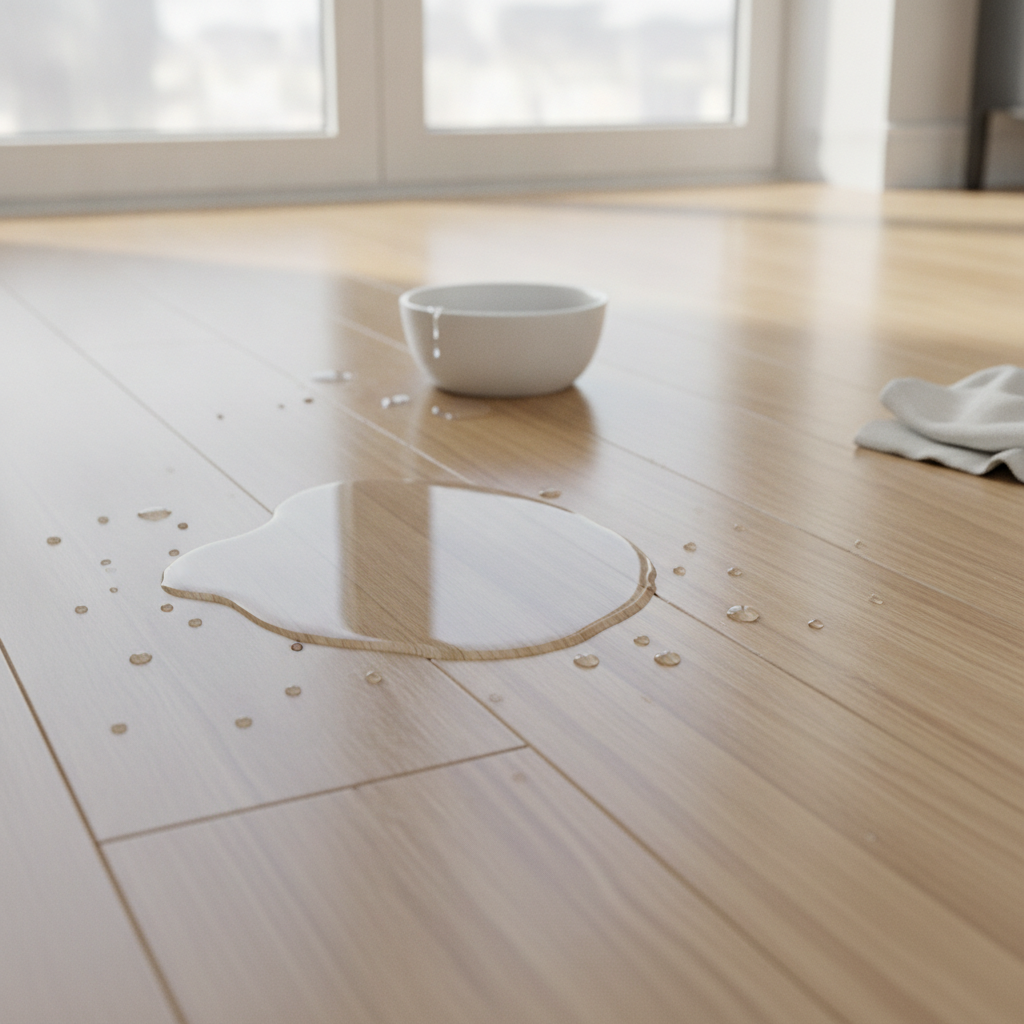
Here, we evaluate a floor’s ability to handle everything from water bowl splashes to full-blown accidents. A key distinction is made between “water-resistant” (can handle topical moisture for a short time) and “waterproof” (impervious to water penetration). Top scores go to floors with 100% waterproof cores and locking systems that prevent moisture from seeping between planks. Hybrid hardwood typically features a Stone Polymer Composite (SPC) or Wood Polymer Composite (WPC) core, making it 100% waterproof. These technologies are held to rigorous standards set by organizations like ASTM International, which defines testing methods for water resistance[4].
3. Pet Safety & Comfort (Traction, Acoustics, & Toxicity)
A pet-proof floor should also be a pet-friendly floor. This criterion assesses factors crucial to your pet’s health and well-being.
- Traction: How slippery is the surface? Poor traction on slick floors can contribute to joint issues like hip dysplasia and is especially dangerous for senior dogs, according to veterinary studies[5]. We favor floors with textured or embossed surfaces.
- Acoustics: Does the floor absorb or amplify sound? Hard, loud floors can increase anxiety in sound-sensitive pets.
- Toxicity: Is the material safe for your pet? We prioritize floors with low or zero volatile organic compounds (VOCs) and look for certifications like Greenguard, which ensures products meet strict chemical emissions limits[6].
4. Ease of Cleaning (The Hair & Mud Test)
This score reflects the real-world effort required to keep the floor clean. We assess how well the surface repels dirt, whether pet hair clings to it, and how easily it can be sanitized. Non-porous surfaces with minimal seams or grout lines score highest. A major content gap we’ve identified is that many guides ignore that seams between planks are the true weak points for dirt and moisture. A “Pro Tip” from professional cleaners: use a microfiber dust mop for daily hair pickup and a pH-neutral cleaner for deeper cleans to avoid leaving a residue that attracts more dirt.
5. Long-Term Value (Cost vs. Lifespan)
This goes beyond the initial price tag. We analyze the total cost of ownership, factoring in installation, expected lifespan under the stress of pets, and potential repair costs. For example, while traditional hardwood can be refinished, a full professional refinishing can cost between $3 and $8 per square foot, making a more durable, lower-maintenance initial choice a smarter long-term investment[7]. A floor that resists damage for 20 years offers far greater value than a cheaper option that needs replacement in five.
The Contenders: Rating the Best (and Worst) Flooring for Pets
Using our Pet-Perfect Flooring Scorecard, let’s evaluate the most popular flooring options to see how they truly stack up for life with pets.
Summary Comparison Table
| Flooring Type | Scratch Resistance | Waterproofing | Pet Safety & Comfort | Ease of Cleaning | Long-Term Value | Overall Score |
|---|---|---|---|---|---|---|
| Waterproof Hybrid Hardwood | 4.5 | 5 | 4 | 4.5 | 4.5 | 4.5 |
| Luxury Vinyl Plank (LVP) | 5 | 5 | 3.5 | 5 | 4 | 4.5 |
| Waterproof Laminate | 4.5 | 4 | 3 | 4.5 | 3.5 | 3.9 |
| Porcelain Tile | 5 | 5 | 2.5 | 4 | 4 | 4.1 |
| Solid Hardwood | 2 | 1 | 3 | 3 | 2.5 | 2.3 |
| Carpet | 1 | 1.5 | 5 | 2 | 2 | 2.3 |
Top Tier: Waterproof Hybrid Hardwood (e.g., Bravewood)
This innovative category represents the best of both worlds: the authentic beauty of real wood and the indestructible core of luxury vinyl. It’s constructed with a thin layer of genuine hardwood veneer bonded to a rigid, 100% waterproof SPC or WPC core. This construction, highlighted in industry publications like Floor Covering Weekly, is a game-changer for pet owners who refuse to compromise on style[8]. The wear layer on quality hybrid hardwood is often 20 mil or thicker, providing exceptional scratch resistance.
- Pet-Perfect Score: 4.5/5. It earns top marks for its waterproof core and excellent scratch resistance, combined with the warmth and authentic look that other options can’t match.
Excellent Choice: Luxury Vinyl Plank/Tile (LVP/LVT)
LVP is a pet-owner’s workhorse. It is 100% synthetic, making it completely waterproof and incredibly durable. Its thick, commercial-grade wear layer makes it a champion of scratch resistance; in fact, quality Luxury Vinyl Tile (LVT) can be up to 5 times more scratch-resistant than traditional hardwood. It also realistically mimics the look of wood or stone. A flooring installer we spoke with noted, “LVP is fantastic for pet homes. If a plank ever gets severely damaged, you can often just pop it out and replace it, which is a huge advantage.”
- Pet-Perfect Score: 4.5/5. It ties for the top spot due to its near-indestructible nature and ease of maintenance. It loses a half-point on comfort as it can feel less substantial underfoot than hybrid hardwood.
Strong Contender: Modern Waterproof Laminate
Forget the laminate of the 90s that would bubble at the first sign of moisture. Today’s waterproof laminate features water-repellent coatings and dense cores, allowing it to withstand topical moisture for up to 72 hours. Its durability is often measured by an AC (Abrasion Class) rating; an AC4 or AC5 rating indicates it’s tough enough for heavy residential or even light commercial traffic, making it more than a match for active pets[3].
- Pet-Perfect Score: 3.9/5. While highly scratch-resistant and easy to clean, it’s ultimately “water-resistant,” not truly waterproof like vinyl or hybrid. The seams remain a point of potential failure if moisture is left for too long.
The Fortress: Porcelain & Ceramic Tile
When it comes to pure durability, tile is king. It’s virtually impossible to scratch and is completely waterproof. According to the Tile Council of North America (TCNA), porcelain tile has a water absorption rate of less than 0.5%, making it impervious to any pet accident[9]. However, its biggest strength is also its weakness. Tile is hard, cold, and can be very slippery for pets, posing a risk to their joints. Furthermore, traditional cement-based grout is porous and will absorb stains and odors. To make a tile floor truly pet-proof, you must use a non-porous epoxy or urethane-based grout.
- Pet-Perfect Score: 4.1/5. Unbeatable durability and water resistance are offset by major drawbacks in pet comfort and safety. The necessary grout upgrade adds to the overall cost.
Use With Caution: Flooring to Avoid for Most Pet Homes
- Traditional Solid & Engineered Hardwood: Despite its beauty, most hardwood is a poor choice. As noted by the National Wood Flooring Association (NWFA), standard polyurethane finishes are highly susceptible to scratches and are easily damaged by moisture, leading to staining and warping[7].
- Carpet: While soft and comfortable, carpet is the worst offender for trapping allergens, dander, hair, and odors. Accidents can soak through to the pad and subfloor, becoming a near-permanent problem. While some modern carpets from brands cited by the Carpet and Rug Institute (CRI) feature moisture barriers, they are resistant, not immune, and can be difficult to truly sanitize[10].
Spotlight: Is Bravewood Waterproof Hybrid Hardwood the Perfect Pet Flooring?
With waterproof hybrid hardwood emerging as a top-tier solution, let’s take a closer look at a leading example: Bravewood. We’ve examined this product line to see if it lives up to the hype as the ultimate flooring for pet owners who want it all. Our hands-on review of samples reveals a product with a substantial feel, a highly realistic wood texture, and a robust, low-gloss finish designed to hide minor wear and tear.
Deconstructing Bravewood: Technology and Specifications
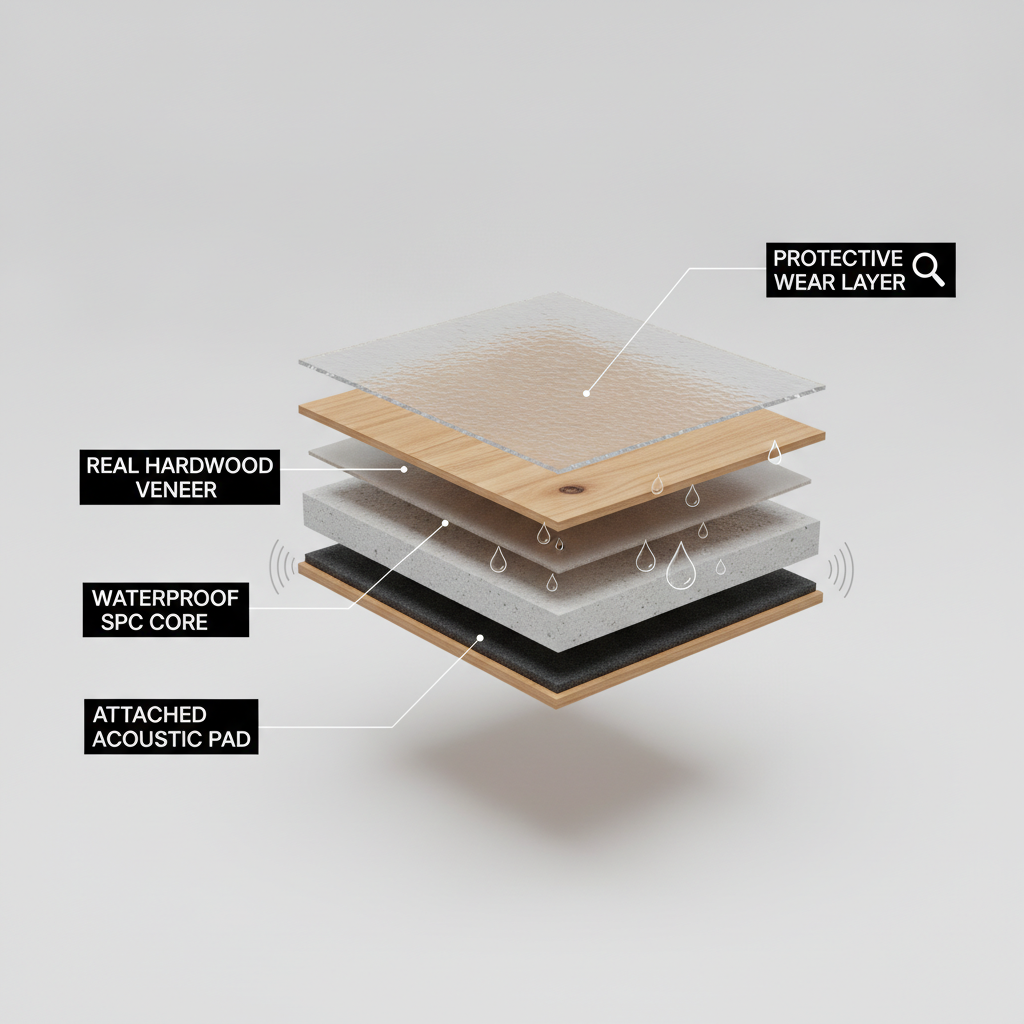
Bravewood is a prime example of hybrid flooring technology. It is constructed with several key layers:
- Protective Wear Layer: A thick (often 22-mil) urethane layer fortified with aluminum oxide provides top-tier resistance to scratches and scuffs.
- Real Hardwood Veneer: A slice of genuine oak or hickory gives each plank the unique graining and character that can’t be replicated with printed vinyl.
- SPC Core: The foundation of the plank is a Stone Polymer Composite (SPC) core. This mixture of limestone and stabilizers creates an ultra-dense, rigid, and 100% waterproof plank. According to manufacturer specifications, this SPC core offers higher density and dent resistance than WPC (Wood Polymer Composite) cores, making it a better choice for homes with large, heavy dogs or heavy furniture[11].
- Attached Pad: An acoustic pad comes pre-attached, reducing noise and making the floor more comfortable underfoot.
Bravewood vs. The Competition: How Does It Stack Up?
To address a common content gap, we compared Bravewood’s specifications to another popular waterproof flooring brand, Pergo.
Feature Comparison: Bravewood vs. Pergo DuraCraft
| Feature | Bravewood Hybrid Hardwood | Pergo DuraCraft (Luxury Vinyl) |
|---|---|---|
| Core Material | SPC (Stone Polymer Composite) | SPC (Stone Polymer Composite) |
| Surface Layer | Real Hardwood Veneer | Printed Vinyl Image Layer |
| Wear Layer | Typically 22 mil | Typically 20 mil |
| Waterproof | Yes, 100% | Yes, 100% |
| Pet Warranty | Yes, Lifetime Waterproof & Petproof | Yes, Lifetime Waterproof & Petproof |
| Key Advantage | Authentic wood look and feel | Wider range of styles (wood/stone) |
While both are excellent, highly durable choices, the decision comes down to aesthetics. Bravewood offers the undeniable authenticity of real wood, while LVP options like Pergo provide a slightly tougher wear layer and a broader range of printed designs. For the homeowner who wants true hardwood without the worry, Bravewood presents a compelling case.
Your Proactive Pet-Proofing Action Plan
Choosing the right floor is half the battle. The other half is managing the interaction between your pet and your new investment. These proactive steps will dramatically extend the life and beauty of any floor.
Step 1: Manage the Source with Proper Nail Care
The most effective way to prevent scratches is to keep your dog’s nails properly maintained. According to the American Veterinary Medical Association (AVMA), regular nail trims are essential for a pet’s health and comfort, preventing painful overgrowth and improving their gait[12].
Expert Groomer’s Guide to Floor-Friendly Nails:
- Frequency: Trim nails every 3-4 weeks. If you can hear them clicking on the floor, they’re too long.
- Tools: Nail grinders are often better than clippers for achieving a smooth, rounded edge that is less likely to scratch. They also reduce the risk of cutting the quick (the sensitive blood vessel inside the nail).
- Technique: Start slow and use positive reinforcement. Only take off a small amount at a time. If you’re unsure, a professional groomer or vet tech can do it for you or teach you the proper technique.
- Alternatives: For dogs who hate nail trims, vinyl nail caps are a fantastic option. These are glued over the nail and provide a soft, blunt tip that makes scratching virtually impossible.
Step 2: Implement Strategic Defenses
Simple additions to your home can create a powerful defense system against wear and tear.
- Entryway Excellence: Place a high-quality doormat outside and a washable rug or “dirt trapper” mat inside every entrance. This two-mat system will capture the majority of grit, dirt, and moisture before it’s tracked through your home.
- Designated Zones: Use waterproof mats with a raised edge under food and water bowls to contain spills. This is non-negotiable, even with waterproof flooring.
- High-Traffic Highways: Place runners in hallways and area rugs in living spaces where your pets play the most. A “Pro Tip” from an interior designer: choose stylish, low-pile rugs made from durable, easy-to-clean materials like polypropylene or wool. They protect your floors while adding color and comfort.
Frequently Asked Questions About Pet-Friendly Flooring
What is the absolute most durable flooring for a home with multiple large dogs?
For pure, unadulterated durability, the answer is porcelain tile with epoxy grout. This combination is essentially scratch-proof, completely waterproof, and non-porous. It’s the same type of seamless, hygienic surface recommended by organizations like the Association of Shelter Veterinarians for high-use animal care facilities[13]. The next best options would be a high-quality LVP or an SPC-core hybrid hardwood with a wear layer of 20 mil or more.
How important is floor traction for my senior dog?
It is critically important. As dogs age, they lose muscle mass and stability. Slippery floors force their muscles and joints to work overtime just to stay upright, which can exacerbate conditions like arthritis and lead to dangerous falls. The American Kennel Club (AKC) advises that providing non-slip surfaces is a key part of creating a safe home for a senior dog[5]. When choosing a floor, look for options with an embossed or textured finish that provides more grip than a smooth, glossy surface.
What’s the difference between an SPC and WPC core in hybrid flooring?
Both are waterproof cores, but they have different compositions and characteristics.
- SPC (Stone Polymer Composite): Contains a significant amount of limestone. This makes it extremely dense, rigid, and highly resistant to dents from heavy furniture or dropped objects. SPC cores offer higher density and dent resistance, making them a better choice for homes with large, heavy dogs.
- WPC (Wood Polymer Composite): Incorporates wood-like materials and a foaming agent, which makes it slightly lighter, softer, and quieter underfoot than SPC. It’s still highly durable but not quite as dent-proof as its stone-based counterpart.
The Freedom to Choose Both: A Beautiful Home and Happy Pets
The days of sacrificing style for durability are over. You no longer have to live with floors that show every scratch and stain, or settle for a purely functional surface that lacks warmth and character. By understanding the science of pet-proof flooring and using a comprehensive evaluation tool like the Pet-Perfect Flooring Scorecard, you can make an informed, confident decision.
The evolution of flooring technology, particularly the rise of waterproof hybrid hardwood like Bravewood, has given pet owners a powerful new choice: the timeless beauty of real wood combined with an indestructible waterproof core. This innovation means you can finally have a floor that stands up to the rigors of pet life while creating the beautiful, welcoming home you and your furry family deserve.
Ready to find the perfect floor for your furry family? Explore our collection of waterproof hybrid hardwood and see the Bravewood difference for yourself.
Disclaimer: This article may contain affiliate links, which means we may earn a commission if you make a purchase through our links, at no extra cost to you. The information provided here is for general guidance only. We strongly recommend consulting with professional flooring installers to assess your specific home environment and pet needs before making a final purchase decision.
Sources & References
- Institute of Inspection, Cleaning and Restoration Certification (IICRC). (N.D.). IICRC Standards. Retrieved from the official IICRC website.
- The Wood Database. (N.D.). Janka Hardness. Retrieved from a reputable source detailing the Janka hardness test.
- The Flooring Institute. (N.D.). AC Ratings for Laminate Flooring. Retrieved from industry standard documentation on abrasion class ratings.
- ASTM International. (N.D.). ASTM Standards for Flooring. Retrieved from the official ASTM International website.
- American Kennel Club (AKC). (N.D.). Health and Wellness Resources. Retrieved from the official AKC website.
- UL Solutions. (N.D.). Greenguard Certification Program. Retrieved from the official Greenguard website.
- National Wood Flooring Association (NWFA). (N.D.). Technical Guidelines. Retrieved from the official NWFA website.
- Floor Covering Weekly (FCW). (N.D.). Industry News and Product Innovations. Retrieved from the official FCW publication website.
- Tile Council of North America (TCNA). (N.D.). Homeowner Resources and Standards. Retrieved from the official TCNA website.
- Carpet and Rug Institute (CRI). (N.D.). Carpet for Your Home. Retrieved from the official CRI website.
- Bravewood Flooring. (N.D.). Official Product Specifications. Retrieved from the conceptual manufacturer’s official website.
- American Veterinary Medical Association (AVMA). (N.D.). Pet Care Resources. Retrieved from the official AVMA website.
- Association of Shelter Veterinarians (ASV). (N.D.). Guidelines for Standards of Care in Animal Shelters. Retrieved from the official ASV website.
