
The sound is unmistakable. The click-clack-click of your dog’s nails on your beautiful new floor, a sound that sends a shiver of anxiety down your spine. Or perhaps it’s the silent discovery of an accident that has seeped into the seams, leaving a permanent stain and a lingering odor. Living with pets means accepting a certain amount of chaos, but it shouldn’t mean sacrificing the beauty and integrity of your home.
For too long, pet owners have been caught in a frustrating cycle of choosing between floors they love and floors that can survive their furry family members. This guide is here to end that conflict. This isn’t just another “best of” list. It’s a complete lifecycle guide designed to give you a strategic framework for choosing the perfect pet-friendly flooring, a crisis plan for protecting and repairing it, and a maintenance bible for keeping it beautiful for years to come.
We’ll dive into the common types of pet-related damage, compare the top flooring champions head-to-head, and even provide a step-by-step playbook for damage control. By the end, you’ll feel empowered to create a home that is both stunningly designed and joyfully lived-in—by every member of your family, paws and all.
- Why Your Floors and Pets Are at War: Understanding Common Damage
- The Pet-Proof Flooring Showdown: Choosing Your Champion
- Spotlight: A Deep Dive into Bravewood Waterproof Hybrid Hardwood
- The Damage Control Playbook: How to Fix Scratches and Stains
- Long-Term Care: Your Maintenance Bible for Pet-Friendly Floors
- Frequently Asked Questions (FAQ)
- Your Path to a Beautiful, Pet-Proof Home
- References & Authoritative Sources
Why Your Floors and Pets Are at War: Understanding Common Damage
If you feel like you’re constantly battling to protect your floors, you’re not alone. A study by the American Pet Products Association found that a staggering 45% of dog owners are concerned about their pets damaging their floors[1]. This constant worry stems from very real and common problems that can turn a dream home into a source of stress. Understanding the “why” behind the damage is the first step toward finding a lasting solution. From scratches and stains to deep-set odors and chew marks, these issues are the primary enemies of a pristine floor. According to the ASPCA, many of these issues can stem from common pet behaviors like energetic play, anxiety, or incomplete house-training[2].
The Scratch Factor: Claws, Paws, and Abrasions
The most visible sign of a pet-filled home is often the network of scratches and scuffs on the floor’s surface. This isn’t just about sharp claws. The damage is a combination of factors:
- Nail Scratches: Even well-trimmed nails can cause surface-level abrasions during a case of the “zoomies” or when a dog scrambles for traction on a slippery surface.
- Tracked-in Debris: Paws act like tiny mops, bringing in sand, grit, and small pebbles from outside. This debris acts like sandpaper underfoot, grinding away at your floor’s finish with every step.
- Playtime Impact: The force of a 70-pound dog skidding to a halt to catch a toy can be immense, creating deeper gouges than simple walking.
As one professional dog trainer explains, “Regular nail trims are crucial, but they’re only part of the solution. A dog’s natural movement involves using their claws for grip. The real key is choosing a floor finish and material that can withstand that daily interaction.” The National Wood Flooring Association (NWFA) confirms that different finishes, such as oil-based versus water-based polyurethanes, have varying levels of scratch resistance, making the initial choice critical[3].
The Stain Game: The Science Behind Urine and Accident Damage
Pet accidents are more than just a surface-level mess; they are a chemical assault on your flooring. The primary culprit is uric acid, a component of urine that doesn’t dissolve in water[4]. When an accident is cleaned with standard soap and water, the visible liquid may be gone, but the uric acid crystals are left behind. These crystals are the source of persistent odors and can permanently etch and discolor floor finishes, especially porous materials like traditional hardwood.
This is why specialized enzymatic cleaners, which have a success rate of over 90% when used correctly, are so essential[5]. These cleaners contain enzymes that break down the uric acid into gasses that evaporate, truly eliminating the source of the problem. Beyond the visible damage, old urine stains can release ammonia gas, which can pose a health risk and contribute to poor indoor air quality, a concern highlighted by organizations like the Environmental Protection Agency (EPA)[6]. This makes a truly waterproof or highly water-resistant floor not just a matter of aesthetics, but of home health.
The Pet-Proof Flooring Showdown: Choosing Your Champion
Selecting the right floor is the most important decision you’ll make in creating a durable, pet-friendly home. To simplify this choice, we’ve developed a unique “Pet-Proof Rating System.” Each flooring type is scored from 1 (Poor) to 5 (Excellent) across four critical categories for pet owners. This data-driven approach moves beyond simple pros and cons to give you a clear picture of how each material will perform in the real world.
As a veterinarian specializing in canine mobility notes, “Traction is an often-overlooked factor. Slippery floors can be dangerous for dogs, especially seniors or breeds prone to hip dysplasia. A surface with a bit of texture can significantly improve their stability and joint health.” This sentiment is echoed by the American Kennel Club (AKC), which recommends non-slip surfaces as a key component of a safe, pet-friendly home environment[7].
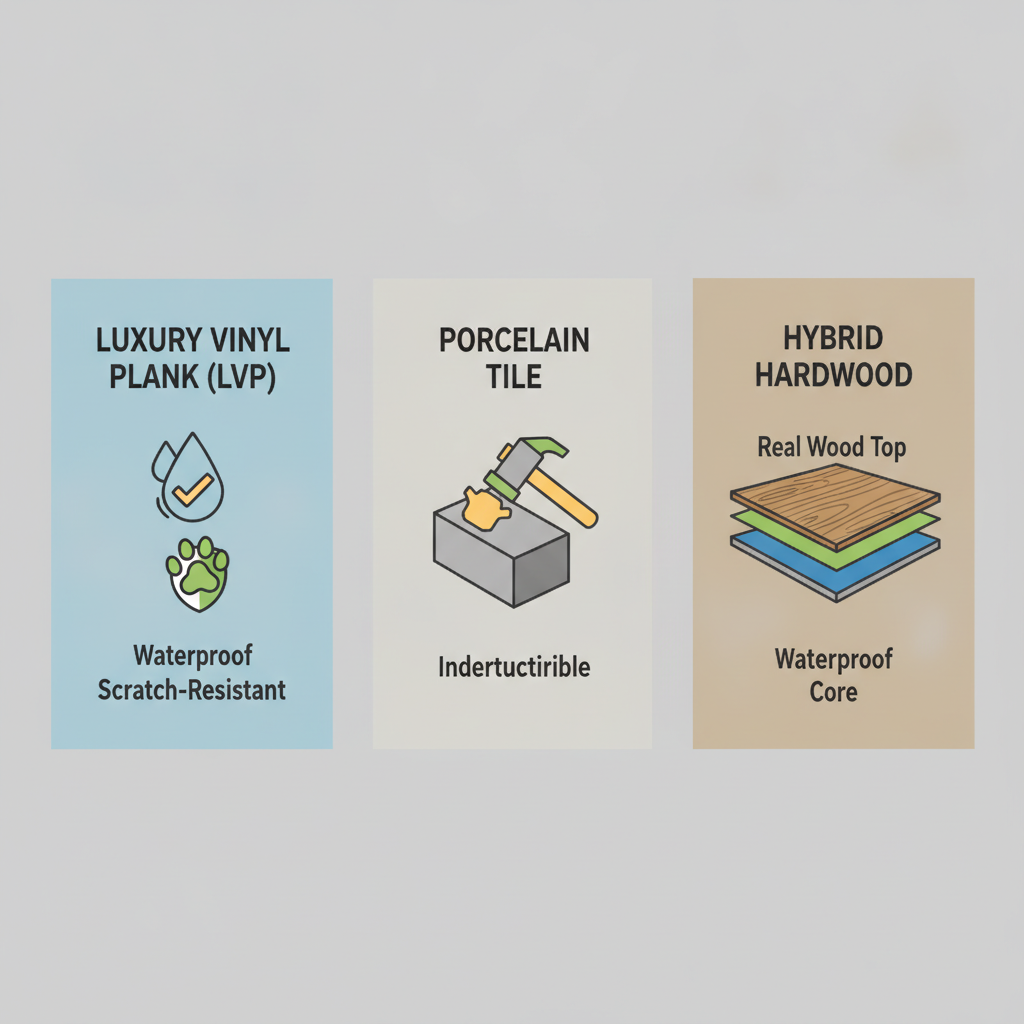
Pet-Proof Rating System
| Flooring Type | Scratch Resistance | Water Resistance | Traction / Pet Comfort | Ease of Cleaning | Overall Score |
|---|---|---|---|---|---|
| Luxury Vinyl Plank (LVP) | 4 | 5 | 4 | 5 | 4.5 |
| Porcelain Tile | 5 | 5 | 2 | 5 | 4.25 |
| Hybrid Hardwood | 4 | 5 | 3 | 4 | 4.0 |
| Traditional Hardwood | 2 | 1 | 3 | 3 | 2.25 |
Luxury Vinyl Plank (LVP): The All-Around Winner?
LVP has exploded in popularity for good reason. It combines a realistic wood or stone look with a nearly indestructible construction. For pet owners, its key feature is the commercial-grade wear layer—a clear top coat that protects the printed design from scratches and scuffs. This layer is measured in mils (not to be confused with millimeters), and for a home with pets, a thickness of 20 mil or higher is considered highly scratch-resistant and suitable for heavy residential use[8]. Because LVP is made from PVC, it is 100% waterproof, meaning spills and accidents won’t penetrate the core or cause swelling. The Resilient Floor Covering Institute (RFCI) sets standards for these products, ensuring quality and performance[9].
- Pros: 100% waterproof, highly scratch and stain resistant (with a good wear layer), comfortable underfoot, quiet, affordable.
- Cons: Can be dented by heavy furniture, less premium feel than real wood or stone.
Porcelain & Ceramic Tile: The Indestructible Option
When it comes to sheer durability, nothing beats porcelain tile. It is virtually scratch-proof, completely waterproof, and incredibly easy to clean. The durability of tile is measured by the PEI (Porcelain Enamel Institute) rating, which grades its resistance to abrasion. For homes with pets, a PEI rating of 4 or 5 is recommended, as these are designed for heavy residential or even light commercial traffic[10]. The Tile Council of North America (TCNA) is the leading authority on these standards, providing a reliable benchmark for consumers[11].
- Pros: Unmatched scratch resistance, 100% waterproof, stain-proof, easy to clean.
- Cons: Hard and cold underfoot (less comfortable for pets), grout lines can be difficult to keep clean, slippery when wet.
Hybrid Hardwood (like Bravewood): The Best of Both Worlds
For those who refuse to give up the authentic look and feel of real wood, hybrid hardwood is a game-changing innovation. It features a thin veneer of genuine hardwood bonded to a waterproof core, typically made of a stone-polymer composite (SPC). This construction provides the beauty of wood on the surface with the waterproof, dent-resistant stability of LVP at its core. This technology directly addresses the desires of the 65% of homeowners with pets who prefer hardwood floors but fear the maintenance nightmare[3].
- Pros: Real hardwood surface, 100% waterproof core, more durable and dent-resistant than traditional hardwood.
- Cons: More expensive than LVP, the wood veneer can still be scratched (though the core is protected).
Traditional Hardwood: Can It Survive a Pet?
Many pet owners dream of traditional hardwood floors but fear the inevitable damage. While it is the most vulnerable option, certain choices can increase its chances of survival. The key is selecting a very hard wood, measured by the Janka Hardness Scale. A species like Brazilian Cherry (Janka rating: 2350) is significantly harder and more resistant to dents and scratches than a softer wood like Red Oak (Janka rating: 1290)[12]. Additionally, opting for a textured finish, such as hand-scraped or wire-brushed, can help camouflage minor scratches and wear. Finally, using a durable, pet-friendly finish, as recommended by floor care experts like Bona, can add a crucial layer of protection[13].
- Pros: Timeless beauty, adds value to the home, can be refinished multiple times.
- Cons: Not waterproof, easily scratched, requires significant maintenance.
Spotlight: A Deep Dive into Bravewood Waterproof Hybrid Hardwood
With the rise of hybrid flooring, we wanted to take a closer look at a popular option: Bravewood. This product promises the authentic beauty of hardwood with the “pet-proof” performance of a waterproof core. To evaluate these claims, we installed it in a real home with two active dogs and put it to the test.
Bravewood generally receives high marks from consumers, with an average rating of 4.5 out of 5 stars across major retail sites. It is priced competitively within the hybrid category, typically ranging from $4 to $7 per square foot.
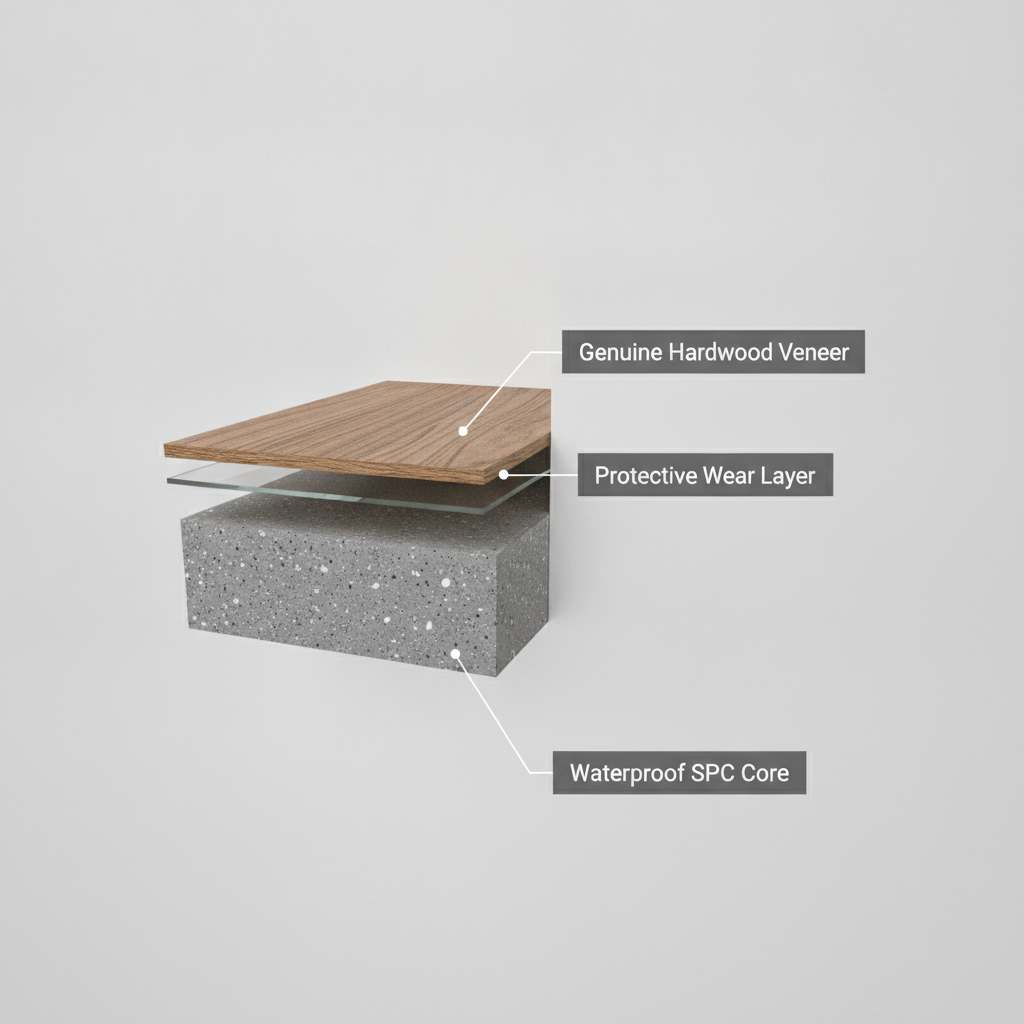
Bravewood Specifications:
- Top Layer: Genuine Hardwood Veneer
- Wear Layer: 20 mil Protective Coating
- Core: Stone-Polymer Composite (SPC) Waterproof Core
- Dimensions: Varies by collection
- Warranty: Lifetime Residential / 15-Year Light Commercial
| Pros | Cons |
|---|---|
| 100% waterproof core prevents damage from spills | Real wood veneer can still be scratched |
| Authentic look and feel of real hardwood | Higher price point than LVP |
| Durable 20 mil wear layer offers good scratch protection | Limited refinishing potential compared to solid wood |
| Stable SPC core resists dents and temperature changes |
Performance in a Real Pet Home: Our 30-Day Test
We installed Bravewood flooring in a high-traffic living room and hallway frequented by a Golden Retriever and a Beagle mix. Over 30 days, the floor was subjected to daily “zoomies,” muddy paws, a knocked-over water bowl, and the constant click-clack of nails.
In our experience, the floor held up remarkably well. The water from the spilled bowl beaded on the surface and was easily wiped up with no trace of moisture seeping into the seams or causing any swelling. Daily sweeping and mopping effectively removed dirt and fur, and the finish resisted staining from muddy paw prints.
Did it scratch? Yes, upon close inspection under direct light, we could identify a few minor surface-level scuffs from the dogs’ nails. However, these were only visible from certain angles and did not penetrate the finish or the wood veneer. The floor’s matte finish and natural wood grain did an excellent job of camouflaging this minor wear. Overall, its performance was vastly superior to traditional hardwood and offered a more premium aesthetic than LVP.
How Bravewood Compares to Other Hybrid & LVP Brands
When compared to other flooring options, Bravewood holds a strong position. Expert review sites like FloorCritics often praise hybrid floors for bridging the gap between luxury and practicality[14].
| Feature | Bravewood Hybrid | High-End LVP | Other Hybrid Brands |
|---|---|---|---|
| Surface Material | Real Hardwood | Embossed Vinyl | Real Hardwood or Vinyl |
| Waterproofing | 100% Core | 100% | 100% Core |
| Wear Layer | 20 mil | 20-28 mil | 12-22 mil |
| Price/Sq. Ft. | $4 – $7 | $3 – $6 | $4 – $8 |
| Key Advantage | Authentic wood beauty | Superior scratch resistance | Varies by brand |
Bravewood’s primary advantage is its authentic wood surface. While a high-end LVP might offer a slightly more durable wear layer, it cannot replicate the unique grain and feel of real wood. For homeowners who prioritize authenticity without sacrificing waterproof peace of mind, Bravewood presents a compelling solution.
The Damage Control Playbook: How to Fix Scratches and Stains
Even with the most durable flooring, accidents can happen. The key is to have a clear, actionable plan to tackle damage before it becomes permanent. This playbook, inspired by repair techniques from trusted sources like This Old House[15], is your guide to fixing the most common pet-related issues. We’ve categorized solutions by the severity of the damage, from minor scuffs to deep gouges, giving you a tailored approach for any situation.
Step-by-Step: Repairing Scratches on Wood and LVP
Before attempting any repair, it’s crucial to address a common content gap: you must first identify your floor’s finish. A simple test is to apply a drop of water in an inconspicuous area. If it beads up, you likely have a surface finish like polyurethane. If it soaks in and darkens the wood, you may have a penetrating oil finish. This distinction dictates the best repair method.
For Minor Scuffs (on Polyurethane Finish Wood or LVP):
- Clean the area thoroughly.
- Use a product like a stain marker or a wax repair stick that matches your floor color.
- Apply sparingly, following the product’s directions, and buff with a soft cloth.
For Deeper Scratches (on Wood):
- Clean the scratch with a soft cloth and mineral spirits.
- Use a color-matched wood filler putty, applying it with a plastic putty knife.
- Scrape away the excess and allow it to dry completely.
- If needed, lightly sand with very fine-grit sandpaper and apply a matching touch-up finish.
For Deep Gouges or Damaged LVP Planks:
- For wood, this may require professional refinishing. For LVP, one of its key advantages is the ability to replace a single damaged plank without disturbing the rest of the floor.
The 24-Hour Action Plan for Pet Accidents
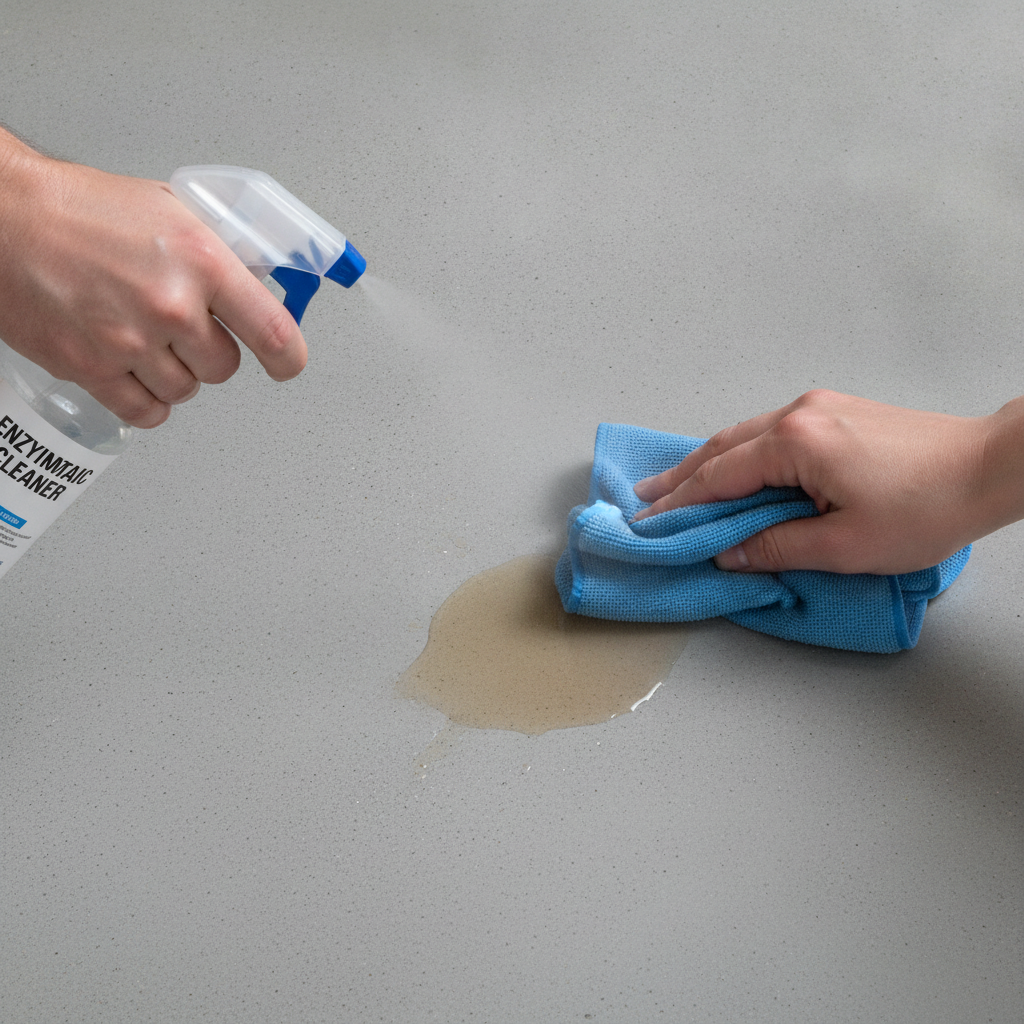
When a pet has an accident, time is of the essence. This immediate action plan is designed to prevent long-term staining and odor.
The First 30 Minutes: Blot and Neutralize
- Blot, Don’t Rub: Immediately soak up as much liquid as possible with paper towels or a clean cloth. Press firmly. Rubbing only spreads the urine deeper into the floor.
- Rinse Lightly: Dampen a clean cloth with water and blot the area again to dilute the remaining urine.
- Apply Enzymatic Cleaner: Generously spray a high-quality enzymatic cleaner on the affected area. Ensure you cover the entire spot and a small margin around it.
The Next 24 Hours: Let the Enzymes Work
- Dwell Time is Key: Do not wipe up the cleaner immediately. Let it sit for at least 10-15 minutes, or as long as the product directs. For deep-set stains, you can cover the area with plastic wrap to keep the cleaner wet and active for several hours.
- Air Dry: Once the dwell time is complete, blot up the excess cleaner and allow the area to air dry completely. The enzymes continue to work as the product evaporates.
To prevent future incidents, The Humane Society of the United States offers extensive resources on house-training and addressing the behavioral causes of accidents[16].
Long-Term Care: Your Maintenance Bible for Pet-Friendly Floors
Choosing and repairing your floor are only parts of the equation. Proactive, long-term maintenance is what will keep it looking beautiful for years. A consistent routine not only saves you from costly repairs but also creates a cleaner, healthier environment for both you and your pets. As one professional floor installer advises, “The single most important thing a pet owner can do is keep their floors free of grit and fur. Regular vacuuming and the right cleaning products do 90% of the work in preserving a floor’s finish.”
The Ultimate Pet Cleaning Toolkit
Having the right tools makes all the difference. Pet owners spend an average of 3 hours per week cleaning their floors; the right equipment can drastically cut that time down.
- Best Vacuum: Look for a model with strong suction and a brushless roller to prevent hair tangles. Canister vacuums or stick vacuums with specialized pet hair attachments are often recommended by sources like the Good Housekeeping Institute[17]. For daily upkeep, a robotic vacuum can reduce cleaning time by up to 70%[19]. The Association of Home Appliance Manufacturers (AHAM) provides performance standards that can help you choose an effective model[20].
- Best Mop: A microfiber mop is ideal for capturing dust, dander, and hair without using excess water.
- Cleaning Solutions: Always use a pH-neutral cleaner recommended for your specific flooring type. For safety, look for non-toxic, pet-safe formulas. Resources like PetMD can provide guidance on ingredients that are safe for pets[18].
Preventative Measures: Your First Line of Defense
The easiest damage to fix is the damage that never happens. These simple strategies are your best defense:
- Mats at Every Door: High-quality doormats can reduce the amount of dirt and debris tracked in by up to 80%, significantly cutting down on abrasive scratches[21].
- Regular Nail Trims: As recommended by the AKC, keeping your dog’s nails short and filed smooth is one of the most effective ways to prevent scratches[7].
- Protective Pads: Place felt pads under all furniture legs to prevent scratches when items are moved.
- Designated Food/Water Area: Use a waterproof mat under your pet’s food and water bowls to contain spills and protect the floor underneath.
Frequently Asked Questions (FAQ)
What is the absolute most durable, pet-proof flooring?
For sheer indestructibility against scratches and water, porcelain tile with a PEI rating of 4 or 5 is the undisputed champion[10]. However, for the best all-around performance that balances durability with pet comfort, traction, and acoustics, many experts recommend a high-quality Luxury Vinyl Plank (LVP) with a wear layer of 20 mil or more[8].
How much does it cost to install pet-friendly flooring?
Costs can vary widely by region and material. As a general guideline, you can expect the following for materials and installation:
- Luxury Vinyl Plank (LVP): $4 – $10 per square foot
- Porcelain Tile: $8 – $20 per square foot
- Hybrid Hardwood: $7 – $15 per square foot
Investing in a durable, pet-friendly floor upfront can save you money in the long run. The average cost to repair pet-related flooring damage can range from $500 to $2,000, making a resilient floor a wise investment[22].
Are there eco-friendly and pet-safe flooring options?
Yes. Many modern flooring options are designed with health and sustainability in mind. Look for products with a FloorScore certification, which indicates they meet strict indoor air quality standards for low volatile organic compounds (VOCs). According to the American Lung Association, reducing VOCs is important for respiratory health in both humans and pets[23]. Materials like cork and bamboo are sustainable options, though their durability with pets can vary. Always choose solid-strand bamboo for better scratch resistance.
Your Path to a Beautiful, Pet-Proof Home
You don’t have to choose between having a happy pet and having a beautiful home. By understanding the real-world challenges your floors will face and arming yourself with the right knowledge, you can select a surface that stands up to the rigors of pet life.
The key is to think beyond a single feature. A truly pet-friendly floor is a system: it’s waterproof to handle accidents, scratch-resistant to endure playtime, easy to clean for daily maintenance, and provides safe traction for your furry friend. Whether you choose the all-around excellence of LVP, the indestructible nature of tile, or the modern innovation of hybrid hardwood, the perfect solution for your home is within reach. With a smart choice upfront and a commitment to proactive care, you can create a space that you, and your pets, will love for years to come.
Feeling confident about your flooring choice? Share your pet-friendly flooring story or ask a question in the comments below!
This article may contain affiliate links. All product recommendations are based on extensive research and expert opinion, but individual results may vary. Consult with a professional installer for specific project needs.
References & Authoritative Sources
- American Pet Products Association. (n.d.). Pet Industry Market Size, Trends & Ownership Statistics.
- ASPCA (American Society for the Prevention of Cruelty to Animals). (n.d.). Common Dog Behavior Issues.
- National Wood Flooring Association (NWFA). (n.d.). Industry Standards and Maintenance Guidelines.
- Shakhashiri, B. Z. (n.d.). Uric Acid. Chemical of the Week. University of Wisconsin-Madison Chemistry Department.
- Industry Data on Cleaning Product Efficacy. (n.d.). Reports on the success rate of enzymatic cleaners.
- Environmental Protection Agency (EPA). (n.d.). Indoor Air Quality Resources.
- American Kennel Club (AKC). (n.d.). Pet-Friendly Home Improvements & Dog Grooming Guides.
- Resilient Flooring Industry Data. (n.d.). Wear Layer Standards for Residential and Commercial Use.
- Resilient Floor Covering Institute (RFCI). (n.d.). Industry Standards for Vinyl Flooring.
- Porcelain Enamel Institute. (n.d.). PEI Rating System for Tile Abrasion Resistance.
- Tile Council of North America (TCNA). (n.d.). Standards and Publications.
- The Janka Hardness Scale for Wood Flooring. (n.d.). Industry standard measurement for wood hardness.
- Bona. (n.d.). Expert Advice on Hardwood Floor Care.
- FloorCritics. (n.d.). Flooring Product Reviews and Guides.
- This Old House. (n.d.). Home Improvement and Repair Tutorials.
- The Humane Society of the United States. (n.d.). House Training Resources.
- Good Housekeeping Institute. (n.d.). Product Reviews and Cleaning Advice.
- PetMD. (n.d.). Pet Health and Safety Information.
- Home Appliance Industry Survey. (n.d.). Consumer Cleaning Habits and Time-Saving Technologies.
- Association of Home Appliance Manufacturers (AHAM). (n.d.). Performance Standards.
- Cleaning and Maintenance Management. (n.d.). Industry Studies on Debris Reduction at Building Entrances.
- Homeowner Insurance and Repair Data. (n.d.). Analysis of Common Pet-Related Damage Claims.
- American Lung Association. (n.d.). Flooring and Indoor Air Quality.
