
Let’s set the record straight: the “100% pet-proof floor” is a marketing myth. If you are a homeowner with an active dog, you have likely found yourself drowning in a sea of confusing flooring terminology, desperately trying to avoid costly buyer’s remorse. The core problem? Manufacturers frequently conflate “waterproof” with “scratch-proof.” A floor that can survive a spilled water bowl might still be shredded by the zoomies of a sixty-pound Golden Retriever.
Welcome to the science-backed playbook for pet-friendly flooring. In this comprehensive guide, we are moving beyond the marketing fluff to deliver a strategy based on matching flooring materials to your specific “Pet Personality.” We will balance your desire for premium aesthetics—like the look and feel of real wood—with the brutal realities of dog claws, accidents, and joint health. We will take a deep dive into the highly debated Bravewood hybrid hardwood, compare it against the toughest alternatives on the market, and provide an actionable triage guide for repairing the pet damaged flooring you might already have.
- The Myth of “Pet-Proof”: Understanding the Science of Durability
- Deep Dive: Is Bravewood Hybrid Hardwood Good for Dogs?
- The Best Scratch-Resistant Flooring for Pets: A Material Showdown
- Triage and Repair: Fixing Scratched and Pet-Damaged Flooring
The Myth of “Pet-Proof”: Understanding the Science of Durability
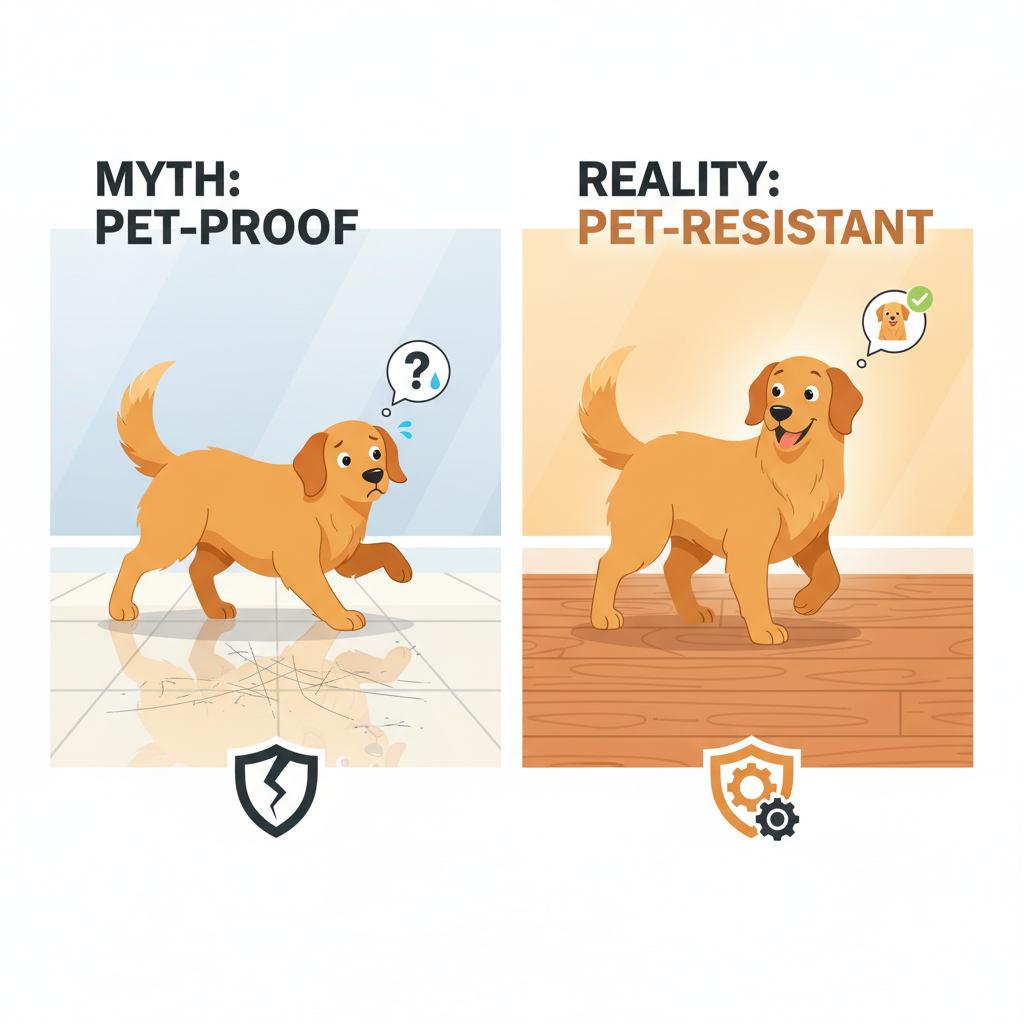
To make an informed investment, we must first redefine our expectations. Instead of chasing “pet-proof flooring options,” shoppers should be looking for materials that are highly pet-resistant. Understanding the science of flooring durability is the only way to see past the glossy brochures.
A critical, yet often overlooked, element of pet friendly flooring is traction. While a high-gloss, ultra-hard floor might resist scratches, it can be a nightmare for your dog’s mobility. According to the American Veterinary Medical Association (AVMA), providing adequate traction is essential for senior dogs to prevent debilitating slip-and-fall joint injuries [1]. A floor that is too slick forces dogs to splay their toes and dig their nails in for balance, which ironically causes more scratching.
Furthermore, you must separate moisture resistance from physical hardness. As detailed in comprehensive category breakdowns by flooring authorities like Giant Floor NEPA Flooring, a product can be 100% waterproof (meaning it won’t swell or warp when exposed to liquid) but still have a soft wear layer that scratches easily under the weight of a dog [2].
The Metrics That Matter: Janka Scale, AC Ratings, and Wear Layers
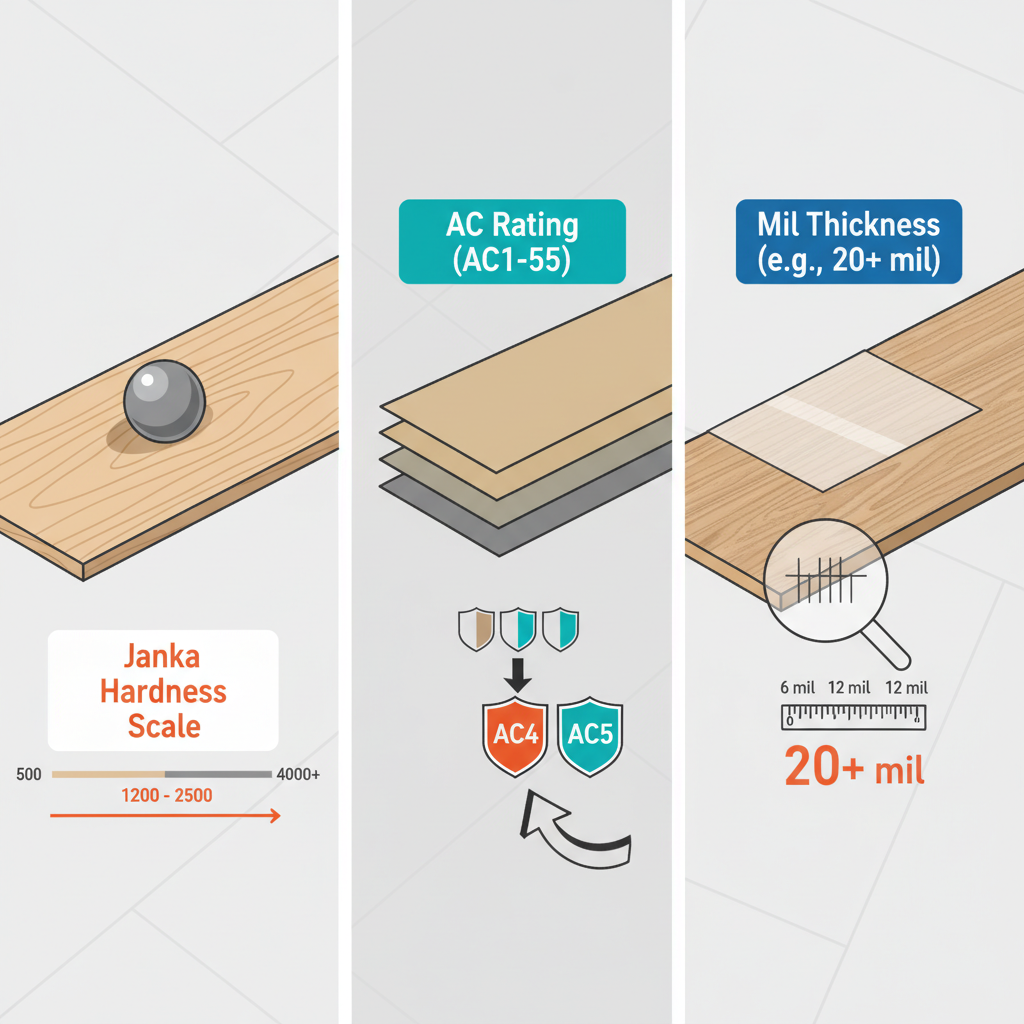
When hunting for scratch resistant pet flooring, ignore the adjectives on the box and look directly at the technical specifications. There are three primary metrics you need to understand:
- Mil Thickness (For Luxury Vinyl Plank): The durability of LVP is dictated by its clear urethane wear layer, measured in “mils” (one-thousandth of an inch, not millimeters). For a household with pets, a 12 mil wear layer is the absolute minimum. However, for large or highly active dogs, upgrading to a 20+ mil wear layer is strongly recommended.
- AC Ratings (For Laminate): Laminate flooring durability is measured by an Abrasion Class (AC) rating, spanning from AC1 to AC5. For optimal pet resistance, you must look for an AC4 or AC5 rating, which indicates commercial-grade scratch resistance, as noted by technical specifications provided by McMillan Floors [3].
- The Janka Hardness Scale (For Wood): This scale measures the resistance of a wood species to denting and wear by tracking the force required to embed a steel ball halfway into the wood. The higher the number, the harder the wood. For example, Douglas Fir is a soft 660, while Brazilian Walnut is a staggering 3684.
Deep Dive: Is Bravewood Hybrid Hardwood Good for Dogs?
Bravewood flooring has generated significant buzz as a premium solution for homeowners who want authentic wood aesthetics without the fragility of traditional solid hardwood. But how does it actually hold up to life with pets?
To answer the question, “is Bravewood hybrid hardwood good for dogs?”, we must examine its specific construction. First, it is important to establish that hybrid hardwood floors are not fake wood. The National Wood Flooring Association (NWFA) officially classifies hybrid floors featuring a real wood top layer as authentic wood flooring [4]. According to TAS Flooring’s official specifications, the Bravewood collection features a 12mm overall thickness, which includes a 1.5mm attached IXPE pad for sound dampening, and a 0.6mm real Birch wood veneer on top [5].
What is Durable Hybrid Hardwood? (The Anatomy of a Plank)
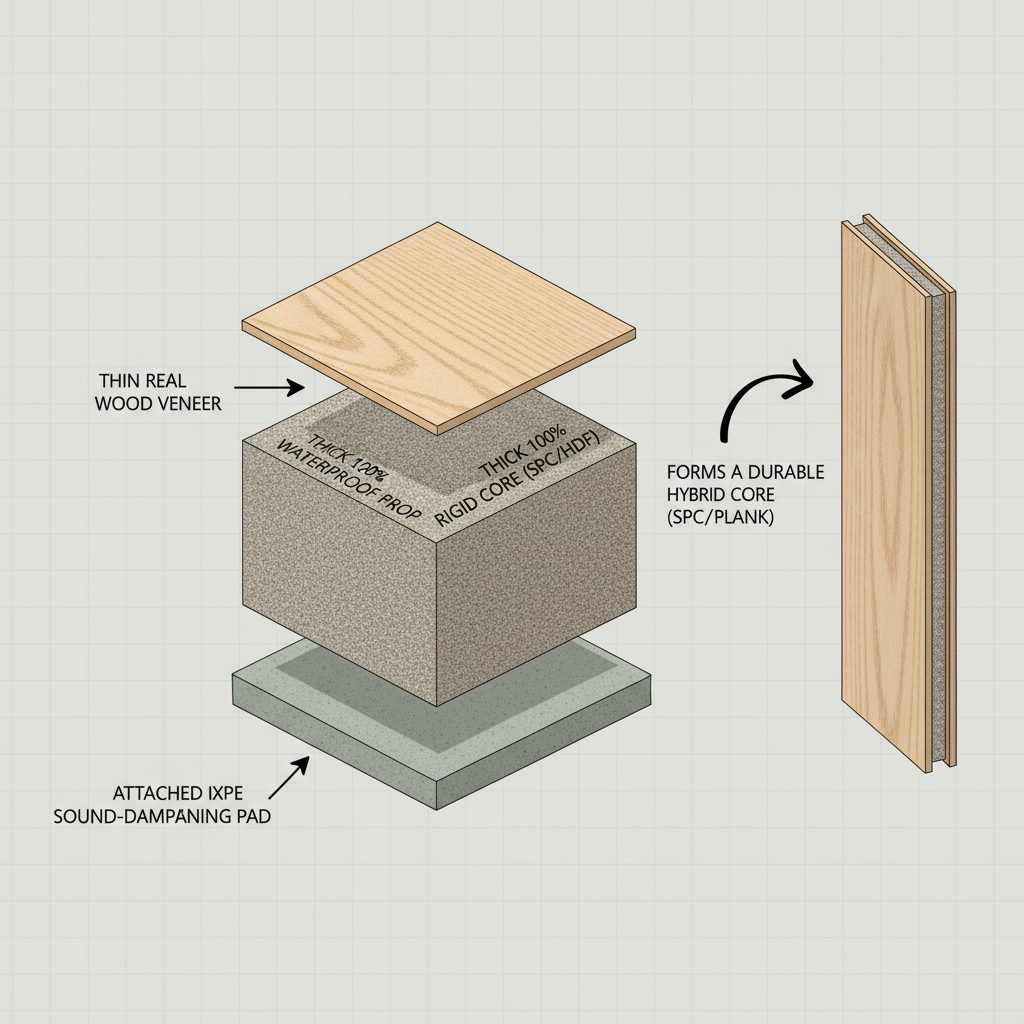
To understand how Bravewood performs, you have to understand the anatomy of durable hybrid hardwood. Traditional engineered hardwood glues a wood veneer to a plywood core. Hybrid hardwood, however, bonds a real wood veneer to a 100% waterproof rigid core, typically made of Stone Polymer Composite (SPC) or High-Density Fiberboard (HDF).
This rigid core is the secret weapon. As highlighted by industry insights from Floor Covering News, the physics of a dense SPC core actually prevents the thin wood veneer on top from denting upon impact [6]. The core absorbs the shock that would normally crush the cellular structure of solid wood.
However, there is a crucial trade-off. Because the real wood veneer on hybrid flooring is ultra-thin (in Bravewood’s case, 0.6mm, and generally 1.2mm or less across the industry), these floors are lifetime products that cannot be sanded or refinished. If a deep gouge occurs, the plank must be replaced.
The Verdict on Bravewood for Active Pets: Expectation Management
So, is Bravewood hybrid hardwood good for dogs? The answer requires honest expectation management.
Bravewood features excellent topical waterproofing, meaning it will easily survive pet accidents, drool, and spilled water bowls without the core swelling. However, its top layer is made of Birch. On the Janka Hardness Scale, Birch sits around 1260. Contrast this with a harder species like Hickory (1820), and the scratch risk becomes scientifically clear.
While the rigid core prevents deep dents from dropped objects, the 0.6mm Birch veneer itself is susceptible to surface-level scratches from the sharp, concentrated pressure of a dog’s nails. Therefore, Bravewood is an exceptional choice for households with small dogs, cats, or calm senior pets who need a comfortable, warm surface. But for high-energy, large-breed dogs prone to indoor zoomies, the Birch veneer will inevitably show wear and tear.
The Best Scratch-Resistant Flooring for Pets: A Material Showdown
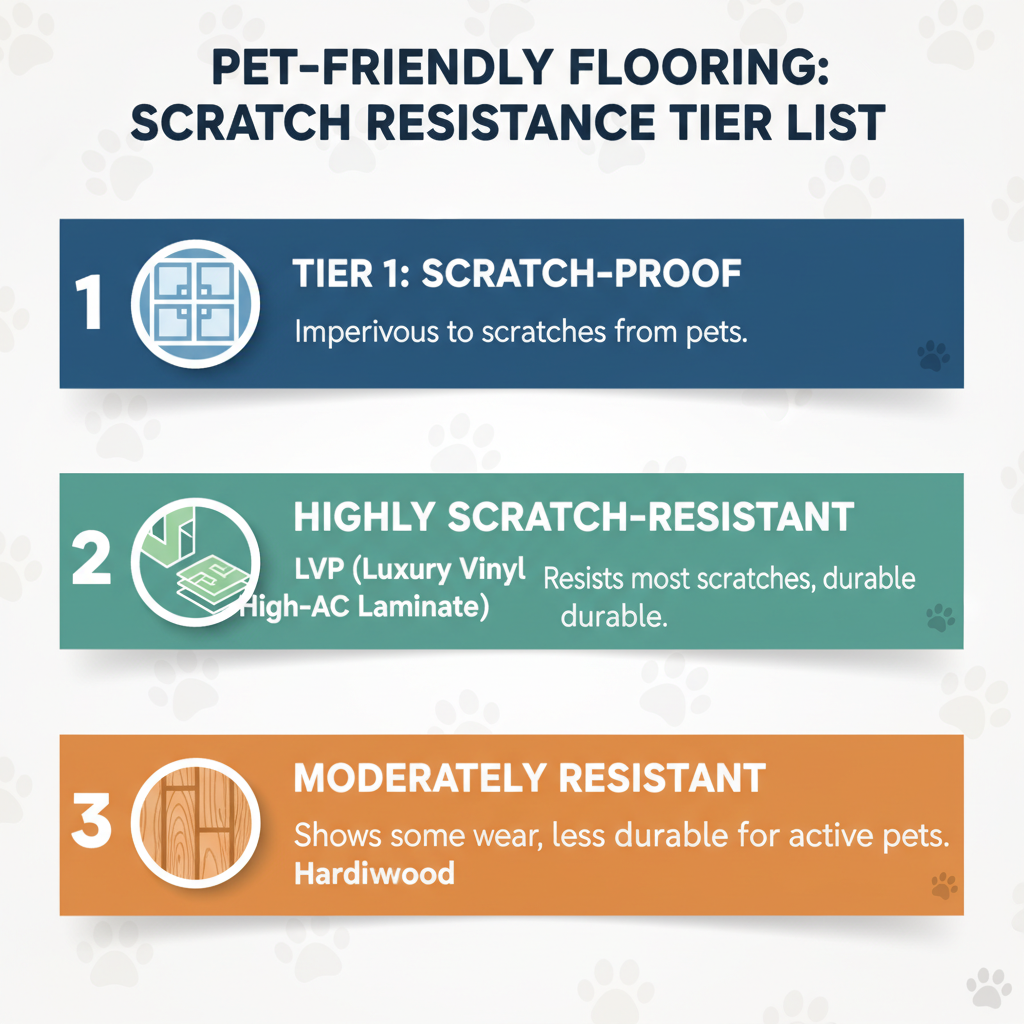
If Bravewood’s Birch veneer is too soft for your pack, you need alternatives. When shopping for the best scratch resistant flooring for pets, it helps to consult a “Scratch Resistance Tier List” based on your Pet Personality:
- Tier 1: Scratch-Proof (Porcelain Tile). Impervious to claws, but cold and hard on senior dog joints.
- Tier 2: Highly Scratch-Resistant (LVP and High-AC Laminate). The best balance of durability, cost, and pet comfort.
- Tier 3: Moderately Resistant (Densified Wood, Bamboo, Hardwood). For purists who demand natural materials but are willing to manage minor wear.
Luxury Vinyl Plank (LVP) vs. Laminate: The Heavyweight Bout
For the vast majority of pet owners seeking scratch resistant pet flooring, the decision comes down to LVP versus Laminate. This is a heavyweight bout of competing benefits.
Luxury Vinyl Plank is 100% waterproof from top to bottom. It also features excellent acoustic properties; when paired with an attached underlayment pad, it significantly dampens the annoying “click-clack” sound of dog nails.
Laminate, on the other hand, often boasts a harder, more scratch-resistant surface (thanks to aluminum oxide coatings) than LVP. However, traditional laminate is notoriously vulnerable to moisture. Fortunately, modern innovations have leveled the playing field. As noted by McMillan Floors, premium modern laminates now offer topical water resistance for up to 300 hours, making them more than capable of handling standard pet accidents if cleaned up reasonably fast [3]. If your primary concern is deep scratches from a heavy dog, AC5 Laminate slightly edges out LVP. If your primary concern is frequent, undetected urine accidents, LVP wins.
Densified Wood: Durable Hardwood Floors for Dogs and Cats
What if you absolutely refuse to compromise on real wood, but have destructive pets? Enter densified wood—the ultimate durable hardwood floors for dogs and cats.
Densified wood utilizes a manufacturing process involving extreme heat and pressure to physically alter the cellular structure of natural wood, compressing it and drastically increasing its density. A prime example of this technology is Hartco Floors’ Dogwood Pro line, which is engineered to be 4X more scratch resistant and 6X more dent resistant than typical hardwood [7].
The data backing this up is staggering. Through the densification process, the Janka rating of standard Oak skyrockets from a modest 1360 to over 3000, putting it on par with exotic Brazilian hardwoods. It offers the authentic beauty and refinishing capabilities of solid wood, with a localized hardness that can actually withstand a Golden Retriever’s claws.
Triage and Repair: Fixing Scratched and Pet-Damaged Flooring
Perhaps you aren’t shopping for new floors; perhaps you are desperately trying to save the ones you have. Dealing with scratched hardwood floors from dogs or severe pet damaged flooring requires a calm, tiered triage approach.
Before panicking, use this “Repair vs. Replace” decision tree based on the square footage and depth of the damage:
- Surface Scuffs (Clear coat only): DIY repair with paste wax, blend sticks, and preventative care.
- Deep Gouges (Raw wood exposed, localized to a few boards): Professional board replacement or localized wood filler and stain matching.
- Widespread Black Stains or Warping: Full room professional refinishing or complete floor replacement.
Life Support for Easily Scratched Wood Floors
If you have inherited easily scratched wood floors (like soft Pine or an older, degraded polyurethane finish), your focus must be on preventative maintenance and minor aesthetic fixes.
First, address the mechanical cause of micro-scratches. It isn’t always just the dog’s nails; it is often small debris and grit brought in from outside that acts like sandpaper under your dog’s paws. Frequent sweeping and the use of felt pads under furniture are mandatory.
Second, protect the chemical integrity of your floor’s finish. Premium wood floor manufacturers like Ted Todd Fine Wood Floors emphasize the critical importance of using only pH-neutral cleaners [8]. Harsh chemicals strip the protective clear coat, leaving the soft raw wood highly vulnerable to your pet’s claws. For light surface scuffs, matching a tinted paste wax to your floor’s sheen (gloss vs. matte) can effectively render scratches invisible without the need for sanding.
The Reality of Pet Urine Damage: Why Sanding Won’t Work
Scratches are frustrating, but pet urine is destructive. If you are dealing with deep, black stains on your hardwood, you are facing severe pet damaged flooring.
Many DIY blogs falsely claim you can simply bleach or sand out these black spots. This sets homeowners up for failure because it ignores the chemistry of the damage. Pet urine contains high levels of ammonia. When urine seeps through the floor’s finish and into the raw wood, the ammonia triggers a chemical reaction with the natural tannins present in the wood (especially high-tannin woods like Oak). This reaction literally burns the wood fibers black from the inside out. Because the stain penetrates deep into the cellular structure of the plank, surface sanding will not remove it.
In these cases, you must face realistic repair costs. According to data from industry professionals like Carpet Warehouse and U.S. Wood Floor Corp, localized hardwood board replacement and spot refinishing typically costs between $200 and $600 [9] [10]. However, if the ammonia seepage is widespread, a full room refinishing can easily run up to $2,000. If the subfloor is also saturated, full replacement is the only hygienic option.
Evaluate your dog’s activity level and weight, then order physical samples of Bravewood, LVP, and Laminate to conduct your own at-home “key scratch test” before making a final investment. No floor is truly indestructible, but by matching the material’s scientific capabilities to your pet’s personality, you can achieve a beautiful home that withstands the beautiful chaos of living with animals.
Product specifications, including veneer thicknesses and warranties, are subject to change by the manufacturer. Always consult specific brand warranties regarding pet damage exclusions.
References
- American Veterinary Medical Association (AVMA). (N.D.). Retrieved from authoritative guidelines on pet joint health and indoor traction requirements for senior dogs.
- Giant Floor NEPA Flooring. (N.D.). Retrieved from comprehensive breakdowns of modern flooring categories and waterproof versus scratch-proof distinctions.
- McMillan Floors. (N.D.). Retrieved from technical specifications detailing 300-hour water resistance in modern laminates and AC/wear layer requirements.
- National Wood Flooring Association (NWFA). (N.D.). Retrieved from industry standards and classifications approving hybrid floors as authentic wood flooring.
- TAS Flooring. (N.D.). Bravewood Collection Specifications. Retrieved from official manufacturer specifications detailing 12mm thickness, 1.5mm IXPE pad, and 0.6mm Birch veneer.
- Floor Covering News. (N.D.). Retrieved from industry publications explaining the physics of SPC rigid cores preventing denting in hybrid veneers.
- Hartco Floors. (N.D.). Dogwood Pro Densified Wood Technology. Retrieved from manufacturer data detailing 4X scratch resistance, 6X dent resistance, and Janka rating increases.
- Ted Todd Fine Wood Floors. (N.D.). Retrieved from expert maintenance guidelines on the necessity of pH-neutral cleaners for protecting wood finishes.
- Carpet Warehouse. (N.D.). Retrieved from localized cost breakdowns for professional flooring and carpet repairs.
- U.S. Wood Floor Corp. (N.D.). Retrieved from professional floor refinisher insights on the costs and realities of severe pet urine damage and board replacement.
