
Every dog owner knows the familiar, anxiety-inducing sound: the rapid click-clack of paws scrambling across the hallway, followed by the inevitable discovery of fresh scratches or a hidden puddle. Trying to maintain a beautiful, magazine-worthy home while accommodating a large, active dog often feels like an unwinnable battle. For decades, the flooring industry has marketed the myth of the 100% “pet-proof” floor, leaving consumers overwhelmed by conflicting claims and confusing technical jargon.
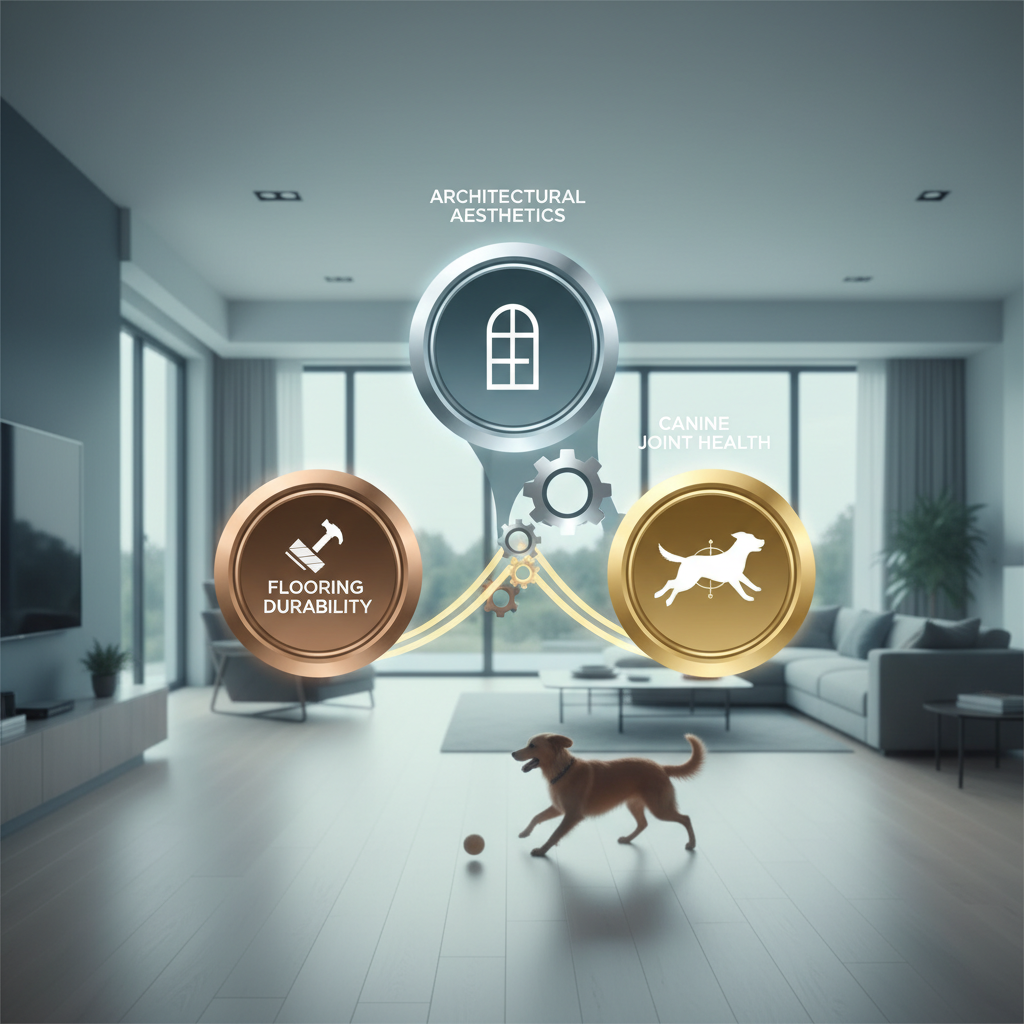
It is time to move beyond the marketing fluff. This guide presents the Ultimate Pet Flooring Matrix—a scientifically-backed approach that balances architectural aesthetics with canine joint health. By decoding industry durability metrics, we will help you protect both your home’s value and your pet’s well-being. In this comprehensive breakdown, we will evaluate top material categories, conduct a deep-dive review to see if Bravewood Hybrid Hardwood lives up to the hype, explore the best alternatives, and provide a professional damage triage guide for the wear and tear you already have.
- The Pet-Friendly Flooring Matrix: Decoding Durability for Dogs
- Deep Dive: Is Bravewood Hybrid Hardwood Pet Friendly?
- Top Alternatives: The Best Hardwood Floors for Dogs
- Durable Pet Floors: LVP, Laminate, and Rigid Core (SPC)
- Damage Triage: Repairing Scratched and Pet-Damaged Flooring
- Prevention Over Repair: Protecting Your Floors and Your Pet
- References & Authoritative Sources
The Pet-Friendly Flooring Matrix: Decoding Durability for Dogs
When searching for pet friendly flooring, most homeowners ask, “What is the overall best flooring for dogs?” The answer requires moving beyond basic top-ten lists and understanding the actual science of flooring wear and tear. To find truly durable pet floors, you must evaluate materials based on objective industry criteria rather than subjective marketing labels.
Scratch Resistance vs. Dent Resistance: Knowing the Difference
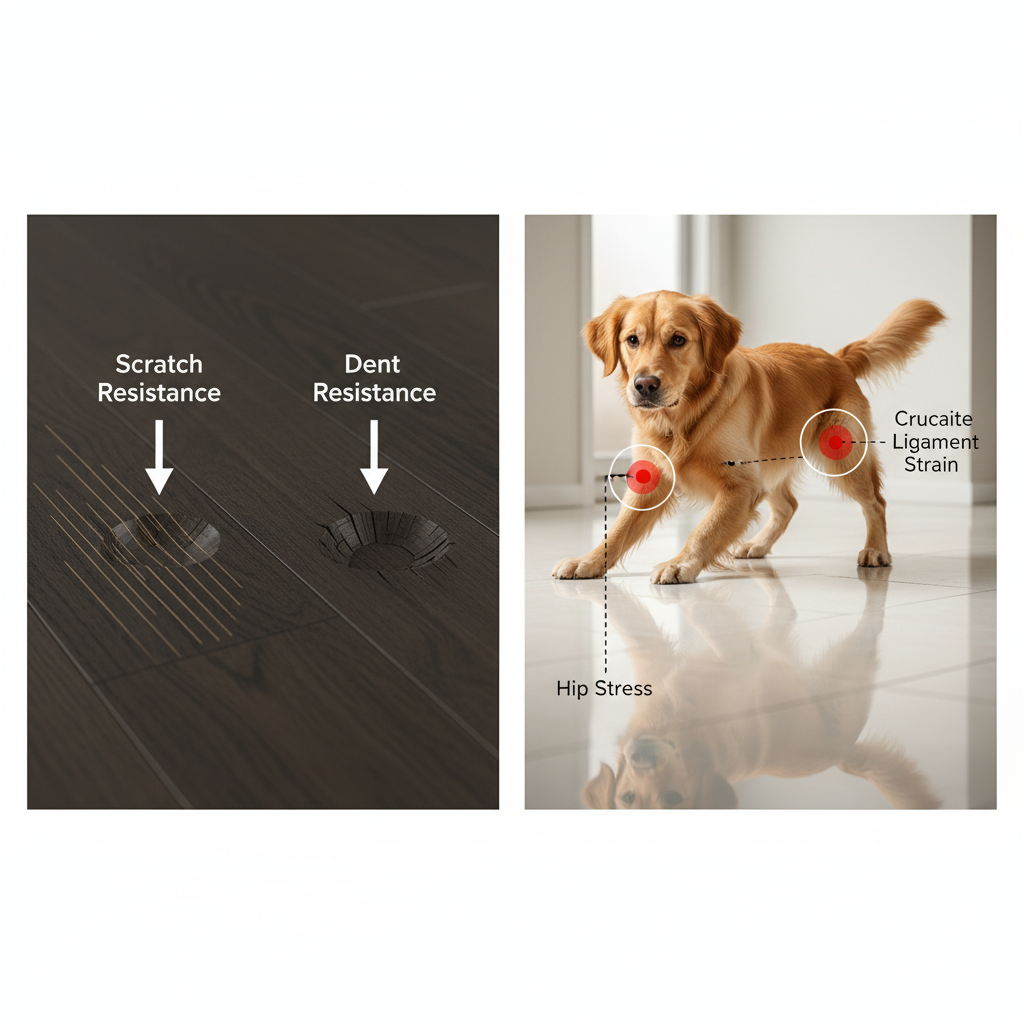
A common mistake homeowners make is assuming that scratch resistant flooring is impervious to all pet damage. In reality, there is a distinct physical difference between scratch resistance and dent (or impact) resistance. Scratch resistance refers to the floor’s ability to withstand the sharp, abrasive friction of dog claws. Dent resistance, however, measures how well the floor holds up against the blunt force impact of a heavy dog jumping off a sofa or a dense bone being dropped.
To objectively measure these factors, the flooring industry relies on specific metrics. For natural wood, the standard is the Janka hardness scale, which measures the force required to embed a steel ball halfway into the wood [1]. For manufactured floors like luxury vinyl or laminate, durability is dictated by the wear layer thickness, measured in “mils” (thousandths of an inch). Licensed flooring contractors consistently note that for homes with multiple large dogs, a wear layer of at least 20 mil is the baseline for ensuring a long-term, callback-free lifespan [2].
The Hidden Factor: Canine Ergonomics & Joint Health
While homeowners are understandably focused on protecting their floors, a critical content gap in most flooring advice is the failure to protect the pet. When asking, “What flooring provides the best traction for older dogs?” we must look at canine ergonomics.
Hard, ultra-smooth, slippery floors are detrimental to canine joint health. When dogs feel themselves slipping, their natural anatomical response is to splay their toes and dig their claws in harder to gain purchase. This not only causes severe micro-scratches on your floor but also places immense stress on the dog’s hips and cruciate ligaments. The American Veterinary Medical Association (AVMA) highlights that slippery environmental factors can severely exacerbate osteoarthritis and joint injuries in aging dogs [3]. As many veterinarians point out, providing adequate floor traction is a vital component of proactive canine joint care [4]. The ideal floor balances a tough wear layer with a subtle surface texture to provide grip.
Deep Dive: Is Bravewood Hybrid Hardwood Pet Friendly?
For homeowners seeking the aesthetic prestige of wood with the resilience of synthetic materials, Bravewood hybrid hardwood has emerged as a highly specific, bottom-of-funnel contender. But is Bravewood hybrid hardwood pet friendly, or is it just clever marketing?
Manufactured and distributed by T&A Supply, Bravewood is engineered to bridge the gap between natural beauty and extreme durability. A close look at its construction layers reveals a 12mm overall thickness, a 1.5mm IXPE attached pad, and a specialized AC4 Rated Antimicrobial surface finish [5].
Translating Technical Specs to Pet Benefits
What do these specifications actually mean for a home with a Golden Retriever or a German Shepherd? The AC4 rating is the key to its status as a premier scratch resistant wood flooring for pets. The AC (Abrasion Class) rating is a stringent European standard (EN 13329) used to objectively grade laminate and hybrid wear layers [6]. An AC4 rating designates a floor suitable for “commercial traffic,” meaning it is scientifically tested to withstand the repetitive, high-friction abrasion that large dog claws produce.
Furthermore, the 1.5mm IXPE (Irradiated Cross-Linked Polyethylene) attached pad solves a major behavioral pain point: noise. Does the attached pad help with pet noise? Absolutely. The dense, acoustic-dampening properties of the IXPE layer absorb the hollow, echoing “click-clack” sound of dog nails that drives many homeowners crazy, creating a quieter, more serene environment.
Waterproofing and Antimicrobial Hygiene
Pet accidents are an unavoidable reality. Bravewood hybrid hardwood addresses this by being highly water-resistant, protecting the structural core against urine accidents and overflowing water bowl spills. Beyond moisture protection, T&A Supply highlights the floor’s Antimicrobial surface finish [5]. In a pet-friendly home, this is a crucial hygiene feature. The antimicrobial treatment inhibits the growth of bacteria and mold associated with pet dander, drool, and inevitable accidents, ensuring that your pet friendly flooring contributes to a healthier overall indoor air quality.
Top Alternatives: The Best Hardwood Floors for Dogs
For purists who refuse to install anything but authentic wood, finding the best hardwood floors for dogs requires strategic compromises. While no natural wood is entirely impervious to a determined dog, certain species and manufacturing techniques offer vastly superior protection. Red Oak, with a Janka rating of 1290, is generally considered the absolute minimum baseline for homes with pets [1]. However, for large breeds, standard oak or hickory often isn’t enough.
Densified Wood & Engineered Solutions
If you are asking, “Is engineered or solid hardwood better for dogs?” the modern answer leans heavily toward high-quality engineered solutions. Traditional solid hardwood relies entirely on its natural Janka density. Engineered hardwood, however, can be fortified.
For optimal performance, a scratch resistant wood flooring for pets should be an engineered plank featuring a wear layer of at least 2mm, topped with a factory-applied aluminum oxide or ceramic coating. Aluminum oxide is one of the hardest minerals on earth, and when baked into the wood’s finish, it acts as an invisible shield against claws. Innovations like Bruce Flooring’s “Dogwood” technology have introduced densified wood to the market—a process that uses heat and pressure to compress the wood fibers, making it significantly harder and virtually dog-proof compared to its natural state [7]. Real-world contractor insights confirm that these engineered, aluminum-oxide-coated floors dramatically outperform traditional polyurethane-finished solid wood in homes with heavy pet traffic [2].
The ‘Camouflage Strategy’: Choosing the Right Finish
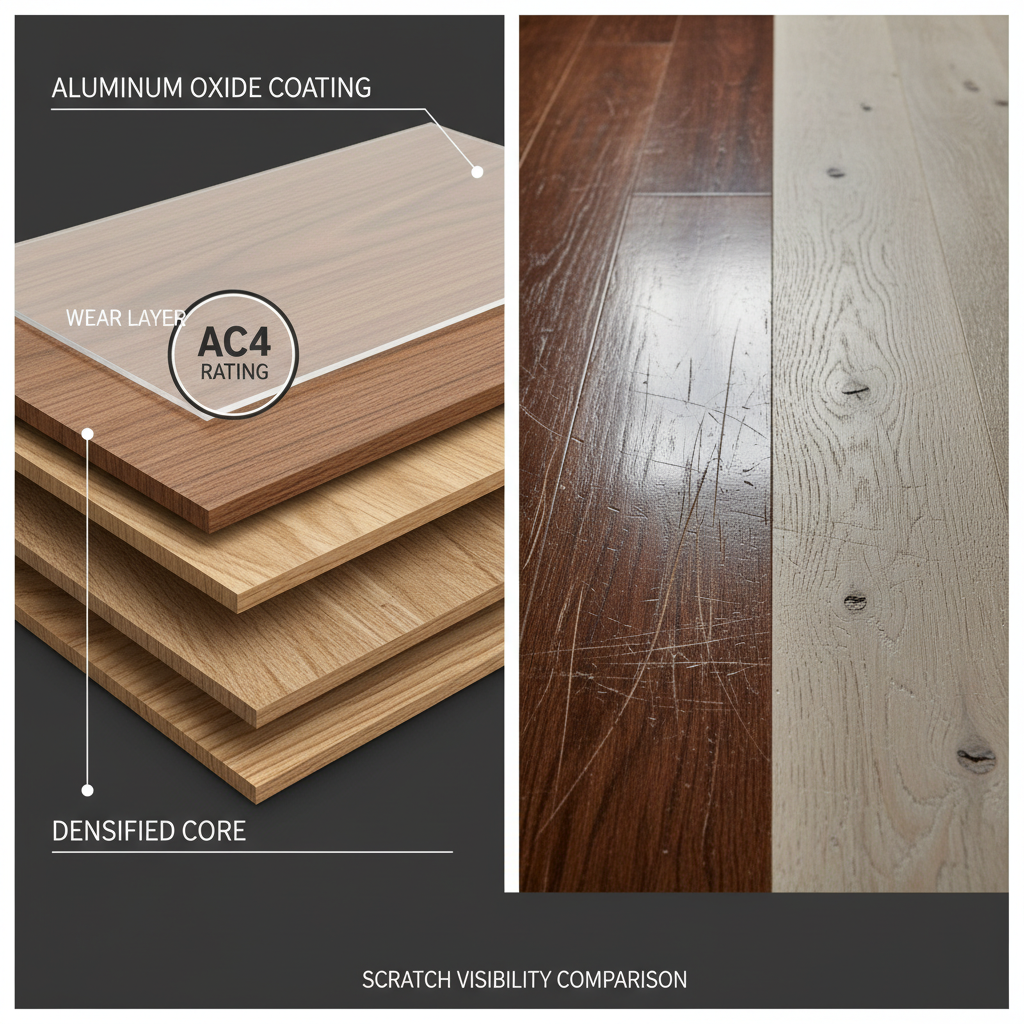
The secret to truly pet proof hardwood floors isn’t just chemical finishes; it’s optical physics. Because no wood is 100% scratch-proof, the most effective defense is the “Camouflage Strategy.”
What finish is best for preventing dog scratches from being seen? High-gloss finishes act like mirrors, catching the light and highlighting every single micro-scratch and smudge. Conversely, matte and satin finishes diffuse light, making surface imperfections nearly invisible. Furthermore, experts at Robbins Flooring emphasize that physical texture is your best friend [8]. Choosing wire-brushed, hand-scraped, or distressed finishes with heavy natural graining (like Hickory or White Oak) allows inevitable dents and scratches to blend seamlessly into the floor’s rustic character, rather than ruining a perfectly smooth, glossy surface.
Durable Pet Floors: LVP, Laminate, and Rigid Core (SPC)
If you are weighing different material categories and asking, “What is the absolute most scratch-resistant flooring?” it helps to look at a ranked hierarchy: Concrete > Tile > LVP > Laminate > Hardwood.
While polished concrete is virtually indestructible, industry experts warn of the trade-offs: concrete is exceptionally cold and unforgivingly hard on older dogs’ joints [9]. Therefore, for the best balance of comfort and extreme resilience, durable pet floors usually fall into the luxury vinyl or high-AC laminate categories.
Why Rigid Core (SPC) Luxury Vinyl Wins for Heavy Pets
When comparing vinyl options, consumers often ask, “Is luxury vinyl or laminate better for pets?” and “Does dog pee ruin luxury vinyl plank?” The answer lies in the core technology.
Modern luxury vinyl is divided primarily into WPC (Wood Plastic Composite) and SPC (Stone Plastic Composite). While WPC is comfortable, SPC rigid core is the ultimate durable pet flooring. Leading innovators like COREtec utilize a limestone-based SPC core that is 100% waterproof and incredibly dense [10]. This means it will not swell, warp, or buckle even if a pet urine puddle sits unnoticed for hours. The stone-composite core also provides superior dent resistance against heavy dogs jumping, making SPC rigid core the undisputed champion for high-traffic, multi-pet households.
Damage Triage: Repairing Scratched and Pet-Damaged Flooring
Even with the best preventative measures, accidents happen. If you are staring at scratched hardwood floors or torn-up corners, you need a damage triage guide to determine whether you can execute a DIY fix or if you need to call a professional.
Diagnosing and Fixing Dog Claw Floor Scratches
The first step in repairing scratched hardwood floors is diagnosing the depth of the damage. Is the scratch a white, superficial scuff in the clear protective finish, or has it penetrated deeply into the colored wood grain?
According to restoration experts at Ted Todd Fine Wood Floors, superficial finish scratches can often be remedied without a full sanding [11]. Minor scuffs can be hidden using wax fill sticks or a specialized stain pen. For slightly deeper clear-coat scratches, you can use a technique called “feathering,” where a small amount of water-based polyurethane is carefully blended over the scratch to restore the protective seal. However, if the scratch has gouged deeply into the raw wood, exposing splintered fibers, professional spot-sanding or board replacement is required.
The Harsh Truth About Pet Urine Stains
When dealing with severe pet damaged flooring, the most common and devastating issue is the black pet urine stain. Many DIY blogs falsely claim you can simply sand these dark spots out.
The harsh truth is that black urine stains are not surface dirt; they are deep chemical burns. When pet urine seeps into unsealed wood, the highly alkaline ammonia reacts violently with the natural tannic acids (tannins) present in woods like oak. This chemical reaction essentially “burns” the wood fibers all the way through the board. Structural restoration experts at U.S. Wood Floor Corp confirm that sanding will not fix an ammonia burn [12]. The only true remedy for this level of severe, structural pet damage is complete board replacement.
Prevention Over Repair: Protecting Your Floors and Your Pet
Ultimately, the best way to handle dog claw floor scratches is to prevent them from happening by addressing the root cause: the dog’s anatomy and environment. Why does your dog scratch the floor when walking? Usually, it is because their nails are too long or they lack traction.
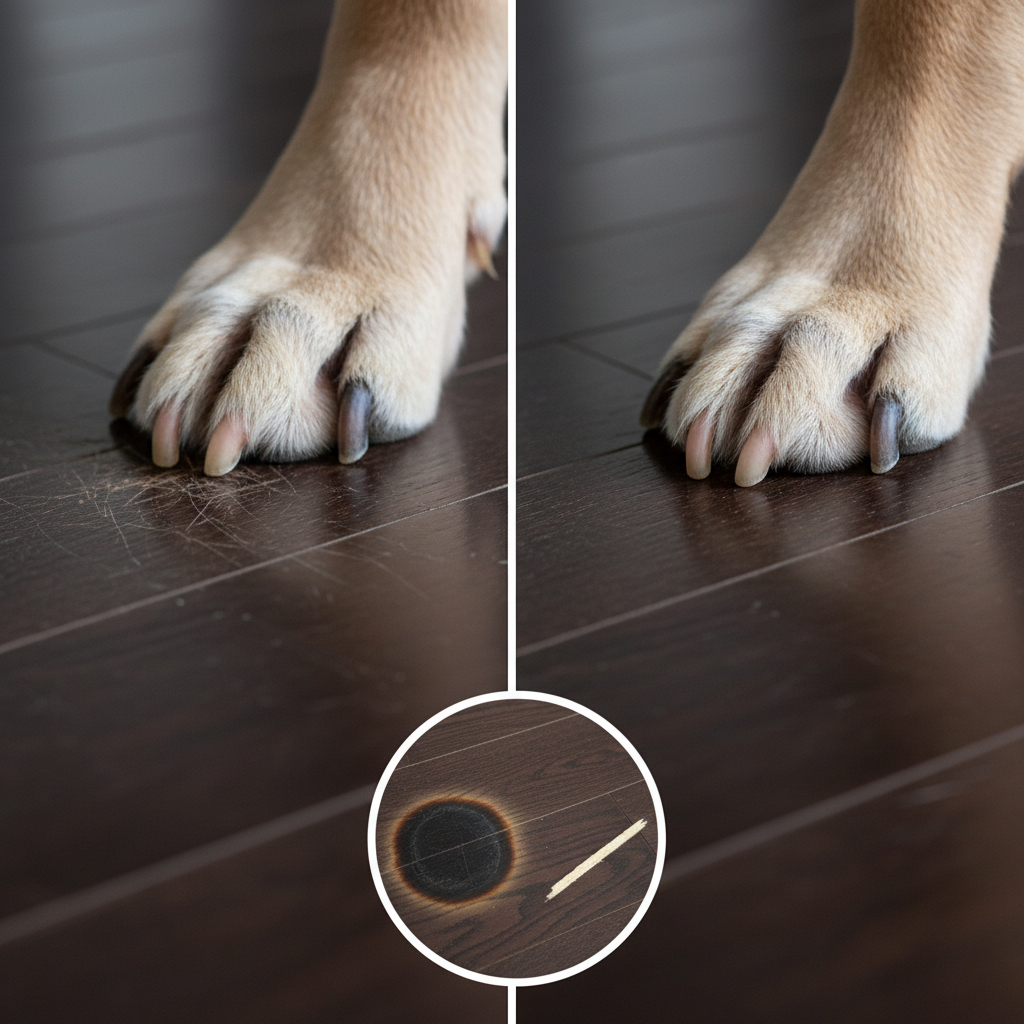
Veterinary best practices dictate strict nail maintenance. According to PetMD, a dog’s nails should not click on the floor when they are standing naturally [4]. If you hear the click, the nails are too long, altering the dog’s gait and turning their paws into floor-destroying cleats. Transitioning from traditional clippers to a rotary nail grinder allows you to smooth the sharp edges of the nail, drastically reducing floor damage. Additionally, environmental management is key. Strategic placement of runner rugs in high-traffic hallways and the application of pet-safe paw wax can provide the traction your dog desperately needs, preventing the slipping and sliding that ruins floors and injures joints.
Conclusion
Navigating the world of pet-friendly flooring doesn’t have to be a gamble. By applying the Ultimate Pet Flooring Matrix, you can look past the marketing jargon and make a scientifically informed decision. While no floor is entirely indestructible, options like Bravewood Hybrid Hardwood and rigid core SPC luxury vinyl offer the absolute best balance of 100% waterproofing, AC4-level scratch resistance, and aesthetic appeal. For those committed to natural wood, utilizing densified technologies and the “camouflage strategy” of matte, wire-brushed finishes will keep your home looking beautiful for years.
Remember, protecting your floors goes hand-in-hand with protecting your pet’s joint health. We highly encourage you to order a sample of Bravewood Hybrid Hardwood or consult with a local flooring professional to test these premium materials against the specific needs of your four-legged family members.
Disclaimer: The information provided regarding pet health and joint ergonomics is for educational purposes and should not replace professional veterinary advice. Flooring durability claims are based on manufacturer specifications and industry standards.
References & Authoritative Sources
- National Wood Flooring Association (NWFA). (N.D.). Janka Hardness Scale Standards. Retrieved from NWFA industry guidelines.
- Block Renovation. (N.D.). Real-world contractor insights on engineered scratch resistance and floor lifespans. Retrieved from Block Renovation.
- American Veterinary Medical Association (AVMA). (N.D.). Guidelines on pet joint health and the impact of slippery environmental factors. Retrieved from AVMA.
- PetMD. (N.D.). Veterinary best practices for proper dog nail care, grooming routines, and pet anatomy. Retrieved from PetMD.
- T&A Supply. (N.D.). Bravewood Collection Product Specifications and Warranties. Retrieved from T&A Supply.
- European Standard EN 13329. (N.D.). Laminate floor coverings – Elements with a surface layer based on aminoplastic thermosetting resins – Specifications, requirements and test methods (AC Ratings).
- Bruce Flooring. (N.D.). Densified ‘Dogwood’ Technology and Engineered Scratch Resistance Data. Retrieved from Bruce Flooring.
- Robbins Flooring. (N.D.). Expert insights on wood graining, physical texture, and camouflage for floor damage. Retrieved from Robbins Flooring.
- Orange County Decorative Concrete. (N.D.). Industry expertise on the durability and application of concrete as a scratch-resistant surface. Retrieved from Orange County Decorative Concrete.
- COREtec. (N.D.). Innovations in 100% waterproof, pet-friendly luxury vinyl and SPC rigid core flooring. Retrieved from COREtec.
- Ted Todd Fine Wood Floors. (N.D.). Professional advice on floor preservation and distinguishing finish scratches from wood gouges. Retrieved from Ted Todd Fine Wood Floors.
- U.S. Wood Floor Corp. (N.D.). Professional floor refinishing expertise regarding severe, structural pet damage and board replacement. Retrieved from U.S. Wood Floor Corp.
