
Stepping into a flooring showroom today is a recipe for instant decision fatigue. With the average consumer facing over 200 distinct SKU options for wood-look flooring, it is incredibly easy to become paralyzed by the sheer volume of species, colors, and textures. For many homeowners, this overwhelm is compounded by a very real fear: the intense anxiety of making an expensive, permanent aesthetic mistake. Choosing the wrong floor grain can clash with your existing cabinetry, visually shrink your living space, or highlight every speck of dirt your dog tracks inside.
If you are navigating the complex world of modern flooring, you need more than just a catalog of options; you need a structured, stress-free methodology. This definitive, architect-inspired guide is designed to be your wood grain masterclass. We will decode the manufacturing technology behind flooring realism (such as Embossed-in-Register textures), break down the exact differences between hybrid, engineered, and solid wood, and provide a foolproof framework to flawlessly match the perfect wood grain to your home’s unique lighting and lifestyle.

- Decoding Wood Grain Realism: Hybrid vs. Engineered vs. Solid
- The Psychology of Grain: How Patterns Impact Your Space
- Overcoming Decision Fatigue: The 3-Step Grain Elimination Framework
- Troubleshooting: Navigating Mismatched Floors and Transitions
- Conclusion
- References & Authoritative Sources
Decoding Wood Grain Realism: Hybrid vs. Engineered vs. Solid
Before you can choose the perfect aesthetic, you must understand what you are actually buying. The flooring industry has evolved rapidly, blurring the lines between natural timber and advanced synthetics. Today, over 70% of consumers prefer wood-look flooring over actual solid hardwood for high-moisture areas, prioritizing a blend of durability and aesthetics [1].
To navigate this, it helps to visualize a “Wood Grain Matrix” that categorizes your options by aesthetic fidelity, cost, and manufacturing technology. Solid hardwood offers the uncompromising, natural variation of real timber but comes with high costs and moisture susceptibility. Engineered wood provides a real wood veneer over a plywood core, offering better stability. Meanwhile, hybrid hardwood grain—a category encompassing advanced rigid core (SPC/WPC) products—has surged in popularity, now accounting for over 30% of new hard-surface flooring installations [2]. Hybrid options deliver extreme durability and waterproof cores, but their true selling point is how remarkably close they have come to mimicking the authentic look and feel of nature.
What Makes Hybrid Hardwood Grain Look Real? (Understanding EIR)
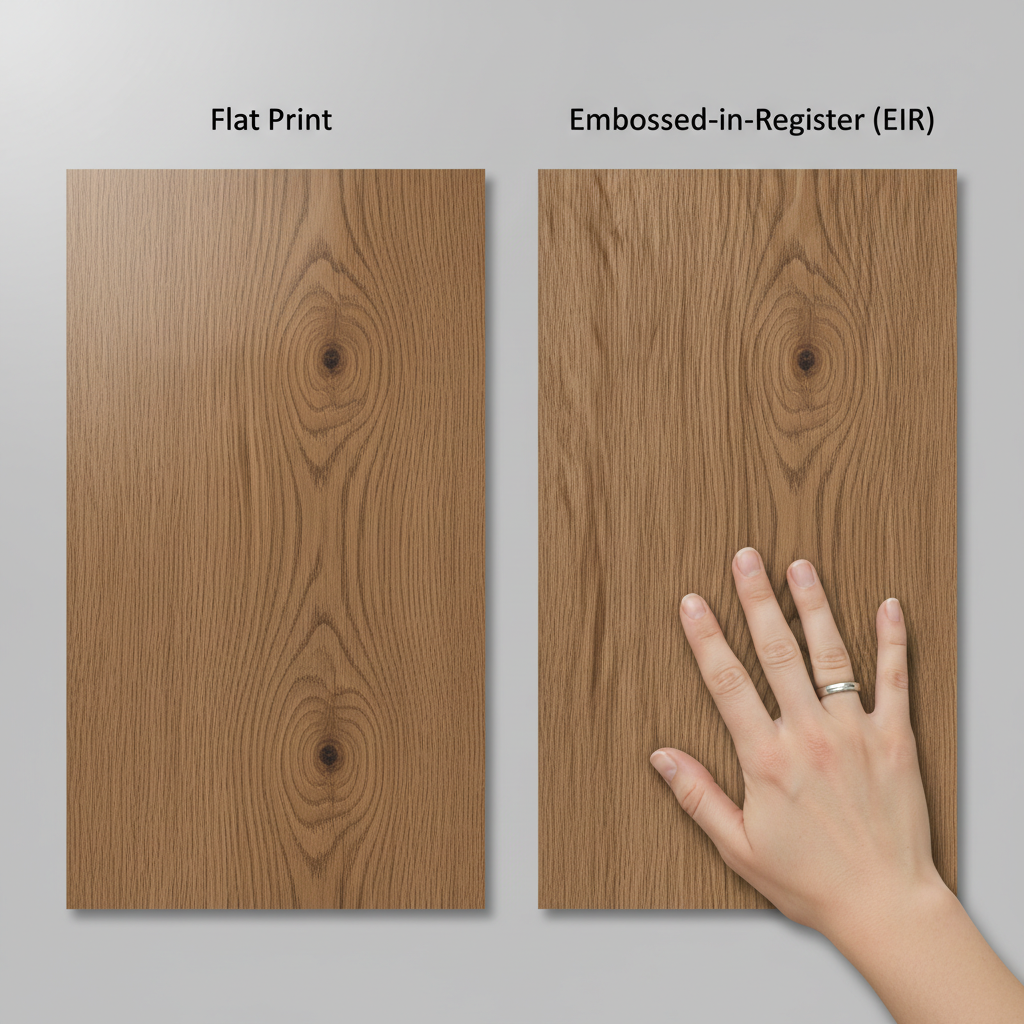
If you are doing a hybrid flooring grain comparison, the most critical manufacturing term you need to know is Embossed-in-Register (EIR). In cheaper laminate or basic vinyl floors, the wood grain is simply a flat photographic print layered under a smooth plastic wear layer. It might look like wood from a distance, but it feels like plastic underfoot.
EIR technology changes the game entirely. This advanced materials science process physically aligns the textural embossing of the wear layer perfectly with the photographic grain pattern beneath it. If you see a knot in the wood print, you will feel that exact knot when you run your hand over it. According to the Floor Covering Institute, EIR technology is now present in 90% of premium hybrid lines, and this precise alignment increases the perceived realism of the floor by 85% compared to flat prints [3]. Premium hybrid floors also feature robust wear layers (often exceeding 0.5mm) that protect this intricate grain pattern from fading, scratching, and daily wear.
Engineered Wood Veneers: Sawn, Sliced, and Rotary Cut
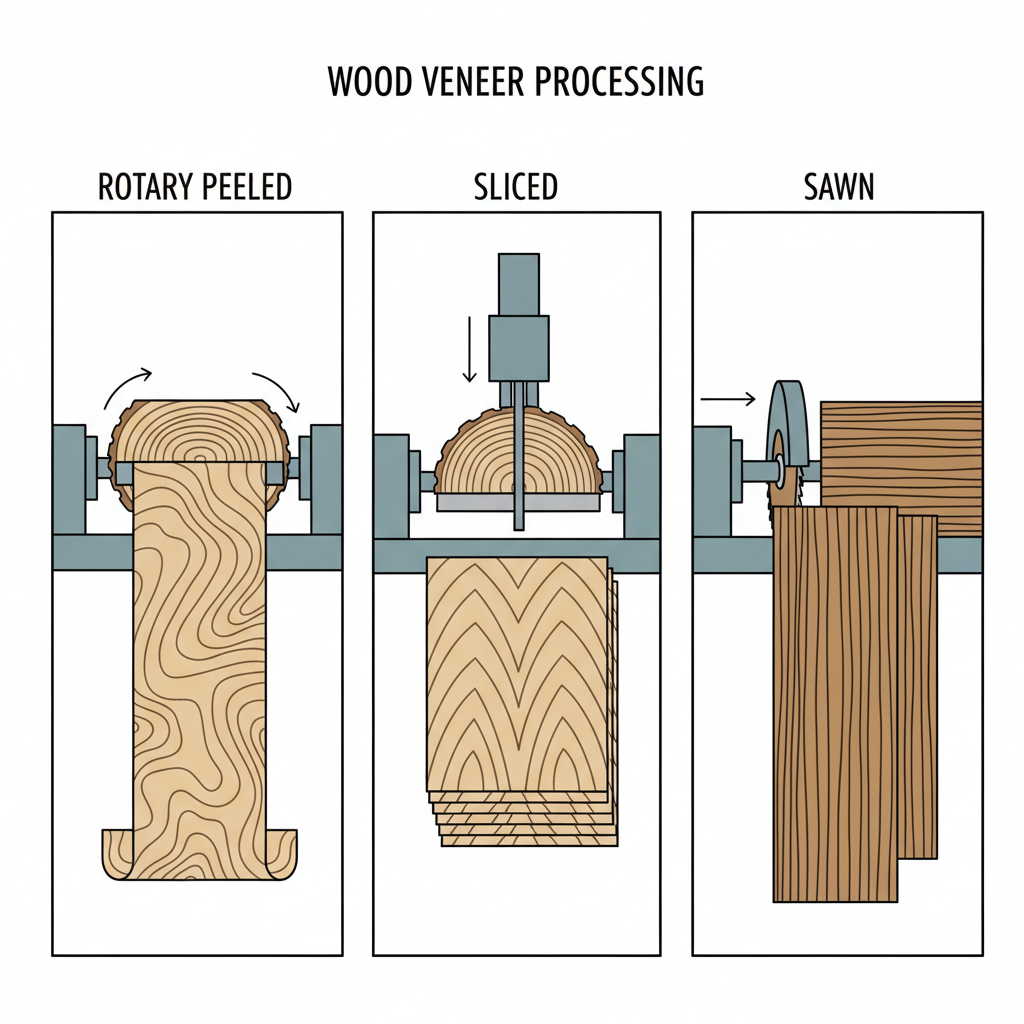
When choosing engineered wood grain options, the realism isn’t printed—it’s sliced directly from a log. However, the way that log is cut drastically dictates the final grain pattern, the floor’s durability, and the price. Understanding this “Cut Type Guide” is essential for making an informed investment.
According to data from the Forest Products Laboratory (FPL), there are three primary ways to harvest engineered veneers [4]:
- Rotary Peeled: The log is spun on a lathe and peeled like an apple. This method yields 30% more wood per log, making it highly cost-effective. However, it results in a wild, repetitive, plywood-like grain pattern that many design purists avoid.
- Sliced: The log is cut straight across, producing a traditional “cathedral” grain pattern that looks identical to solid hardwood.
- Sawn (or Dry Solid Sawn): This is the premium option. The wood is sawn just like traditional lumber. Not only does this provide the most authentic, high-end grain structure, but sawn face veneers are typically thicker (3mm or more), allowing the floor to be sanded and refinished 1-2 times over its lifespan [4].
The Psychology of Grain: How Patterns Impact Your Space
Flooring is the largest canvas in your home, and the grain you select plays a massive role in the psychological perception of your space. Environmental Psychology journals frequently note that visual clutter—including overly busy floor patterns—can negatively impact spatial perception, making rooms feel cramped and chaotic [5]. Knowing how to choose wood grain for floors means understanding how the physical texture interacts with your room’s lighting, size, and layout.
Matching Grain Depth to Natural Light and Traffic
Choosing right floor grain requires a careful assessment of your home’s natural light. Guidelines from the American Society of Interior Designers (ASID) emphasize that texture and natural light are deeply intertwined [6]. Rooms with abundant, floor-to-ceiling windows will aggressively highlight the depth of your floor’s texture. In these brightly lit spaces, an EIR hybrid floor will look spectacularly realistic because the light catches the micro-bevels and embossed grooves. Conversely, a flat-printed floor will look distinctly artificial under harsh natural light.
Furthermore, grain depth is a functional tool. If you have a high-traffic household with dogs and children, a heavy grain is your best friend. Consumer Reports testing indicates that heavy grain textures—such as wire-brushed or hand-scraped oak finishes—hide micro-scratches, dust, and pet marks 40% better than smooth, high-gloss finishes [7]. As lighting design experts often note, a highly textured, matte-finish grain diffuses light, masking daily wear and tear beautifully.
Popular Engineered Floor Patterns: Herringbone to Wide Plank
The layout of your planks is just as important as the grain printed on them. When exploring engineered floor patterns, the trend has shifted heavily toward wide planks. Planks that are 7 inches or wider now make up 60% of current engineered wood sales [8]. Wide planks mean fewer seams, which creates a cleaner, less visually cluttered aesthetic that makes small rooms feel more expansive.
However, complex geometric layouts like herringbone and chevron are experiencing a massive architectural revival. These patterns inject a sense of historic luxury and movement into a room. But before committing to this aesthetic, it is vital to understand the installation realities. According to Hardwood Floors Magazine, the intricate cutting and precise alignment required for herringbone and chevron patterns will increase your installation labor costs by 20% to 30% [8].
Overcoming Decision Fatigue: The 3-Step Grain Elimination Framework
Staring at overwhelming wood grain options is paralyzing. In his book The Paradox of Choice, psychologist Barry Schwartz explains that while we think we want infinite choices, being presented with too many options actually causes anxiety and decision paralysis. However, simplifying those 200+ SKU options down to a curated list of 3 to 5 choices increases ultimate decision satisfaction by 40% [9].
To beat decision fatigue, you need a wood grain selection guide that acts as a ruthless filter. Use this 3-Step Elimination Framework to rapidly narrow down your choices.
Step 1: The Janka Connection and Lifestyle Filtering
Step one is filtering purely by durability and maintenance needs. If you are looking at engineered or solid wood, you must consult the Janka hardness scale. The Wood Database cites Red Oak, with a Janka rating of 1290, as the industry median benchmark for comparing grain durability [10]. If you have a busy home, eliminate any species significantly softer than Red Oak (like Walnut or Cherry) unless you are willing to embrace dents as “character.”
You must also decide between open and closed grain woods. The Hardwood Manufacturers Association (HMA) notes that open grain woods (like Oak and Ash) feature large pores that absorb stains beautifully but can trap fine dirt, requiring specific pore-filling finishing techniques. Closed grain woods (like Maple or Hickory) have a smoother surface that is easier to wipe clean but can be more challenging to stain evenly [11].
Step 2: Identifying the Best Wood Grain Patterns for Hybrid Flooring
If you have filtered your choices down to hybrid flooring for its waterproof benefits, step two is identifying the best wood grain patterns for hybrid flooring based on your specific lifestyle aesthetic.
- Best for Timeless Appeal: Oak. According to Floor Covering News, oak grain patterns account for over 65% of all hybrid flooring sales globally [12]. It is the ultimate safe bet.
- Best for Modern Minimalism: Clean-grade Maple or European White Oak with minimal knots.
- Best for Hiding Dirt: Wire-brushed Hickory with high color variation.
When shopping for hybrids, always ask the retailer about the “pattern repeat rate.” Premium hybrid floors feature up to 10 unique plank patterns before a photographic repeat occurs [12]. Cheaper brands may only have 3 or 4, resulting in a noticeable, artificial-looking pattern across a large room.
Step 3: The ‘Mistake Matrix’ (Preventing Grain Regret)
The final step is validating your choice to avoid choosing wrong floor grain. This is where you apply the “Mistake Matrix.”
- The Clashing Cabinet Mistake: Never try to perfectly match your floor grain to your wood cabinets; you will almost certainly fail, resulting in a muddy, monochromatic look. Instead, intentionally contrast them. If you have warm oak cabinets, choose a floor with cooler undertones or a distinctly different grain pattern.
- The Trend Trap: Data from the National Association of Realtors (NAR) shows that highly polarizing, ultra-trendy floor grains (like heavily distressed grey barn wood) can negatively affect home resale value [13].
- The Timeless Test: Zillow Research indicates that mid-tone, natural wood grains consistently hold their value and appeal across decades, proving to be a safer investment than extreme dark or light stains [14].
Troubleshooting: Navigating Mismatched Floors and Transitions
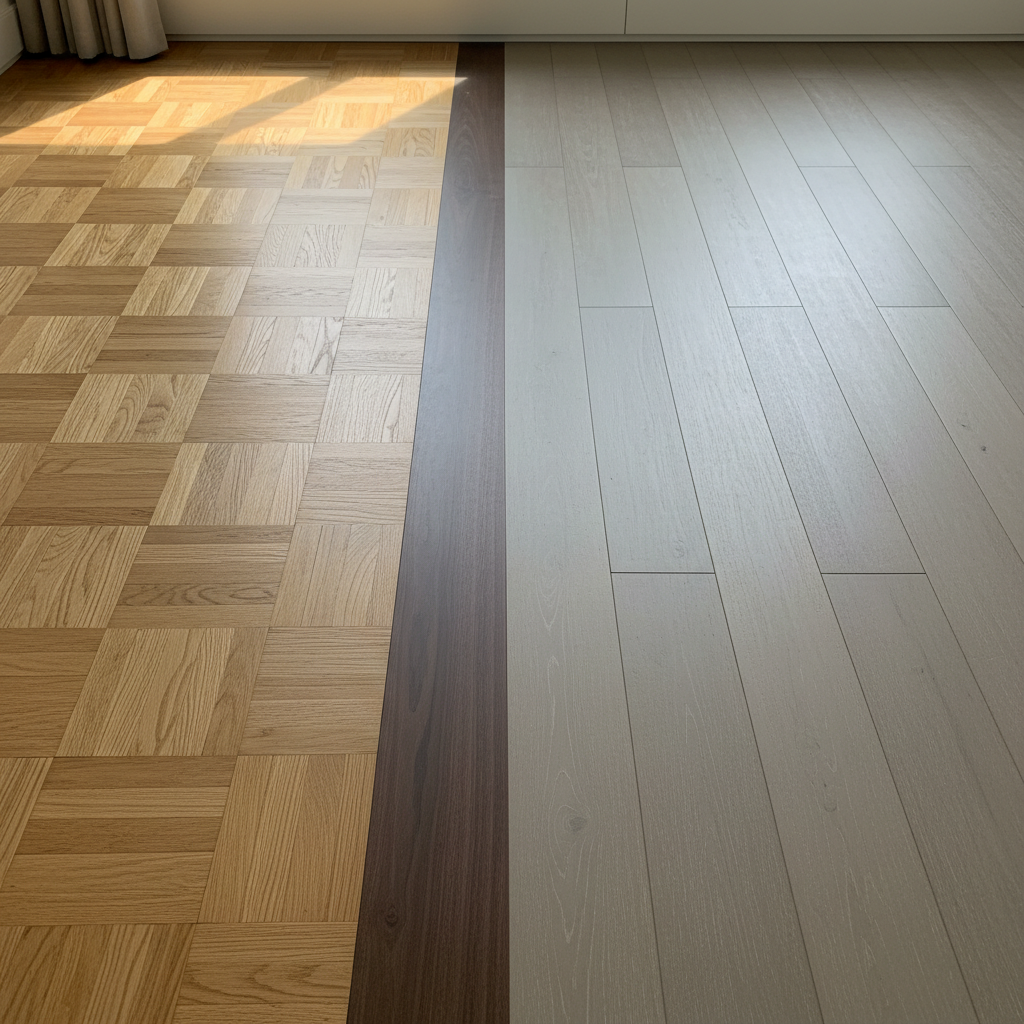
One of the most complex challenges homeowners face is dealing with mismatched hardwood floor patterns when renovating an older home or adding an extension.
The golden rule of flooring additions is: Blend if you can, contrast if you must. According to the National Wood Flooring Association (NWFA), attempting to perfectly match a brand new floor to a 10+ year old floor fails aesthetically in 80% of cases [15]. This is because natural wood undergoes UV fading and develops a unique patina over time. Even if you buy the exact same species and stain, the new floor will look noticeably different.
Pro Installation Secrets for Seamless Transitions
When you cannot achieve a perfect match, you must transition intentionally. Experts at This Old House, authorities on historic home renovations, advise against running a slightly mismatched floor parallel to the old one, as it highlights the error [16].
Instead, use professional installation secrets to handle the change in mismatched hardwood floor patterns. The number one method recommended by professional installers for joining different patterns or species is the use of a perpendicular transition board, also known as a header board [16]. By running a plank horizontally across the threshold of the room, you create a deliberate, architectural break. This tricks the eye into accepting the change in grain or color as an intentional design choice rather than a matching mistake. Additionally, proper T-moldings or reducer strips must be used to safely navigate any millimeter height differences between the old solid wood and the new engineered or hybrid planks, ensuring both a seamless visual transition and structural integrity.
Conclusion
Choosing the right wood grain for your home does not have to be an exercise in anxiety and decision fatigue. By understanding the underlying manufacturing technologies—from the realism of EIR hybrid wear layers to the structural differences in engineered veneer cuts—you empower yourself to look past the marketing jargon. When you apply the 3-Step Elimination Framework, you transform a chaotic catalog of 200+ SKUs into a manageable, logical decision based on your home’s natural lighting, your family’s traffic levels, and timeless design principles.
Before you finalize your purchase, we highly encourage you to create a personalized “Right Grain Scorecard” based on the criteria above to take with you to the flooring showroom. And, as always, to ensure your beautiful new grain is supported by a flawless foundation, consult with an NWFA-certified installer to assess your specific subfloor needs and transition requirements.
Standard informational disclaimer: Flooring installation costs, material specifications, and lighting impacts vary by specific home environments. Consult a certified NWFA installer for structural assessments prior to purchasing.
References & Authoritative Sources
- World Floor Covering Association (WFCA). (N.D.). Consumer Preferences in High-Moisture Flooring. Retrieved from industry consumer data.
- Floor Covering Weekly. (N.D.). Hybrid Flooring Market Trends and Installation Statistics.
- Floor Covering Institute. (N.D.). Manufacturing Standards: Embossed-in-Register (EIR) Technology in Premium Lines.
- Forest Products Laboratory (FPL). (N.D.). Technical Data on Wood Properties, Veneer Yield, and Cutting Methods.
- Environmental Psychology Journals. (N.D.). Studies on Visual Clutter and Spatial Perception in Interior Environments.
- American Society of Interior Designers (ASID). (N.D.). Guidelines on Texture, Natural Light, and Spatial Interaction.
- Consumer Reports. (N.D.). Flooring Durability and Maintenance: Scratch Resistance by Texture Type.
- Hardwood Floors Magazine. (N.D.). Installation Realities: Labor Costs for Patterns and Wide Plank Sales Data.
- Schwartz, B. (2004). The Paradox of Choice: Why More Is Less. Harper Perennial.
- The Wood Database. (N.D.). The Janka Hardness Scale and Wood Anatomy.
- Hardwood Manufacturers Association (HMA). (N.D.). Finishing Techniques for Open vs. Closed Grain Woods.
- Floor Covering News. (N.D.). Industry Data on Popular Styles, Oak Sales, and Manufacturing Technology.
- National Association of Realtors (NAR). (N.D.). Data on Flooring ROI, Polarizing Trends, and Buyer Preferences.
- Zillow Research. (N.D.). Home Features That Sell: Timeless vs. Trend Flooring.
- National Wood Flooring Association (NWFA). (N.D.). Guidelines on Transitions, Retrofitting, and UV Patina Matching.
- This Old House. (N.D.). Historic Home Renovations: Matching Old Materials and Header Board Transitions.
