
Embarking on a home renovation brings a unique kind of anxiety, particularly when it comes to the foundational elements of your space. If you are currently experiencing buyer’s paralysis over the choice between light and dark wood floors, you are not alone. Selecting a flooring color is an expensive, semi-permanent decision that dictates the entire aesthetic of your home. The core problem most homeowners face is that generic online photos rarely reflect how a floor will actually look under the unique lighting conditions of their own living rooms, leading to costly and frustrating mistakes.
To navigate this, you need more than just a swatch; you need a design-first framework. This guide combines high-end interior design theory with the technical superiority of Bravewood hybrid hardwood to help you make a flawless choice. In the following sections, we will explore the classic light vs. dark dilemma, decode the impressive specifications of Bravewood flooring, teach you how to master undertone matching, and provide a foolproof 24-hour at-home testing protocol to ensure your final decision is absolutely perfect.
- The Light vs. Dark Wood Dilemma: Which is Right for Your Space?
- Why Bravewood Hybrid Hardwood is the Ultimate Design Solution
- Masterclass in Undertones: Matching Flooring with Your Decor
- Disaster Prevention: The 24-Hour At-Home Sample Testing Protocol
- Conclusion
- References
The Light vs. Dark Wood Dilemma: Which is Right for Your Space?
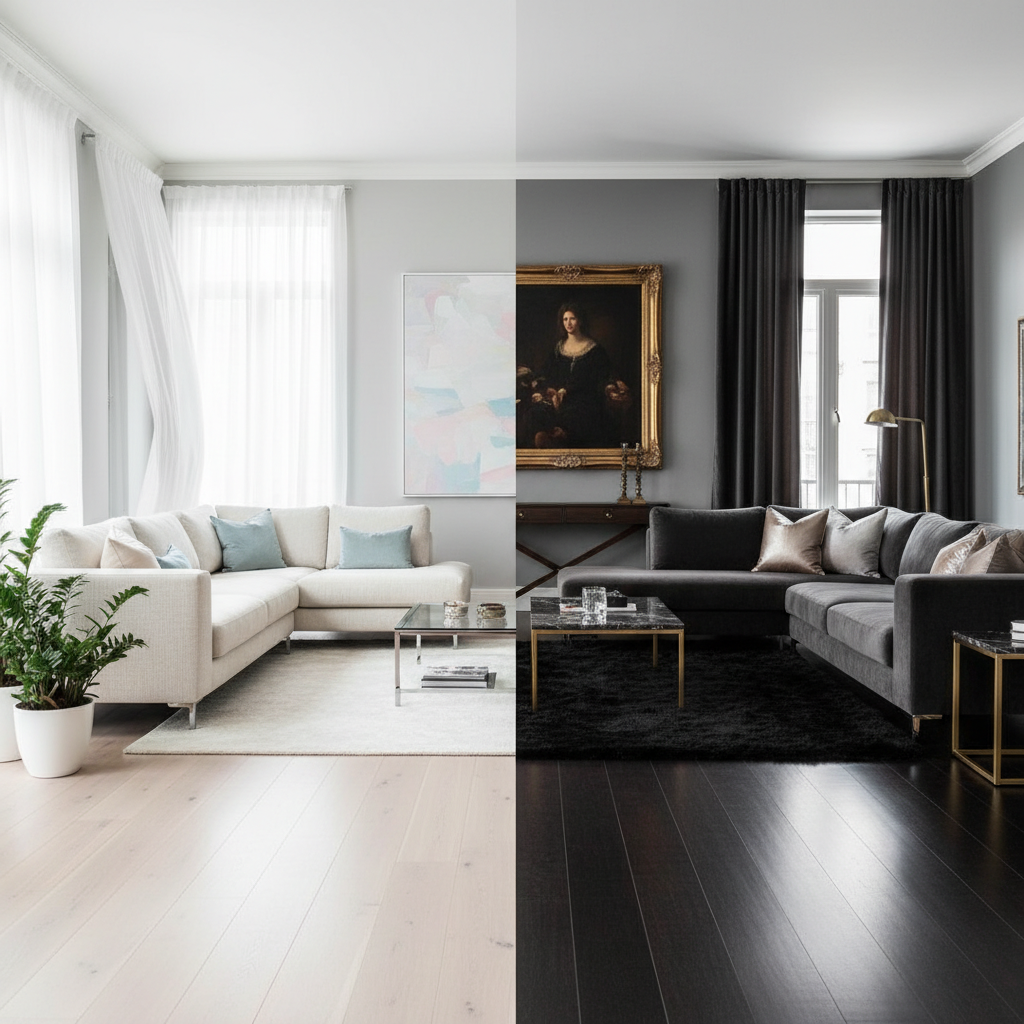
The dark vs light wood dilemma is a classic crossroads in interior design. Both options offer distinct aesthetic and practical advantages, but making the wrong choice can drastically alter how spacious and clean your home feels. When evaluating wood flooring colors, it is essential to consider not just your personal taste, but also the physical dimensions of your rooms, your daily lifestyle, and even your home’s long-term financial outlook.
Interestingly, the choice between light and dark can impact your property’s marketability. According to macro-economic real estate data, homes featuring dark hardwood floors currently tend to sell for more money than comparable properties with light-colored floors [1]. However, resale value is only one piece of the puzzle. Spatial theory plays an equally critical role. As noted by a certified interior designer and ASID member:
“Light floors visually expand compact rooms by reflecting natural light, creating an airy atmosphere. Conversely, dark floors absorb light and introduce dramatic contrast, grounding a large space and providing a luxurious foundation for high-end decor” [2].
The Case for Light Wood Floors: Airy Spaces and Easy Maintenance
If your goal is to create a bright, welcoming, and forgiving environment, light vs dark bravewood hybrid hardwood leans heavily in favor of the lighter spectrum. In fact, warm neutrals, greiges, and mid-tone browns are leading the 2026 design trends, according to the National Wood Flooring Association (NWFA) [3].
From a practical standpoint, a comprehensive wood floor color guide will always highlight the maintenance benefits of lighter woods. Light floors, particularly those with matte finishes, are vastly superior at hiding daily wear and tear. Scratches, minor dents, and light-colored debris—such as pet hair and everyday dust—blend seamlessly into the grain of lighter planks. For bustling family homes or spaces with high foot traffic, light wood floors offer an airy aesthetic without the burden of constant sweeping.
The Case for Dark Wood Floors: Luxury, Drama, and Resale Value
On the other end of the spectrum, dark wood floors are the epitome of luxury and formal elegance. They serve as a stunning, high-contrast canvas for interior design flooring, allowing light-colored furniture, vibrant rugs, and architectural details to pop visually.
However, the luxurious appeal of dark floors comes with a maintenance reality check. While they are excellent at hiding dark dirt and muddy footprints, they act as a magnifying glass for light-colored dust, pet dander, and crumbs, requiring a more rigorous sweeping schedule [1]. Furthermore, scale is crucial when installing dark flooring. In smaller rooms, it is highly recommended to avoid boards narrower than 8 inches; using wider planks reduces the number of visible seams, preventing the dark floor from making the space feel cluttered or visually shrunken [1].
Why Bravewood Hybrid Hardwood is the Ultimate Design Solution
Moving beyond general color theory, it is vital to select a material that can withstand the demands of modern living without sacrificing beauty. This is where Bravewood hybrid hardwood emerges as the ultimate design solution. Blending the authentic beauty of nature with cutting-edge engineering, it is widely considered the best bravewood flooring for interior design projects ranging from active family households to luxury estates.
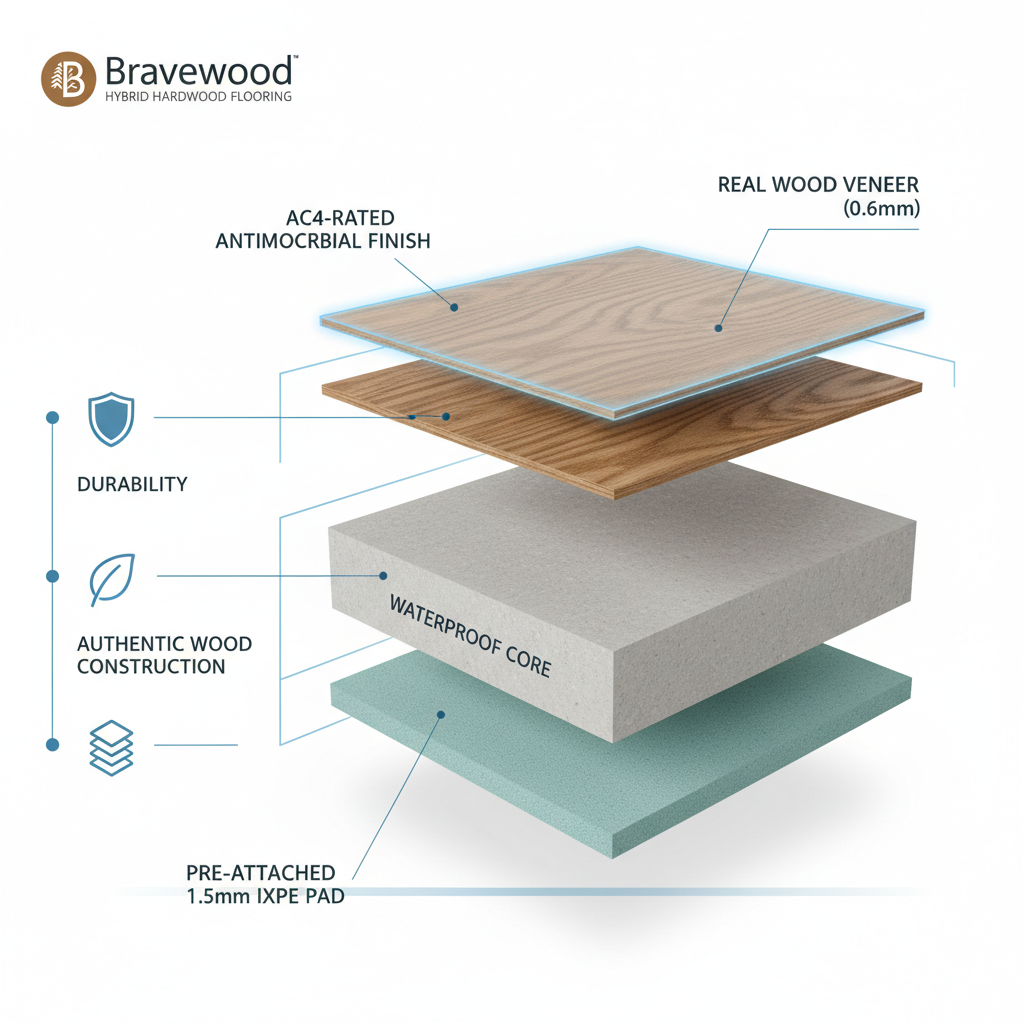
Bravewood is not your standard engineered wood. According to technical specifications from TAS Supply, this innovative flooring features a robust 12mm overall thickness, which includes a pre-attached 1.5mm IXPE pad for superior acoustic insulation and underfoot comfort [4]. The surface is protected by an AC4-rated antimicrobial finish, making it highly resistant to scratches, wear, and household spills. Yet, despite its waterproof core and extreme durability, it boasts a 0.6mm real wood veneer, delivering the unmistakable grain, warmth, and texture of authentic hardwood [4]. Furthermore, eco-conscious homeowners can rest easy knowing the product maintains rigorous indoor air quality standards, holding both FloorScore and GreenGuard Gold certifications via SCS Global Services [5].
Top Bravewood Shades for Modern Interiors
Note: If you are searching for woven wood window shades or bamboo blinds, please be aware that this guide specifically covers Bravewood hybrid hardwood flooring products. Picking the perfect Bravewood shade for your floors requires a different approach than selecting window treatments!
When selecting the perfect hue for your renovation, Bravewood offers a curated palette designed to complement contemporary aesthetics. Standout SKUs like “Sunshine Hickory” bring a bright, warm, and inviting energy perfect for Rustic or Modern Farmhouse designs. Alternatively, “Riftwood Knot” offers a sophisticated, organic texture that pairs beautifully with Modern Organic and minimalist spaces. Because Bravewood utilizes an Embossed In Register (EIR) design process, the physical texture of the AC4 surface perfectly aligns with the visual grain of the real wood veneer, ensuring that whichever shade you choose feels as authentic as it looks.
Masterclass in Undertones: Matching Flooring with Your Decor
One of the most common sources of anxiety during interior design flooring selection is the fear of choosing a wrong floor color that clashes with existing elements. Matching flooring with decor is less about finding an exact color duplicate and more about mastering undertones. Every wood species and stain carries an underlying hue—either warm (yellow, orange, red) or cool (gray, blue, ash).
The secret to a cohesive home is harmonization. As experts at Homes & Gardens advise, the goal should be creating intentional contrast rather than attempting to match your wood floors perfectly to your wood furniture or cabinetry, which can result in a flat, overwhelming, and monotonous space [6].
The Undertone Matching Matrix
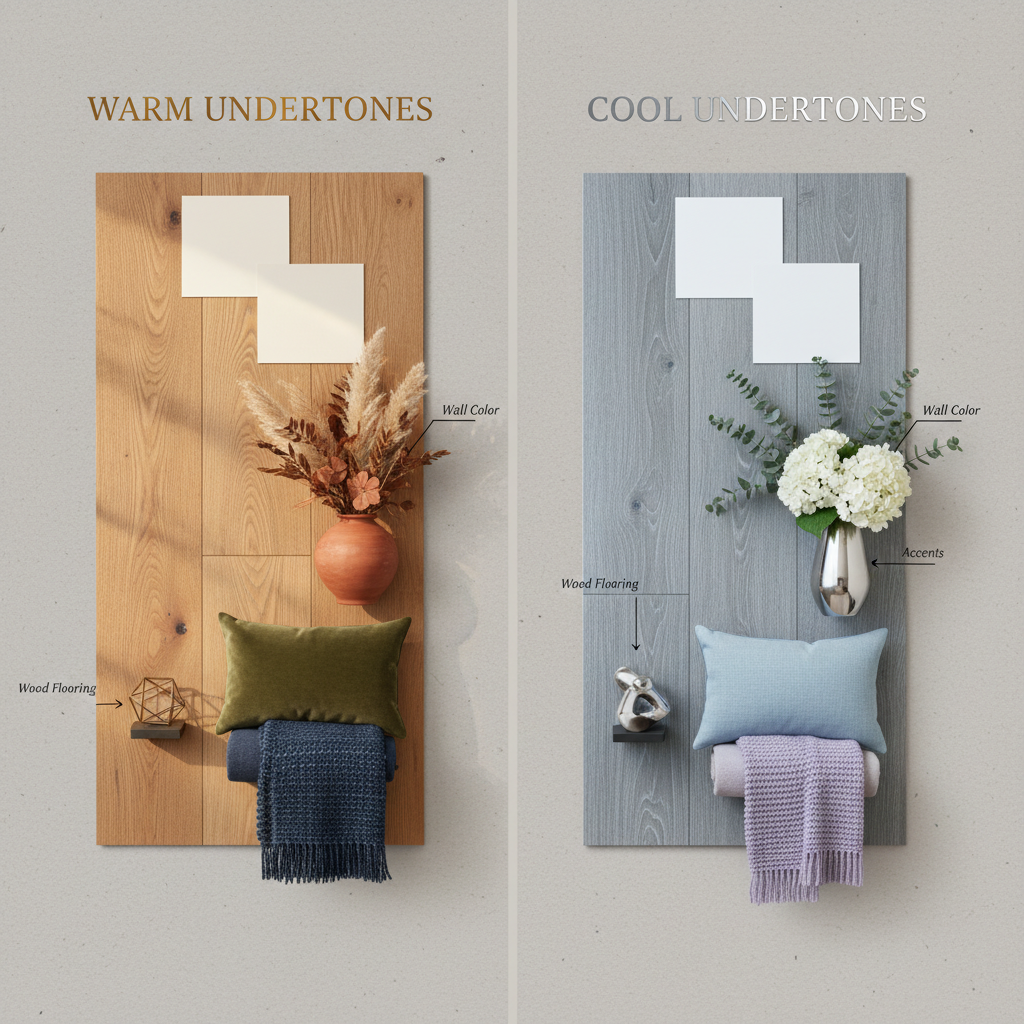
To simplify how to choose wood flooring color, rely on this basic matching matrix:
- Warm Undertones: Natural woods (like unstained oak or hickory) typically radiate warm yellow, orange, or red undertones. These pair beautifully with warm white walls, earthy greens, and rich navy blues.
- Cool Undertones: Woods finished with gray, whitewashed, or ashy stains lean cool. These floors look stunning against crisp white walls, soft pastels, and cool-toned architectural features.
- Contrast Rules: Light floors generally pair well with soft or pastel walls to maintain an airy feel, while dark floors look absolutely striking against lighter walls, creating a crisp, tailored aesthetic.
It is also vital to understand how stains interact with different wood species. FinishWorks experts note that the chemical makeup of a stain will look drastically different on a naturally warm Red Oak compared to a more neutral White Oak [7]. Always view the stain on the specific wood species you are purchasing.
Using Rugs to Bridge Color Gaps
If you find yourself with existing cabinetry or heirloom furniture that slightly clashes with your dream flooring, do not panic. Area rugs are the interior designer’s secret weapon for bridging color gaps. A well-placed rug acts as a visual buffer, separating conflicting wood tones and tying the room’s color palette together. When placing a rug, follow the golden rule of interior design: the rug should be large enough that at least the front legs of all primary furniture pieces in that grouping rest comfortably on it. This anchors the space and makes the floor color feel like an intentional backdrop rather than a competing element.
Disaster Prevention: The 24-Hour At-Home Sample Testing Protocol
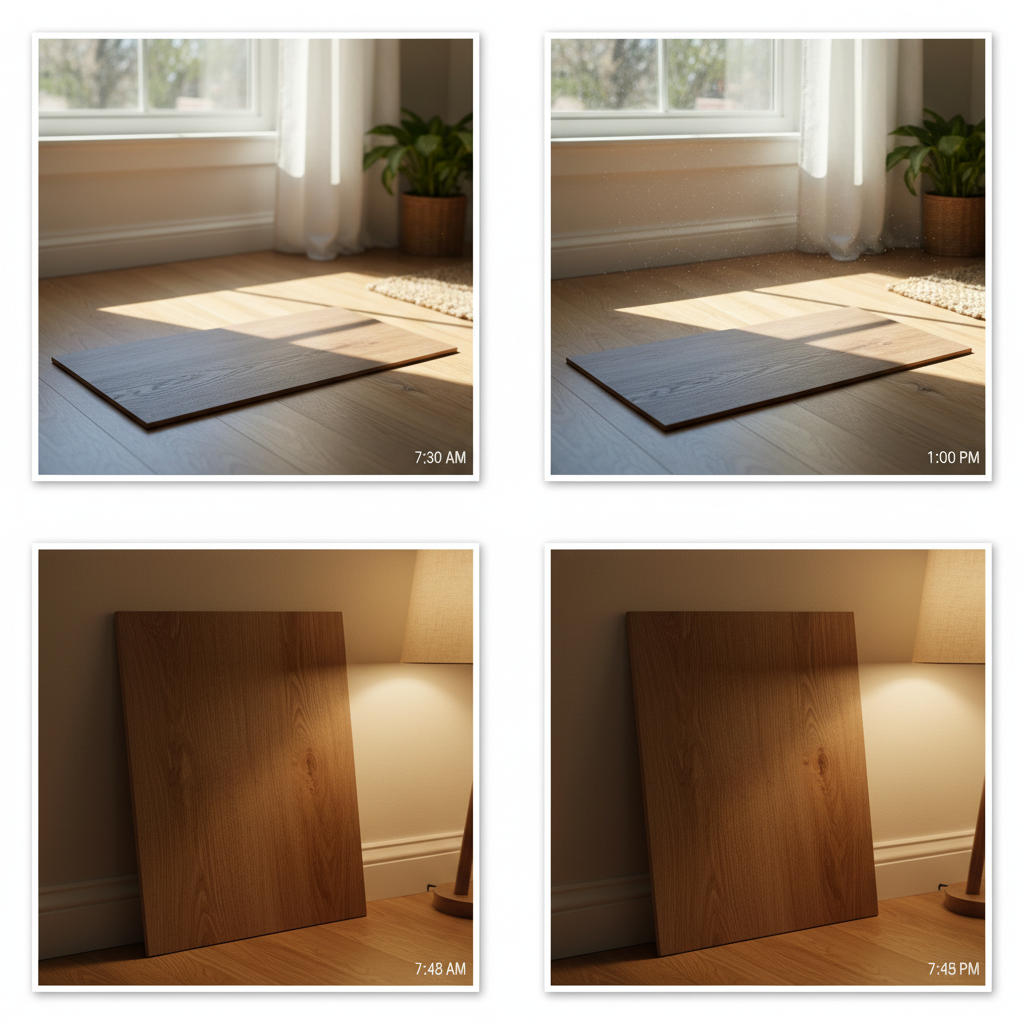
The most critical step in preventing the nightmare of choosing the wrong floor color is taking the decision out of the showroom. Showroom lighting is notoriously deceptive, often utilizing bright, cool-toned commercial bulbs that do not exist in your home. To ensure your choice of how to choose wood flooring color is flawless, you must implement a strict 24-hour at-home sample testing protocol.
The 24-Hour Checklist:
- Morning Natural Light: Observe the Bravewood sample in the early morning. Notice how the cool morning light interacts with the wood’s undertones.
- Afternoon Glare: Check the sample during peak daylight. Does the direct sun wash out the color or highlight unwanted red/yellow hues?
- Evening Artificial Light: This is crucial. Turn on your living room lamps and overhead lights. Warm incandescent bulbs can drastically change a floor’s appearance compared to daylight.
Furthermore, professional installers from companies like 50Floor emphasize the importance of positioning [8]. Do not just lay the sample flat in the middle of the room. Place it horizontally on the floor right next to your cabinetry, and then prop it vertically against your baseboards and painted walls. Viewing the sample from multiple angles and against your permanent fixtures is the only way to guarantee a perfect match.
Conclusion
Ultimately, the choice between light and dark Bravewood hybrid hardwood comes down to a careful balance of your room’s size, the quality of your natural light, and the realities of your daily lifestyle and cleaning habits. Whether you opt for the airy, forgiving nature of a light greige or the dramatic, luxurious statement of a dark espresso, understanding color theory and undertones will ensure your space feels cohesive and professionally designed.
Bravewood flooring offers the ultimate peace of mind by marrying high-end, real-wood aesthetics with the waterproof, AC4-rated durability required for modern life. Don’t leave your interior design to chance. We highly encourage you to order physical samples of your top three Bravewood shades—one light, one dark, and one mid-tone—and apply the 24-hour testing protocol in your own home before making your final, confident decision.
Disclaimer: Colors may vary significantly depending on screen settings and room lighting. Always order physical samples before making a final purchase.
References
- BuildDirect. (N.D.). Hardwood Flooring Pros and Cons: Dark vs. Light Wood. Retrieved from builddirect.com
- American Society of Interior Designers (ASID) Member Insight. (2026). Spatial Theory and Flooring.
- National Wood Flooring Association (NWFA). (2026). Wood Flooring Design Trends Report.
- TAS Supply / TAS Flooring. (N.D.). Bravewood Hybrid Hardwood Technical Specifications. Retrieved from tasupply.com
- SCS Global Services. (N.D.). FloorScore and GreenGuard Gold Certification Directory.
- Homes & Gardens. (N.D.). How to Mix Wood Tones in Interior Design. Retrieved from homesandgardens.com
- FinishWorks. (N.D.). Understanding Wood Stains and Undertones: Red Oak vs. White Oak. Retrieved from finishworks.com
- 50Floor. (N.D.). How to Test Flooring Samples at Home. Retrieved from 50floor.com
