

In the United States alone, a staggering 12 million tons of furniture are discarded into landfills every single year. This monumental waste is the direct result of a modern, short-term buying cycle fueled by mass-produced, poorly constructed home goods. For frustrated homeowners and eco-conscious consumers, the constant cycle of replacing flimsy, trend-driven pieces has become both a financial drain and an environmental crisis. But there is an alternative to this disposable culture. By demystifying the science of wood durability and the rigorous standards of artisan craftsmanship, consumers can break free from the fast furniture cycle. This guide serves as your master maker’s blueprint to Bravewood craftsmanship. In the following sections, we will explore the hidden costs of cheap manufacturing, the structural science behind materials built to last, the hallmarks of true master craftsmanship, how to properly vet custom builders, and the undeniable long-term economics of buying heirloom furniture once.
- The Hidden Cost of Fast Furniture: Why Cheap Now Means Expensive Later
- The Science of Wood Durability: Materials Built to Last
- The Master’s Standard: Inside Bravewood Craftsmanship
- The Master Maker’s Vetting Guide: Red Flags and Green Lights
- The Economics of Heirloom Furniture: Why Choose Exceptional Quality
- Conclusion
- References & Authoritative Sources
The Hidden Cost of Fast Furniture: Why Cheap Now Means Expensive Later
The allure of inexpensive, ready-to-assemble furnishings often masks a steep long-term price tag. When you find yourself replacing cheap furniture often, the cumulative cost quickly surpasses the initial investment of a single, well-made piece. Mass-produced items crafted from particleboard, medium-density fiberboard (MDF), and thin laminates are engineered for a fleeting lifespan of merely 5 to 10 years. In stark contrast, solid wood furniture, when properly constructed and maintained, boasts a lifespan of 100 years or more, easily becoming a multi-generational asset.
The environmental toll of this disposable culture is equally severe. As noted by Architectural Digest in their coverage of the home furnishing sustainability crisis, the industry’s reliance on non-biodegradable, chemically treated composites is overwhelming waste management systems [1]. Recognized sustainability expert and author Ashlee Piper frequently highlights the unrepairable nature of modern fast furniture; once a particleboard joint fails or a laminate surface chips, the piece is virtually impossible to restore, guaranteeing its swift journey to the landfill [2]. Ultimately, poorly made fast furniture is a false economy that taxes both your wallet and the planet.
Diagnosing Flimsy Wood Furniture Issues
Understanding why cheap furniture fails requires a diagnostic look at manufacturing defects, poor assembly methods, and environmental vulnerabilities. If you are experiencing flimsy wood furniture issues, the culprit is likely a combination of these factors.
First, consider environmental vulnerability. Wood is a hygroscopic material, meaning it constantly absorbs and releases moisture. When exposed to fluctuating indoor environments, cheap composites swell and warp irreparably. Furthermore, the chemical breakdown of lignin—the organic polymer that binds wood fibers together—accelerates under excessive UV exposure, leading to brittle, discolored surfaces. To mitigate this, the ideal indoor humidity for preserving wood furniture should be strictly maintained between 30% and 50%.
Second, poor assembly is a primary driver of structural failure. Industrial quality control frameworks, such as the Static Loading and Stability Tests detailed by global manufacturing authority EverWoody, routinely expose the weaknesses of mass-market assembly [3]. Furniture held together by staples, visible screws, and low-grade adhesives cannot withstand the dynamic shear forces of daily use. When these inferior fasteners pull out of soft particleboard, the structural integrity of the piece is permanently compromised.
The Science of Wood Durability: Materials Built to Last
To elevate our understanding from basic woodworking to structural science, we must examine what makes wood inherently strong. When sourcing durable wood products built to last, the selection of the species is paramount. Wood’s structural integrity is a marvel of natural engineering. For instance, a single 10 cm by 10 cm square of Douglas-fir can support nearly 5,000 kg in compression parallel to the grain [4]. This incredible load-bearing capacity is why specific woods have been used for centuries in everything from timber-framed cathedrals to heavy-duty industrial applications.
Evaluating wood types requires technical metrics, most notably the Janka hardness scale, which measures the resistance of a wood sample to denting and wear. However, true longevity also depends on environmental resistance. Data from the US Forest Service Research and Development highlights the extreme durability of specific species and treatments: naturally dense hardwoods like Ipe can last up to 40 years untreated in harsh outdoor environments, while industrial creosote-treated wood has an expected durability exceeding 50 years [5]. Understanding these metrics ensures you are selecting long lasting wood products capable of surviving decades of rigorous use.
The Master’s Standard: Inside Bravewood Craftsmanship
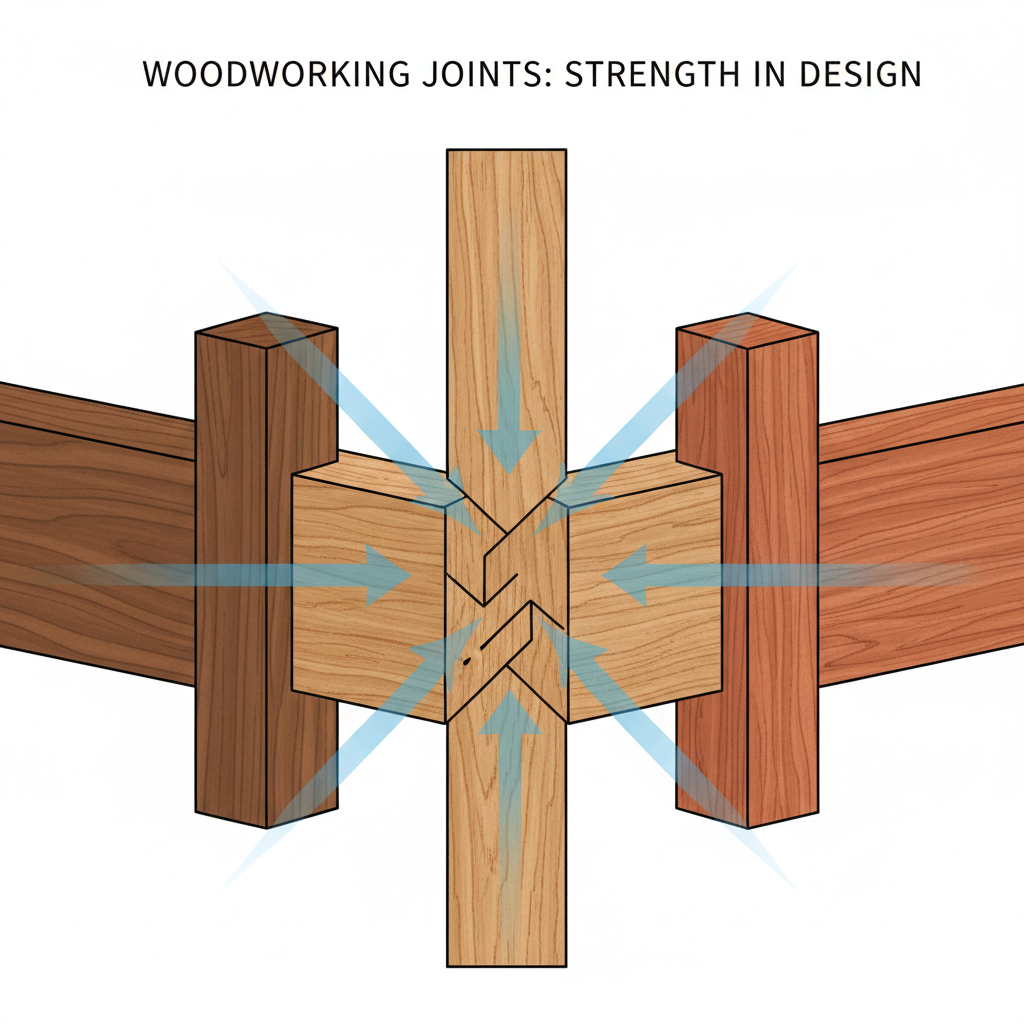
Elite wood craftsmanship is defined by an uncompromising adherence to traditional techniques and structural integrity. Bravewood craftsmanship represents this master’s standard, differentiating authentic artisan techniques from the corner-cutting methods of mass production. At the heart of high integrity building methods is the mastery of traditional joinery.
Unlike factory-made pieces that rely on metal brackets and glue-soaked dowels, a master craftsman utilizes interlocking wood joints—such as the dovetail, and the mortise and tenon. These joints harness the natural strength of the wood itself, allowing for seasonal expansion and contraction without compromising the frame. Fine Woodworking Magazine, a leading authority on advanced woodworking techniques, consistently emphasizes that these time-honored joints are the non-negotiable foundation of heirloom furniture [6]. Furthermore, this level of craftsmanship borrows precise architectural terminology and principles. Just as structural engineers calculate loadbearing installations and thermal performance for buildings, master furniture makers apply these same physics to ensure a dining table or bed frame remains unshakeable for a century, a standard of excellence echoed by structural authorities like Integrity Built [7].
From Concept to Heirloom: The Custom Furniture Building Process
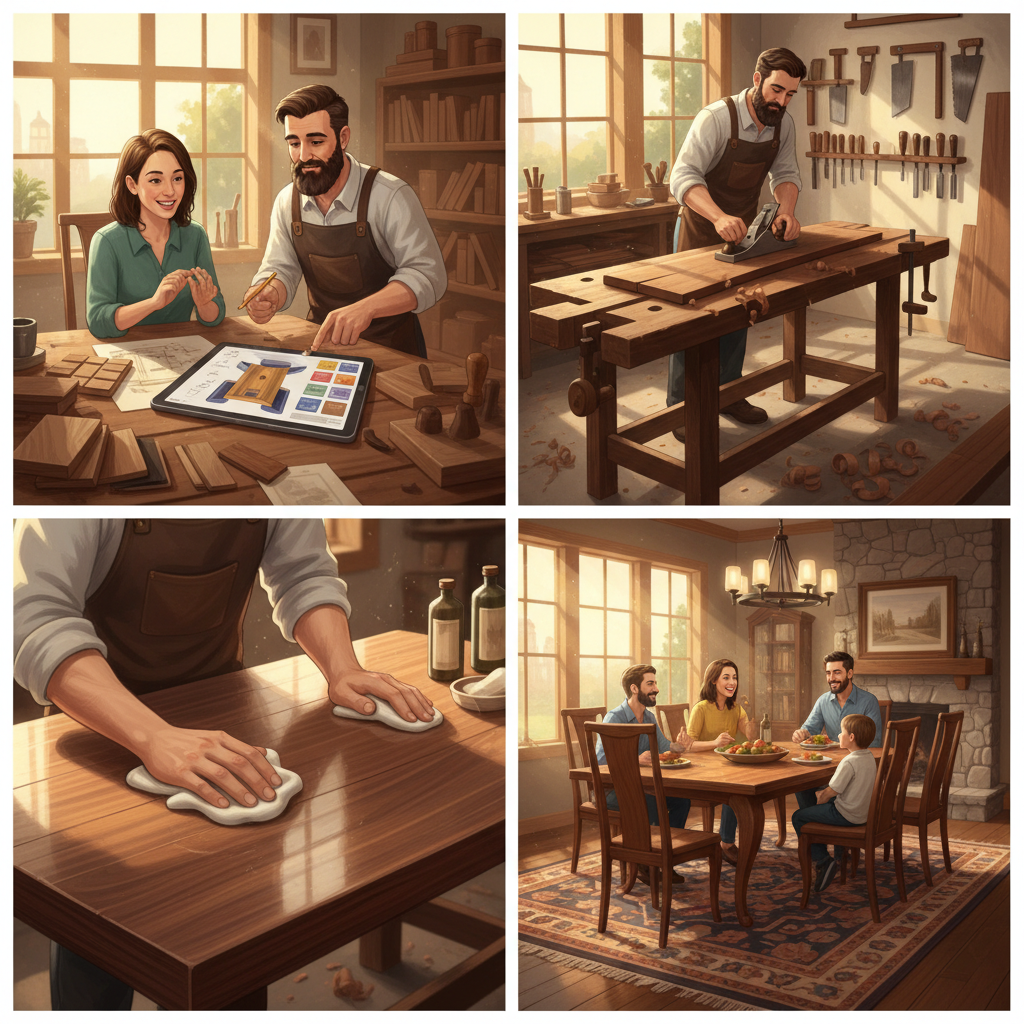
Demystifying the client-maker collaborative process is essential for anyone considering commissioning a bespoke piece. Custom furniture building is an iterative journey that transforms raw lumber into a personalized heirloom. The process typically begins with detailed consultations and 3D renderings, ensuring the client’s vision aligns perfectly with structural realities.
Because of the meticulous nature of this work, custom furniture projects typically require 6 to 12 weeks of lead time depending on complexity and material sourcing. The Woodworkers Guild of America, a premier resource for builder education and methodology, notes that this time is necessary for proper milling, joinery fabrication, and the careful application of hand-rubbed finishes [8]. A hallmark of a reputable maker during this process is transparent pricing—providing clear cost breakdowns that explicitly separate raw material costs from the highly skilled labor hours required to execute the build.
The Master Maker’s Vetting Guide: Red Flags and Green Lights
For consumers, navigating the custom furniture market requires a technical checklist to ensure structural integrity and protect their investment. When evaluating integrity in custom furniture building, there are distinct red flags and green lights to watch for.
The most critical green light is a maker’s understanding of wood science, specifically moisture acclimation. Because wood moves, the ideal wood moisture content for indoor furniture must be strictly acclimated to between 6% and 8% before the first cut is ever made [9]. Makers who rush this process risk their final pieces warping or cracking within the first year.
When vetting a builder for quality wood furniture, authoritative voices in the industry, such as Luke’s Furniture Company and Navillus Woodworks, advise consumers to look for dedicated professionals [10, 11]. A major red flag is a maker whose primary focus is general carpentry, home remodeling, or weekend DIY projects, rather than specialized, full-time furniture fabrication. True master makers possess a hyper-focused expertise in furniture joinery and finishing that cannot be replicated by a generalist.
The Economics of Heirloom Furniture: Why Choose Exceptional Quality
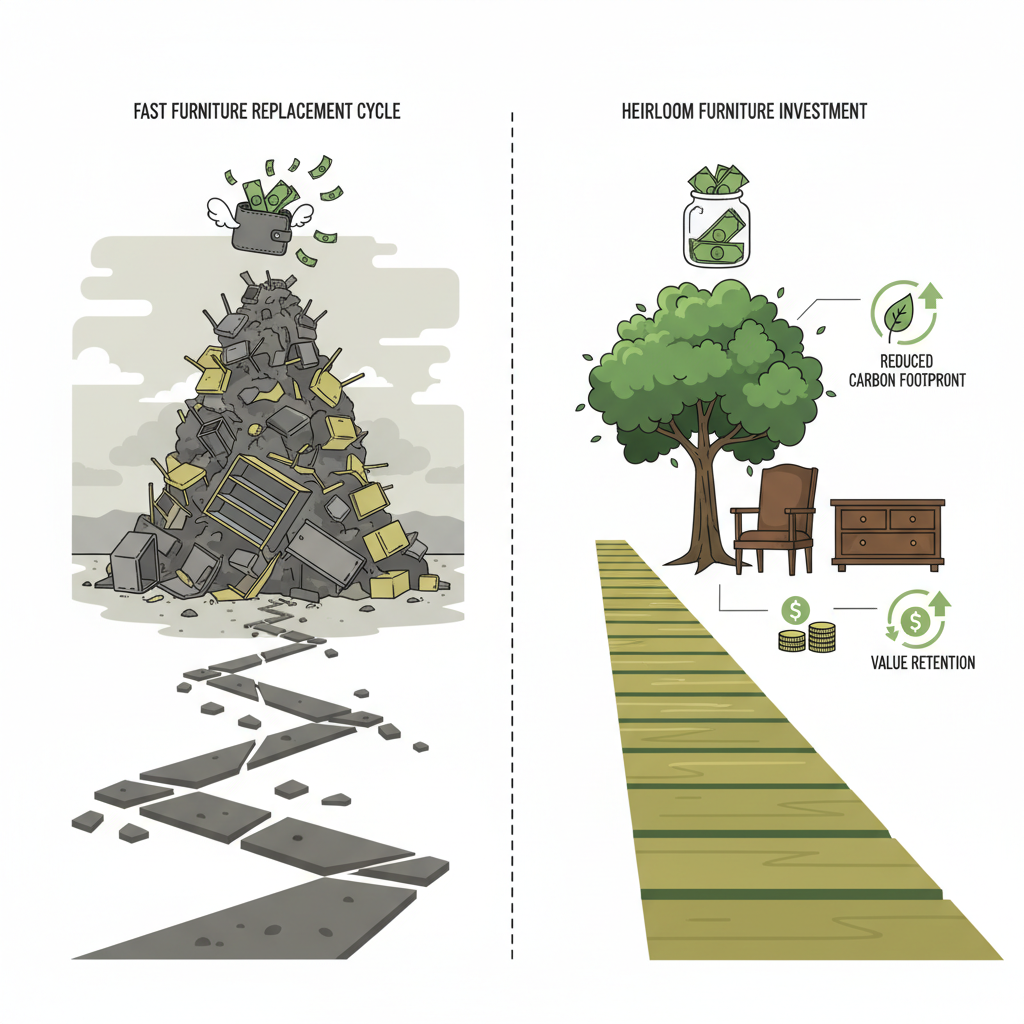
Ultimately, the decision to invest in master-crafted furniture is justified by powerful, long-term economics. While the upfront cost is undeniably higher, why choose exceptional quality furniture? The answer lies in value retention and the elimination of the replacement cycle.
Investing in durable furniture means you are purchasing an asset that resists depreciation. Robust construction and premium hardwoods lead to significantly higher resale value over decades. Industry authorities like Mareblu Furniture Direct and luxury interior design experts at The Design Source frequently highlight the profound cost-saving benefits of durable living room furniture over a 10-to-20-year horizon [12, 13]. When you stop buying a new $500 particleboard dresser every five years, the $2,500 solid wood dresser becomes the financially superior choice.
Furthermore, this investment supports the circular economy, drastically reducing your personal carbon footprint. To maintain this sustainable approach, experts at Delightfully Noted advocate for the one-in, one-out rule to promote sustainable home organization [14]. By choosing exceptional quality, you curate a home of lasting beauty, protect your long-term finances, and refuse to contribute to the millions of tons of waste choking our landfills.
Conclusion
Investing in Bravewood-level craftsmanship and high-integrity building methods is far more than an aesthetic choice; it is a profound financial and environmental imperative. By understanding the hidden costs of fast furniture, the structural science of wood durability, and the meticulous nature of traditional joinery, you are empowered to make purchasing decisions that yield lifelong returns. We encourage you to audit your current furniture using the diagnostic principles outlined in this guide. When you are ready to break the replacement cycle and invest in a piece built to last generations, reach out for a consultation to commission your first true heirloom.
Disclaimer: Please note that custom lead times and pricing (e.g., 6-12 weeks) are estimates and vary by maker.
References & Authoritative Sources
- Architectural Digest. (N.D.). Sustainability in Fast Furniture.
- Piper, Ashlee. (N.D.). Expert insights on the unrepairable nature of modern fast furniture.
- EverWoody. (N.D.). Common Quality Issues in Wooden Furniture Manufacturing.
- naturally:wood. (N.D.). Wood Performance and Durability.
- US Forest Service Research and Development. (N.D.). Long-term durability studies on wood decay and preservation.
- Fine Woodworking Magazine. (N.D.). Authority on advanced woodworking techniques and traditional joinery.
- Integrity Built. (N.D.). An Alternate Method of Homebuilding.
- Woodworkers Guild of America. (N.D.). Builder education and custom furniture methodology.
- Forest 2 Home. (N.D.). Tips for Building Furniture That Lasts Generations.
- Luke’s Furniture Company. (N.D.). 7 Red Flags to Watch Out For When Choosing a Custom Furniture Maker.
- Navillus Woodworks. (N.D.). How to Recognize Quality Woodworking: Insights from a Master Furniture Maker.
- Mareblu Furniture Direct. (N.D.). Discover Why Durable Living Room Furniture is Worth the Investment.
- The Design Source. (N.D.). The Importance of Investing in Quality Furniture.
- Delightfully Noted. (N.D.). How to Stop Replacing Furniture Every Few Years.
