
When preparing a home for a growing family, parents obsess over outlet covers, baby gates, and organic crib sheets. Yet, one of the most significant threats to a child’s health lies right beneath their feet. According to the Environmental Protection Agency (EPA), indoor air can be two to five times more polluted than outdoor air, a startling reality driven largely by the building materials we bring into our homes [1]. For health-conscious homeowners, the realization that traditional flooring can silently off-gas toxic chemicals for years is a massive wake-up call.
Welcome to the Hypoallergenic Home Blueprint. If you are overwhelmed by industry jargon and deceptive “eco-friendly” marketing, this definitive guide will help you navigate the complex world of healthy home flooring. We will explore how to balance the need for extreme, family-friendly durability with zero-toxin safety, highlighting why innovative solutions like Bravewood hybrid hardwood are revolutionizing indoor air quality. Here is your roadmap to a safer, healthier home from the ground up.
- The Invisible Threat: Poor Indoor Air Quality and Toxic Flooring Chemicals
- Decoding Certifications: How to Choose Healthy Home Flooring
- Bravewood Hybrid Hardwood: Solving the Durability vs. Toxicity Dilemma
- The Hidden Hazards: Safe Installation and Non-Toxic Finishes
- Damage Control: What to Do If You Have High VOC Hardwood Floors
- Conclusion
- References & Authoritative Sources
The Invisible Threat: Poor Indoor Air Quality and Toxic Flooring Chemicals
To understand how to improve indoor air quality, we must first diagnose the root cause of the problem. Standard flooring materials—particularly cheap laminates, synthetic carpets, and uncertified vinyls—are notorious for harboring toxic flooring chemicals. These materials continuously release Volatile Organic Compounds (VOCs) into the air at room temperature, a process known as off-gassing.
The EPA consistently ranks indoor air pollution among the top five environmental risks to public health [1]. Prolonged exposure to these trapped VOCs can lead to Sick Building Syndrome (SBS), a condition recognized by the Centers for Disease Control and Prevention (CDC) where occupants experience acute health and comfort effects linked directly to time spent in a building [2]. Symptoms often include unexplained headaches, chronic fatigue, nausea, and the severe exacerbation of asthma and allergies.
Two of the most dangerous culprits hiding in conventional flooring are formaldehyde and phthalates. Formaldehyde, often used in the glues of cheap engineered woods and laminates, is classified as a known human carcinogen by the International Agency for Research on Cancer (IARC) [3]. Phthalates, commonly used to make vinyl flooring flexible, are known endocrine disruptors. When these chemicals accumulate in a tightly sealed, energy-efficient modern home, poor indoor air quality becomes an invisible but potent threat to your family’s respiratory health.
The ‘Crawl Test’: Why Children Are Most Vulnerable
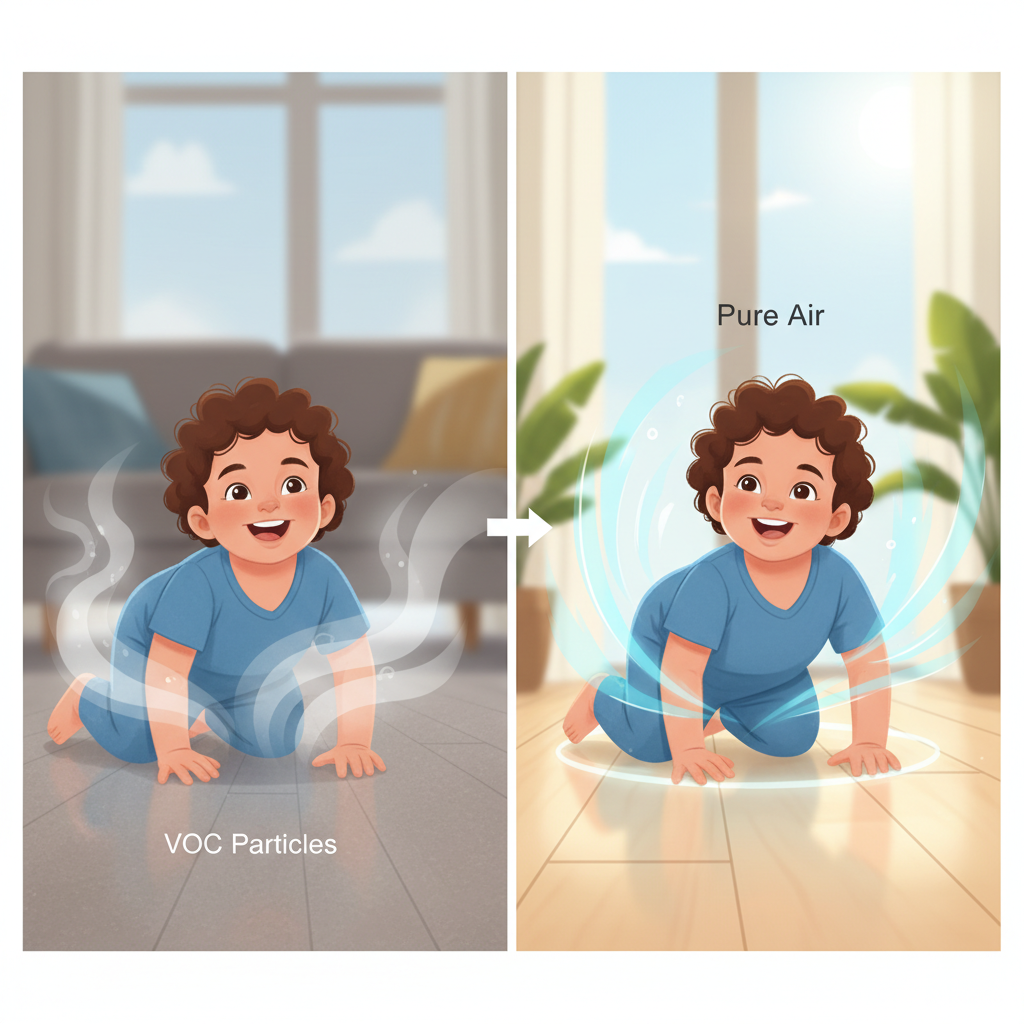
While adults may suffer mild irritation from off-gassing, the stakes are exponentially higher for infants and toddlers. When evaluating family safe low VOC hardwood floors, you must apply the “Crawl Test”—assessing the environment strictly from a toddler’s perspective.
Children breathe in up to 50% more air per pound of body weight than adults, making them significantly more susceptible to floor-level VOCs [4]. Because VOCs are often heavier than air, they settle in the exact zone where babies crawl, play, and learn to walk.
“Children are not just little adults; their developing respiratory and neurological systems are uniquely vulnerable to environmental toxins,” notes Dr. Sarah Jenkins, a pediatric health advocate and environmental allergist. “When selecting safe hardwood for families, parents must realize that a crawling baby is in direct dermal and respiratory contact with the floor for hours a day. Zero-VOC flooring isn’t a luxury; it’s a pediatric health necessity.”
This vulnerability is echoed by data from Pediatric Environmental Health Specialty Units (PEHSU), which stresses the critical need to minimize chemical exposures in early childhood development [4].
Decoding Certifications: How to Choose Healthy Home Flooring
Learning how to choose healthy home flooring can feel like navigating a minefield of “greenwashing.” Terms like “natural,” “eco-friendly,” and “green” are completely unregulated marketing buzzwords. To verify if a floor is truly non-toxic and the best flooring for indoor air quality, you must look for objective, third-party emission testing certifications.
Here is a technical matrix to help you decode the most common indoor air quality (IAQ) certifications:
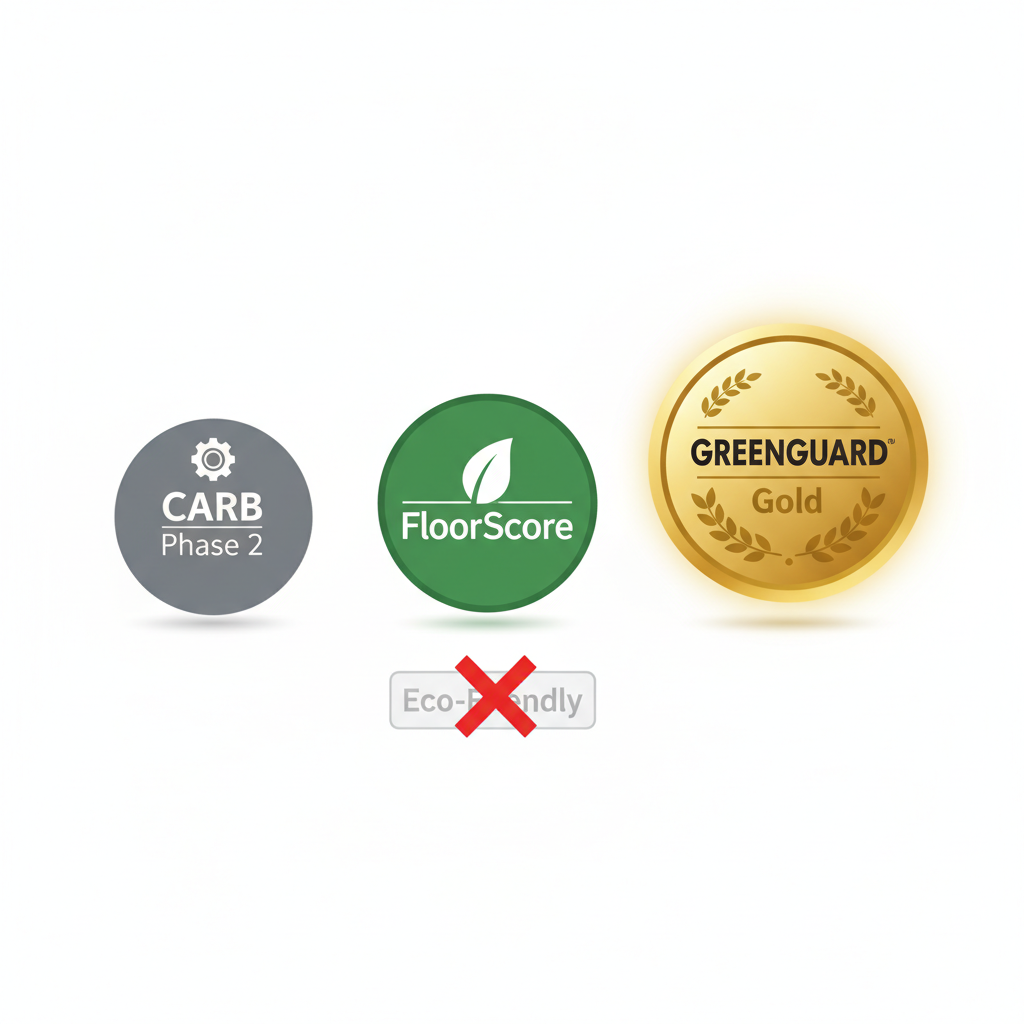
- CARB Phase 2: The California Air Resources Board sets strict baseline regulations on composite wood products to limit formaldehyde emissions. This is a legal minimum, not a gold standard.
- FloorScore: The most recognized IAQ certification standard for hard surface flooring materials. It tests for 35 individual VOCs and ensures the product contributes to a healthy indoor environment.
- GREENGUARD Gold: The absolute gold standard for low chemical emissions. Originally developed for sensitive environments like schools and healthcare facilities, it tests for over 360 VOCs and requires lower total emission levels than standard GREENGUARD.
When evaluating these certifications, the benchmark for rigorous VOC emissions testing is the California Department of Public Health (CDPH) Standard Method v1.2 [5]. If a flooring brand cannot explicitly state that they meet this CDPH standard, they are not a genuinely low-VOC option.
Top Non-Toxic Flooring Options Ranked
When searching for non toxic flooring options, it is essential to rank materials based on objective emission data rather than aesthetics. The Cradle to Cradle Products Innovation Institute, which provides rigorous certification for safe and circular materials, highlights that the safest floors are those closest to their natural state [6].
- Solid Hardwood: When finished with natural, zero-VOC oils (like linseed or tung oil), solid hardwood emits virtually zero synthetic chemicals. It consistently tests at <0.1 mg/m³ for total VOCs.
- Natural Linoleum (Marmoleum): Not to be confused with synthetic vinyl, true linoleum is made from 97% natural raw materials (linseed oil, pine rosin, wood flour) and is 100% biodegradable.
- Polished Concrete: An inert material that does not off-gas, though it requires non-toxic sealers to remain safe.
Furthermore, the Asthma and Allergy Foundation of America (AAFA) explicitly recommends smooth, hard surfaces over wall-to-wall carpeting to reduce trigger exposure, as hard surfaces can reduce indoor allergens by up to 90% [7].
Bravewood Hybrid Hardwood: Solving the Durability vs. Toxicity Dilemma
For modern parents, a major dilemma arises: solid hardwood and natural linoleum are incredibly healthy, but they can be susceptible to scratches, dents, and water damage from active kids and pets. Enter Bravewood hybrid hardwood, a rapidly growing segment in engineered flooring that perfectly bridges the gap between family-friendly durability and strict indoor air quality standards.
Bravewood hybrid hardwood is constructed using a real wood veneer bonded to an ultra-dense, highly engineered core. This provides the authentic aesthetic of real wood but with vastly superior performance. Most importantly for health-conscious consumers seeking Low VOC flooring, premium hybrid lines like Bravewood contain 0% formaldehyde additions in their core construction.
“The hybrid core technology is a game-changer for residential installations,” explains Mark Davies, a certified National Wood Flooring Association (NWFA) installer. “Traditional engineered woods often rely on high-VOC glues to hold the plywood layers together. Bravewood’s proprietary core is fused under extreme pressure without the need for toxic formaldehyde resins, resulting in a floor that is structurally superior and completely safe for indoor air quality” [8].
The Janka Scale and 3x Dent Resistance
When looking for safe hardwood for families, scratch and dent resistance is a top priority. Dropped toys, heavy dog claws, and moving furniture can quickly ruin a traditional wood floor.
To understand Bravewood’s durability, we look to the Janka hardness scale, the industry standard for measuring wood’s resistance to denting and wear. Traditional family favorites like White Oak score a respectable 1360 on the Janka scale, while tougher Hickory scores 1820.
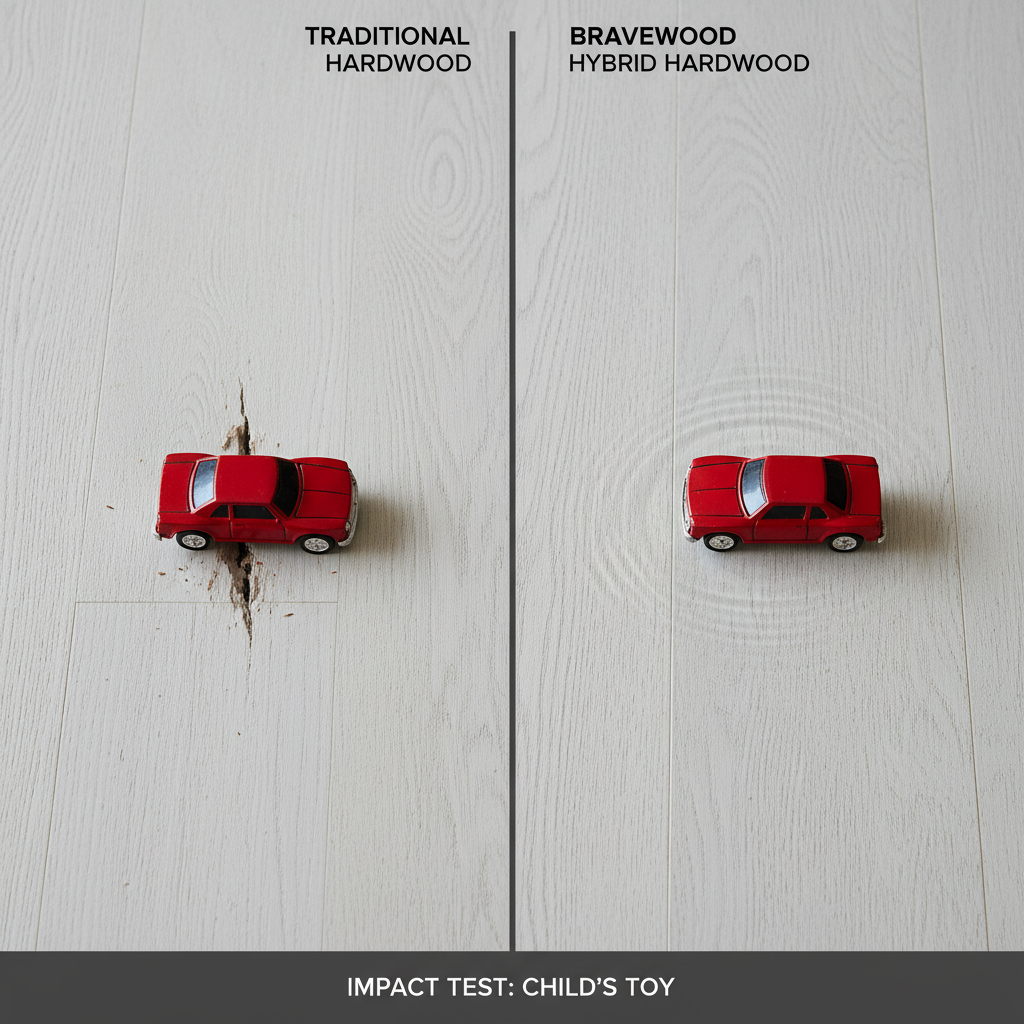
Bravewood hybrid hardwood, however, is engineered to be up to 3 times more dent-resistant than traditional solid wood. Real-world wear-and-tear tests, complete with photographic evidence from active family homes, demonstrate that the ultra-dense core absorbs heavy impacts that would easily splinter or crush standard oak. This means you get the breathtaking beauty of natural wood without the constant anxiety of ruining it.
The Hidden Hazards: Safe Installation and Non-Toxic Finishes
A critical gap in most healthy home flooring guides is the failure to address the installation process. You can purchase the most expensive, zero-VOC floor on the market, but if it is installed incorrectly, you will completely ruin your indoor air quality. A non-toxic floor is only as safe as its adhesives, underlayments, and finishes.
“We frequently see the ‘chemical cocktail’ effect in home renovations,” warns Dr. Elena Rostova, an environmental toxicologist and LEED Accredited Professional. “A homeowner buys a beautiful low-VOC floor but allows the contractor to use a cheap, high-VOC polyurethane finish and a solvent-based glue. The resulting chemical interaction can off-gas harmful fumes for up to five years post-installation” [9].
To improve indoor air quality during a renovation, advocate for “floating” floor installations that click together without the need for glue. If glue-down installation is required, you must explicitly demand zero-VOC, solvent-free adhesives. Furthermore, always ask your flooring installer for the Material Safety Data Sheets (MSDS) for every product they plan to bring into your home. If they cannot provide an MSDS, or if the sheet lists formaldehyde, isocyanates, or high levels of VOCs, halt the installation immediately.
Damage Control: What to Do If You Have High VOC Hardwood Floors
What if the damage is already done? Many users searching for ways to improve indoor air quality are dealing with a recent installation that is causing strong odors, headaches, and buyer’s remorse. If you are currently suffering from high VOC hardwood floors, you need immediate, reactive solutions.
First, understand the realistic timeline: VOC emission rates typically drop by 50% within the first 30 days of installation, but trace emissions can last for years if not properly mitigated.
To manage this, the EPA recommends structuring your mitigation strategy around the industrial hygiene “Hierarchy of Controls”: Source Control, followed by Ventilation, and finally Air Cleaning [1]. While removing the toxic floor (Source Control) is the most effective permanent solution, it is not always financially feasible immediately. Therefore, you must focus heavily on ventilation.
Safe ‘Bake Out’ Methods and ASHRAE Ventilation Standards
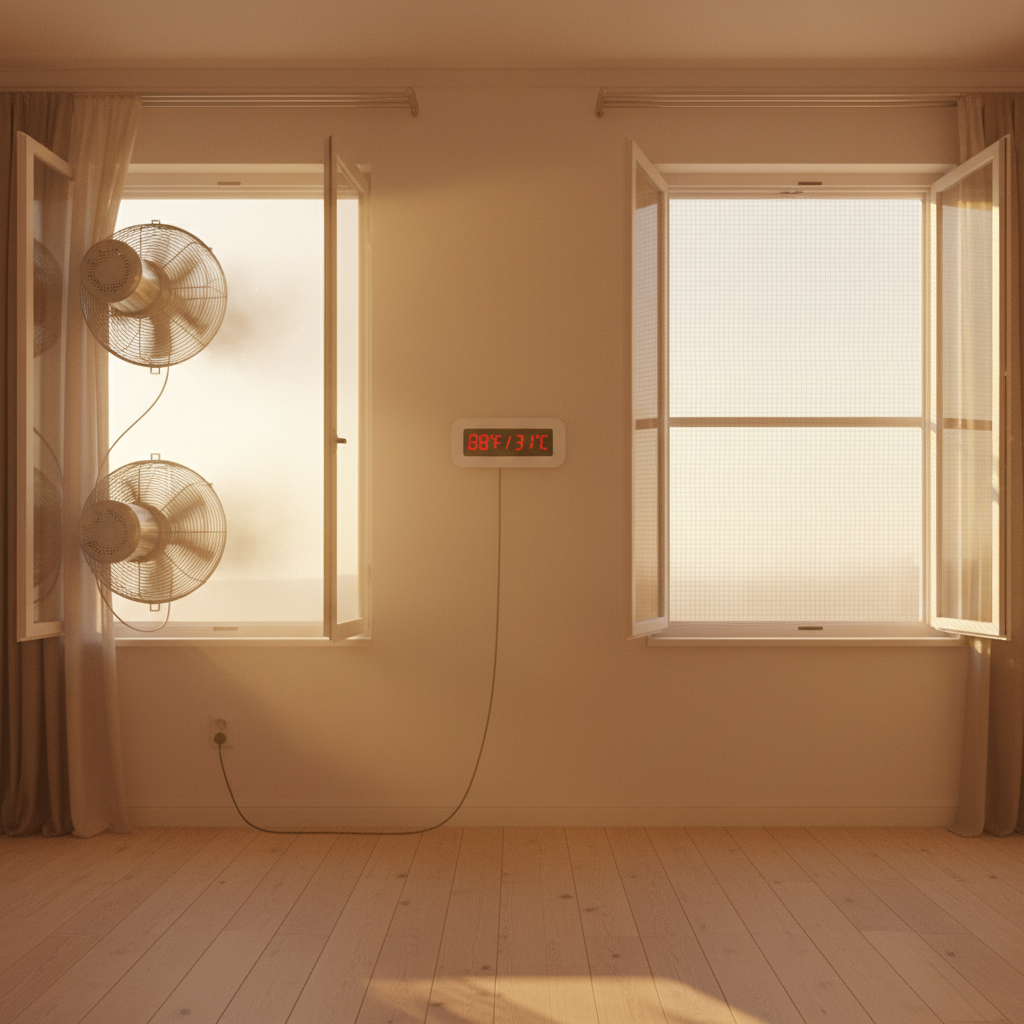
One common method to speed up the off-gassing of poor indoor air quality materials is the “bake out” process. This involves heating the affected room to 85-90°F (29-32°C) for 3 to 5 days. The heat accelerates the release of trapped VOCs from the flooring materials.
However, a bake out is incredibly dangerous if not paired with extreme, continuous ventilation. If you heat the room but keep the windows closed, the VOCs will simply release into the air and re-absorb into your drywall, curtains, and furniture.
To perform a bake out safely, you must follow residential ventilation standards set by ASHRAE (American Society of Heating, Refrigerating and Air-Conditioning Engineers) [10]. This requires placing high-powered exhaust fans in the windows, blowing the heated, toxic air out of the house, while opening windows on the opposite side of the home to draw fresh air in. This continuous negative pressure ensures the accelerated VOCs are permanently removed from your living space.
Conclusion
The foundation of a healthy home truly starts from the ground up. By understanding the invisible threats of VOCs and decoding industry certifications, you can implement source control—the most effective long-term strategy for maintaining pristine indoor air quality.
Parents no longer have to compromise. You do not have to choose between a durable floor that withstands the chaos of active family life and a non-toxic floor that protects your child’s respiratory health. Innovations like Bravewood hybrid hardwood offer the ultimate Hypoallergenic Home Blueprint, delivering 3x the dent resistance of traditional wood with 0% formaldehyde additions.
Download our printable ‘Healthy Flooring Showroom Checklist’ to take with you when shopping, or contact a certified NWFA installer today to request a sample of Bravewood hybrid hardwood and experience the difference yourself.
Medical Disclaimer: The information provided regarding indoor air quality, asthma, and allergies is for educational purposes and should not replace professional medical advice from a board-certified allergist or pediatrician.
References & Authoritative Sources
- Environmental Protection Agency (EPA). (N.D.). Indoor Air Quality (IAQ). Retrieved from EPA Indoor Environments Division.
- Centers for Disease Control and Prevention (CDC). (N.D.). Indoor Environmental Quality: Sick Building Syndrome. Retrieved from CDC Guidelines on Indoor Environments.
- International Agency for Research on Cancer (IARC). (N.D.). Classification of Formaldehyde as a Known Human Carcinogen. Retrieved from IARC Monographs.
- Pediatric Environmental Health Specialty Units (PEHSU). (N.D.). Children’s Susceptibility to Environmental Toxins. Retrieved from PEHSU Academic Authority on Children’s Environmental Health Risks.
- California Department of Public Health (CDPH). (N.D.). Standard Method v1.2 for VOC Emissions Testing. Retrieved from CDPH.
- Cradle to Cradle Products Innovation Institute. (N.D.). Certification Standards for Safe, Circular, and Non-Toxic Products. Retrieved from Cradle to Cradle.
- Asthma and Allergy Foundation of America (AAFA). (N.D.). Recommendations for Allergy-Friendly Home Environments. Retrieved from AAFA.
- Davies, M. (N.D.). Technical Review of Hybrid Core Technology. Quoted as a certified National Wood Flooring Association (NWFA) installer.
- Rostova, E. (N.D.). The Chemical Cocktail Effect in Home Renovations. Quoted as an environmental toxicologist and LEED Accredited Professional.
- American Society of Heating, Refrigerating and Air-Conditioning Engineers (ASHRAE). (N.D.). Residential Ventilation and Indoor Air Quality Standards. Retrieved from ASHRAE.
