
The timeless beauty of a hardwood floor is undeniable. It’s the gold standard, the dream for countless homeowners. But in a modern home—a bustling hub of kids, pets, spills, and daily chaos—that dream can quickly turn into a high-anxiety reality. You love the look, but you fear the vulnerability. The constant worry over a spilled drink, a pet accident, or the inevitable scratches from a dropped toy can overshadow the joy of your living space.
This is where the flooring industry has evolved, creating a new class of materials designed for real life. But this evolution has brought a new problem: overwhelming confusion from competing marketing claims and biased sales pitches.
This is not another sales page. This is the ultimate data-driven showdown. We are moving beyond the hype to provide a clear, unbiased comparison between the new guard—hybrid hardwood—and the old guard of traditional solid wood. We’ve developed a proprietary ‘Flooring Scorecard’ and will reference visual test evidence to empower you with the facts. By the end of this guide, you will have the confidence to choose the perfect floor for your home, your family, and your peace of mind.
- The Modern Home Dilemma: Why Traditional Hardwood is a Risky Investment
- Enter Hybrid Hardwood: The Best of Both Worlds?
- The Ultimate Showdown: Bravewood Hybrid vs. Traditional Hardwood
- Pros and Cons of Hybrid Hardwood Flooring: An Unbiased Summary
- Beyond Hybrid: Other Top Durable & Waterproof Hardwood Alternatives
- The Final Verdict: How to Choose the Right Floor for YOUR Home
- Conclusion
- References & Authoritative Sources
The Modern Home Dilemma: Why Traditional Hardwood is a Risky Investment
Before we explore the solutions, it’s crucial to understand the core problems they were designed to solve. For all its character and warmth, traditional solid hardwood has inherent weaknesses that make it a challenging choice for many active households. These issues go beyond simple wear and tear; they are fundamental to the material itself.
Water Damage: From Minor Spills to Major Disasters
Solid wood is a natural, porous material. Think of it like a dense sponge. When exposed to moisture, its cellular structure absorbs the water, causing it to swell. This simple scientific fact is the root cause of the most common and costly forms of hardwood floor damage. How can you tell if a wood floor has water damage? Look for these tell-tale signs:
- Cupping: When the edges of a plank are higher than its center, creating a concave shape. This happens when moisture is absorbed from the bottom of the board (e.g., from a damp subfloor).
- Crowning: The opposite of cupping, where the center of the plank is higher than its edges. This typically occurs when the surface of the floor is exposed to water, like a large spill or improper cleaning.
- Buckling: The most severe form of water damage, where the flooring lifts entirely off the subfloor, often in large sections. This is a catastrophic failure caused by significant flooding or a major leak.
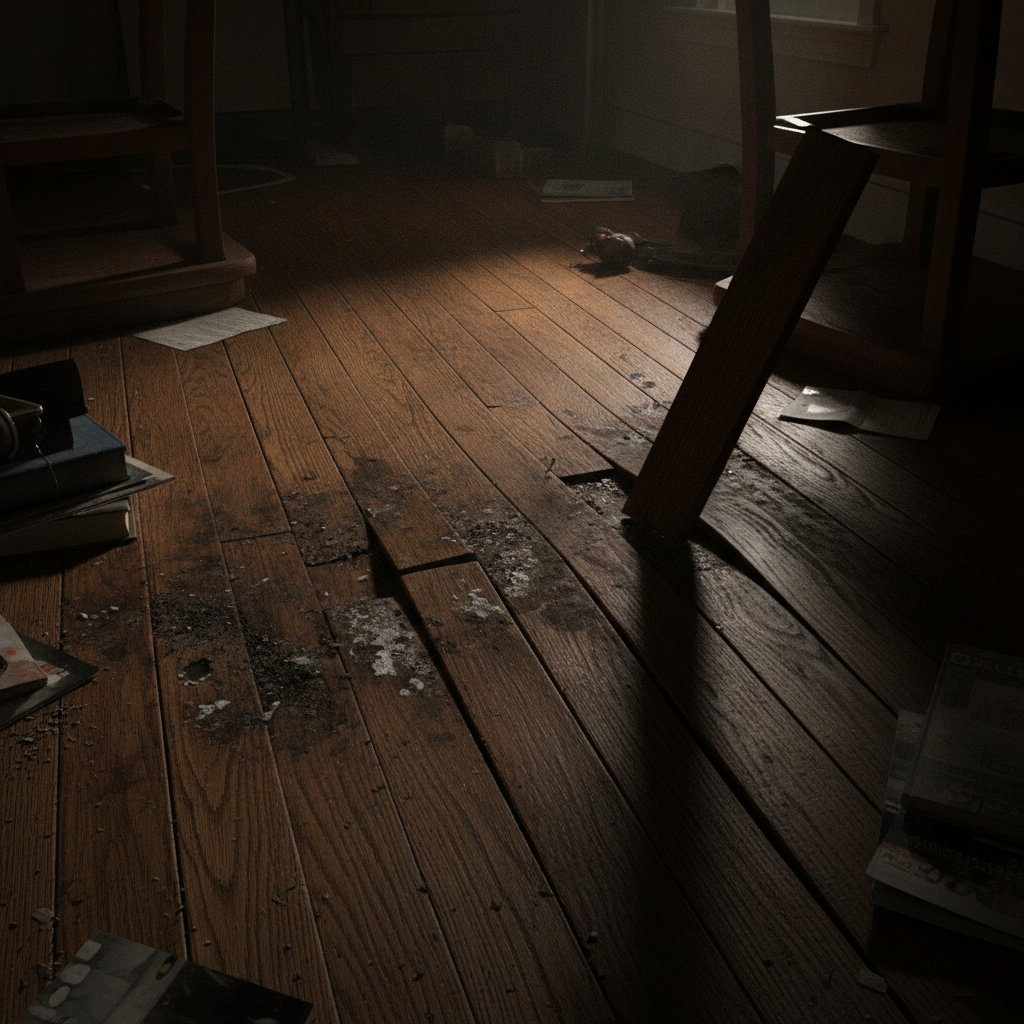
Even a minor appliance leak can lead to thousands of dollars in repairs. In cases of significant water damage, professional restoration is the only option. The Institute of Inspection, Cleaning and Restoration Certification (IICRC) sets the professional standard for this work in its IICRC S500 guide.[1] Furthermore, governmental bodies like FEMA provide extensive guidelines on post-flood cleanup, underscoring the severity and complexity of remediating water-logged wood floors.[2]
A simple DIY vs. Pro checklist can help assess the severity:
- DIY Potential: A small, recent spill on a well-sealed floor that is wiped up immediately.
- Call a Pro: Visible cupping or crowning, dark stains appearing on the wood, a musty smell, or any water damage that covers more than a few square feet. Buckling always requires professional intervention.
The Unavoidable Reality of Scratches, Dents, and Dings
Beyond water, the daily grind presents another constant threat. While the hardness of a wood species is measured on the Janka Hardness Scale, this scale primarily indicates resistance to denting, not scratching. The floor’s finish is the first line of defense against scratches, and traditional polyurethane finishes, while durable, are not invincible.
It’s important to distinguish between two types of damage:
- Surface-Level Finish Scratch: A light scuff or scratch that has only affected the top protective layer (the polyurethane). These can sometimes be buffed out or hidden with special products.
- Deep Wood Gouge: A scratch or dent that has penetrated the finish and damaged the wood fibers themselves. As authorities on wood care like Bona and Minwax explain, these are far more difficult to repair, often requiring wood filler, stain matching, and refinishing the entire area to blend the repair seamlessly.[3]
For homes with active kids, large dogs, or even just the occasional dropped pan in the kitchen, these scratches and dents are not a matter of if, but when. This reality of high maintenance flooring leads many to seek a more resilient solution.
Enter Hybrid Hardwood: The Best of Both Worlds?
In response to the clear vulnerabilities of traditional wood, manufacturers developed hybrid hardwood flooring. Products like Bravewood are engineered to deliver the authentic, natural beauty of real wood on the surface while providing a technologically advanced, waterproof core below. But is it real hardwood? The answer is yes—and no.
A hybrid hardwood plank is a multi-layered product. A typical cross-section reveals its intelligent design:
- Real Hardwood Veneer: The top layer is a slice of genuine hardwood (like oak, hickory, or maple). This is what you see and touch, providing the unique grain, texture, and beauty of a traditional wood floor.
- Waterproof Core: This is the game-changing innovation. Instead of solid wood, the core is made from a composite material, typically an SPC (Stone Plastic Composite) or WPC (Wood Plastic Composite) core. These materials are 100% waterproof and extremely stable, meaning they will not swell, warp, or buckle when exposed to moisture.
- Attached Underlayment: Most hybrid products come with a pre-attached pad that provides sound insulation, cushioning underfoot, and a moisture barrier, simplifying the installation process.
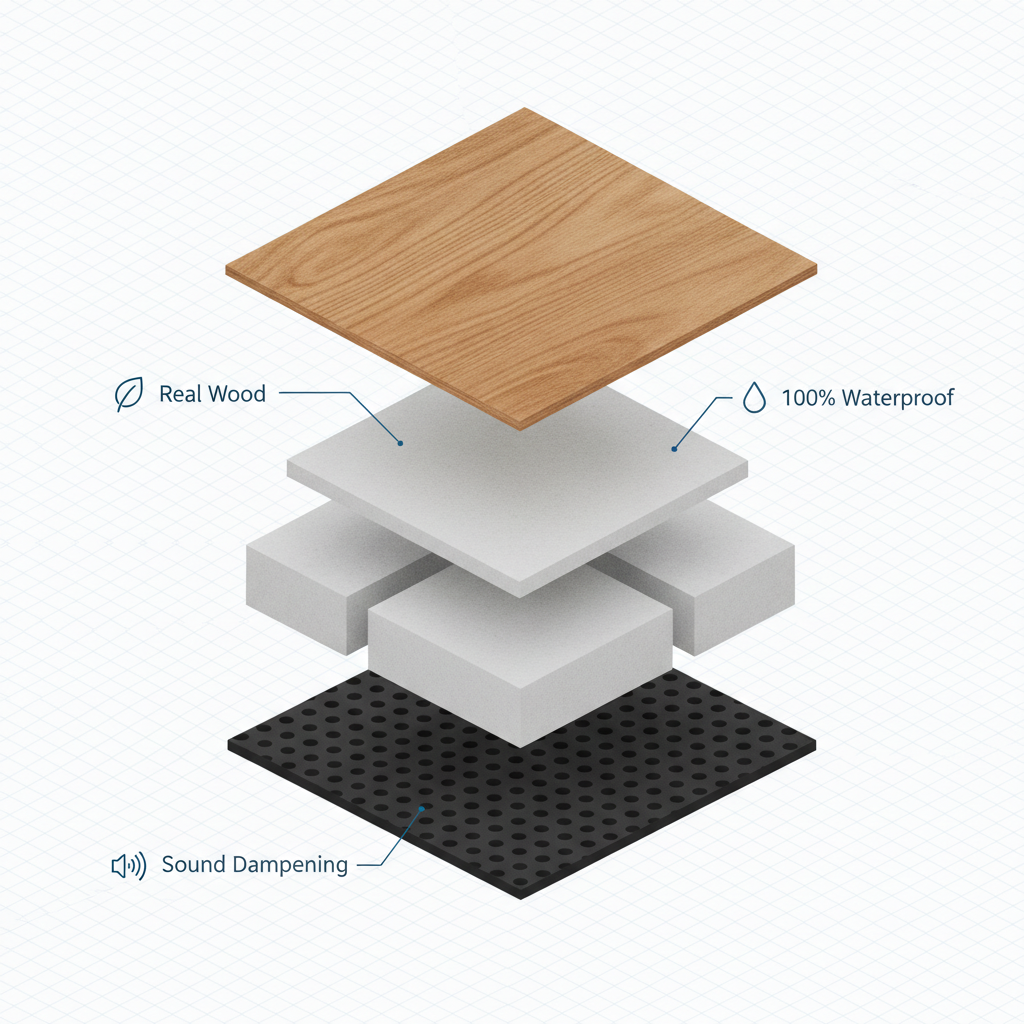
This construction, with technical specifications available from manufacturers,[4] directly solves the water damage problem. The waterproof core protects your subfloor from top-down spills, and its dimensional stability prevents the planks from cupping or crowning, offering peace of mind that was previously impossible with real wood in kitchens, bathrooms, and basements.
The Ultimate Showdown: Bravewood Hybrid vs. Traditional Hardwood
Now, let’s put these two flooring types in a head-to-head battle based on the factors that matter most to modern homeowners. For a quick overview, here is a summary of our findings:
| Feature | Bravewood Hybrid Hardwood | Traditional Solid Hardwood |
|---|---|---|
| Waterproofing | 100% Waterproof Core | Highly Susceptible to Water Damage |
| Durability | High (Aluminum Oxide Finish) | Varies by Wood & Finish |
| Ideal Location | Any room, including kitchens & basements | Not recommended for below-grade or wet areas |
| Repair Method | Plank Replacement | Sanding & Refinishing (for deep damage) |
| Refinishing | No | Yes (multiple times) |
| Installation | DIY-friendly (Click-Lock Floating) | Professional Nail-Down Recommended |
| Cost (Material) | $$-$$$ | $$-$$$$ |
| Long-Term Value | Excellent durability, low risk | Good, but with risk of costly repairs |
With solid wood, the job isn’t done until it’s sanded, stained, and sealed on-site—a messy, week-long process. With a hybrid like Bravewood, we click it together and the homeowner can move their furniture in that same day. The biggest difference, though, is I don’t get panicked calls about a dishwasher leak ruining their floor six months later.
Factor 1: Waterproofing & Moisture Resistance
This is the most significant differentiator. The composite core of hybrid hardwood is completely impervious to water. As our video test demonstrates, water can sit on the surface indefinitely without causing the plank to swell or warp. Manufacturer warranties often cover topical moisture and spills, a guarantee unheard of for solid wood,[4] though it’s important to note this does not cover major flooding from below. The performance of these materials is often verified against technical benchmarks like those set by ASTM International, which provides standards for water-performance testing.[5]
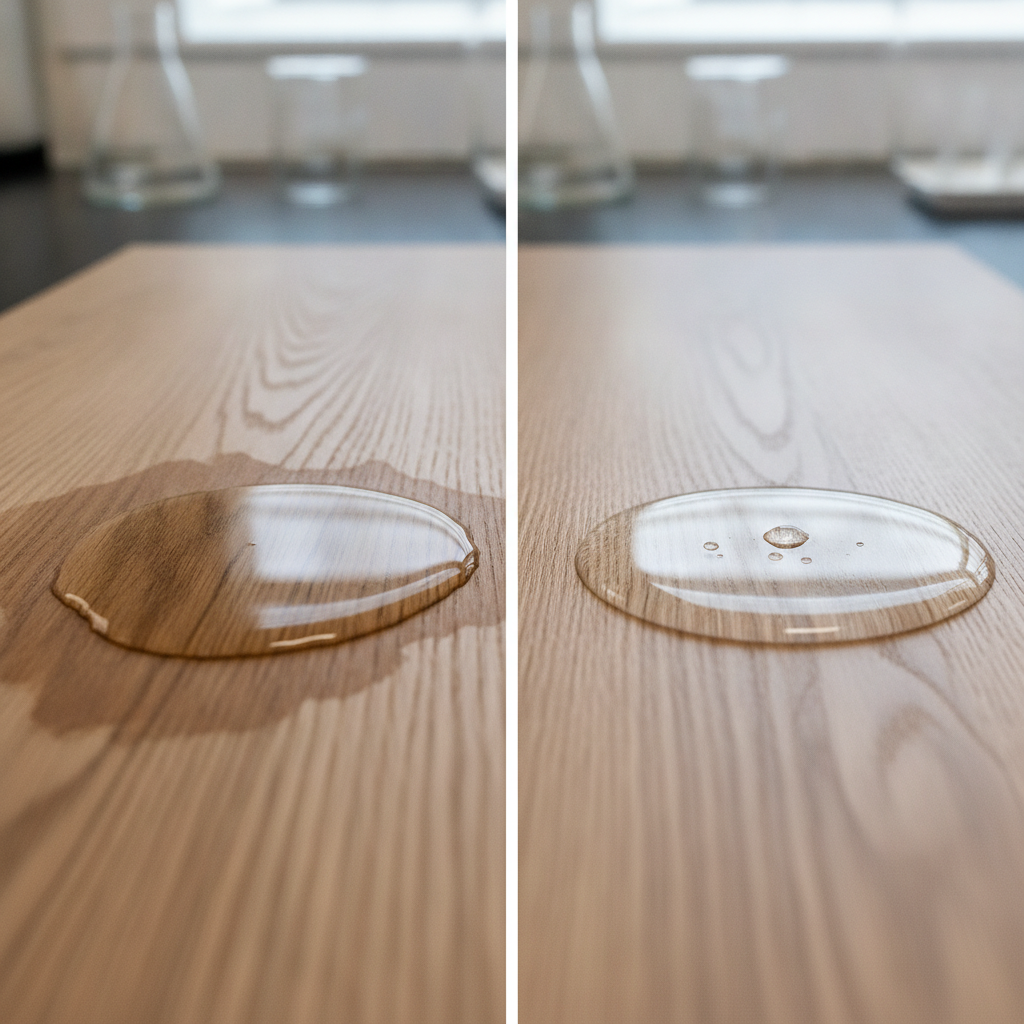
Traditional hardwood, on the other hand, will begin to absorb water immediately, leading to the cupping, crowning, and staining discussed earlier. It is fundamentally unsuitable for moisture-prone environments like basements and full bathrooms.
Factor 2: Durability, Scratch & Dent Resistance
While the top layer of hybrid flooring is real wood, it is protected by a modern, factory-applied finish containing aluminum oxide. This creates a much harder and more scratch-resistant surface than traditional, on-site-applied polyurethane. Our scratch test video shows that while both surfaces can be damaged by a deep gouge, the hybrid’s finish better resists the lighter scratches from everyday life.
The durability of a hybrid floor is often measured by the thickness of its protective wear layer. A thicker wear layer means more protection before any damage can reach the real wood veneer below. The high-resolution texture of both materials is nearly identical, as the hybrid uses a genuine wood top layer, making it visually indistinguishable from its solid counterpart.
Factor 3: Maintenance, Repair, and Lifespan
Here, the comparison becomes more nuanced. Traditional hardwood’s greatest strength is its longevity through refinishing. According to guidelines from the National Wood Flooring Association (NWFA), a standard 3/4-inch solid hardwood floor can be sanded down and refinished multiple times over its life, effectively erasing decades of wear and tear.[6]
Hybrid hardwood, due to its thin wood veneer, cannot be sanded and refinished. This is a critical trade-off. However, repairing a deep gouge is often simpler and less disruptive. Instead of refinishing an entire room, a damaged plank can be individually removed and replaced with a new one. This “plank replacement” method is a significant advantage for localized damage. For routine maintenance, both floors benefit from simple sweeping and cleaning with a pH-neutral cleaner.
Factor 4: Cost Analysis (Total Cost of Ownership)
When comparing costs, it’s essential to look beyond the initial price per square foot. A Total Cost of Ownership analysis provides a more accurate picture.
| Cost Factor | Bravewood Hybrid Hardwood | Traditional Solid Hardwood |
|---|---|---|
| Material Cost | $6 – $12 / sq. ft. | $5 – $15+ / sq. ft. |
| Installation Cost | $2 – $5 / sq. ft. (DIY possible) | $5 – $10 / sq. ft. (Pro required) |
| Hidden Costs | Minimal | Subfloor prep, staining, sealing, acclimation time |
| Risk Cost | Low (Waterproof) | High (Potential water damage repair) |
| Est. Total Initial | $8 – $17 / sq. ft. | $10 – $25+ / sq. ft. |
While material costs can be similar, hybrid flooring is significantly less expensive to install due to its click-lock system, which is also accessible to skilled DIYers. When you factor in the “risk cost”—the potential for a multi-thousand-dollar water damage repair for solid wood—the long-term value proposition of hybrid flooring becomes exceptionally strong.
Pros and Cons of Hybrid Hardwood Flooring: An Unbiased Summary
Is hybrid hardwood flooring worth it? The answer depends entirely on your priorities. Here is a clear, balanced summary to help you decide.
Pros of Hybrid Hardwood
- 100% Waterproof: The core benefit. Perfect for kitchens, basements, and homes with pets and kids.
- Authentic Wood Beauty: You get the real look and feel of hardwood because the top layer is real hardwood.
- Enhanced Durability: The commercial-grade aluminum oxide finish provides superior scratch resistance for daily life.
- Easy Installation: Click-lock floating systems reduce installation time and cost, with DIY potential.
- Dimensional Stability: Resists expansion and contraction with changes in temperature and humidity.
- Healthy Home: Many brands are FloorScore® Certified, ensuring they meet strict indoor air quality standards.[7]
Cons of Hybrid Hardwood
- Cannot Be Refinished: The thin wood veneer prevents sanding. Deep scratches require plank replacement, not refinishing.
- Thinner Wood Layer: Purists may prefer the feel and substance of a solid 3/4-inch wood plank.
- Potential for Pattern Repeat: While the wood veneer is real, in some products, the underlying texturing can show repetition.
- Newer Technology: Lacks the centuries-long track record of traditional solid hardwood.
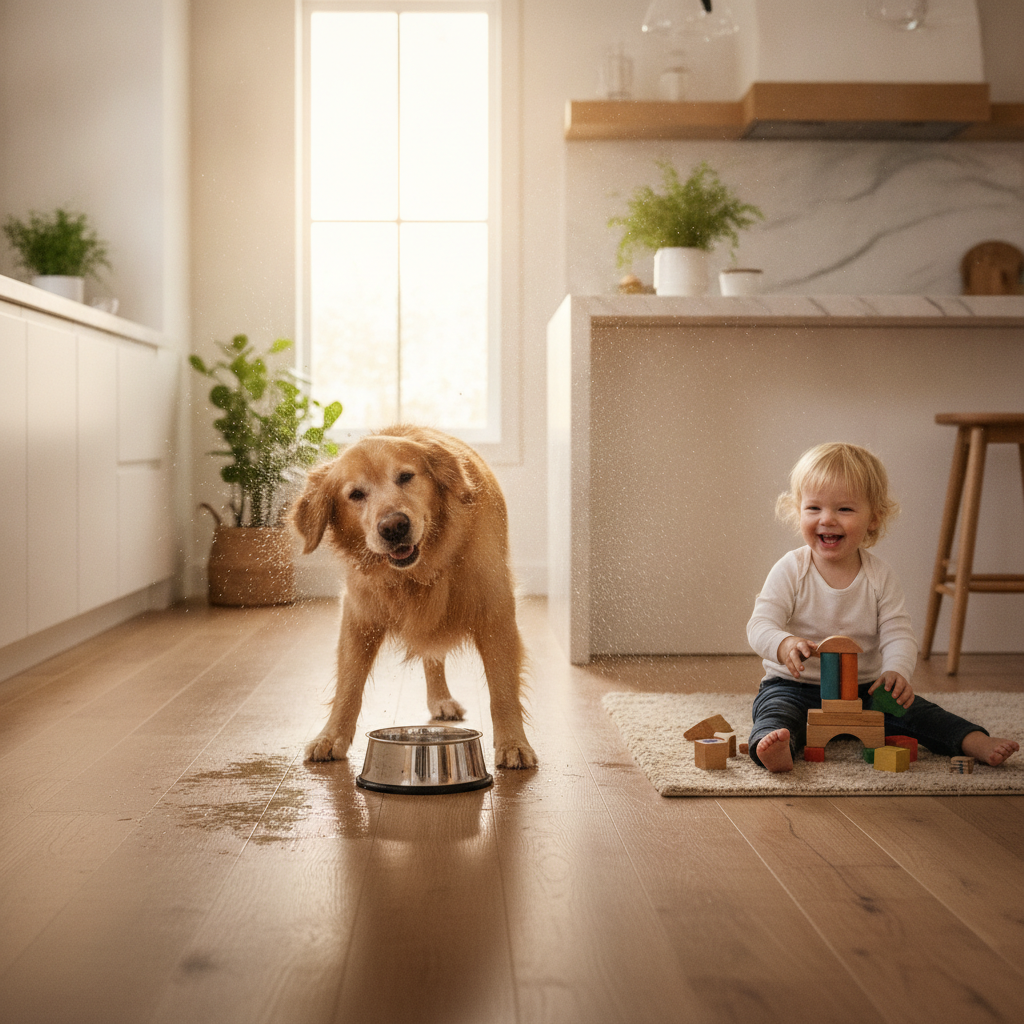
Who is Hybrid Hardwood Perfect For?
Busy families with kids and pets, homeowners planning a kitchen or basement remodel, and anyone who wants the authentic look of wood without the constant worry of water damage or scratches.
Who Should Stick with Traditional Hardwood?
Historical home purists, those who desire custom on-site staining, and homeowners who value the ability to completely refinish their floors multiple times over a 100+ year lifespan.
Beyond Hybrid: Other Top Durable & Waterproof Hardwood Alternatives
Hybrid hardwood is a fantastic solution, but it’s part of a larger family of modern, durable hardwood alternatives. To give you the complete picture, here is our proprietary Flooring Scorecard, rating the top contenders on the five criteria that matter most.
The Ultimate Flooring Scorecard
(Ratings are on a 1-5 scale, with 5 being the best)
| Flooring Type | Waterproofing | Scratch Resistance | Realism | DIY-Friendliness | Cost |
|---|---|---|---|---|---|
| Hybrid Hardwood | 5 | 4 | 5 | 4 | 3 |
| Luxury Vinyl Plank (LVP) | 5 | 5 | 4 | 5 | 5 |
| Wood-Look Porcelain Tile | 5 | 5 | 3 | 2 | 4 |
| Waterproof Laminate | 4 | 5 | 4 | 5 | 5 |
Luxury Vinyl Plank (LVP): The Champion of Realism and Resilience
LVP is a 100% synthetic material, typically with a rigid waterproof core similar to hybrid flooring. Instead of a real wood veneer, it uses a high-definition photographic layer topped with a thick, clear wear layer (often 20 mil or more). Modern LVP offers astonishingly realistic wood visuals and textures. It is arguably the best all-around value for a pet friendly waterproof flooring, combining top-tier durability and waterproofing with a budget-friendly price and the easiest DIY installation.
Wood-Look Porcelain Tile: The Pinnacle of Durability
For sheer indestructibility, nothing beats porcelain tile. It is 100% waterproof, will not scratch, and can last a lifetime. Its durability is rated on the PEI (Porcelain Enamel Institute) scale, with a PEI rating of 4 or 5 being suitable for any residential or even light commercial use. The main drawbacks are the hard, cold feel underfoot and the need for grout, which requires maintenance. To minimize this, experts from the Tile Council of North America (TCNA) often recommend using darker, stain-resistant epoxy grouts.[8]
The Final Verdict: How to Choose the Right Floor for YOUR Home
You’ve seen the data, the comparisons, and the alternatives. Now it’s time to make a decision. Use this simple framework to find the perfect fit for your specific needs.
Start with these key questions:
- Is this for a basement, full bathroom, or kitchen?
- Yes: Your choice is clear. Eliminate traditional hardwood. Focus on Hybrid Hardwood, LVP, or Porcelain Tile.
- Is the ability to sand and refinish the floor in 20 years a top priority?
- Yes: Traditional solid hardwood is your best, and really only, option.
- Do you have large dogs, active kids, or a very high-traffic household?
- Yes: Prioritize scratch resistance. LVP and Porcelain Tile are top-tier. Hybrid Hardwood is a very strong contender. Traditional hardwood is the riskiest choice.
A Special Note for Pet Owners:
When choosing a pet friendly waterproof flooring, look beyond just scratch resistance. The American Kennel Club (AKC) advises considering traction to prevent slips and injuries, especially for older dogs.[9] The subtle texturing on LVP and hybrid hardwood often provides better grip than smooth, high-gloss traditional floors.
Our Expert Verdict:
- For the Style Purist with Low Risk: If your home has no pets or young kids and you value timeless authenticity above all, traditional hardwood remains a beautiful choice.
- For the Busiest Family: Hybrid Hardwood strikes the perfect balance. You get the genuine beauty of wood with the waterproof, scratch-resistant technology needed to handle the chaos of modern family life.
- For the Ultimate Durability & Budget: Luxury Vinyl Plank (LVP) is the undisputed champion. It offers elite waterproofing and scratch resistance at an unbeatable price point, making it the smartest choice for most high-use areas.
Conclusion
The debate between classic charm and modern practicality is over. While the soul of traditional hardwood will always have its place, the realities of modern life demand a more resilient solution. Hybrid hardwood and its advanced alternatives have risen to the challenge, offering the stunning aesthetics of real wood without the inherent vulnerabilities. They provide a foundation for your home that is not just beautiful, but built for life—spills, scratches, and all.
Armed with this data-driven guide and our Flooring Scorecard, you are no longer just a shopper; you are an informed expert on your own home. You can now move forward and make a confident, long-term investment, choosing a floor that you won’t just love the day it’s installed, but for every busy, unpredictable, and wonderful day that follows.
Disclaimer: This article may contain affiliate links. All product recommendations are based on independent research and analysis. Consult with a professional flooring installer for advice specific to your home’s subfloor and environmental conditions.
References & Authoritative Sources
- Institute of Inspection, Cleaning and Restoration Certification. (N.D.). IICRC S500: Standard for Professional Water Damage Restoration. Retrieved from the IICRC website.
- Federal Emergency Management Agency (FEMA). (N.D.). Salvaging Water-Damaged Family Valuables and Heirlooms. Retrieved from the FEMA website.
- Bona US. (N.D.). Hardwood Floor Repair Guide. Retrieved from the Bona US website.
- Bravewood Flooring. (N.D.). Technical Specifications & Warranty Information. Retrieved from the official manufacturer’s website.
- ASTM International. (N.D.). Building and Construction Standards. Retrieved from the ASTM International website.
- National Wood Flooring Association (NWFA). (N.D.). Sanding & Finishing Guidelines. Retrieved from the NWFA technical publications.
- SCS Global Services. (N.D.). FloorScore®. Retrieved from the SCS Global Services website.
- Tile Council of North America (TCNA). (N.D.). TCNA Handbook for Ceramic, Glass, and Stone Tile Installation. Retrieved from the TCNA website.
- American Kennel Club (AKC). (N.D.). The Best Flooring for Dogs. Retrieved from the AKC website.
