
Choosing a new floor is one of the most significant decisions you’ll make for your home. It’s a choice you’ll live with—and walk on—every single day. But the modern flooring market can be overwhelming, filled with technical jargon, competing claims, and the nagging fear of making a costly mistake. You want the timeless beauty of hardwood, but your life demands a floor that can stand up to spills, pets, and the chaos of a busy household.
This is where two leading contenders enter the ring: Hybrid Hardwood and Luxury Vinyl Plank (LVP). Both promise the coveted wood look combined with next-generation durability and water resistance. But which one is truly the right investment for you?
This is not just another list of pros and cons. This is a lifestyle-first guide designed to decode the marketing-speak and translate complex specs into real-world performance. We’ll provide a clear framework to match your specific needs—whether you have a dog that loves to slide, kids who treat the living room like a splash zone, or a basement crying out for a beautiful, moisture-proof finish. By the end, you’ll have the clarity and confidence to choose the perfect floor for your home.
-
Hybrid Hardwood vs. LVP: A Head-to-Head Comparison
- Construction & Materials: What’s Inside Matters
- Durability Deep Dive: Scratch, Dent, and Fade Resistance
- Waterproof vs. Water-Resistant: A Critical Distinction
- Aesthetics & Realism: The Quest for the Authentic Wood Look
- Cost Comparison: Materials and Installation
- Installation & Repairability: DIY-Friendliness and Long-Term Value
- The Buyer’s Guide to a Truly Authentic Wood Look
- Which Floor is Best for YOUR Lifestyle? A Scenario-Based Guide
- Frequently Asked Questions (FAQ)
- The Final Verdict: Choosing Your Perfect Floor
- References
Hybrid Hardwood vs. LVP: A Head-to-Head Comparison
To make the best choice, you first need to understand the fundamental differences between these two innovative flooring options. While they may look similar from a distance, their construction, performance, and ideal applications vary significantly.
Construction & Materials: What’s Inside Matters
The core difference between hybrid hardwood and LVP lies in their composition. One is a true hybrid, blending natural materials with synthetic engineering, while the other is a fully synthetic marvel.
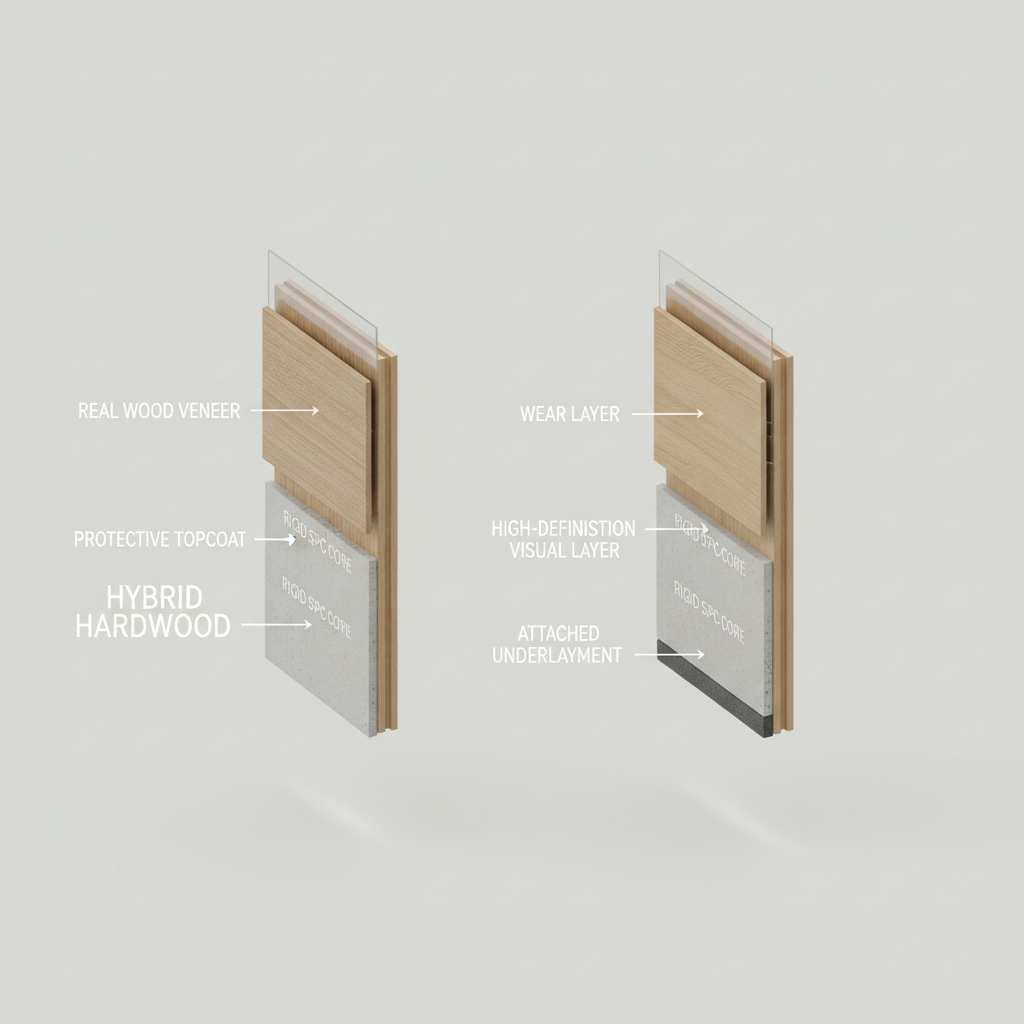
Hybrid Hardwood is built in layers, with its defining feature being a top layer of real wood veneer. This is a thin but genuine slice of hardwood (like oak, hickory, or maple), which gives it an authentic look and feel that is unique to each plank. According to the National Wood Flooring Association (NWFA), this veneer is what provides the floor’s natural grain, color, and character [2]. Beneath this veneer lies a high-density, rigid core. This core is typically made of High-Density Fiberboard (HDF) or a Stone Plastic Composite (SPC), the same type of core often found in LVP. This composite core provides dimensional stability and dent resistance.
Luxury Vinyl Plank (LVP) is 100% synthetic from top to bottom. Its layers consist of:
- A protective wear layer on top.
- A high-definition visual layer (the printed wood-look design).
- A rigid core, most commonly Stone Plastic Composite (SPC) or Wood Plastic Composite (WPC).
- An attached backing layer, often cork or foam, for sound insulation and comfort.
The Floor Covering Institute, an authority on flooring technology, explains that SPC cores are denser and more rigid, offering superior resistance to dents, while WPC cores contain a foaming agent that makes them lighter, thicker, and more comfortable underfoot [1]. This synthetic construction is what makes LVP completely waterproof.
Durability Deep Dive: Scratch, Dent, and Fade Resistance
“Durable” is a word thrown around a lot, but it means different things for different floors. Here’s how these two stack up in the real world.
Scratch Resistance: This is where LVP generally has the edge. Its durability against scratches is determined by the thickness and quality of its top wear layer. This transparent layer is measured in mils (one-thousandth of an inch). A 12-mil wear layer is good for residential use, but for homes with pets or high traffic, a 20-mil or higher commercial-grade wear layer with a protective coating like aluminum oxide offers superior protection against claws, toys, and dragged furniture. The real wood veneer on hybrid hardwood, while protected by a strong factory finish, is still wood and can be more susceptible to scratching than a high-quality LVP wear layer.
Dent Resistance: Here, the core is king. Hybrid hardwood, especially models with a rigid SPC core, offers excellent dent resistance, often outperforming traditional solid or engineered hardwood. Similarly, LVP with a dense SPC core is highly resistant to impacts from dropped objects. LVP with a softer WPC core may be slightly more prone to denting from heavy furniture.
Fade Resistance: Both products generally feature UV-inhibiting topcoats to protect against fading from sunlight. However, as LVP’s visual layer is a printed image, it is exceptionally stable. The real wood veneer of hybrid hardwood, like any natural wood product, may experience subtle color changes over time with prolonged, direct exposure to harsh sunlight.
Waterproof vs. Water-Resistant: A Critical Distinction
This is one of the most confusing and critical points for homeowners. The terms are not interchangeable.
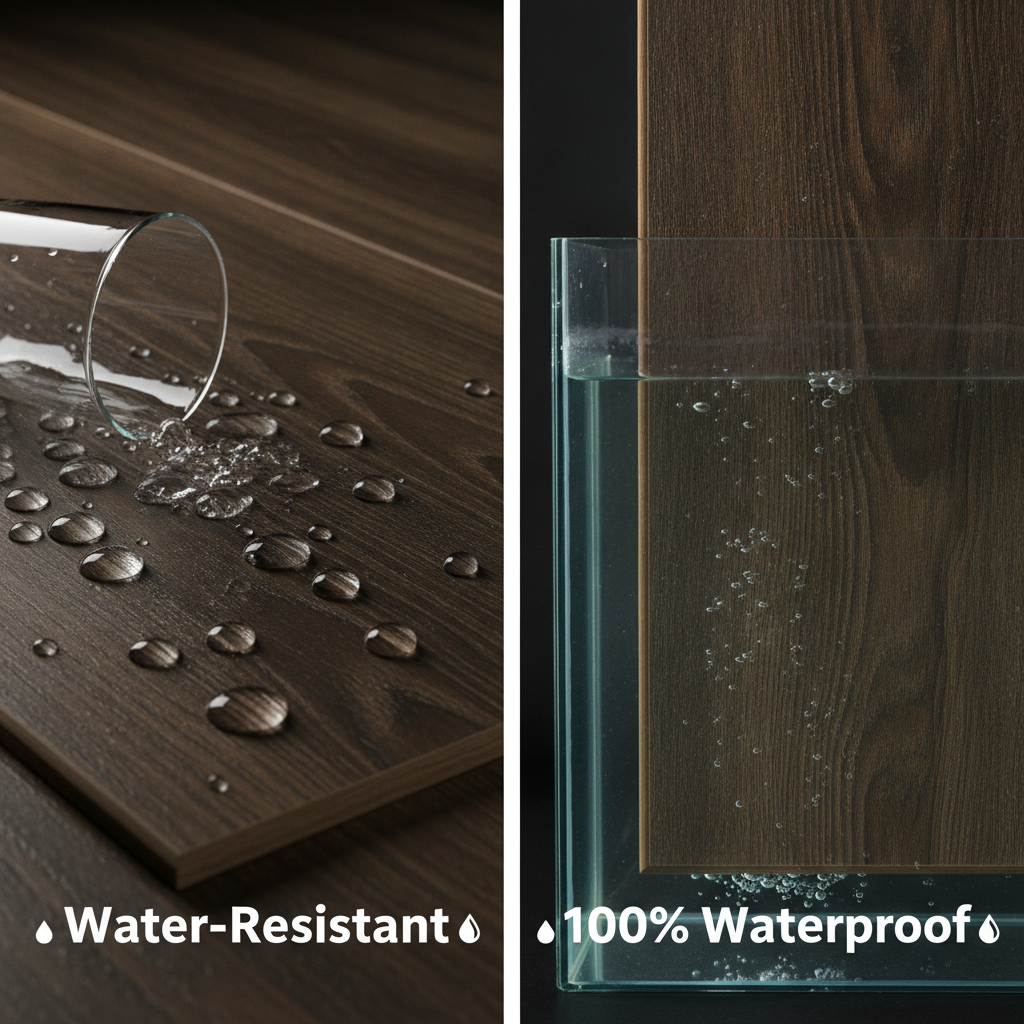
LVP is 100% waterproof. This means the plank itself will not swell, crack, warp, or be damaged by water, even if fully submerged. Its synthetic materials are inert to moisture. This makes LVP the undisputed champion for areas with high moisture levels or the risk of flooding.
Hybrid Hardwood is highly water-resistant. Thanks to its waterproof composite core and protective topcoat, it can handle everyday spills and moisture far better than traditional hardwood or engineered flooring. However, its top layer is still real wood. While protected, it is not designed to be impervious to standing water for extended periods.
The concept of “waterproof” is a technical quality, often defined by industry standards. For example, in the tile industry, a material is considered “impervious” (waterproof) if it has a water absorption rate of 0.5% or less, as measured by ASTM International test methods [3]. While a different material, this illustrates that “waterproof” is a measurable characteristic that LVP meets, while hybrid hardwood falls into the “resistant” category.
Best For…
- LVP: Full bathrooms, basements, laundry rooms, and any area where standing water or high humidity is a concern.
- Hybrid Hardwood: Kitchens, powder rooms, entryways, and main living areas where you want enhanced protection against spills without sacrificing the authenticity of real wood.
Aesthetics & Realism: The Quest for the Authentic Wood Look
Your floor is a major design element, and achieving an authentic wood look is a top priority for most homeowners.
Hybrid Hardwood wins on pure authenticity. Because it uses a real wood veneer, it possesses the natural, unique grain patterns, knots, and color variations that can’t be perfectly replicated. Each plank is one-of-a-kind. When you look at it, touch it, and walk on it, you are interacting with genuine wood.
Luxury Vinyl Plank has made incredible technological leaps in realism. Top-tier LVP can be difficult to distinguish from real wood at a glance. The key technology is Embossed in Register (EIR), which aligns the surface texture with the high-definition printed wood grain image. This means you can see and feel the texture of wood grain, knots, and saw marks, creating a highly convincing replica. However, even the best LVP will have a repeating pattern, whereas hybrid hardwood is naturally random.
Cost Comparison: Materials and Installation
Generally, LVP offers a more budget-friendly price point, though high-end LVP can overlap with the cost of hybrid hardwood.
| Flooring Type | Average Material Cost (per sq. ft.) | Average Installation Cost (per sq. ft.) | Total for 200 sq. ft. Room (Estimate) |
|---|---|---|---|
| Luxury Vinyl Plank (LVP) | $2.50 – $7.00 | $2.00 – $4.00 | $900 – $2,200 |
| Hybrid Hardwood | $6.00 – $12.00 | $3.00 – $5.00 | $1,800 – $3,400 |
Note: These are general estimates. Prices vary significantly based on brand, quality, region, and project complexity.
Installation & Repairability: DIY-Friendliness and Long-Term Value
Both LVP and hybrid hardwood are typically installed as “floating floors” using a click-lock system, making them relatively friendly for experienced DIYers.
The biggest difference comes in long-term repair. If a plank of LVP gets severely damaged, a skilled installer (or DIYer) can often carefully remove and replace just that single plank.
Repairing hybrid hardwood is more complex. A deep gouge that penetrates the wood veneer cannot be sanded out as you would with solid hardwood. The repair often involves either replacing the entire plank, which can be difficult, or using specialized color-matched fillers and finish pens. According to members of the Certified Flooring Installers Association (CFI), proper plank replacement for either floor type requires skill to avoid damaging the surrounding locking mechanisms [4].
The Buyer’s Guide to a Truly Authentic Wood Look
The fear of choosing a floor that looks “fake” is real. Whether you choose LVP or another wood-look product, here are the five key features that separate a realistic, high-end floor from a cheap imitation.
Texture is Key: Why Embossed in Register (EIR) Matters
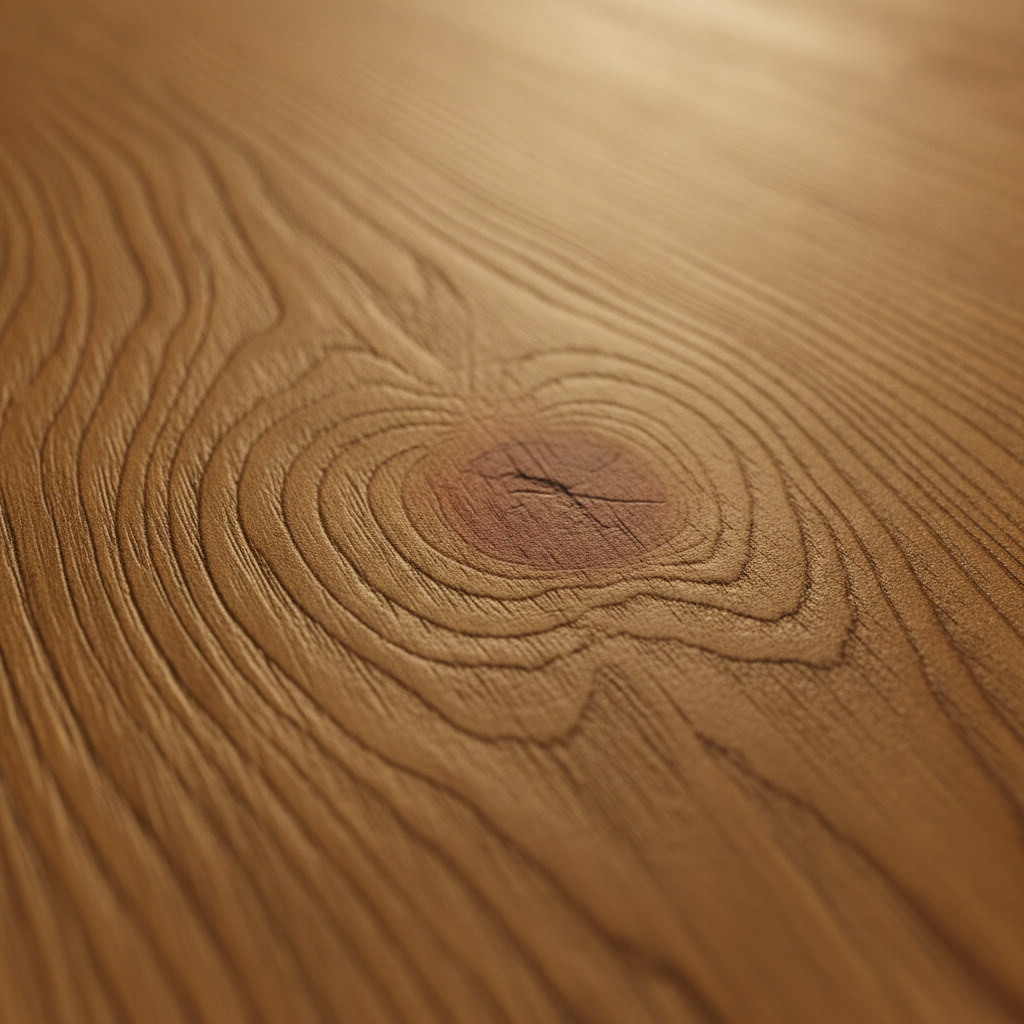
Embossed in Register (EIR) is the single most important technology for creating realistic LVP. Standard LVP might have a generic wood-like texture applied over the whole surface, but it doesn’t match the visual grain. With EIR, the manufacturing process uses plates to press a texture that perfectly aligns with the printed image below. You can see a knot and feel the knot. This synergy between sight and touch is what tricks the brain into perceiving the material as real wood. When shopping, always ask if the LVP features EIR technology.
Pattern Variation: Avoiding the Repetitive Look
Nothing screams “fake floor” faster than seeing the exact same knot or grain pattern repeated every few feet. This is a common issue with low-quality LVP. Premium manufacturers invest in high-definition printing with a large number of unique plank visuals. As a rule of thumb, look for products with at least 10-12 unique plank patterns to ensure a natural, random installation that mimics the organic variety of real hardwood.
The Right Finish: Matte vs. Gloss
The sheen of your floor has a massive impact on its perceived realism. While some older or cheaper vinyl products have a high-gloss, almost plastic-like finish, this is rarely found in authentic wood floors. A low-gloss or matte finish more closely resembles the sophisticated look of a modern oiled or site-finished hardwood floor. As a bonus, a matte finish is far better at hiding minor scratches, dust, and footprints, making it a practical choice for busy homes.
Details That Count: Beveled Edges and Plank Dimensions
Subtle details make a big difference. Look for planks with micro-beveled edges. This means each plank has a tiny, angled cut along its edges. When installed, these bevels create a subtle definition between the planks, just like in a real hardwood floor. Planks with perfectly square edges can sometimes blend together, creating a flat, unrealistic, sheet-like appearance.
Plank dimensions also contribute to a premium look. Wider and longer planks (e.g., 7″ wide by 60″ long or more) are a hallmark of high-end hardwood and can make a room feel larger and more luxurious.
Which Floor is Best for YOUR Lifestyle? A Scenario-Based Guide
Now it’s time to apply this knowledge to your life. The “best” floor isn’t a single product; it’s the one that solves your specific problems and meets your unique needs.
For Homes with Pets and Kids: The Durability Champion
Winner: High-Quality LVP
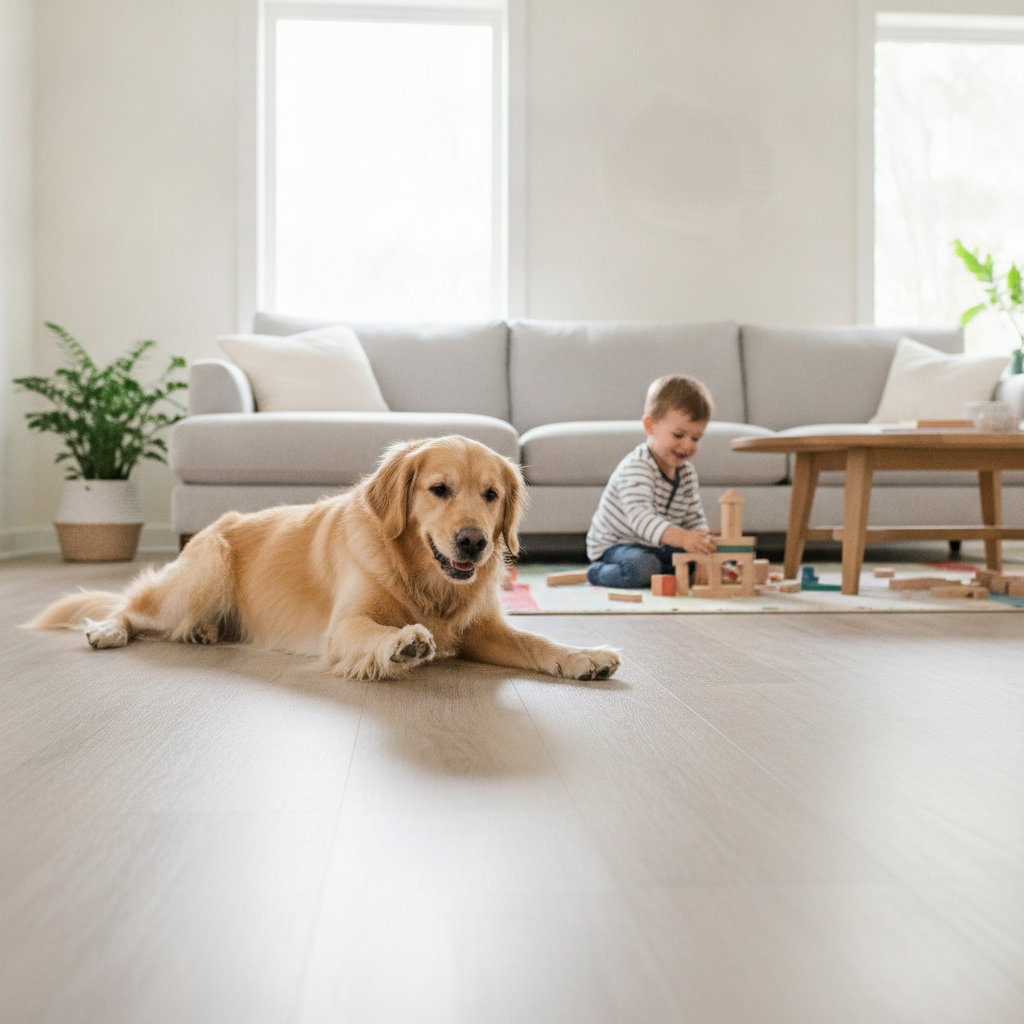
For households with the constant threat of pet claws, dragged toys, and non-stop foot traffic, a top-tier LVP is the clear champion. Specifically, look for an LVP with a commercial-grade wear layer of 20 mil or higher and a protective topcoat like aluminum oxide. The dense SPC core will resist dents from dropped items, and the textured, matte finish will help conceal the inevitable micro-scratches of an active life. It’s the closest you can get to a worry-free floor in a busy home.
For Kitchens, Basements, and Bathrooms: The Waterproof Winner
Winner: LVP
In any area prone to moisture, spills, or humidity, the 100% waterproof nature of LVP makes it the safest and most logical choice. It’s perfect for kitchens, laundry rooms, and full bathrooms. For below-grade basements, LVP is one of the best possible flooring solutions. The Institute of Inspection, Cleaning and Restoration Certification (IICRC) emphasizes using fully waterproof materials in any installation where moisture is a known risk [5]. While hybrid hardwood is water-resistant enough for most kitchens, LVP provides ultimate peace of mind in the wettest areas of your home.
For Maximum Resale Value: The Authenticity Advantage
Winner: Hybrid Hardwood
While both options are desirable to modern buyers, the presence of real wood often carries a higher perceived value. Real estate professionals frequently note that buyers respond positively to the look and feel of genuine wood surfaces. The authentic wood veneer of hybrid hardwood can give it an edge in the eyes of potential buyers, potentially boosting your home’s resale value. That said, a high-quality, beautifully installed LVP is also a major selling point and a huge upgrade over old carpet or dated tile.
For the DIY Installer: The Easiest to Work With
Winner: It’s a Tie (with slight differences)
Both LVP and hybrid hardwood are designed with the DIYer in mind, thanks to their click-lock floating floor systems. They don’t require nails, glue, or specialized flooring tools beyond a saw, tapping block, and pull bar. LVP can sometimes be slightly easier to cut, as some thinner products can be scored with a utility knife and snapped. The thicker, denser cores of hybrid hardwood and robust LVP will require a power saw for clean cuts. The Certified Flooring Installers Association (CFI) advises any DIYer to focus on a perfectly flat and clean subfloor, as this is the most critical step for a successful installation of either product [4].
Frequently Asked Questions (FAQ)
Can you refinish hybrid hardwood flooring?
No. This is a critical limitation to understand. Due to its very thin wood veneer, hybrid hardwood cannot be sanded down and refinished like solid hardwood. The National Wood Flooring Association (NWFA) notes that a substantial wood layer is required to allow for sanding [2]. Once the factory finish on a hybrid floor is worn through, or if it sustains a deep scratch, the plank must be replaced or cosmetically repaired.
Which is quieter underfoot, LVP or hybrid hardwood?
The core material and underlayment play the biggest roles here. LVP with a very dense SPC core can sometimes create more clicking noise underfoot. Hybrid hardwood with an HDF core or LVP with a thicker WPC core can be inherently quieter. However, the most important factor for acoustics is a quality underlayment. Many modern LVP and hybrid products come with a pre-attached backing pad, which provides excellent sound insulation. If your chosen floor doesn’t have one, adding a separate underlayment is crucial for reducing noise.
What is the best way to clean LVP and hybrid hardwood floors?
Both floors are easy to maintain and should be cleaned similarly. Regular sweeping or vacuuming (with the beater bar turned off) is the first step. For deeper cleaning, use a microfiber mop with a pH-neutral flooring cleaner specifically approved for vinyl or urethane finishes. Never use steam mops, wax, oil soaps, or harsh abrasive cleaners. Always wipe up spills promptly and avoid letting large amounts of water sit on the floor, especially on hybrid hardwood.
The Final Verdict: Choosing Your Perfect Floor
The debate between hybrid hardwood and LVP isn’t about which floor is universally “better,” but which floor is perfectly suited to you. The choice becomes clear when you prioritize your needs.
If your primary goal is ultimate durability and worry-free waterproofing, especially for a busy home with pets, kids, or moisture-prone areas like a basement, Luxury Vinyl Plank (LVP) is your champion. Its 100% synthetic construction and robust wear layer offer unparalleled performance and peace of mind.
If your heart is set on the unmatched, authentic beauty of real wood for your main living areas, and you want excellent water resistance and stability that traditional hardwood can’t provide, Hybrid Hardwood is the superior choice. It delivers the genuine look and feel of wood with the performance benefits of a modern composite core.
Ultimately, the best floor is the one that seamlessly fits your lifestyle, budget, and design vision. By understanding the core strengths of each of these incredible flooring innovations, you can invest with confidence, knowing you’ve chosen a foundation for your home that is not only beautiful but built to last.
This article provides general guidance. Always consult with a professional flooring installer for advice specific to your home’s conditions and subfloor. Product specifications can vary by manufacturer; always check the documentation for the specific product you are considering.
References
- Floor Covering Institute. (n.d.). Technical Information on Flooring Materials. Retrieved from floorcoveringinstitute.com
- National Wood Flooring Association (NWFA). (n.d.). Wood Flooring Standards and Guidelines. Retrieved from nwfa.org
- ASTM International. (n.d.). ASTM C373 – Standard Test Method for Water Absorption. Retrieved from astm.org
- Certified Flooring Installers Association (CFI). (n.d.). Installation Standards and Professional Insights. Retrieved from cfi-installers.org
- Institute of Inspection, Cleaning and Restoration Certification (IICRC). (n.d.). IICRC S500 Standard for Professional Water Damage Restoration. Retrieved from iicrc.org
