
Choosing the perfect floor for your home can feel like navigating a maze. You want the timeless beauty of hardwood, but your life—filled with kids, pets, and the occasional spilled drink—demands something tougher. The market is flooded with options, but two champions of modern flooring consistently rise to the top: Waterproof Hybrid Hardwood and Luxury Vinyl Plank (LVP). Both promise durability and water resistance, but which one is truly right for you?
This is the challenge for countless homeowners: cutting through the marketing jargon to find a clear, practical answer. You’re not just buying planks; you’re investing in the foundation of your home’s style and function for years to come.
This guide is your definitive showdown. We’ll ditch the confusing sales pitches and provide a practical, scenario-based comparison of hybrid hardwood vs. LVP. We’ll break down their construction, compare their performance in real-world situations, analyze the true cost, and give you a simple framework to confidently choose the perfect floor for your specific lifestyle.
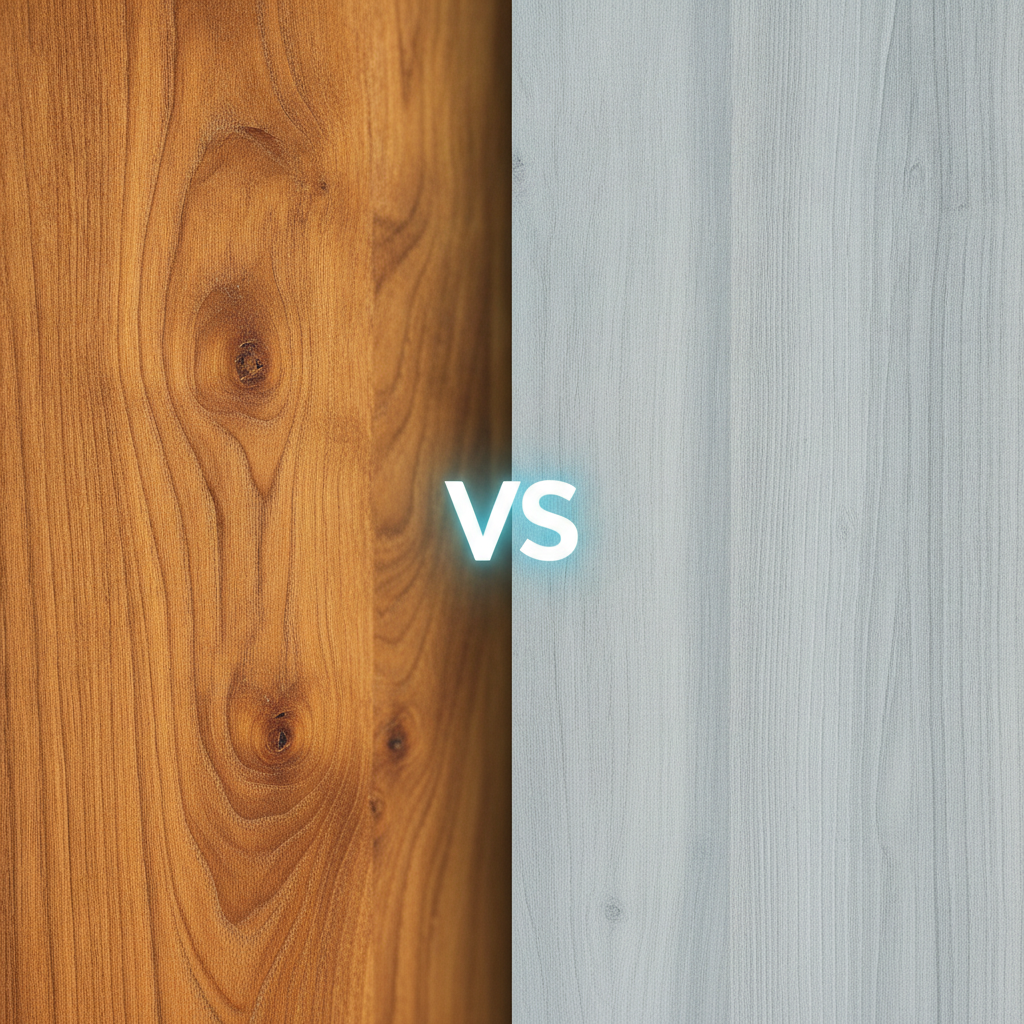
- Quick Comparison: Hybrid Hardwood vs. LVP At-a-Glance
- What is Waterproof Hybrid Hardwood Flooring?
- What is Luxury Vinyl Plank (LVP) Flooring?
- Head-to-Head Showdown: A Detailed Performance Comparison
- Cost vs. Value: A Complete Financial Breakdown
- Making the Right Choice: Which Floor is Best for Your Home?
- The Final Verdict
- References & Sources
Quick Comparison: Hybrid Hardwood vs. LVP At-a-Glance
For those who need a quick summary, here’s a direct, side-by-side look at how these two waterproof flooring options stack up.
| Feature | Waterproof Hybrid Hardwood | Luxury Vinyl Plank (LVP) |
|---|---|---|
| Core Material | Real wood veneer over a waterproof composite core (typically SPC). | 100% synthetic materials. A printed design layer over a waterproof core (SPC or WPC). |
| Waterproofing Method | Waterproof core and sealed top layer protect against topical spills. | Fully waterproof from top to bottom. Core and surface are impervious to water. |
| Average Material Cost | $7 – $15 per sq. ft. | $3 – $8 per sq. ft. |
| Durability (Wear Layer) | Durable urethane with aluminum oxide finish. | High-performance urethane wear layer, measured in mils (typically 12-22 mil for residential). |
| Feel Underfoot | Firm and solid, feels more like traditional hardwood. | Can feel slightly softer and warmer, especially with a WPC core and attached pad. |
| Typical Lifespan | 20-30 years, depending on veneer thickness and quality. | 15-25 years, depending on wear layer thickness and core quality. |
What is Waterproof Hybrid Hardwood Flooring?
Waterproof hybrid hardwood is one of the most exciting innovations in the flooring industry. It solves the age-old problem of wood’s vulnerability to water. Think of it as the perfect marriage of nature and technology: it gives you the authentic, unique beauty of real wood on the surface, backed by a completely waterproof, high-tech core.
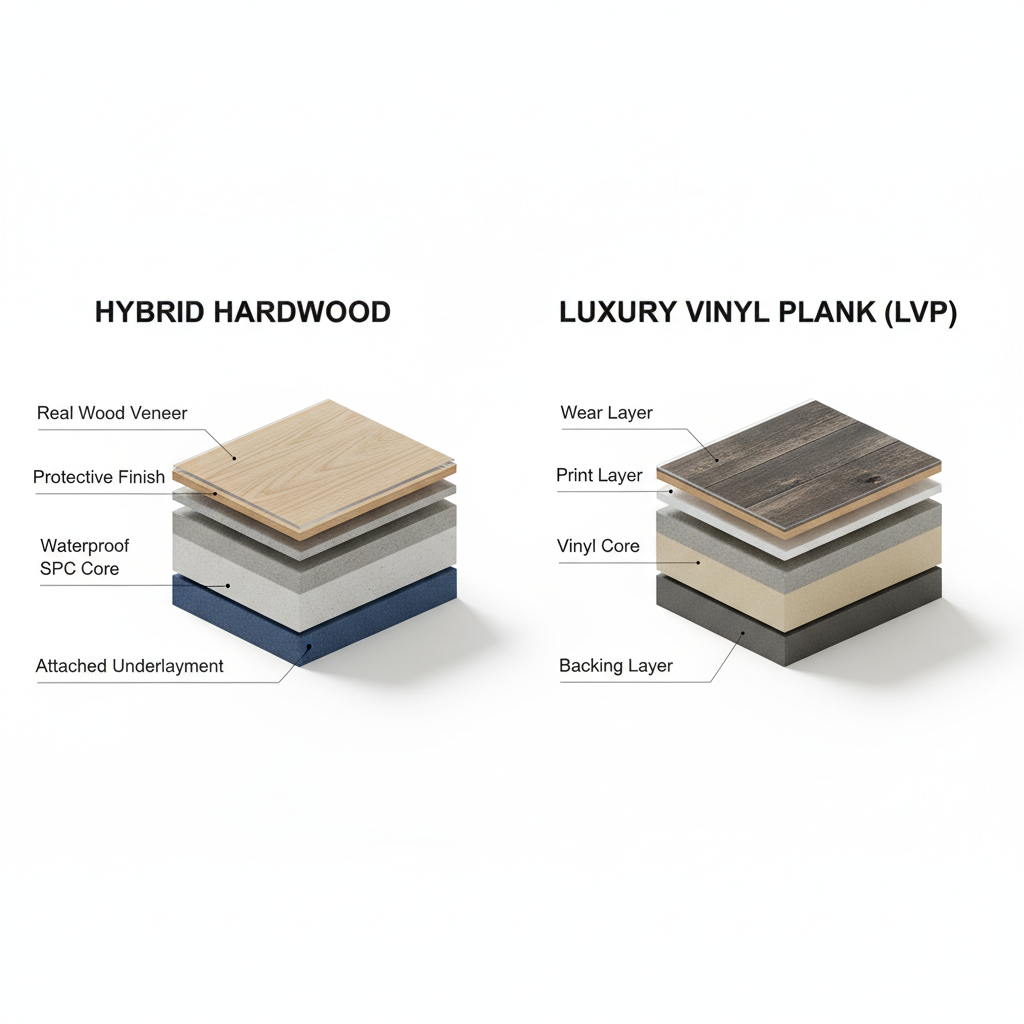
The construction is key. A typical plank is made of several layers:
- Real Hardwood Veneer: This is the top layer and what you see and feel. It’s a thin but genuine slice of wood, often oak, hickory, or maple, showcasing real grain patterns and texture.
- Protective Finish: A factory-applied, multi-layer urethane finish with aluminum oxide provides robust protection against scratches, stains, and fading.
- Waterproof Core: This is the magic ingredient. The wood veneer is bonded to a rigid, 100% waterproof core, most commonly a Stone Polymer Composite (SPC) core. This core prevents the plank from swelling, warping, or buckling when exposed to moisture.
- Attached Underlayment: Most hybrid hardwood products come with a pre-attached pad (like cork or foam) that provides sound absorption, insulation, and underfoot comfort.
Pro-Tip: When shopping for hybrid hardwood, pay close attention to the thickness of the real wood veneer. While it can’t be sanded and refinished like solid hardwood, a thicker veneer will offer a more premium look and feel, contributing to the floor’s overall longevity and value.
Pros: The Best of Both Worlds
- Authentic Wood Beauty: This is hybrid hardwood’s biggest advantage. You get the unique grain, knots, and character of real wood because it is real wood on top. No two planks are identical.
- Completely Waterproof: The SPC core makes the planks themselves waterproof, allowing you to confidently install the beauty of hardwood in kitchens, mudrooms, and even finished basements.
- Exceptional Durability: The combination of a rigid core and a tough factory finish makes it highly resistant to dents, scratches, and the daily wear and tear from pets and kids.
- Easy Installation: Like LVP, it’s typically installed as a floating floor with a click-lock system, making it a viable DIY project for many homeowners.
Cons: Potential Drawbacks to Consider
- Higher Cost: The inclusion of real wood makes hybrid hardwood a more premium product, generally costing significantly more per square foot than LVP.
- Cannot Be Refinished: The wood veneer is too thin to be sanded down and refinished. Deep scratches that penetrate the finish and veneer are permanent, though minor scratches can often be concealed with repair kits. Manufacturer warranties explicitly state that attempting to sand the surface will void all coverage[1].
- Pattern Repeats: While the wood grain is unique, the plank dimensions and overall stain color can create a more uniform look than traditional, site-finished hardwood.
What is Luxury Vinyl Plank (LVP) Flooring?
Luxury Vinyl Plank, or LVP, is a well-established powerhouse in the waterproof flooring market. It’s a 100% synthetic product engineered for maximum durability and versatility. LVP uses advanced 3D printing technology to create remarkably realistic visuals that mimic wood, stone, or even concrete.
Its layered structure is built for performance:
- Wear Layer: A clear, tough top layer that protects the floor from scratches, scuffs, and stains. Its thickness, measured in mils, is the single most important factor in the floor’s durability.
- Print Layer: A high-resolution printed image that gives the plank its look. The quality of this layer determines how realistic the floor appears.
- Vinyl Core: The main body of the plank, which is 100% waterproof and provides stability. This core comes in a few different types, which we’ll explore next.
- Backing Layer: The bottom layer, which often includes an attached underlayment for comfort and sound dampening.
Many quality LVP products are also FloorScore certified, which means they are independently tested to meet strict indoor air quality standards and contribute to a healthier home environment[2].
Understanding LVP Cores: SPC vs. WPC
The core is the heart of an LVP plank, and the two most common types have distinct characteristics:
- SPC (Stone Polymer Composite): Made from a mixture of limestone powder, PVC, and stabilizers. This creates an incredibly dense, rigid, and stable core.
- Pros: Extremely dent-resistant, making it ideal for high-traffic areas, heavy furniture, and commercial applications. Very stable against temperature changes.
- Cons: Feels harder and colder underfoot.
- WPC (Wood Polymer Composite): Made from a mixture of recycled wood pulp, PVC, and a foaming agent. This makes the core lighter and less dense than SPC.
- Pros: Feels softer, warmer, and quieter underfoot, making it more comfortable for living areas and bedrooms.
- Cons: Less dent-resistant than SPC.
Pros: Unbeatable Durability and Versatility
- Essentially Indestructible: With a thick wear layer (20 mil or more), LVP is one of the most durable flooring options available, standing up to pet claws, dropped toys, and heavy foot traffic with ease.
- 100% Waterproof: Every component of LVP is synthetic and impervious to water, making it the go-to choice for bathrooms, laundry rooms, and basements.
- Budget-Friendly: LVP offers incredible performance and aesthetics at a price point that is significantly lower than hybrid hardwood.
- Endless Style Options: From rustic barnwood to sleek, modern oak, the design possibilities are virtually limitless.
Cons: Where LVP Can Fall Short
- It’s Not Real Wood: No matter how realistic the image is, LVP is still a replica. Discerning eyes can often spot the pattern repeats, and it lacks the unique texture and depth of a real wood veneer.
- Lower Resale Value Impact: While high-quality LVP is seen as a major upgrade over old carpet or sheet vinyl, it generally doesn’t add the same perceived resale value as flooring with a real wood component. As one interior designer notes, “Buyers are savvy. They appreciate the practicality of LVP, but the ‘wow’ factor and premium value still belong to floors with genuine wood.”
Head-to-Head Showdown: A Detailed Performance Comparison
Now let’s put these two flooring giants in the ring and compare them on the factors that matter most to a busy household.
Winner for Durability & Scratch Resistance
This is an incredibly close match. Hybrid hardwood’s protective aluminum oxide finish is exceptionally tough. LVP’s durability is determined by its wear layer thickness. For an average family, a high-quality product from either category will perform brilliantly. However, for extreme situations—like a home with multiple large dogs or heavy commercial traffic—a premium LVP with a 20 mil or 22 mil wear layer has a slight edge in its ability to resist deep scratches and gouges.
Winner: LVP (by a slight margin)
Winner for Waterproof Capabilities
Both products are marketed as “waterproof,” and for everyday spills, they both perform flawlessly. You can leave a puddle on either surface for hours, and the plank itself will not be damaged. The key difference lies in the materials. Hybrid hardwood has a real wood veneer on top, while LVP is 100% synthetic. In a major flooding event, both floors would likely require removal to dry the subfloor, but LVP planks are more likely to be completely salvageable and reinstallable. Manufacturer warranties for both types cover topical moisture but not damage from hydrostatic pressure or flooding from below[1].
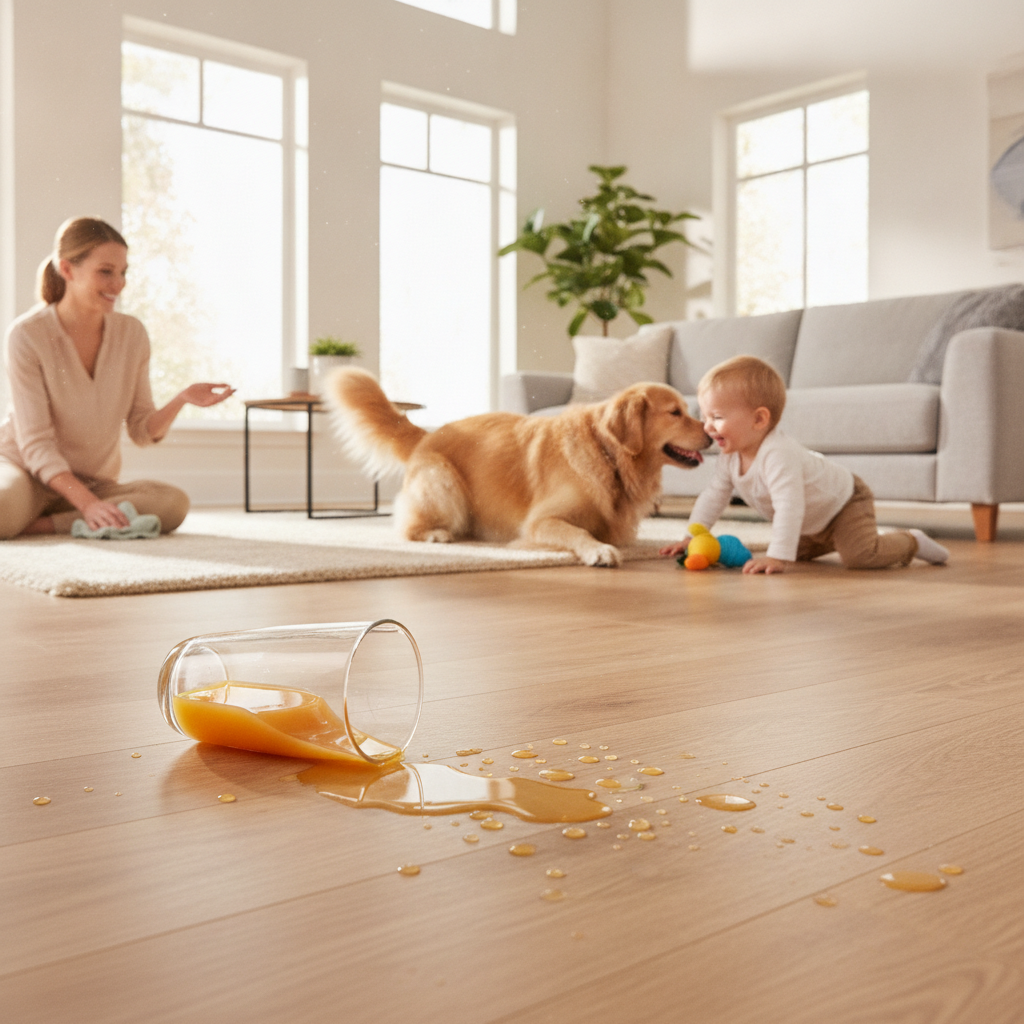
Winner: LVP
Winner for Aesthetics & Realism
There’s no substitute for the real thing. While high-end LVP looks fantastic and can fool most people at a glance, it can’t replicate the unique depth, texture, and one-of-a-kind grain pattern of a genuine wood veneer. If your absolute top priority is the authentic look and feel of hardwood, hybrid is the undeniable champion.
Winner: Hybrid Hardwood
Winner for Comfort & Feel Underfoot
This depends on your preference. Hybrid hardwood, with its rigid SPC core, feels very firm and solid underfoot, closely mimicking the feel of a traditional nail-down hardwood floor. LVP offers more variety. An SPC-core LVP will feel similarly firm, but a WPC-core LVP will provide more cushion and warmth.
Pro-Tip from an Installer: “Clients are often surprised by the difference in sound. The dense core of hybrid hardwood and SPC vinyl gives a quieter, more solid ‘thud’ when you walk on it, while some thinner or less dense LVP can have a slightly hollow ‘tapping’ sound if the subfloor isn’t perfectly level.”
For overall comfort and warmth, the option of a WPC core gives LVP a slight advantage.
Winner: LVP (specifically WPC core options)
Cost vs. Value: A Complete Financial Breakdown
Budget is a major factor in any renovation. Here’s how the costs break down for these two flooring types.
Material Costs: Upfront Price Per Square Foot
This is the most straightforward comparison. Hybrid hardwood is a premium product with a higher price tag.
- Waterproof Hybrid Hardwood: Typically ranges from $7 to $15 per square foot.
- Luxury Vinyl Plank (LVP): Typically ranges from $3 to $8 per square foot for quality residential products.
For a 1,000-square-foot project, this could mean a difference of $4,000 to $7,000 or more in material costs alone.
Installation Costs: DIY vs. Professional
Both flooring types use a click-lock floating installation method, making them popular for confident DIYers. This can save you $2 to $5 per square foot in labor costs. However, professional installation is highly recommended to ensure a perfect finish and, crucially, to keep your product warranty intact.
Pro-Tip: The biggest hidden cost in any flooring project is subfloor preparation. Both hybrid hardwood and LVP require a flat, clean, and dry subfloor. If your subfloor needs leveling, grinding, or repairs, this can add significant cost and time to your project, regardless of which flooring you choose.
Long-Term Value and ROI
Both options offer excellent long-term value. They are durable, low-maintenance, and will last for decades. When it comes to home resale value, however, there’s a general consensus among real estate professionals. Any flooring that contains real wood tends to have a higher perceived value to potential buyers. While LVP is a fantastic and desirable feature, hybrid hardwood can often be listed and marketed as a type of “hardwood flooring,” which can command a higher premium in the real estate market.
Making the Right Choice: Which Floor is Best for Your Home?
The “best” floor is the one that best fits your budget, lifestyle, and aesthetic priorities. Use this simple checklist to find your winner.
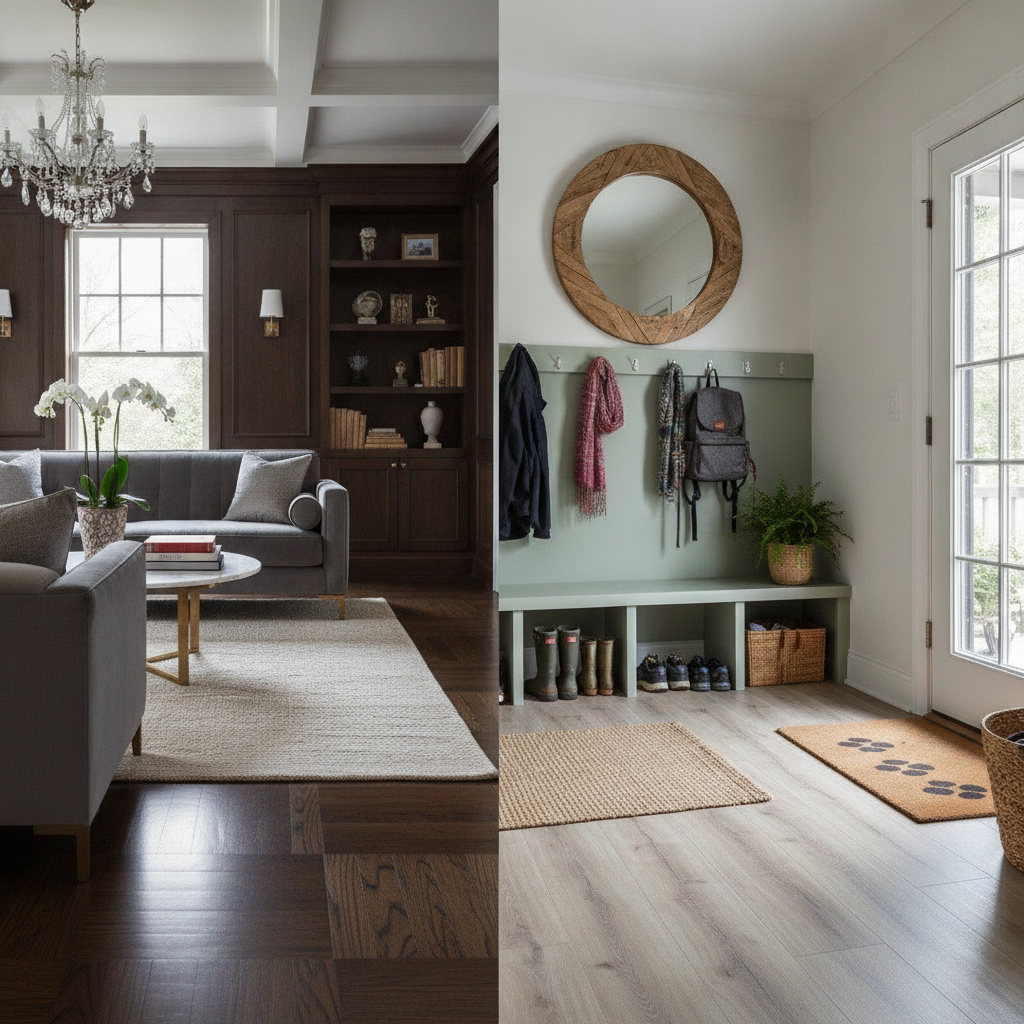
Choose Hybrid Hardwood If…
- Authentic wood aesthetics are your #1 priority. You want the unique, natural beauty of real wood and are willing to pay a premium for it.
- You are flooring main living areas, dining rooms, or bedrooms. These are areas where the premium look of real wood makes the biggest impact on home value.
- Your budget can accommodate a higher-end product. You see this as a long-term investment in your home’s beauty and value.
Choose LVP If…
- You need the absolute best performance for your budget. LVP offers an unbeatable combination of durability, style, and affordability.
- You’re flooring a high-moisture or high-traffic area. It’s the ideal choice for basements, bathrooms, laundry rooms, and mudrooms where ultimate water and scratch resistance is essential.
- You have large pets or a very active young family. A thick wear-layer LVP provides maximum peace of mind against scratches, dents, and spills.
- You want the widest possible range of styles and colors to perfectly match your home’s decor.
The Final Verdict
The choice between waterproof hybrid hardwood and LVP flooring is a fantastic problem to have—you’re deciding between two of the best flooring technologies on the market. There is no single right answer, only the right answer for you.
Hybrid hardwood delivers the unmatched, authentic beauty of real wood with the modern convenience of a waterproof core. It’s an investment in aesthetics and premium feel. LVP, on the other hand, is the pragmatic workhorse, offering near-indestructible performance and incredible style at a fraction of the cost.
By evaluating your room, your lifestyle, and your budget against the strengths of each product, you can move forward confidently, knowing you’re making a smart investment that you’ll love for years to come.
This article may contain affiliate links. All cost estimates are for informational purposes and can vary significantly based on location, materials, and labor.
References & Sources
- Shaw Floors. (n.d.). Floorte Hardwood Warranty Information. Retrieved from a representative manufacturer warranty document outlining coverage details, including exclusions for sanding and refinishing.
- SCS Global Services. (n.d.). FloorScore Certified Products. Retrieved from the official certifying body’s directory, which explains the standard for low-VOC flooring materials.
