
The constant thump-thump-thump of footsteps from the floor above. The hollow echo in your own living room. The muffled sound of a television bleeding through the ceiling. If these sounds are the unwelcome soundtrack to your daily life, you’re not alone. For many homeowners, the dream of beautiful hard surface flooring quickly turns into a nightmare of noise, creating a home that feels anything but peaceful.
The core problem is a sea of confusing information. You hear terms like “soundproof” and “acoustic,” but it’s hard to know what really works. The fear of investing thousands of dollars in a new floor only to find it’s just as noisy as the old one is real.
This guide is here to cut through the noise. We will demystify the science of sound transmission, giving you the tools—like understanding IIC and STC ratings—to make an informed decision. We’ll compare the best sound dampening flooring options and explain why a complete system is crucial for success. By the end, you’ll be empowered to choose the right quiet flooring solution, from classic choices to advanced modern options like Bravewood Hybrid Hardwood, and finally reclaim the peace and quiet you deserve.
- The Science of Silence: Understanding Sound Transmission Through Floors
- Comparing Sound Dampening Floors: From Carpet to Hybrid Hardwood
- The Unsung Hero: Why Acoustic Underlayment is Critical
- Your Questions Answered: A Quiet Flooring FAQ
- Your Path to a Quieter Home
- References
The Science of Silence: Understanding Sound Transmission Through Floors
Before you can solve a noise problem, you need to understand its source. The science behind noisy floors isn’t overly complicated, but knowing the basics is the single most important step in choosing a flooring system that actually works. It all comes down to understanding the two types of sound you’re dealing with and the metrics used to measure a floor’s ability to stop them.
Airborne vs. Impact Noise: What Are You Hearing?
Not all noise is created equal. When it comes to floors, sound is transmitted in two distinct ways, and your flooring solution needs to address the specific type causing you problems.
Airborne Noise is sound that travels through the air before hitting a surface. Think of it as sound waves radiating outwards from a source. Once these waves hit your floor or ceiling, they cause it to vibrate, transmitting the sound to the other side.
- Real-world examples: Voices, music from a stereo, television sounds, a dog barking.
Impact Noise, also known as structure-borne noise, is created by a direct physical impact on the floor assembly. This collision sends a shockwave of vibration directly through the building’s structure—the flooring, subfloor, joists, and ceiling below. This is often the most irritating and difficult type of noise to control.
- Real-world examples: Footsteps (especially hard-soled shoes), running children, dropped objects, furniture being dragged across the floor.
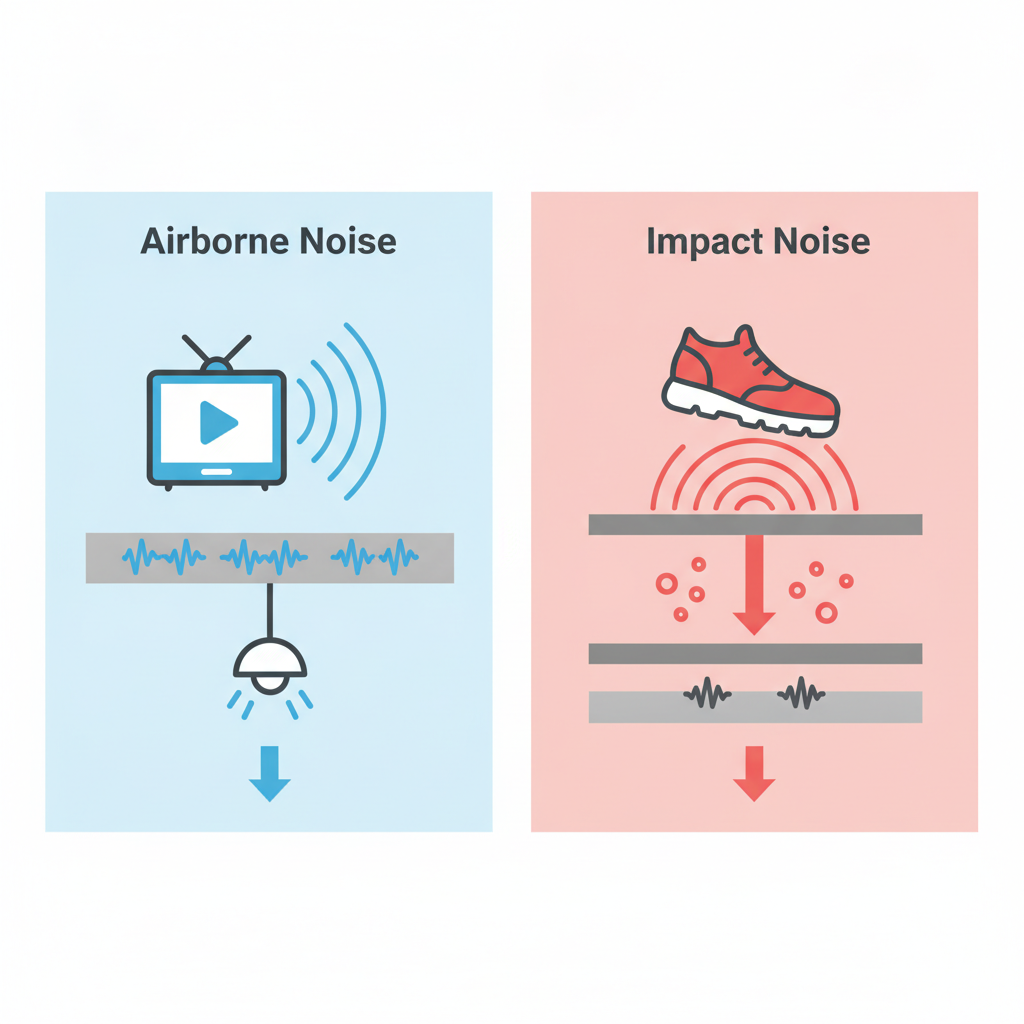
For most people complaining about “noisy floors,” impact noise is the primary culprit. While all flooring has some effect on airborne noise, the best acoustic flooring is specifically engineered to stop impact noise in its tracks.
Decoding the Ratings: What STC and IIC Really Mean
To compare the acoustic performance of different flooring systems objectively, the building industry uses two standard ratings. Understanding these numbers is your secret weapon for choosing a truly quiet floor.
STC (Sound Transmission Class): This rating measures how well a building assembly (like a wall or floor/ceiling) reduces airborne noise. A higher STC rating means less airborne sound can pass through. While important, it’s not the primary rating to consider for flooring performance itself.
IIC (Impact Insulation Class): This is the critical rating for flooring. IIC measures how well a floor/ceiling assembly resists the transmission of impact noise. A higher IIC number means the floor does a better job of absorbing impacts and preventing that vibrational energy from traveling to the room below.
So, what do the numbers actually mean for your home? Here’s a simple breakdown:
- IIC 30s-40s (Poor): You will clearly hear footsteps, dropped items, and other impacts from the floor above. This is typical of a basic hard surface floor on a standard wood subfloor with no acoustic treatment.
- IIC 50s (Good): This is the minimum requirement in many building codes for multi-family housing (apartments and condos). At this level, impact noises are significantly muffled and much less likely to be disruptive.
- IIC 60+ (Excellent): Impact sounds are barely audible, if at all. This level of performance provides a truly peaceful and quiet environment, often found in luxury construction or with specialized acoustic flooring systems.
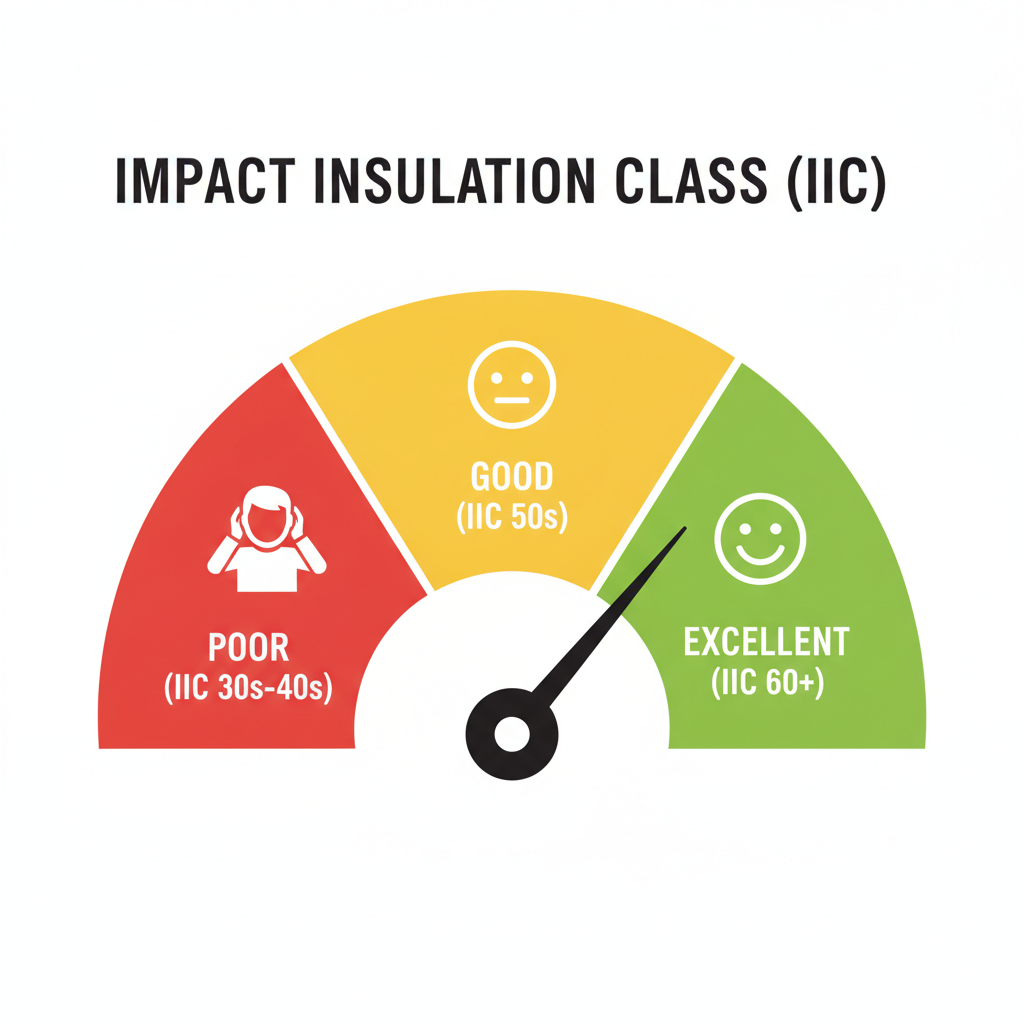
A simple rule of thumb is that a 5-point increase in a floor’s IIC rating can reduce audible impact noise by nearly half. When you’re looking for quiet flooring for apartments or to solve a footstep noise upstairs problem, the IIC rating is your most important tool.
Comparing Sound Dampening Floors: From Carpet to Hybrid Hardwood
Now that you understand the science, let’s look at the materials. Different flooring types have vastly different acoustic properties. Here’s a comparative analysis of the most popular soundproof flooring options, helping you weigh the pros, cons, and performance of each.
| Material | Typical IIC Range | Best For | Pros / Cons |
|---|---|---|---|
| Carpet with Pad | 60 – 75+ | Maximum impact noise reduction, comfort | Pros: Best-in-class sound absorption, soft, warm. Cons: Can trap allergens, susceptible to stains, not ideal for wet areas. |
| Cork | 55 – 65 | Natural sound dampening, comfort | Pros: Naturally porous and shock-absorbent, eco-friendly, comfortable underfoot. Cons: Can be dented by heavy furniture, may require sealing. |
| Rubber | 50 – 65 | Extreme durability, excellent sound isolation | Pros: Highly effective at absorbing impact, very durable. Cons: Utilitarian aesthetic, can have a distinct odor initially. |
| Luxury Vinyl (LVT) | 45 – 65+ | Versatility, water resistance, good acoustics | Pros: Wide range of styles, waterproof, many options with attached acoustic pads. Cons: Performance varies greatly; attached pad is key. |
| Hybrid Hardwood | 50 – 70+ | The look of real wood with superior acoustics | Pros: Combines real wood veneer with a sound-dampening core, often has an attached pad. Cons: Premium price point compared to laminate or LVT. |
Naturally Quiet: Carpet, Cork, and Rubber Flooring
For decades, the go-to solution for sound absorption has been soft-surface flooring. These materials excel at dampening noise for a simple reason: their structure.
Carpet is the undisputed champion of quiet floors. Its soft, porous fibers absorb both airborne sound within a room (reducing echo) and impact sound at the source. The key to maximizing its performance, however, lies beneath. A high-density, quality carpet pad is a critical component that can add 10-20 points to the overall IIC rating, making the combination incredibly effective.
Cork and rubber are also natural sound-dampeners. Cork’s cellular structure, which is over 50% air, acts like a natural cushion, absorbing footfalls and vibrations. Rubber, commonly used in gyms, offers extreme impact absorption and is one of the best materials for isolating severe vibrations.
The Evolution of Hard Surfaces: LVT, Acoustic Laminate, and Hybrid Hardwood
The biggest challenge in modern flooring has been achieving peace and quiet without sacrificing the beauty and durability of a hard surface. Thankfully, flooring technology has evolved to meet this demand.
Modern Luxury Vinyl Tile (LVT) and acoustic laminate products are often engineered with sound reduction in mind. The most effective of these options come with a pre-attached acoustic pad made of cork or high-density foam. This integrated underlayment is a game-changer, allowing these hard surfaces to achieve IIC ratings that rival some soft-surface options.
This evolution reaches its peak with hybrid hardwood flooring. This category represents the best of both worlds: the timeless aesthetic of real hardwood and a technologically advanced core designed for superior acoustic performance.
The Bravewood Advantage: Engineered for Peace and Quiet
Bravewood Hybrid Hardwood is a prime example of flooring engineered specifically for acoustic comfort. It solves the classic problem of noisy hardwood floors by fundamentally redesigning the plank itself.
Imagine a cross-section of a Bravewood plank. At the top, you have a durable wear layer protecting a beautiful veneer of real hardwood. But the magic happens below. The core is a high-density, rigid composite material that provides stability and helps deaden vibrations. Crucially, at the very bottom is a pre-attached acoustic underlayment.
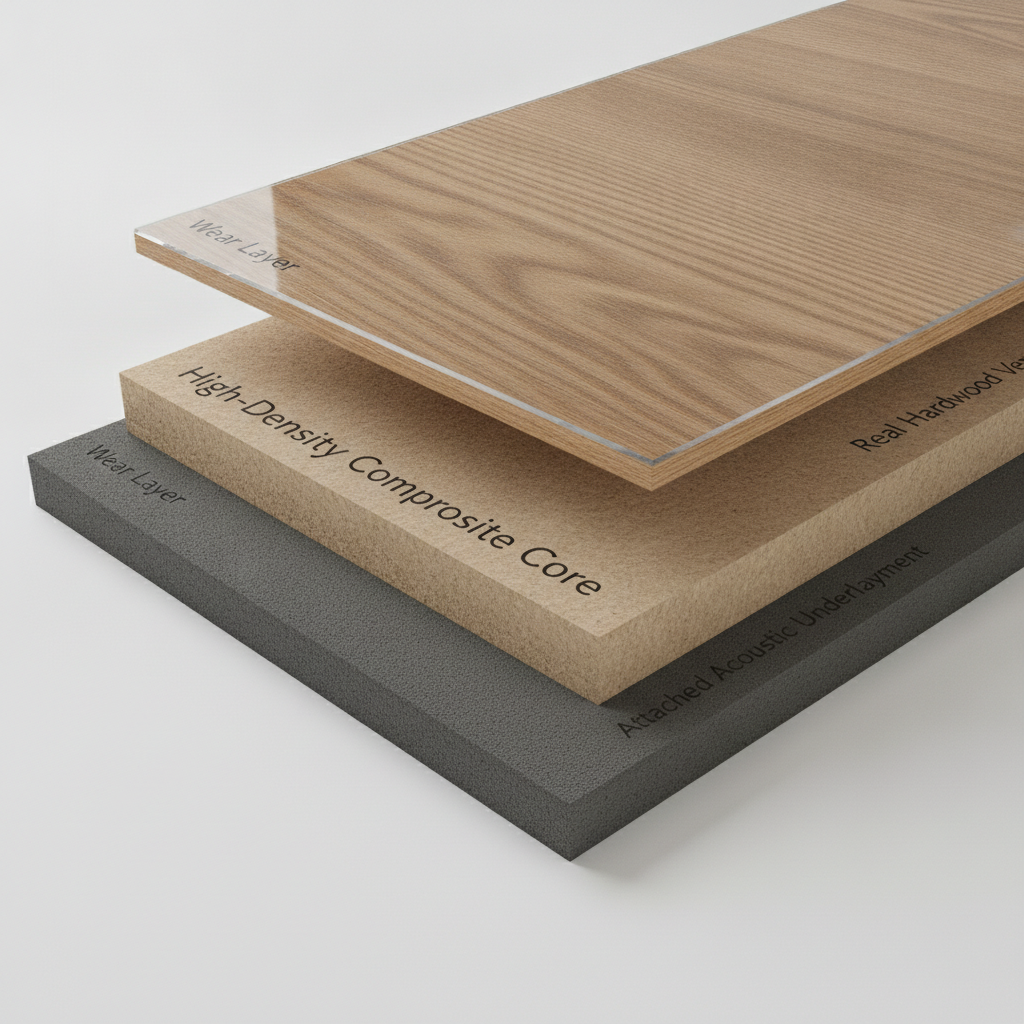
This multi-layer construction is a complete sound-dampening system in a single plank. The rigid core prevents the hollow sound common with older floating floors, while the integrated acoustic pad absorbs impact energy at the source, before it can travel through your subfloor. This design allows Bravewood Hybrid Hardwood to achieve impressive IIC ratings, making it an excellent choice for reducing impact noise while delivering the authentic look and feel of wood.
The Unsung Hero: Why Acoustic Underlayment is Critical
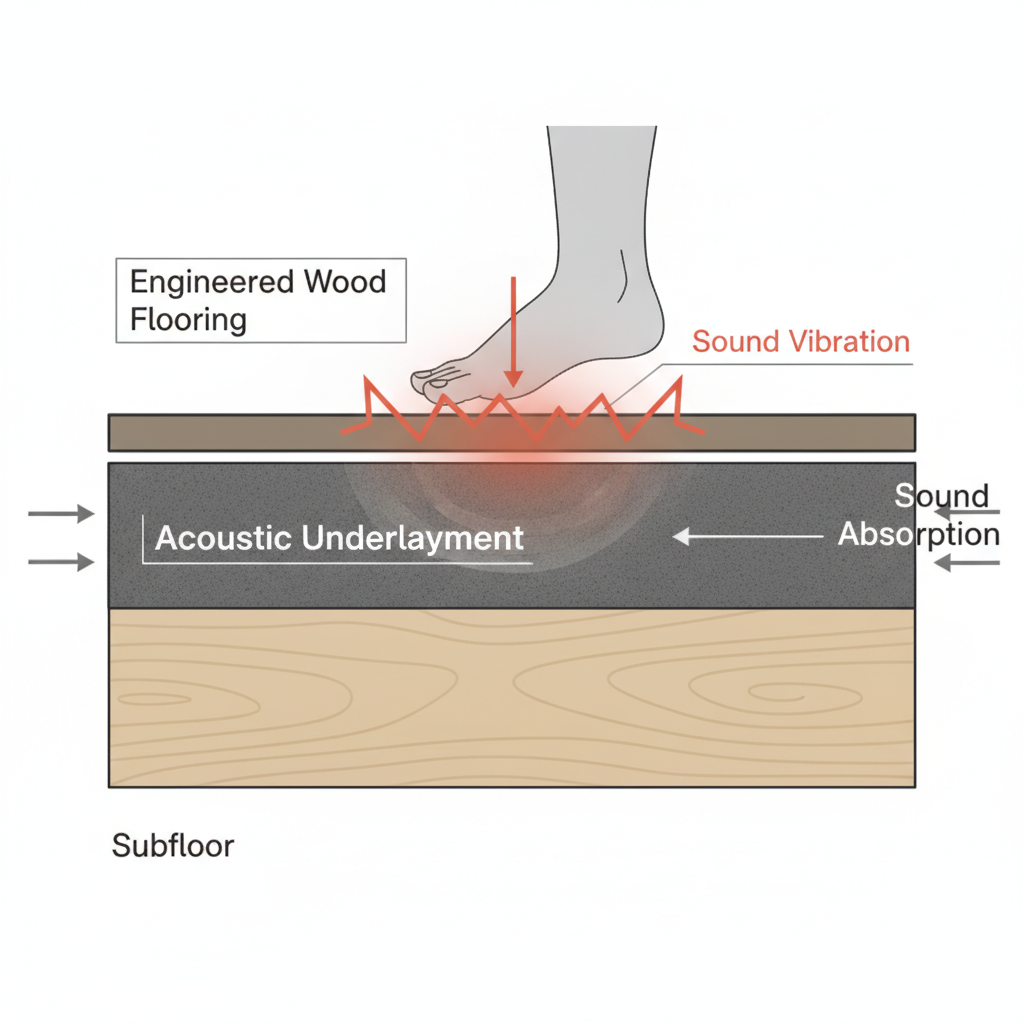
You can buy the best acoustic flooring in the world, but if you pair it with a cheap, thin underlayment—or none at all—you will be disappointed with the results. The underlayment is the essential, unsung hero of a quiet flooring system.
Veteran installers agree that skimping on the underlayment is one of the biggest mistakes a homeowner can make. The primary job of an acoustic underlayment is to “decouple” the finished flooring from the structural subfloor. This means creating a separating layer that absorbs and dissipates the vibrational energy from impacts, preventing it from passing into the building’s structure. A quality underlayment made from materials like dense felt, cork, or rubber can dramatically boost the IIC rating of your entire floor assembly.
How to Choose the Right Underlayment for Your Floor
Choosing the right underlayment depends on your flooring and subfloor. For flooring like LVT or hybrid hardwood that already has an attached pad, you typically do not need an additional underlayment. Using one can even void the warranty.
For flooring that requires a separate underlayment, consider the following:
- For Wood Subfloors: Felt and rubber underlayments are excellent choices for reducing impact noise.
- For Concrete Subfloors: You’ll need an underlayment that also includes a vapor barrier to protect your flooring from moisture. Many acoustic underlayments are available in “all-in-one” versions for this purpose.
Crucially, always check the flooring manufacturer’s warranty requirements. They will specify the type and thickness of underlayment that is compatible with their product. Following these guidelines is essential for both performance and warranty protection.
Your Questions Answered: A Quiet Flooring FAQ
Navigating the world of acoustic flooring can bring up a lot of practical questions. Here are answers to some of the most common concerns.
What is the best flooring to reduce footstep noise from an upper floor?
The best solution is a complete flooring system with a high IIC rating. This is an impact noise problem, so the IIC rating is the metric you need to focus on. Your top options are:
- Carpet with a high-density pad: This offers the highest possible IIC performance.
- A high-performance hybrid hardwood like Bravewood or an acoustic LVT: Look for products with an integrated acoustic pad and a total system IIC rating of 60 or higher.
Is ‘soundproof’ flooring a realistic goal for a home?
No, but significant sound reduction is very achievable. True “soundproofing,” to the level of a professional recording studio, involves incredibly complex and expensive construction methods like isolated walls and floating floors. For a home, the goal isn’t total silence but reducing noise to a level where it is no longer a disturbance. A high-IIC flooring system can absolutely achieve that, transforming a noisy environment into a peaceful one.
What’s the best quiet flooring for apartments and condos?
The best choice is a flooring system that meets or exceeds your building’s acoustic requirements. Many HOAs and condo boards mandate a minimum IIC rating (often 50 or 55) for all new hard surface flooring installations.
- Always check your building’s specific IIC/STC requirements before you buy anything.
- Acoustic LVT and hybrid hardwood floors with attached pads are excellent choices for apartments because they offer high IIC ratings in a single, easy-to-install product, often satisfying building codes while providing a stylish, durable surface.
Your Path to a Quieter Home
Choosing a new floor is a major investment, and it should improve your quality of life, not create new frustrations. By understanding the fundamentals of sound, you can move past confusing marketing claims and make a decision based on real performance.
Remember the key takeaways: noise comes in two forms, impact and airborne, with impact noise being the main culprit for floors. The IIC rating is your most powerful tool for comparing how well a floor will block that noise. And finally, the best results come from a complete system where your flooring and underlayment work together.
You are now equipped with the knowledge to select a floor that provides not just beauty and durability, but also peace and quiet.
Ready to experience the difference a quiet floor can make? Explore the Bravewood Hybrid Hardwood collection to find the perfect blend of style, durability, and acoustic comfort for your home.
Disclaimer: This article provides general guidance on acoustic flooring. Readers should consult with professional flooring installers and/or acoustical consultants for their specific projects, as building codes, subfloor conditions, and acoustic requirements can vary significantly.
