
Choosing a new floor often feels like a high-stakes compromise. You fall in love with the timeless beauty of hardwood, but your mind races with worries about spills, scratches, and the realities of a busy household. You consider durable waterproof options, but fear you’ll have to sacrifice authentic style for practicality. This is the homeowner’s dilemma: the fear of making an expensive choice that either fails the test of real life or fails to match your home’s unique style.
What if you didn’t have to choose between beauty and resilience?
Welcome to the Regret-Proof Flooring Playbook. This guide introduces Bravewood waterproof hybrid hardwood, a revolutionary flooring solution designed to bridge that very gap. We’ll go beyond product features to give you a complete decision-making framework, covering the innovative technology, essential interior design principles, and real-world durability tests. By the end, you’ll be empowered to make a confident flooring choice that you’ll love for years to come.
- What Exactly is Bravewood Waterproof Hybrid Hardwood?
- Design Freedom: How to Match Bravewood With Any Decor
- Bravewood Reviews & Competitor Comparisons
- The ‘Regret-Proof’ Promise: Durability, Water, and Wear
- Frequently Asked Questions About Bravewood Flooring
- The Foundation for a Fearless Home
- References
What Exactly is Bravewood Waterproof Hybrid Hardwood?
To understand the design freedom Bravewood offers, you first need to understand what makes it a “hybrid.” This isn’t just another wood-look floor; it’s an advanced composite material that combines the best attributes of natural wood with the high-performance engineering of luxury waterproof flooring. It’s built in layers, each with a specific purpose, to deliver a surface that is both authentically beautiful and functionally superior.
At its core, Bravewood flooring leverages a Stone Polymer Composite (SPC) core, a dense and rigid foundation that is 100% waterproof and provides exceptional stability. This powerful core is then topped with a veneer of genuine hardwood, delivering the unique grain, texture, and character that can only come from nature.
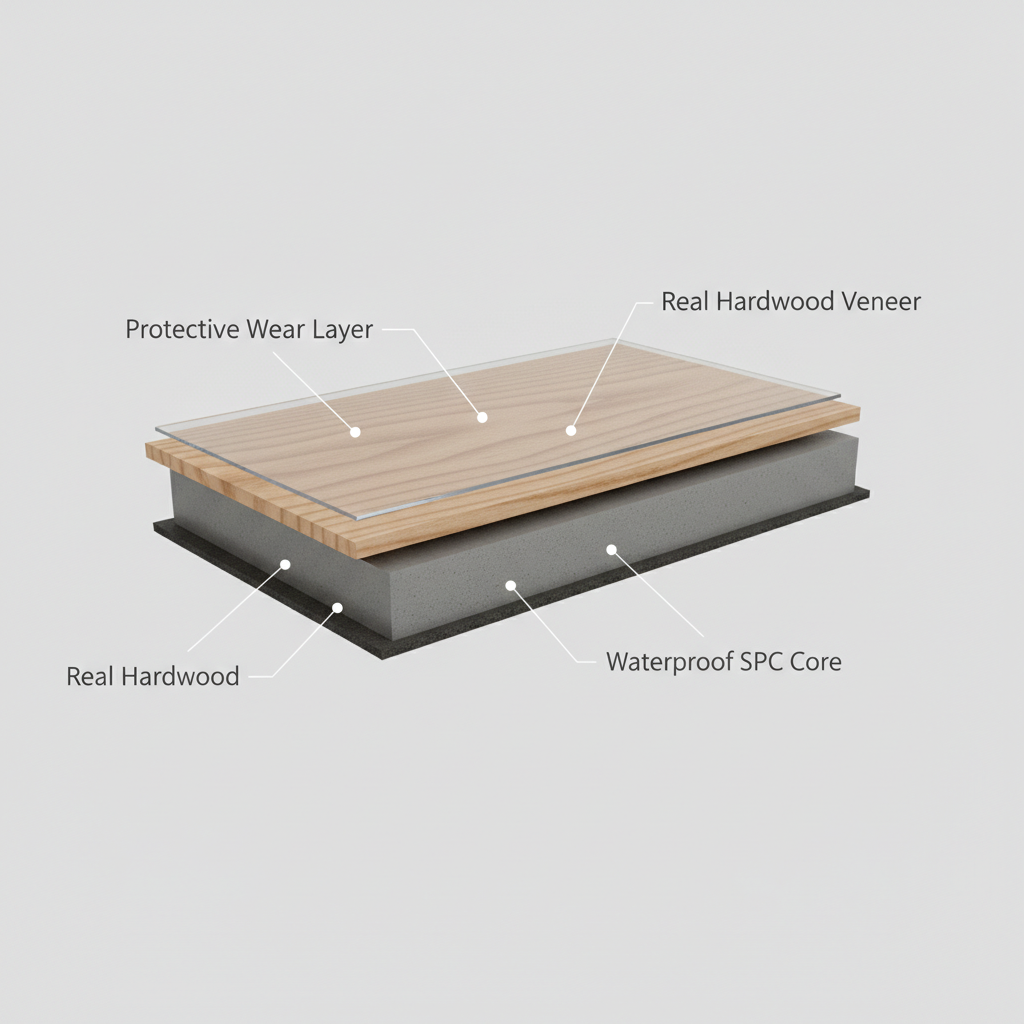
The Best of Both Worlds: Real Wood Veneer on a Waterproof Core
The magic of Bravewood hybrid hardwood lies in its construction. Unlike laminate flooring, which uses a high-resolution photograph of wood, or Luxury Vinyl Plank (LVP), which uses an embossed vinyl layer to mimic wood texture, Bravewood uses a top layer of authentic hardwood. This means the floor you see and touch has the natural, non-repeating grain patterns and warmth of a traditional wood floor.
This innovative approach solves a major pain point for discerning homeowners: the search for a realistic-looking wood-alternative flooring. The genuine wood veneer provides an unmatched level of authenticity that even the highest-quality LVP struggles to replicate. This is all made possible by advancements in flooring technology that allow for the stable bonding of a natural wood layer to a completely synthetic, waterproof SPC core. The result is a floor that doesn’t force you to choose between the material you love and the performance you need.
Decoding the Specs: Wear Layer, Core Thickness, and Why They Matter
When you’re comparing durable waterproof flooring, the technical specifications can feel overwhelming. However, understanding a few key terms is crucial to identifying a high-quality product that will last. This is how you can look at a product description and know you’re making a sound investment.
Bravewood’s durability comes from more than just its waterproof core. The real wood veneer is protected by a high-performance wear layer. This transparent top coating is what stands up to daily traffic, scuffs, and scratches.
Here are the key specs to understand:
- Wear Layer Thickness: Measured in mils (one-thousandth of an inch), the wear layer is your floor’s first line of defense. For residential settings with pets, kids, and active life, you should look for a substantial wear layer. As a general rule, for commercial-grade durability in a residential setting, look for a wear layer of 20mil or higher.
- Core Composition (SPC): Bravewood uses a Stone Polymer Composite (SPC) core. This is a crucial detail. SPC cores are more rigid and dent-resistant than their WPC (Wood Polymer Composite) counterparts, making them an excellent choice for high-traffic areas and for installation over slightly imperfect subfloors.
- Overall Thickness: Measured in millimeters (mm), this contributes to the floor’s substantial feel underfoot and can help with noise insulation.
These specifications are governed by performance standards set by bodies like ASTM International, which ensures that claims about durability and resilience are backed by standardized testing.[2]
Durability Glossary
- Mil: Not to be confused with millimeters. A unit of thickness equal to one-thousandth of an inch (0.001 inches), used to measure a floor’s wear layer. Higher mil ratings mean greater durability.
- SPC Core: Stone Polymer Composite. A core layer made from a mixture of limestone (calcium carbonate), PVC, and stabilizers. It is known for being extremely dense, stable, and 100% waterproof.
- Embossed in Register (EIR): An advanced manufacturing technique primarily used in LVP and laminate that aligns the surface texture with the visual pattern of the wood grain. While Bravewood uses real wood, EIR is a key technology to look for in high-end synthetic floors for maximum realism.
Design Freedom: How to Match Bravewood With Any Decor
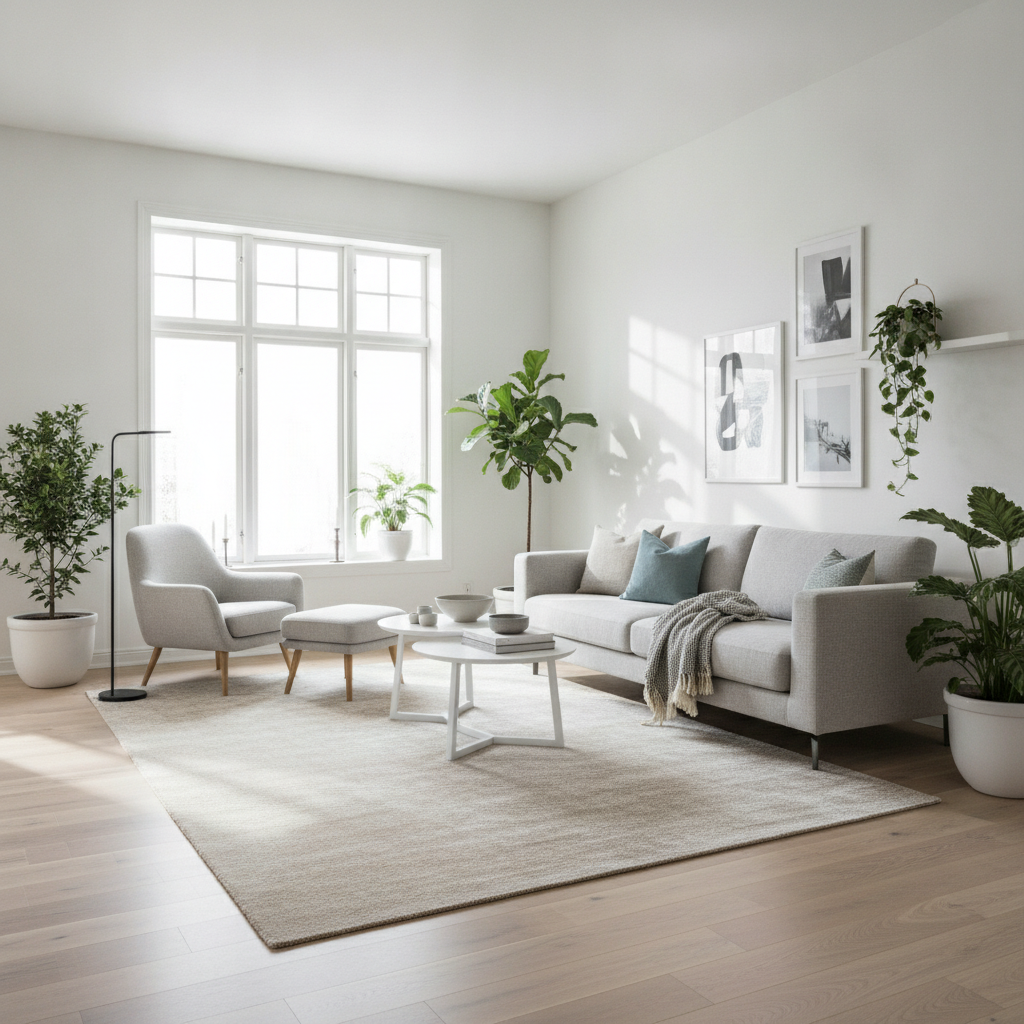
The true test of a great floor is its ability to serve as a versatile foundation for your home’s design, both now and in the future. This is where Bravewood truly shines. Its combination of natural wood aesthetics and a wide range of colors and finishes provides a perfect canvas for nearly any interior design style. It solves the common problem of mismatched flooring and decor by offering timeless options that harmonize rather than compete with your furniture and color palette.
Established interior design principles, like the 60-30-10 Rule for color balance (where 60% of your room is a dominant color, 30% is a secondary color, and 10% is an accent), become easier to apply when your floor acts as a beautiful, neutral base.
Style Showcase: Bravewood in Today’s Top Interior Designs
A key challenge for homeowners is visualizing how a flooring sample will look across an entire room and within a specific design scheme. To prove its versatility, let’s explore how different Bravewood styles can anchor some of today’s most popular interior designs.
- Modern Farmhouse: This style thrives on a blend of rustic charm and clean, modern lines. A wide-plank Bravewood floor in a light, natural oak finish with a matte sheen is the perfect foundation. It provides the warmth and organic texture of reclaimed wood without feeling heavy or dated.
- Scandinavian: Characterized by minimalism, light, and natural textures, the Scandinavian aesthetic calls for flooring that is bright and understated. Choose a Bravewood style in a pale, almost-white wash or a very light, cool-toned maple. The clean lines and minimal grain pattern will enhance the sense of space and light.
- Industrial: For a style that celebrates raw materials like metal, brick, and concrete, the flooring needs to add warmth without feeling out of place. A Bravewood floor with a slightly weathered, grey-toned, or medium-brown finish can beautifully balance the cooler elements of an industrial space.
- Minimalist: In a minimalist home, every element must be intentional and high-quality. The flooring is not just a surface but a key design feature. A Bravewood style with a clean, consistent grain and a neutral, natural finish provides a serene and uncluttered canvas that allows furniture and art to take center stage.
The Designer’s Toolkit: Using Undertones and Color Theory
The secret to flawlessly matching your floors with your decor lies in understanding color theory, specifically the concept of undertones. Every wood floor, whether natural or stained, has a dominant color undertone: warm (red, yellow, orange), cool (grey, ash), or neutral. Identifying this undertone is the key to creating a harmonious color palette.
- Identifying Undertones: Place your flooring sample next to a pure white object, like a piece of paper. The underlying warm or cool tones will become more apparent. A red oak will show hints of pink or red, while a white oak will appear more beige or grey.
- Creating Harmony: For a cohesive and serene look, choose wall colors and furniture that share the same undertone family as your floor. For example, a warm, honey-toned Bravewood floor pairs beautifully with creamy whites, warm greiges, and earthy greens.
- Creating Contrast: For a more dynamic, designer look, you can choose contrasting undertones. A cool, grey-toned floor can be a stunning backdrop for warm wood furniture (like walnut or teak) and rich jewel-toned fabrics. The key is to make the contrast feel intentional.
A common question is, “Should floors be lighter or darker than furniture?” There’s no single right answer, but here are two guiding principles:
- Contrast Creates Definition: Placing dark furniture on a light floor (or vice versa) makes each piece stand out. This is a great way to highlight a special piece of furniture.
- Low Contrast Creates Space: Keeping your floor and major furniture pieces in a similar color depth can make a room feel larger and more seamless.
Bravewood Reviews & Competitor Comparisons
When making a significant investment like new flooring, comparing your top choice against the competition is a critical step. Bravewood waterproof hybrid hardwood enters a competitive market, and understanding its unique position will help you validate your decision. While independent, long-term (1+ year) reviews are still emerging for newer product lines, we can synthesize available feedback and perform a data-driven comparison against leading alternatives.
To provide a clear picture, here is a comparison of Bravewood against top competitors based on the most important specifications for homeowners:
| Feature | Bravewood Hybrid Hardwood | Leading LVP (e.g., Flooret) | Leading Hybrid (e.g., Cali Bamboo) |
|---|---|---|---|
| Surface Material | Genuine Hardwood Veneer | Embossed Vinyl | Embossed Vinyl or Bamboo Veneer |
| Core Type | Stone Polymer Composite (SPC) | Stone Polymer Composite (SPC) | Varies (SPC, WPC, Bamboo) |
| Wear Layer | Typically 20mil+ | Up to 40mil | Typically 20mil+ |
| Waterproof | Yes, core is 100% waterproof | Yes, core is 100% waterproof | Yes, core is 100% waterproof |
| Key Advantage | Unmatched visual authenticity | Extreme scratch/dent resistance | Strong brand reputation, eco-story |
| Price Range (Material) | $4.50 – $7.00 / sq. ft. | $3.50 – $5.50 / sq. ft. | $4.00 – $7.00 / sq. ft. |
| Warranty | Lifetime Limited Residential | Lifetime Limited Residential | 50-Year to Lifetime Residential |
Professional flooring installers often note that the installation process for hybrid products like Bravewood is similar to other floating floors, but proper subfloor preparation is always paramount to ensure a successful, long-lasting result.
How Does Bravewood Compare to Other Flooring Types?
To fully understand Bravewood’s value, it’s helpful to see where it fits within the broader flooring landscape.
- vs. Traditional Hardwood:
- Pros: Bravewood offers superior water resistance and often greater dent resistance due to its SPC core. It can be installed in areas where solid hardwood is not recommended, like basements.
- Cons: Traditional hardwood can be sanded and refinished multiple times, extending its life indefinitely. Bravewood’s veneer is too thin for refinishing.
- vs. Luxury Vinyl Plank (LVP):
- Pros: Bravewood’s real wood surface provides a level of authenticity and unique character that even the best LVP cannot perfectly replicate.
- Cons: High-end LVP, with its thick wear layers (up to 40mil), may offer superior scratch and dent resistance, making it a top choice for the most demanding environments.
- vs. Waterproof Laminate:
- Pros: The feel of real wood underfoot gives Bravewood a more premium quality than laminate. Its SPC core is also inherently more waterproof than the fiberboard cores found in most laminates.
- Cons: Top-tier waterproof laminates with high AC Ratings (a measure of durability) can be extremely scratch-resistant and may come at a lower price point.
The ‘Regret-Proof’ Promise: Durability, Water, and Wear
A floor’s promise of beauty is meaningless if it can’t withstand the rigors of daily life. This section tackles the most critical concerns for any homeowner: water damage, long-term wear, and what a warranty really protects.
A key point of confusion for consumers is the difference between “water-resistant” and “waterproof.” A water-resistant floor can handle topical spills if they are wiped up quickly. A truly waterproof floor, like Bravewood, has a core that will not swell, warp, or degrade even with prolonged exposure to water. According to IICRC-certified restoration professionals, having a fully waterproof flooring system is a significant advantage, as it can prevent a minor leak from becoming a major, subfloor-damaging catastrophe.
Emergency Steps for Minor Spills
Even with waterproof flooring, quick action is best practice.
- Wipe up the spill immediately with a dry cloth.
- For sticky spills, use a damp cloth with a manufacturer-approved cleaner.
- Dry the area completely.
- Check for any moisture that may have seeped under baseboards.
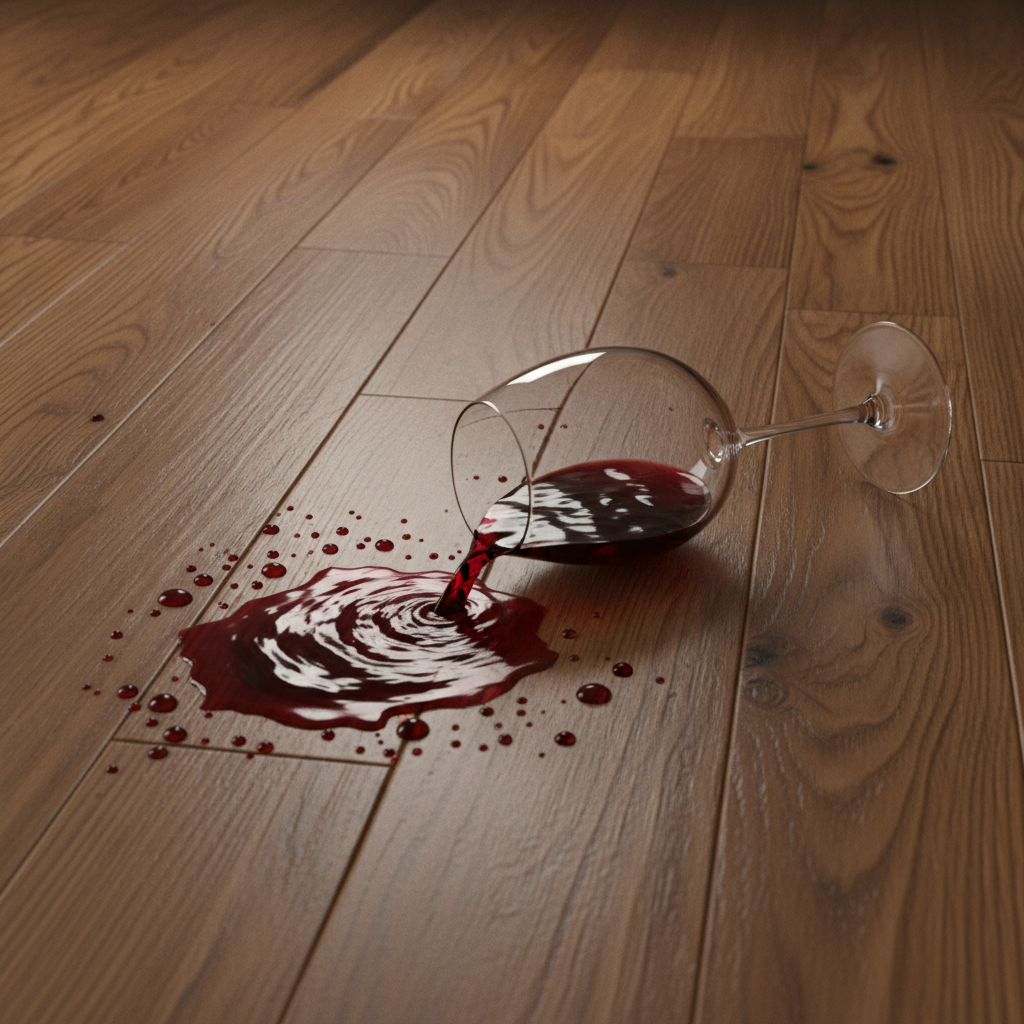
Is Bravewood Flooring Truly 100% Waterproof?
Yes, the core of Bravewood flooring is 100% waterproof. The SPC construction means the planks themselves will not be damaged by water. You can have a plumbing leak or a major spill, and the planks will remain structurally sound.
However, it is critical to understand what this means in a real-world scenario. While the flooring itself is safe, water can still find its way into the seams and get trapped between the flooring and the subfloor. This is why the warranty is important. Most waterproof flooring warranties cover topical spills and normal cleaning but exclude damage from major flooding, subfloor moisture issues, or hydrostatic pressure. If a leak occurs, the source of the water must be stopped and the area dried completely to prevent issues like mold, which can begin to grow in as little as 24-48 hours in a damp environment.[1] Following guidelines from agencies like FEMA on proper drying and moisture control after a water event is crucial for the health of your entire home, regardless of your flooring choice.[4]
Real-World Resilience: Resisting Scratches, Dents, and Pets
Beyond water, your floor needs to stand up to dropped toys, pet claws, and shifting furniture. Bravewood’s resilience comes from a two-part system: the dense SPC core and the tough aluminum oxide finish on the wear layer.
The SPC core provides exceptional resistance to dents from heavy objects. The wear layer is designed to protect the real wood veneer from scratches and scuffs. While no wood floor is truly “scratch-proof,” a high-quality finish provides significant protection against the daily wear and tear from pets and kids. To ensure the longest life for your floor, it’s always wise to follow best practices recommended by the National Wood Flooring Association (NWFA), such as using felt pads on all furniture legs and using walk-off mats at entryways.[3]
Frequently Asked Questions About Bravewood Flooring
Here are direct answers to some of the most common questions homeowners have when considering Bravewood.
What is the actual cost per square foot, including installation?
The material cost for Bravewood waterproof hybrid hardwood typically ranges from $4.50 to $7.00 per square foot. Installation costs can vary significantly based on your geographic location, the condition of your subfloor, and the complexity of the layout. On average, you can expect installation to add $2.00 to $4.00 per square foot. It is always advisable to get at least three quotes from qualified, professional installers to ensure a fair price and high-quality work.
Can I install Bravewood flooring myself (DIY)?
Bravewood flooring is designed with a click-lock system that makes it suitable for experienced DIYers. The planks are designed to float over the subfloor without the need for nails or glue. However, a successful and long-lasting installation depends on a perfectly flat, clean, and dry subfloor. If you are not confident in your ability to properly prepare the subfloor, hiring a professional is a worthwhile investment. A professional installation ensures that the work meets the benchmark standards set by the NWFA and protects your warranty.[3]
Are there eco-friendly waterproof flooring options like Bravewood?
The conversation around “eco-friendly” flooring is complex. Many hybrid floors, including Bravewood, focus on indoor air quality by seeking certifications like FloorScore, which tests for low volatile organic compound (VOC) emissions. The use of a composite core means it is not biodegradable, but its durability and long lifespan mean less frequent replacement and waste compared to lower-quality flooring. As you shop, look for transparency from manufacturers regarding the recycled content in their cores and their commitment to responsible sourcing for their wood veneers.
The Foundation for a Fearless Home
Bravewood waterproof hybrid hardwood represents a new era in flooring, one where you no longer have to compromise. It delivers the unique, authentic beauty of genuine hardwood, the versatile design potential to fit any decor, and the modern waterproof durability to handle the demands of a real, lived-in home.
By understanding the technology behind its construction, the design principles that unlock its versatility, and the real-world data on its resilience, you are now equipped to make a regret-proof decision. You can move forward with confidence, knowing you are choosing a floor that is not just a surface, but the perfect foundation for your life and your style.
Ready to experience the design freedom of Bravewood? Explore our full range of colors and styles to find the perfect foundation for your home.
References
- Environmental Protection Agency (EPA). (N.D.). Mold. Retrieved from https://www.epa.gov/mold
- ASTM International. (N.D.). Standards and Publications. Retrieved from https://www.astm.org
- National Wood Flooring Association (NWFA). (N.D.). Consumer Resources. Retrieved from https://www.nwfa.org
- Federal Emergency Management Agency (FEMA). (N.D.). Floods. Retrieved from https://www.fema.gov/disaster/floods
