
Upgrading your home’s flooring is a significant investment, and for many homeowners, the excitement of a renovation is quickly overshadowed by a looming anxiety: the fear of devastating water damage. Whether it is a hidden subfloor leak, a spilled pitcher of water, or a flooded basement, traditional wood floors are notoriously vulnerable to moisture. Enter Bravewood waterproof hybrid hardwood—the ultimate solution that bridges the authentic, warm aesthetics of natural wood with the rigid-core durability of modern waterproof flooring.
However, achieving a flawless finish requires more than just buying the right product. You need a fail-proof blueprint that cuts through deceptive marketing fluff. This comprehensive guide serves as your masterclass. We will provide a brutally honest DIY vs. Pro viability test, demystify the science of waterproof flooring, and deliver step-by-step, professional-grade installation secrets to ensure your Bravewood floors are installed perfectly and protected for a lifetime.
- Demystifying Waterproof Hybrid Hardwood: The Science Behind the Planks
- The Brutally Honest DIY vs. Professional Installation Matrix
- Crucial Pre-Installation Mastery: Setting the Stage for Success
- Step-by-Step: How to Install Bravewood Flooring (The Fail-Proof Method)
- Emergency Triage: Preventing and Treating Water Damaged Floors
- Conclusion
- References & Authoritative Sources
Demystifying Waterproof Hybrid Hardwood: The Science Behind the Planks
Before you lay a single plank, it is crucial to understand exactly what you are installing. The flooring market is saturated with confusing terminology, making it difficult to choose the right waterproof flooring solutions. By breaking down the science of hybrid hardwood, you can confidently protect your investment.
What Makes Bravewood Flooring Different?
Bravewood hybrid hardwood is not your grandfather’s laminate, nor is it a standard vinyl plank. It is a highly engineered, multi-layer construction designed to offer the best of both worlds. According to product specifications from TAS Contract / T&A Supply, a leading distributor, Bravewood features a robust composition that includes a highly durable wear layer, a high-definition printed vinyl or real wood veneer layer, and a formidable Stone Plastic Composite (SPC) rigid core [1]. This core is what provides its exceptional dimensional stability.
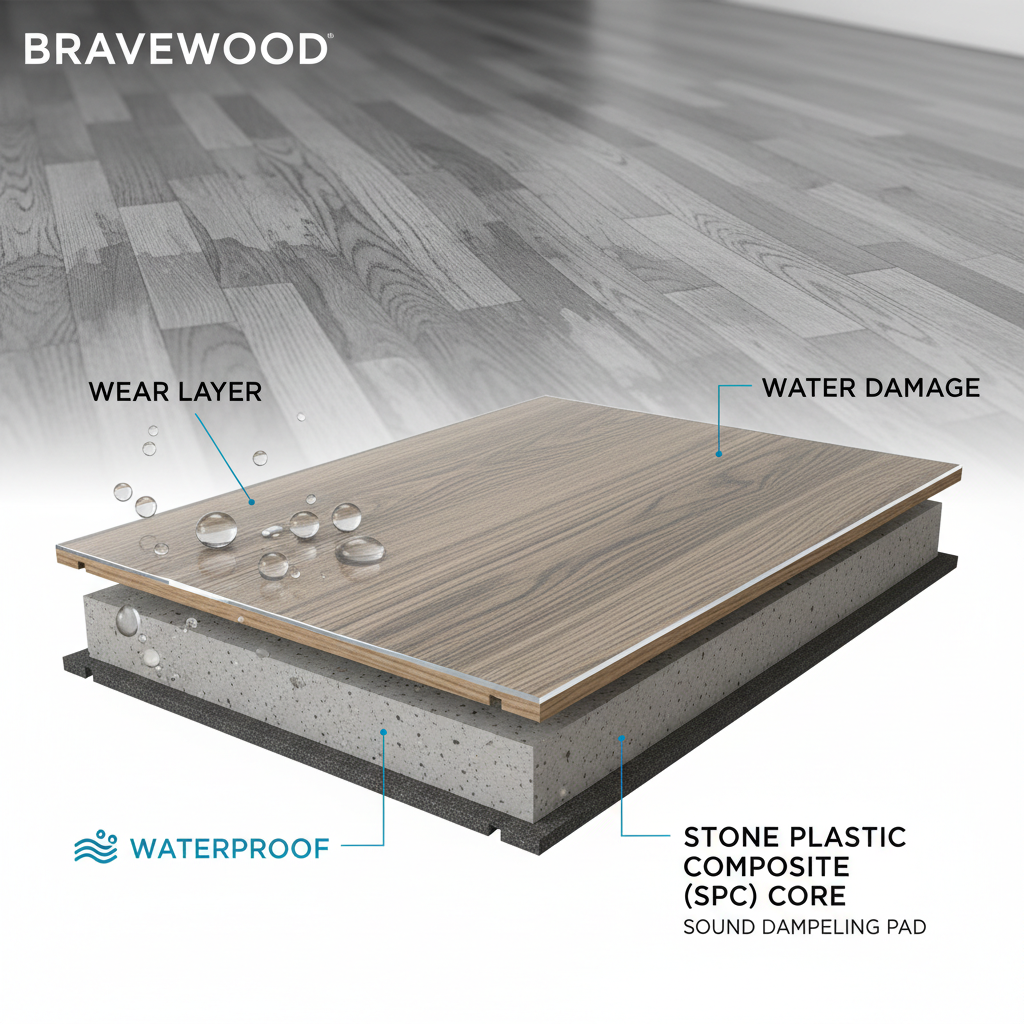
Furthermore, Bravewood utilizes a precise Angle/Angle locking mechanism, which creates an impenetrable seam when installed correctly. Backed by a Lifetime Residential warranty and boasting FloorScore® and GreenGuard Gold certifications for indoor air quality, Bravewood hybrid hardwood stands out as a premium, health-conscious, and structurally sound choice for modern homes [1].
Waterproof vs. Water-Resistant: Don’t Be Fooled
One of the most dangerous traps for consumers is misunderstanding the difference between “water-resistant” and “waterproof.” Water-resistant flooring can handle a quick spill if wiped up immediately, but prolonged exposure will cause swelling, delamination, and irreversible damage. Waterproof hardwood flooring, thanks to its SPC rigid core and sealed wear layers, will not degrade, swell, or lose its structural integrity even when fully submerged.
As noted by the experts at Justice Inc. Tile and Flooring, who specialize in severe moisture environments and flood-prone areas:
“True waterproof flooring systems are non-negotiable in spaces like basements, kitchens, and full bathrooms. While the planks themselves won’t be destroyed by water, homeowners must still properly prepare their subfloors to prevent mold from growing underneath the waterproof surface” [2].
The Brutally Honest DIY vs. Professional Installation Matrix
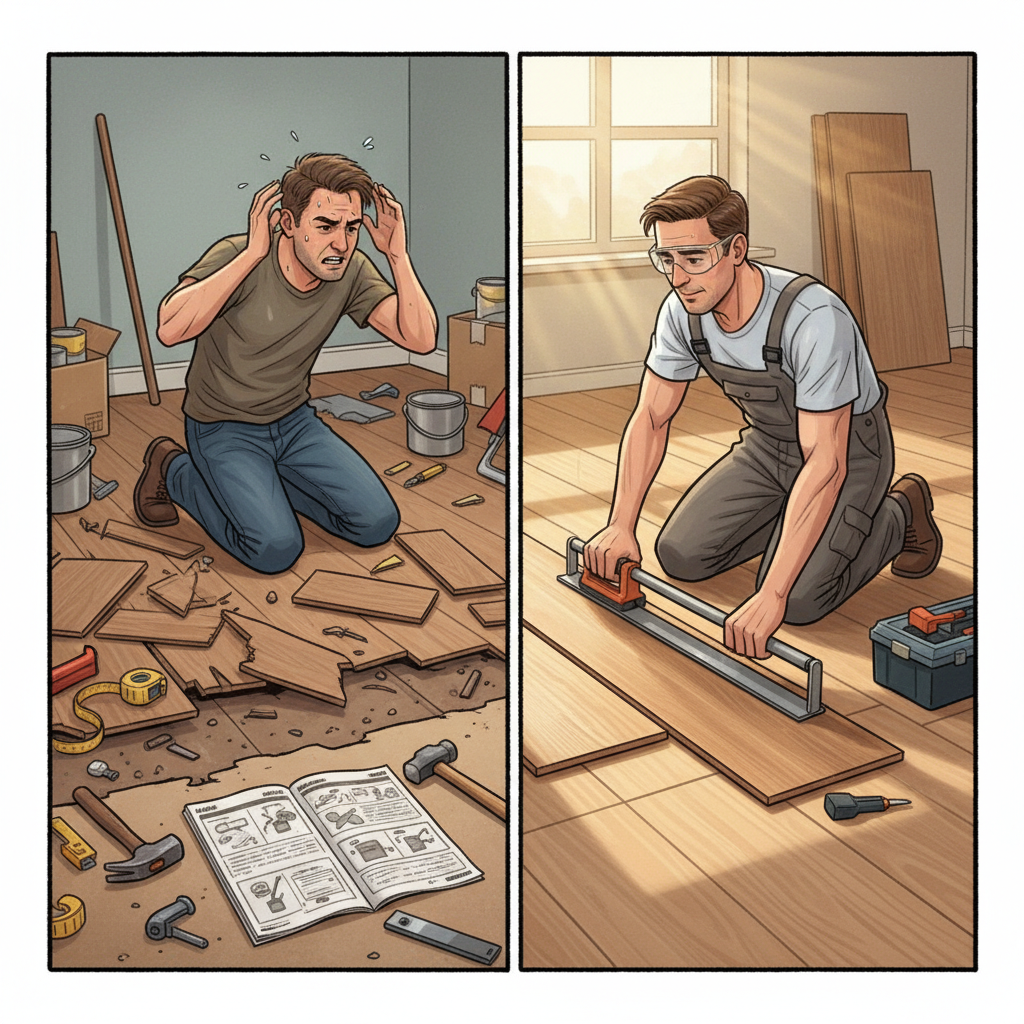
With the materials selected, the next major hurdle is deciding who will do the labor. While tackling a complicated flooring installation yourself can save money, the hidden costs of DIY mistakes can quickly eclipse professional fees.
Decoding Your Flooring Quote: Why is it So Expensive?
If you have received quotes for an expensive professional floor installation, you might be experiencing sticker shock. Professional installation typically costs between $6 and $14 per square foot. However, this price covers much more than just clicking planks together. It includes demolition, disposal, critical surface preparation, specialized tools, and guaranteed longevity. Furthermore, efficient professional installation reduces project time by up to 30% compared to a DIY approach.
The most critical line item in your quote is subfloor preparation. According to Footprints Floors, a national flooring franchise:
“Surface preparation is the foundation of any successful flooring project. Skipping it to save a few dollars is the fastest way to experience buckling and separation, which almost always voids manufacturer warranties” [3].
The DIY Viability Test
Can you handle a DIY flooring installation? To objectively assess your viability, consider your subfloor condition, layout complexity, and tool availability. If your subfloor requires extensive leveling, or if your layout involves complex diagonal patterns and numerous irregular cuts, hiring a professional is highly recommended.
The experts at CabStone, a professional flooring contractor network, frequently mitigate DIY disasters. They warn that the most costly consequences of DIY installations stem from improper expansion gaps and failing to undercut door jambs, leading to floors that buckle and peak under seasonal temperature changes [4]. If you are comfortable with precise measurements, renting specialized tools, and meticulously following instructions, a floating hybrid floor is highly achievable.
Crucial Pre-Installation Mastery: Setting the Stage for Success
The number one cause of DIY flooring failure is poor preparation. You cannot build a beautiful, lasting floor on a flawed foundation. Mastering this pre-installation phase is the secret behind every successful DIY hardwood floor guide and easy hybrid hardwood installation.
Subfloor Preparation and Flatness Tolerances
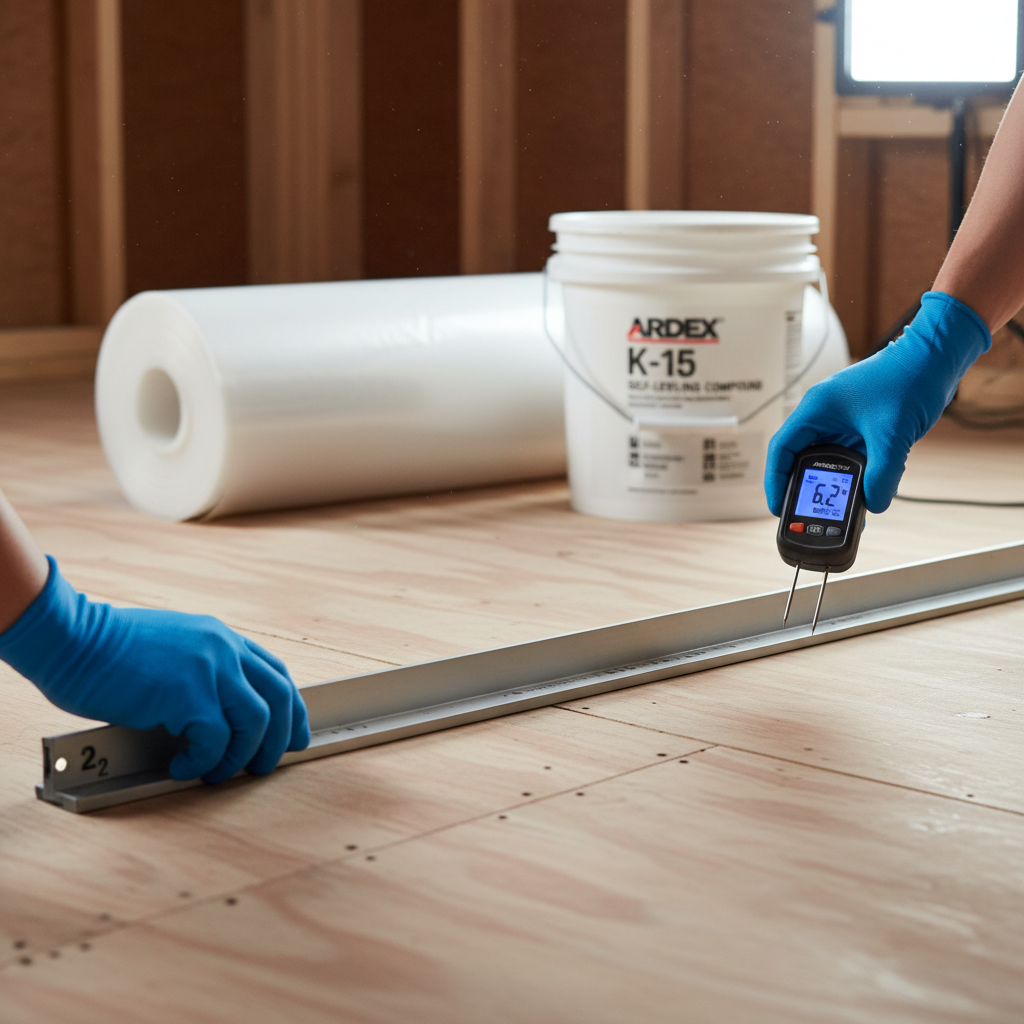
Your subfloor must be clean, dry, and structurally sound. Most importantly, it must be flat. The National Wood Flooring Association (NWFA), the ultimate authority on wood flooring standards, dictates strict tolerances for subfloor flatness [5]. As a general rule, uneven surfaces over 3mm per metre must be levelled prior to installation.
The Flooring Guys, professional installers known for their practical field advice, recommend using a long straight edge to identify dips and high spots [6]. High spots on wood subfloors must be sanded down, while dips in concrete or wood should be filled with a high-quality, Portland cement-based self-leveling compound.
Moisture Testing and Barriers (Non-Negotiable)
Even though you are installing a waterproof product, moisture testing your subfloor is non-negotiable. Moisture wicking up from a concrete slab will become trapped beneath your waterproof flooring solutions, creating a breeding ground for toxic mold.
For concrete subfloors, perform a Calcium Chloride test. The moisture vapor emission rate must be no more than 5lbs per 1,000 square feet per 24 hours. For wood subfloors, use a pin-style moisture meter; the moisture level must be at or below 12%. Regardless of the test results, installing over concrete always requires a 6-mil polyethylene moisture barrier, with the seams overlapped by at least 8 inches and taped securely.
Acclimation and Layout Planning (The Waste Rule)
Before installation, your flooring must acclimate to the environment where it will live. Acclimatize the planks in the installation room for at least 48 hours prior to installation, keeping the home’s relative humidity between 35% and 55% [5].
When planning your layout and ordering materials, you must account for waste. A standard step by step hybrid hardwood guide will tell you to add 10% to your total square footage for a standard straight-lay installation. If you are planning a more complex diagonal layout, increase your waste calculation to 15%.
Step-by-Step: How to Install Bravewood Flooring (The Fail-Proof Method)
With a perfectly prepped subfloor, you are ready to begin your easy DIY waterproof hardwood installation. Bravewood flooring utilizes a “floating” method, meaning the planks click together and rest on the subfloor without the use of nails or messy adhesives.
Essential Tools for Click-Lock & Floating Floors
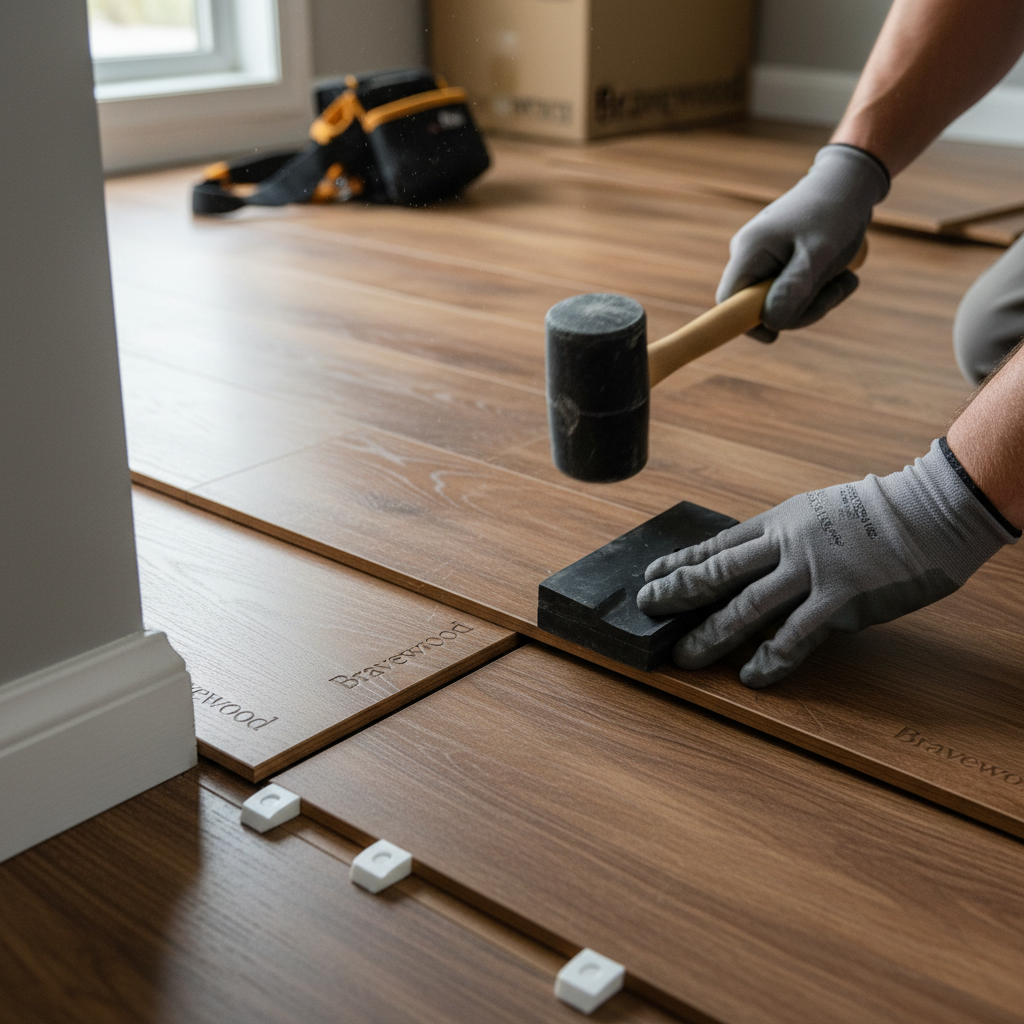
To ensure a tight, waterproof lock between planks, you need the right tools. Attempting to force planks together by hand will damage the locking mechanism. According to the industry-leading PERGO® Installation Guidelines, your professional-grade tool checklist must include [8]:
- Tapping Block: Distributes the force of your mallet evenly across the plank’s edge to prevent chipping.
- Pull Bar: Essential for pulling the final row of planks tight against the wall where a tapping block won’t fit.
- Spacers: Used to maintain the mandatory expansion gap around the perimeter of the room.
- Rubber Mallet: Used in conjunction with the tapping block to gently coax the planks into a locked position.
Laying the First Rows and Staggering Joints
Start in the left corner of the room, working left to right, with the tongue side facing the wall. Place your spacers against the wall to maintain your expansion gap.
A critical secret to a professional-looking step by step hybrid hardwood guide is “racking” the floor. Legendary master carpenter Norm Abram of This Old House emphasizes the importance of racking—opening multiple boxes at once and mixing the boards to ensure a natural, random variation of color and grain patterns throughout the room [7].
As you start your second row, ensure you stagger the joints (the short ends of the planks) by at least 300mm (about 12 inches) from the joints in the previous row. This staggering provides vital structural integrity.
Pro Installer’s Corner: Never pin down a floating floor. Installing heavy, fixed cabinetry—like a kitchen island bench—directly on top of your floating floor will prevent it from expanding and contracting, leading to severe buckling and joint failure.
Bravewood-Specific Pitfalls and Requirements
To successfully learn how to install Bravewood flooring, you must adhere to their specific manufacturer tolerances. While standard hybrid floors often call for an 8-12mm expansion gap, the official Bravada Hardwood Installation Guidelines mandate a minimum expansion space of 1/2 inch around all vertical obstructions for floating installations [9].
If you need to use tape to hold planks together during tricky sections, only use 3-M Blue Tape, and do not let it remain on the flooring longer than 24 hours to avoid damaging the finish. Once the installation is complete, the new floor can be walked on and used after 12 to 24 hours [9].
Navigating Tricky Cuts and Door Jambs
The hallmark of an easy hybrid hardwood installation is knowing how to handle obstacles. Never try to cut your flooring to perfectly trace the shape of a door jamb. Instead, use an oscillating multitool to undercut the door jamb and casing, allowing the flooring plank to slide neatly underneath for a seamless finish. The experts at the Online Flooring Store highly recommend measuring twice and using a contour gauge to perfectly map out irregular cuts around pipes or curved tubs before making your cut with a jigsaw [10].
Emergency Triage: Preventing and Treating Water Damaged Floors
Even with 100% waterproof planks, severe plumbing failures or natural floods can wreak havoc on your home. Knowing how to identify and treat water damaged hardwood floors in the immediate aftermath is critical to saving your investment.
The First 24-48 Hours: Cupping vs. Crowning
When water infiltrates the subfloor beneath your planks, the wood or rigid core can reach its “fiber saturation point.” The most common symptom is “cupping,” where the edges of the plank raise higher than the center, creating a wavy appearance. Cupping and toxic mold can develop within 24 to 48 hours of water exposure. In severe flood scenarios, the hydrostatic pressure can cause damaged boards to raise 4 to 5 inches off the floor.
If you experience cupping, strictly advise against premature sanding. Sanding a cupped floor before it is completely dry will result in “crowning” (where the center of the board becomes higher than the edges) once the moisture eventually leaves the wood, permanently ruining the floor.
When to Call a Restoration Professional
If you experience a massive leak, surface mopping is not enough. You must call a professional. Certified Water & Fire Restoration experts utilize specialized in situ moisture probes to determine exactly how much water is trapped in your subfloor [11]. They will deploy commercial dehumidifiers and air movers to extract the moisture. Be patient; the structural drying process can take approximately one week or more before a proper assessment can be made regarding whether the floor needs to be unclicked, removed, and reinstalled.
Conclusion
Mastering the installation of Bravewood waterproof hybrid hardwood comes down to respecting the process. By prioritizing meticulous subfloor preparation, executing strict moisture testing, and adhering to manufacturer-specific guidelines—like the critical 1/2-inch expansion gap—you can bypass the pitfalls that ruin amateur projects. Armed with this fail-proof blueprint, you can confidently achieve a professional-grade, waterproof finish that elevates your home’s beauty and stands the test of time.
We encourage you to gather your tapping block and pull bar, follow the steps closely, and share your DIY flooring progress. However, if your subfloor requires advanced leveling or your layout is highly complex, never hesitate to consult a certified local installer to protect your investment.
Disclaimer: The information provided in this article is for educational purposes and constitutes a standard DIY safety guide. Home improvement projects involve inherent risks, including the use of power tools and heavy lifting. Users must always consult their specific product’s official manufacturer warranty and installation guidelines, as failure to do so may void warranties and result in structural failure.
References & Authoritative Sources
- TAS Contract / T&A Supply. (N.D.). Bravewood Product Specifications, FloorScore® and GreenGuard Gold Certifications. Retrieved from tascontract.com.
- Justice Inc. Tile and Flooring. (N.D.). Waterproof Flooring in Severe Moisture Environments. Retrieved from justiceincorporated.com.
- Footprints Floors. (N.D.). Professional Flooring Installation Estimates and Surface Preparation. Retrieved from footprintsfloors.com.
- CabStone / Professional Flooring Contractors. (N.D.). Mitigating DIY Flooring Disasters and Expansion Gap Failures. Retrieved from cabstone.us.
- National Wood Flooring Association (NWFA). (N.D.). Wood Flooring Acclimatization and Moisture Guidelines.
- The Flooring Guys. (N.D.). Subfloor Preparation and Flatness Tolerances. Retrieved from theflooringguys.com.au.
- Abram, N. / This Old House. (N.D.). Master Carpentry: Racking Hardwood Floors. Retrieved from thisoldhouse.com.
- PERGO®. (N.D.). PERGO® Installation Guidelines for Waterproof Systems. Retrieved from pergoflooring.com.
- Bravada Hardwood. (N.D.). Bravada Hardwood Installation Guidelines. Retrieved from bravadahardwood.squarespace.com.
- Online Flooring Store. (N.D.). Navigating Tricky Cuts and Door Jambs in Hybrid Flooring. Retrieved from onlineflooringstore.com.au.
- Certified Water & Fire Restoration. (N.D.). Structural Drying and In Situ Moisture Probes. Retrieved from certifiedwaterandfire.com.
