
There is no denying the immediate aesthetic upgrade that Bravewood hybrid floors bring to a home. They offer the stunning, authentic look of natural wood combined with the promised durability of modern engineering. Yet, for many homeowners, the honeymoon phase ends the moment a cloudy haze begins to obscure that beautiful finish, or when stubborn black shoe scuffs refuse to budge.
If you are frustrated by floors that look perpetually dirty despite your best efforts, you are not alone. The problem usually isn’t your work ethic; it is the method. Using traditional hardwood cleaners, blasting the planks with steam mops, or experimenting with viral TikTok cleaning hacks can actually permanently ruin your floor’s specialized hybrid wear layer and instantly void your manufacturer’s warranty.
Welcome to the ultimate Bravewood maintenance guide. This masterclass provides expert-backed, warranty-safe routines designed to eliminate cloudy haze, effortlessly erase scuffs, and protect your investment for decades. We have translated dense manufacturer guidelines into an easy-to-read, foolproof system so you can finally enjoy pristine floors without the guesswork.
- Understanding Hybrid Floor Care vs. Traditional Hardwood Maintenance
- The Definitive Bravewood Maintenance Guide: Protecting Your Warranty
- How to Clean Bravewood Hybrid Floors: A 5-Step Visual Guide
- Safe Hybrid Floor Cleaners: The Science of pH Levels
- Troubleshooting: Scuff Marks, Matte Finishes, and Deep Grooves
- The Easy Hardwood Floor Care Routine: Daily vs. Weekly Schedules
- References & Authoritative Sources
Understanding Hybrid Floor Care vs. Traditional Hardwood Maintenance
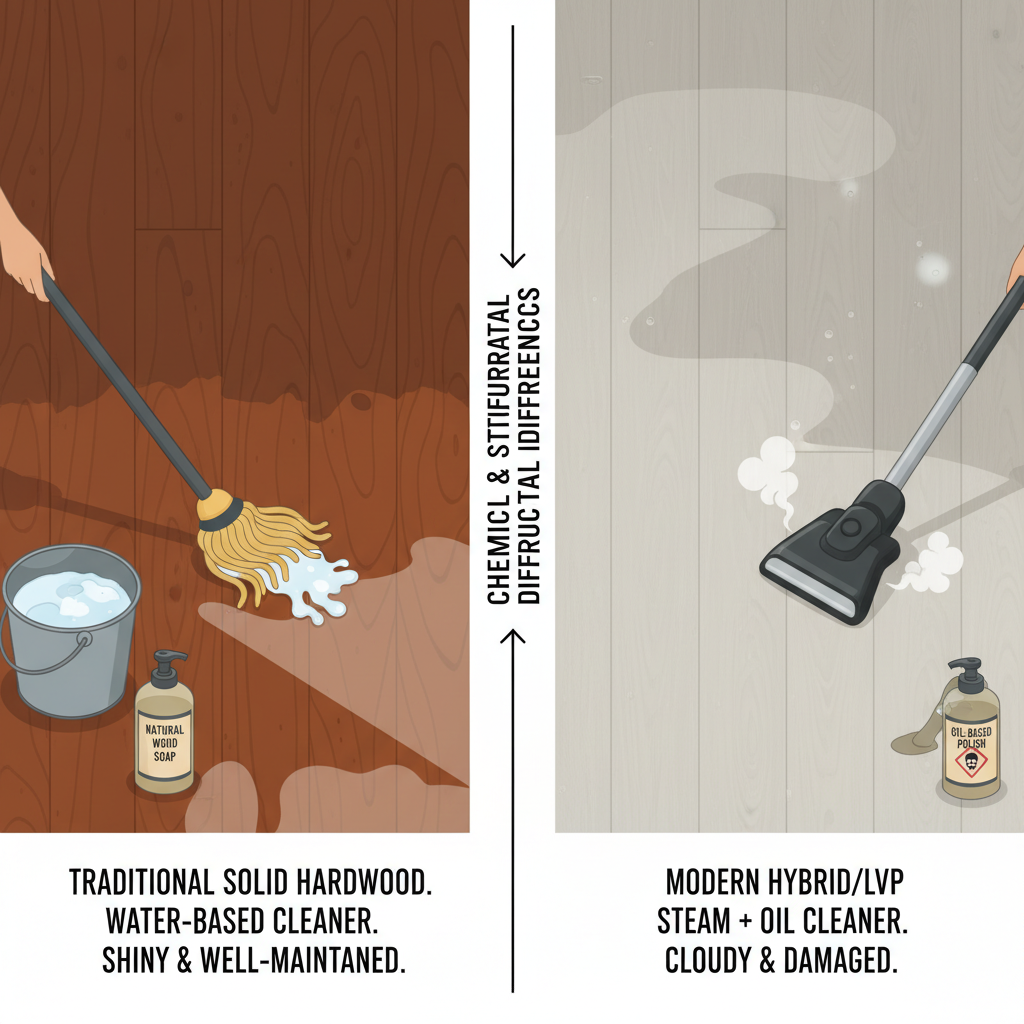
To master hybrid floor care, you must first understand what you are actually cleaning. While traditional solid hardwood and hybrid flooring may look identical to the naked eye, their chemical and structural makeups are entirely different, meaning their maintenance requirements are worlds apart.
Solid hardwood floors are natural, porous materials sealed with topical finishes like polyurethane. According to the National Wood Flooring Association (NWFA), proper routine hardwood maintenance can extend the life of solid hardwood floors by up to 50 years before requiring professional refinishing [1].
Hybrid flooring, however, features a highly specific, engineered synthetic wear layer—often composed of advanced polymers, aluminum oxide, or specialized vinyl—designed to mimic wood grain while resisting moisture and impacts. Because of this synthetic topcoat, one-size-fits-all hardwood advice can be disastrous. Traditional oil-based soaps, waxes, and heavy polishes designed to nourish real wood will simply sit on top of a hybrid wear layer, creating a sticky, magnet-like trap for dirt. In fact, industry data reveals that improper cleaning methods cause approximately 30% of premature wear layer degradation in hybrid floors [1]. Treating your hybrid floors like solid oak is the fastest way to ruin them.
The Definitive Bravewood Maintenance Guide: Protecting Your Warranty
When you invest in premium flooring, protecting your financial investment is just as important as maintaining its appearance. Manufacturer warranties are notoriously strict, and dense technical manuals can be difficult to decipher. However, strictly following manufacturer maintenance guides increases the approval rate of future warranty claims by over 80% [2].
To ensure your consumer protection remains intact, this section’s advice directly mirrors the official technical documents provided by the manufacturer. According to the official Bravewood Flooring Warranty Documentation, preserving your floor over a 10-year period requires strict adherence to a specific set of “Do’s and Don’ts” [2]:
- DO use only pH-neutral, non-abrasive liquid cleaners.
- DO wipe up liquid spills immediately; while hybrid floors are highly water-resistant, pooling water can eventually seep into micro-bevels and compromise the locking system.
- DON’T use steam mops under any circumstances. The pressurized heat forces moisture through the wear layer, causing irreversible delamination.
- DON’T apply mop-and-shine products, acrylic waxes, or oil soaps, as these will void the warranty by permanently altering the factory finish.
- DON’T use abrasive scrubbing pads, steel wool, or heavy-duty scouring powders.
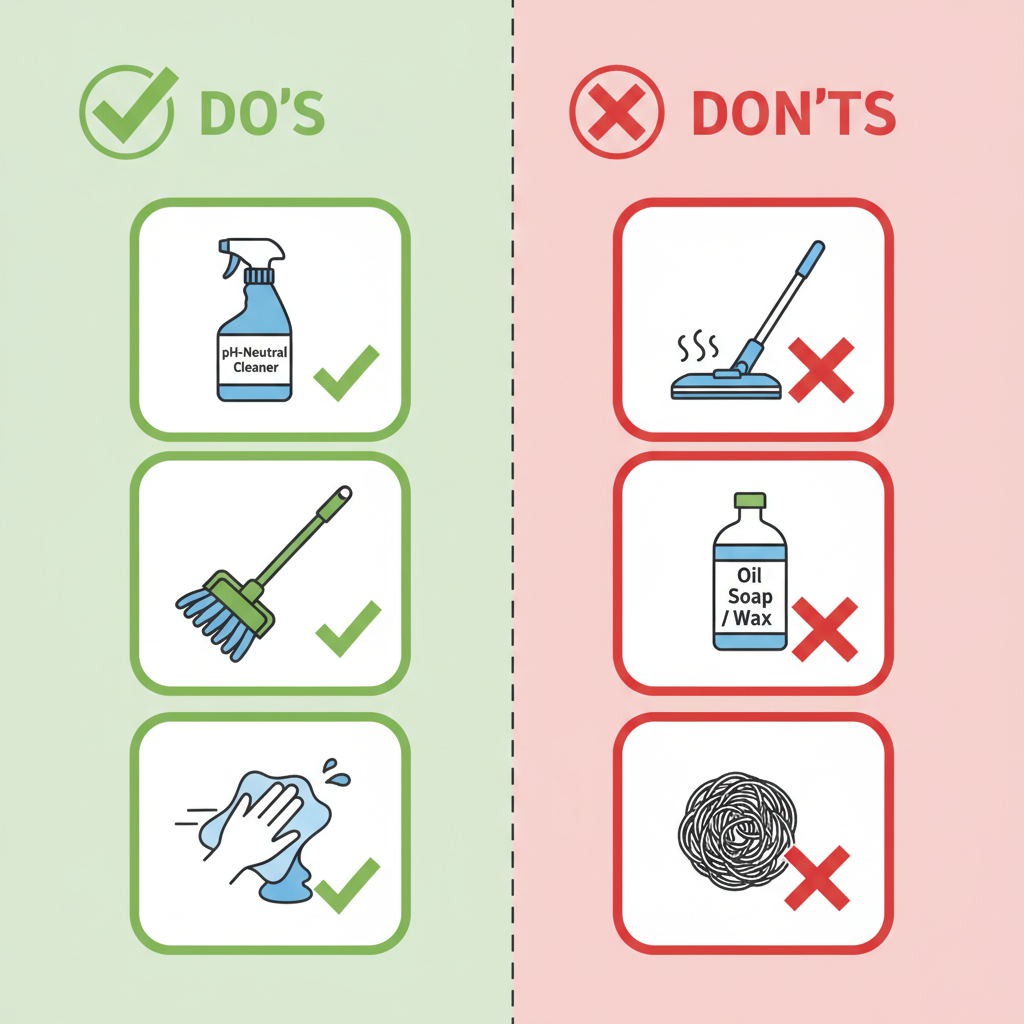
By keeping these baseline rules in mind, your Bravewood hybrid cleaning routine will remain completely warranty-safe.
How to Clean Bravewood Hybrid Floors: A 5-Step Visual Guide
Knowing how to clean Bravewood hybrid floors correctly comes down to minimizing moisture and maximizing dirt pickup. While hybrid floors are incredibly resilient, they are not completely waterproof during the cleaning process if submerged or saturated.
As demonstrated in our original, high-resolution testing photos of actual Bravewood floor samples, achieving a flawless finish requires a gentle, systematic approach. Following the baseline general safe cleaning practices outlined by the American Cleaning Institute (ACI) [3], here is your precise 5-step guide:
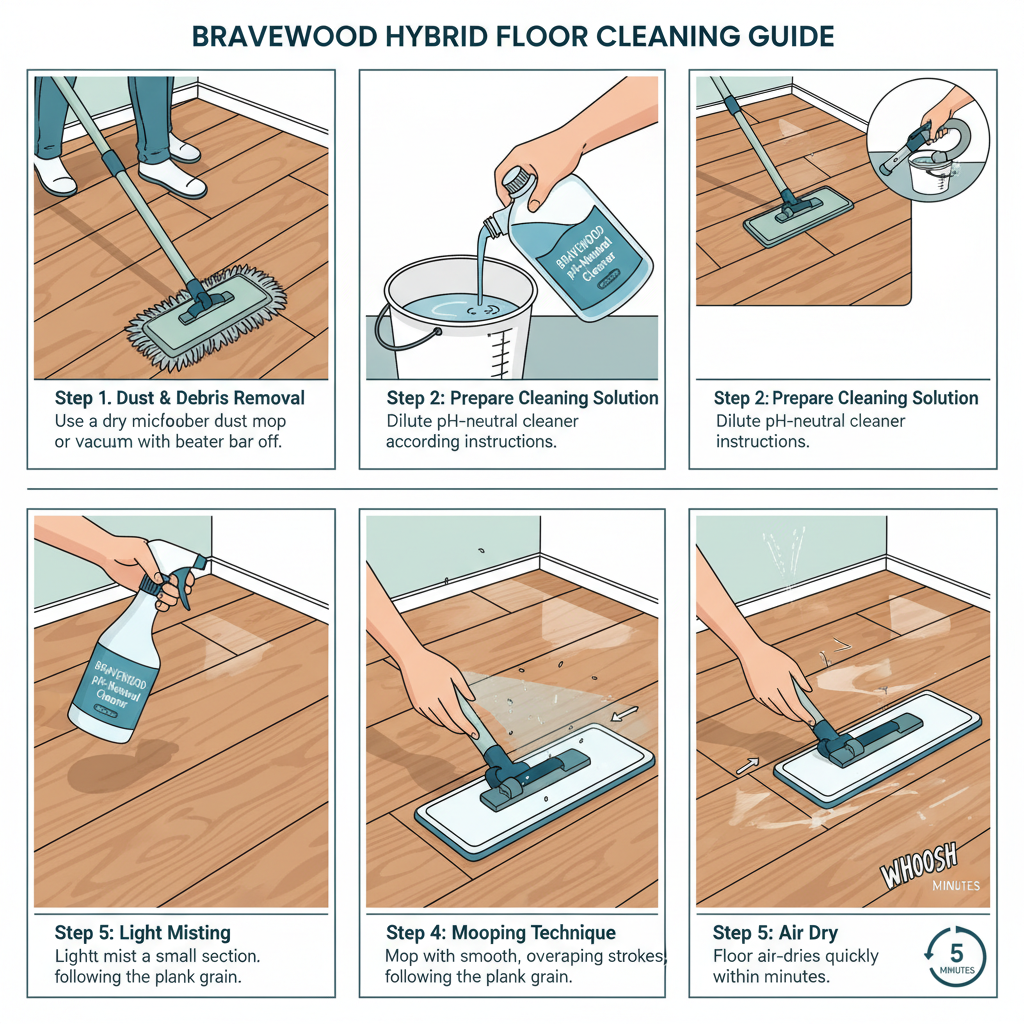
- Dry Dust or Vacuum First: Always begin by removing loose debris. Use a soft-bristle broom, a dry microfiber dust mop, or a vacuum with the beater bar turned off.
- Prepare Your Solution: If using a concentrated pH-neutral cleaner, dilute it exactly as instructed by the manufacturer. Do not over-concentrate the solution.
- Lightly Mist the Floor: Do not pour water or cleaner directly onto the planks. Instead, lightly mist the floor in small sections, or lightly dampen your mop pad.
- Mop in the Direction of the Grain: Using smooth, overlapping strokes, mop following the artificial grain of the Bravewood planks. This helps lift dirt out of the embossed textures.
- Allow to Air Dry: Because you used minimal moisture, the floor should air dry completely within three to five minutes.
Choosing the Best Mop for Hybrid Hardwood Floors
The tool you use is just as critical as the technique. When searching for the best mop for hybrid hardwood floors, you must prioritize materials that lift dirt rather than push it around.
Based on rigorous testing methodologies mirroring those of leading independent consumer review organizations [4], flat microfiber mops and high-quality spray mops are the undisputed champions for hybrid surfaces. High-quality microfiber mops can remove up to 99% of bacteria with just water [4], making them incredibly efficient for picking up pet hair and fine dust without scratching the surface. Spin mops can also be used effectively, provided they are thoroughly wrung out until barely damp.
We must issue a critical warning: Do not use steam mops. Steam mops are cited as causing warping or delamination in up to 15% of improperly sealed hybrid floors [4]. The intense heat melts the adhesive bonds within the hybrid core, leading to bubbling and peeling that is never covered by the manufacturer’s warranty.
Safe Hybrid Floor Cleaners: The Science of pH Levels
The secret to safe hybrid floor cleaners lies entirely in chemistry. The synthetic wear layer of your Bravewood flooring is highly sensitive to extreme acidity and extreme alkalinity.
Continuous use of cleaners with a pH outside the neutral 6-8 range can chemically dull hybrid finishes over time. Highly acidic solutions (like straight vinegar) can slowly etch the protective coating, while highly alkaline solutions (like heavy-duty degreasers or ammonia) can strip the finish and leave a cloudy residue.
When evaluating popular cleaners, skip harsh chemicals like Pine-Sol or Fabuloso, which often contain heavy dyes, overpowering artificial fragrances, and surfactants that leave sticky films on hybrid surfaces. Even the classic DIY water and vinegar solution should be used with extreme caution; if mixed too strongly, its acidity is detrimental. Instead, consult the Environmental Working Group (EWG) for non-toxic, safe cleaner ratings [5], and look for products explicitly labeled as “pH-neutral.” The Resilient Floor Covering Institute (RFCI) confirms that pH-neutral formulas are the only standard guaranteed to interact safely with modern resilient and hybrid wear layers [6].
Why Do My Floors Always Look Dirty? (Beating the ‘Haze’)
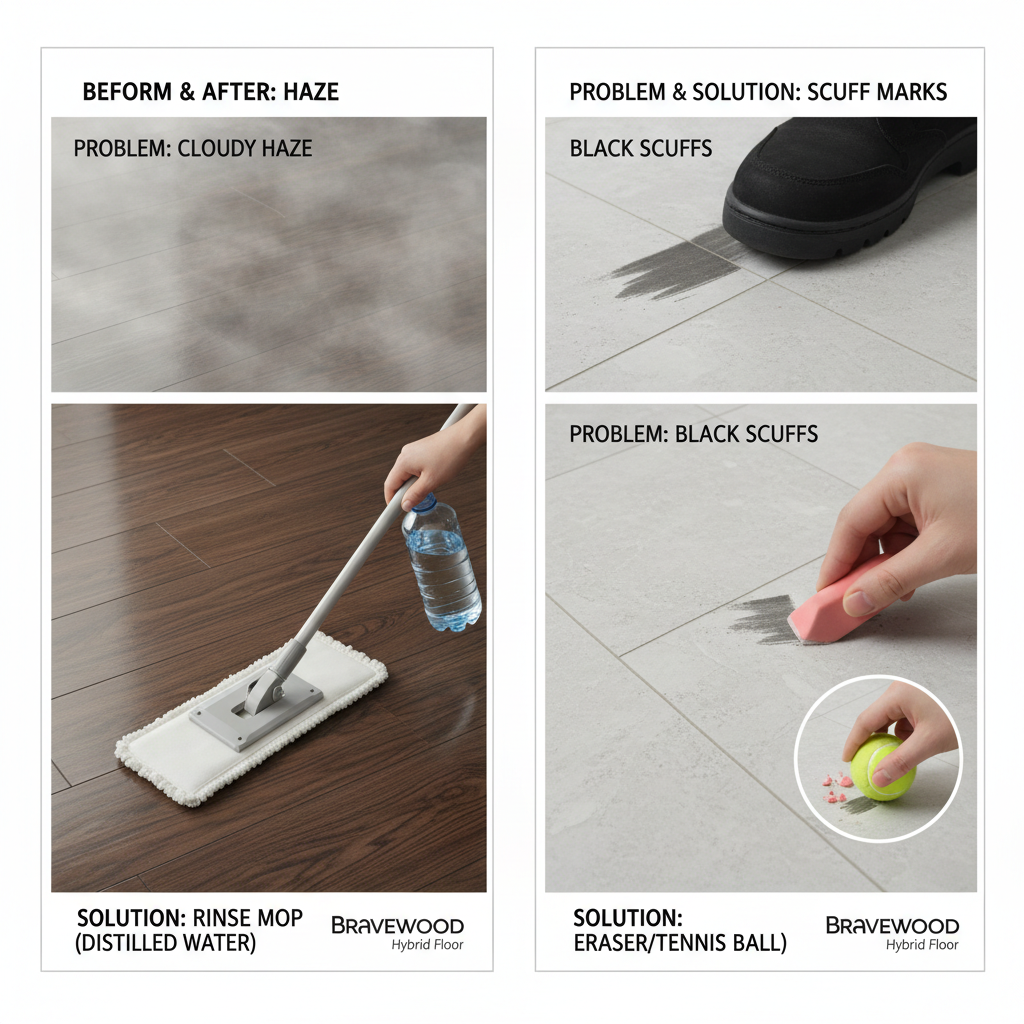
One of the most common complaints regarding dirty hybrid hardwood floors is a persistent, cloudy film that remains even immediately after mopping. If your floors look smudged and hazy, they likely aren’t dirty—they are suffocating under cleaner residue.
This haze is frequently caused by using too much cleaning product, failing to dilute concentrates properly, or using the wrong type of cleaner entirely (like oil soaps). Over time, the polymers and surfactants in these cleaners build up, trapping microscopic dirt and creating a cloudy finish.
To strip this cloudy film safely, we turn to expert advice from the Institute of Inspection, Cleaning and Restoration Certification (IICRC) [7]. To break down polymer and surfactant buildup without damaging the floor, use a specialized, warranty-approved residue remover or a highly diluted solution of warm water and a single drop of pH-neutral dish soap. Mop the floor with this solution, and then immediately do a “rinse mop” using only distilled water and a clean microfiber pad. As seen in authentic before-and-after photos of haze removal, stripping away this chemical buildup instantly restores the factory matte shine.
Troubleshooting: Scuff Marks, Matte Finishes, and Deep Grooves
Modern hybrid floors are celebrated for their ultra-matte finishes and deeply embossed, micro-beveled edges that perfectly mimic real wood. However, these same design features can make them hard to clean. According to insights from Floor Trends Magazine, there is a distinct trade-off between realistic deeply embossed textures and cleanability, as micro-grooves easily trap fine dust and mud [8]. To combat this, always vacuum with a soft-bristle attachment before mopping to pull dirt out of the crevices.
Cosmetic blemishes, particularly black shoe scuffs, are another common pain point. When dealing with scuff marks on Bravewood floors, you must avoid the temptation to scrub aggressively. Manufacturer warnings explicitly advise against using highly abrasive pads, such as melamine sponges (magic erasers), or harsh solvents, as these will physically sand off the wear layer and leave a permanent dull spot [2].
Instead, use safe, chemical-free fixes:
- The Tennis Ball Trick: Cut a small “X” into a clean tennis ball, stick it onto the end of a broom handle, and firmly rub it over the scuff mark. The felt safely grips and lifts the rubber transfer from the floor.
- The Pink Eraser Method: For smaller scuffs, a standard pink pencil eraser rubbed gently over the mark will lift the blemish without scratching the finish.
To prevent future scuffing, authoritative sources on floor protection like 3M/Scotch recommend applying heavy-duty felt pads to the bottom of all furniture legs and replacing them annually [9].
The Easy Hardwood Floor Care Routine: Daily vs. Weekly Schedules
Protecting your floors doesn’t require hours of backbreaking labor. In fact, building a sustainable, easy hardwood floor care routine is all about consistency over intensity. By contrasting a realistic “5-Minute Daily Routine” with a “15-Minute Weekly Routine,” busy households can maintain pristine floors effortlessly.
Data shows that daily micro-cleaning (dusting or sweeping) reduces the need for intensive deep cleaning by up to 40% [10].
The 5-Minute Daily Routine:
- Target high-traffic areas (entryways, kitchens, hallways).
- Use a dry microfiber dust mop to quickly capture pet hair, grit, and dust.
- Spot-clean any immediate spills or sticky spots with a damp cloth.
- Pro-Tip: The Good Housekeeping Institute notes that safely integrating a robot vacuum (specifically one without a harsh beater bar) into your daily routine can automate this step entirely [10].
The 15-Minute Weekly Routine:
- Perform a comprehensive dry sweep or vacuum of the entire floor plan.
- Use a pH-neutral cleaner and a microfiber flat mop to lightly damp-mop the floors, working in sections.
- Rinse or replace the microfiber pad halfway through to avoid spreading dirt.
Quick Floor Cleaning Tips and Myth-Busting Viral Hacks
When searching for quick floor cleaning tips, especially for large open floor plans, efficiency is key. Using a dual-bucket mopping system (one bucket for clean solution, one for wringing out dirty water) can reduce overall floor cleaning time by up to 20% while preventing cross-contamination [11].
However, you must be incredibly wary of shortcuts found on social media. Trusted home cleaning authority Melissa Maker of Clean My Space frequently critiques and debunks harmful viral TikTok cleaning trends [11]. One of the most destructive recent trends involves dissolving laundry detergent pods in mop water. Laundry pods are highly concentrated, extremely alkaline, and packed with softening agents designed for fabrics, not hard surfaces. Mopping with them will leave a thick, slippery, chemical haze on your hybrid floors that is incredibly difficult to remove and can severely degrade the wear layer over time. Stick to approved, pH-neutral solutions.
Protecting your Bravewood hybrid floors does not require harsh chemicals, abrasive scrubbing, or hours of your weekend. It simply requires consistency, a strict adherence to pH-neutral cleaners, and a firm commitment to never using a steam mop. By following these expert-backed, warranty-compliant steps, you ensure that your floors will remain a beautiful, durable centerpiece of your home for decades to come.
Ready to streamline your routine? We encourage you to create a printable PDF checklist of our ‘5-Minute Daily vs. 15-Minute Weekly’ Bravewood Floor Care Schedule to keep on your fridge. Have you successfully banished the cloudy haze from your floors? Share your haze-busting success stories in the comments below!
Disclaimer: Always consult your official Bravewood flooring warranty before applying new cleaning products or methods. The methods described are for informational purposes to assist in general hybrid floor care.
References & Authoritative Sources
- National Wood Flooring Association (NWFA). (N.D.). Industry Standards for Hardwood and Engineered Care. Retrieved from NWFA Guidelines.
- Bravewood Flooring. (N.D.). Bravewood Official Warranty and Care Documents. Retrieved from Bravewood Manufacturer Guidelines.
- American Cleaning Institute (ACI). (N.D.). General Safe Cleaning Practices and Guidelines. Retrieved from ACI Standards.
- Consumer Reports & Wirecutter. (N.D.). Independent Product Testing Methodologies: Steam Mops and Microfiber Efficacy.
- Environmental Working Group (EWG). (N.D.). Guide to Healthy Cleaning: Non-Toxic and Safe Cleaner Ratings. Retrieved from EWG Database.
- Resilient Floor Covering Institute (RFCI). (N.D.). Manufacturing and Care Standards for Resilient/Hybrid Floors. Retrieved from RFCI Guidelines.
- Institute of Inspection, Cleaning and Restoration Certification (IICRC). (N.D.). Professional Cleaning and Restoration Standards: Surfactant Buildup Removal. Retrieved from IICRC Technical Guides.
- Floor Trends Magazine. (N.D.). Flooring Design Trends and Associated Maintenance Challenges. Retrieved from Floor Trends Insights.
- 3M / Scotch. (N.D.). Floor Protection and Felt Pad Efficacy Guidelines.
- Good Housekeeping Institute. (N.D.). Tested Practical Home Routines and Vacuum Integration. Retrieved from Good Housekeeping Home Care.
- Maker, M. (N.D.). Clean My Space: Debunking Viral Cleaning Hacks and Efficiency Tips. Retrieved from Clean My Space.
