
For generations, homeowners have faced a difficult choice: install the timeless, beautiful hardwood floors they love, or opt for a more practical, water-resistant alternative and sacrifice the authentic look and feel of real wood. The fear is universal—a single dishwasher leak, a pet accident, or a spilled drink could lead to devastating warping, cupping, and permanent damage. But what if you no longer had to compromise? What if you could have genuine hardwood with 100% waterproof protection, even in your kitchen or bathroom?
This is the promise of hybrid hardwood flooring, and Bravewood is a leading name in this revolutionary category. This article is your definitive, jargon-free guide to understanding this game-changing technology. We will cut through the confusing marketing claims to give you an honest, evidence-based evaluation. By the end, you’ll have a clear framework to decide if Bravewood Hybrid Hardwood is the perfect, worry-free foundation for your home, empowering you to invest with absolute confidence.
- The Homeowner’s Dilemma: Why Traditional Hardwood Fails in Wet Areas
- What is Hybrid Waterproof Hardwood? The Best of Both Worlds Explained
- A Deep Dive into Bravewood Hybrid Hardwood: Reviews, Specs, and Cost
- The Perfect Solution for Kitchens: Why Hybrid Hardwood Excels
- Can You Use Hybrid Hardwood in Bathrooms? A Definitive Answer
- The Ultimate Buyer’s Guide: Choosing Your Perfect Pet-Proof & Kid-Friendly Floor
- The End of Compromise: A Worry-Free Wood Floor is Here
- References and Authoritative Sources
The Homeowner’s Dilemma: Why Traditional Hardwood Fails in Wet Areas
To appreciate the innovation of hybrid hardwood, we must first understand why its traditional counterparts are so vulnerable. Solid and engineered hardwood floors are made of natural wood cells, which act like a bundle of microscopic straws. When exposed to water, these cells absorb moisture and swell. This process leads to a host of problems that can ruin a floor.
Common signs of water damaged wood floors include:
- Cupping: The edges of the planks rise higher than the center, creating a concave, “cupped” shape. This happens when the bottom of the board absorbs more moisture than the top.
- Crowning: The opposite of cupping, where the center of the plank swells and bulges higher than the edges. This often occurs when the surface is exposed to a significant spill.
- Buckling: The most severe form of damage, where the flooring lifts entirely off the subfloor, sometimes by several inches. This indicates a major leak and widespread moisture saturation.
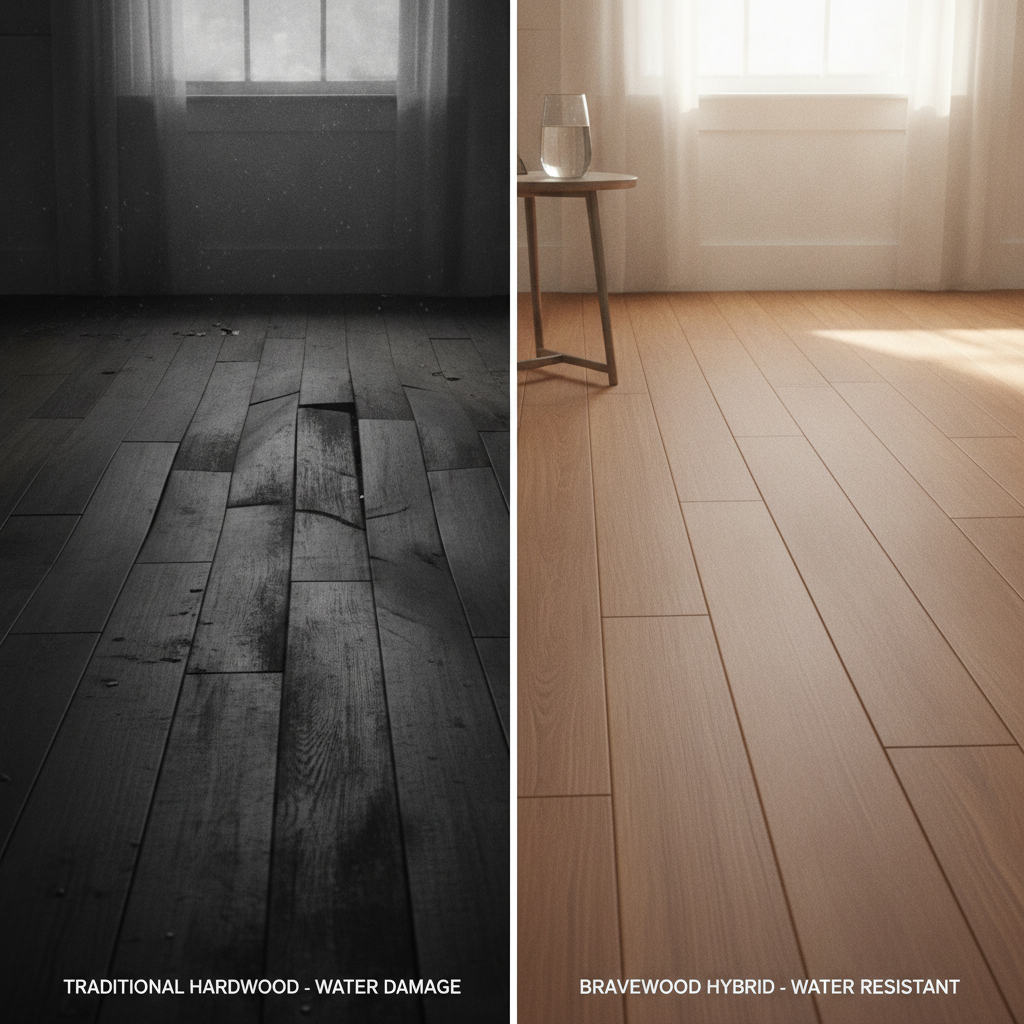
Beyond the visible warping, moisture creates a hidden danger. According to restoration experts, mold and mildew can begin to grow within just 24-48 hours of water exposure.[1] The Institute of Inspection, Cleaning and Restoration Certification (IICRC) confirms that once water has penetrated the cellular structure of traditional wood, the damage is often irreversible, leading to costly repairs or complete replacement of your kitchen floor water damage or warped bathroom flooring.
What is Hybrid Waterproof Hardwood? The Best of Both Worlds Explained
Hybrid waterproof hardwood is the solution to this age-old dilemma. It is a multi-layered flooring product engineered to deliver the authentic beauty of real wood on a completely inert, 100% waterproof platform. It answers the common question, “is waterproof hardwood real wood?” with a definitive yes—the part you see and touch is genuine hardwood.
The magic lies in its construction. A cross-section of a typical hybrid hardwood plank, like Bravewood, reveals several key layers:
- Protective Wear Layer: A transparent, highly durable topcoat (often containing aluminum oxide) that resists scratches, stains, and fading.
- Real Wood Veneer: A thin, authentic slice of hardwood (such as oak, hickory, or maple) that provides the unique grain, texture, and character that can’t be replicated by printed designs.
- Waterproof Core: This is the revolutionary component. It is typically a Stone Plastic Composite (SPC) core, a dense and rigid material made from a mixture of limestone powder, polyvinyl chloride, and stabilizers. A flooring expert would explain that this SPC core is completely impervious to water, will not swell or warp, and provides extreme dent resistance.
- Attached Underlayment: Most hybrid hardwood products come with a pre-attached pad that provides sound insulation, cushioning underfoot, and a moisture barrier.
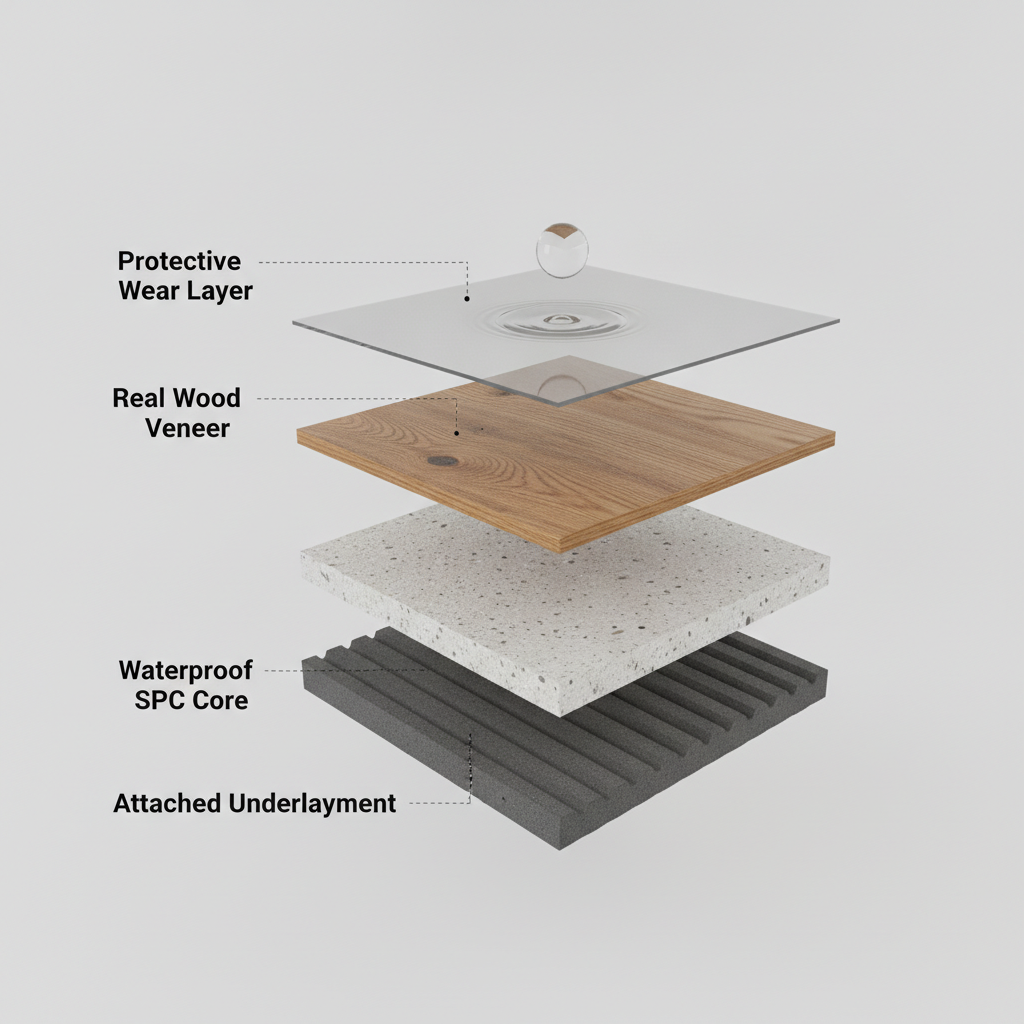
This construction allows a plank to be fully submerged in water for days without any damage to its structural integrity, a feat demonstrated in many videos where spills are left for 24 hours or more with no effect. The National Wood Flooring Association (NWFA) acknowledges these products, noting that while they cannot be sanded and refinished like solid wood, they offer a viable way to bring the look of wood to previously unsuitable areas.[2]
Hybrid Hardwood vs. LVP, Laminate, and Traditional Hardwood: A Clear Comparison
With so many flooring options, it’s easy to get confused. Where does hybrid hardwood fit in? Here’s a clear breakdown to address the common “hybrid vs laminate” and “waterproof hardwood vs lvp” questions.
| Feature | Hybrid Hardwood (e.g., Bravewood) | Luxury Vinyl Plank (LVP) | Laminate Flooring | Traditional Solid Hardwood |
|---|---|---|---|---|
| Waterproofing | 100% Waterproof (SPC Core) | 100% Waterproof (Vinyl Core) | Water-Resistant (Swells if water penetrates seams) | Not Waterproof (Highly susceptible to damage) |
| Durability | Excellent (High-density core + wear layer) | Very Good (Wear layer protects printed design) | Good to Excellent (High AC ratings like AC4/AC5) | Poor to Good (Dents and scratches easily) |
| Aesthetics | Authentic Wood (Real wood veneer) | Realistic Wood Look (High-def printed image) | Realistic Wood Look (High-def printed image) | Authentic, Timeless Wood |
| Feel Underfoot | Solid, substantial feel | Softer, can feel less substantial | Hard, can be noisy without good underlayment | Solid, firm, natural feel |
| Cost (Materials) | High-End ($$$-$$$$) | Mid-Range ($$-$$$) | Budget to Mid-Range ($-$$) | High-End ($$$-$$$$) |
| Repairability | Plank replacement | Plank replacement | Plank replacement | Can be sanded and refinished multiple times |
The key takeaway is that hybrid hardwood is the only option that provides a 100% waterproof core combined with a genuine wood surface. While high-end LVP and laminate offer excellent visuals, they are ultimately imitations. Traditional hardwood offers authenticity but none of the protection. Hybrid hardwood, like Bravewood, truly bridges that gap. One of its few cons compared to traditional solid hardwood is that its thin veneer, typically around 1.2mm, cannot be sanded and refinished.
A Deep Dive into Bravewood Hybrid Hardwood: Reviews, Specs, and Cost
Bravewood has emerged as a prominent brand in the hybrid flooring space, offering a robust solution for homeowners seeking beauty and durability. An analysis of Bravewood hybrid hardwood flooring reviews and product specifications reveals a consistent picture of a high-performance floor.
Aggregated customer reviews often highlight the following:
Pros:
- “The floor is beautiful. You can’t tell it’s not a traditional solid hardwood floor.”
- “We had a small leak from the ice maker and there was zero damage. It gave us total peace of mind.”
- “With two large dogs and three kids, our floor still looks brand new after a year. No scratches.”
Cons:
- “It was more expensive than the LVP we were considering, but we felt the real wood was worth it.”
- “My installer said you have to be very careful with the locking system. It’s not as forgiving as some vinyl planks.”
High-resolution images and videos of Bravewood installations showcase its ability to seamlessly integrate into kitchens, bathrooms, and basements, areas where traditional wood would be a liability.
Key Features and Technology Breakdown
To understand Bravewood’s performance, you must look at its specifications, which are detailed on the official manufacturer’s website.[3]
- Wear Layer: Bravewood typically features a commercial-grade 20 mil wear layer with a urethane and aluminum oxide finish. A 20 mil wear layer provides excellent protection against scratches from pet claws, dragged furniture, and heavy foot traffic, making it suitable for the busiest homes.
- Waterproof Core: The core is a high-density SPC (Stone Plastic Composite). This not only makes the plank 100% waterproof but also exceptionally resistant to dents from dropped objects—a common occurrence in kitchens.
- Genuine Wood Veneer: Bravewood uses a sliced-face hardwood veneer, which provides a more authentic and natural grain pattern compared to the rotary-peeled veneers found on some lower-quality engineered products.
Bravewood vs. Competitors (Shaw Floorte, Mohawk RevWood)
How does Bravewood stack up against other industry giants? Here is a general comparison based on their flagship waterproof wood product lines.
| Feature | Bravewood Hybrid Hardwood | Shaw Floorte Exquisite | Mohawk RevWood Plus |
|---|---|---|---|
| Top Layer | Real Hardwood Veneer | Real Hardwood Veneer | Wood-Look Laminate |
| Core Material | SPC (Stone Plastic Composite) | SPC (Stone Plastic Composite) | HDF (High-Density Fiberboard) |
| Waterproofing | 100% Waterproof Plank | 100% Waterproof Plank | Waterproof Surface & Locking System |
| Wear Layer | ~20 mil | Varies by collection | AC4 Rating |
| Unique Selling Prop. | Focus on real wood + SPC core | Brand recognition, wide availability | Exceptional scratch/dent resistance (laminate) |
This comparison highlights a key difference: Mohawk’s RevWood is technically a waterproof laminate, not a hybrid hardwood with a real wood veneer. Bravewood and Shaw’s Floorte line are more direct competitors, both offering a real wood surface on a waterproof SPC core. Your choice may come down to specific wood species, color options, and warranty details.
How Much Does Bravewood Flooring Cost?
Bravewood Hybrid Hardwood is a premium flooring product, and its price reflects its advanced technology and use of real wood. Homeowners can expect the material cost to range from $7 to $12 per square foot.
Pro-Tip from a Certified Flooring Installer: “The material is only part of the total cost. Remember to budget for installation, which can run from $3 to $6 per square foot. This cost can increase if your subfloor isn’t perfectly flat or if we have to remove and dispose of old flooring first. Proper subfloor preparation is non-negotiable for a successful installation.”
While the upfront cost is higher than LVP or laminate, many reviews conclude that Bravewood flooring is worth the money due to its long-term value, durability, and the peace of mind it offers against water damaged wood floors.
The Perfect Solution for Kitchens: Why Hybrid Hardwood Excels
The kitchen is the heart of the home, but it’s also a battlefield for floors. Spills, splashes, dropped pots, and constant foot traffic demand a surface that is both beautiful and resilient. This is where hybrid hardwood shines.
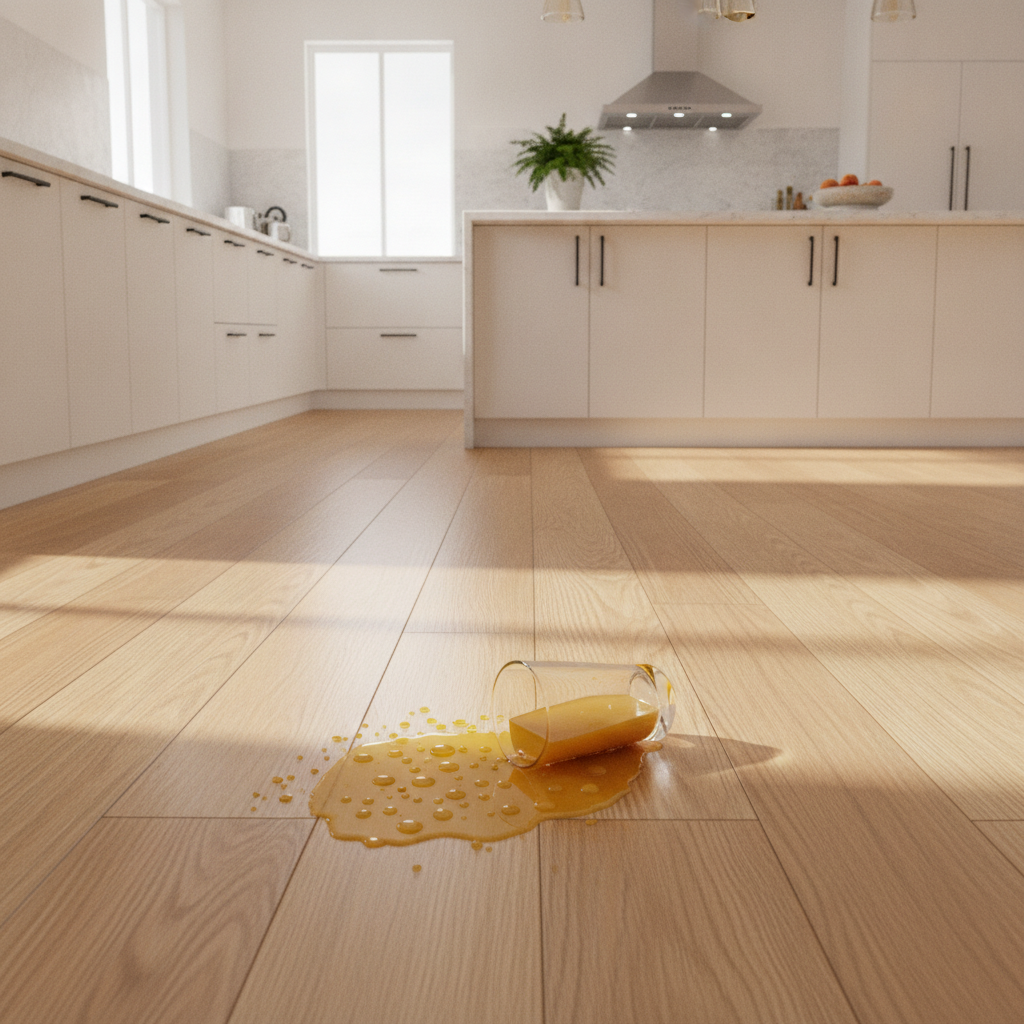
Here’s how it scores on key criteria for the best waterproof flooring for kitchens:
- Waterproofing: 10/10 – The SPC core provides complete protection from dishwasher leaks, refrigerator line breaks, or everyday spills.
- Durability: 9/10 – The dense core resists dents, and the 20 mil wear layer guards against scratches, making it a highly durable kitchen flooring option.
- Stain Resistance: 9/10 – The topcoat prevents spills like wine, oil, or tomato sauce from penetrating and staining the floor.
- Safety: A crucial but often overlooked factor is slip resistance. Many hybrid hardwood floors are textured to provide better grip. For safety, flooring in areas like kitchens should meet standards outlined by the Americans with Disabilities Act (ADA) for floor surfaces.[4]
Pro-Tip from a Kitchen Designer: “Bringing the warm, continuous look of wood into the kitchen is one of the most requested features from my clients. It makes the entire living space feel larger and more cohesive. A product like Bravewood allows us to achieve this design without compromising on practicality. It absolutely increases a home’s appeal and can contribute to a higher ROI on a kitchen remodel.”
Can You Use Hybrid Hardwood in Bathrooms? A Definitive Answer
The idea of wood flooring in a full bathroom has long been considered taboo. With hybrid hardwood, it’s now a reality, but with important caveats. The answer to “is hybrid hardwood good for bathrooms?” is a resounding “yes, but only if the product is specified for it and installed correctly.”
For a successful bathroom installation, you must ensure:
- 100% Waterproof Core: The floor must have an SPC core. WPC (Wood Plastic Composite) cores are less dense and not always recommended for full bathrooms.
- Warranty Compliance: You must check the manufacturer’s warranty. A quality brand like Bravewood will explicitly state if their product is approved for full bathroom installations. A typical warranty clause might read: “This product is 100% waterproof and can be installed in full bathrooms. Damage resulting from water getting under the floor due to improper installation is not covered.”
- Proper Installation: This is the most critical factor. The International Residential Code (IRC) sets standards for materials in wet areas, and proper installation is key to meeting them.[5]
Proper Bathroom Flooring Installation Checklist:
- ✓ Flat, Clean Subfloor: Ensure the subfloor is perfectly level and free of debris.
- ✓ Perimeter Seal: Apply a 100% silicone sealant around the entire perimeter of the floor (at tubs, showers, toilets, and vanities) to create a watertight seal. This prevents water from getting under the planks.
- ✓ Watertight Transitions: Use appropriate waterproof transitions at doorways.
When these conditions are met, hybrid hardwood becomes one of the most durable bathroom flooring options available, offering the warmth and style of wood without the risk of warped bathroom flooring.
The Ultimate Buyer’s Guide: Choosing Your Perfect Pet-Proof & Kid-Friendly Floor
Whether you have a playful golden retriever or active toddlers, you need a floor that can stand up to life. Hybrid hardwood is an excellent choice for a pet proof hardwood flooring solution because it tackles the two main threats from pets: claws and accidents.
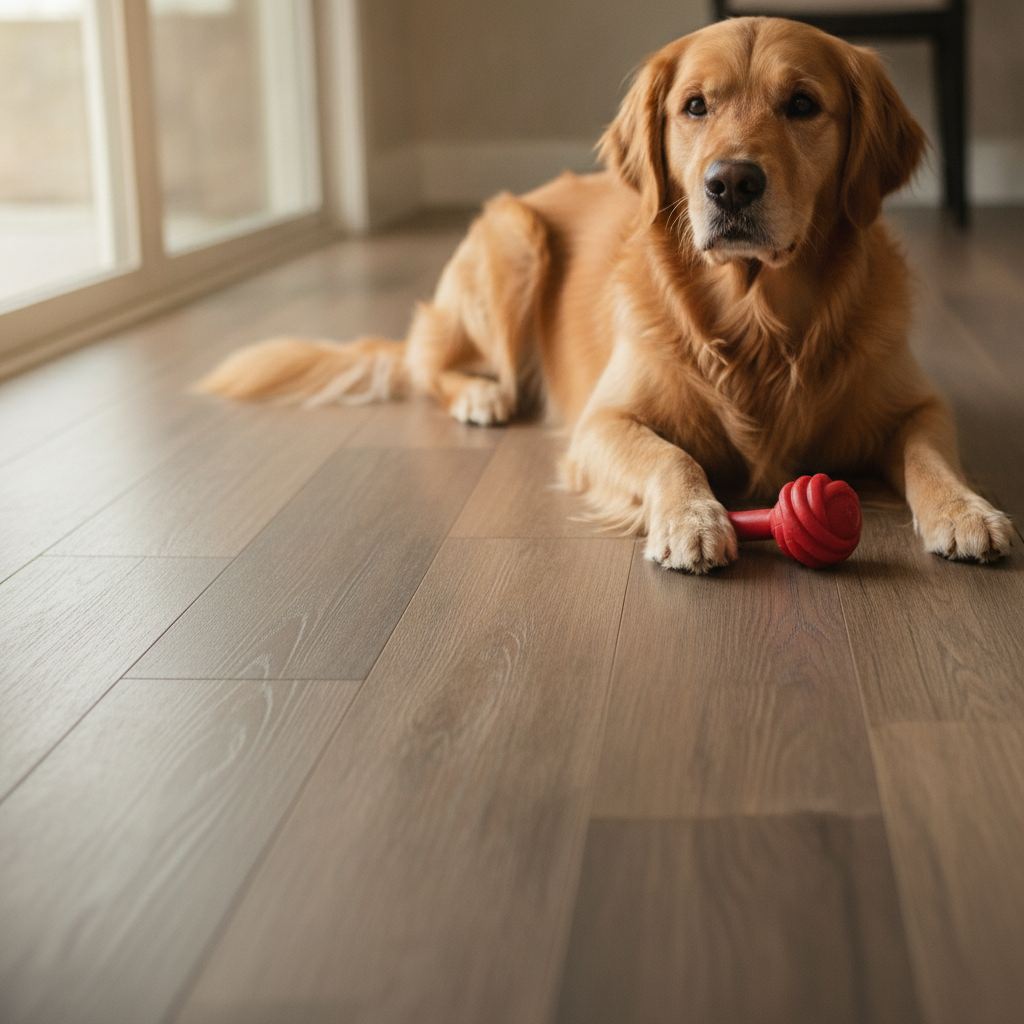
Here’s what to look for on any hybrid hardwood spec sheet:
- Wear Layer Thickness: This is your primary defense against scratches. For homes with pets, especially large dogs, look for a wear layer of 20 mil or higher.
- Wood Veneer Hardness: The hardness of the actual wood species still matters for dent resistance. The Janka Hardness Scale measures this. A harder wood like Hickory or White Oak will resist denting better than a softer wood.
- Core Density: A high-density SPC core is more resistant to impacts from dropped toys or rambunctious pets.
- Texture and Finish: A low-gloss, textured finish (like wire-brushed or hand-scraped) is brilliant at hiding the minor scratches and scuffs that are inevitable in a busy home.
As one pet owner noted in a review, “The waterproof feature saved us when our puppy was house-training, and the textured finish means I’m not constantly worried about his nails scratching the floor. It’s the best of both worlds.”
Installation and Maintenance: Protecting Your Investment
To ensure your hybrid hardwood floor lasts for decades and your warranty remains intact, proper installation and maintenance are crucial. Always defer to the manufacturer’s official installation guide as the ultimate authority.
Subfloor Preparation Checklist:
- ✓ Level: The subfloor must be flat to within the manufacturer’s tolerance (e.g., 3/16″ in a 10-foot span).
- ✓ Clean: The subfloor must be free of all dust, dirt, and debris.
- ✓ Dry: The subfloor must be structurally sound and dry.
Cleaning and Maintenance: Do’s and Don’ts
- DO: Sweep, dust mop, or vacuum regularly to remove grit.
- DO: Clean spills promptly with a soft cloth.
- DO: Use a pH-neutral cleaner recommended for hardwood floors, lightly misting it onto a microfiber mop (not directly on the floor).
- DON’T: Use a steam cleaner, as the heat and excessive moisture can damage the wood veneer.
- DON’T: Use wax, oil soap, or other household cleaners that can leave a dulling residue.
- DON’T: Use abrasive tools like steel wool or scouring pads.
The End of Compromise: A Worry-Free Wood Floor is Here
The evolution of flooring technology has finally solved the age-old conflict between the timeless beauty of hardwood and the practical demands of modern life. Hybrid waterproof hardwood, exemplified by brands like Bravewood, delivers the authentic look and feel of real wood on a platform that is 100% waterproof, highly durable, and ready for anything your family can throw at it.
You no longer have to sacrifice style for peace of mind in your kitchen, bathroom, or any room in your home. Armed with the knowledge of how this technology works, what specifications to look for, and how it compares to the alternatives, you are now empowered to make a confident, informed decision. The perfect, worry-free wood floor is no longer a dream—it’s a reality.
Feeling confident about choosing a worry-free wood floor? Explore the latest styles and find an authorized dealer near you to get a sample of Bravewood Hybrid Hardwood today.
References and Authoritative Sources
- Institute of Inspection, Cleaning and Restoration Certification (IICRC). (N.D.). IICRC S500 Standard for Professional Water Damage Restoration.
- National Wood Flooring Association (NWFA). (N.D.). Technical Guidelines and Publications.
- Bravewood Flooring. (N.D.). Product Specifications and Warranty Information.
- U.S. Access Board. (N.D.). ADA Standards for Accessible Design. Retrieved from https://www.access-board.gov/ada/
- International Code Council (ICC). (N.D.). International Residential Code (IRC).
