
Every homeowner eventually faces the same frustrating design dilemma: the deep desire for the authentic, timeless beauty of real hardwood, pitted against the constant anxiety of water damage, pet scratches, and everyday wear and tear. For decades, choosing a floor meant compromising. You either accepted the high maintenance and vulnerability of solid wood, or you settled for the artificial, repetitive look of traditional vinyl or laminate. But what if you didn’t have to choose?
Enter the “Best of Both Worlds” solution: waterproof hybrid wood flooring. This revolutionary category is rapidly transforming the industry by merging the stunning aesthetics of natural wood with the indestructible performance of rigid core technology. This comprehensive guide cuts through the confusing marketing jargon to provide you with a definitive, technical blueprint on hybrid floors. We will spotlight the premium Bravewood collection, explore the exact 4-layer anatomy of these planks, decode durability metrics, share professional moisture prevention tactics, and provide a step-by-step installation guide to help you achieve flawless floors in every room.
- The Evolution of Flooring: What is Waterproof Hybrid Wood Flooring?
- Spotlight on Bravewood Hybrid Hardwood: Specs & Benefits
- Defeating the Elements: Preventing Wood Floor Water Damage
- Ultimate Protection: Solutions for Easily Scratched Hardwood Floors
- Step-by-Step: Bravewood Hybrid Hardwood Flooring Installation
- References & Authoritative Sources
The Evolution of Flooring: What is Waterproof Hybrid Wood Flooring?
To understand why hybrid hardwood flooring is taking over the market, we must first distinguish it from its predecessors: traditional laminate and luxury vinyl plank (LVP). While laminate offers decent scratch resistance, its fiberboard core acts like a sponge around moisture. LVP is waterproof, but often lacks the rigid feel and acoustic depth of real wood. Hybrid hardwood bridges this gap entirely.
The secret lies in its advanced 4-layer construction. A true waterproof hybrid wood floor consists of:
- The Wear Layer: A highly durable, clear topcoat engineered to resist scratches, stains, and fading.
- The Decorative Layer/Veneer: A high-definition print or ultra-thin real wood veneer that provides the authentic visual texture.
- The Rigid Core: A 100% waterproof Stone Plastic Composite (SPC) or Wood Plastic Composite (WPC) center that provides structural stability and prevents denting.
- The Backing Layer: An attached underlayment pad for sound dampening and underfoot comfort.
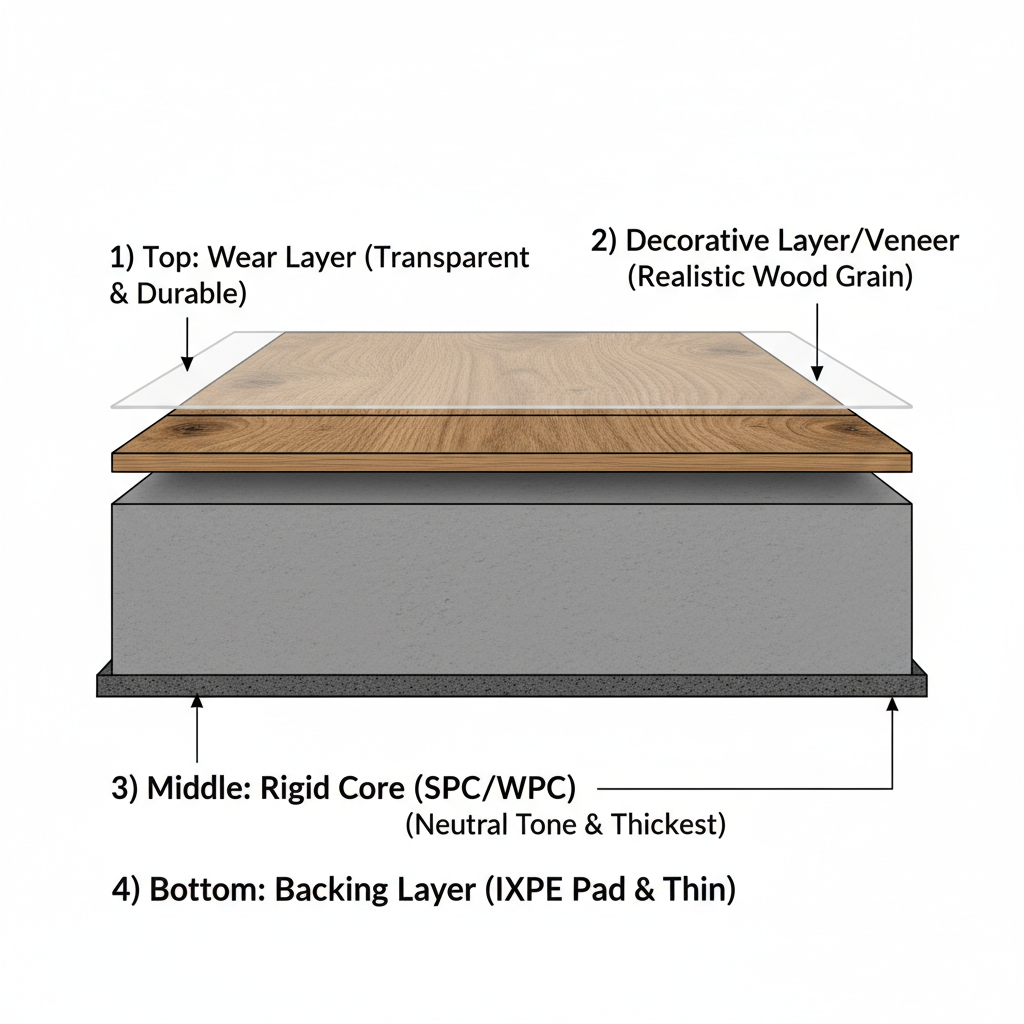
According to flooring experts at Floor & Decor, the integration of a rigid core is what gives hybrid flooring its unparalleled stability, ensuring the planks will not expand, contract, or warp under standard environmental changes [1].
Topical Water-Resistant Wood vs. 100% Waterproof Cores
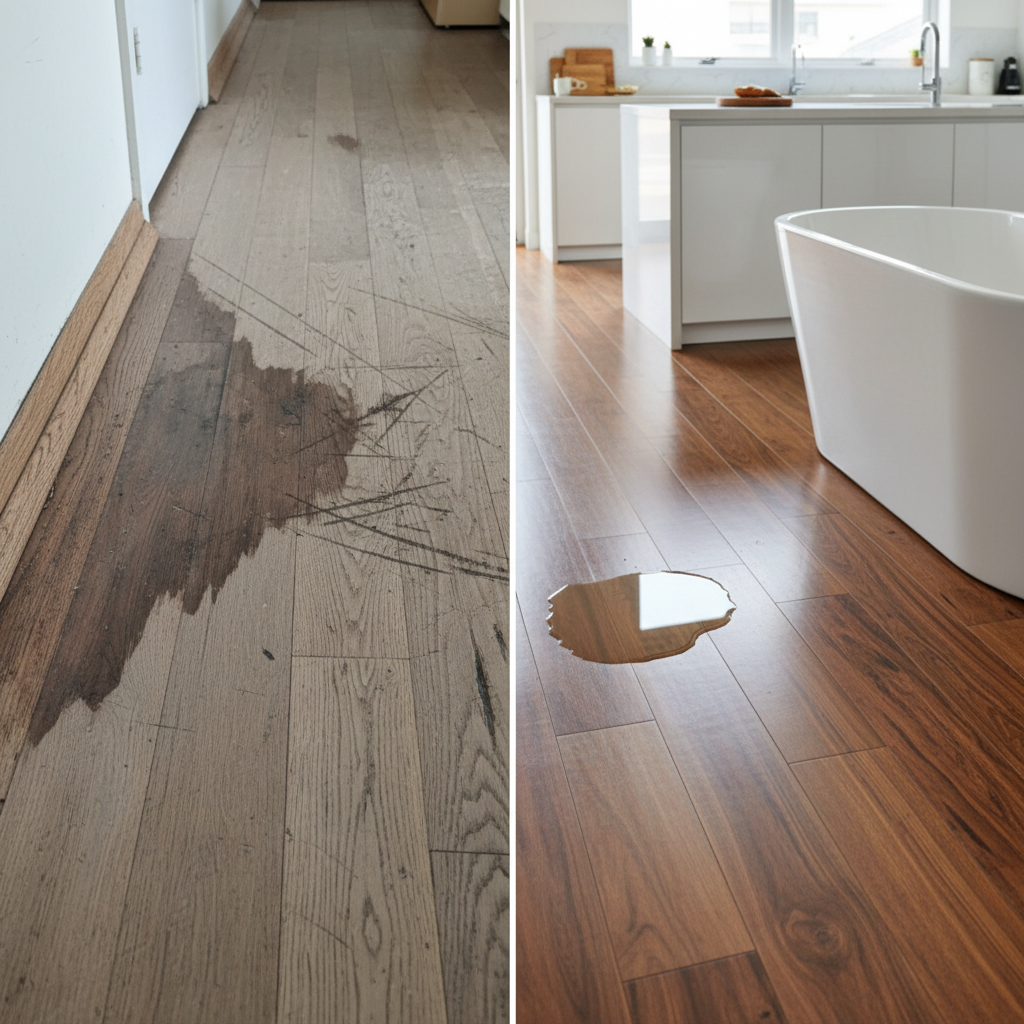
When shopping for waterproof wood floors, it is critical to understand the difference between “water-resistant” and “100% waterproof.” Traditional wood is naturally hygroscopic, meaning its cellular structure absorbs and releases moisture from the air and direct contact. Manufacturers often apply topical sealants to real wood, creating a “water-resistant” floor. However, these topical treatments only protect against standing water for a limited window—typically 24 to 72 hours. If water seeps between the seams, the wood will swell.
True, indefinite waterproof performance requires a non-wood core. SPC (limestone and stabilizers) and WPC (wood flour and thermoplastics) cores are biologically incapable of absorbing water. The National Wood Flooring Association (NWFA) notes that controlling wood moisture content is the primary challenge of traditional hardwood [2]. By replacing the hygroscopic wood core with an SPC or WPC rigid core, hybrid floors eliminate this biological limitation entirely, allowing them to be submerged in water without sustaining structural damage.
Hybrid vs. LVP and Laminate: The Real Wood Look
For homeowners seeking real wood look alternatives, the tactile and visual experience is paramount. Traditional laminate is constructed using MDF or HDF (Medium/High-Density Fiberboard), which can sound hollow and “clicky” underfoot. LVP uses flexible thermoplastics, which can feel soft and lack the acoustic resonance of a solid floor. Hybrid flooring, with its dense rigid core, mimics the dense underfoot feel and solid acoustic resonance of traditional hardwood far better than its counterparts.
Furthermore, premium hybrid floors utilize Embossed-in-Register (EIR) technology. In cheaper laminates, the textured grooves on the surface rarely match the printed wood grain beneath, ruining the illusion. EIR technology perfectly aligns the physical surface texture with the high-definition printed grain, creating a waterproof real wood look floor that is virtually indistinguishable from nature, without the repeating patterns that plague budget alternatives.
Spotlight on Bravewood Hybrid Hardwood: Specs & Benefits
When evaluating the market’s top contenders, the Bravewood hybrid hardwood collection by TAS Flooring stands out as a premium, architectural-grade solution. Positioned as a top-tier topical waterproof hybrid, Bravewood is engineered for both stunning visual appeal and rigorous daily use.
The specifications of the Bravewood line demonstrate its quality. The planks feature a robust 12mm overall thickness, which provides a substantial, solid feel underfoot that rivals engineered hardwood. This thickness includes a pre-attached 1.5mm IXPE (Irradiated Cross-Linked Polyethylene) pad, offering superior sound insulation and thermal properties. Packaged efficiently at 20.56 square feet per carton, it is available in 10 distinct, highly realistic color variations to suit any interior design palette. TAS Flooring backs the Bravewood collection with a Lifetime Residential and a 7-Year Light Commercial warranty, signaling immense confidence in its long-term durability [3].
Eco-Friendly and Safe: FloorScore & GreenGuard Gold
Modern homeowners are rightfully concerned about the chemicals used in synthetic building materials. Bravewood hybrid hardwood addresses these health and environmental concerns head-on by holding some of the industry’s most stringent certifications.
The collection is Carb Phase II Compliant, ensuring incredibly low formaldehyde emissions. More impressively, it holds the GreenGuard Gold certification and is FloorScore certified. According to SCS Global Services, the authoritative body issuing the FloorScore certification, products must undergo rigorous laboratory testing to ensure they meet strict indoor air quality standards and do not emit harmful Volatile Organic Compounds (VOCs) [4]. This makes Bravewood an exceptionally safe choice for homes with children, pets, and individuals with respiratory sensitivities.
Defeating the Elements: Preventing Wood Floor Water Damage
While hybrid floors are impervious to water, many homeowners still have traditional hardwood in certain rooms, or are transitioning away from it due to past trauma. Understanding how moisture damage hardwood flooring occurs is vital. There is a distinct difference between topical water damage (like a spilled glass or a pet accident) and vapor moisture damage (insidious humidity rising from a concrete subfloor).
Wood stability is governed by its Equilibrium Moisture Content (EMC)—the point at which the wood is neither gaining nor losing moisture from the surrounding air. When the environment’s relative humidity spikes, or subfloor vapor barriers fail, traditional wood absorbs that moisture, expanding past its EMC and causing the boards to crush against each other.
The 24-Hour Emergency Triage for Water Damage
If your traditional wood floor suffers a sudden flood, immediate action is required to prevent permanent ruin. The first 24 hours are critical; visible warping can develop within 24 to 48 hours.
According to the mitigation protocols of 1-800 WATER DAMAGE, the emergency response steps are strict: immediately stop the water source, extract all standing water using wet vacuums, and deploy high-volume fans and commercial dehumidifiers to aggressively dry the environment [5].
The most common symptom of wood floor water damage is “cupping,” where the edges of the boards raise higher than the center. A critical mistake many homeowners make is sanding a cupped floor flat before the wood has fully dried and returned to its EMC. If you sand a cupped floor too early, once the moisture finally evaporates and the board settles, the center will now be higher than the edges—a permanent, unfixable condition known as “crowning.”
Ultimate Protection: Solutions for Easily Scratched Hardwood Floors
Beyond water, easily scratched hardwood floors are the leading cause of homeowner frustration. Active families and large dogs can destroy a solid wood finish in months. Scratch resistance relies on a dual-factor system: the density of the core material and the technology of the surface finish.
For traditional wood, density is measured by the Janka Hardness Scale (e.g., Hickory is harder than Pine). However, even the hardest wood will show scratches because it is the finish that scratches first, not the wood itself. Durable scratch resistant floors like hybrid hardwood solve this by utilizing advanced Aluminum Oxide finishes and high-density wear layers. In the laminate and hybrid industry, durability is often graded on the AC (Abrasion Class) rating system, ranging from AC1 (light residential) to AC5 (heavy commercial). Premium hybrids boast high AC ratings, ensuring they can withstand the claws of large pets and the grit of heavy foot traffic without losing their luster.
Achieving a Cohesive Look: Durable Wood Flooring for Every Room
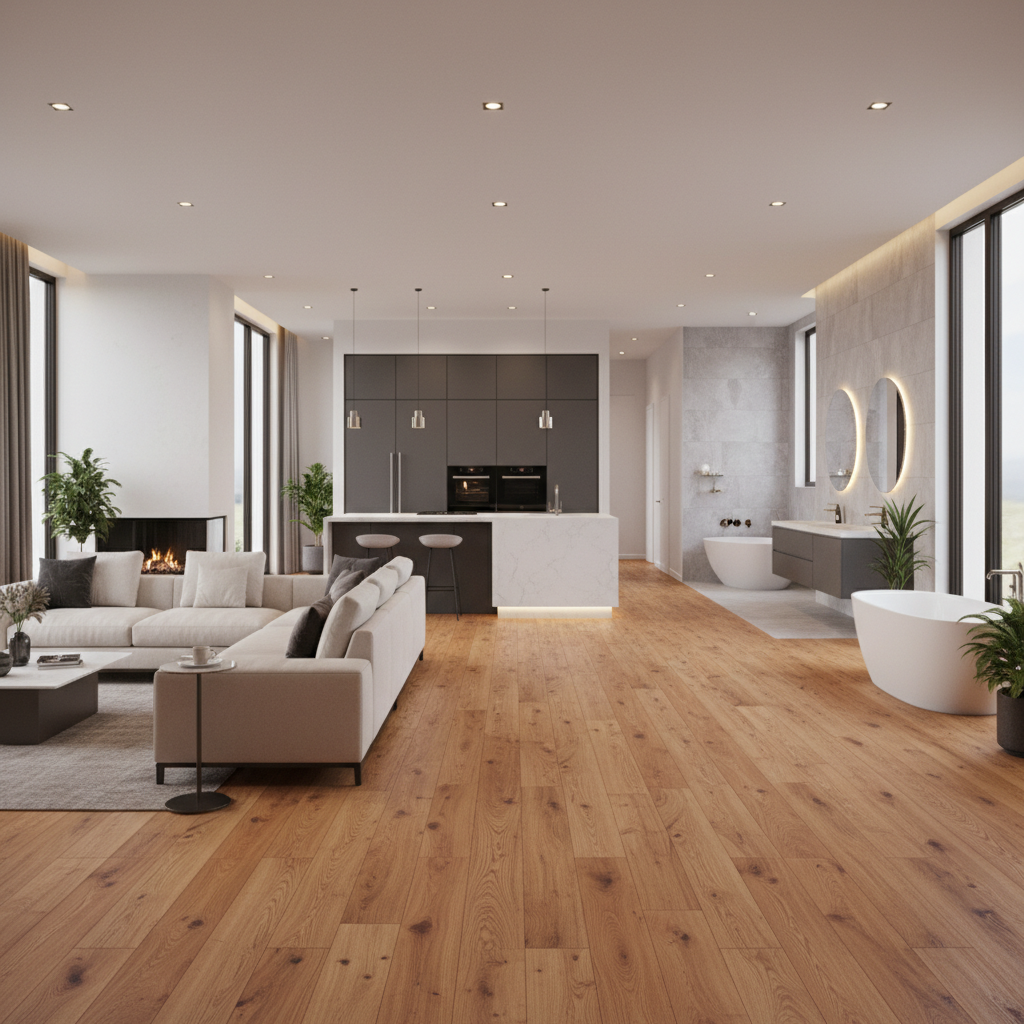
Historically, homeowners had to break up their floor plans, using tile in the kitchen for water resistance and wood in the living room for warmth. This chops up the visual flow of a house. Today, interior designers advocate for continuous flooring, which draws the eye seamlessly from room to room, making the home feel significantly larger and more cohesive.
Finding durable wood flooring for every room used to be impossible. Solid White Oak or Hickory, while beautiful, lacks the structural stability to survive the moisture fluctuations of a full bathroom or a basement. Because hybrid hardwood features a 100% waterproof rigid core, it possesses the structural stability required for moisture-prone areas, allowing you to run the exact same beautiful, real wood look planks continuously from your front door, through your kitchen, and into your bathrooms without fear of warping or buckling.
Step-by-Step: Bravewood Hybrid Hardwood Flooring Installation
One of the most appealing aspects of the Bravewood collection is its accessibility for ambitious DIY renovators. The system is engineered for a floating installation, meaning it does not need to be nailed or glued to the subfloor. Furthermore, because Bravewood features a pre-attached 1.5mm IXPE pad, the costly and time-consuming step of rolling out a separate underlayment is completely eliminated.
Subfloor Preparation and Moisture Barriers
A successful Bravewood hybrid hardwood flooring installation begins long before the first plank is laid. Proper subfloor preparation is non-negotiable. According to TAS Flooring’s official installation guidelines, the subfloor must be clean, dry, and structurally sound [6].
Crucially, the subfloor must be flat. The manufacturer requires a leveling tolerance of no more than a 3/16 inch variance per 10-foot radius. Installing rigid core planks over an uneven subfloor will cause the locking mechanisms to stress, squeak, and eventually break. Additionally, if you are installing over a concrete slab, you must test for moisture emissions. Even though the hybrid plank is waterproof, trapped moisture beneath the floor can breed mold. Calibrate and use a concrete moisture meter; if emissions are high, laying down a 6-mil polyethylene moisture barrier over the concrete before installation is mandatory to protect your home’s air quality.
Mastering the Angle/Angle Click-Lock Mechanism
Bravewood utilizes an intuitive Angle/Angle click-lock mechanism, ensuring a tight, seamless fit. To install, insert the long edge of the new plank into the groove of the previously installed row at a slight 20 to 30-degree angle. Gently fold the plank down until it clicks flush. Next, slide the plank down so the short end aligns with the adjacent plank, and angle it into place.
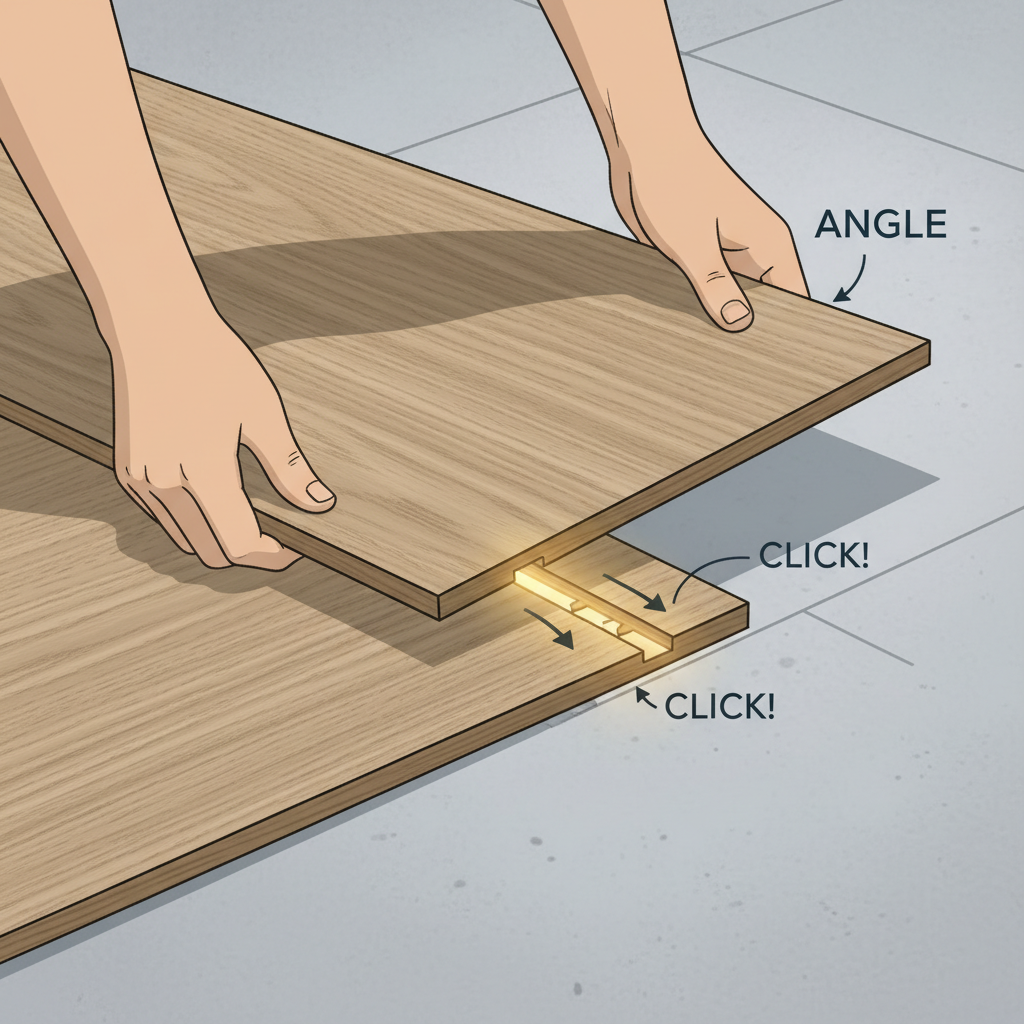
If a joint feels tight or refuses to click, do not force it with a heavy hammer, as this will shatter the locking profile. Instead, use a specialized tapping block and a soft rubber mallet to gently coax the seam together. Finally, always remember to leave a 1/4-inch to 3/8-inch expansion gap around the entire perimeter of the room (hidden later by baseboards). While the SPC core is highly stable, the home itself will shift and expand; this gap prevents the floor from buckling against the drywall.
Bravewood hybrid hardwood and similar waterproof rigid core floors truly represent the ultimate “Best of Both Worlds” solution. By combining the breathtaking, Embossed-in-Register aesthetics of natural wood with the indestructible, 100% waterproof performance of SPC technology, homeowners no longer have to compromise. You can eliminate the stress of water damage and pet scratches while elevating the design of your entire home. By understanding industry metrics like AC ratings and EMC, and following proper installation protocols, you can achieve a flawless finish. We encourage you to order a sample of Bravewood Hybrid Hardwood from an authorized TAS Flooring dealer today to test its remarkable durability and view its stunning texture in your own home’s natural lighting.
Disclaimer: Always consult official manufacturer installation guidelines (TAS Flooring) and local building codes before beginning any flooring project.
References & Authoritative Sources
- Floor & Decor. (N.D.). Glossary and Product Structures. Retrieved from Flooranddecor.com
- National Wood Flooring Association (NWFA). (N.D.). Wood Moisture Content Standards.
- TAS Flooring. (N.D.). Bravewood Hybrid Hardwood Specifications and Warranty. Retrieved from Tasflooring.com
- SCS Global Services. (N.D.). FloorScore Certification Standards.
- 1-800 WATER DAMAGE. (N.D.). Water Mitigation and Restoration Protocols. Retrieved from 1800waterdamage.com
- TAS Flooring. (N.D.). Installation & Maintenance Sheet. Retrieved from Tasflooring.com
