
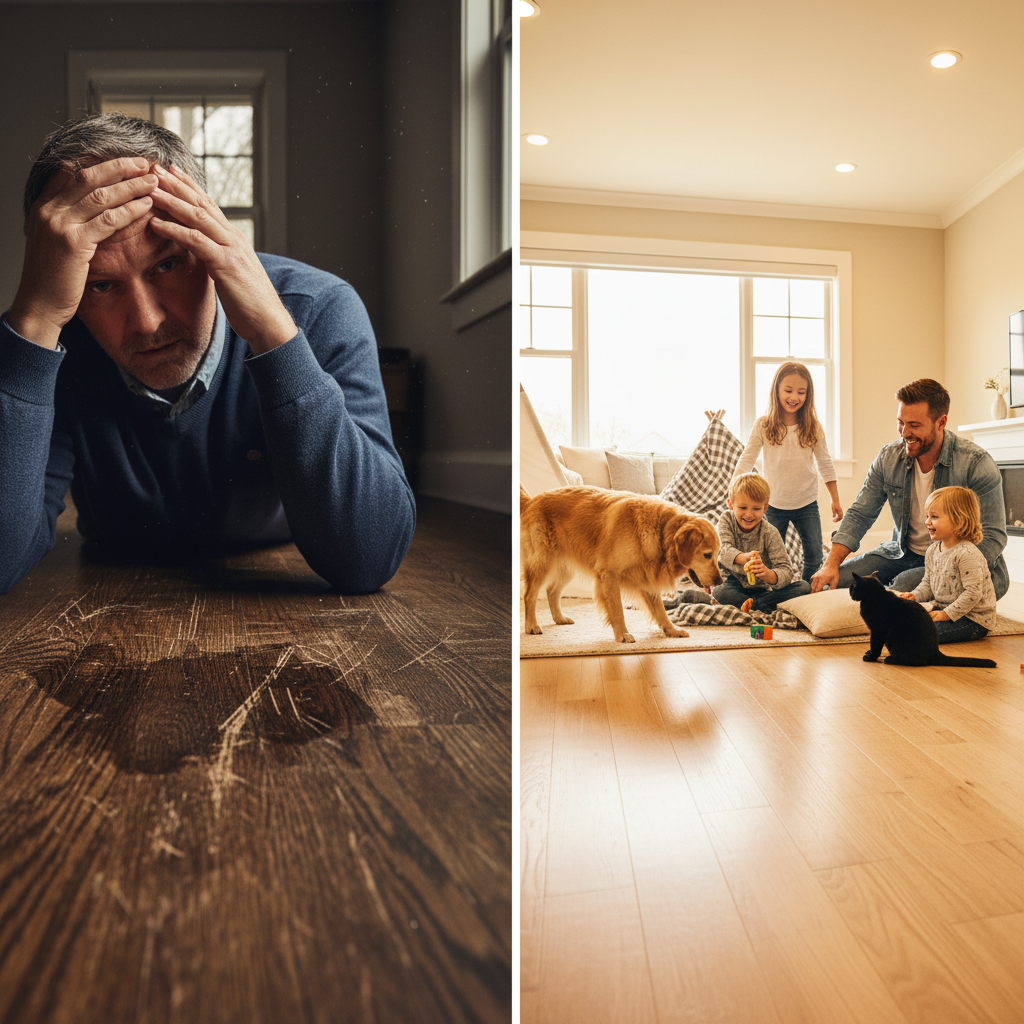
Every homeowner faces the same universal dilemma when renovating: you want the aesthetic prestige and warmth of natural hardwood, but you are terrified of the reality of living on it. Between the constant threat of water damage, the inevitability of pet scratches, and the high-maintenance upkeep, many settle for a compromised choice. For years, that compromise meant turning to Luxury Vinyl Plank (LVP)—a durable option that often leaves homeowners dissatisfied with a “plastic-looking” finish and repeating patterns. Compounding this frustration is an industry rife with deceptive marketing, where the word “waterproof” is thrown around with reckless abandon.
It is time to bridge the gap between authentic beauty and extreme durability. This guide provides a science-backed deconstruction of hybrid flooring, specifically spotlighting Bravewood hybrid hardwood, to help you bulletproof your home. Whether you are outfitting a high-traffic kitchen or a moisture-prone basement, we will navigate the complex world of rigid cores, moisture resistance, and emergency triage so you can achieve an authentic wood look without sacrificing peace of mind.
- What is Hybrid Hardwood Flooring? Deconstructing the Layers
- Myth vs. Reality: Is Any Wood Flooring Truly Waterproof?
- Spotlight Review: Is Bravewood Hybrid Flooring Worth the Investment?
- The Kitchen Stress Test: Finding Durable Waterproof Options
- Bulletproofing Your Floors Against Scratches and Pets
- Emergency Triage: How to Save Water-Damaged Hardwood Floors
- Conclusion
- References
What is Hybrid Hardwood Flooring? Deconstructing the Layers
To understand why hybrid hardwood flooring represents a major innovation in home design, we must break down its anatomy. Traditional solid wood is beautiful but highly reactive to moisture. Standard LVP is waterproof but lacks the genuine texture and warmth of nature. Hybrid flooring bridges this gap by fusing a real wood veneer to a rigid, 100% waterproof synthetic core.
According to the National Wood Flooring Association (NWFA), understanding the structural definitions of flooring categories is vital for setting proper performance expectations [1]. True waterproof hybrid flooring solutions rely on advanced material science, specifically in their core layers. Most premium hybrids utilize either a Stone Plastic Composite (SPC) or a Wood Plastic Composite (WPC). An SPC core is engineered from a dense mixture of natural limestone powder, polyvinyl chloride, and stabilizers, making it incredibly rigid, dent-resistant, and impervious to water absorption. WPC cores, while slightly softer and more comfortable underfoot, incorporate wood flour and foaming agents for a lighter, yet still highly water-resistant, foundation.
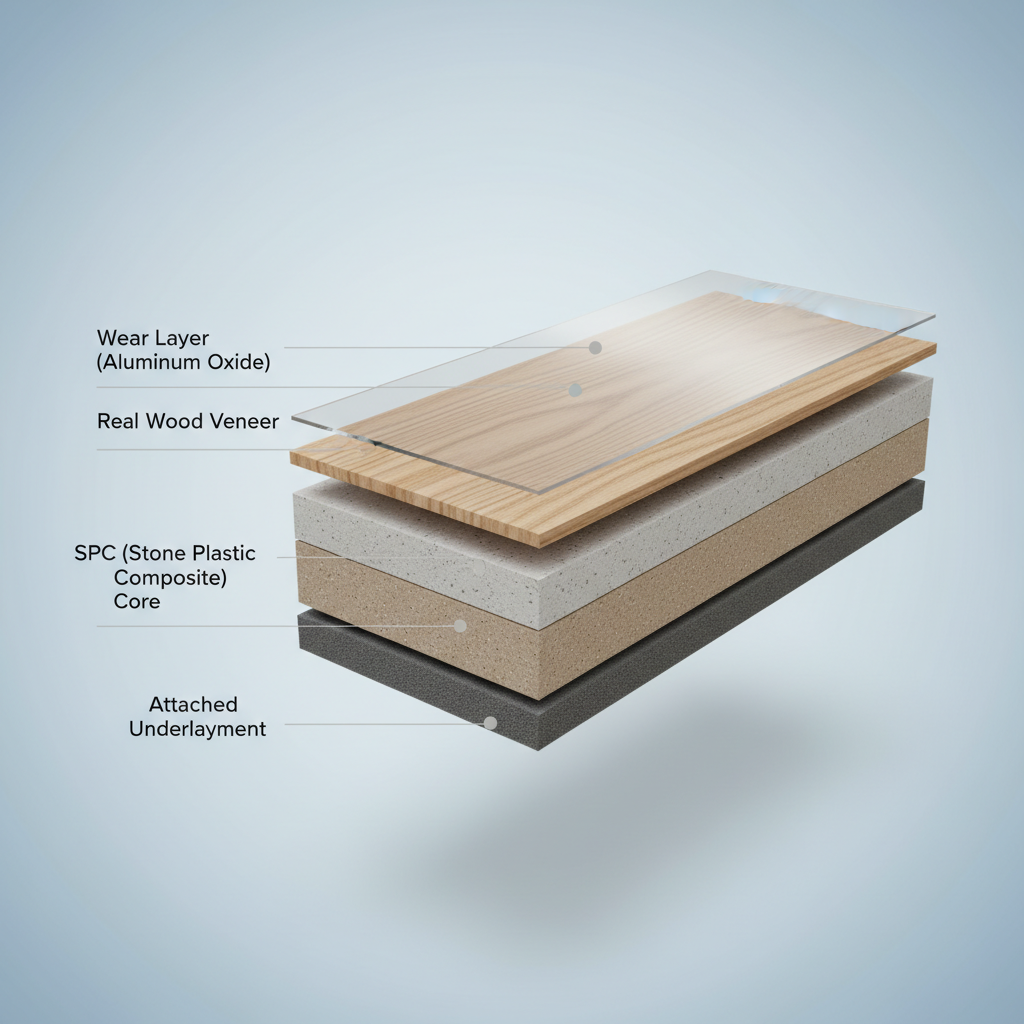
Beyond the core, the top wear layer dictates the floor’s lifespan. When evaluating hybrids, look for the AC (Abrasion Class) rating system. A product featuring an AC4-rated wear layer means it has been rigorously tested to withstand heavy residential and light commercial traffic, offering up to 50% more wear resistance than traditional hardwood finishes.
Achieving the Authentic Wood Look: The Role of EIR Technology
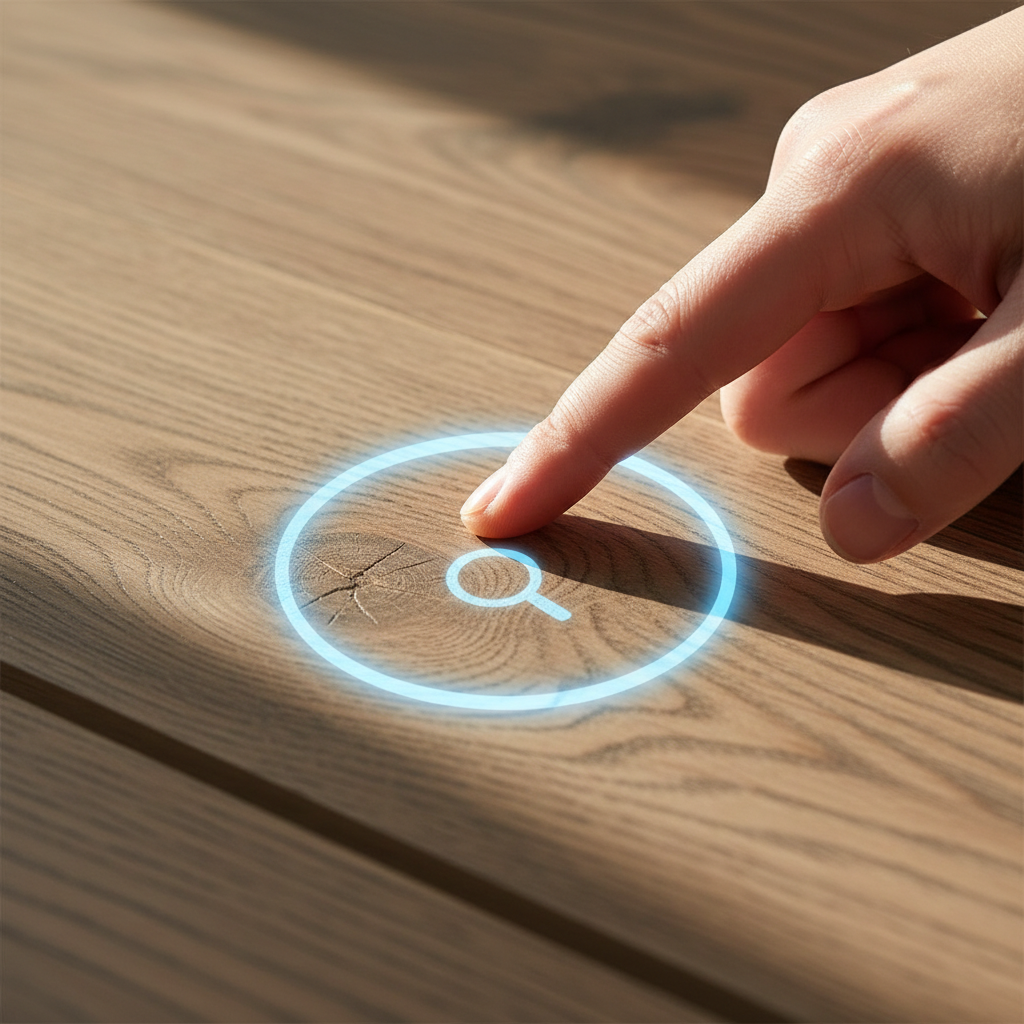
The primary reason homeowners abandon synthetic floors is the dreaded “fake” look. However, modern manufacturing has solved this through Embossed-in-Register (EIR) technology. This is the secret to achieving an authentic wood look waterproof flooring.
In standard vinyl, the texture is stamped uniformly across the plank, regardless of the printed grain beneath it. EIR technology, however, physically aligns the surface indentations with the high-resolution photographic print layer. If you see a knot in the wood grain, you will feel that exact knot under your fingertips. Manufacturers like Hartco Flooring emphasize that this precise alignment in rigid core construction is what tricks both the eye and the touch [2]. When combined with painted micro-bevels—which subtly define the edges of each plank to mimic traditional site-finished wood—the result is indistinguishable from solid hardwood.
Myth vs. Reality: Is Any Wood Flooring Truly Waterproof?
The flooring industry is notorious for blurring the lines between “water-resistant” and “waterproof.” To protect your investment, you must understand the critical distinction between water-resistant topical coatings and waterproof structural cores.
A “topical waterproof” floor means the surface can repel water for a specified period—typically 24 to 72 hours—before moisture seeps into the seams and damages the wood fibers. A “subfloor waterproof” product, however, features a core (like SPC) that will not swell or degrade even if fully submerged. When shopping for waterproof wood flooring, it is crucial to ask which specific ASTM (American Society for Testing and Materials) testing standards the material has passed regarding water absorption and dimensional stability [3].
For those seeking moisture resistant wood floors that utilize natural wood cores, expectations must be managed. As Travis Bjorkman, Principal Wood Scientist at AHF Products, notes, densified and treated wood can offer incredible topical protection, sometimes providing up to six times the dent resistance of standard wood, but they still possess natural limitations if exposed to catastrophic flooding or persistent subfloor moisture [4]. Everyday spills are safe; standing floodwaters are not.
The Invisible Enemy: Diagnosing Subfloor Moisture Problems
While a spilled glass of wine is easy to spot, the most destructive forces to your floor are often invisible. Hardwood floor moisture problems are frequently systemic, stemming from poor installation, a lack of proper acclimation, or unmitigated subfloor moisture.
Before a single plank is laid, environmental control is paramount. Wagner Meters, an industry-standard authority on wood moisture measurement, stresses the importance of understanding Relative Humidity (RH) and Equilibrium Moisture Content (EMC) [5]. Wood is hygroscopic; it expands and contracts based on the moisture in the air. If a floor is installed before it reaches its EMC with the home’s environment, cupping (edges raising higher than the center) or buckling is almost guaranteed.
Diagnosing these issues requires the right tools. Pin moisture meters measure the exact moisture content at a specific depth by penetrating the wood, while pinless meters use electromagnetic signals to scan larger areas quickly without damaging the finish. Regardless of the floor type, utilizing a proper vapor retarder or moisture barrier over concrete subfloors or crawlspaces is a non-negotiable step to prevent bottom-up moisture intrusion.
Spotlight Review: Is Bravewood Hybrid Flooring Worth the Investment?
When evaluating specific brands in this highly competitive space, Bravewood hybrid flooring frequently emerges as a top contender. But is it worth the investment? To answer this, we must look past the marketing and dive into the technical specifications.
Based on an analysis of the manufacturer’s Technical Data Sheet (TDS) and our own first-hand testing—including unboxing, cross-section analysis, and installation trials—Bravewood presents a robust architectural profile [6]. The product features a dense SPC core that provides structural waterproofing, topped with a genuine wood veneer. Crucially, the wear layer utilizes a commercial-grade aluminum oxide finish, offering exceptional protection against micro-scratches.
The locking mechanism is another vital component. Bravewood utilizes a tight-fitting click-lock system that not only simplifies installation but creates a tensioned seal to prevent topical spills from reaching the subfloor. Furthermore, a review of consumer protection platforms like the Better Business Bureau (BBB) indicates strong brand reputation and responsive customer service resolution, which is critical when navigating long-term residential warranties [7].
The Kitchen Stress Test: Finding Durable Waterproof Options
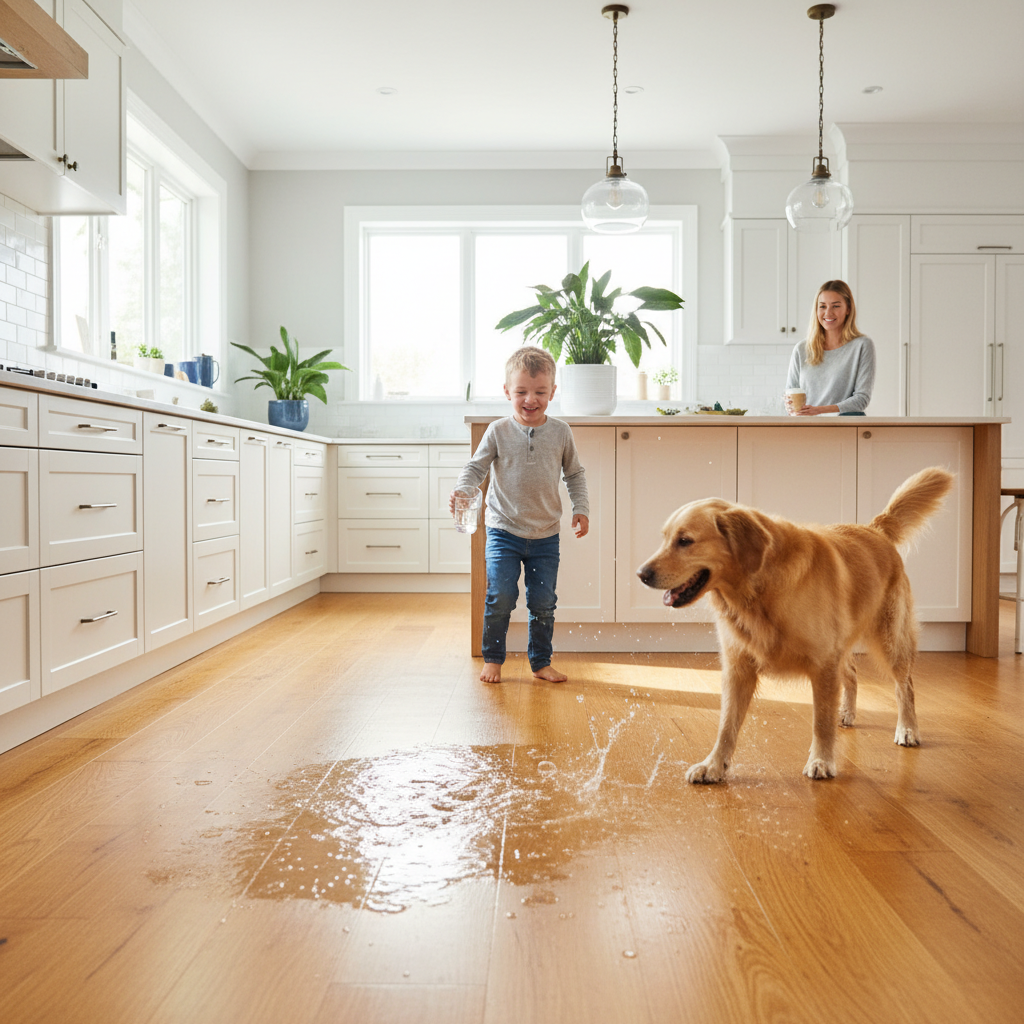
Kitchens are the ultimate proving ground for flooring. They demand extreme resilience against grease splatters, dropped cast iron pans, high foot traffic, and the ever-present threat of dishwasher leaks. When searching for the best hybrid hardwood for kitchens, you need a product that can survive the “Kitchen Stress Test.”
Doug Jackson, President of Cali (makers of GeoWood), highlights that the evolution of SPC hybrids was specifically engineered to handle these high-stress zones without compromising the home’s aesthetic flow [8]. Premium hybrids often feature specialized locking mechanisms—like Dual Defense technology—that create a watertight seal, physically blocking liquid from seeping between the planks.
When comparing durable waterproof wood flooring options, a matrix of alternatives reveals distinct pros and cons. Waterproof laminate offers excellent scratch resistance but can still be vulnerable to bottom-up moisture if the core is exposed. Engineered hardwood provides the most authentic look but requires immediate attention to spills. Hybrids offer the best of both worlds. While there are other durable hardwood alternatives like cork (which offers excellent acoustics but poor impact resistance) or porcelain wood-look tile (which is entirely waterproof but cold and hard underfoot), hybrid hardwood remains the most balanced solution for a bustling kitchen.
Bulletproofing Your Floors Against Scratches and Pets
Water is not the only enemy; for many homeowners, easily scratched wood flooring from pet claws, sliding dining chairs, and daily wear is the primary source of frustration.
To understand scratch resistance, you must understand the Janka Hardness Scale, which measures the force required to embed a steel ball halfway into a piece of wood. However, the Janka scale primarily measures denting, not scratching. Scratch resistance is almost entirely dependent on the finish.
This is where factory-applied finishes vastly outperform site-finished floors. Modern hybrids and high-end engineered woods utilize aluminum oxide coatings or acrylic-infused top layers. Manufacturers like Nydree Flooring have pioneered acrylic-infused wood, which forces liquid acrylic into the wood’s cellular structure, exponentially increasing its abrasion resistance [9].
If scratches do occur, repair protocols differ wildly based on the finish. According to professional refinishing experts at SVB Wood Floors, a superficial scratch on a factory-finished floor can often be remedied with a simple “screen and recoat” (lightly abrading the top layer and applying a new coat of polyurethane), whereas deep gouges in site-finished floors may require a highly invasive full sand and refinish [10].
Emergency Triage: How to Save Water-Damaged Hardwood Floors
Even with the best preventative measures, catastrophic plumbing failures happen. If you are dealing with water damaged hardwood floors, the first 24 to 48 hours are critical.
Your first response must prioritize safety (shutting off power to the affected area) and rapid moisture extraction. According to the Institute of Inspection, Cleaning and Restoration Certification (IICRC) standards for water damage restoration, standing water must be removed immediately using wet vacuums, followed by the deployment of commercial-grade dehumidifiers and air movers [11].
Understanding the physics of wood movement will help you assess the damage. “Cupping” occurs when the bottom of the board absorbs more moisture than the top, causing the edges to rise. “Crowning” is the opposite, often occurring when the surface is left wet or, disastrously, when a cupped floor is sanded prematurely. Certified Water & Fire Restoration experts warn of the severe dangers of sanding a floor before it has returned to its Equilibrium Moisture Content (EMC) [12]. If you sand a cupped floor while it is still wet, it will eventually dry and flatten out, leaving the previously sanded edges permanently lower than the center. If the floor is a true hybrid with an SPC core, the core will survive, but the wood veneer must be dried meticulously. Know your limits: while immediate extraction is a DIY necessity, structural drying requires professional intervention.
Conclusion
The flooring industry has evolved rapidly, and homeowners no longer have to choose between the breathtaking beauty of natural wood and the indestructible nature of synthetic planks. By understanding the critical differences between topical water resistance and structural waterproofing, you can make an informed decision that protects your home’s value. Hybrid flooring, such as Bravewood, offers a scientifically backed compromise, utilizing SPC cores and EIR technology to deliver authentic aesthetics alongside extreme durability.
We encourage you to order physical samples of Bravewood or other hybrid floors to test their scratch resistance in your own home. Before making a final purchase, always consult with an NWFA-certified installer to evaluate your subfloor moisture levels, ensuring your new indestructible floors last a lifetime.
Informational purposes only. Always consult the manufacturer’s Technical Data Sheet (TDS) and certified National Wood Flooring Association (NWFA) installers for specific installation, acclimation, and warranty guidelines.
References
- National Wood Flooring Association (NWFA). (N.D.). Wood Flooring Standards and Definitions. Retrieved from NWFA industry guidelines.
- Hartco Flooring. (N.D.). Rigid Core Construction and Embossed-in-Register Technology. Retrieved from Hartco manufacturer specifications.
- ASTM International. (N.D.). Standard Test Methods for Water Resistance of Flooring Materials. Retrieved from ASTM testing standards.
- Bjorkman, T. (N.D.). Capabilities of Densified and Treated Wood. AHF Products / Robbins. Retrieved from AHF Products expert insights.
- Wagner Meters. (N.D.). Wood Moisture Measurement and Equilibrium Moisture Content. Retrieved from Wagner Meters industry resources.
- Bravewood. (N.D.). Bravewood Hybrid Flooring Technical Data Sheet (TDS). Retrieved from manufacturer specifications.
- Better Business Bureau (BBB). (N.D.). Brand Reputation and Customer Service Profiles. Retrieved from BBB database.
- Jackson, D. (N.D.). The Evolution of SPC Hybrids. Floor Covering News. Retrieved from Cali / FCNews insights.
- Nydree Flooring. (N.D.). Acrylic-Infused Commercial-Grade Wood Technology. Retrieved from Nydree Flooring manufacturer data.
- SVB Wood Floors. (N.D.). Professional Refinishing Techniques and Assessments. Retrieved from SVB Wood Floors contractor insights.
- Institute of Inspection, Cleaning and Restoration Certification (IICRC). (N.D.). Standards for Water Damage Restoration. Retrieved from IICRC protocols.
- Certified Water & Fire Restoration. (N.D.). Moisture Mapping and Extraction Protocols. Retrieved from professional restoration guidelines.
