
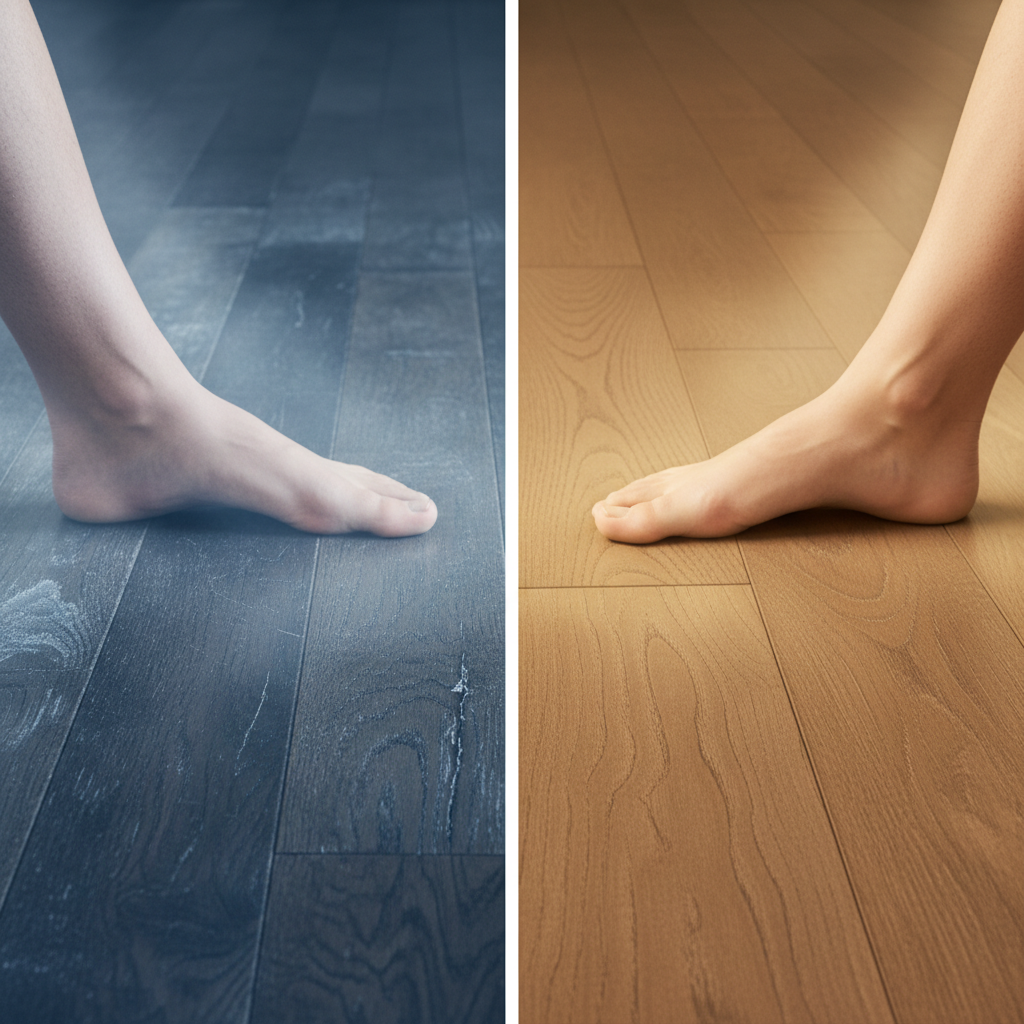
There is a distinct, visceral discomfort that comes with stepping out of bed onto freezing cold winter hardwood floors. For decades, homeowners in colder climates have faced a frustrating dilemma: endure the chill of uninsulated wood or sacrifice the luxurious aesthetic of hardwood for more heat-conductive materials like tile. The dream of heated wood floors has long been overshadowed by the anxiety of wood flooring heat damage—expensive planks cupping, crowning, or cracking under the stress of fluctuating temperatures.
Fortunately, advancements in flooring technology have bridged the gap between luxury aesthetics and radiant heat comfort. Enter Bravewood hybrid hardwood. Engineered to withstand the thermal rigors that destroy traditional solid oak, Bravewood offers a science-backed blueprint for safe, energy-efficient underfloor heating integration. This definitive guide will explore the thermodynamics of wood flooring, detail strict installation protocols, and show you exactly how to achieve a warm, comfortable home without voiding your warranty.
- The Thermodynamics of Wood vs. Heat: Solving the Cold Floor Problem
- Why Bravewood is the Best Hybrid Hardwood for Radiant Heat
- Evaluating Underfloor Heating Systems for Your Home
- Flawless Execution: Installing Underfloor Heating Under Wood Floors
- Smart Home Synergy: Hybrid Hardwood Heating Integration
- Conclusion
- References & Authoritative Sources
The Thermodynamics of Wood vs. Heat: Solving the Cold Floor Problem
To understand why pairing wood with heat has historically so difficult, we have to look at the building science behind your home’s thermal envelope. Uninsulated floors are a massive energy drain; according to the Department of Energy (DOE), they can account for up to 10% of a home’s total heat loss [1]. This heat loss is exactly why your floors feel like ice in January.
However, simply blasting heat under traditional solid hardwood is a recipe for disaster. Wood is hygroscopic, meaning it acts like a sponge, constantly absorbing and releasing moisture based on its environment. When you introduce a direct heat source beneath it, you drastically alter its moisture content. The Forest Products Laboratory (FPL) explains that solid wood can shrink up to 5% in width when exposed to temperatures over 85°F and low humidity [2]. This rapid moisture loss leads directly to the classic signs of heat damage: unsightly gaps between boards, cupping (where the edges of the board are higher than the center), and severe cracking.
Furthermore, solid wood is a natural insulator. Thick oak planks actively block heat from entering the room, forcing your heating system to work overtime and driving up energy bills. This brings us to the concept of radiant heat flooring incompatibility. The Radiant Professionals Alliance (RPA) sets a definitive “Do Not Use” rule for contractors: flooring with an R-value (a measure of thermal resistance) higher than 1.5 is generally considered incompatible with radiant heating systems [3]. Traditional solid hardwoods often exceed this limit, making them a poor choice for modern heating solutions.
Why Bravewood is the Best Hybrid Hardwood for Radiant Heat
If solid wood is off the table, what is the solution? The answer lies in the structural engineering of Bravewood hybrid hardwood. Unlike traditional solid planks, Bravewood features a real wood veneer permanently bonded to a highly stable, waterproof core. This unique construction makes it the best hybrid hardwood for radiant heat on the market today.
The secret to its success is the Stone Polymer Core (SPC). While traditional wood blocks heat, an SPC core actively facilitates it. Floor Covering Installer Magazine notes that hybrid hardwoods with SPC cores possess an ideal R-value of approximately 0.05, making them highly efficient for heat transfer [4]. This allows the warmth to pass through the floor and into your living space quickly and evenly, without getting trapped and baking the wood from below.
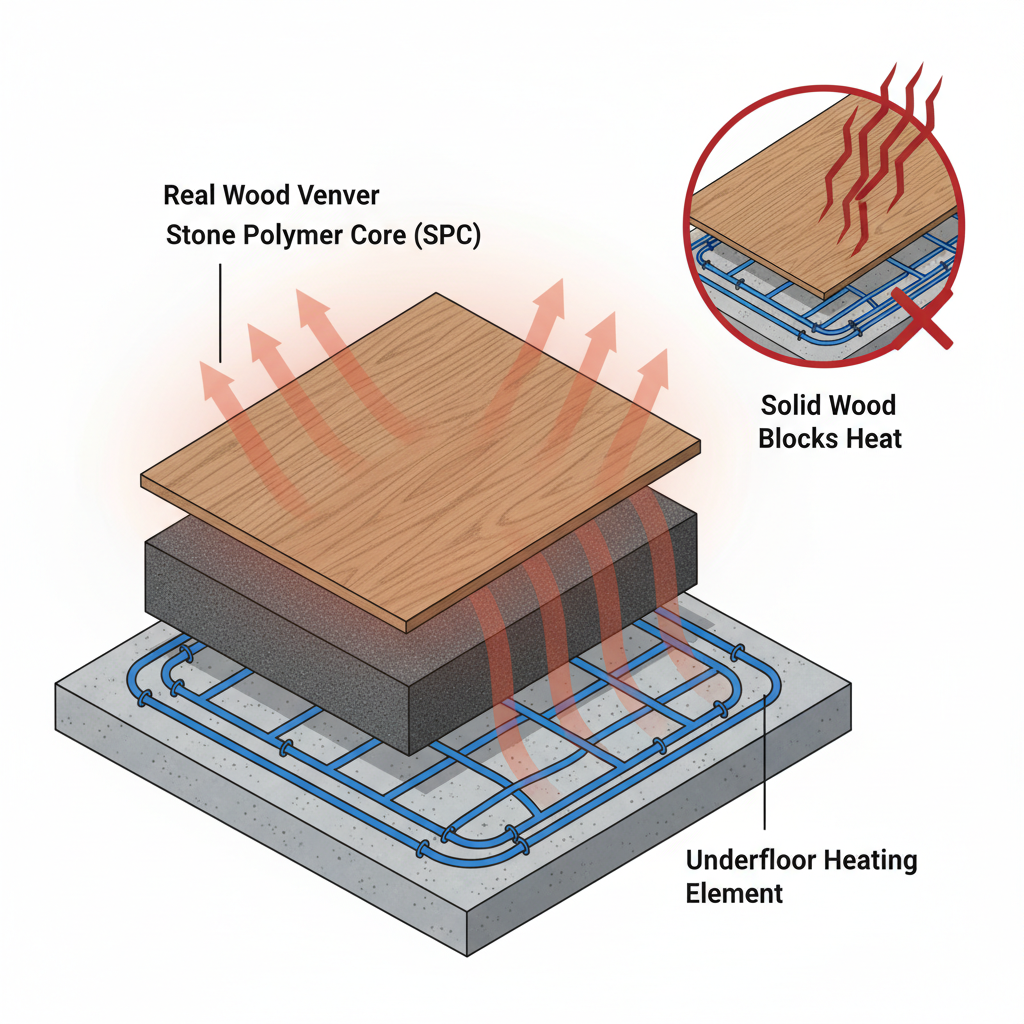
When searching for radiant heat compatible hardwood, thickness is also a critical factor. Consumer Reports data suggests that engineered and hybrid hardwoods with a thickness of 3/8 to 1/2 inch provide the optimal balance of stability and heat transfer [5]. Bravewood is engineered precisely within these parameters.
Beyond its thermal capabilities, Bravewood offers incredible durability for daily life. Because of its dense SPC construction, this hybrid hardwood is up to 3x more dent-resistant than traditional solid hardwood, ensuring your floors stay beautiful long after the winter heating season ends.
Evaluating Underfloor Heating Systems for Your Home
Before you can enjoy your heated wood floors, you must select the right heating mechanism. Underfloor heating systems generally fall into two categories: electric and hydronic (water-based). Both are highly effective, but they serve different project scopes and budgets.
Electric systems utilize a network of heated cables or mats installed directly beneath the flooring. They are generally easier and cheaper to install upfront. Hydronic systems pump heated water through a network of PEX tubing installed in the subfloor. While more complex, they are incredibly efficient for large spaces.
Understanding the financial investment is key. On average, electric systems cost $8-$15 per sq ft, while hydronic systems cost $14-$20 per sq ft to install. Despite the upfront costs, the long-term return on investment is substantial. ASHRAE (American Society of Heating, Refrigerating and Air-Conditioning Engineers) standards note that radiant heating can reduce home energy costs by 10-30% compared to forced air [6].
Pro Consult: “When evaluating systems, you have to look at the scale of your renovation,” advises a licensed master electrician and HVAC specialist. “Electric mats are incredibly cost-effective and straightforward for retrofitting single rooms, like a master bathroom or a chilly bedroom. However, if you are doing a ground-up new build or a whole-house gut renovation, investing in a hydronic system will yield the best long-term operational efficiency, especially when paired with a highly conductive floor like hybrid hardwood.”
Flawless Execution: Installing Underfloor Heating Under Wood Floors
Even the best materials can fail if installed incorrectly. Installing underfloor heating under wood floors requires strict adherence to industry protocols. When laying Bravewood flooring over radiant heat, patience and precision are your best tools.
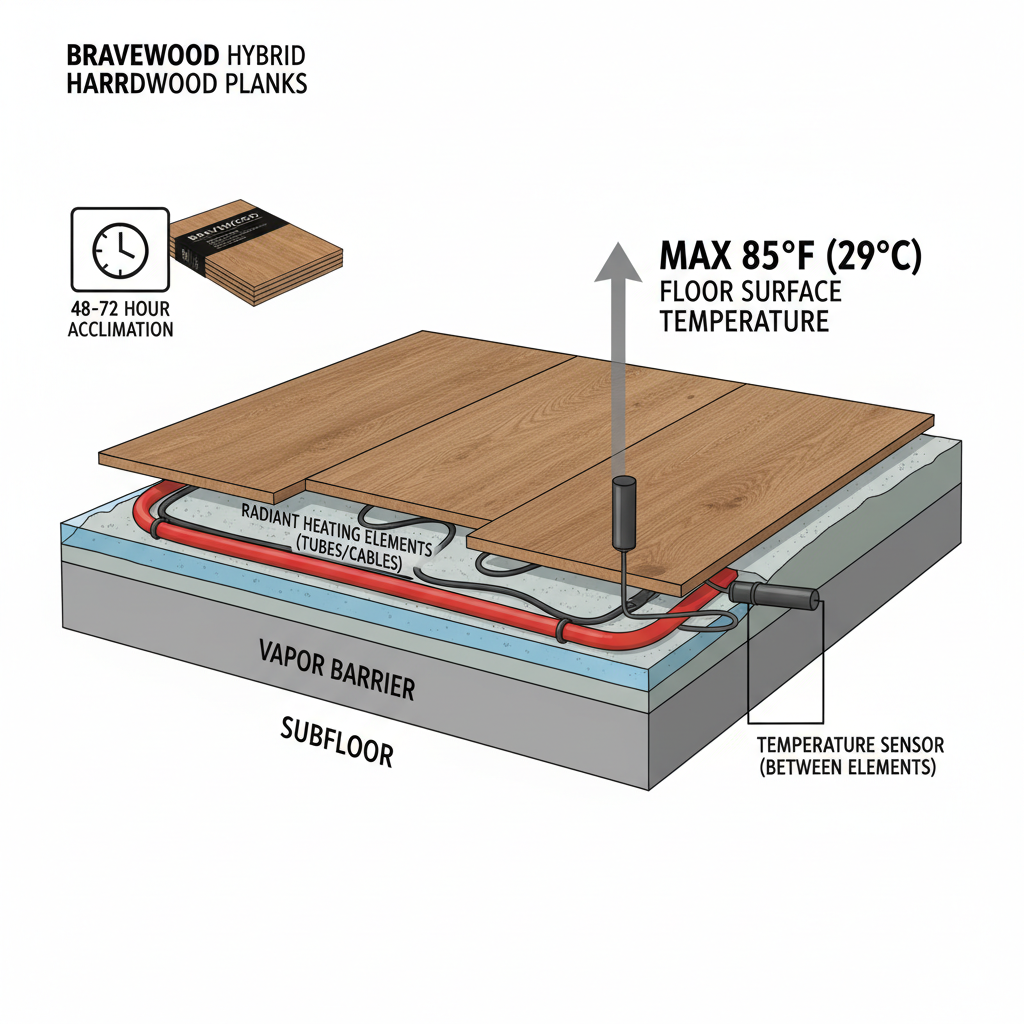
The most critical step in the process is acclimation. You cannot simply bring cold wood into a house and immediately install it over a hot floor. The National Wood Flooring Association (NWFA) Installation Guidelines state that wood flooring must acclimate for 48-72 hours with the heating system running at normal temperature before installation [7]. This allows the hybrid planks to adjust to the exact microclimate of the room, preventing expansion or contraction after they are locked into place.
Equally important is what goes underneath the planks. The official Bravewood Manufacturer Guidelines dictate specific underlayment requirements and the absolute necessity of a proper vapor barrier when installing over concrete subfloors or radiant systems [8]. Using the wrong underlayment can trap moisture or insulate the heat, defeating the purpose of the system.
Finally, installers and homeowners must respect the “85°F Rule.” This is the strict industry standard for maximum floor surface temperature. Exceeding 85°F (29°C) on the surface of the wood can compromise the structural integrity of the planks and will void almost all manufacturer warranties. Proper placement of the floor temperature sensor during installation—ensuring it sits exactly between the heating wires or tubes, not directly on top of them—is vital for accurate temperature readings and protecting your investment.
Smart Home Synergy: Hybrid Hardwood Heating Integration
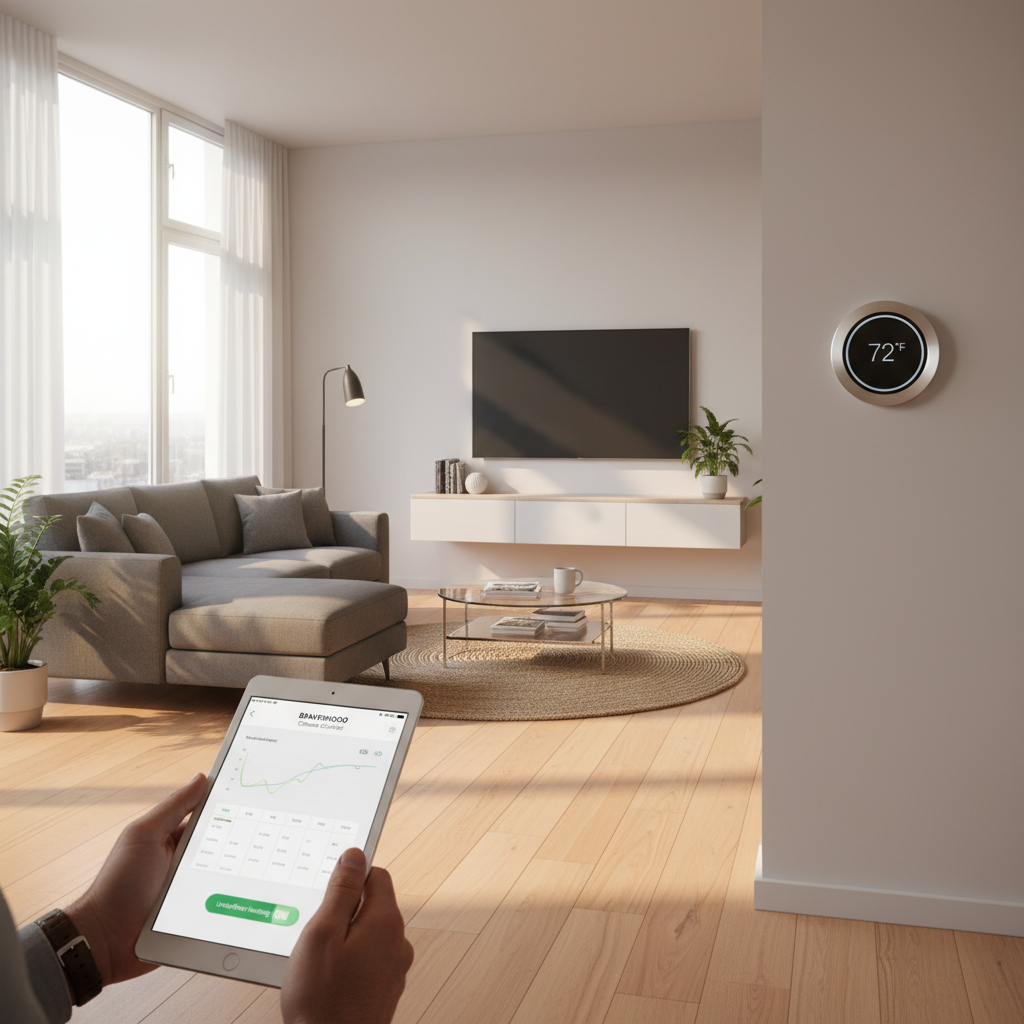
The ultimate luxury of warm comfortable flooring solutions is realized when you introduce modern automation. Hybrid hardwood heating integration with smart home technology not only protects your floors but maximizes your daily comfort and minimizes your energy bills.
By connecting your underfloor heating to a smart thermostat, you can create customized heating schedules that align with your lifestyle—warming the floors just before you wake up and lowering the temperature while you are at work. The Smart Home Association reports that smart thermostat integration with radiant floors can yield an additional 15% in energy savings annually [9].
Furthermore, radiant heat fundamentally changes how you experience the temperature in a room. The American Society of Interior Designers (ASID) notes that radiant heated floors can make a room feel comfortable at ambient temperatures 2-4 degrees lower than forced air [10]. Because the heat radiates from the ground up, warming your body directly, you don’t need to pump as much hot air into the room to feel cozy.
To protect your Bravewood floors, utilize the advanced settings on your smart thermostat. Most modern units allow you to set a “hard temperature limit lock.” By programming the thermostat to never allow the floor sensor to exceed 82°F to 84°F, you create an automated fail-safe. This ensures you stay comfortably within the 85°F warranty limit, giving you total peace of mind.
Conclusion
You no longer have to choose between the timeless beauty of hardwood and the modern comfort of radiant heat. By understanding the thermodynamics of your home and choosing a product engineered for the task, you can eliminate the risks of heat damage. Bravewood’s SPC hybrid core, when paired with a properly selected heating system and installed with strict adherence to NWFA and manufacturer guidelines, provides an ultimate, risk-free solution for cold winter floors.
Ready to transform your home? Download the official Bravewood Radiant Heat Installation Checklist or contact a certified local flooring dealer to get a quote for your project today.
Disclaimer: Always consult the official Bravewood installation manual and a licensed HVAC or flooring professional before installing underfloor heating systems. Pricing and warranty terms are subject to change.
References & Authoritative Sources
- Department of Energy (DOE). (N.D.). Residential Heat Loss and Insulation. Retrieved from energy.gov data on home insulation.
- Forest Products Laboratory (FPL). (N.D.). Thermodynamics of Wood Moisture Content and Heat Damage.
- Radiant Professionals Alliance (RPA). (N.D.). Technical Standards for Material Compatibility with Heating Systems.
- Floor Covering Installer Magazine. (N.D.). Thermal Resistance and R-Values of SPC Cores.
- Consumer Reports. (N.D.). Hardwood Flooring Thickness and Heat Transfer Optimization.
- American Society of Heating, Refrigerating and Air-Conditioning Engineers (ASHRAE). (N.D.). Radiant Heating Systems and Energy Efficiency Standards.
- National Wood Flooring Association (NWFA). (N.D.). NWFA Installation Guidelines.
- Bravewood. (N.D.). Official Bravewood Manufacturer Guidelines and Warranty.
- Smart Home Association. (N.D.). Home Automation, Energy Management, and Heating Integration.
- American Society of Interior Designers (ASID). (N.D.). Residential Comfort, Ergonomics, and Design.
