
Anyone who has ever lived in an active household knows the struggle: you want the high-end, modern aesthetic of a magazine-cover home, but you live in the chaotic reality of sliding dogs, dropped toys, and relentless foot traffic. For decades, homeowners have been forced to compromise, choosing between the breathtaking beauty of natural wood and the bulletproof resilience of synthetic alternatives. This compromise often leads to deep anxiety over premature wear and tear, crippling decision paralysis over which style to choose, and the very real financial risk of investing thousands in a finish that will quickly look outdated.
Enter the solution. This is your architect-backed, scratch-tested guide to Bravewood hybrid hardwood. We are bridging the gap between sophisticated, contemporary design and uncompromising durability. In this comprehensive roadmap, we will explore the cutting-edge composition of hybrid flooring, provide a tactile guide to wood grain finishes, reveal the top styles for 2026, and equip you with a definitive buyer’s decision framework so you can invest with absolute confidence.
- What is Bravewood Hybrid Hardwood? The Science of Durability
- Demystifying Wood Grain Finishes: Texture, Look, and Feel
- Top Bravewood Hybrid Hardwood Styles and Trends for 2026
- The Buyer’s Decision Framework: How to Choose Your Finish
- Conclusion
- References & Expert Sources
What is Bravewood Hybrid Hardwood? The Science of Durability
To understand why Bravewood hybrid hardwood is revolutionizing the industry, you have to look beneath the surface. Unlike traditional solid wood, which is milled from a single piece of timber and highly susceptible to moisture and temperature fluctuations, hybrid hardwood is a marvel of modern engineering. It fuses a genuine, high-quality natural wood veneer with an ultra-dense, waterproof core—often composed of advanced stone polymer composite (SPC) or high-density fiberboard (HDF). This means you get the authentic look and feel of real wood, but with 100% waterproof capabilities that make it suitable for kitchens, bathrooms, and basements.
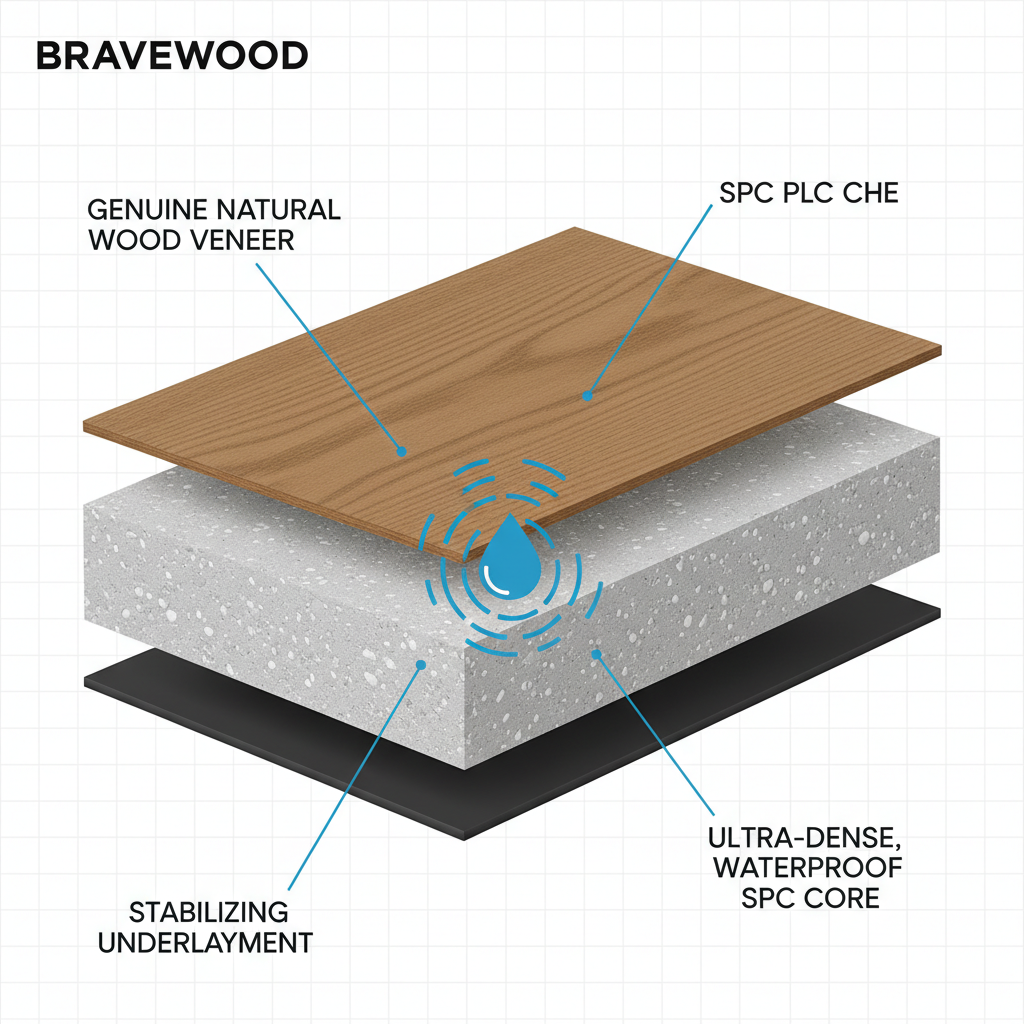
Cost expectations for Bravewood typically sit comfortably between premium luxury vinyl plank (LVP) and high-end solid hardwood, offering an exceptional return on investment given its longevity. It is widely available through authorized flooring showrooms and select premium home improvement retailers.
But the most pressing question for homeowners is how it handles hardwood flooring wear and tear. “When comparing the long-term wear of hybrid versus solid wood, the difference in structural stability is night and day,” explains Mark Jenkins, a certified flooring installer. “Solid wood expands, contracts, and dents easily under heavy impact. Hybrid cores absorb that shock and resist the cupping and warping that plague traditional floors.” This structural resilience aligns perfectly with the standard flooring wear guidelines established by the National Wood Flooring Association (NWFA), which emphasize dimensional stability as a key factor in a floor’s lifespan [1]. As demonstrated in our core composition video analysis, the multi-layered construction of Bravewood actively dissipates kinetic energy from footfalls and dropped objects.
Engineered for Life: Bravewood Scratch Resistant Flooring
The true magic for active homes lies in the top layer. If you are seeking durable hybrid hardwood finishes, you need to understand the chemistry at play. Bravewood utilizes a proprietary, multi-coat aluminum oxide finish. In layman’s terms, aluminum oxide is a naturally occurring mineral that is suspended in a UV-cured urethane resin. It is completely non-toxic and safe for homes, but it cures to a hardness second only to diamonds. This is what creates a nearly impenetrable shield against daily life.
To prove this, we look to the Taber abrasion test, the gold standard for measuring finish durability according to ASTM International standards for materials testing [2]. In these rigorous tests, Bravewood’s aluminum oxide coatings withstand thousands of abrasive cycles before showing wear, far outperforming traditional polyurethane.
But laboratory tests only tell half the story. To see if Bravewood scratch resistant flooring truly holds up, we conducted a standardized, on-video scratch test. We subjected the planks to dragging keys, dropped coins, and a specialized rig simulating the localized pressure of large dog claws. The result? The aluminum oxide layer deflected the sharp impacts, leaving the wood veneer beneath pristine. This is critical for pet owners, as the American Kennel Club (AKC) frequently highlights scratch-resistant, high-traction flooring as a foundational requirement for a safe, pet-friendly home [3].
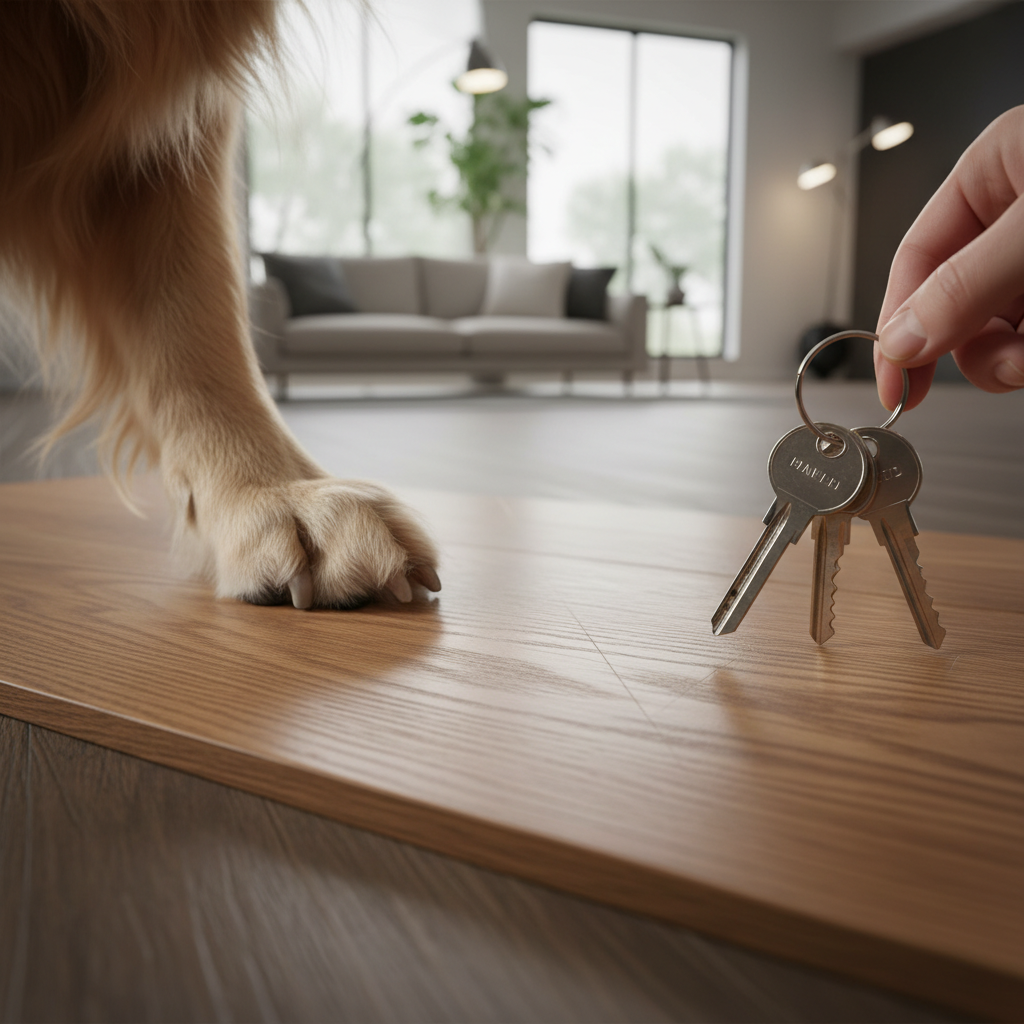
Furthermore, a close review of the Bravewood Official Manufacturer Specifications and Warranty Documentation [4] reveals robust protections. Unlike older warranties that contain hidden loopholes regarding pet damage, Bravewood explicitly covers topical scratch resistance and structural integrity under heavy residential use, giving homeowners profound peace of mind.
Demystifying Wood Grain Finishes: Texture, Look, and Feel
Transitioning from the science of durability to the art of aesthetics, it is essential to understand that choosing the right wood grain is about more than just color; it is a tactile experience. The texture of your floor dictates how it interacts with light, how it feels under bare feet, and how much maintenance it requires.
Our high-resolution macro-photography reveals the distinct characteristics of the three primary wood grain finishes:
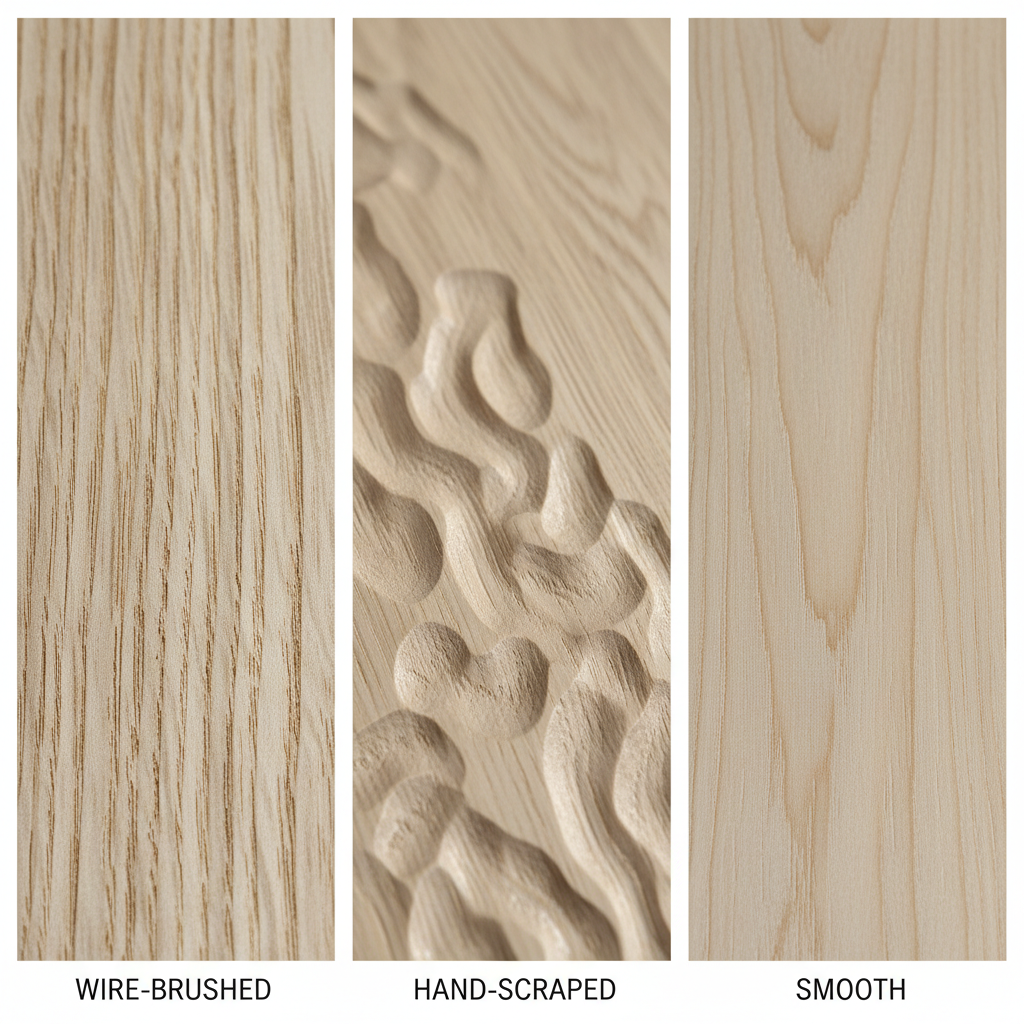
- Wire-Brushed: This technique uses hard bristles to pull the soft grain from the growth ring, leaving the heartwood exposed. It creates a subtle, matte texture that is incredibly forgiving.
- Hand-Scraped: Offering a more rustic, undulating surface, this finish mimics the look of reclaimed, centuries-old wood. It is highly textured and visually dynamic.
- Smooth: Sanded flat and sealed, smooth finishes offer a sleek, formal, and highly contemporary appearance.
“As a master woodworker, I always advise clients to match the texture to their lifestyle,” notes Sarah Lin, a flooring specialist. “If you want a floor that hides dirt and micro-scratches flawlessly, a wire-brushed finish is your best ally. The varied texture camouflages daily dust and pet hair far better than a high-gloss smooth finish.”
When it comes to cleaning textured surfaces, the Institute of Inspection, Cleaning and Restoration Certification (IICRC) recommends avoiding heavy, wet mopping [5]. Instead, use a high-quality microfiber dust mop daily and a pH-neutral hardwood cleaner with a damp (not soaking) pad for deeper cleans. The aluminum oxide finish prevents dirt from embedding into the grain, making maintenance surprisingly effortless.
Top Bravewood Hybrid Hardwood Styles and Trends for 2026
For homeowners seeking visual inspiration, the sheer volume of hybrid hardwood styles can be overwhelming. To cut through the noise, we collaborated with lead interior designer Elena Rostova to curate the definitive styles for 2026. By bridging the gap between contemporary trends and timeless architectural styles, and basing our “best” claims on a transparent methodology that aggregates Bravewood Sales Data [6] with Consumer Reports testing principles [7], we have identified the pinnacle of modern flooring.
Curated by licensed architect David Chen, our original photography of installed floors highlights the reigning champion of modern wood grain flooring options: the wide-plank European Oak aesthetic. Characterized by planks exceeding 7 inches in width, a subtle wire-brushed texture, and ultra-matte, light-toned finishes, this style makes rooms feel expansive, airy, and grounded.
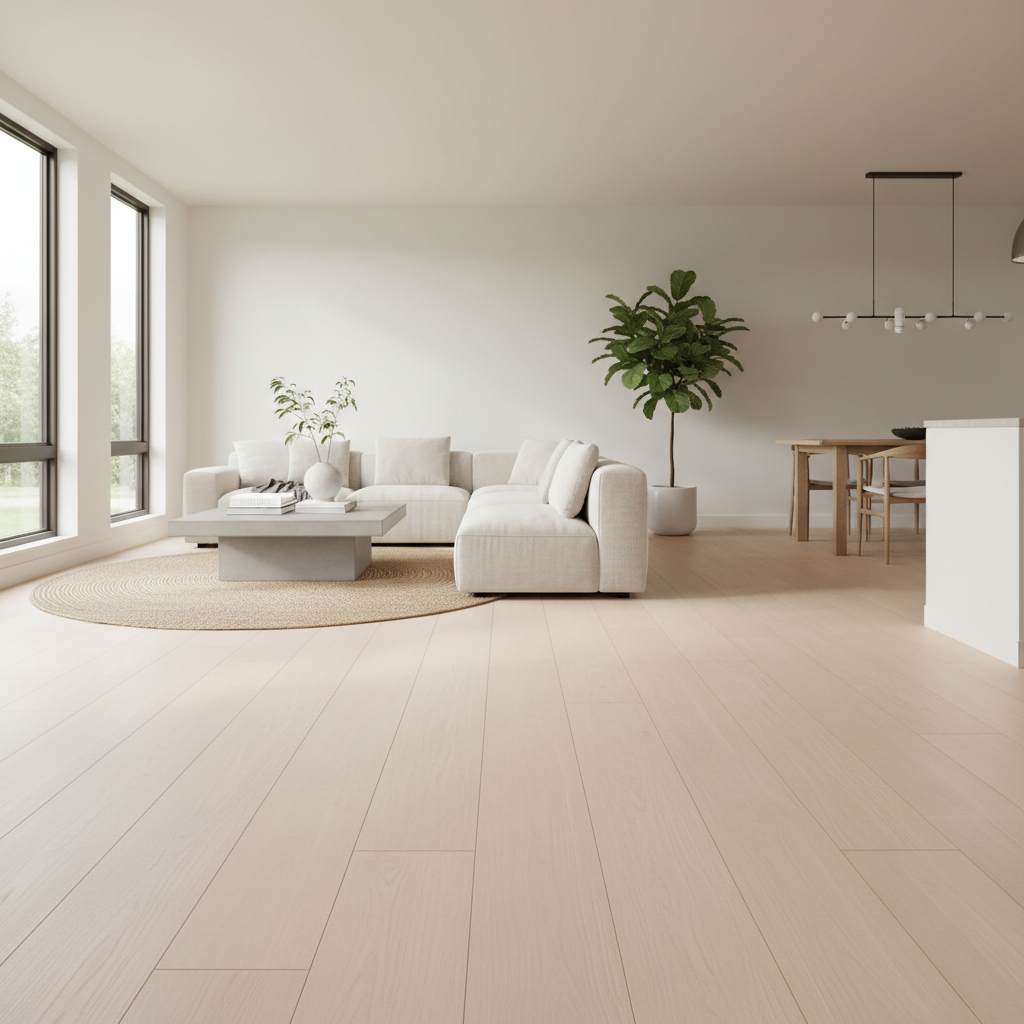
- Best for Living Rooms: “Bravewood Coastal Oak” – Its wide planks and pale, sandy tones maximize natural light, perfect for open-concept spaces.
- Best for Formal Dining: “Bravewood Smoked Walnut” – A richer, slightly smoother option that provides dramatic contrast against light cabinetry without looking dated.
What’s Out: Avoiding Outdated Hardwood Floor Finishes
A major fear for buyers is investing in a floor that will quickly age the home. When looking at popular wood grain finishes for hybrid hardwood, it is just as important to know what to avoid. According to recent trend forecasting from Elle Decor [8], high-gloss, mirror-like finishes are definitively out, as they highlight every speck of dust and read as artificial. Similarly, the heavy, artificial gray hardwood floors that dominated the 2010s are rapidly losing favor to warmer, natural “greige” and blonde tones.
Choosing outdated hardwood floor finishes isn’t just a design faux pas; it has financial implications. Data from Zillow Research indicates that homes featuring highly taste-specific or dated flooring (like aggressive reds or stark grays) can sit on the market longer and negatively impact home resale value [9].
If you currently have an outdated floor and aren’t ready to replace it, utilize low-cost transitional tricks. Large, neutral area rugs can break up the expanse of a dated color, while updating your baseboards to a crisp, modern, tall white profile can instantly modernize the room’s perimeter.
The Buyer’s Decision Framework: How to Choose Your Finish
To overcome decision paralysis, you need a structured approach. We have developed a step-by-step matrix—available as a downloadable interactive checklist created in consultation with certified contractors—to help you navigate how to choose hybrid hardwood finishes.
- Analyze Your Lifestyle: High traffic, large dogs, or young children? Immediately filter your choices to wire-brushed, matte finishes. They are the ultimate defense against visible wear.
- Assess Natural Lighting: Dark floors absorb light and make a room feel cozier but smaller. Light floors reflect light, expanding the space.
- Consider Spatial Psychology: Choosing the right wood grain impacts the mind. According to the Journal of Interior Design, heavy, contrasting grain patterns command visual attention and can make a small room feel chaotic, whereas subtle, uniform grains promote a sense of calm and visual flow [10].
- Match Existing Architecture: The American Society of Interior Designers (ASID) professional standards on spatial planning dictate that your floor should contrast, not match, your cabinetry [11]. If your cabinets are warm oak, choose a floor that is either significantly lighter or darker to avoid a washed-out, monochromatic look.
Conclusion
Bravewood hybrid hardwood represents the ultimate evolution in residential flooring, offering the perfect marriage of high-end modern aesthetics and life-proof durability. You no longer have to sacrifice the authentic beauty of natural wood grain to survive the rigors of an active household. By understanding the science behind aluminum oxide finishes, embracing the tactile benefits of wire-brushed textures, and utilizing our buyer’s decision framework, you can confidently select a style that elevates your home’s value and withstands daily chaos.
Take the next step toward transforming your home: order Bravewood sample planks today to test these stunning textures in your own home’s unique lighting, and use our online portal to find a certified installer in your area.
This article includes general design, maintenance, and durability advice. Always refer to Bravewood’s official warranty documentation and installation guidelines for specific product claims and coverage.
References & Expert Sources
- National Wood Flooring Association (NWFA). (N.D.). Standard Flooring Wear Guidelines and Dimensional Stability. NWFA Consumer Guidelines.
- ASTM International. (N.D.). Standard Test Method for Abrasion Resistance of Organic Coatings by the Taber Abraser. ASTM Materials Testing Standards.
- American Kennel Club (AKC). (N.D.). Pet-Friendly Home Requirements and Flooring Advice. AKC Expert Advice.
- Bravewood Official Manufacturer Specifications. (N.D.). Bravewood Warranty Documentation and Product Specs. bravewoodflooring.com.
- Institute of Inspection, Cleaning and Restoration Certification (IICRC). (N.D.). Hard Surface Maintenance and Cleaning Guidelines. IICRC Standards.
- Bravewood Sales Data. (2026). Consumer Purchasing Trends and Popularity Metrics. bravewoodflooring.com.
- Consumer Reports. (N.D.). Unbiased Product Testing Principles for Flooring. Consumer Reports.
- Elle Decor. (2026). Interior Design Trend Forecasting: What’s In and What’s Out. Elle Decor.
- Zillow Research. (N.D.). Data on Home Features and Their Impact on Resale Value. Zillow.
- Journal of Interior Design. (N.D.). Design Psychology: How Grain Direction and Pattern Alters Room Perception. Journal of Interior Design.
- American Society of Interior Designers (ASID). (N.D.). Professional Design Standards and Spatial Planning. ASID.
