
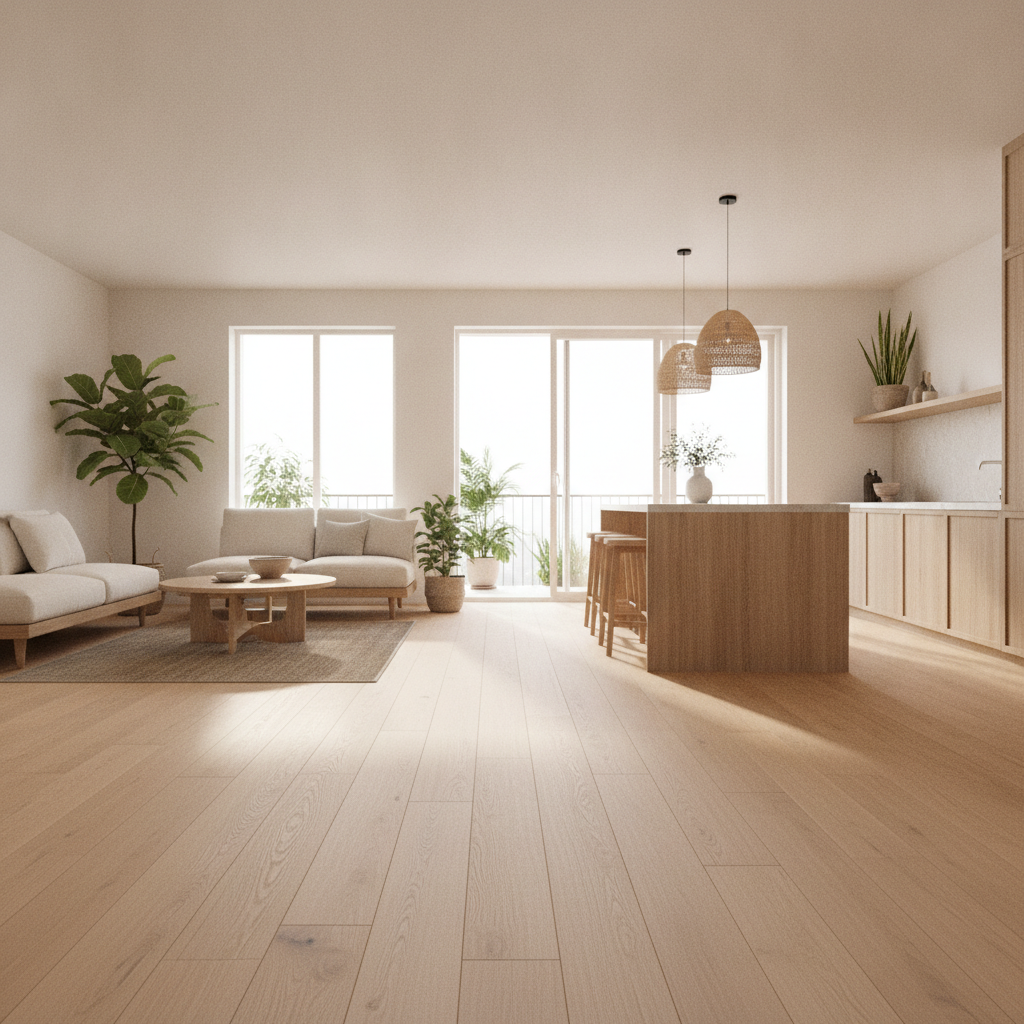
Choosing the right flooring for your home can feel overwhelming. It’s a significant investment, and the fear of making a costly mistake—selecting a style that quickly looks dated or a material that can’t withstand the rigors of daily life—is very real. You’re looking for that perfect balance of timeless beauty and real-world durability. This is where Bravewood Hybrid Hardwood emerges as a premier solution, engineered to deliver the authentic character of real wood with next-generation performance.
This guide is designed to be your confident homeowner’s framework for selecting the perfect Bravewood style and finish. We’ll move beyond simple product descriptions to give you an actionable process that eliminates overwhelm, answers your most pressing questions, and ensures you choose a floor you’ll love for years to come.
- What is Bravewood Hybrid Hardwood? Understanding the Technology
- The Bravewood Style Palette: A Visual Guide to Finishes, Colors & Textures
- A Step-by-Step Framework to Your Perfect Bravewood Floor
- Bravewood Performance: Durability, Warranty, and Maintenance
- Frequently Asked Questions (FAQ)
- Conclusion
- References & Authoritative Sources
What is Bravewood Hybrid Hardwood? Understanding the Technology
At its core, Bravewood Hybrid Hardwood is an innovative flooring solution that combines the best of multiple worlds. It isn’t solid hardwood, nor is it a fully synthetic product like laminate or vinyl. It’s a meticulously engineered “hybrid” designed for modern living.
The construction typically features several layers, each serving a distinct purpose. At the top is a slice of genuine hardwood veneer—this is the real oak, hickory, or other wood species that provides the authentic grain, texture, and visual warmth you desire. Below this is a high-density core, often made from a composite material, which provides dimensional stability and impact resistance. This multi-layer construction, recognized by industry bodies like the National Wood Flooring Association (NWFA) as a standard for engineered and hybrid products, is what gives Bravewood its strength and versatility.[1] This construction makes it more resistant to the expansion and contraction that can affect solid wood in fluctuating humidity levels. The final, crucial element is a high-performance wear layer on the surface, which protects the real wood from scratches, stains, and fading.
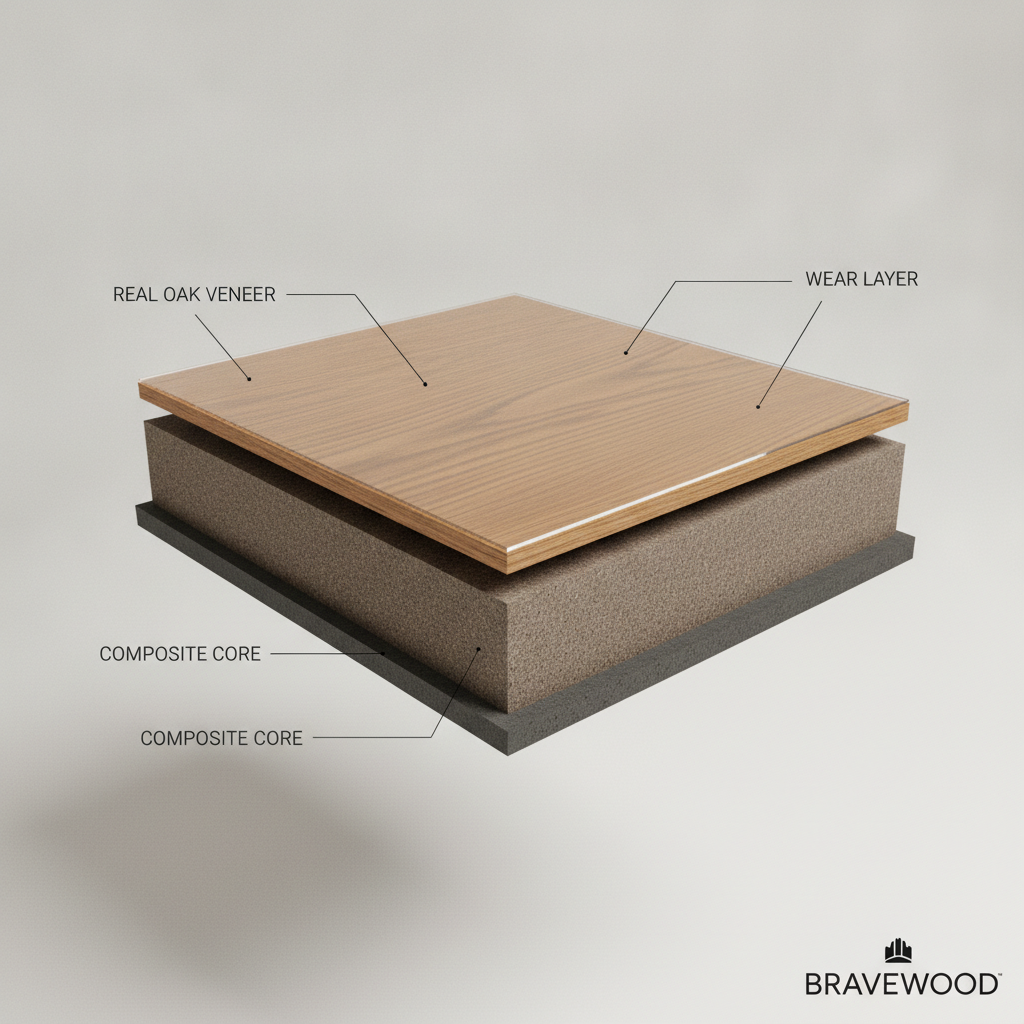
For detailed technical information, you can always refer to the manufacturer’s official specification sheets and warranty documents.
Bravewood vs. Traditional Solid Hardwood: The Key Differences
Understanding how Bravewood compares to classic solid hardwood is key to appreciating its advantages. While solid hardwood has a timeless appeal, hybrid technology offers practical benefits for many modern homes.
A certified flooring installer might note that the primary advantage of a hybrid product like Bravewood is its installation flexibility. Its stable core allows it to be installed in areas where solid hardwood is often not recommended, such as basements or over concrete slabs, without the same level of concern for moisture-related issues.
Here’s a simple breakdown:
| Feature | Bravewood Hybrid Hardwood | Traditional Solid Hardwood |
|---|---|---|
| Composition | Real wood veneer over a stable composite core. | A single, solid piece of wood. |
| Water Resistance | High resistance to topical moisture and spills due to its core and finish. | Highly susceptible to water damage, cupping, and warping. |
| Durability | Excellent scratch and dent resistance from its protective top coat. | Durability varies by species (measured by the Janka Hardness Test[2]) but can be prone to scratching and denting. |
| Installation | Can be installed on any level of the home, including below grade (basements). | Typically not recommended for below-grade or high-humidity areas. |
| Stability | Resists expansion and contraction caused by changes in humidity. | Can expand, contract, and gap with seasonal humidity changes. |
| Refinishing | Cannot be sanded and refinished like solid wood. | Can be sanded down and refinished multiple times over its lifespan. |
While the Janka Hardness Test is the industry standard for measuring a wood species’ natural resistance to denting,[2] Bravewood’s durability comes primarily from its advanced finish technology, which creates a tough barrier over the wood veneer.
The Bravewood Style Palette: A Visual Guide to Finishes, Colors & Textures
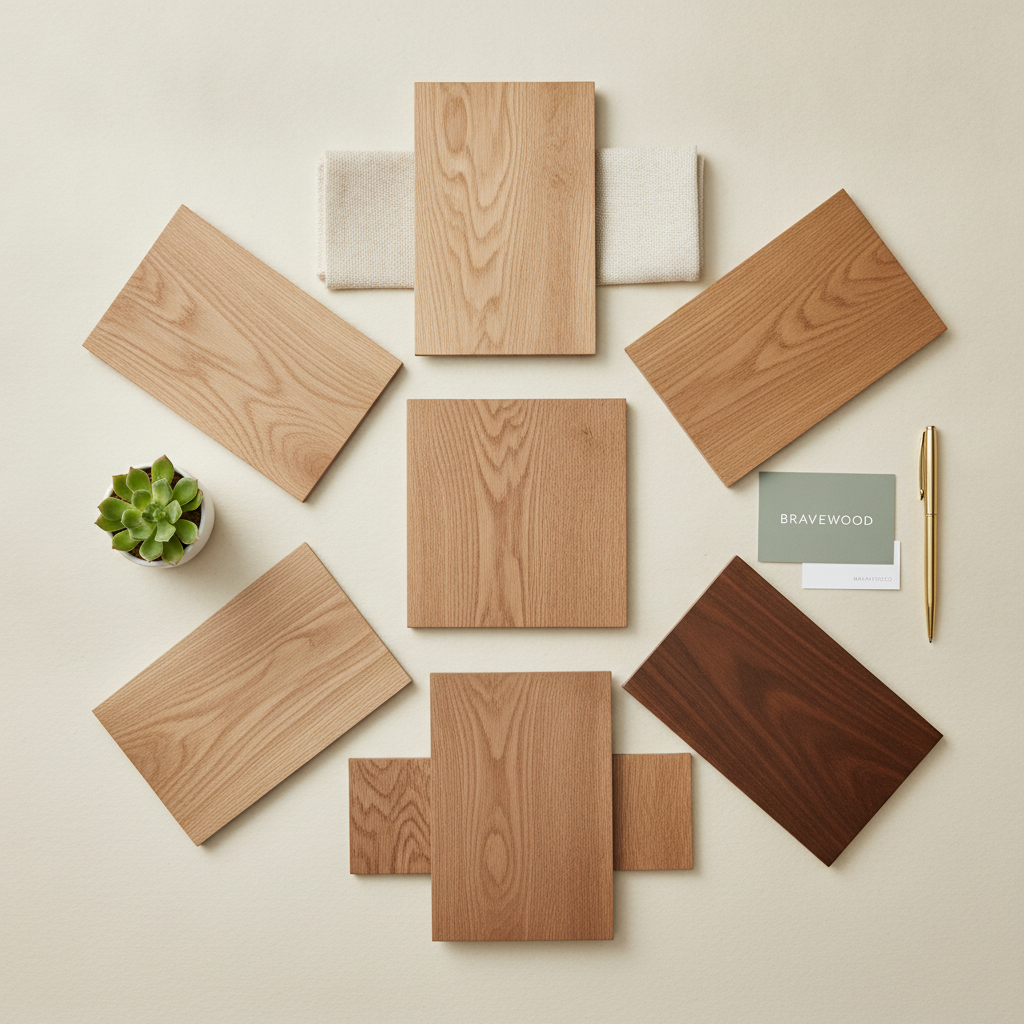
This is where the fun begins. Choosing your floor’s aesthetic is about more than just picking a color; it’s about defining the entire mood and style of your home. The Bravewood collection offers a curated palette to achieve looks from warm and traditional to sleek and modern. As interior designers often note, the floor is the fifth wall and the foundation of any design scheme. The right color and finish can make a space feel larger, cozier, more formal, or more relaxed. This is particularly true when aligning your choice with broader design movements, such as the warm minimalism of “Japandi” or the nature-inspired palettes of “Biophilic design,” which emphasize organic textures and authentic materials.
Choosing Your Color: From Light Naturals to Rich, Moody Tones
The color of your floor sets the stage for everything else in the room. Bravewood offers a spectrum of shades, each with its own personality.
Light & Natural Tones: Airy, light-colored floors (like pale oaks and maples) are a cornerstone of Scandinavian and coastal design. They make a room feel larger and brighter by reflecting more natural and artificial light. They are also fantastic at hiding dust, pet hair, and minor scratches, making them a practical choice for busy households.
Mid-Tones & “Greige”: Warm, medium-toned woods (like natural hickory or walnut) and the popular “greige” (a mix of grey and beige) are incredibly versatile. They provide a grounded, inviting feel without overpowering the space. According to color coordination principles championed by experts like Sherwin-Williams and Benjamin Moore, these neutral tones offer maximum flexibility, pairing well with both warm and cool wall colors and a wide range of furniture styles.[3]
Dark & Moody Tones: Deep, rich floors (like dark walnuts or espressos) create a sense of drama, luxury, and sophistication. They can make a large room feel more intimate and cozy. However, it’s important to address a common question: “Do dark wood floors make a room look smaller?” While they can absorb light, they don’t necessarily shrink a room if balanced with lighter wall colors, ample lighting, and tall decor elements. Be aware that dark, smooth finishes tend to show dust and footprints more readily than their lighter, more textured counterparts.
Understanding Finishes & Sheens: Matte vs. Satin for a Modern Look
The sheen of your floor’s finish has a major impact on its final look and feel. Gone are the days of high-gloss, bowling-alley shine being the standard. Modern aesthetics heavily favor low-sheen finishes that celebrate the wood’s natural character.
So, are matte or satin finishes more modern? Absolutely. A matte finish offers the lowest level of gloss, providing a very raw, organic, and natural appearance. It excels at hiding minor imperfections and scratches because it doesn’t reflect much light. A satin finish has a bit more luster than matte but is still considered a low-sheen option. It offers a subtle glow that is elegant and easy to maintain, making it the most popular choice for contemporary homes.
When considering the most durable hardwood floor finish, modern polyurethane coatings are engineered for exceptional performance. Leading finish manufacturers like Bona and Minwax have perfected water-based formulas that offer robust protection against wear and tear while having significantly lower VOCs (Volatile Organic Compounds) than older, oil-based options.[4] Bravewood’s factory-applied finish is designed to provide this top-tier durability right out of the box.
The Impact of Texture and Plank Size
Beyond color and sheen, two final elements complete your floor’s style: texture and dimension.
Texture: The surface feel of the planks adds depth and character.
- Smooth: A classic, refined look that is sleek and versatile.
- Wire-Brushed: A popular modern texture where a wire brush removes the softest part of the wood grain, leaving a subtle texture that enhances the wood’s natural pattern. This finish is excellent for hiding minor wear and tear in high-traffic areas.
Plank Size: The width and length of your flooring planks dramatically influence the scale and feel of your room. The answer to “Are wide plank floors still in style?” is a resounding yes. In fact, they are a hallmark of high-end, modern design. As noted in design trade publications like Floor Covering Weekly, plank widths have been trending wider, with 7 to 9 inches becoming a popular choice for a modern aesthetic.[5] Wider and longer planks mean fewer seams, which creates a more seamless, uncluttered, and expansive look, making any room feel more open and luxurious.
A Step-by-Step Framework to Your Perfect Bravewood Floor
Feeling overwhelmed is a common part of the process, but it doesn’t have to be. By breaking down the decision into manageable steps, you can move forward with clarity and confidence.
Step 1: Assess Your Home’s Lighting and Existing Decor
Before you fall in love with a sample at the store, evaluate your own space.
- Natural Light: A room with large, south-facing windows can handle a darker floor color, while a north-facing room or one with little natural light will benefit from a lighter floor to maximize brightness.
- Existing Fixtures: Look at your permanent elements. Should your wood floors be lighter or darker than your cabinets? A common design rule is to create contrast. If you have dark kitchen cabinets, a lighter floor can provide a beautiful visual lift. Conversely, light cabinets pop against a medium or dark floor. The key is to ensure the undertones (warm or cool) of the wood and the cabinets are compatible.
A critical mistake homeowners make is not testing samples in their own home’s unique lighting. A color can look completely different under the fluorescent lights of a showroom compared to the warm, natural light of your living room in the afternoon.
Step 2: Match the Floor to Your Lifestyle (Kids, Pets & Traffic)
Your floor needs to look good not just on day one, but for years to come. Be realistic about your lifestyle.
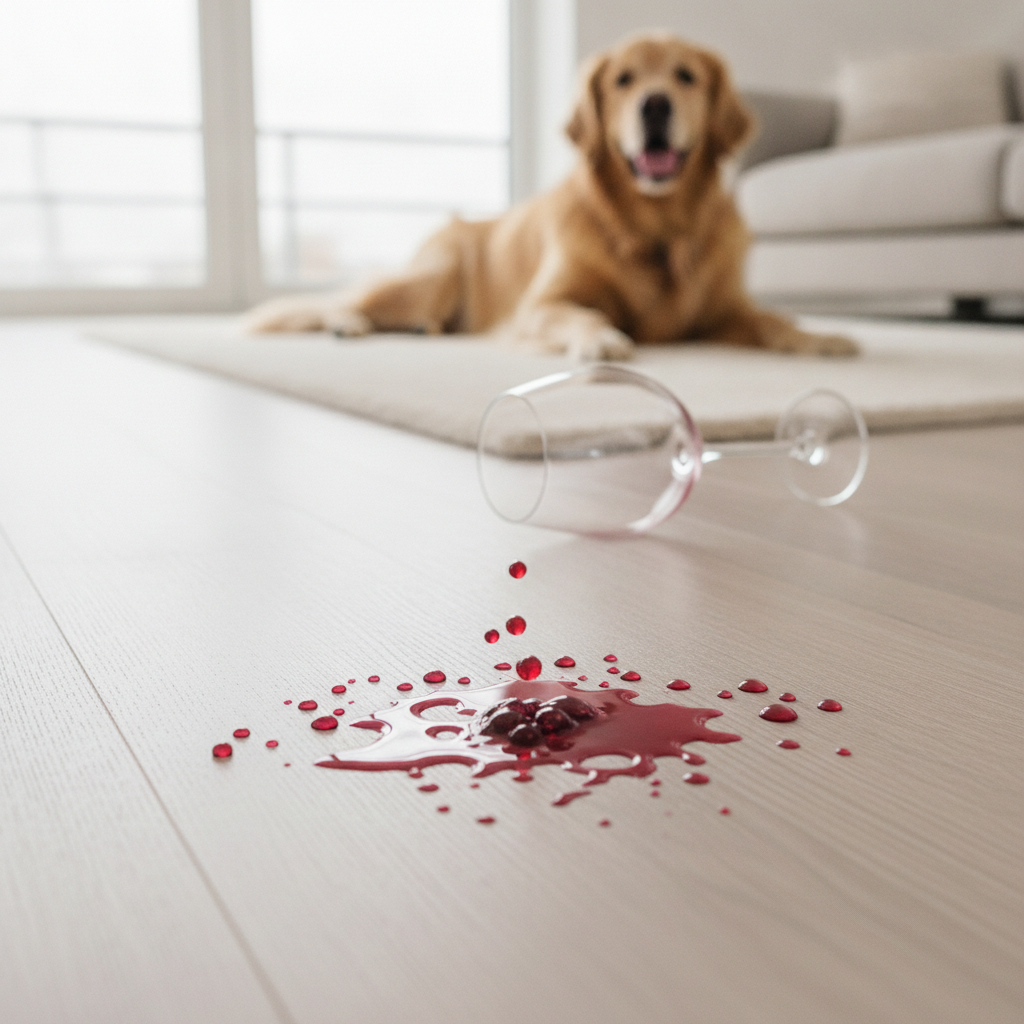
- Kids and Pets: For active families, durability is paramount. What is the most scratch-resistant wood look flooring for dogs? While no wood floor is truly scratch-proof, a lighter color combined with a textured, low-sheen finish (like a wire-brushed matte oak) is your best defense. The color and texture help camouflage the inevitable minor scratches from pet nails or dropped toys.
- Maintenance: Consider how much time you want to spend cleaning. As mentioned, dark, glossy floors will show every speck of dust and require more frequent cleaning than light-colored, matte-finish floors.
The American Kennel Club (AKC) advises keeping pets’ nails trimmed and using durable floor-protecting mats under food and water bowls to minimize potential damage.[6] Choosing a Bravewood style with a robust finish and a forgiving color palette is the best first line of defense.
Step 3: The Power of Sampling (The Right Way)
Getting samples is the single most important step before making your final decision. But there’s a right way and a wrong way to use them.
As one interior designer puts it, “A single small sample is almost useless. You need to see how the color and grain vary across several planks to get a true sense of the final product.”
- Get Large Samples: Always request the largest samples available, preferably multiple planks.
- Move Them Around: Don’t just leave the sample in the middle of the room. Place it next to your sofa, against your kitchen cabinets, and in a dark hallway.
- View Them Vertically and Horizontally: A floor’s color can appear different when light hits it on a vertical plane. Lean your samples against a wall to see how they interact with your wall color.
- Check at All Times of Day: Look at the samples in the morning, at midday, and at night under your artificial lighting. This will reveal the wood’s true undertones and prevent any surprises after installation.
Bravewood Performance: Durability, Warranty, and Maintenance
Bravewood is engineered not just for its looks, but for its ability to perform under pressure. Its hybrid construction and advanced finish provide a surface that is tough, easy to clean, and resistant to the challenges of everyday life. A simple scratch and stain test often reveals how well the protective wear layer repels common household spills like wine or coffee and resists scuffs.
Bravewood Family Durability Scorecard:
- Scratch Resistance: High (thanks to the advanced top coat)
- Water Resistance: High (protects against everyday spills and moisture)
- Ease of Cleaning: Excellent (requires simple sweeping and damp mopping)
- Stain Resistance: Excellent (non-porous finish prevents stains from setting)
For complete details on performance and coverage, always refer to the official Bravewood warranty and maintenance guide documents provided by the manufacturer.
Warranty and Long-Term Care Explained
Understanding the warranty provides peace of mind. Typically, a manufacturer’s warranty will cover defects in the finish and milling for a specified period under normal residential use. It’s crucial to read the document to understand what is covered and, just as importantly, what isn’t (e.g., damage from improper installation or maintenance).
Maintaining your Bravewood floor is simple.
Do’s:
- Sweep, dust mop, or vacuum regularly to remove grit and dirt.
- Clean up spills promptly with a soft cloth.
- Use a pH-neutral cleaner specifically designed for hardwood or hybrid floors.
- Use felt pads under all furniture legs.
Don’ts:
- Never use a steam mop, which can damage the finish and core.
- Avoid oil soaps, waxes, or harsh, abrasive cleaners.
- Don’t let water stand on the floor for extended periods.
For minor scratches, repair kits are often available that can help conceal the mark. Unlike solid hardwood, the floor cannot be sanded down, so prevention is the best strategy for long-term beauty.
Frequently Asked Questions (FAQ)
Where can I buy Bravewood Hybrid Hardwood?
Bravewood is typically sold through authorized flooring retailers. Check the manufacturer’s website for a dealer locator to find a showroom near you.
Can Bravewood be installed over an existing floor?
In many cases, yes. Bravewood can often be installed as a “floating floor” over existing hard surfaces like vinyl, tile, or laminate, provided the subfloor is clean, flat, and structurally sound.
Is Bravewood suitable for kitchens and bathrooms?
Due to its high water resistance, Bravewood is an excellent choice for kitchens. While it can be used in half-baths or powder rooms, it is generally not recommended for full bathrooms where significant amounts of water and high humidity are common.
What kind of underlayment is needed for Bravewood?
An underlayment is typically required to provide moisture protection, sound absorption, and cushioning. The specific type of underlayment will depend on your subfloor (e.g., concrete or wood). Always follow the manufacturer’s installation guidelines.
Conclusion
Bravewood Hybrid Hardwood offers a powerful combination of authentic wood beauty and modern hybrid durability, making it an ideal choice for homeowners who refuse to compromise. We’ve deconstructed the technology, explored the full style palette, and provided a clear, step-by-step framework to guide your selection. By assessing your home’s unique character, matching the floor to your lifestyle, and sampling correctly, you are now equipped to make a confident, informed decision that you will cherish for years.
Feeling inspired and ready to take the next step? Explore the full Bravewood Hybrid Hardwood collection online or order your samples today to see the beauty and durability for yourself.
Suggested Disclaimer: While this guide provides comprehensive advice, it is recommended to consult with a professional flooring installer for specific subfloor and installation requirements. Always obtain physical samples before making a final purchase decision, as screen colors may vary.
References & Authoritative Sources
- National Wood Flooring Association (NWFA). (n.d.). Engineered Wood Flooring Guidelines. Retrieved from https://www.nwfa.org/
- United States Department of Agriculture, Forest Service. (n.d.). Janka Hardness. Forest Products Laboratory. Retrieved from https://www.fpl.fs.fed.us/
- Sherwin-Williams. (n.d.). Color Theory & Advice. Retrieved from https://www.sherwin-williams.com/homeowners/color/color-selection-tools
- Bona US. (n.d.). Waterborne Finishes & Sealers. Retrieved from https://www.bona.com/en-us/professional/products/finishes–sealers/
- Floor Covering Weekly. (n.d.). Flooring Trends. Retrieved from https://www.floorcoveringweekly.com/main/features/trends
- American Kennel Club (AKC). (n.d.). Home & Travel Advice. Retrieved from https://www.akc.org/expert-advice/home-living/
