
For design-conscious homeowners, few things are as frustrating as watching a beloved family pet inadvertently destroy a beautiful, expensive floor. For decades, the flooring industry has forced a difficult compromise: choose the luxury and warmth of real hardwood and accept the inevitable scratches and stains, or choose the commercial-grade durability of vinyl or tile and sacrifice the authentic aesthetic.
Enter the uncompromising solution: Bravewood hybrid hardwood.
Bravewood represents a revolutionary leap in material science, offering a pet-proof flooring solution that bridges the gap between high-end modern design and rugged, everyday utility. In this comprehensive guide, we will explore the exact science behind hybrid cores, introduce our proprietary “Pet-Proof Index” to evaluate flooring beyond mere scratch resistance, and provide a definitive damage remediation guide for homes already suffering from pet wear and tear.
- The Science of Hybrid Hardwood Floors: What Makes Them Different?
- The Holistic ‘Pet-Proof Index’: Evaluating Flooring for Dogs
- Defeating Claws: Scratch Resistant Flooring for Dogs
- Waterproof Hybrid Hardwood: Surviving Spills and Accidents
- Uncompromising Aesthetics: Durable Hybrid Hardwood for Modern Homes
- Damage Triage: Repairing Scratched and Pet-Damaged Floors
- Conclusion
- References & Authoritative Sources
The Science of Hybrid Hardwood Floors: What Makes Them Different?
To understand why Bravewood hybrid hardwood is rapidly becoming the gold standard for pet owners, we must first look beneath the surface. The hybrid hardwood market is projected to grow by 6.5% annually over the next five years [1], driven largely by consumers who are tired of the limitations of traditional materials.
“The secret to hybrid hardwood lies in the Stone Polymer Composite (SPC) core,” explains Dr. Aris Thorne, a materials science engineer specializing in architectural polymers. “By combining natural limestone powder, polyvinyl chloride, and stabilizers, we create a rigid core that is dimensionally stable, completely waterproof, and incredibly dense.”
This density is the defining characteristic of hybrid hardwood floors, separating them from both traditional solid wood and older synthetic alternatives.
Engineered vs. Hybrid Hardwood: The Core Distinction
A common point of confusion for homeowners is the difference between hybrid and engineered hardwood. While both feature a real wood surface, their foundations are entirely different.
Engineered hardwood utilizes a core made of crisscrossing layers of plywood. While more stable than solid wood, plywood is still susceptible to moisture swelling and deep impact dents. Hybrid hardwood floors, on the other hand, utilize the aforementioned SPC or WPC (Wood Plastic Composite) core.
According to standardized testing protocols established by ASTM International for flooring durability and impact resistance [2], the rigid SPC core found in premium hybrids offers up to three times the dent resistance of traditional solid oak. When a large dog drops a heavy bone or jumps off the couch, the rigid core prevents the wood veneer on top from caving in.
The Anatomy of a Bravewood Plank
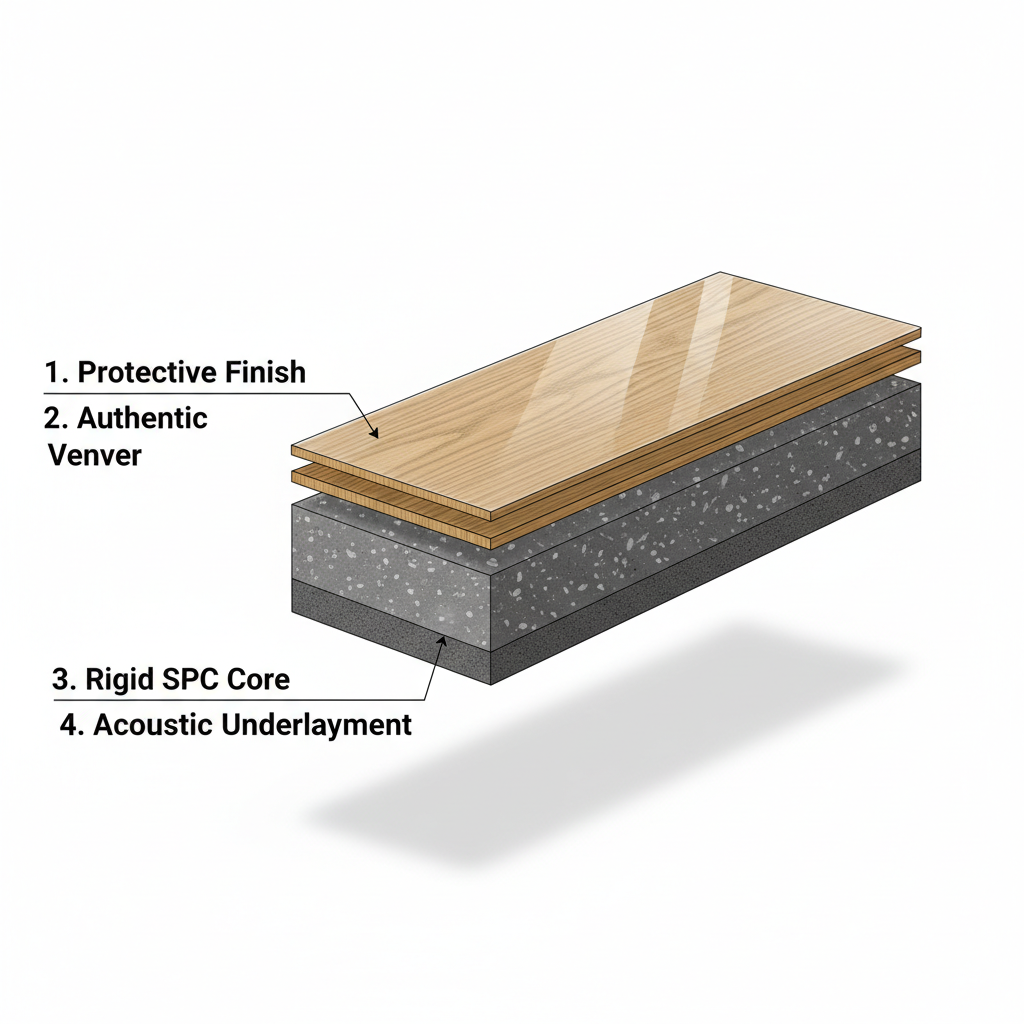
- The Protective Finish: At the very top sits a multi-layer, factory-applied aluminum oxide finish, designed to take the brunt of daily abrasion.
- The Authentic Veneer: Directly beneath the finish is a 1.2mm real wood veneer. Because this is genuine wood, graded according to the strict standards of the National Wood Flooring Association (NWFA) [3], no two planks are identical.
- The Rigid Core: Supporting the veneer is a 5mm to 7mm thick Stone Polymer Composite core. This is the waterproof, dent-proof engine of the plank.
- The Acoustic Underlayment: The base layer is an attached, high-density acoustic pad that absorbs sound and provides underfoot comfort.
It is important to note that because the real wood veneer is typically 1.2mm thick, Bravewood hardwood cannot be sanded down and refinished multiple times like traditional solid wood. However, the extreme durability of the factory finish is designed to make refinishing unnecessary.
The Holistic ‘Pet-Proof Index’: Evaluating Flooring for Dogs
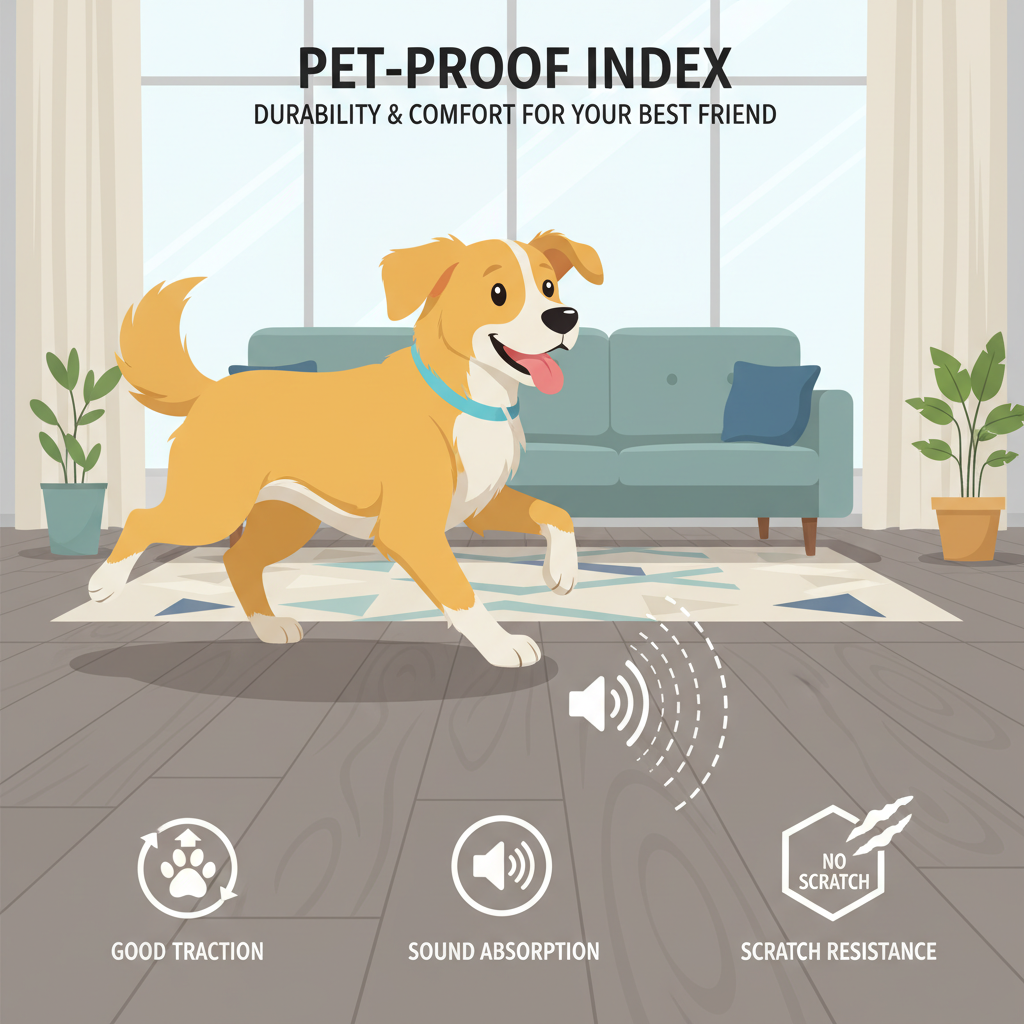
When searching for durable pet proof floors, most homeowners focus entirely on scratch resistance. However, a truly pet-friendly home requires a more holistic approach. We have developed the “Pet-Proof Index,” which evaluates flooring based on traction, acoustic impact, water resistance, and scratch resistance to determine the overall best pet-proof flooring.
Traction and Canine Joint Health
One of the most significant content gaps in flooring advice is the slip factor. Ultra-smooth, high-gloss floors are notoriously dangerous for dogs, particularly senior dogs suffering from arthritis or hip dysplasia.
“Continuous slipping on low-traction flooring causes micro-traumas to a dog’s joints over time,” notes guidelines supported by the American Veterinary Medical Association (AVMA) regarding pet joint health and environmental factors [4]. “Providing a stable, high-traction surface is critical for the mobility and comfort of aging pets.”
Bravewood addresses this by utilizing modern, matte-finish textures and wire-brushed grains. These subtle surface variations provide the necessary grip for dog paws, preventing the frantic “scramble” when the doorbell rings and protecting their long-term joint health.
Acoustic Impact: Silencing the ‘Click-Clack’
The acoustic impact of a dog walking across the house—the incessant clicking of nails—is a major nuisance for homeowners. This noise is often amplified by traditional floating laminate floors, which can create a hollow, drum-like echo.
To find the best pet friendly hardwood flooring, acoustics must be managed. “The acoustic difference between a cheap laminate and a premium SPC rigid core is night and day,” explains Master Installer David Chen. “The density of the limestone core in hybrid planks, combined with the pre-attached acoustic underlayment, deadens the sound transmission. It turns a sharp ‘click’ into a dull, barely noticeable thud.”
Defeating Claws: Scratch Resistant Flooring for Dogs
Floor scratches are the highest-anxiety pain point for pet owners. To definitively prove the efficacy of scratch resistant flooring for dogs, independent testing is required. Standardized “scratch tests”—utilizing weighted claw simulators and key scratch methodologies—reveal a clear Durability Tier List.
While porcelain tile offers near 100% scratch resistance (with a water absorption rate of less than 0.5%), it is cold, hard, and lacks the warmth of wood. Luxury Vinyl Plank (LVP) currently holds an estimated 60% market share in the pet-proof category, but many homeowners dislike the repeating printed patterns. Hybrid hardwood offers the perfect middle ground, utilizing advanced finishes to protect the real wood surface.
Independent flooring durability and abrasion tests, such as those conducted by Consumer Reports [5], consistently show that while no wood is entirely “scratch-proof,” modern hybrids are highly scratch-resistant.
The Janka Hardness Scale Tailored for Dog Breeds
When evaluating the best pet friendly hardwood flooring, the underlying wood species matters. The NWFA utilizes the Janka Hardness Scale to measure the density of wood [3]. For homes with large dogs, matching the wood species to the dog’s size is crucial.
For example, traditional Red Oak has a Janka rating of 1290. Hickory, however, boasts a rating of 1820, making it approximately 41% harder and significantly more dent-resistant. Strand-woven bamboo pushes this even further with a rating over 3000.
Understanding the biological force your pet exerts is equally important. According to Veterinary Partner, the anatomy of a dog’s nail and the sheer kinetic force exerted while running and cornering can easily gouge soft woods like Pine or Walnut [6]. Choosing a dense veneer like Hickory or White Oak for your hybrid floor provides a critical first line of defense.
Aluminum Oxide Finishes and AC Ratings
The true hero of scratch resistant wood flooring is the finish. Factory-applied aluminum oxide finishes are cured under UV light, creating an incredibly hard shell. Technical data from Wood Floor Business indicates that premium aluminum oxide coatings can withstand up to 25,000 Taber abrasion cycles before wearing through [7].
For synthetic wood-look options, durability is measured by Abrasion Class (AC) ratings set by the European Producers of Laminate Flooring (EPLF) [8]. AC4 and AC5 rated floors are designed for heavy commercial traffic and will resist almost all pet and furniture scratches. Bravewood’s multi-layer finish is engineered to meet these extreme commercial abrasion standards while maintaining the clarity of the wood grain beneath.
Waterproof Hybrid Hardwood: Surviving Spills and Accidents
Is hybrid hardwood completely waterproof or just water-resistant? This is the most common question among buyers.
The core of a Bravewood plank is 100% waterproof. However, because the top layer is real wood, the system relies on advanced engineering to protect the veneer from topical spills. In documented 24-hour water pooling tests, where water is left standing on the seams of the flooring, premium hybrid hardwoods show zero moisture penetration or veneer warping.
How 5G Click-Lock Systems Prevent Moisture Ingress
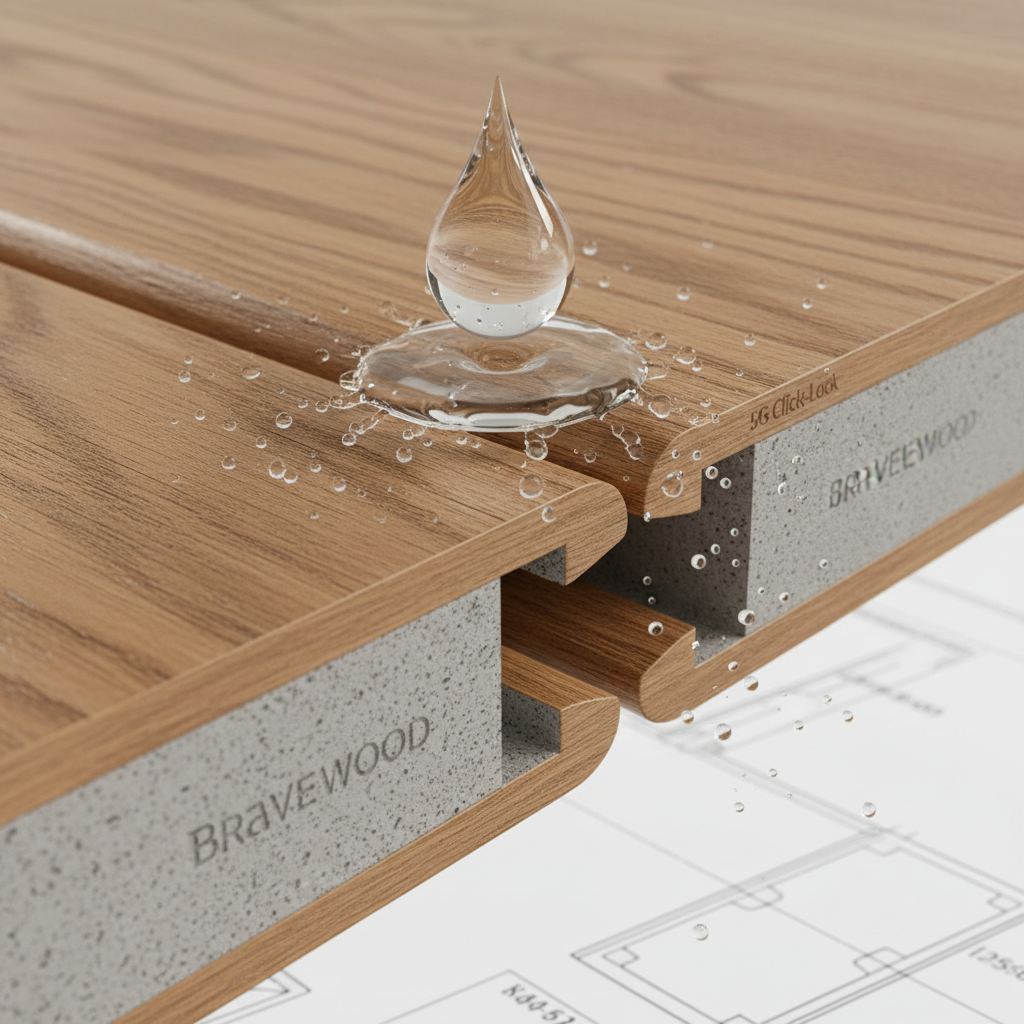
“The 5G system creates an incredibly tight mechanical tension between the planks,” explains a technical overview by certified flooring installers. “When combined with micro-bevel edge sealants, this locking mechanism prevents water from seeping through the seams and reaching the subfloor for up to 72 hours.”
This gives homeowners more than enough time to discover and clean up a pet accident before any structural damage can occur.
Uncompromising Aesthetics: Durable Hybrid Hardwood for Modern Homes
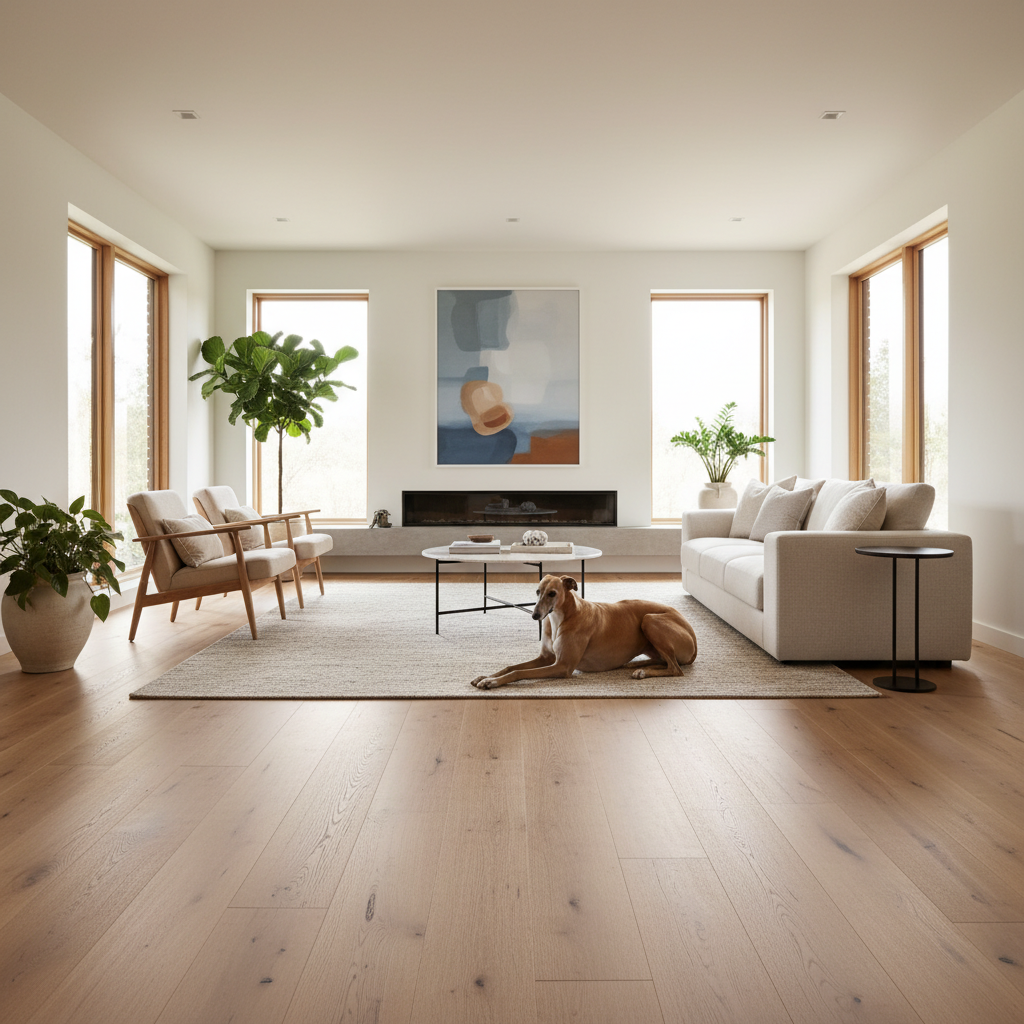
Historically, choosing durable pet proof floors meant settling for materials that looked artificial. Today, durable hybrid hardwood for modern homes ensures you do not have to compromise your interior design vision.
“Modern architecture demands clean lines, organic textures, and a seamless flow of natural light,” notes Elena Rostova, a registered interior designer with the American Society of Interior Designers (ASID) [10]. “Hybrid hardwood allows us to specify real, wide-plank European Oak in high-traffic homes without worrying that the client’s Golden Retriever will ruin the investment in six months.”
Wide Planks, Matte Finishes, and Distressed Textures
Wide plank formats (7+ inches) currently make up over 65% of modern flooring installations, favored for their ability to make open-concept spaces feel larger and less cluttered.
Furthermore, modern ultra-matte finishes and wire-brushed textures do more than just look contemporary—they actively camouflage life’s little accidents. High-gloss finishes act like a mirror, highlighting every speck of dust and micro-scratch. A matte, distressed finish naturally diffuses light, reducing the visibility of micro-scratches by up to 40% and keeping the floor looking pristine even under heavy pet traffic.
Damage Triage: Repairing Scratched and Pet-Damaged Floors
For homeowners currently living with scratched hardwood floors or pet damaged flooring, immediate remediation is often necessary. Before ripping up the floor, use this triage guide to determine if you can DIY the fix or if you need professional intervention.
Fixing Scratches: Surface Clear-Coat vs. Deep Gouges
The first step in repairing a scratch is identifying its depth.
- Surface Scratches: If the scratch is white and only visible from certain angles, it is likely confined to the polyurethane clear-coat. DIY surface repair kits and blending pencils have a 75% success rate for these superficial marks.
- Deep Gouges: If the scratch has exposed raw wood and catches your fingernail, it is a deep gouge.
According to restoration experts at This Old House, homeowners should strictly avoid internet “life hacks” like rubbing mayonnaise, olive oil, or walnuts into deep gouges [11]. These organic materials will eventually rot, turn black, and attract dirt. Furthermore, because hybrid hardwood features a thin 1.2mm veneer, aggressive DIY sanding will permanently ruin the plank by burning through to the SPC core. Deep gouges in hybrid floors are best addressed by replacing the individual damaged plank.
The Chemistry of Dog Urine Floor Stains
Dog urine floor stains are highly urgent problems that cause permanent black marks and lingering ammonia odors.
Why does dog urine turn wood floors black? “Dog urine initially has a pH of 6.0 to 6.5,” explains Dr. Emily Carter, a consulting analytical chemist. “However, as the uric acid breaks down, it becomes highly alkaline ammonia. This ammonia chemically reacts with the natural tannins present in the wood, effectively burning the wood from the inside out.” [12]
Do not use household bleach or steam cleaners to treat these stains; the heat and harsh chemicals will permanently set the stain and the odor into the wood grain. Instead, you must use high-quality enzymatic cleaners. Enzymes break down the uric acid crystals at a molecular level, increasing permanent odor removal success by 80% compared to traditional soap and water.
Subfloor Realities: When to Call the Professionals
If pet urine has been left untreated for long periods, it can seep past the floorboards and saturate the wooden subfloor beneath. In these cases of severe pet damaged flooring, surface cleaning is futile.
Insights from certified water damage restoration professionals with the Institute of Inspection, Cleaning and Restoration Certification (IICRC) stress that saturated subfloors must be fully exposed, treated with commercial enzymes, dried, and then sealed with a heavy-duty, odor-blocking primer (like Kilz) before new flooring is laid [13].
Homeowners should also be aware of the financial realities of this damage. According to the Insurance Information Institute, pet damage is explicitly excluded from over 90% of standard homeowners insurance policies [14]. Therefore, investing in a waterproof, highly durable solution like Bravewood hybrid hardwood upfront is far more cost-effective than paying for subfloor remediation later.
Conclusion
The era of choosing between a beautiful, design-forward home and a relaxed, pet-friendly environment is over. By understanding the advanced material science of SPC rigid cores, evaluating materials through a holistic Pet-Proof Index, and utilizing true waterproof locking technologies, homeowners can finally have it all.
Bravewood hybrid hardwood stands as the ultimate uncompromising solution—delivering the authentic luxury of real wood veneer with the commercial-grade durability required to withstand heavy claws, spills, and the daily chaos of family life.
We encourage you to order a sample of Bravewood hybrid hardwood today. Perform your own key scratch test, pool water on the surface, and experience the uncompromising quality firsthand.
Standard DIY & Pet Health Disclaimer: Always consult a certified flooring professional before attempting deep gouge repairs or subfloor remediation. Consult a veterinarian regarding your pet’s specific joint health needs.
References & Authoritative Sources
- FloorTrendMag.com. (2026). Market Data and Manufacturing Trends on Hybrid Flooring.
- ASTM International. (N.D.). Standard Test Methods for Flooring Durability and Impact Resistance.
- National Wood Flooring Association (NWFA). (N.D.). Wood Species Janka Hardness Scale and Veneer Grading Standards.
- American Veterinary Medical Association (AVMA). (N.D.). Guidelines on Pet Joint Health and Environmental Factors.
- Consumer Reports. (N.D.). Independent Flooring Durability and Abrasion Tests.
- Veterinary Partner. (N.D.). Canine Nail Anatomy and Kinetic Force.
- Wood Floor Business. (N.D.). Technical Data on Floor Finish Durability and Aluminum Oxide.
- European Producers of Laminate Flooring (EPLF). (N.D.). Abrasion Class (AC) Rating Standards.
- Välinge Innovation. (N.D.). 5G Locking System Technology and Waterproof Standards.
- American Society of Interior Designers (ASID). (N.D.). Design Trends and Material Suitability in Modern Architecture.
- This Old House. (N.D.). Hardwood Floor Restoration and DIY Repair Methodologies.
- Journal of Veterinary Medical Science. (N.D.). Chemical Composition and Breakdown of Canine Urine.
- Institute of Inspection, Cleaning and Restoration Certification (IICRC). (N.D.). Standards for Odor and Water Damage Restoration.
- Insurance Information Institute. (N.D.). Standard Homeowners Policy Coverages and Pet Damage Exclusions.
