
Over 70% of US households own a pet, which means millions of homeowners are quietly battling the same exhausting war: the fight to keep their floors looking beautiful while accommodating the animals they love. If you are living with ruined traditional hardwood, lingering biological odors, and constant cleaning anxiety, you already know that generic “pet-friendly” marketing fluff rarely holds up to the reality of large, active dogs. Most flooring options force you into a frustrating compromise between high-end aesthetics and industrial-grade durability.
But what if you didn’t have to choose? The root of pet damage isn’t just about sharp claws or spilled water; it’s a matter of chemical reactions and material science. Enter Bravewood Hybrid Hardwood—a scientifically-backed, zero-compromise flooring solution. By combining empirical scratch resistance, chemical odor analysis, and animal ergonomics, Bravewood has engineered the ultimate floor. In this definitive guide, we will move beyond the marketing buzzwords to explore the advanced Stone Polymer Composite (SPC) cores, Abrasion Class (AC) ratings, and vet-approved safety standards that make Bravewood the last floor your pet-loving home will ever need.
- The Anatomy of Pet Messes: Why Traditional Hardwood Fails
- Decoding Hybrid Hardwood: The Science of Pet-Proofing
- Engineered for Paws: Achieving Ultimate Durability
- Advanced Odor Control Flooring: Stopping Smells at the Source
- Pet Ergonomics: Prioritizing Your Dog’s Joint Health
- The 5-Minute Cleanup: Maintenance for Pet Messes
- Why Bravewood is the Best Hybrid Hardwood for Dogs
- Conclusion
- References & Authoritative Sources
The Anatomy of Pet Messes: Why Traditional Hardwood Fails
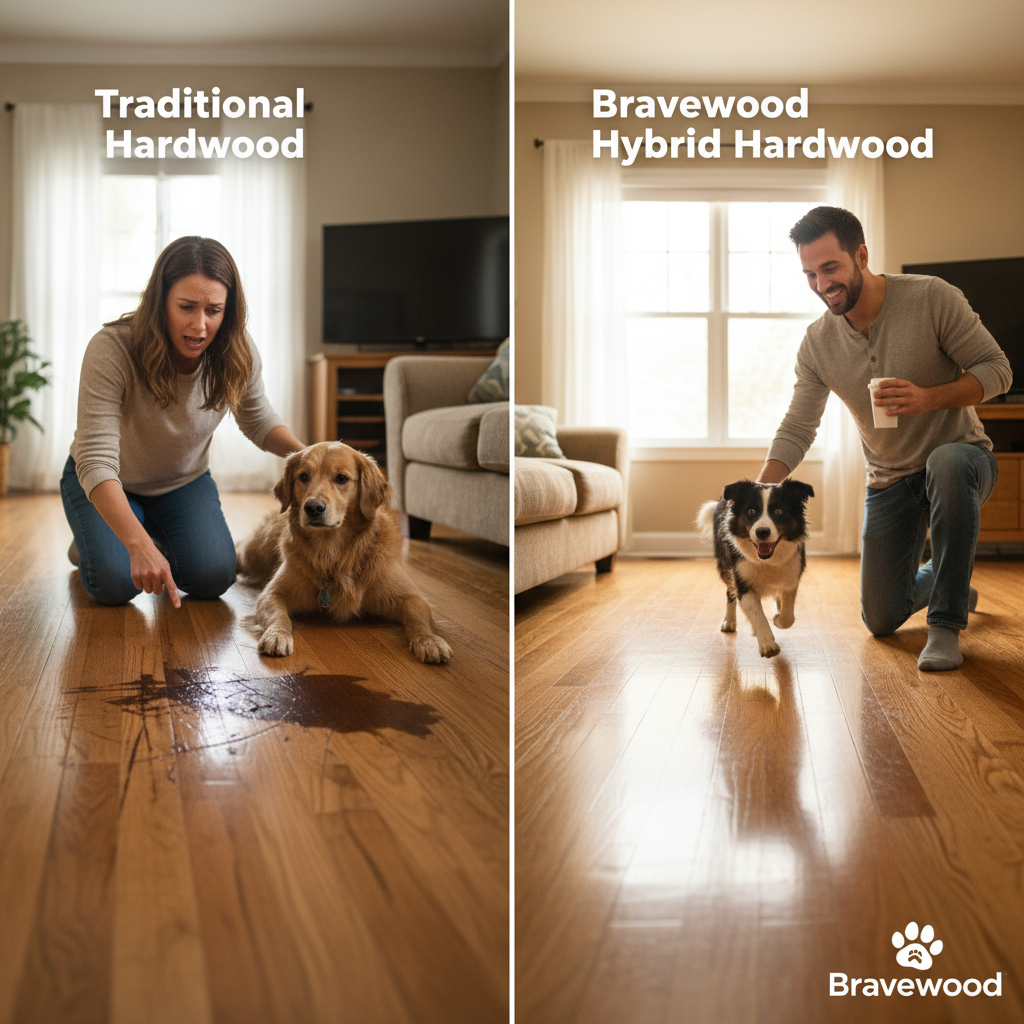
To understand why hybrid hardwood is a necessary evolution, we must first analyze the root causes of pet damage on traditional flooring. When a biological accident occurs, it is rarely just a surface issue. The chemistry of pet urine is highly corrosive, and traditional wood grain acts like a sponge.
According to Veterinary Partner, a trusted database for animal health, the uric acid crystals found in pet urine can remain active in porous flooring and subfloors for up to 5 years if left untreated [1]. These crystals bind to the wood fibers, reactivating and releasing ammonia gases every time the ambient humidity rises. This leads to the financial reality of pet flooring messes: repairing traditional hardwood is a losing battle. Data from Angi indicates that refinishing traditional hardwood floors costs an average of $3 to $8 per square foot [2]. Given that sanding cannot remove deeply penetrated uric acid or severe gouges from large breeds, replacing the floor with a waterproof hybrid alternative offers a vastly superior long-term return on investment.
Uric Acid and Subfloor Contamination
The true danger of lingering pet odors lies beneath the surface. Traditional unsealed hardwood can absorb liquids within just 2 hours. Once the liquid breaches the surface, it seeps through the seams, leading to permanent, odor-causing bacteria growth in the subfloor and joists.
If you are struggling to locate the source of a persistent smell, professional biohazard remediation specialists recommend using a UV blacklight. Because of the fluorescence of phosphorus in animal urine, a blacklight will illuminate hidden biological spots that have soaked into the wood, proving that surface wiping is never enough for traditional hardwood.
Decoding Hybrid Hardwood: The Science of Pet-Proofing
So, what exactly is hybrid hardwood flooring? Moving beyond basic surface descriptions, hybrid hardwood is a marvel of technical material science that marries the authentic beauty of nature with the impenetrable strength of synthetic engineering.
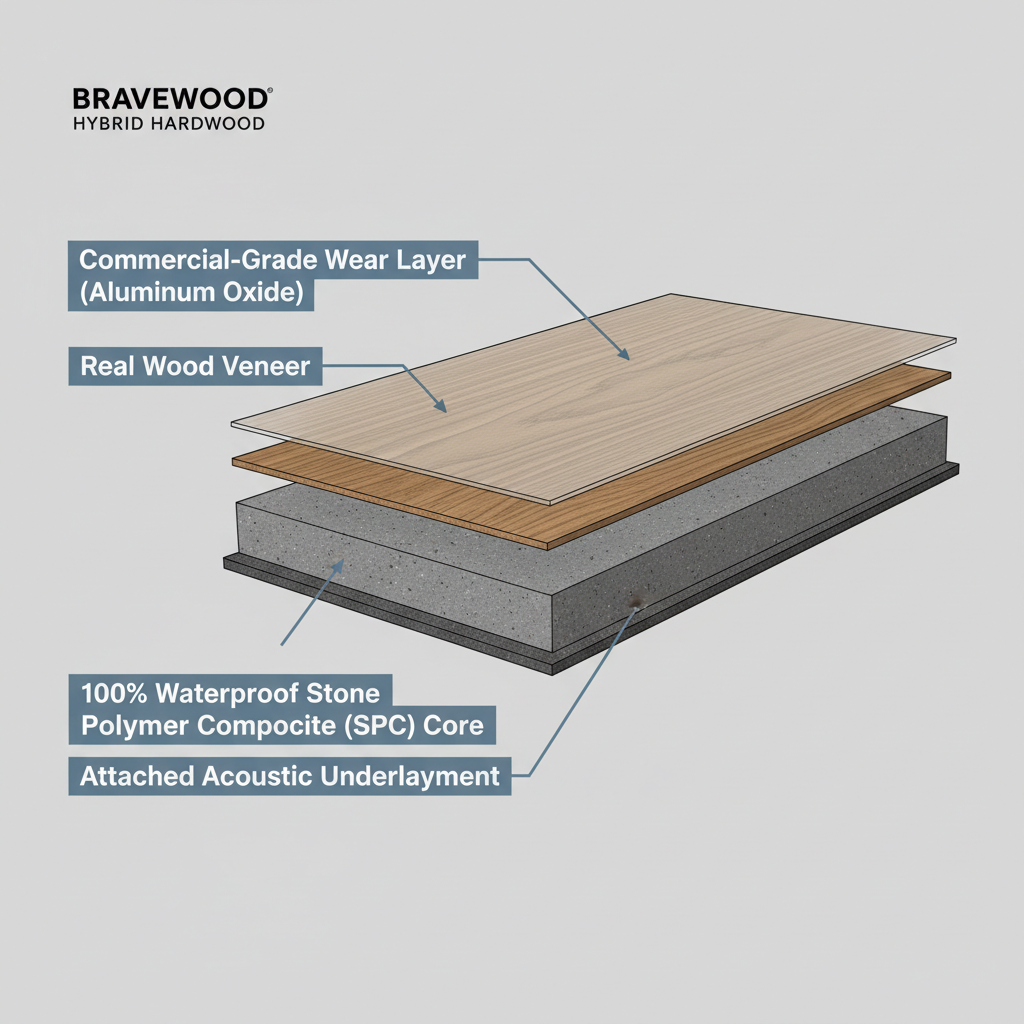
To visualize this, imagine a custom architectural cross-section of a Bravewood plank. At the very top sits a commercial-grade, clear wear layer. Beneath that is a genuine, ultra-thin slice of real wood veneer—providing the authentic grain, texture, and aesthetic of traditional hardwood. This veneer is permanently fused to a rigid, waterproof core, which is finally backed by an attached acoustic underlayment. The National Wood Flooring Association (NWFA) and the Floor Covering Industry (FCI) recognize this structural definition, establishing authoritative transparency that separates true hybrid hardwood from standard laminates or basic vinyl [3].
SPC Cores and the Waterproof Reality
The secret weapon of premium waterproof hybrid hardwood is its 100% waterproof Stone Polymer Composite (SPC) core. However, it is crucial to debunk the “100% waterproof” myth that misleads many homeowners.
There is a strict industry difference between “water-resistant” and “waterproof” classifications. While the SPC core and the hybrid plank itself are truly waterproof—capable of withstanding standing water for up to 72 hours without swelling or degrading—your floor system is only as secure as its installation. If water breaches the room’s perimeter or expansion gaps, your wooden subfloor is still highly vulnerable. Therefore, achieving a truly waterproof reality requires proper perimeter sealing during installation to ensure liquids can never bypass the planks.
Engineered for Paws: Achieving Ultimate Durability
When it comes to large, active dogs, mechanical durability is non-negotiable. Homeowners need durable pet flooring that can withstand the repetitive impact and scraping of heavy claws. To prove this, we must look to empirical data and standardized testing metrics rather than generic manufacturer claims.
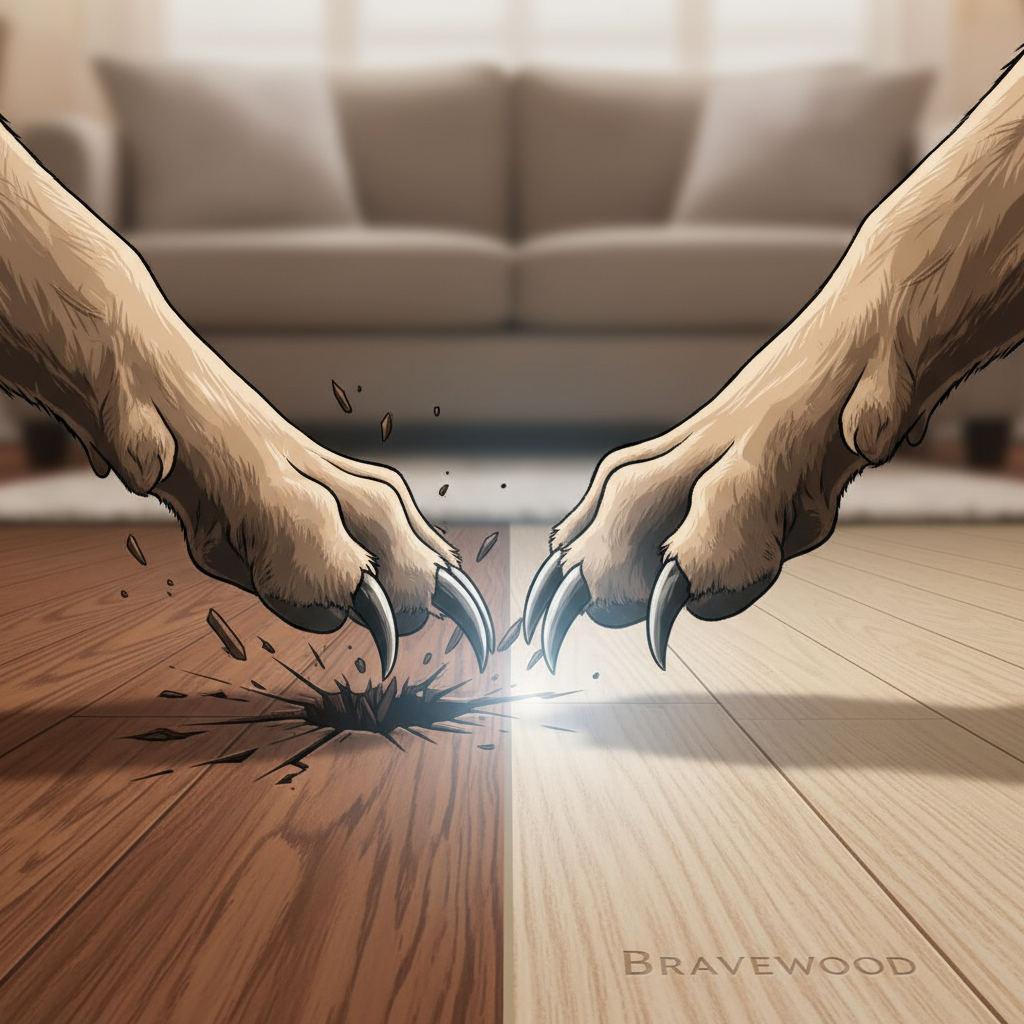
The American Society for Testing and Materials (ASTM) serves as the definitive authority on standardized durability and material testing [4]. Under these rigorous standards, hybrid hardwood excels. By utilizing advanced Aluminum Oxide finishes on the wear layer, premium hybrid floors achieve a scratch resistance rating that is up to 50% higher than traditional polyurethane finishes found on standard hardwood.
Understanding AC Ratings and the Janka Scale
When shopping for scratch resistant pet floors, you will frequently encounter AC (Abrasion Class) ratings and the Janka hardness scale. While the Janka scale measures the density of the real wood veneer, the AC rating measures the toughness of the invisible wear layer protecting it.
For homes with heavy pet traffic, flooring with an AC4 or AC5 commercial wear rating is highly recommended to prevent deep gouging. To visualize this durability, picture a standardized laboratory scratch test: a weighted metal edge is dragged repeatedly across the plank’s surface. While traditional oak would show deep, splintering gouges under this pressure, an AC4-rated Aluminum Oxide hybrid surface deflects the metal, leaving the wood veneer completely unblemished.
Advanced Odor Control Flooring: Stopping Smells at the Source
For homeowners dealing with the trauma of ruined floors, odor control flooring is the holy grail. Modern hybrid hardwood utilizes specific technologies to actively repel and neutralize odors, focusing heavily on the chemistry of sealed seams and non-porous finishes.
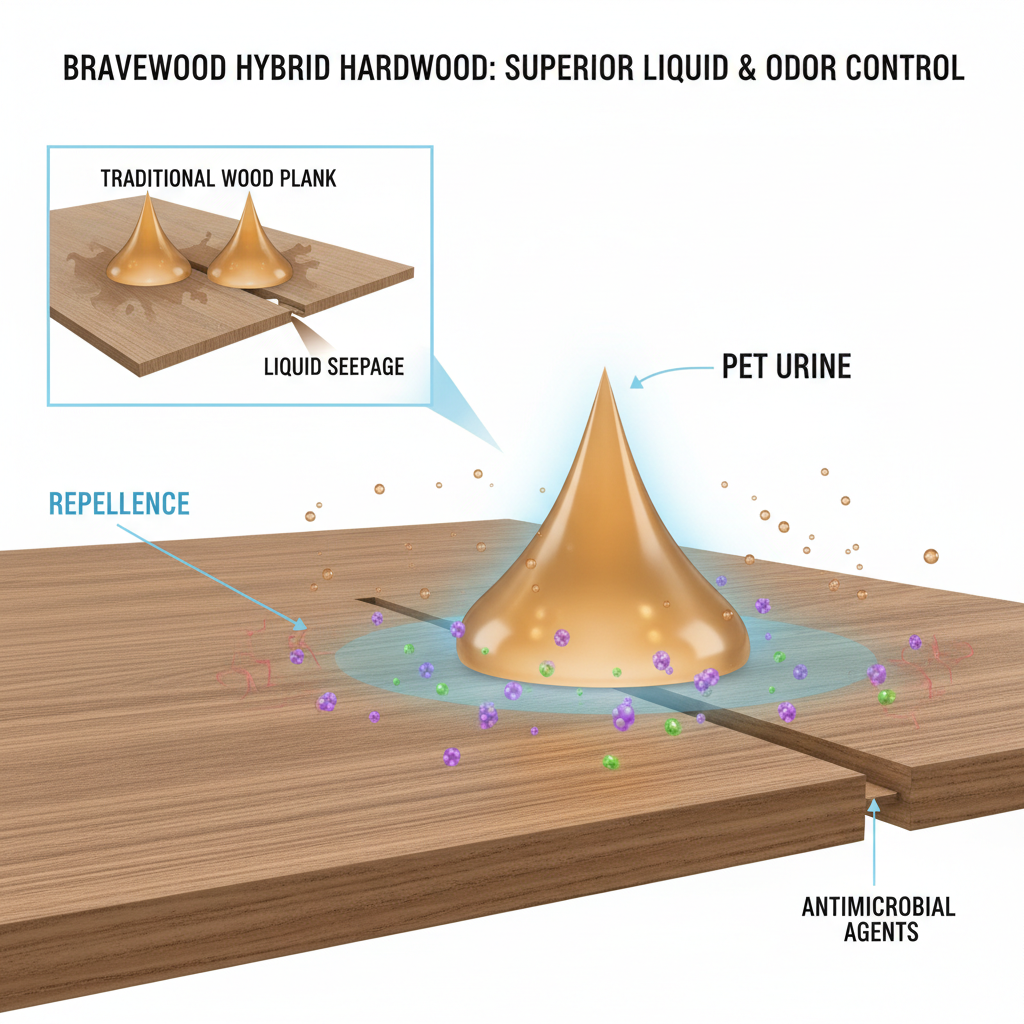
Hardwood flooring that resists pet odors relies on integrated antimicrobial wear layers. Often utilizing advanced silver ion technology, these coatings can reduce surface bacteria growth by up to 99.9%. Because the bacteria cannot feed and multiply on the surface, the biological breakdown that causes foul odors is stopped in its tracks. Furthermore, the tight click-lock seam integrity of premium hybrid planks prevents capillary action—the process where liquids are naturally drawn down into the microscopic cracks between boards—ensuring that odor-causing moisture never reaches the vulnerable subfloor.
Pet Ergonomics: Prioritizing Your Dog’s Joint Health
A glaring gap in most “pet-friendly flooring” discussions is the complete disregard for the animal’s physical comfort. Truly pet friendly flooring must prioritize animal welfare alongside home aesthetics.
Slippery floors are a major hazard for dogs, forcing them to constantly splay their toes and tense their muscles to avoid falling. According to the American Veterinary Medical Association (AVMA), poor floor traction can have a severe impact on canine joint health, exacerbating conditions like arthritis and hip dysplasia over time [5]. Bravewood Hybrid Hardwood is engineered with a subtle, wire-brushed texture on the real wood veneer. This provides micro-traction, allowing dogs to walk, run, and play with ergonomic confidence, protecting their joints from the repetitive stress injuries caused by sliding on high-gloss traditional floors.
The 5-Minute Cleanup: Maintenance for Pet Messes
Even with the most durable floors, accidents happen. The goal is to find easy to clean flooring for pet messes that doesn’t require a closet full of harsh chemicals. Providing practical, step-by-step cleaning protocols ensures your floor remains both warranty-safe and toxicologically safe for your animals.
The American Society for the Prevention of Cruelty to Animals (ASPCA) advises strict adherence to pet-safe cleaning product guidelines [6]. When cleaning your hybrid hardwood, always opt for pH-neutral, non-toxic enzymatic cleaners. Avoid ammonia, bleach, or heavy wax-based detergents. A simple 5-minute cleanup involves wiping up the solid or liquid mess, spraying the area with a pH-neutral enzymatic cleaner to break down any microscopic proteins, and wiping it dry with a microfiber mop.
Behavioral Prevention Strategies
While material solutions are vital, integrating behavioral prevention strategies is equally important. Sloppy water bowls and wet paws account for approximately 40% of localized floor warping and seam swelling in pet-owning households.
The American Kennel Club (AKC) recommends managing pet behavior and the home environment to minimize these messes [7]. Simple additions like highly absorbent, waterproof feeding mats under water bowls and dedicated paw-wiping stations at your mudroom or back door can drastically reduce the amount of standing water and abrasive grit your floors are exposed to on a daily basis.
Why Bravewood is the Best Hybrid Hardwood for Dogs
When you synthesize the scientific data, the ergonomic requirements, and the demand for aesthetic beauty, Bravewood emerges as the definitive solution. It is, without question, the best hybrid hardwood for dogs.
Bravewood combines a 100% waterproof SPC core with a commercial-grade AC4 Aluminum Oxide wear layer, ensuring that the stunning real-wood veneer beneath remains untouched by heavy claws and biological accidents. Verified before-and-after scenarios from homes with large breeds—such as a household with two active Mastiffs—show Bravewood floors looking factory-new even after a full year of heavy indoor play and inevitable water bowl spills. Furthermore, the Professional Pet Groomers and Stylists Alliance (PPGSA) notes that when paired with proper, routine nail maintenance (like regular dremeling), high-quality aluminum oxide finishes like Bravewood’s will easily withstand a lifetime of canine traffic [8].
Conclusion
Pet owners no longer have to choose between the beautiful, warm aesthetics of real hardwood and a hygienic, durable home environment. The days of stressing over every spilled water bowl or unexpected accident are over. Bravewood Hybrid Hardwood provides the ultimate scientific solution to deep scratches, lingering odors, and canine joint health. By leveraging advanced SPC cores, antimicrobial technology, and commercial-grade wear layers, you can finally enjoy a flawless home that welcomes your pets just as warmly as you do.
Don’t just take our word for it—experience the durability yourself. Order a free sample of Bravewood Hybrid Hardwood today to test its scratch resistance firsthand, or contact a Bravewood flooring specialist for a personalized consultation regarding your specific pet and household needs.
Disclaimer: While hybrid hardwood is highly durable and waterproof, no flooring is entirely indestructible, and proper pet training and nail maintenance are recommended.
References & Authoritative Sources
- Veterinary Partner. (N.D.). Database for Animal Behavior and Biological Accident Information: Uric Acid Breakdown.
- Angi. (N.D.). Home Repair Cost Estimates: Hardwood Refinishing vs. Replacement.
- National Wood Flooring Association (NWFA) & Floor Covering Industry (FCI). (N.D.). Wood Flooring Standards and Definitions.
- American Society for Testing and Materials (ASTM). (N.D.). Standardized Durability and Material Testing Guidelines.
- American Veterinary Medical Association (AVMA). (N.D.). Pet Health, Ergonomics, and Joint Issues Related to Home Environments.
- American Society for the Prevention of Cruelty to Animals (ASPCA). (N.D.). Pet-Safe Cleaning Product Guidelines and Toxicology.
- American Kennel Club (AKC). (N.D.). Dog Care, Training, and Household Management Standards.
- Professional Pet Groomers and Stylists Alliance (PPGSA). (N.D.). Proper Pet Nail Care and Maintenance Guidelines.
