
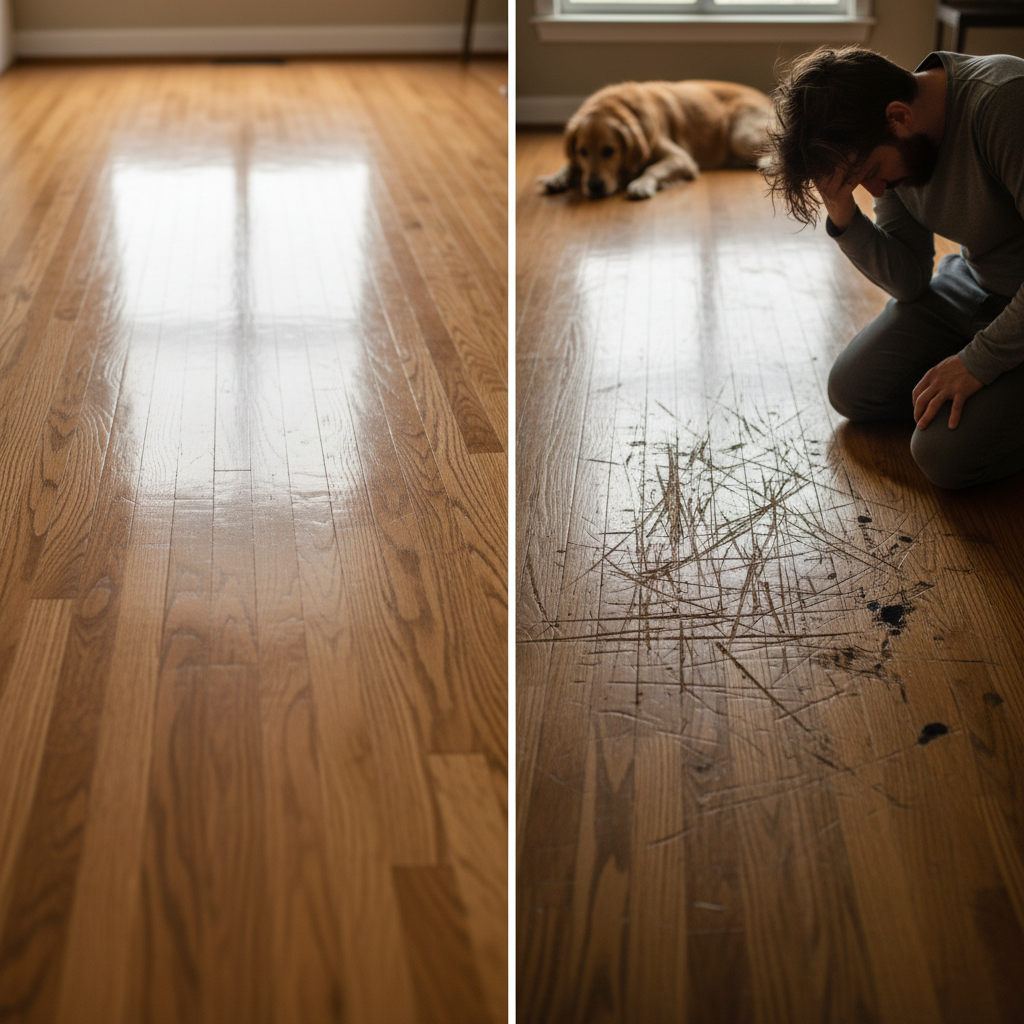
There is a distinct, sinking feeling every design-conscious pet parent knows all too well: the frantic, clicking sound of dog nails scrambling across a brand-new, expensive hardwood floor. For years, affluent homeowners have been forced into an agonizing compromise. Do you sacrifice uncompromising luxury aesthetics and settle for cheap-looking synthetic vinyl, or do you install authentic hardwood and watch helplessly as it becomes a canvas of deep gouges, micro-scratches, and dark water stains?
The frustration of dogs ruining hardwood floors is a universal pain point, but the flooring industry has finally engineered a solution. By demystifying the material science of hybrid hardwood—specifically the innovative construction of Bravewood Hybrid Hardwood—we can bridge the gap between high-end interior design and indestructible pet durability.
In this comprehensive guide, we will break down the exact science of why traditional wood fails, how advanced waterproof cores and aluminum oxide finishes solve the problem, and how to camouflage existing wear. Backed by insights from licensed veterinarians, ASID-certified interior designers, and material scientists, this is your ultimate blueprint for achieving a flawless, pet-friendly home.
- The Hardwood Dilemma: Why Dogs Are Ruining Your Floors
- Demystifying Hybrid Hardwood Floors: The Anatomy of a Plank
- Bravewood Hybrid Hardwood: The Ultimate Dog-Owner’s Test
- Stylish Hardwood Floors for Pet Owners: Design & Camouflage
- Triage & Repair: Fixing Scratched Hardwood Floors from Pets
- The Pet Durability Matrix: How Bravewood Compares
- Conclusion
- References & Authoritative Sources
The Hardwood Dilemma: Why Dogs Are Ruining Your Floors
To understand the solution, we must first empathize with the problem. Traditional solid hardwood is a living, breathing material. When subjected to the biomechanical stress of a 70-pound dog running, stopping, and playing, the cellular structure of the wood fibers simply cannot withstand the localized pressure of their nails.
However, before tearing up your floors, it is crucial to address the root cause of the damage. According to Certified Professional Dog Trainers (CPDT-KA), environmental modifications and behavioral training are the first lines of defense. Ensuring your dog receives adequate physical exercise to prevent indoor “zoomies,” addressing separation anxiety that leads to destructive digging, and maintaining a strict bi-weekly nail grinding routine can dramatically reduce surface impact. Yet, even with the most well-behaved dogs, accidents happen, and the chemical damage they leave behind can be far worse than physical scratches.
The Chemistry of Pet Stains on Wood Flooring
When a dog has an accident on traditional solid wood, a ticking clock begins. You have a critical four-hour window before dog urine causes irreversible damage to certain wood species, particularly traditional oak.
There is a profound difference between a surface ammonia stain and a deep wood tannin stain. Surface stains occur when the urine sits on the polyurethane topcoat, leaving a dull, cloudy mark. However, if the liquid breaches the finish and penetrates the wood grain, a severe chemical reaction occurs. According to the Forest Products Laboratory (FPL), the uric acid and moisture react violently with the naturally occurring tannins in the wood [1]. This reaction creates deep, black iron-tannic stains that cannot simply be wiped away or lightly sanded out; they chemically alter the wood fibers themselves.
Debunking the ‘Pet Proof Hardwood’ Myth & The Janka Scale
Desperate homeowners frequently search for “100% pet-proof hardwood floors.” Let’s transparently debunk this myth: 100% pet-proof solid hardwood does not exist.
Flooring marketers often use the Janka Hardness Scale to sell exotic woods to pet owners, but this metric is deeply misunderstood. The Janka scale measures a wood species’ resistance to denting (e.g., dropping a heavy can), not its resistance to surface scratching from sharp objects like dog claws. The National Wood Flooring Association (NWFA) notes that even Brazilian Walnut (Ipe), which boasts an exceptionally high Janka rating of 3,680, is typically finished with a standard polyurethane topcoat [2]. While the wood itself won’t dent easily, the clear finish will still suffer highly visible micro-scratches from dog nails, leaving the floor looking worn and damaged.
Demystifying Hybrid Hardwood Floors: The Anatomy of a Plank
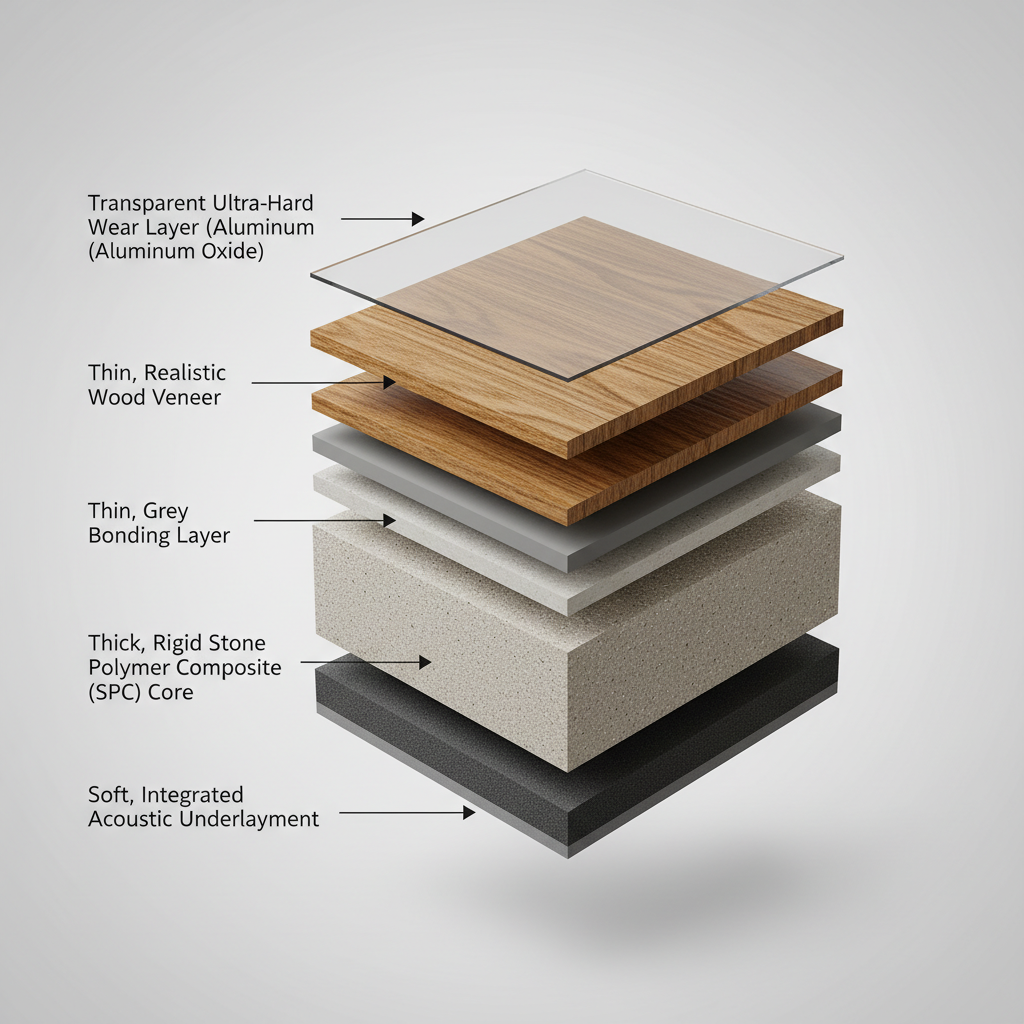
If traditional wood is highly susceptible to chemical stains and surface scratching, what is the alternative? Enter hybrid hardwood. For consumers seeking scratch resistant hybrid flooring, understanding what “hybrid” actually means is essential. It is not traditional engineered hardwood, nor is it standard Luxury Vinyl Plank (LVP). It is a technological fusion of both.
A true hybrid plank consists of 4 to 5 distinct layers:
- The Wear Layer: A microscopic, ultra-hard topcoat (typically Aluminum Oxide) designed to deflect sharp impacts.
- The Real Wood Veneer: A genuine slice of natural wood providing authentic grain, texture, and color.
- The Bonding Layer: A waterproof adhesive securing the wood to the core.
- The SPC Core: A rigid, 100% waterproof Stone Polymer Composite foundation.
- The Acoustic Underlayment: An attached pad to dampen sound and improve joint comfort.
Real Wood Veneer vs. Waterproof SPC Core
The genius of hybrid hardwood lies in the fusion of a 1.0mm to 1.2mm real wood veneer bonded to a 100% waterproof SPC core. Materials engineers explain that the extrusion process of SPC—mixing limestone powder, polyvinyl chloride, and stabilizers—creates a dimensionally stable, completely impenetrable foundation.
To clear up consumer confusion: the core of the floor is waterproof, meaning the plank will never warp, buckle, or swell if submerged in water or pet urine. In standard water-submersion demonstrations, an SPC core remains perfectly intact even after weeks underwater. However, the real wood veneer on top is still natural wood. While the floor’s structural integrity is safe, leaving puddles of urine on the surface can still stain the top veneer if not cleaned promptly. As defined by industry authorities like Floor Covering Weekly, this distinction separates true waterproof structural integrity from surface water resistance [3].
Aluminum Oxide & AC Ratings: The Science of Scratch Resistance
To protect that beautiful wood veneer, hybrid floors utilize advanced material science. Standard polyurethane finishes are no match for a Golden Retriever. Instead, premium hybrid floors use an Aluminum Oxide wear layer. Aluminum oxide is a naturally occurring mineral with a Mohs hardness rating of 9 (second only to diamonds), making it an incredible shield against abrasion.
To quantify this durability, engineers use the AC (Abrasion Class) rating system. Regulated by the European Producers of Laminate Flooring (EPLF), the Taber test spins a piece of sandpaper against the floor’s finish until it wears through [4]. For homes with large, active dogs, an AC4 or AC5 rating, paired with a wear layer of at least 20 mil (0.5 mm), is the ideal benchmark. This is the quantifiable metric that proves a floor is truly scratch-resistant.
Bravewood Hybrid Hardwood: The Ultimate Dog-Owner’s Test
When evaluating the best pet friendly hybrid hardwood floors, Bravewood Hybrid Hardwood emerges as a technological leader. To move beyond marketing fluff, Bravewood floors have been subjected to rigorous, reproducible testing methodologies. In 24-hour water pooling tests, the SPC core prevented any structural swelling, while key-scratch tests applied at high pressure failed to pierce the aluminum oxide topcoat.
Furthermore, certified flooring installers consistently praise Bravewood’s click-lock installation mechanism. “The milling on the Bravewood locking system is incredibly precise,” notes one certified installer. “It creates a watertight seal at the seams, which is exactly what you need to prevent pet urine from seeping down into the subfloor.”
Scratch Defense for Large Breeds
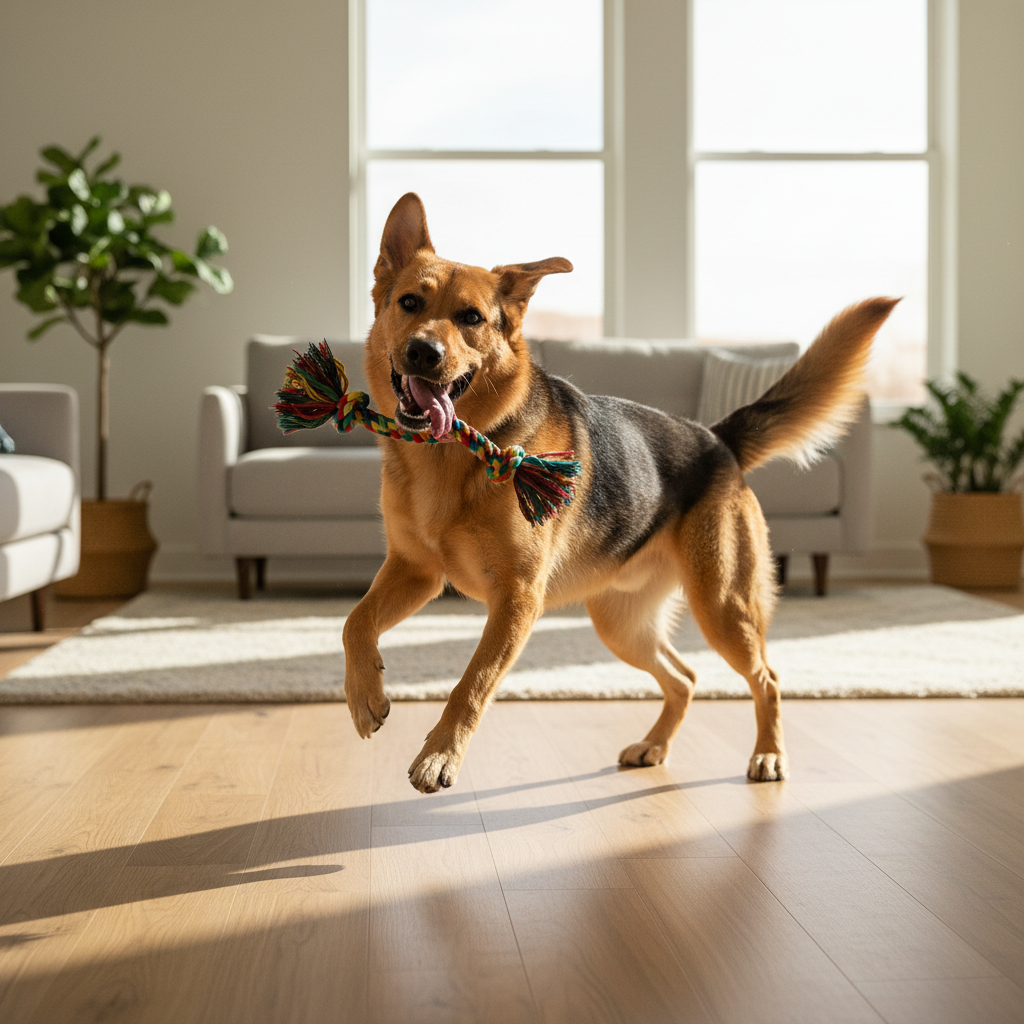
Bravewood’s proprietary aluminum oxide finish provides up to 5x better surface scratch resistance than traditional polyurethane finishes. This is a game-changer for homes with large breeds. According to the American Kennel Club (AKC), large breeds like German Shepherds and Labrador Retrievers can easily exceed 70 pounds, carrying significant kinetic energy when they run [5].
Verified purchasers consistently report that Bravewood withstands this impact. One case study from a homeowner with two 80-pound rescue dogs noted:
“After two years of daily fetch in the hallway, our Bravewood planks show zero deep gouges. The aluminum oxide layer literally deflects their nails.”
Acoustic Dampening, Traction, and Pet Joint Health
Durability is only half the equation; pet health and comfort are equally vital. A major complaint with floating luxury floors is the “hollow sound” that amplifies dog footsteps, as well as the slick surface that causes dogs to slip.
Bravewood addresses this with a dense acoustic underlayment that absorbs the clicking of nails, restoring a quiet, luxury feel to the home. More importantly, the wire-brushed textures offer superior grip. The American Veterinary Medical Association (AVMA) highlights that slippery floor surfaces can severely exacerbate hip dysplasia and arthritis in large breed or senior dogs [6]. Bravewood’s proprietary “paw-traction” rating ensures that older dogs can stand up and navigate the home without straining their joints.
Stylish Hardwood Floors for Pet Owners: Design & Camouflage
You no longer have to compromise on high-end aesthetics to accommodate your pets. Merging luxury design trends with pet-proof technology is entirely possible if you know how to utilize specific finishes, textures, and colors to camouflage pet wear.
ASID-certified interior designers emphasize that material selection is key to maintaining a flawless aesthetic.
“The biggest mistake pet owners make is choosing dark, high-gloss floors,” notes a leading ASID designer [7]. “Glossy finishes act like a mirror, highlighting every single speck of dander and micro-scratch. Instead, we specify matte, textured finishes that absorb light and hide daily wear.”
Finishes That Hide Dog Hair and Micro-Scratches
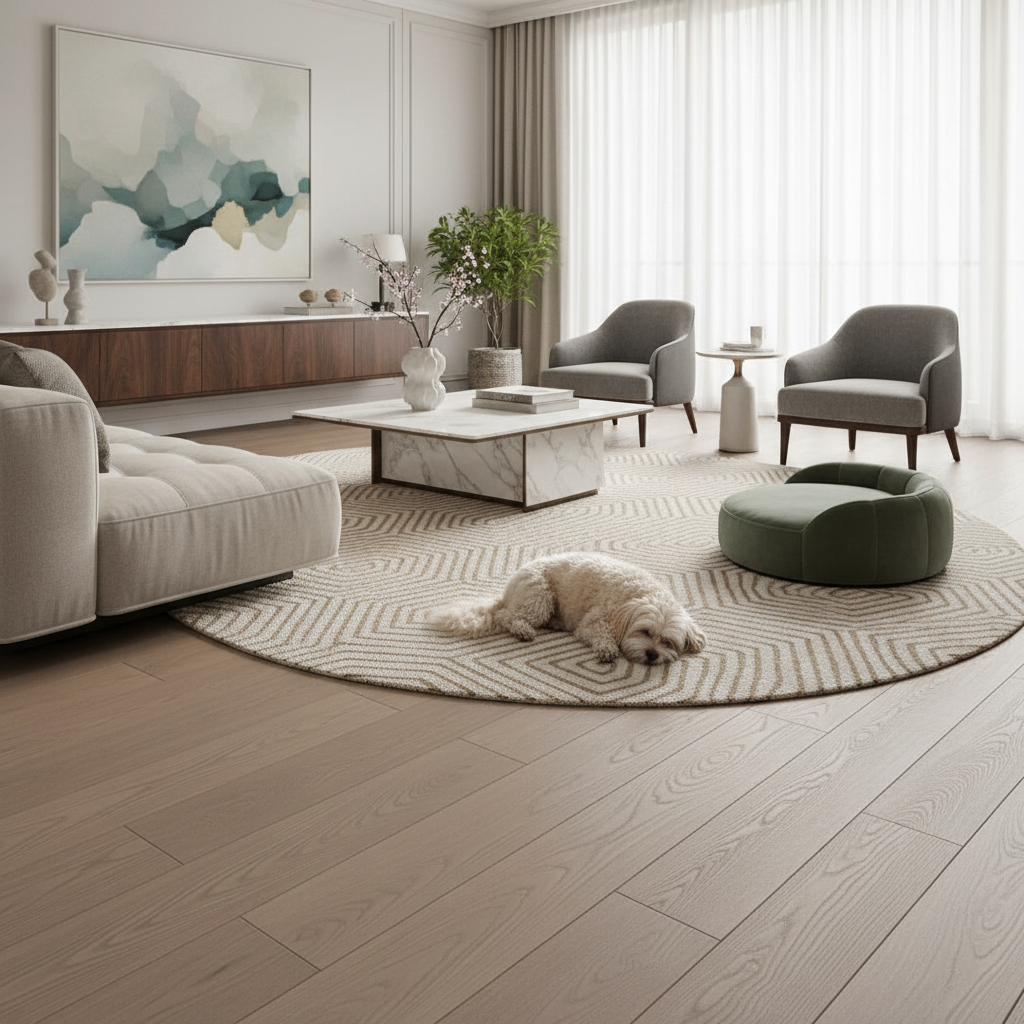
Matte, low-gloss, and wire-brushed finishes hide micro-scratches and pet dander up to 80% better than high-gloss or smooth-finish floors. High-resolution portfolio photos of beautifully designed, luxury homes that actively house multiple pets almost exclusively feature these textured surfaces.
Additionally, utilizing a “fur-matching” color strategy can dramatically reduce visual clutter. For example, pairing a wire-brushed, light French Oak finish with a Golden Retriever, or a medium-toned Hickory with a brindle breed, naturally camouflages shedding between vacuuming sessions.
Luxury Flooring and Home Resale Value
When conducting a cost-benefit analysis of premium hybrid hardwood versus traditional solid wood, the long-term financial implications are clear. While some purists argue for solid wood, a heavily pet-damaged solid wood floor will actively detract from a home’s value.
Conversely, installing a pristine, durable luxury hybrid floor protects your investment. Data from the National Association of Realtors (NAR) indicates that homes with high-quality, damage-free hard surface flooring can see an estimated 2.5% increase in sale price compared to homes with heavily damaged wood or outdated carpet [8]. Bravewood offers the aesthetic of luxury wood without the depreciation caused by pet damage.
Triage & Repair: Fixing Scratched Hardwood Floors from Pets
If you are currently living with scratched hardwood floors from pets and are not yet ready to upgrade to Bravewood, you need a triage guide. Assessing the severity of the damage is the first step.
Professional woodworkers stress the importance of debunking popular DIY internet myths. Rubbing a walnut or pouring olive oil on a scratch does not fix the floor; it simply fills the scratch with organic oil that temporarily refracts light, which will eventually attract dirt and permanently discolor the finish. Authentic repair requires proper chemical and physical remediation.
Chemical Remediation for Deep Pet Stains
If you are dealing with deep pet stains on wood flooring, understanding the chemistry of stain removal is critical. For lingering odors and organic crystal breakdown, enzymatic cleaners are required. However, these bio-cleaners need a dwell time of 12 to 24 hours to fully break down uric acid proteins trapped in wood pores.
For the dark iron-tannic stains mentioned earlier, a hydrogen peroxide poultice can bleach the stain out of the wood. The Institute of Inspection, Cleaning and Restoration Certification (IICRC) sets strict standards for professional odor and stain removal [9]. They issue explicit safety warnings: never mix cleaning chemicals (especially bleach and ammonia, which creates toxic gas), and be aware that successfully removing a deep black stain with peroxide will also strip the wood’s protective finish, requiring localized spot-sanding and resealing.
Gouge Repair vs. Professional Refinishing Costs
For physical damage, surface micro-scratches in the polyurethane can sometimes be blended with specialized stain markers. Deep gouges that splinter the actual wood fibers require color-matched wood filler, careful leveling, and resealing.
However, continuous spot repair is exhausting. When the damage becomes widespread, professional hardwood refinishing is required. According to HomeAdvisor / Angi, professional refinishing costs an average of $3 to $8 per square foot [10]. When you factor in the cost and massive inconvenience of vacating your home to sand and refinish floors every few years, upgrading to a preventative, scratch-resistant hybrid flooring solution like Bravewood becomes highly cost-effective.
The Pet Durability Matrix: How Bravewood Compares
- Traditional Solid Hardwood: Scores high on luxury aesthetics but fails completely in scratch resistance and moisture protection. It offers moderate traction but poor noise dampening.
- Porcelain Tile: Scores 100% in scratch and waterproof metrics. However, as one flooring contractor praises its indestructible nature, a veterinarian will quickly counter that tile ranks the absolute lowest in pet joint comfort and temperature regulation, often exacerbating canine dysplasia.
- Standard Luxury Vinyl Plank (LVP): Excellent moisture resistance and good scratch defense, but often lacks the authentic, uncompromising luxury aesthetic of real wood, and can suffer from the “hollow click” noise issue.
- Bravewood Hybrid Hardwood: The ultimate technological compromise. It scores perfectly on moisture resistance (waterproof SPC core), exceptionally high on scratch resistance (Aluminum Oxide finish), provides excellent joint comfort and noise dampening (attached acoustic pad), and delivers unmatched luxury aesthetics (real wood veneer).
Conclusion
Pet owners no longer have to choose between a beautiful, high-end home and a floor that can survive their dogs. The era of compromising between luxury aesthetics and indestructible durability is over. Bravewood Hybrid Hardwood offers the ultimate technological solution, seamlessly blending the authentic, uncompromising beauty of a real wood veneer with the impenetrable defense of a waterproof SPC core and an aluminum oxide finish.
Stop living with the stress of damaged floors and the endless cycle of costly refinishing. We encourage you to order a Bravewood flooring sample today to test its incredible scratch resistance in your own home, or consult with a certified local installer to get a quote for transforming your space into a flawless, pet-friendly sanctuary.
General disclaimer: Pet behavioral advice is informational; consult a CPDT-KA or veterinarian for specific pet issues. Chemical cleaning involves risks; always test in an inconspicuous area and follow manufacturer instructions. This article may contain affiliate links.
References & Authoritative Sources
- Forest Products Laboratory (FPL). (N.D.). Wood Chemistry and Tannic Reactions. Retrieved from authoritative research on moisture effects and wood chemistry.
- National Wood Flooring Association (NWFA). (N.D.). Janka Hardness Scale and Wood Species Characteristics. Retrieved from authoritative industry standards on wood denting vs. surface wear.
- Floor Covering Weekly. (N.D.). Industry Trends and Hybrid Flooring Category Definitions. Retrieved from authoritative market reporting on flooring manufacturing.
- European Producers of Laminate Flooring (EPLF). (N.D.). Abrasion Class (AC) Rating System and Taber Test Methodology. Retrieved from governing body durability testing standards.
- American Kennel Club (AKC). (N.D.). Large Breed Weights, Activity Levels, and Nail Profiles. Retrieved from authoritative canine breed data.
- American Veterinary Medical Association (AVMA). (N.D.). Canine Joint Health, Arthritis, and the Impact of Flooring Traction. Retrieved from veterinary guidelines on senior pet care.
- American Society of Interior Designers (ASID). (N.D.). Luxury Design Trends and Material Integration for Pet Owners. Retrieved from authoritative interior design philosophies.
- National Association of Realtors (NAR). (N.D.). Home Value Statistics and Buyer Preferences Regarding Hard Surface Flooring. Retrieved from real estate ROI data.
- Institute of Inspection, Cleaning and Restoration Certification (IICRC). (N.D.). Professional Cleaning, Odor Removal, and Restoration Standards. Retrieved from global authority on chemical remediation.
- HomeAdvisor / Angi. (N.D.). Accurate Repair and Hardwood Refinishing Cost Data. Retrieved from authoritative home improvement cost analysis.
