
There is no denying the stunning visual appeal and robust durability of Bravewood hybrid flooring. It offers the luxurious warmth of traditional hardwood backed by the resilient, modern engineering of a hybrid core. However, purchasing the flooring is only half the battle. The true test—and where the highest stakes lie—is in the installation.
A flawless installation yields a breathtaking room that elevates your home’s value. A botched installation, on the other hand, can lead to buckling boards, voided warranties, and thousands of dollars down the drain. If you are standing in your living room wondering if you should tackle this project yourself or hire a professional, you are not alone.
This guide bridges the gap between dense, jargon-heavy manufacturer manuals and real-world execution. First, we will walk you through a brutally honest framework to help you definitively decide between DIY and hiring a pro. Then, we will provide a plain-English, highly visual translation of the official Bravewood installation manual to guarantee a flawless, warranty-compliant result.
- The Brutally Honest Decision: DIY vs. Professional Hybrid Flooring Installation
- Pre-Installation: The Make-or-Break Phases for Bravewood Hybrid Flooring
- Step-by-Step Hybrid Hardwood Installation Guide: The Bravewood Method
- Top Hybrid Flooring Installation Mistakes (and the ‘Mistake Autopsy’)
- Conclusion
- References and Authoritative Sources
The Brutally Honest Decision: DIY vs. Professional Hybrid Flooring Installation
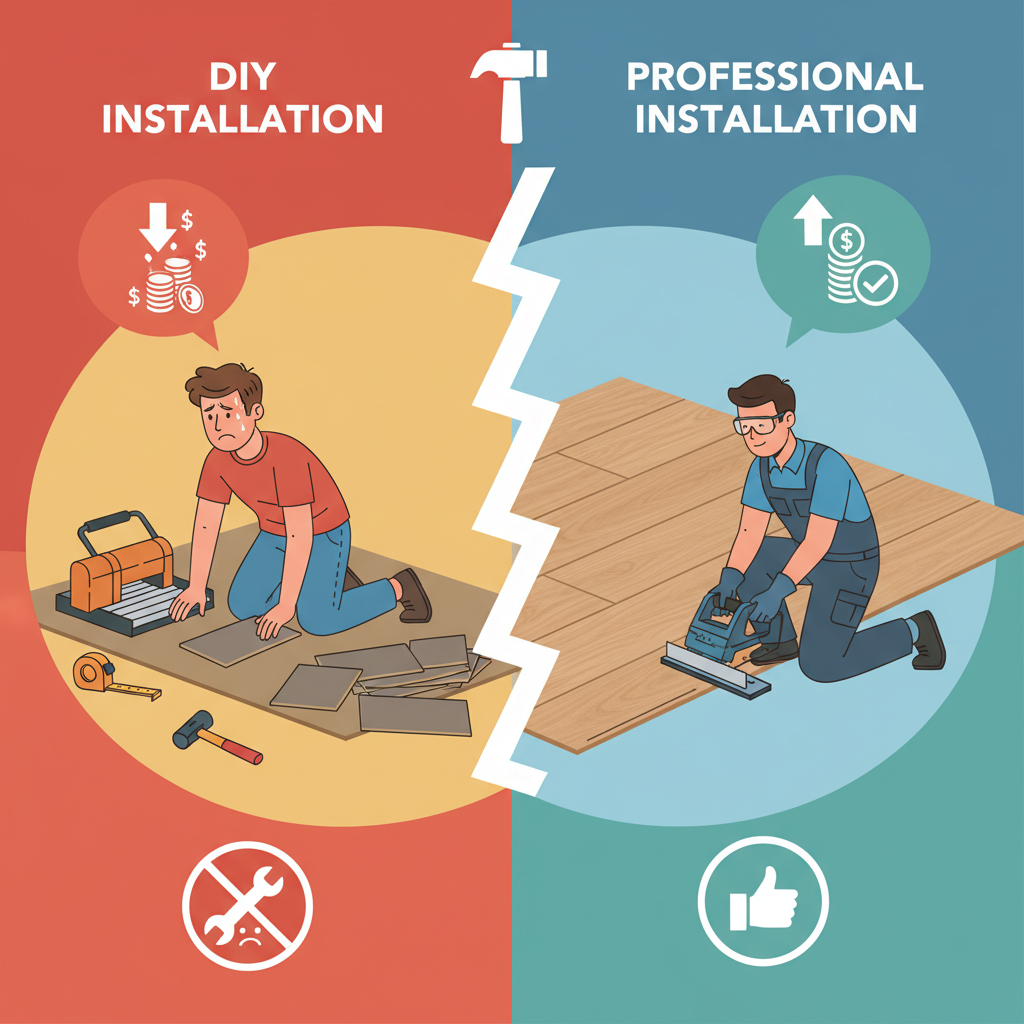
The allure of a DIY flooring installation is almost always financial. When you look at the sticker price of the planks, adding a massive labor fee on top can feel like a tough pill to swallow. However, making the choice between DIY vs professional hybrid flooring installation requires looking far beyond the initial quote.
Data from HomeAdvisor and Angi reveals that professional installation typically adds 30% to 50% to the total project cost [1]. While saving that money is tempting, it is crucial to weigh the true financial and physical costs of doing it yourself. Flooring installation is grueling work. As many licensed general contractors will warn you, homeowners frequently calculate the cost of materials but entirely forget to calculate the physical toll. Spending an entire weekend on your hands and knees maneuvering heavy planks is a fast track to severe back and knee pain for the uninitiated.
Furthermore, mistakes are expensive. According to Remodeling Magazine’s Cost vs. Value Report, DIYers typically waste 5% to 10% more material on bad cuts compared to seasoned professionals [2]. When you are working with premium Bravewood hybrid flooring, those miscuts add up quickly.
Calculating the Hidden Costs of DIY Flooring
When evaluating your flooring installation cost vs DIY savings, you must factor in the easily forgotten expenses that eat into your bottom line. A true DIY budget should include this mini-checklist of hidden costs:
- Tool Acquisition and Rentals: Do you own a jamb saw, a high-quality tapping block, or a heavy-duty flooring cutter? Renting or buying these tools can easily add hundreds of dollars to your project.
- Consumables: Underlayment tape, premium saw blade replacements (hybrid cores dull standard blades rapidly), and heavy-duty knee pads are non-negotiable expenses.
- Wasted Planks: As mentioned, factor in an extra 10% material cost for inevitable miscuts, especially around tricky angles and closets.
- Your Time: What is the value of your weekend? A project that takes a professional crew one day might take a solo DIY beginner three to four days of exhausting labor.
When to Hire a Professional Flooring Installer (and How to Vet Them)
If you have reviewed the hidden costs and physical demands and decided that DIY is not for you, the next step is to hire a professional flooring installer. However, not all contractors are created equal.
Hiring the right person does more than just save your knees; it protects your investment. The National Wood Flooring Association (NWFA) notes that hiring a certified installer can actually extend your flooring warranty by up to 5 years, depending on the specific manufacturer’s terms [3].
To avoid scams and poor workmanship, use this vetting guide and ask these mandatory questions:
- Are you certified by the NWFA or a similar recognized industry body? (The NWFA Certified Professionals directory is the gold standard for finding vetted pros [3]).
- Does your quote include subfloor preparation and leveling, or is that billed hourly?
- How do you handle undercutting door jambs and baseboards?
- Will you be responsible for the removal and disposal of the old flooring?
- Can you provide proof of insurance and three recent references for hybrid hardwood installations?
Pre-Installation: The Make-or-Break Phases for Bravewood Hybrid Flooring
Whether you are hiring a pro or taking the DIY route, the success of your Bravewood hybrid flooring depends entirely on what happens before a single plank is laid. The preparation phases dictate the lifespan of the floor. According to standards set by the World Floor Covering Association (WFCA), improper subfloor preparation accounts for a staggering 70% of all hybrid flooring failures [4].
Essential Tools for an Easy DIY Hybrid Flooring Guide
If you are committing to the DIY path, having the right tools is the difference between a weekend of frustration and an easy DIY hybrid flooring guide experience.
Alongside your standard tape measure, chalk line, and rubber mallet, prioritize ergonomic tools designed for beginners. For instance, insights from the DIY Network and Magnolia Network highlight that using a guillotine-style flooring cutter can reduce installation time by 30% compared to running back and forth to a power saw [5]. It also eliminates airborne dust, allowing you to cut planks directly in the room you are working in.
Your Weekend Warrior Tool Checklist:
- Guillotine-style flooring cutter
- Premium tapping block and pull bar
- Spacers (crucial for expansion gaps)
- Oscillating multi-tool (for door jambs)
- Long spirit level (at least 4 to 6 feet)
- Moisture meter
Subfloor Preparation: The #1 Cause of Flooring Failure
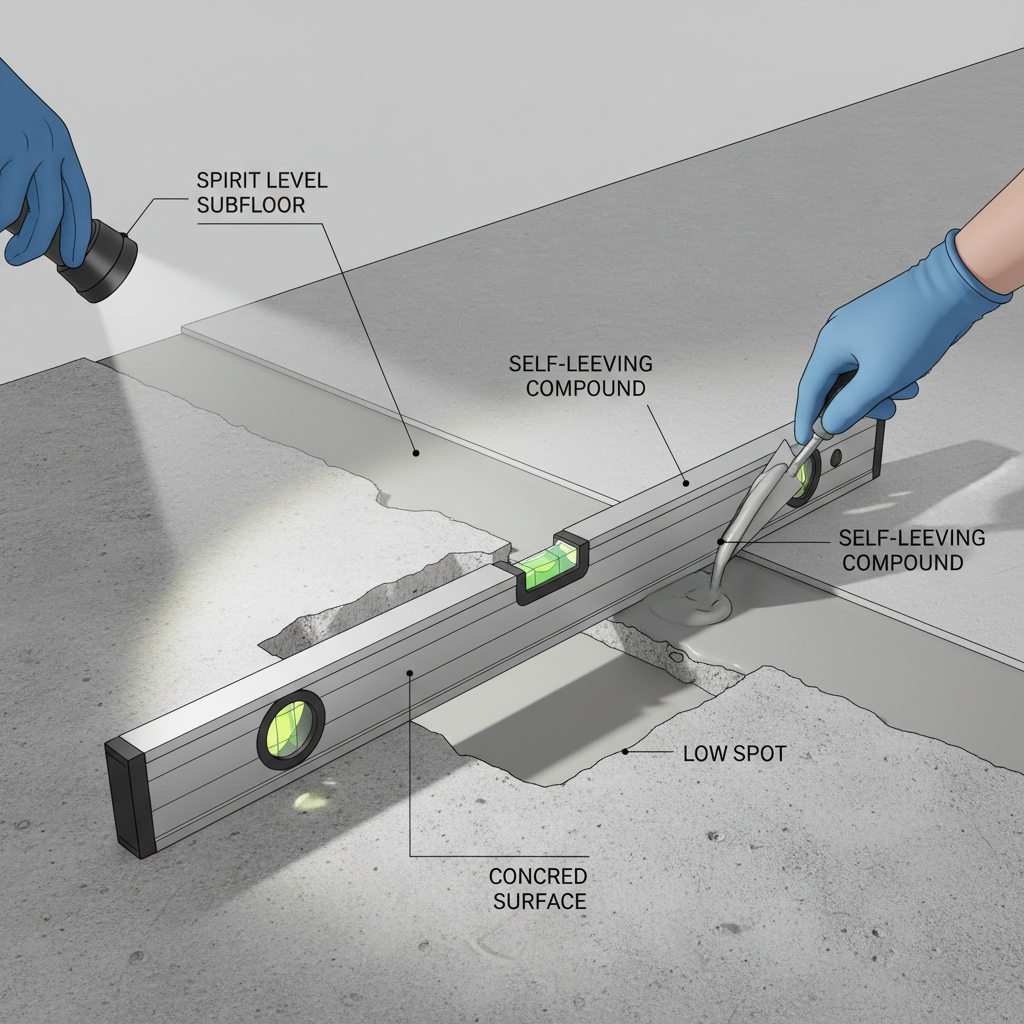
Hybrid hardwood installation is unforgiving when it comes to uneven subfloors. Because hybrid planks feature a rigid core, they will not bend to accommodate dips or hills in your concrete or plywood. If the subfloor is uneven, the locking mechanisms will eventually snap under foot traffic, leading to a ruined floor.
You must check for level, fill low spots with a self-leveling compound, and grind down high spots.
Pro Tip from Certified Flooring Installers (CFI): To properly find dips and hills, take a 6-foot long level or a perfectly straight edge and drag it slowly across the entire subfloor. Shine a flashlight behind the level; wherever light peeks through underneath, you have a low spot that must be marked and filled [6].
Step-by-Step Hybrid Hardwood Installation Guide: The Bravewood Method
This section is your highly visual, plain-English translation of the dense manufacturer manual. It is important to note that over 60% of hybrid hardwood today is installed using the floating click-lock method [7].
Disclaimer: The following steps explicitly state adherence to the Bravewood Official Installation Guidelines. Always cross-reference with the physical manual included in your boxes to ensure you maintain your warranty.
Step 1: The Mandatory Acclimation Period
Wood and hybrid materials are porous and react to the environment. Before you install, the flooring must adapt to the temperature and humidity of the room to prevent future warping, expanding, or shrinking.
According to the official Bravewood Technical Documents, there is a strict requirement for a minimum 48-hour acclimation period before installation [8]. Leave the boxes flat on the floor in the center of the room, ideally with the HVAC system running at normal living conditions. Skipping this step is the fastest way to void your Bravewood installation instructions warranty.
Step 2: Mastering the First Row and Expansion Gaps
The first row dictates the straightness of the entire room. If your first row is off by even a fraction of an inch, the final row will be crooked.
More importantly, you must respect the expansion gap. Hybrid flooring expands and contracts with seasonal temperature changes. If the floor is pinched against the drywall, it has nowhere to go but up. Place your spacers against the wall and lay your first plank. Ensure the tongue side is facing the wall and the groove side is facing out into the room, ready to receive the next row.
Step 3: Engaging the Bravewood Click-Lock Mechanism
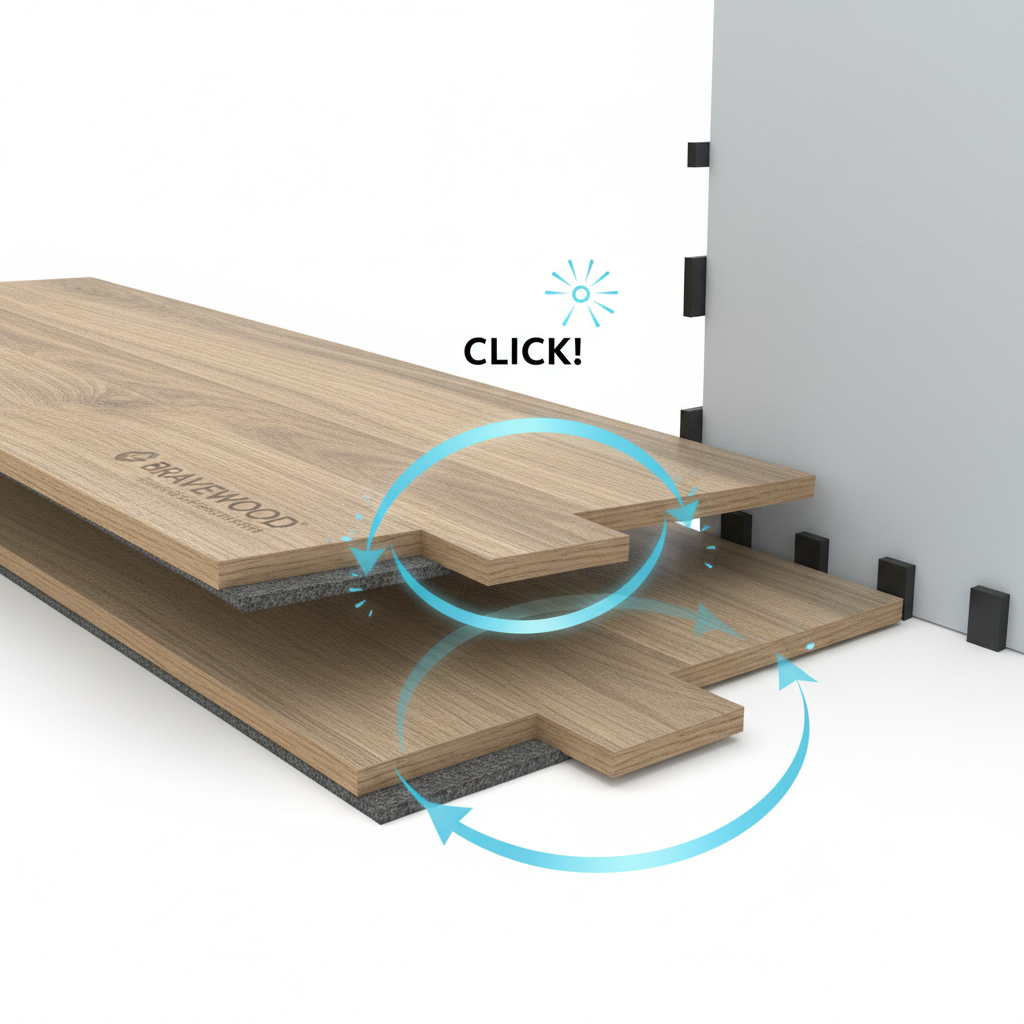
Many beginners find it hard to install hybrid hardwood because they force the planks together, breaking the delicate locking tongues. Bravewood uses a specific angle-and-click mechanism.
To lock the planks together without breaking the tongue, insert the long edge of the new plank into the groove of the established row at a slight 20-to-30-degree angle. Push inward gently while lowering the plank flat to the floor. You should feel a distinct “click.”
Only use a tapping block when the plank is already lying flat to close hairline gaps. Never strike the locking edge directly with a hammer.
Step 4: Navigating Tricky Zones (Door Jambs and Transitions)
The most common stumbling block in any step by step hybrid hardwood installation guide is dealing with doorways. You should never cut the flooring to trace the shape of the door frame; instead, you must undercut the door jamb so the flooring slides cleanly underneath it, hiding the cut edge.
Incorporate technical building techniques recommended by ProTradeCraft: Use an oscillating multi-tool for flush door jamb cuts [9]. Place a scrap piece of your Bravewood flooring (with the underlayment attached) flat against the door frame. Rest the blade of your oscillating tool flat on top of the scrap piece and plunge it into the wooden door casing. This guarantees the cut is the exact height needed for the new floor to slide underneath seamlessly.
Top Hybrid Flooring Installation Mistakes (and the ‘Mistake Autopsy’)
Even with a comprehensive guide, errors happen. This troubleshooting section focuses on preventative measures and post-installation fixes for the most common hybrid flooring installation mistakes.
The Mistake Autopsy: The Buckled Floor
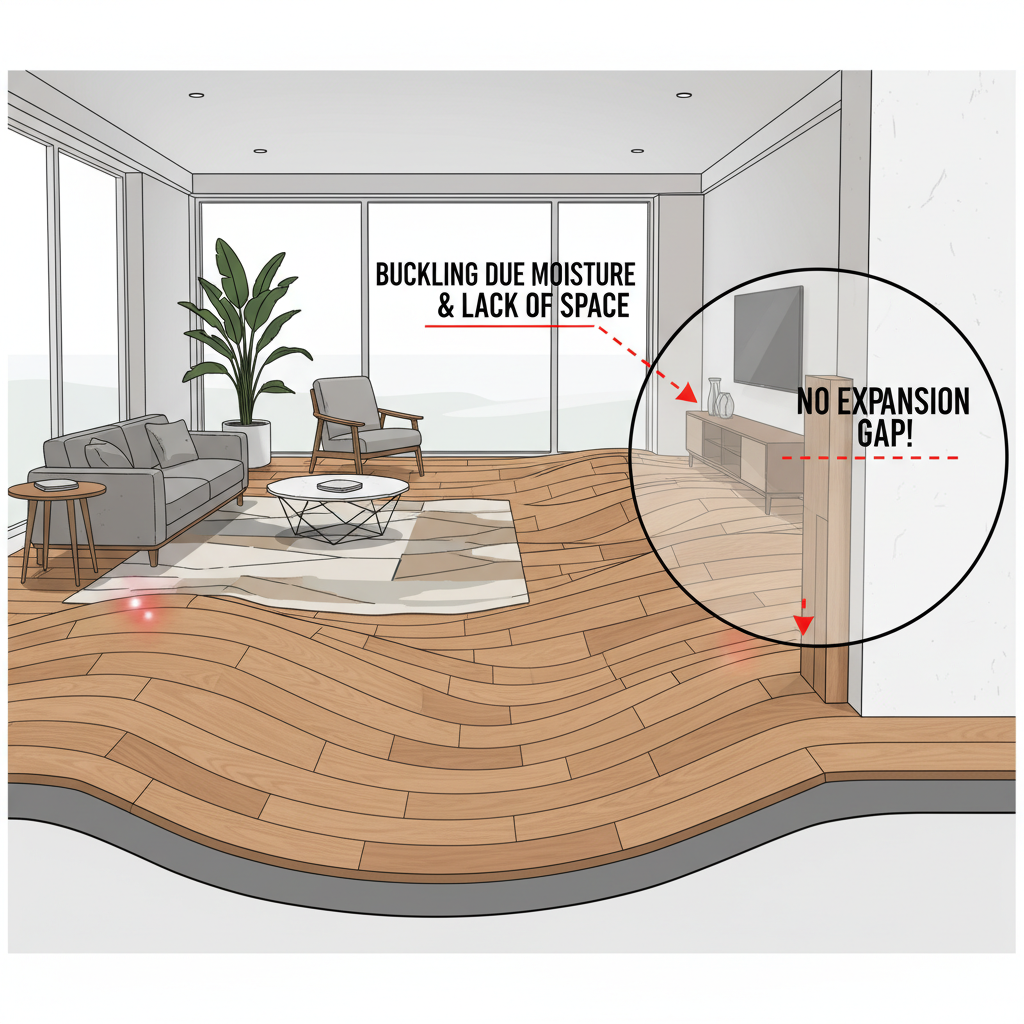
Imagine a beautifully installed living room floor that, three months later, looks like a roller coaster track with massive humps in the center of the room. What went wrong?
According to data from Certified Flooring Installers (CFI), not leaving adequate expansion gaps causes over 80% of buckling issues in floating floors [10]. In this “autopsy,” a flooring inspector would pull up the baseboards and find that the planks were installed completely flush against the drywall. When summer humidity hit, the floor expanded, hit the wall, and was forced upward.
Why is My Hybrid Flooring Buckling or Peaking?
Buckling (lifting off the subfloor) and peaking (where two planks push against each other at the seams, creating a sharp ridge) are almost always caused by thermal expansion combined with a pinched floor. A floor can be pinched by a lack of expansion gaps around the perimeter, or by installing heavy permanent cabinetry directly on top of a floating floor.
The Fix: If you are experiencing peaking, you do not necessarily have to tear up the whole room.
- Remove the baseboards or quarter-round molding along the walls parallel to the peaking planks.
- Check the expansion gap. You will likely find the flooring is touching the wall.
- Use an oscillating multi-tool or a toe-kick saw to carefully trim 1/4 inch off the edge of the flooring while it is still on the ground.
- Once the pressure is relieved, the peaked planks should settle back down flat. You may need to place heavy weights on the peaked seam for a few days to help the locking mechanism relax back into place.
Conclusion
Bravewood hybrid hardwood is a phenomenal investment that brings lasting beauty and durability to your home. However, its long-term success relies entirely on meticulous subfloor preparation and an unwavering respect for expansion gaps.
By utilizing the DIY vs. Pro framework, you can make an empowered decision about who should handle the installation. If you are ready to tackle it yourself, gather your ergonomic tools, respect the acclimation period, and follow the Bravewood method step-by-step. If you prefer the peace of mind that comes with a warranty-backed professional installation, use the NWFA directory to find a certified expert in your area.
Standard DIY disclaimer: Home improvement projects carry inherent physical and financial risks. Always consult the official manufacturer’s manual before beginning to avoid voiding your warranty.
References and Authoritative Sources
- HomeAdvisor / Angi. (N.D.). Data on average professional installation costs. Retrieved from angi.com / homeadvisor.com
- Remodeling Magazine. (N.D.). Cost vs. Value Report.
- National Wood Flooring Association (NWFA). (N.D.). NWFA Certified Professionals directory.
- The World Floor Covering Association (WFCA). (N.D.). Standards for subfloor preparation.
- DIY Network / Magnolia Network. (N.D.). Accessible home improvement content.
- Certified Flooring Installers (CFI). (N.D.). Expertise in installation troubleshooting.
- Floor Covering Installer Magazine. (N.D.). Industry standard installation techniques.
- Bravewood Flooring. (N.D.). Official Technical Documents and Installation Guidelines. Retrieved from bravewoodflooring.com
- ProTradeCraft. (N.D.). Technical building and installation techniques.
- Certified Flooring Installers (CFI). (N.D.). Expertise in installation troubleshooting (Buckling and Expansion Gaps).
