
We have all experienced the frustration of the “Fast Furniture Crisis.” You purchase a sleek, modern-looking dining table or a trendy dresser, only to find it wobbling, sagging, or peeling within a few short years. It is a cycle of wasting money on mass-produced pieces engineered for obsolescence rather than endurance. The core problem for most consumers isn’t a lack of taste, but a lack of technical knowledge. Without understanding the mechanics of joinery or the science of wood movement, it is nearly impossible to spot the deceptive manufacturing techniques hiding beneath a glossy veneer.
This article serves as your ultimate buyer’s defense guide. By demystifying the engineering behind high-integrity custom furniture, we will empower you to look beyond the surface. Furthermore, we will explore the exceptional work of Bravewood craftsmanship as the ultimate case study in functional, heirloom-grade art. From the science of structural stability and material selection to the true economics of bespoke building and practical repair triage, this guide will transform how you evaluate, purchase, and maintain wooden furniture.
- The Fast Furniture Crisis: Why Mass-Produced Furniture Keeps Breaking
- The Science of Structural Integrity in Custom Furniture Building
- Material Mastery: Selecting Exceptional Quality Durable Wood Products
- The Bravewood Craftsmanship Standard: A Case Study in High-Integrity Building
- The Economics of Heirloom Furniture: Is Custom Wood Furniture Worth It?
- Triage and Repair: How to Stabilize Flimsy Wood Furniture Issues
- Conclusion
- References
The Fast Furniture Crisis: Why Mass-Produced Furniture Keeps Breaking
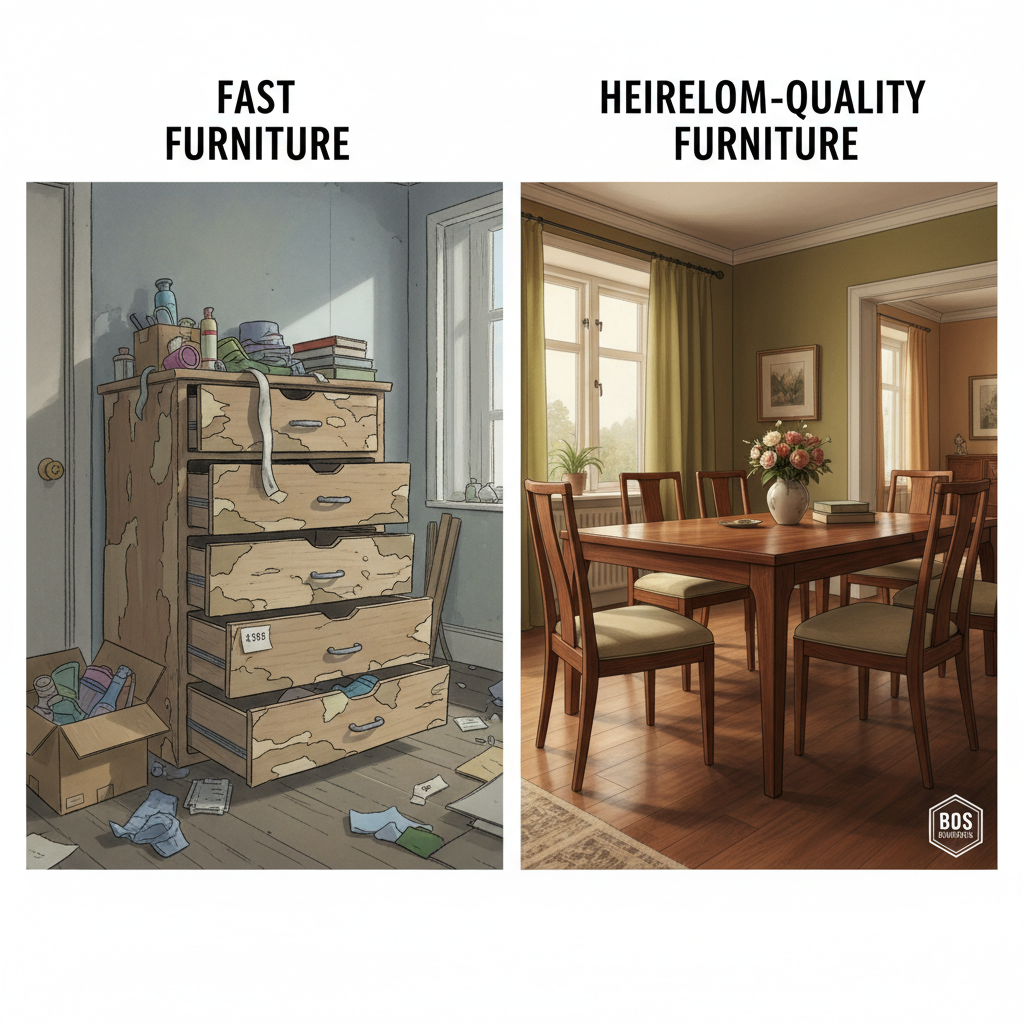
The modern furniture industry has undergone a radical transformation, prioritizing speed and cost-cutting over longevity. This phenomenon, often referred to as “fast furniture,” relies heavily on planned obsolescence—the intentional engineering of products to have a limited lifespan, forcing consumers into a continuous cycle of repurchasing.
A significant factor in mass-produced furniture breaking so quickly is the reliance on substandard materials. Data consistently shows that mass-produced furniture leans heavily on medium-density fiberboard (MDF) and low-grade plywood. These engineered woods lack the continuous grain structure of natural lumber, causing them to warp, swell, and degrade significantly faster than solid hardwoods when exposed to everyday wear and ambient humidity. According to industry insights from Smith Interior Design, the shift toward global manufacturing and outsourcing has drastically reduced quality control oversight, resulting in substandard glue applications and improper finishing in massive production batches [1].
Spotting the Red Flags of Poor Quality Construction
To protect your investment, you must learn to inspect furniture like a seasoned woodworker. Poor quality furniture construction often hides in plain sight, disguised by cosmetic fixes. One of the most effective ways to assess a piece on the showroom floor is the “shake test,” a method frequently recommended by interior designers in Business Insider to immediately gauge structural stability [2]. If a table or dresser sways or twists under gentle lateral pressure, it lacks the necessary internal bracing to survive daily use.
A critical red flag is the presence of gappy joints. Oak Castle Furniture notes that the “Solid Wood Trust Gap”—where consumers are misled by solid wood labels on poorly joined frames—is a pervasive issue, and gappy, misaligned joints are the number one revealing indicator of poor construction [3]. Manufacturers often use high-gloss finishes or thick layers of lacquer to fill these gaps and hide structural flaws. Additionally, side-by-side visual tear-downs reveal that cheap, mass-produced furniture relies heavily on butt joints fastened with staples and basic glue, whereas heirloom pieces utilize interlocking mechanical connections like dovetail or mortise-and-tenon joints.
The Science of Structural Integrity in Custom Furniture Building
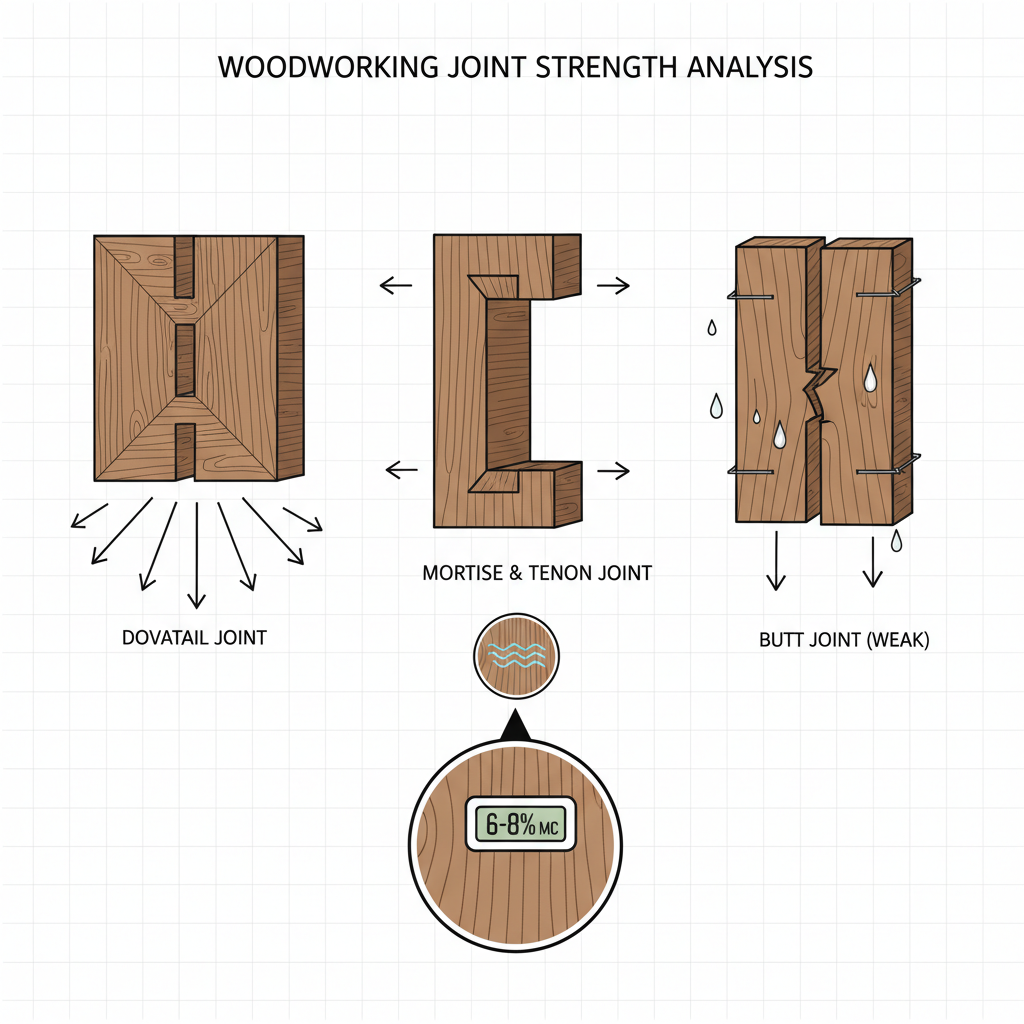
Transitioning from disposable goods to generational investments requires an understanding of the engineering behind furniture stability. True integrity in custom furniture building does not happen by accident; it is the result of precise joinery, structural engineering, and strict environmental controls during the build process.
A key concept in custom furniture building is preventing “racking”—the tendency of a square or rectangular frame to distort into a parallelogram under stress. CratesGalore provides excellent engineering-based explanations of this phenomenon, detailing how strategic cross-bracing and mechanical joinery distribute load-bearing stress evenly across the piece, preventing the wobble that plagues cheap furniture [4]. When assessing structural stability, master furniture makers rely on a strict checklist. Insights from Navillus Woodworks emphasize that true structural integrity requires accounting for wood movement, ensuring that panels can expand and contract within their frames without cracking the surrounding structure [5].
Moisture Management: The 6-8% Kiln-Dried Rule
At the heart of high integrity furniture building is the mastery of moisture. Wood is a hygroscopic material, meaning it acts like a sponge, constantly absorbing and releasing moisture in response to its environment. If this is not meticulously managed, even the strongest joints will fail.
Because regional climate and indoor heating dictate how wood behaves, the industry gold standard for indoor furniture stability is achieving a 6-8% moisture content. Forest 2 Home emphasizes the absolute necessity of using kiln-dried hardwood that has reached this precise 6-8% threshold before any cutting or gluing begins [6]. Failing to adhere to this standard leads to disaster. As noted by EverWoody, the hygroscopic properties of improperly dried wood will cause it to shrink violently in dry, air-conditioned homes, leading directly to open joints, split tabletops, and structural failure [7].
Material Mastery: Selecting Exceptional Quality Durable Wood Products
The foundation of any heirloom piece is the lumber itself. Selecting exceptional quality durable wood products requires moving beyond simple aesthetics and understanding the “Generational Durability” of different species.
To quantify this, woodworkers rely on the Janka hardness scale, which measures the resistance of a wood sample to denting and wear. According to The Wood Database, premium hardwoods boast impressive scores—for example, Walnut features a robust Janka rating of 1010, making it highly resistant to everyday impacts and decay [8]. When sourcing quality wood furniture, environmental responsibility is also paramount. Timber Products highlights the importance of seeking FSC (Forest Stewardship Council) certification, which ensures that the exceptional materials used are harvested sustainably, protecting global forests while providing top-tier lumber [9].
Solid Hardwood vs. High-Pressure Laminates
Consumers frequently ask about the difference between solid wood, veneers, and laminates. While solid wood is the gold standard, not all engineered surfaces are inherently bad—it depends on the application. Furniture Fair provides expert retail perspectives on this, noting that high-quality, thermally-fused laminates can offer excellent scratch resistance for commercial environments, but they cannot be sanded or refinished [10].
For true heirloom pieces, FAS-grade solid hardwoods (the highest grade available, yielding long, clear cuts) remain the benchmark. For outdoor or extreme-use indoor applications, Cardinal Patio Furniture points to ultra-dense materials like Ipe, which boasts Class-1 durability and unmatched dimensional stability, representing the pinnacle of material mastery [11].
The Bravewood Craftsmanship Standard: A Case Study in High-Integrity Building
To truly understand what separates fast furniture from functional art, we can look to the Bravewood craftsmanship standard. Bravewood has positioned itself as the ultimate solution to the disposable furniture crisis by creating highly customized, visually striking pieces that refuse to compromise on structural integrity.
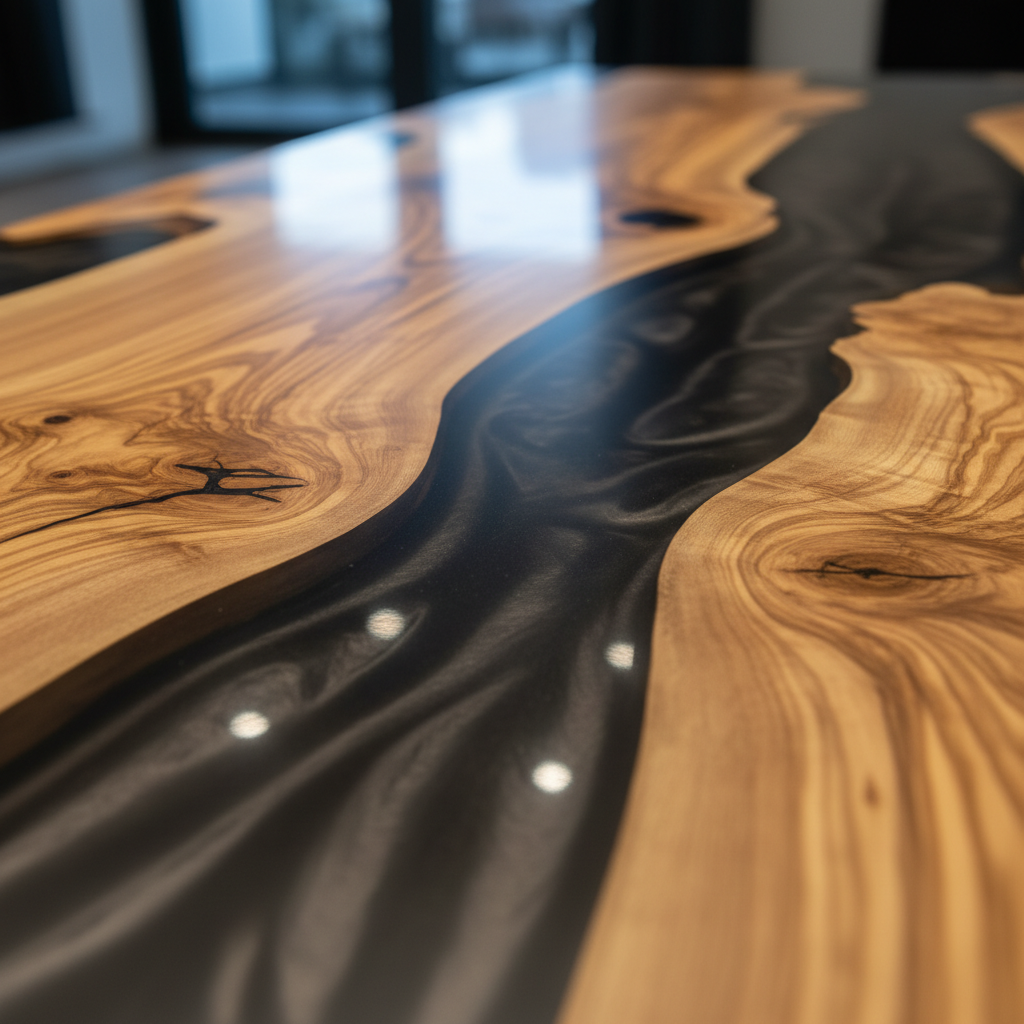
A hallmark of why choose Bravewood custom furniture is their specific material selection. Their artisans frequently utilize premium olive wood, known for its dense, swirling grain patterns, seamlessly integrated with a specialized epoxy finish palette featuring clear and smoke resins. This combination of traditional woodworking and modern resin application creates a durable, unified surface. The proof of their quality lies in their customer satisfaction; Etsy Verified Reviews showcase over 100+ positive ratings, providing strong third-party social proof of their exceptional build quality and aesthetic appeal [12].
Transparent Timelines and Bespoke Epoxy Techniques
One of the primary anxieties buyers face when commissioning custom furniture is opaque timelines and hidden costs. Bravewood directly addresses this by maintaining strict operational transparency. According to the Bravewood Design Official Store, custom epoxy tables start at approximately $949, and their standard cargo production process takes exactly 3-4 weeks [13]. This precise timeline allows for the meticulous pouring, curing, and finishing of their epoxy—a stark contrast to the flash-cured, brittle resins used in cheaper, mass-market alternatives.
To ensure these epoxy-wood hybrid tables last a lifetime, proper maintenance is required. Unlike standard wood, epoxy surfaces should be cleaned with gentle, non-abrasive microfiber cloths and mild soapy water. Avoid harsh chemical solvents or abrasive scouring pads, which can dull the resin’s finish. A high-quality automotive or specialized epoxy polish can be applied annually to maintain the glass-like sheen of the resin, while the exposed olive wood should be periodically conditioned with a natural hard-wax oil to prevent drying.
The Economics of Heirloom Furniture: Is Custom Wood Furniture Worth It?
When faced with the upfront price of bespoke pieces, consumers naturally wonder if long lasting custom furniture is truly worth the investment. The answer lies in a simple “Cost Per Year” analysis.
Mass-produced furniture typically has a lifespan of 5-10 years before it requires replacement due to structural failure or aesthetic degradation. In contrast, custom solid wood furniture is engineered to last 50+ years, often spanning multiple generations. When you divide the initial cost by the decades of use, durable wood furniture solutions are significantly cheaper in the long run. Luke’s Furniture Company reinforces this reality, highlighting that the ROI of luxury custom furniture extends beyond mere finances; it encompasses the sustainability of keeping disposable goods out of landfills and the daily joy of interacting with true craftsmanship [14].
Triage and Repair: How to Stabilize Flimsy Wood Furniture Issues
If you are currently dealing with flimsy wood furniture issues in your home, you don’t necessarily have to throw the piece away immediately. By categorizing defects into critical (safety hazards), major (functional), and minor (cosmetic), you can apply effective DIY triage.
For wobbly tables or chairs—a major functional defect—Woodcraft recommends practical stabilization fixes such as leveling uneven legs, injecting wood glue into loose mortises, and installing hidden steel corner brackets or cross-braces to restore rigidity [15]. Another highly effective way to extend the lifespan of cheaper furniture is to upgrade the factory hardware. Replacing cheap, stripped screws with longer, thicker wood screws, and swapping out flimsy drawer slides for heavy-duty, ball-bearing runners can instantly improve the structural feel and daily utility of an otherwise unstable piece.
Conclusion
The divide between mass-produced fast furniture and high-integrity custom builds is not just a matter of price; it is a matter of engineering, material science, and respect for the craft. By understanding the red flags of poor construction—from gappy joints to improper moisture management—you can protect your investment and refuse to settle for planned obsolescence.
Custom furniture building, exemplified by the meticulous 3-4 week production timelines and premium olive wood and epoxy integrations of Bravewood, proves that furniture can be both a durable utility and generational functional art. We encourage you to perform the “shake test” on your current furniture today. If it fails to hold its ground, it may be time to explore Bravewood Design’s portfolio and commission an heirloom piece engineered to outlast us all.
Disclaimer: The information provided in this article is for educational and informational purposes only. While every effort has been made to ensure the accuracy of the woodworking and engineering principles discussed, readers should consult with professional furniture makers or structural experts before attempting major repairs or modifications to heavy furniture.
References
- Smith Interior Design. (N.D.). Insights on the shift toward global manufacturing and the fast furniture phenomenon.
- Business Insider. (N.D.). Interior Designer Interviews: Tips for spotting bad furniture.
- Oak Castle Furniture. (N.D.). The ‘Solid Wood Trust Gap’ and construction red flags. oakcastlefurniture.co.uk.
- CratesGalore. (N.D.). Engineering-based explanations of structural integrity, beam theory, and racking. cratesgalore.com.
- Navillus Woodworks. (N.D.). Insights from a master furniture maker on structural assessment and wood movement. navilluswoodworks.com.
- Forest 2 Home. (N.D.). Expertise in premium, kiln-dried hardwood sourcing and moisture management. forest2home.com.
- EverWoody. (N.D.). Manufacturer insights on moisture management, hardware failure, and defect categorization. everwoody.com.
- The Wood Database. (N.D.). Authoritative data on wood species and Janka hardness scores.
- Timber Products. (N.D.). Authoritative manufacturer of industrial wood products and FSC certified materials. timberproducts.com.
- Furniture Fair. (N.D.). Expert retail perspective on ranking wood durability and heirloom quality. furniturefair.net.
- Cardinal Patio Furniture. (N.D.). Strict material standards and technical data on high-performance woods like Ipe. cardinalpatiofurniture.com.
- Etsy Verified Reviews. (N.D.). Third-party social proof and customer satisfaction metrics for BraveWoodDesign. Etsy.
- Bravewood Design Official Store. (N.D.). Product specifications, finish options, and lead times. bravewooddesign.com.
- Luke’s Furniture Company. (N.D.). Expertise on the ROI, sustainability, and craftsmanship of luxury custom furniture. lukesfurniturecompany.com.
- Woodcraft. (N.D.). Expertise on stabilizing and repairing wobbly furniture through practical woodworking solutions. woodcraft.ca.
