
Choosing a new floor for your kitchen or bathroom can feel like a high-stakes decision. You want the timeless beauty of wood or the sleek look of modern tile, but a nagging fear holds you back: water. A single overflowing sink, a dishwasher leak, or even the daily splashes from the tub can lead to warped planks, ugly stains, and costly repairs. You’re not just choosing a floor; you’re trying to prevent a future disaster.
This is your indestructible floor playbook. We’re here to cut through the confusing marketing hype and technical jargon. Forget wondering what “water-resistant” really means or if “waterproof hardwood” is too good to be true. This definitive guide will empower you with the knowledge to invest with confidence. We’ll decode the technology behind today’s most durable flooring, compare the top options for high-moisture areas, and reveal the pro-level installation secrets that ensure your floor not only looks beautiful but lasts a lifetime.
- Why Kitchen and Bathroom Floors Fail: The Science of Water Damage
- Decoding the Tech: What Does “Waterproof Flooring” Really Mean?
- Top 4 Waterproof Flooring Options for Kitchens & Bathrooms
- Your Decision Framework: How to Choose the Perfect Floor
- Pro-Level Installation: Avoid These Common, Costly Mistakes
- The Foundation of a Worry-Free Home
- References & Authoritative Sources
Why Kitchen and Bathroom Floors Fail: The Science of Water Damage
Before finding the right solution, it’s crucial to understand the problem. Traditional flooring materials, especially solid hardwood, have a natural enemy: moisture. Wood is a porous material that acts like a sponge. When it absorbs water, it swells. When it dries, it shrinks. This constant battle with moisture leads to several common types of flooring failure.
According to the National Wood Flooring Association (NWFA), wood floors perform best when they are in balance with their environment, maintaining an equilibrium moisture content (EMC) of 6-9%[1]. When excessive water is introduced, that balance is destroyed, causing the wood fibers to expand and resulting in visible damage:
- Cupping: When the bottom of a floorboard absorbs more moisture than the top (often from a damp subfloor), the edges of the plank swell and rise higher than its center, creating a concave, “cupped” shape.
- Crowning: This is the opposite of cupping. It happens when the top surface of the board is exposed to more moisture than the bottom, causing the center to swell and bulge upwards, higher than the edges. This often occurs after a previously cupped floor is sanded flat before it has fully dried out.
- Buckling: This is the most extreme form of water damage. Buckling occurs when the flooring expands so much that it lifts completely off the subfloor, sometimes by several inches. It’s a clear sign of a major water event.
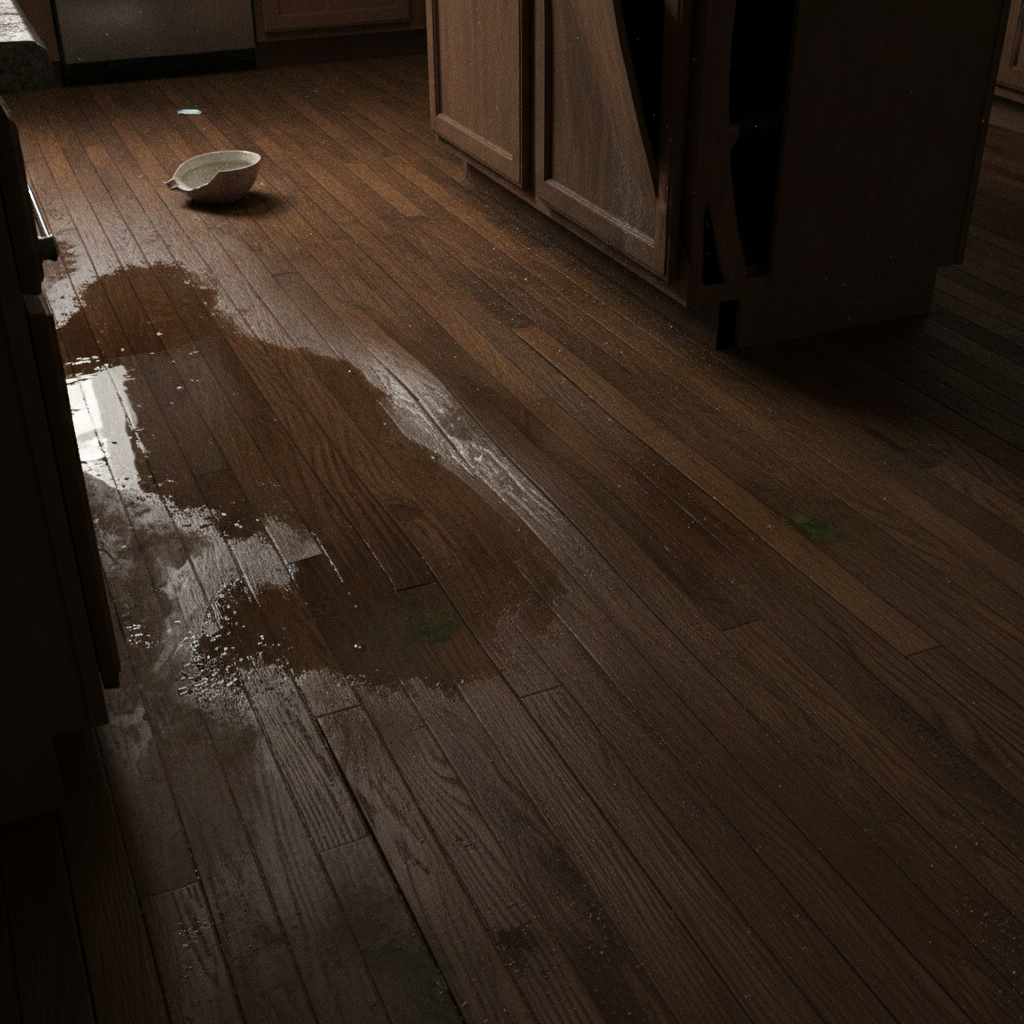
As certified water damage restoration professionals will attest, time is of the essence. The Institute of Inspection, Cleaning and Restoration Certification (IICRC) standards highlight a critical window: most wood floors can be saved if the water is thoroughly removed within 24-48 hours[2]. Beyond that, the risk of permanent damage and mold growth increases dramatically. This is why choosing a flooring material designed to handle water from the start is the best defense.
Decoding the Tech: What Does “Waterproof Flooring” Really Mean?
In the world of flooring, “waterproof” is one of the most powerful—and often misused—marketing terms. Understanding the technology behind the label is the first step to making a smart choice. The most critical distinction to grasp is between “waterproof” and “water-resistant.”
- Water-Resistant: This means the flooring can repel water for a limited time. Spills need to be wiped up quickly. Prolonged exposure will eventually cause the material to absorb moisture, leading to damage.
- Waterproof: This means the flooring material itself is impervious to water. It will not swell, warp, or degrade, no matter how long water sits on its surface. However, this doesn’t mean the entire installation is a waterproof barrier. Water can still find its way through seams or around the perimeter to damage the subfloor below.
To help clarify, let’s bust some common myths.
| Myth | Reality |
|---|---|
| Myth: All engineered hardwood is waterproof. | Reality: Only specific engineered hardwood products, often marketed as “hybrid hardwood,” are designed to be waterproof. This is due to a specialized waterproof core and top-coat finish. Traditional engineered hardwood with a plywood or HDF core is only water-resistant. |
| Myth: “Waterproof” means my subfloor is safe from leaks. | Reality: The planks themselves may be waterproof, but water can still seep through the locking systems or gaps at the edge of the room. Proper installation and, in some cases, additional sealants are key to protecting the subfloor. |
| Myth: Thicker flooring is always more durable and more waterproof. | Reality: Durability comes from the quality of the wear layer and the density of the core, not just the overall thickness. A thin plank with a robust wear layer and a dense SPC core can be far more durable than a thick, low-quality plank. |
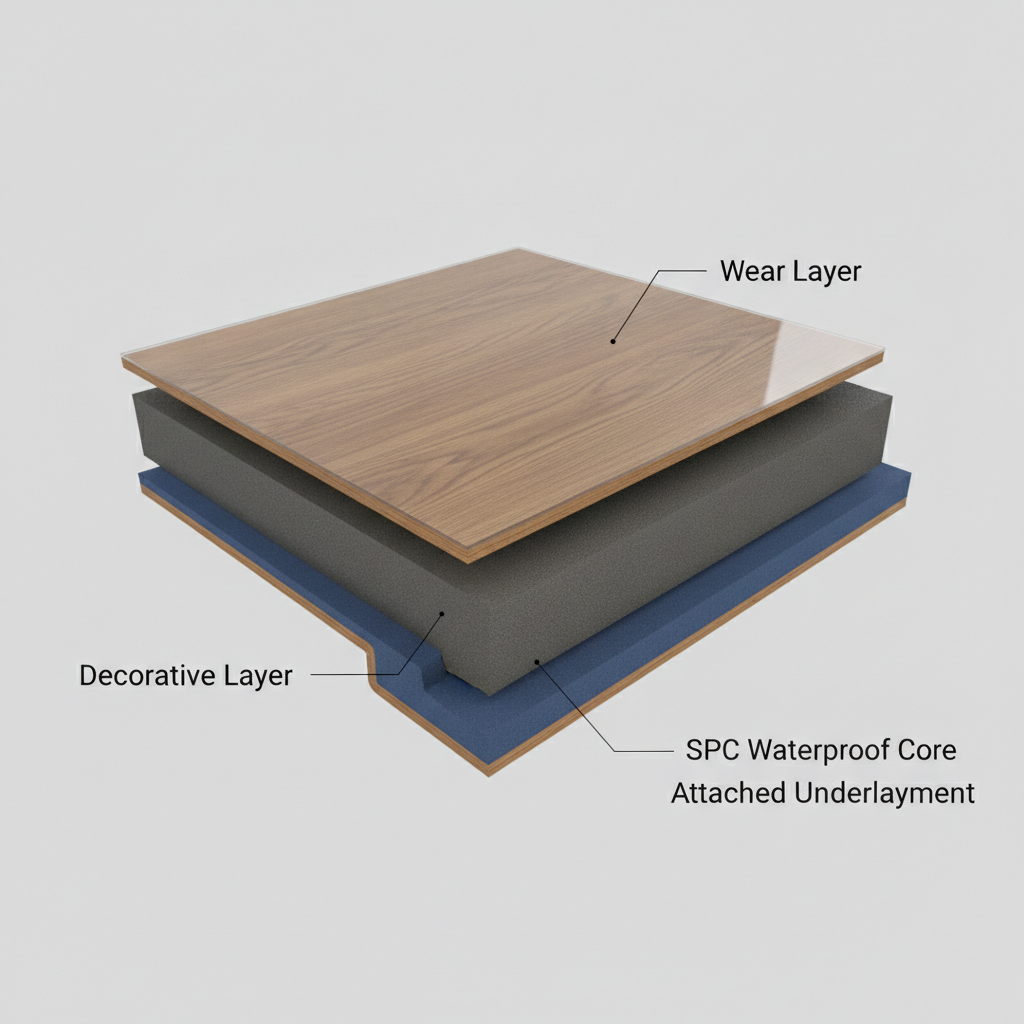
The magic behind modern waterproof flooring lies in its multi-layer construction. A typical waterproof hybrid plank is an engineering marvel:
- Wear Layer: A tough, transparent top coating (usually polyurethane) that resists scratches, stains, and UV fading.
- Decorative Layer: A high-resolution printed image that gives the plank its realistic wood or stone look.
- Waterproof Core: This is the most important layer. It’s typically made from either SPC or WPC.
- SPC (Stone Plastic Composite): A rigid, ultra-dense core made from a mixture of limestone powder (often around 60% of the composition), polyvinyl chloride, and stabilizers. SPC is known for its exceptional dent resistance and stability.
- WPC (Wood Plastic Composite): A slightly less dense core that incorporates wood pulp or flour with plastic composites. WPC is lighter, softer, and quieter underfoot than SPC but can be more susceptible to dents.
- Attached Underlayment: Many waterproof floors come with a pre-attached acoustic pad that provides cushioning, noise reduction, and a minor moisture barrier.
Top 4 Waterproof Flooring Options for Kitchens & Bathrooms
Now that you understand the technology, let’s compare the leading contenders. Each has a unique profile of strengths and weaknesses, making them suitable for different priorities and budgets.
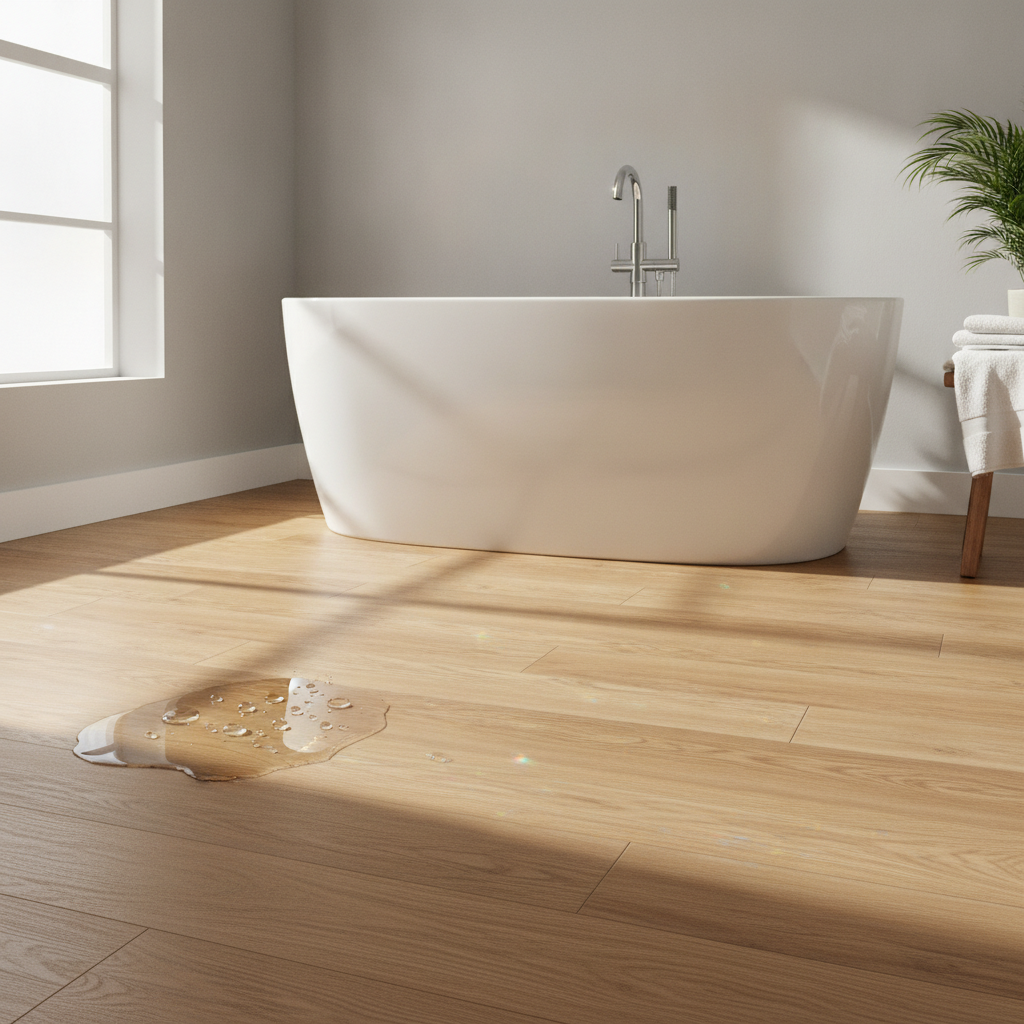
Wet Area Flooring Scorecard
| Flooring Type | Waterproofness (1-5) | Durability (1-5) | Avg. Cost (1-5) | Style & Realism (1-5) |
|---|---|---|---|---|
| Waterproof Hybrid Hardwood | 4 | 4 | 5 | 5 |
| Hybrid Vinyl (SPC/WPC) | 5 | 5 | 3 | 4 |
| Luxury Vinyl Plank (LVP) | 5 | 4 | 2 | 4 |
| Porcelain & Ceramic Tile | 5 | 5 | 4 | 3 |
1. Waterproof Hybrid Hardwood (Engineered Hardwood)
For those who refuse to compromise on the authentic look and feel of real wood, waterproof hybrid hardwood is a game-changer. It combines a genuine wood veneer top layer with a waterproof composite core (typically SPC). This gives you the natural beauty of oak, hickory, or maple on the surface, with a core that won’t swell or warp when exposed to moisture.
The key is understanding that while the core is 100% waterproof, the top layer is still real wood and should be cared for accordingly. The surface is protected by a highly durable wear layer, often between 12 to 20 mil thick, which repels water and prevents it from reaching the wood veneer. So, is it truly waterproof? The core is, which prevents the structural failures like cupping and buckling seen in traditional hardwood. It offers the best of both worlds: genuine wood aesthetics with peace of mind in the kitchen.
2. Hybrid Vinyl Flooring (SPC & WPC Core)
Often called rigid core flooring, this category has exploded in popularity for good reason. It takes the best qualities of laminate and vinyl and combines them into one superior product. It has the rigidity and durability of laminate but is made from completely waterproof materials like vinyl. This makes it an ideal choice for any room in the house, including bathrooms and basements.
The primary difference comes down to the core:
| Feature | SPC (Stone Plastic Composite) | WPC (Wood Plastic Composite) |
|---|---|---|
| Composition | Limestone, PVC, Stabilizers | Wood Pulp, PVC, Foaming Agents |
| Feel | Extremely rigid and dense | Softer, more resilient |
| Dent Resistance | Highest | Good |
| Comfort | Firmer underfoot | Quieter and warmer underfoot |
| Best For | High-traffic areas, heavy furniture, temperature fluctuations | Homes where comfort and acoustics are a top priority |
When people ask if hybrid flooring is better than laminate, the answer in wet areas is a definitive yes. While modern laminate has improved water resistance, its fiberboard core will eventually swell with prolonged water exposure. Hybrid vinyl’s composite core will not. Its performance is often backed by industry standards from organizations like ASTM International, which sets benchmarks for things like wear and impact resistance[3].
3. Luxury Vinyl Plank/Tile (LVP/LVT)
Luxury vinyl has been a go-to waterproof solution for years and continues to be a top performer, especially for budget-conscious renovators. Its popularity is undeniable; LVT has seen a 20% increase in market share for kitchen renovations in recent years. Made entirely of PVC, the material itself is 100% waterproof.
The single most important factor determining LVP’s durability is its wear layer. This is the transparent top coat that protects the printed design layer from scratches, scuffs, and stains.
- 6-12 mil: Suitable for low-traffic residential areas like bedrooms.
- 12-20 mil: Recommended for moderate to high-traffic areas like kitchens, hallways, and living rooms.
- 20+ mil: The gold standard for busy homes with pets and kids, or for light commercial use.
While the planks are waterproof, it’s crucial to remember that the seams between them are potential weak points. A well-installed LVP floor with tight seams will be highly effective at keeping surface spills from reaching the subfloor, but it won’t protect against a major flood.
4. Porcelain & Ceramic Tile
When absolute, unquestionable waterproof performance is the top priority, tile is the undisputed champion. As defined by the American Society for Testing and Materials (ASTM C373), porcelain tile has a water absorption rate of 0.5% or less, making it impervious to water[4]. It will not be damaged by any amount of water, making it the perfect choice for bathrooms, shower surrounds, and mudrooms.
To choose the right tile, look for two key ratings:
- PEI Rating (Porcelain Enamel Institute): This measures the wear resistance and durability of the tile’s glaze. For high-traffic kitchen floors, look for a PEI rating of 4 (suitable for all residential traffic) or 5 (suitable for heavy residential and light commercial traffic).
- DCOF Rating (Dynamic Coefficient of Friction): This is a critical safety measure of slip resistance. The Tile Council of North America (TCNA) recommends a DCOF rating of 0.42 or greater for level interior spaces expected to be walked upon when wet, like a bathroom floor[5].
Your Decision Framework: How to Choose the Perfect Floor
With a solid understanding of the top options, you can now select the perfect floor based on your lifestyle, budget, and design goals. Use this framework to guide your decision.
- Durability: How much traffic will the floor see? Do you have pets or kids? If so, prioritize a thick wear layer (20+ mil LVP/Hybrid) or a high PEI rating (4-5 for tile).
- Style: What is your design aesthetic? If only the look of real wood will do, waterproof hybrid hardwood is your answer. If you want a vast array of wood, stone, or abstract looks, hybrid vinyl and LVP offer endless options.
- Comfort: How important is warmth and quietness underfoot? WPC hybrid flooring and LVP with a thick underlayment will be much more comfortable and quiet than rigid SPC or tile.
- Maintenance: All these options are relatively low-maintenance, requiring simple sweeping and damp mopping. Tile, however, has grout lines that will need periodic cleaning and sealing to prevent staining.
- Cost: LVP is typically the most budget-friendly option, followed by hybrid vinyl. Tile and waterproof hybrid hardwood represent a higher upfront investment but can offer greater long-term value and home resale appeal.
- Installation: Are you a DIYer? LVP and hybrid flooring with click-lock systems are very DIY-friendly. Tile installation is more labor-intensive and generally best left to professionals.
Special Consideration: The Best Flooring for Homes with Pets and Kids
Life with children and pets places extreme demands on a floor. You need a surface that can handle scratches from dog nails, spills from sippy cups, and the general chaos of a busy household.
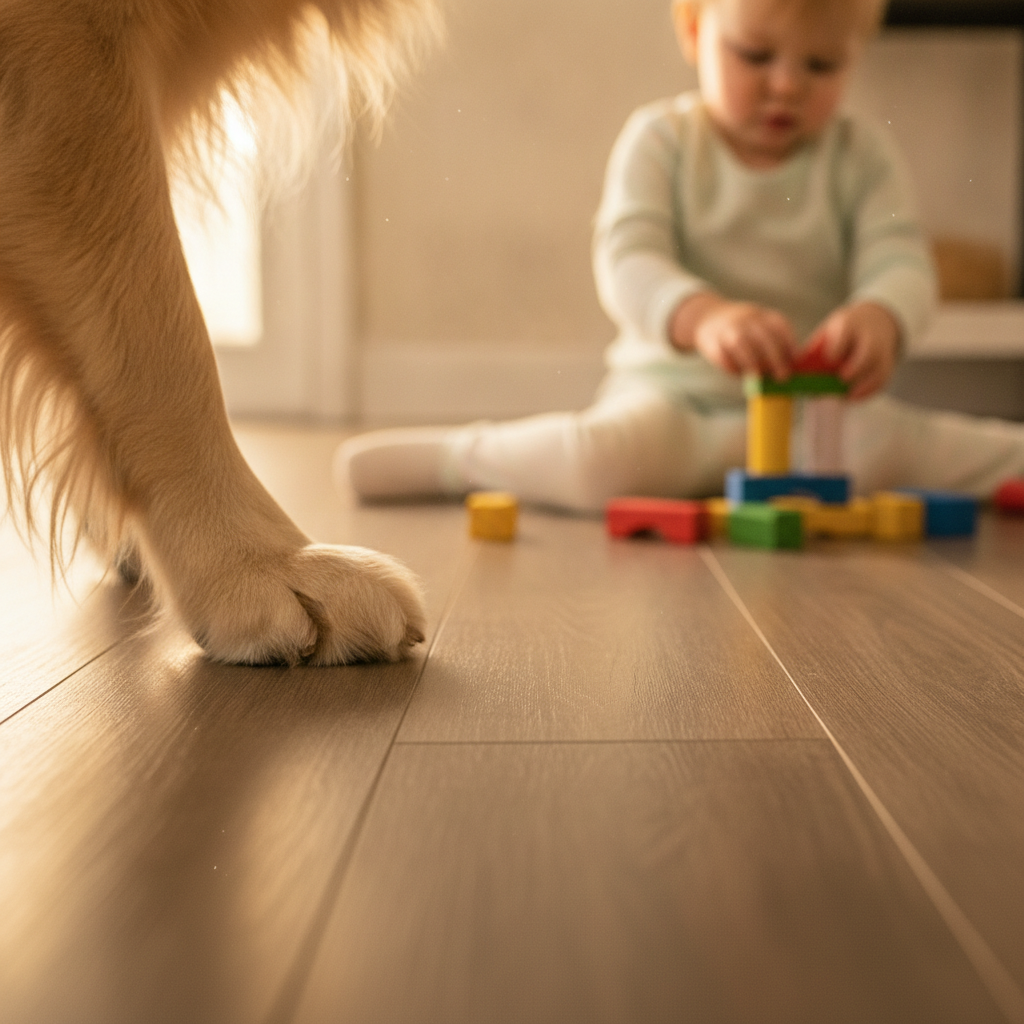
Family-Proof Scorecard
| Criteria | LVP (20+ mil wear layer) | Hybrid Vinyl (SPC Core) | Porcelain Tile (PEI 4+) |
|---|---|---|---|
| Scratch Resistance | Excellent | Excellent | Ultimate |
| Stain Resistance | Excellent | Excellent | Excellent (Grout is vulnerable) |
| Waterproof | Yes | Yes | Yes (Impervious) |
| Comfort/Safety | Good (Softer on falls) | Good | Poor (Hard, slippery when wet) |
| Health (Low VOC) | Look for certification | Look for certification | Excellent (Inert material) |
For families, scratch resistance is paramount. Beyond that, consider safety and health. The American Kennel Club (AKC) often advises that very slick surfaces can be hard on dogs’ joints, so a floor with some texture is beneficial[6]. Additionally, look for products with FloorScore® or GREENGUARD Gold certifications. These independent standards verify that the flooring has low emissions of volatile organic compounds (VOCs), contributing to healthier indoor air quality for your family[7].
Pro-Level Installation: Avoid These Common, Costly Mistakes
You can choose the best, most expensive waterproof flooring in the world, but if it’s installed incorrectly, it will fail. The performance of your floor is just as dependent on the preparation and installation as it is on the product itself.
Certified Pro’s Corner
“The number one mistake I see homeowners and even some inexperienced installers make is improper subfloor preparation. They’re so eager to see the new floor down that they skip the most critical step. A floor that isn’t perfectly clean, flat, and dry is a recipe for disaster. You’ll get bouncy spots, separating planks, and a floor that fails years before it should.”
– Insight from a Certified Flooring Installers Association (CFI) member[8]
Whether you’re doing it yourself or hiring a professional, ensure these steps are followed:
- Subfloor Prep is Non-Negotiable: The subfloor must be Clean (free of all debris), Flat (typically within 3/16 of an inch over a 10-foot radius), and Dry (moisture-tested and within manufacturer specifications). Any dips or high spots must be leveled with a patching compound.
- Respect the Expansion Gap: All floating floors (like hybrid and LVP) expand and contract with temperature changes. A gap of 1/4 inch to 1/2 inch must be left around the entire perimeter of the room, including around cabinets and door jambs. This gap is hidden by baseboards and trim. Without it, the floor will buckle as it expands.
- Read the Instructions: Every manufacturer has specific requirements for their product regarding acclimation time, underlayment, and installation techniques. The manufacturer’s guide is the ultimate authority and following it is essential to keep your warranty intact.
The Foundation of a Worry-Free Home
Choosing the right flooring for your kitchen or bathroom is about more than just style; it’s about building a durable, worry-free foundation for your home. By moving beyond marketing buzzwords and understanding the technology—the waterproof cores, the resilient wear layers, and the critical industry ratings—you are now equipped to make an expert decision.
Whether you choose the unmatched authenticity of waterproof hybrid hardwood, the balanced performance of hybrid vinyl, or the impervious durability of porcelain tile, you know what to look for. And by recognizing that a flawless installation is just as important as a quality product, you can ensure your investment stands up to everything life throws at it. You haven’t just learned about flooring; you’ve gained the confidence to build a beautiful, functional space that will last for years to come.
This article may contain affiliate links. All recommendations are based on extensive research and expert opinion.
References & Authoritative Sources
- National Wood Flooring Association (NWFA). (N.D.). Technical Guidelines on Wood Flooring Installation and Maintenance.
- Institute of Inspection, Cleaning and Restoration Certification (IICRC). (N.D.). S500 Standard for Professional Water Damage Restoration.
- ASTM International. (N.D.). Published Standards for Resilient Flooring.
- ASTM International. (N.D.). ASTM C373: Standard Test Method for Water Absorption, Bulk Density, Apparent Porosity, and Apparent Specific Gravity of Fired Whiteware Products.
- Tile Council of North America (TCNA). (N.D.). TCNA Handbook for Ceramic, Glass, and Stone Tile Installation.
- American Kennel Club (AKC). (N.D.). Expert Advice on Pet-Safe Homes and Flooring.
- UL Solutions. (N.D.). GREENGUARD Certification Program & FloorScore® Certification.
- Certified Flooring Installers Association (CFI). (N.D.). Installation Best Practices and Training Manuals.
