
If you have ever watched a 70-pound Golden Retriever scramble across a newly installed floor or winced as a heavy dining chair was dragged across a room, you know the frustration of modern homeownership. We are constantly bombarded with marketing claims promising “100% scratch-proof” or “indestructible” surfaces, only to watch those same floors succumb to the realities of active kids, large pets, and daily life. It is time to look past the buzzwords and embrace a higher standard: adamantine flooring.
In the flooring industry, “adamantine” isn’t a specific brand you can pull off a shelf; it is a standard of extreme, diamond-like durability rooted in objective material science. This guide is designed to demystify the complex industry jargon—from Abrasion Class (AC) ratings to the Janka hardness scale—and provide you with a definitive framework for choosing truly life-proof flooring. By shifting your perspective from upfront pricing to a “Cost per Year of Lifespan” metric, we will help you make a confident, century-lasting investment that can withstand your household’s most extreme threats.
- What is Adamantine Flooring? Decoding the ‘Life-Proof’ Myth
- Top Long-Lasting Floor Materials for Heavy Traffic
- Calculating the True ROI: Cost per Year of Lifespan
- Diagnosing Flooring Wear and Tear vs. Actual Damage
- The Professional Triage Guide for Scratched Floors
- Strategic Material Placement for Specific Household Threats
- Conclusion
- References & Authoritative Sources
What is Adamantine Flooring? Decoding the ‘Life-Proof’ Myth
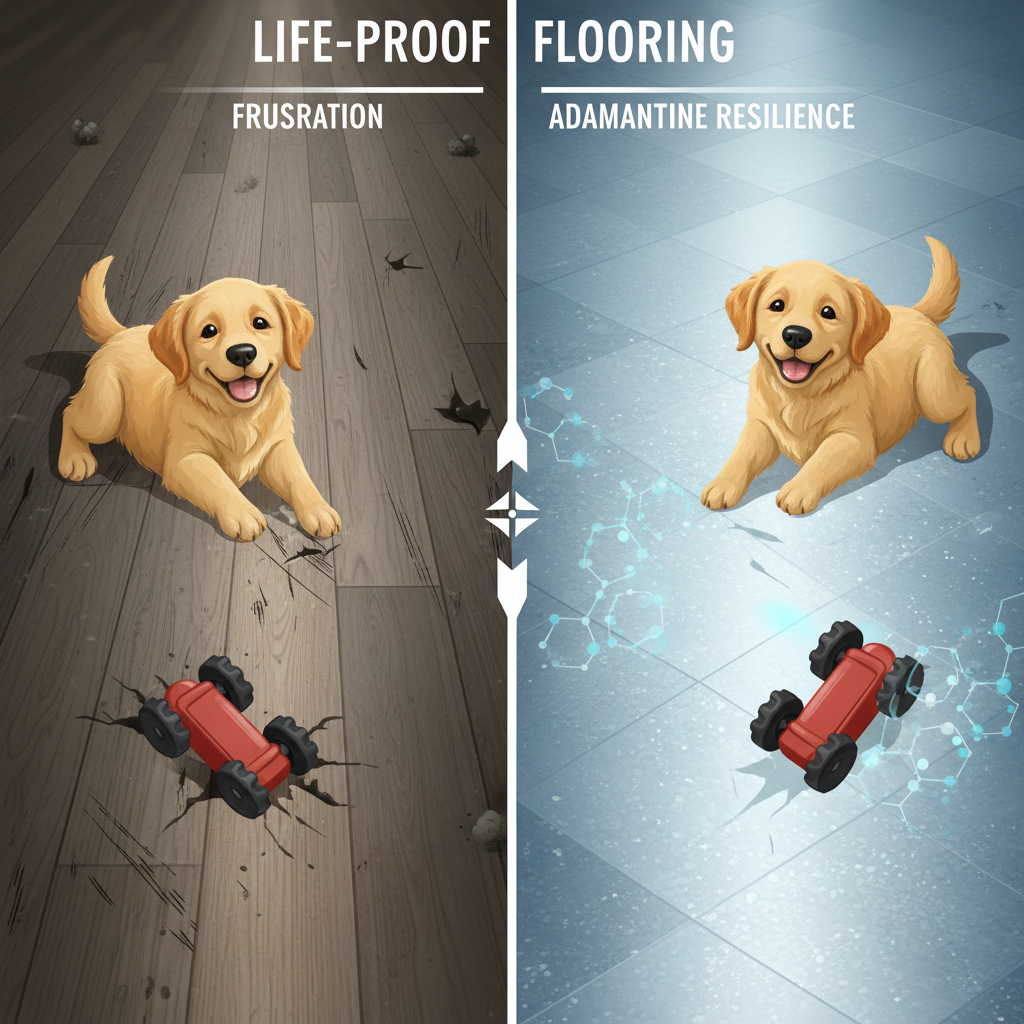
The term “adamantine” historically refers to something unbreakable or diamond-like in its hardness. In the context of residential design, adamantine flooring represents the absolute pinnacle of durable flooring. However, the consumer market is flooded with exaggerated claims. To separate marketing hype from actual material science, we must look at measurable manufacturing standards rather than generic adjectives.
True life-proof flooring is defined by its ability to resist specific types of degradation over decades. For natural materials, organizations like the National Wood Flooring Association (NWFA) provide rigorous baseline durability comparisons, helping consumers understand exactly how different species of wood will react to foot traffic and impacts [1].
Furthermore, extreme durability should never come at the expense of your family’s health. When evaluating synthetic adamantine options, it is crucial to look for FloorScore certifications. This standard ensures that the highly durable chemical composites and adhesives used in your flooring meet strict indoor air quality and material safety guidelines, proving that a floor can be tough on wear and tear while remaining safe for your home [2].
The Material Science Behind Extreme Durability
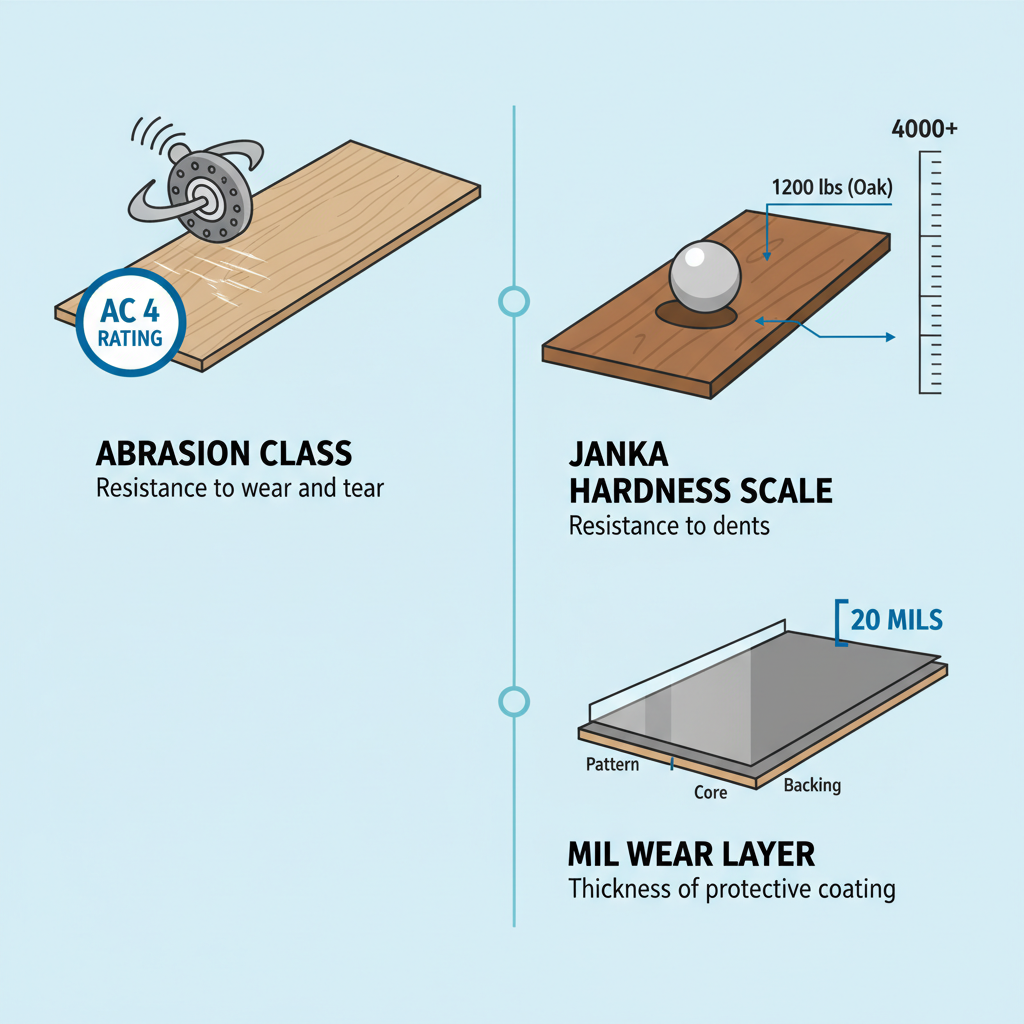
To find the best adamantine flooring for homes, you must learn to read the empirical measurement systems used by manufacturers to evaluate toughness.
For laminate flooring, durability is measured by the Abrasion Class (AC) rating system. This scale grades the material’s resistance to abrasion, impact, and staining. According to data compiled by industry experts at Bob Vila and BestLaminate, AC ratings of AC3 to AC4 are required for the best quality residential durability, capable of withstanding heavy foot traffic and large pets [3].
For natural wood, the Janka hardness scale measures the force required to embed a steel ball halfway into the wood, providing an objective number for dent resistance. Meanwhile, for luxury vinyl, true scratch resistance is evaluated by the thickness of its transparent wear layer, which is measured in “mils” (one-thousandth of an inch), not millimeters. Understanding these three metrics is the key to unlocking true adamantine performance.
Top Long-Lasting Floor Materials for Heavy Traffic
When categorizing the most durable flooring solutions, it is essential to match the material’s specific strengths against your unique household threats, whether that means standing water in a bathroom, heavy furniture in a living room, or pet claws in a hallway. The World Floor Covering Association (WFCA) provides extensive industry standards for longevity, noting that a floor’s lifespan is inextricably linked to its material composition and the environment in which it is installed [4].
SPC and High-Mil LVP: The Waterproof Champions
If your primary concerns are moisture and active pets, Stone Plastic Composite (SPC) and Luxury Vinyl Plank (LVP) are the reigning champions of scratch resistant flooring for heavy traffic.
SPC represents a massive leap in flooring technology. Its core is constructed from a mixture of natural limestone powder, polyvinyl chloride, and stabilizers. This dense, rigid core makes it incredibly resistant to dents from dropped objects or heavy furniture. According to comparative data from Go Flooring, a high-quality SPC floor boasts a lifespan of 20 to 30+ years [5].
However, the scratch resistance of both SPC and LVP is entirely dependent on the mil wear layer applied to the top. For high-traffic areas, industry experts universally advise avoiding any LVP or laminate with a wear layer under 12 mils; ideally, a 20-mil layer or higher should be chosen for true life-proof performance.
Porcelain Tile & Commercial Epoxy: The Indestructible Options
For areas requiring ultra-hard surfaces, such as mudrooms, kitchens, or utility spaces, porcelain tile and commercial epoxy offer virtually indestructible durable flooring solutions.
Porcelain is manufactured from dense clay and fired at significantly higher temperatures than standard ceramic. This process results in a highly impervious material that is 20 to 30 percent harder than granite. Because of its density, it is exceptionally resistant to scratches, stains, and moisture.
Epoxy, often relegated to garages, is increasingly being adapted for high-traffic residential interiors. Utilizing thermosetting resin chemistry, epoxy creates a seamless, non-porous surface. Experts at Everlast Epoxy and Spectra Contract Flooring note that these commercial-grade applications routinely achieve 10 to 20-year lifespans even under the punishing conditions of industrial use, making them more than capable of handling residential wear [6].
Solid Hardwood & Natural Stone: The 100-Year Legacy Floors
If your goal is multi-generational longevity, natural materials remain the gold standard for long lasting floor materials. While they may require more maintenance than synthetics, their structural integrity and ability to be restored are unmatched.
The secret to hardwood’s longevity lies in its Janka rating and its refinishability. Data from Pro Floors and Blinds highlights the immense density of top-tier woods: Hickory tops the scale at an impressive 1820, Maple sits at 1450, and Oak at 1290 [7]. Because solid hardwood is a single, thick piece of timber, it can last 30 to 100+ years and can be sanded and refinished 4 to 10 times over its lifespan, effectively erasing decades of scratches and dents. Natural stone offers similar legacy performance, often outlasting the structure of the house itself.
Calculating the True ROI: Cost per Year of Lifespan
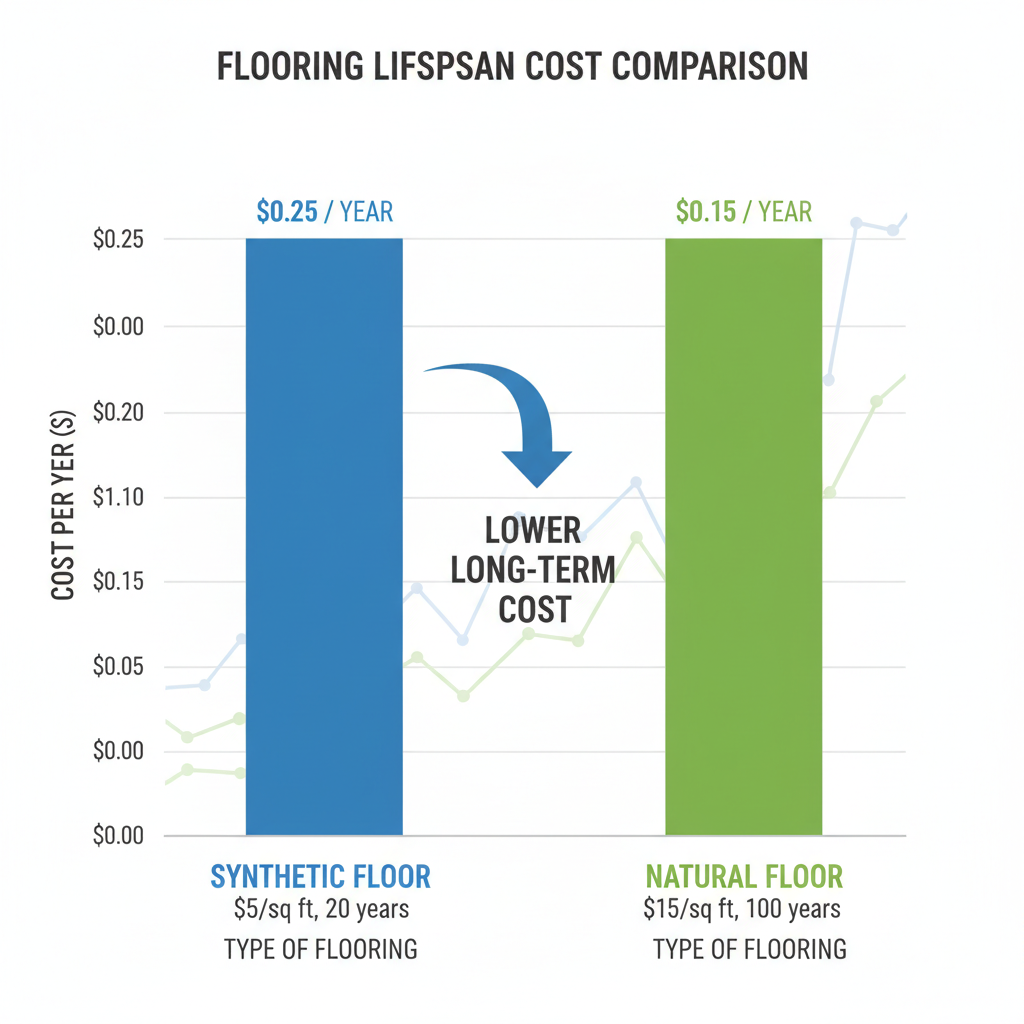
To truly understand the value of adamantine flooring, we must shift our perspective from the initial price tag to a “Cost per Year of Lifespan” financial matrix. How long does adamantine flooring last? It depends entirely on your investment strategy.
Consider a high-quality, 20-year synthetic floor (like a premium LVP) that costs $5 per square foot to install. Its cost per year is $0.25 per square foot. Now, compare this to a 100-year natural solid hardwood floor costing $15 per square foot. Over its century-long lifespan, its cost per year drops to just $0.15 per square foot. While the upfront cost of wood is triple that of vinyl, its long-term Return on Investment (ROI) is vastly superior.
However, this ROI is highly dependent on execution. Experts at Geneva Flooring emphasize that the impact of professional installation versus DIY cannot be overstated. A poorly installed subfloor or improper acclimation can cut a 100-year floor’s lifespan down to a decade, completely destroying your long-term financial investment [8].
Diagnosing Flooring Wear and Tear vs. Actual Damage
Whether you are a homeowner deciding if it is time to renovate or a landlord managing tenant deposits, establishing objective criteria for flooring wear and tear versus actionable damage is critical.
According to property management standards and typical lease agreement clauses outlined by authorities like RentSpree and Azibo, normal wear and tear refers to the expected, unavoidable deterioration of a property resulting from standard daily living [9]. Actionable damage, conversely, is the result of negligence, abuse, or accidents.
The 5-Year and 10-Year Visual Baselines
Setting visual baselines helps eliminate the guesswork of aging floor damage. Statistics show that noticeable wear patterns and minor surface scratches naturally emerge after a 5-year period of occupancy. At the 5-year mark, you should expect slight fading in areas exposed to direct sunlight, minor scuffing in high-traffic hallways, and a general dulling of the finish.
By the 10-year mark, these patterns deepen. However, deep gouges that penetrate the wood core, shattered porcelain tiles, or torn vinyl seams are never considered normal wear and tear at any age; they are definitive signs of excessive damage.
The Hidden Culprit: Subfloor Degradation
Often, what appears to be aging floor damage is actually a symptom of a much deeper problem. Surface issues like warping, buckling, or sagging are rarely the fault of the top flooring material.
According to structural engineering principles and insights from Clover Valley Home Service, identifying foundation issues versus surface issues is paramount [10]. Subfloor integrity, joist health, and hidden moisture infiltration are the root causes of catastrophic flooring failure. If your adamantine floor is failing prematurely, the subfloor is almost certainly the hidden culprit.
The Professional Triage Guide for Scratched Floors
Even the most durable floors can suffer under extreme circumstances. When faced with scratched hardwood floors, many homeowners panic and turn to internet trends, which often do more harm than good.
Professional flooring contractors, such as those at Straight Edge Tile & Flooring, issue strict warnings against popular DIY hacks, particularly the myth of using olive oil and baking soda to fix wood scratches [11]. These household items can contaminate the wood grain, making future professional refinishing nearly impossible.
Surface Finish vs. Core Penetration: When to DIY
Before attempting any repair on scratched hardwood floors, you must diagnose the depth of the wound. Has the scratch only breached the clear polyurethane topcoat, or has it penetrated down into the raw wood core?
If the scratch is light and only affects the surface finish, a specialized blending pencil or a localized finish touch-up may suffice. However, you must know your floor’s chemistry. Experts at McNair Custom Homes detail the critical chemical differences between water-based and oil-based urethane finishes; applying the wrong type of finish during a DIY repair will result in peeling, discoloration, and a ruined aesthetic [12]. If the scratch has penetrated the raw wood, step away from the DIY tools—professional sanding and refinishing are required.
Strategic Material Placement for Specific Household Threats
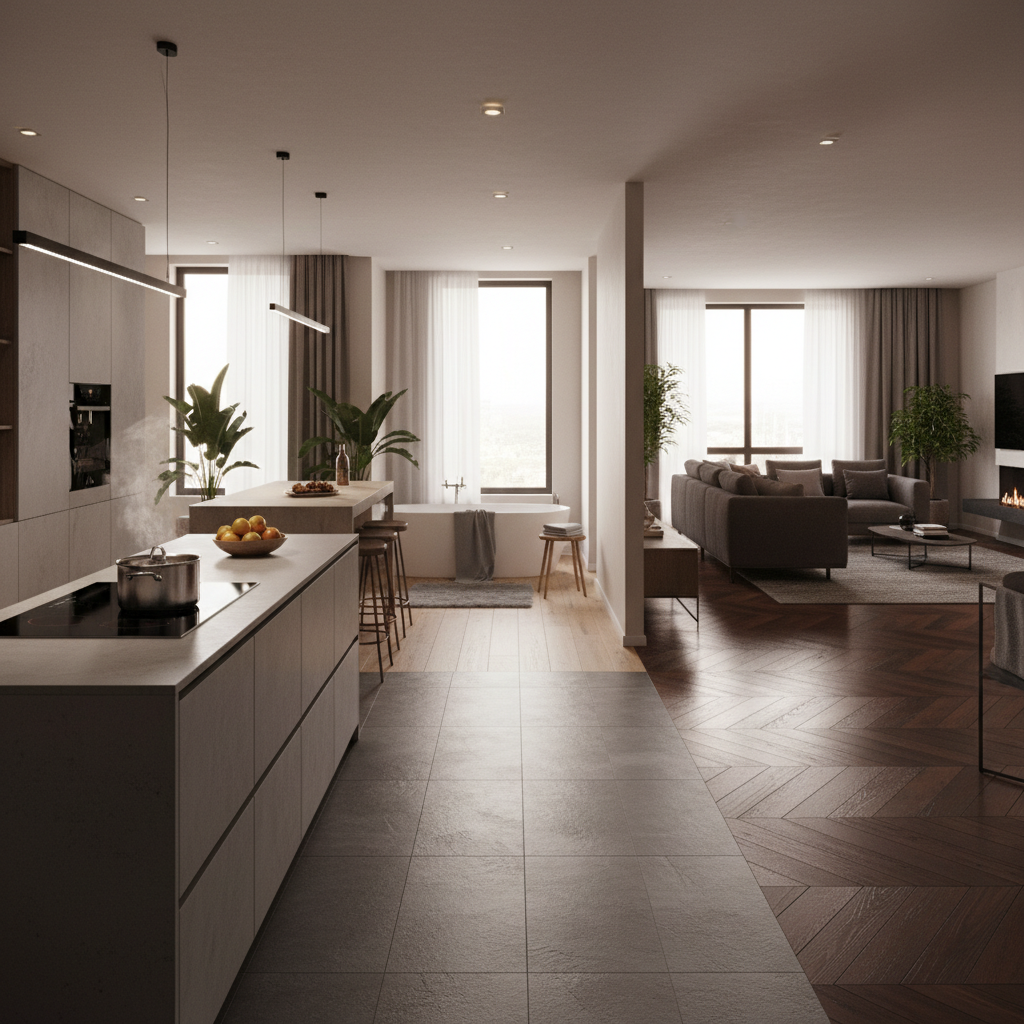
Achieving an adamantine home is not about installing a single material in every room; it is about strategic material placement. The best adamantine flooring for homes involves matching specific materials to distinct household threats.
For instance, long-term reliability data from Consumer Reports indicates that while solid hardwood is beautiful in a living room or bedroom, it is highly susceptible to standing water, making it a poor choice for full bathrooms or busy laundry rooms [13]. In those wet zones, high-mil SPC or porcelain tile are the superior, scratch resistant flooring for heavy traffic. By evaluating the specific traffic levels, moisture risks, and pet activity in each individual room, you can engineer a home that genuinely embraces life’s demands without showing its age.
Conclusion
“Adamantine” flooring is not a myth, nor is it a single miracle product you can buy off a shelf. It is a standard of excellence achieved through the careful, educated selection of materials based on objective data: AC ratings, mil wear layers, and Janka hardness scores. By looking past the marketing hype and understanding the “Cost per Year of Lifespan,” you can make flooring decisions that save thousands of dollars over time. We encourage you to evaluate your home’s unique traffic patterns using the metrics provided in this guide, and always consult a certified flooring installer to assess the health of your subfloor before making your final, century-lasting investment.
Standard DIY and financial disclaimers apply. Always consult a certified flooring professional before attempting structural repairs, subfloor modifications, or chemical refinishing.
References & Authoritative Sources
- National Wood Flooring Association (NWFA). (N.D.). Baseline durability comparisons for natural materials. Retrieved from NWFA industry standards.
- FloorScore. (N.D.). Certification standards for indoor air quality and material safety. Retrieved from FloorScore global guidelines.
- Bob Vila / BestLaminate. (N.D.). AC rating explanations and residential durability recommendations. Retrieved from bobvila.com and bestlaminate.com.
- World Floor Covering Association (WFCA). (N.D.). Industry standards and consumer guides on flooring longevity. Retrieved from WFCA consumer resources.
- Go Flooring. (N.D.). Comparative data on flooring types, wear layers, and lifespans. Retrieved from goflooring.com.
- Everlast Epoxy / Spectra Contract Flooring. (N.D.). Expertise on commercial flooring applications, epoxy resins, and lifespans. Retrieved from everlastepoxy.com and spectracf.com.
- Pro Floors and Blinds. (N.D.). Specific data on the Janka scale and refinishing limits. Retrieved from profloorsandblinds.com.
- Geneva Flooring. (N.D.). Expertise on flooring lifespans and the impact of professional installation. Retrieved from genevaflooring.com.
- RentSpree / Azibo. (N.D.). Property management standards, typical lease agreement clauses, and wear-and-tear definitions. Retrieved from rentspree.com and azibo.com.
- Clover Valley Home Service. (N.D.). Expertise on structural floor issues, subfloor damage, and replacement criteria. Retrieved from clovervalleyhomeservice.com.
- Straight Edge Tile & Flooring. (N.D.). Professional contractor insights on floor restoration and DIY warnings. Retrieved from straightedgetileflooring.com.
- McNair Custom Homes. (N.D.). Expertise on urethane finishes and custom wood repair. Retrieved from mcnaircustomhomes.com.
- Consumer Reports. (N.D.). Unbiased product testing and long-term reliability data for household zones. Retrieved from Consumer Reports product testing data.
