
It’s a homeowner’s nightmare. The slow, silent drip from the dishwasher connection you didn’t notice for days. The aftermath of a joyous, splash-filled kids’ bath time. A tipped glass of red wine during a dinner party. In an instant, your beautiful kitchen or bathroom floor is transformed from a source of pride into a source of panic. You’re left wondering: Is it warped? Is mold growing underneath? Did I just ruin my investment?
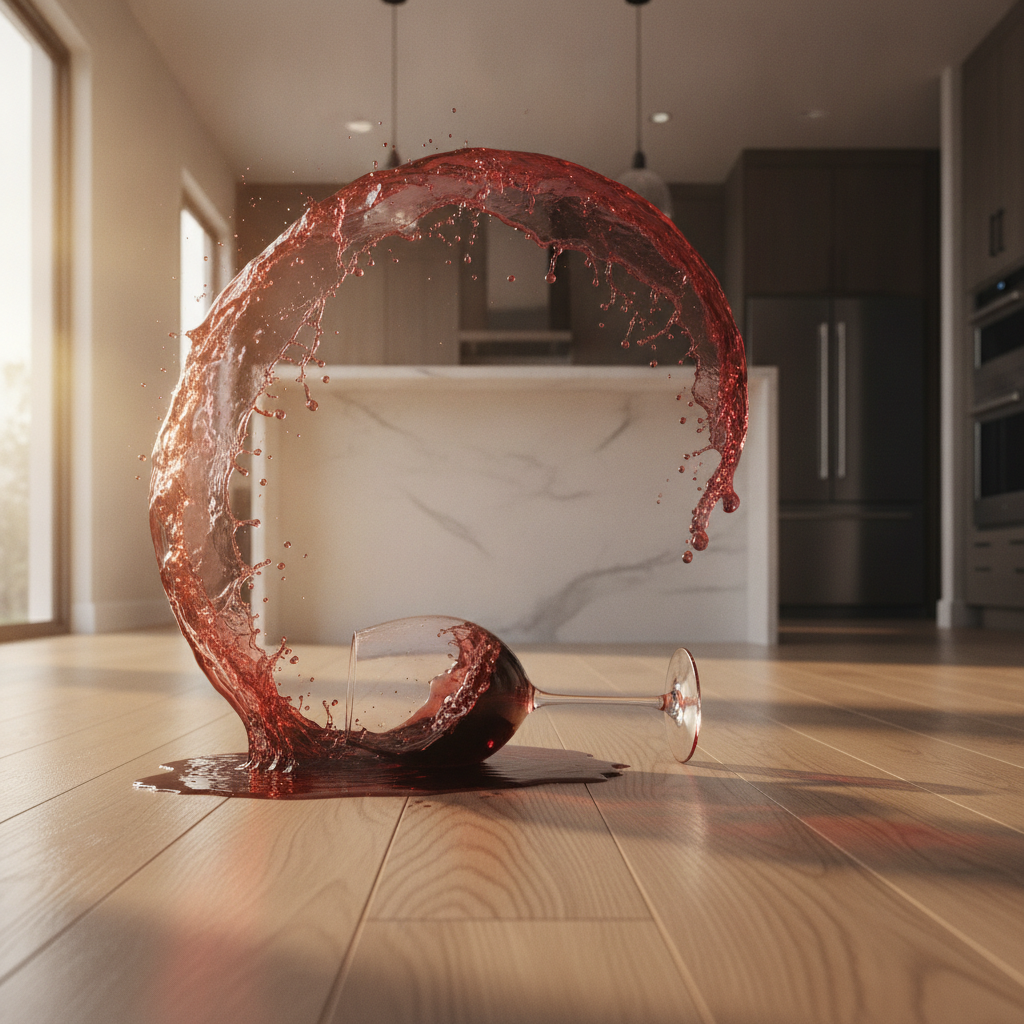
This fear of water damage is real, and the flooring market knows it. You’re bombarded with confusing terms like “hybrid,” “SPC core,” “water-resistant,” and “100% waterproof.” It’s enough to paralyze any renovator. But what if you could move past the marketing noise and make a decision with total confidence?
This is your definitive playbook. We will cut through the confusion and provide a data-driven framework to help you choose a floor that isn’t just waterproof on paper, but truly indestructible in the face of real-life spills, humidity, and traffic. By the end of this guide, you won’t just buy a floor; you’ll invest in a beautiful, worry-free foundation for your home’s busiest rooms.
- Why Your Kitchen & Bathroom Floors Are Under Constant Threat
- Decoding the Lingo: What is ‘100% Waterproof’ Hybrid Flooring?
- The Ultimate Showdown: Comparing the Top Waterproof Flooring Options
- Installation is Everything: How to Create a Truly Watertight System
- Frequently Asked Questions (FAQ)
- Your Path to a Worry-Free Floor
- References & Authoritative Sources
Why Your Kitchen & Bathroom Floors Are Under Constant Threat
Kitchens and bathrooms are the wettest, most unpredictable rooms in your home. They face a daily barrage of moisture from sources you expect—and some you don’t. From steamy showers and overflowing sinks to leaky refrigerators and everyday spills, the potential for water intrusion is constant.
Choosing the wrong flooring for these high-stakes environments can lead to catastrophic and costly failures. Traditional materials like solid hardwood or standard laminate are highly susceptible to spills. When their core materials absorb water, the results are devastating:
- Warping: The planks bend and twist, creating an uneven, unsightly surface.
- Cupping and Crowning: A moisture imbalance causes the edges of the planks to rise higher than the center (cupping) or the center to swell higher than the edges (crowning).
- Delamination: The top wear layer separates from the core, causing peeling and bubbling.
- Mold and Mildew Growth: This is the most insidious threat. According to the Institute of Inspection, Cleaning and Restoration Certification (IICRC), mold can begin to grow on damp surfaces within just 24-48 hours[1]. Once it takes hold beneath your floor, it can pose a serious health risk and require expensive professional remediation.
These issues aren’t just cosmetic; they compromise the structural integrity of your floor and the health of your home. This is why selecting a truly waterproof solution isn’t a luxury—it’s an absolute necessity.
Decoding the Lingo: What is ‘100% Waterproof’ Hybrid Flooring?
To make an informed choice, you first need to speak the language. The flooring industry is filled with terms that sound similar but have vastly different meanings.
First, let’s clarify the most important distinction: water-resistant vs. waterproof. A water-resistant floor can handle topical spills if they are wiped up quickly. However, if water sits for too long or seeps between the planks, it can still damage the core. A 100% waterproof floor is constructed with materials that are completely impervious to water from the top down. The planks themselves will not swell, crack, or warp, even when fully submerged.
This is where modern waterproof hybrid flooring comes in. These floors achieve their incredible performance thanks to a revolutionary core construction. The two dominant types are:
- SPC (Stone Polymer Composite): This core is made from a mixture of natural limestone powder, polyvinyl chloride (PVC), and stabilizers. The result is an incredibly dense, rigid, and dimensionally stable core that is 100% waterproof and highly resistant to dents and impacts.
- WPC (Wood Polymer Composite): This core is made from a blend of recycled wood pulp, plastic composites, and a foaming agent, which makes it slightly softer and warmer underfoot than SPC. While also 100% waterproof, it is generally less dense and slightly less resistant to heavy impacts than its stone-based counterpart.
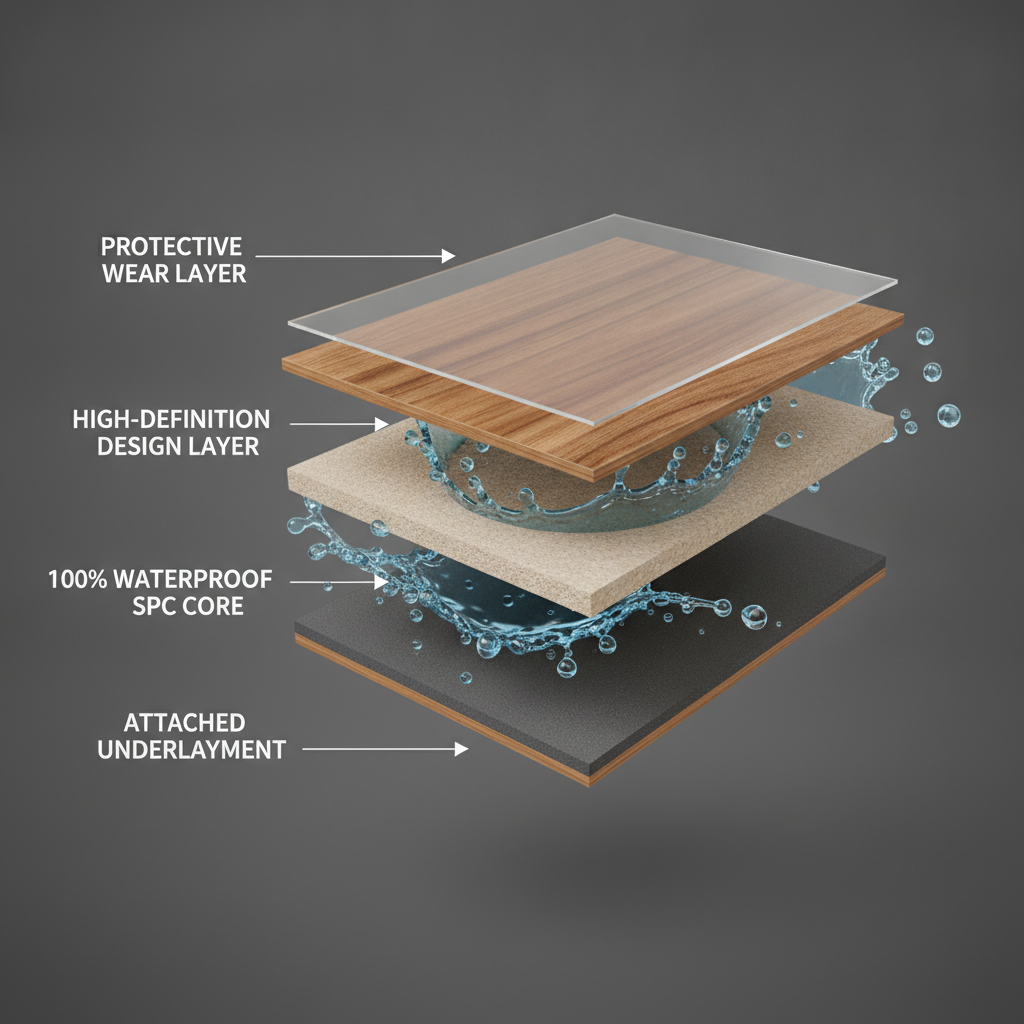
Regardless of the core, these planks are typically built in layers: a protective wear layer on top, a decorative vinyl layer with the design, the waterproof core, and often a pre-attached underlayment for sound absorption and comfort. Products with certifications like FloorScore® also ensure that the materials meet strict indoor air quality standards, making them a safe choice for your family[2].
Myth vs. Fact: The Waterproof Flooring Reality Check
Myth: “If my flooring is 100% waterproof, my subfloor is completely protected from leaks.”
Fact: While the planks themselves won’t be damaged by water, moisture can still find its way through the seams or around the edges of the room if the floor is not installed correctly. This can lead to water getting trapped between your new floor and the subfloor, causing rot and mold. The flooring is one part of a complete waterproof system.
The Ultimate Showdown: Comparing the Top Waterproof Flooring Options
Now that you understand the technology, let’s pit the top contenders against each other. We’ve created a “Durability Scorecard” to give you a quick, data-driven comparison of the best options for your kitchen or bathroom.
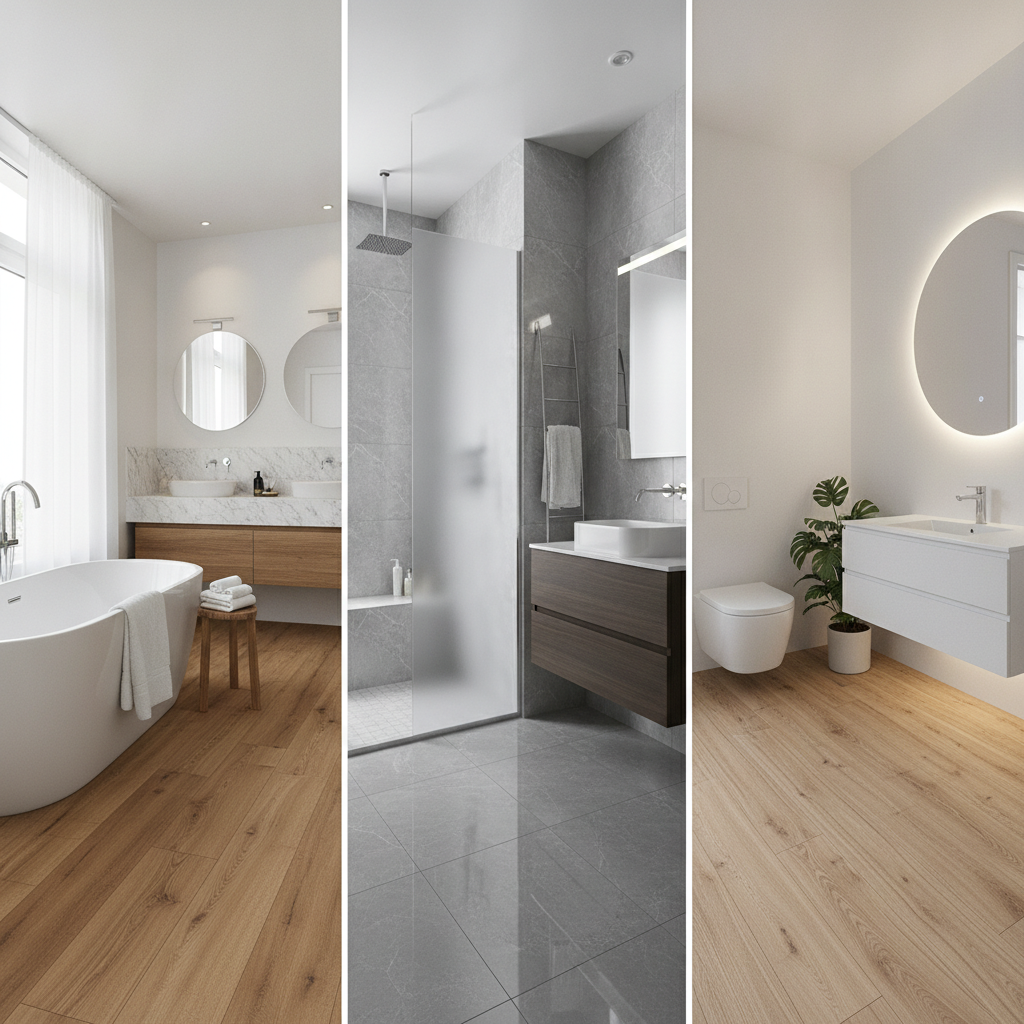
The Durability Scorecard
| Feature | Luxury Vinyl Plank (SPC) | Porcelain & Ceramic Tile | Waterproof Laminate |
|---|---|---|---|
| Waterproofing | ★★★★★ | ★★★★★ | ★★★★☆ |
| Scratch Resistance | ★★★★☆ | ★★★★★ | ★★★★★ |
| Dent Resistance | ★★★★☆ | ★★★★★ | ★★★☆☆ |
| Cost (Material) | $$$ | $$$ | $$ |
| DIY-Friendliness | ★★★★★ | ★★☆☆☆ | ★★★★☆ |
Contender #1: Luxury Vinyl Plank (LVP) – The Versatile Champion
Luxury Vinyl Plank, particularly with an SPC core, has become the go-to choice for homeowners seeking the perfect balance of beauty, durability, and waterproofing. Its core is completely impervious to water, making it ideal for bathrooms, kitchens, and basements. Modern printing technology allows for hyper-realistic wood and stone visuals that are often difficult to distinguish from the real thing.
The key to LVP’s longevity is its wear layer, a clear top coating that protects the printed design from scratches, scuffs, and stains. When shopping, this is the most important specification to check. For maximum durability in high-traffic kitchens and bathrooms, look for a wear layer of 20 mil (0.5mm) or higher. This commercial-grade thickness ensures your floor can withstand dropped utensils, pet claws, and sliding chairs for years to come.
Contender #2: Porcelain & Ceramic Tile – The Indestructible Classic
When it comes to pure, unadulterated durability, nothing beats tile. As the Tile Council of North America (TCNA) standards confirm, porcelain and ceramic are the time-tested champions of wet areas[3]. Porcelain tile, in particular, has a water absorption rate of 0.5% or less, making it functionally impervious to water.
Tile’s hardness is measured by its PEI rating, which indicates its resistance to abrasion and wear. For busy kitchen floors, look for a PEI rating of 4 (heavy residential traffic) or 5 (heavy residential/light commercial traffic).
However, tile has its trade-offs. It can be cold and hard underfoot, and dropped glasses are almost certain to shatter. Furthermore, while the tile itself is waterproof, the grout lines are porous and can stain or absorb moisture if not properly sealed. Using a high-quality epoxy grout or ensuring your cement-based grout is sealed annually is critical to creating a truly impenetrable surface.
Contender #3: Waterproof Laminate – The New Challenger
For years, laminate flooring was a definite “no” for wet areas due to its moisture-susceptible fiberboard core. But technology has evolved. The new generation of waterproof laminate features water-repellent topcoats, advanced locking systems, and denser, more water-resistant cores.
Its primary advantage is scratch resistance. Laminate’s durability is measured by its Abrasion Class (AC) rating, based on standards from organizations like ASTM International[4]. An AC4 or AC5 rating indicates a floor tough enough for even light commercial use, easily shrugging off scratches that might damage other surfaces.
The crucial caveat with waterproof laminate is to read the fine print. The level and duration of water protection can vary significantly between brands. Always check the manufacturer’s warranty to understand the specific coverage for water damage before installing it in a full bathroom or kitchen.
Installation is Everything: How to Create a Truly Watertight System
You can buy the best, most expensive waterproof flooring on the market, but it will fail if it’s not installed correctly. The goal is not just to lay down waterproof planks, but to create a sealed, watertight system.
The most common DIY mistake I see is ignoring the subfloor. People are so excited to get the new floor down, they cover up problems. A little bit of unevenness or moisture in the subfloor can cause a complete failure of a brand-new waterproof floor within a year.
– Certified Flooring Installer
To avoid this, follow this master checklist and always prioritize the manufacturer’s specific installation guide to avoid voiding your warranty.
Step 1: Subfloor Preparation – The Non-Negotiable Foundation
Your subfloor is the canvas for your new flooring. It must be perfectly prepared.
- Clean: Scrape away any old adhesive, remove nails or staples, and thoroughly sweep and vacuum the entire surface.
- Level: The floor must be flat. Roll a 6-foot level across the surface; any dips or peaks greater than 3/16 of an inch need to be addressed with a self-leveling compound or by sanding down high spots.
- Dry: Use a moisture meter to test both wood and concrete subfloors. As experts at the Building Science Corporation emphasize, managing moisture from below is critical to the health of the entire home structure[5]. If moisture readings are high, you must identify and resolve the source before proceeding.
Step 2: Sealing the Perimeter – Your Final Line of Defense
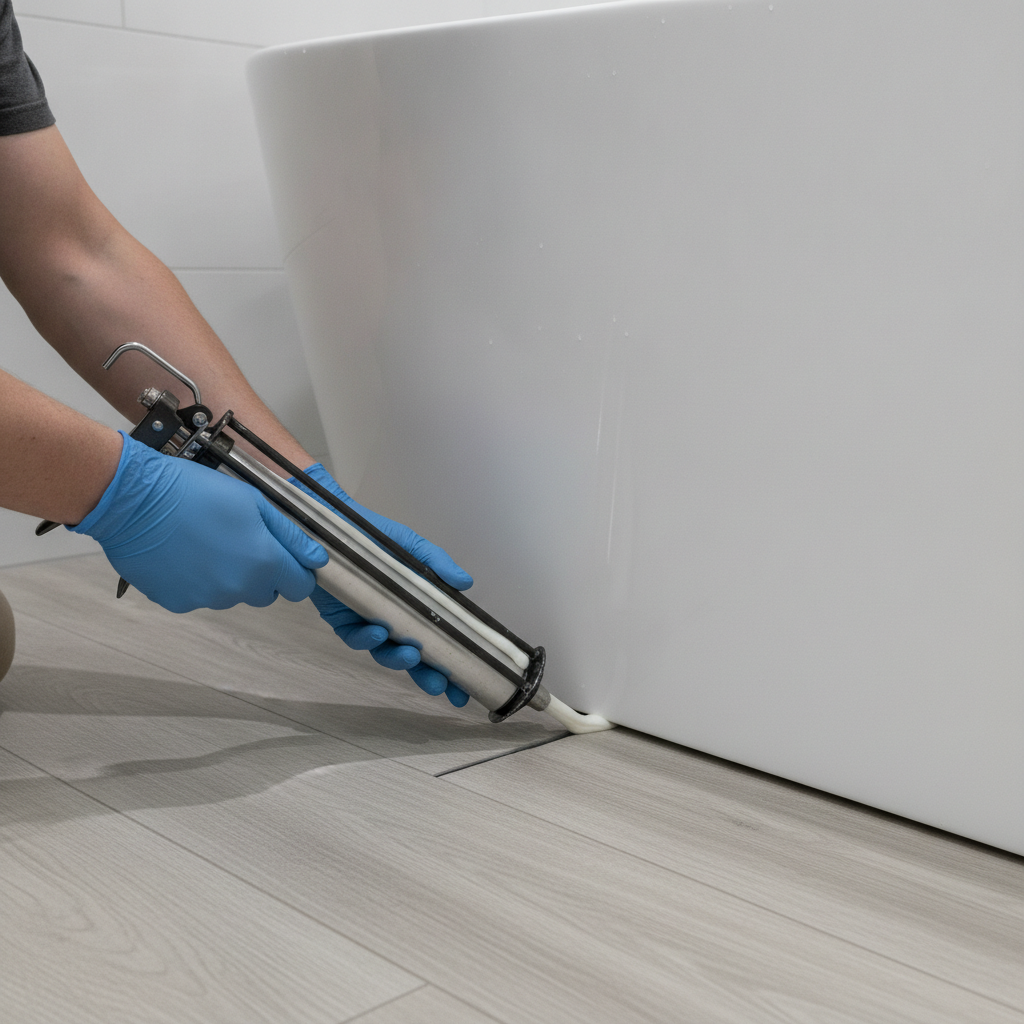
This is the final, crucial step that turns your floor into a fortress against water. Once the planks are laid, you must seal all expansion gaps and edges where the floor meets a wall or fixture. This prevents water from splashing over the edge and getting trapped underneath.
Use a 100% silicone caulk to create a flexible, watertight seal around the entire perimeter of the room. Pay special attention to high-risk areas like the base of a bathtub, around a toilet flange, and in front of kitchen cabinets and dishwashers. Apply a clean, consistent bead of caulk and smooth it with a tool or a wet finger for a professional finish that will provide the ultimate line of defense.
Frequently Asked Questions (FAQ)
Is engineered hardwood a good choice for bathrooms?
While engineered hardwood is more dimensionally stable than solid hardwood due to its layered construction, it is still not a waterproof product. As the National Wood Flooring Association (NWFA) advises, wood flooring in high-humidity environments carries significant risk[6]. The top layer is real wood, which can be damaged by standing water, and moisture can still penetrate the seams. For a worry-free wood look in a full bathroom, LVP or wood-look porcelain tile are far safer and more durable choices.
How do I clean and maintain my waterproof floor?
Maintenance is generally simple, but it’s crucial to use the right methods. For routine cleaning, use a broom, dust mop, or a vacuum without a beater bar. For deeper cleaning, use a damp mop with a pH-neutral flooring cleaner. Avoid using steam mops, harsh chemicals like bleach or ammonia, and abrasive scrubbers, as these can dull the finish or damage the protective wear layer. Most importantly, always consult the specific cleaning and maintenance recommendations from your flooring’s manufacturer.
Can a 100% waterproof floor still get mold underneath?
Yes, absolutely. This is a critical point that reinforces the importance of proper installation. The flooring planks themselves are inert and will not support mold growth. However, if water gets trapped underneath the floor—either from a plumbing leak below or from water seeping around an unsealed perimeter—it can create the perfect dark, damp environment for mold to thrive on the subfloor[1]. A waterproof floor is only as good as its installation.
Your Path to a Worry-Free Floor
Choosing the right flooring for your kitchen or bathroom doesn’t have to be a gamble. By moving beyond the marketing hype and focusing on the core science of materials and installation, you can make a truly informed decision.
Your choice ultimately comes down to your priorities. For unmatched versatility, warmth, and DIY-friendliness with a stunningly realistic wood look, Luxury Vinyl Plank is the reigning champion. For the absolute pinnacle of scratch-proof, dent-proof, indestructible durability, porcelain tile remains the classic choice.
But remember the most important lesson from this playbook: the product is only half the equation. Meticulous subfloor preparation and a perfectly sealed perimeter are what transform your purchase from a “waterproof floor” into an indestructible, worry-free flooring system. With this knowledge, you are now fully equipped to select and install a beautiful floor that will confidently withstand everything life throws at it.
Feeling confident? Explore our curated gallery of kitchen and bathroom flooring ideas to find the perfect style for your new, indestructible floor.
This article provides general guidance. Always consult the specific manufacturer’s installation instructions and warranty details for any flooring product you choose. Professional installation is recommended for best results in high-moisture areas.
References & Authoritative Sources
- Institute of Inspection, Cleaning and Restoration Certification (IICRC). (N.D.). IICRC Standard for Professional Water Damage Restoration (S500). Retrieved from iicrc.org.
- SCS Global Services. (N.D.). FloorScore®. Retrieved from scsglobalservices.com/services/floorscore.
- Tile Council of North America (TCNA). (N.D.). TCNA Handbook for Ceramic, Glass, and Stone Tile Installation. Retrieved from tcnatile.com.
- ASTM International. (N.D.). Flooring Standards. Retrieved from astm.org.
- Building Science Corporation. (N.D.). Resource Library. Retrieved from buildingscience.com.
- National Wood Flooring Association (NWFA). (N.D.). Installation Guidelines. Retrieved from nwfa.org.
