
The joyful chaos of a home filled with pets is priceless. The click-clack of paws on the floor, the playful skids around corners, the happy greetings at the door—it’s the soundtrack of a life well-loved. But the evidence of that love is often etched permanently into your floors. Scratches from excited claws, stubborn stains from accidents, and the constant battle against pet hair can make you feel like you have to choose between your furry family members and a beautiful home. What if you didn’t have to?
Welcome to the ultimate, data-driven Pet-Proof Flooring Showdown. We’re moving beyond simple lists to give you a definitive guide to the best wood-look floors for dogs and cats. We’ve developed a proprietary ‘Pet-Proof Score’—a rating system based on critical performance metrics—to rank the top contenders and eliminate the guesswork. In this guide, we’ll demystify the technical jargon, compare the leading materials head-to-head, and take a special deep-dive into an innovative category contender: Bravewood hybrid hardwood. Get ready to make a confident investment in a floor that’s as durable as it is beautiful.
- The Pet Owner’s Dilemma: Why Your Floor Is Losing the Battle
- Decoding Durability: The 4 Key Metrics of a Truly Pet-Proof Floor
- The 2024 Pet-Proof Flooring Showdown: Ranked & Reviewed
- Spotlight on Bravewood: A Deep Dive into This Hybrid Hardwood
- Your Proactive Playbook: Preventing and Repairing Pet-Related Floor Damage
- Frequently Asked Questions
- The Verdict: The Right Pet-Proof Floor for Your Home
- References & Authoritative Sources
The Pet Owner’s Dilemma: Why Your Floor Is Losing the Battle
If you’re constantly worried about your floors, you’re not alone. The daily life of a pet presents a unique set of challenges that can quickly degrade even the most robust-seeming surfaces. Understanding the enemy is the first step to choosing the right defense.
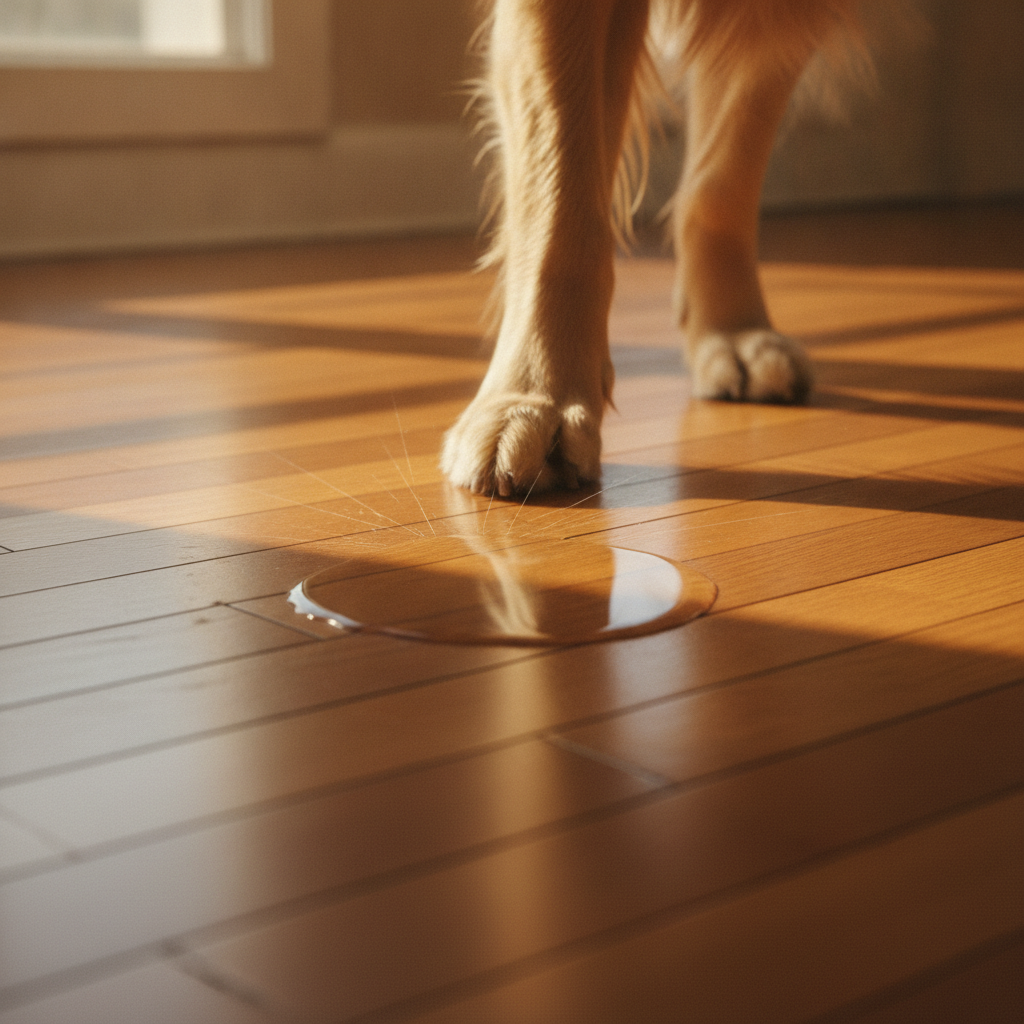
The most visible and frustrating issue is scratches. A dog’s nails, even when trimmed, can act like sandpaper against a floor’s finish, especially during moments of high excitement. The American Kennel Club (AKC) emphasizes that regular nail trimming is the single most important preventative measure, but it doesn’t eliminate the risk entirely.[1] Over time, these micro-scratches dull the finish and create a worn, tired look, particularly in high-traffic areas.
Even more destructive are pet accidents. Pet urine isn’t just a liquid; it’s a complex chemical cocktail that can cause permanent damage. The uric acid in urine is corrosive and can eat through a floor’s protective finish if not cleaned immediately. Worse, the ammonia can react with the natural tannins in wood, causing deep, dark stains that are often impossible to remove without sanding or replacing the plank entirely.[2] This is the primary reason why traditional solid hardwood is such a risky choice for homes with puppies or senior pets.
Beyond these major issues, there’s the general wear and tear: the grit and dirt tracked in on paws, the constant sweeping of pet hair, and spills from water bowls. This combination of factors puts your floor under constant assault, making durability a non-negotiable feature for any pet-friendly home.
Decoding Durability: The 4 Key Metrics of a Truly Pet-Proof Floor
When you start shopping, you’ll be hit with a wall of technical terms. Understanding these key metrics is crucial to seeing past the marketing hype and choosing a floor that will actually perform. Here’s what you need to know.
1. Scratch Resistance (AC Rating & Wear Layer)
This measures how well a floor’s surface withstands abrasion. For laminate flooring, this is measured by an Abrasion Class (AC) rating. According to industry bodies like the World Floor Covering Association (WFCA), this scale runs from AC1 (light residential use) to AC5 (heavy commercial use).[3] For homes with pets, an AC4 or AC5 rating is highly recommended. For Luxury Vinyl Plank (LVP), scratch resistance comes from its transparent wear layer, measured in mils (one-thousandth of an inch). A 12-mil layer is fine for light traffic, but for pet owners, a 20-mil wear layer or higher is the gold standard for protection.
2. Water Resistance (Waterproof vs. Water-Resistant)
This is one of the most confusing distinctions.
- Waterproof: This means the plank or tile itself is impervious to water. It can be fully submerged without swelling or delaminating. According to the Resilient Floor Covering Institute (RFCI), materials like LVP, SPC vinyl, and porcelain tile have a core that will not be damaged by water, making them ideal for kitchens, bathrooms, and accident-prone pets.[5] Hybrid hardwood also features a waterproof core.
- Water-Resistant: This typically applies to modern laminate flooring. The surface and joints are treated to repel water for a specific period (e.g., 24-72 hours), giving you time to clean up spills. However, if water penetrates the seams and reaches the fiberboard core, the plank can still swell and be permanently damaged.
3. Dent & Impact Resistance (Core & Hardness)
This refers to the floor’s ability to withstand dropped objects or heavy furniture. For LVP and hybrid floors, this is determined by the density of their composite core (SPC, or Stone Plastic Composite, is denser and more dent-resistant than WPC, or Wood Plastic Composite). For real wood surfaces, like the veneer on hybrid hardwood, hardness is measured on the Janka hardness scale. The National Wood Flooring Association (NWFA) uses this scale to rate how resistant a wood species is to denting and wear.[4] A harder wood like Hickory will resist dents better than a softer wood like Pine.
4. Stain Resistance & Cleanability
A truly pet-proof floor must have a non-porous surface with a strong protective topcoat. This prevents spills and urine from soaking in, making them easy to wipe away without leaving a trace. It also ensures you can use effective, pet-safe cleaners without damaging the floor’s finish.
The 2024 Pet-Proof Flooring Showdown: Ranked & Reviewed
Now it’s time to put the top contenders to the test. We’ve analyzed each flooring type based on the four key durability metrics to create our proprietary Pet-Proof Score. Our analysis is based on manufacturer specs and industry standards to simulate how these floors hold up under the real-world stress of daily pet life.
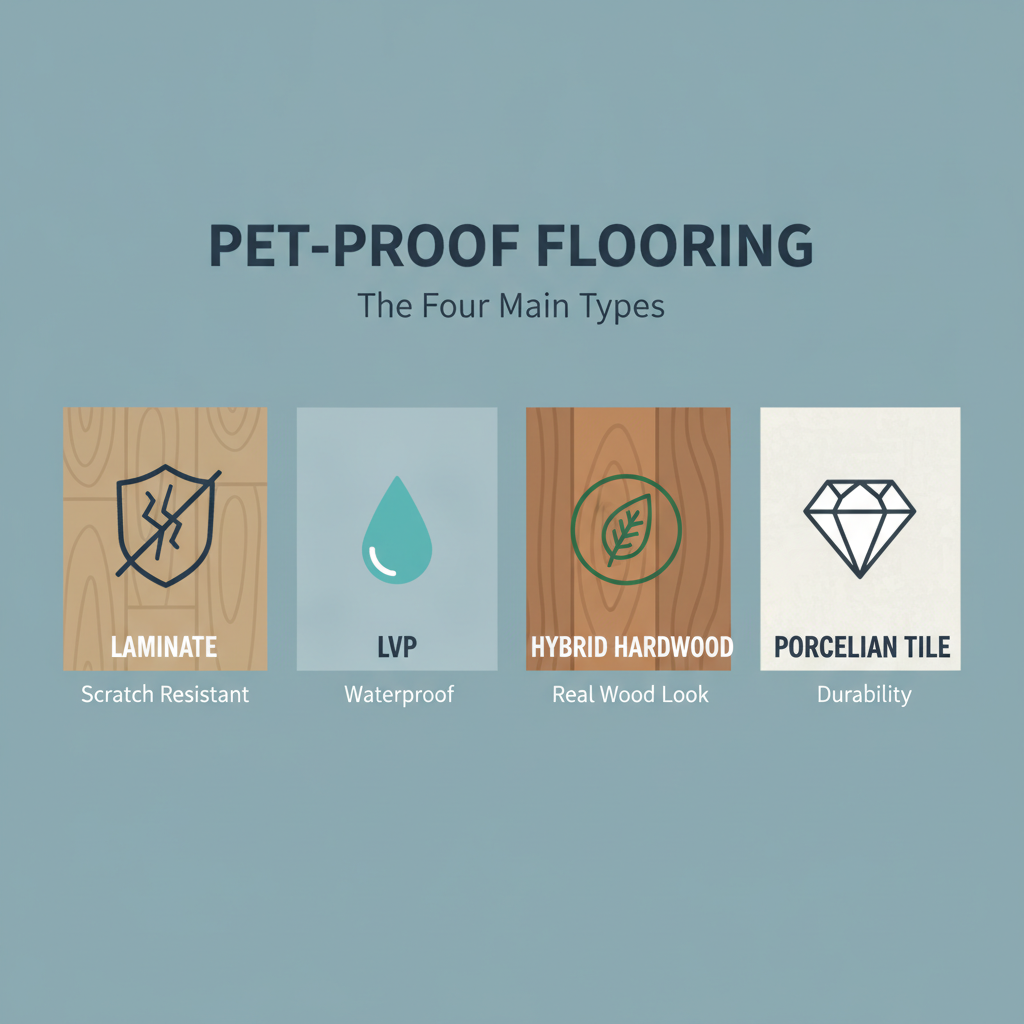
Master Comparison Table
| Flooring Type | Scratch Resistance (1-10) | Waterproofing (1-10) | Maintenance (1-10) | Avg. Pet-Proof Score |
|---|---|---|---|---|
| High-Performance Laminate (AC4+) | 9.5 | 7.0 | 8.5 | 8.3 |
| Luxury Vinyl Plank (LVP/SPC) | 8.0 | 10 | 9.0 | 9.0 |
| Hybrid Hardwood (Bravewood) | 7.5 | 9.5 | 8.0 | 8.3 |
| Wood-Look Porcelain Tile | 10 | 10 | 7.5 | 9.2 |
Contender #1: Hybrid Hardwood (e.g., Bravewood)
Hybrid hardwood is the new kid on the block, designed to offer the best of both worlds. It combines the authentic beauty of real wood with the rugged durability of a composite core.
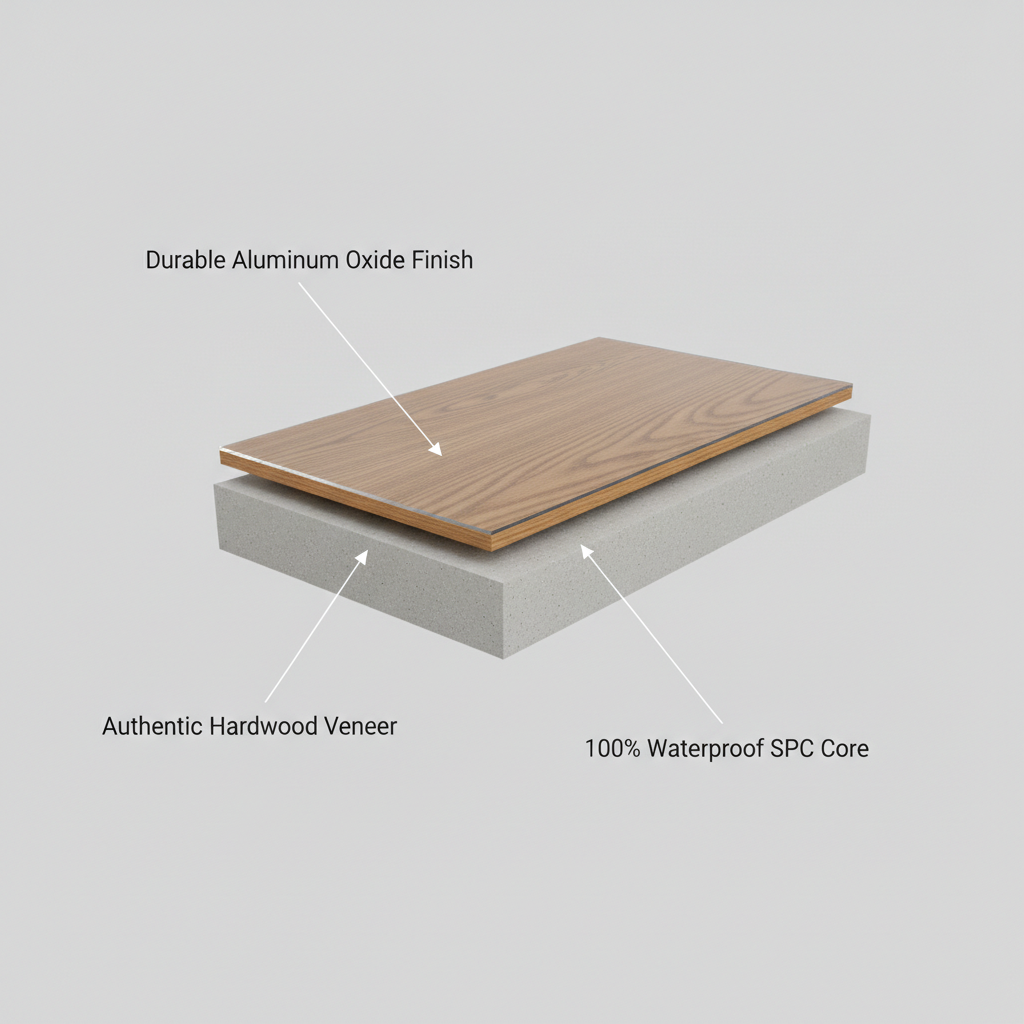
Imagine a cross-section of a hybrid plank: at the top is a thin veneer of real hardwood (typically 1.2mm to 3mm thick). This is bonded to a 100% waterproof SPC or WPC core. The entire plank is then finished with a durable, multi-layer aluminum oxide coating for scratch protection. As explained by technical resources like the Floor Covering Institute, this construction gives you a floor that won’t swell or warp from topical moisture while still providing the unique grain and texture of genuine wood.[6]
- Pros: Unmatched aesthetic realism because it is real wood on top. The waterproof core provides peace of mind against spills and accidents. It feels more substantial underfoot than LVP.
- Cons: The real wood veneer, while protected by a strong finish, can still be scratched or dented like any wood product. It is generally more expensive than laminate or LVP. Unlike traditional hardwood, the thin veneer cannot be sanded and refinished. Deep gouges that penetrate the veneer are difficult to repair seamlessly.
- Pet-Proof Score: 8.3/10
Contender #2: Luxury Vinyl Plank (LVP/SPC)
LVP has exploded in popularity for good reason. It is a 100% synthetic product made of multiple layers of PVC vinyl, culminating in a high-resolution printed design layer and a tough, transparent wear layer. Modern SPC (Stone Plastic Composite) cores make it incredibly dense, rigid, and stable.
- Pros: It is 100% waterproof, making it a top choice for any room in the house. The thick wear layer (20-mil+) provides excellent resistance to scratches and stains. It’s also softer and warmer underfoot than laminate or tile, and its textured surfaces can offer better traction for pets. As noted in product testing by sources like Consumer Reports, high-quality LVP offers exceptional all-around durability.[7] From a pet health perspective, the slight give and better traction of LVP can be beneficial for senior dogs or those with joint issues, a point often highlighted by veterinary resources like PetMD.[8]
- Cons: While realism has improved dramatically, it can’t perfectly replicate the unique depth of real wood. The material can be dented or punctured by extremely heavy or sharp objects.
- Pet-Proof Score: 9.0/10
Contender #3: High-Performance Laminate
Don’t confuse modern laminate with the cheap, easily damaged products of the past. Today’s high-performance laminate is an engineering marvel, prized for one thing above all: extreme scratch resistance. Its durability comes from an incredibly hard, clear top layer infused with aluminum oxide, which protects the photographic image layer beneath.
- Pros: The undisputed champion of scratch resistance. A laminate floor with an AC4 or AC5 rating, based on testing standards from organizations like ASTM International, is tough enough for commercial environments and can easily handle the claws of even the largest dogs.[9] It is also very budget-friendly. Modern versions feature water-resistant technologies that protect against spills for up to 72 hours. Furthermore, textured, low-gloss matte finishes are excellent at hiding the inevitable micro-scratches that can occur over time.
- Cons: It is not fully waterproof; the fiberboard core can be damaged by pet urine if it seeps into the seams. It can be noisy and produce a “clicking” sound under claws, though a quality underlayment can mitigate this.
- Pet-Proof Score: 8.3/10
Contender #4: Wood-Look Porcelain Tile
When absolute, uncompromising durability is the goal, wood-look porcelain tile is the answer. Made from refined clay fired at extremely high temperatures, porcelain is incredibly dense, hard, and non-porous. High-definition printing technology allows it to mimic the look of wood with surprising realism.
- Pros: It is virtually scratch-proof and completely waterproof. It will not stain from pet accidents and is incredibly easy to clean. Its durability is measured by a PEI rating for surface abrasion, with the Tile Council of North America (TCNA) recommending a PEI 4 or 5 for heavy residential traffic.[10]
- Cons: It is a very hard and cold surface, which can be uncomfortable for pets (and humans). The American Kennel Club often advises using area rugs or orthopedic pet beds on hard surfaces to protect pet joints.[1] The grout lines, while minimal with modern tile, are porous and can trap dirt and stains if not sealed properly.
- Pet-Proof Score: 9.2/10
Spotlight on Bravewood: A Deep Dive into This Hybrid Hardwood
Now that we understand the category, let’s focus on a specific brand that’s generating buzz: Bravewood. Manufactured by industry giant AHF Products, Bravewood is a prime example of hybrid hardwood technology.[11]
It features a sliced-face real hardwood veneer (Oak or Hickory) over a proprietary “SolidTRU” composite core, which is designed to be 100% waterproof. The surface is protected by a multi-layer urethane finish with aluminum oxide. According to the manufacturer’s specifications, this construction makes it suitable for installation in any room, including kitchens and basements.
Bravewood vs. The Competition
| Feature | Bravewood | Typical LVP (20-mil) | Typical Laminate (AC4) |
|---|---|---|---|
| Surface | Real Hardwood | Embossed Vinyl | Melamine/Aluminum Oxide |
| Core | Waterproof Composite | Waterproof SPC/WPC | Water-Resistant HDF |
| Realism | 10/10 (Authentic) | 8/10 (High-Quality Image) | 7/10 (High-Quality Image) |
| Refinishable? | No | No | No |
| Primary Advantage | Real wood beauty | 100% waterproof & balanced | Superior scratch resistance |
Review of the Reviews: Analyzing feedback from professional forums like The Floor Pro Community and retailer sites reveals common themes.[12] Installers praise its solid feel and the quality of its locking system. Homeowners love the authentic wood look that LVP can’t quite match. Common complaints, typical for the hybrid category, revolve around the surface being more susceptible to fine scratches than top-tier laminate and the higher price point compared to LVP. The consensus is that Bravewood is a premium product for those who prioritize the genuine look and feel of wood but require the waterproof assurance that traditional hardwood can’t offer.
Your Proactive Playbook: Preventing and Repairing Pet-Related Floor Damage
Choosing a durable floor is half the battle. The other half is smart maintenance. Following best practices from industry authorities like the National Wood Flooring Association (NWFA) can dramatically extend the life and beauty of your investment.[4]
Prevention: Your First Line of Defense Against Damage
- Nail Care is Non-Negotiable: This is the most important step. Keep your dog’s nails trimmed so they don’t click on the floor when they walk. Consider having a groomer or vet show you the proper technique.
- Deploy Strategic Mats: Place high-quality, absorbent mats at all entryways to trap dirt, grit, and moisture. Use a waterproof mat with a raised edge under food and water bowls.
- Wipe Those Paws: Keep a “paw towel” by the door to wipe your pet’s feet after they’ve been outside, especially on rainy or snowy days.
- Use Protective Pads: Apply felt pads to the bottom of all furniture legs to prevent scratches when chairs and tables are moved.
Repair Guide: Fixing Scratches and Stains Like a Pro
Accidents happen. Here’s how to handle them.
For Minor Surface Scratches (on Hybrid or Laminate):
For light scuffs that haven’t penetrated the finish, a repair kit or touch-up marker from the flooring manufacturer is your best bet.
- Clean the area thoroughly with a recommended cleaner and a soft cloth.
- Apply the marker or filler crayon sparingly, following the direction of the wood grain.
- Use a clean, dry cloth to gently buff away any excess.
The goal is to conceal the scratch, not fill it like a deep gouge.
For Pet Urine Accidents:
Speed is everything.
- Blot Immediately: Use highly absorbent paper towels to blot up as much liquid as possible. Do not rub, as this can spread the urine.
- Clean with an Enzymatic Cleaner: This is the crucial step. Standard cleaners won’t work. You need an enzymatic cleaner specifically designed for pet urine. The enzymes break down the uric acid crystals at a molecular level, eliminating both the stain and the odor.[2] Spray the area, let it sit for the recommended time, and then blot dry.
- Assess Damage: For waterproof floors like LVP and tile, this is usually all you need. For wood or laminate, if the urine has sat for too long and caused a dark stain, the damage may be permanent. As a professional floor refinisher would advise, a deep, set-in urine stain in wood often requires the affected board to be professionally replaced.
Frequently Asked Questions
Can you refinish hybrid hardwood flooring like Bravewood?
No. The real wood veneer on hybrid hardwood is too thin to be sanded and refinished. Minor scratches can be concealed with touch-up kits, but deep damage is permanent.
Is luxury vinyl (LVP) or laminate better for pets?
It’s a trade-off. High-performance laminate (AC4 or AC5) offers superior scratch resistance, making it ideal for homes with large, active dogs. LVP is 100% waterproof, making it the safer choice for puppies or accident-prone pets. LVP is also quieter and softer underfoot.
What is the best waterproof flooring for a basement?
Luxury Vinyl Plank (LVP/SPC) and porcelain tile are the two best options. Both are 100% waterproof and will not be damaged by the moisture or potential water intrusion common in basements.
The Verdict: The Right Pet-Proof Floor for Your Home
The battle between your pets and your floors doesn’t have to have a loser. By understanding the key metrics of durability and the unique strengths of each material, you can choose a floor that wins for everyone.
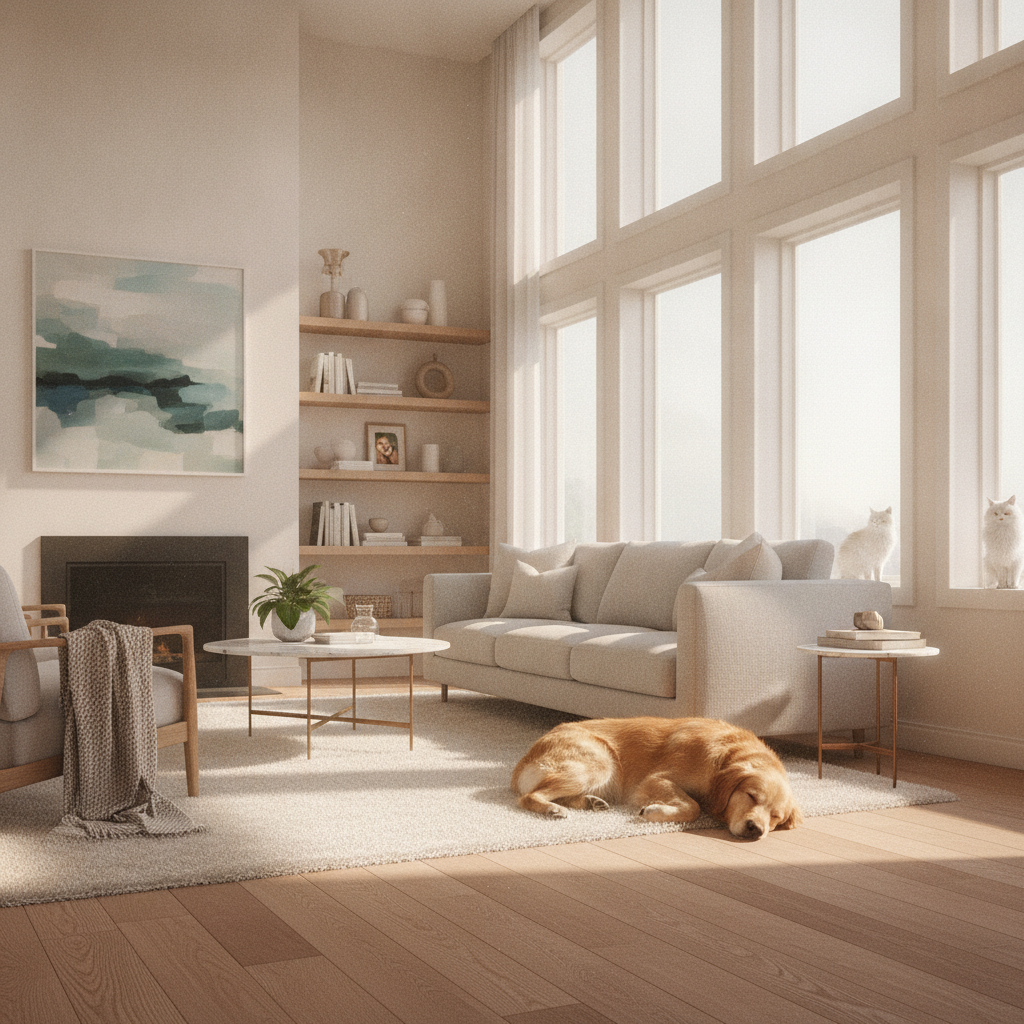
Wood-look porcelain tile stands as the undisputed king of durability, but its hard, cold nature is a significant drawback. For most pet owners seeking the perfect balance of performance, comfort, and beauty, the real showdown is between High-Performance Laminate and Luxury Vinyl Plank. LVP takes the edge for its foolproof waterproofing and quieter, softer feel, making it our top all-around choice.
And what about Bravewood hybrid hardwood? It’s a fantastic premium option for the discerning pet owner who refuses to compromise on the authentic look and feel of real wood but needs robust protection against spills and moisture. It proves you can have a genuinely beautiful hardwood surface that’s intelligently designed for the realities of pet ownership.
Ultimately, you are now equipped to make a confident, long-term investment. You can finally have a floor you love, in a home filled with the pets you love even more.
Feeling confident? Explore our detailed reviews of top flooring brands or download our free ‘Pet-Friendly Flooring Checklist’ to take with you on your shopping trip.
Disclaimer: This article may contain affiliate links. All product reviews and scoring systems are based on independent research and publicly available data.
References & Authoritative Sources
- American Kennel Club (AKC). (N.D.). Dog Grooming and Home Safety Guidelines. Retrieved from AKC official website.
- Institute of Inspection, Cleaning and Restoration Certification (IICRC). (N.D.). Standards for Cleaning and Restoration. Retrieved from IICRC official resources.
- World Floor Covering Association (WFCA). (N.D.). Flooring Standards and Definitions. Retrieved from WFCA official website.
- National Wood Flooring Association (NWFA). (N.D.). Official Wood Flooring Maintenance Guidelines & Janka Hardness Scale. Retrieved from NWFA official website.
- Resilient Floor Covering Institute (RFCI). (N.D.). Technical Information on Vinyl Flooring Products. Retrieved from RFCI official publications.
- Floor Covering Institute. (N.D.). Educational Resources on Flooring Construction. Retrieved from Floor Covering Institute official website.
- Consumer Reports. (N.D.). Flooring Buying Guides and Ratings. Retrieved from Consumer Reports official website.
- PetMD. (N.D.). Veterinarian-Authored Articles on Pet Health and Home Safety. Retrieved from PetMD official website.
- ASTM International. (N.D.). Standard Test Method for Abrasion Resistance of Resilient Floor Coverings (ASTM F510). Retrieved from ASTM International standards database.
- Tile Council of North America (TCNA). (N.D.). Handbook for Ceramic, Glass, and Stone Tile Installation. Retrieved from TCNA official publications.
- AHF Products. (N.D.). Bravewood Product Specifications and Warranty Information. Retrieved from the official brand or manufacturer website.
- The Floor Pro Community. (N.D.). Professional Flooring Forums and Discussions. Retrieved from The Floor Pro Community website.
